Changing Passwords Is Not Enough: Dissecting the GMO Desktop Cloud Breach, Session Revocation, and Active Cyber Defense
When 26,739 cloud servers face unauthorized intrusion, resetting credentials fails to protect financial accounts if active broker sessions persist—requiring a strict decoupling of credential rotation, session termination, and state intervention.
Published: October 24, 2026 | Read time: ~10 min | Watch Video (Japanese)
1. Executive Summary: The Persistence of Compromised Sessions
In modern cloud-hosted financial operations, retail and institutional traders routinely deploy automated execution algorithms, custom Expert Advisors (EAs), and trading scripts onto remote Virtual Private Servers (VPS). When an unauthorized intrusion breaches the underlying virtualization layer, a standard incident response playbook advises users to immediately shut down instances and reset user passwords.
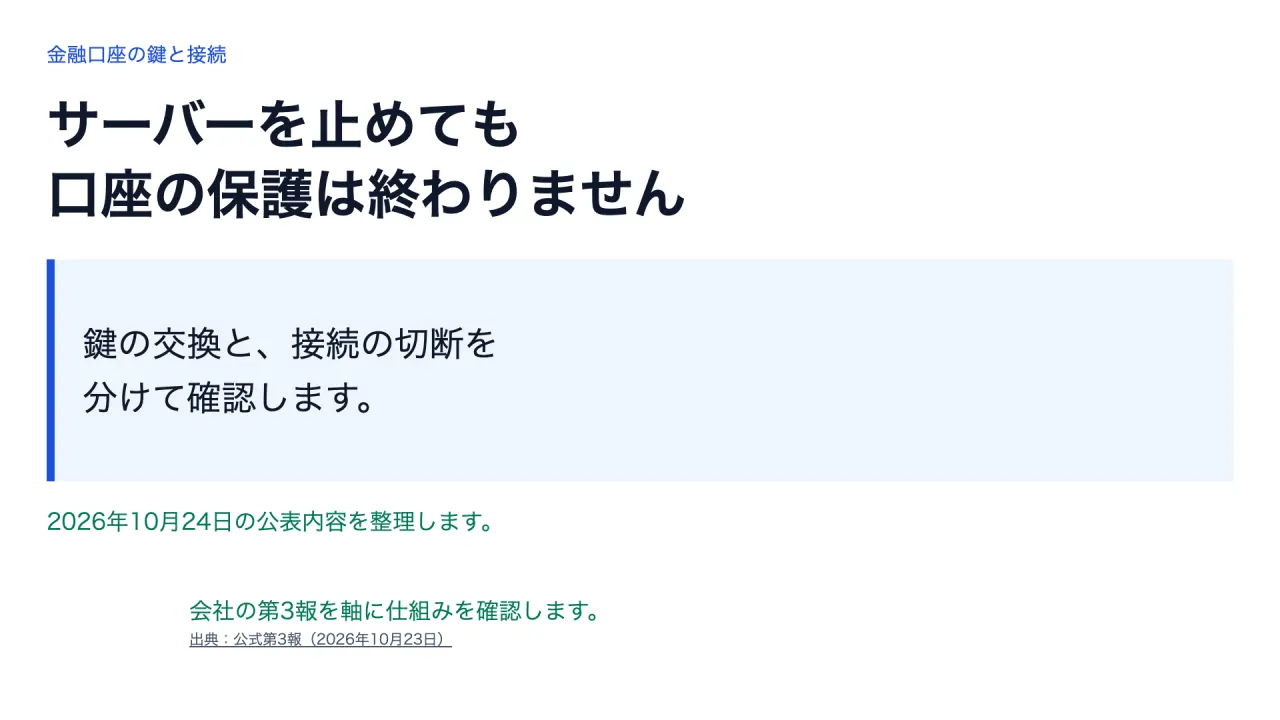
However, as demonstrated by the major cybersecurity incident disclosed by GMO Internet Group regarding its “Onamae.com Desktop Cloud” service on October 23 and October 24, 2026, rotating credentials alone does not neutralize active account compromise. Depending on the architecture of upstream brokerage and foreign exchange (FX) trading servers, existing authenticated sessions, persistent WebSocket connections, and long-lived OAuth tokens can remain fully operational after a password reset, allowing threat actors to execute unauthorized market orders.
This investigation provides a forensic and governance analysis of the GMO Desktop Cloud breach based on primary corporate disclosures as of October 24, 2026. We examine the exact incident progression, analyze what the publicized figure of 26,739 servers represents, deconstruct the technical mechanics of session persistence, evaluate the structure of compensatory remedies, and delineate the crucial legal distinction between corporate requests and state-authorized Active Cyber Defense.
2. Forensic Timeline: What Happened and When
Understanding the incident requires establishing a strict chronological timeline reconstructed from GMO Internet Group’s official investor relations (IR) disclosures and sequential security alerts (Reports 1 through 4).
- Sunday, October 19, 2026: Customer inquiries alerting GMO customer support to anomalies on specific virtual instances trigger an internal security review.
- Monday, October 20, 2026: Internal security telemetry confirms the placement of unauthorized third-party programs across certain customer server environments. GMO immediately suspends new customer applications and locks down the cloud management control panel.
- Tuesday, October 21, 2026 (04:00 JST): To halt lateral movement and prevent data exfiltration while investigating the blast radius, GMO initiates a sequential, total emergency shutdown of all server instances across all service plans.
- Wednesday, October 22, 2026: GMO formally reports the incident to law enforcement authorities and initiates forensic coordination with the police.
- Thursday, October 23, 2026:
- GMO issues its official IR disclosure alongside Security Report 1 and Security Report 3.
- Report 1 acknowledges potential browsing of server contents while noting no confirmed abuse at that moment.
- Report 3 clarifies that financial trading account credentials stored on virtual desktops were likely accessed and improperly utilized, warning that unauthorized market orders had been reported.
- Friday, October 24, 2026:
- In Security Report 4, GMO confirms confirmed unauthorized access and data exfiltration from the service environment, outlines compensatory policies, and reveals an emergency appeal to government authorities under Japan’s Active Cyber Defense framework.
When reading rolling incident disclosures, analysts must recognize the evidentiary difference between “abuse has not been confirmed at this time” and “no abuse has occurred”. Initial corporate reports communicate real-time verification boundaries rather than comprehensive post-incident absolution.
3. Dissecting the Infrastructure Metrics: What 26,739 Servers Represents
In public discourse surrounding the breach, media outlets widely circulated the metric of 26,739 units. Engineering leaders and financial risk officers must interpret this number accurately.
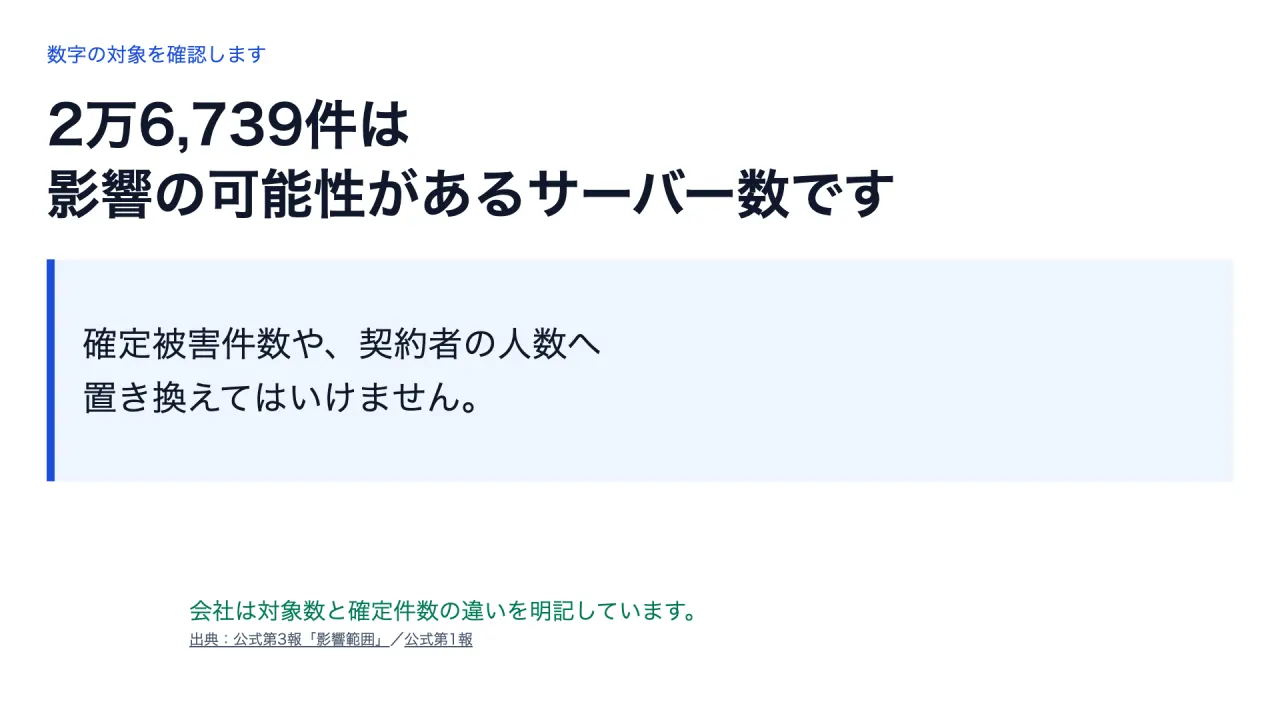
According to official IR filings and Report 3:
- 26,739 is the total population of potentially impacted virtual server instances. It delineates the outer boundary of the customer infrastructure subject to forensic quarantine and investigation.
- 26,739 is NOT the number of confirmed compromised accounts, stolen credential pairs, or victimized individuals.
Consider an apartment complex where a master key defect is detected, prompting management to inspect all 500 units. The number of inspected apartments (500) does not equal the number of burglarized units. Furthermore, because algorithmic traders often provision multiple virtual machines under a single corporate subscription, the count of unique legal subscribers is strictly smaller than 26,739.
Similarly, GMO’s disclosures revealed that extortion communications received from suspected threat actors claimed intrusions spanning “over 70 domestic and international firms”. This claim represents the threat actor’s unverified extortion rhetoric rather than legally proven corporate compromise across 70 independent enterprises.
4. Architectural Analysis: Severing the VPS Does Not Invalidate the Keys
A virtual private server is an isolated, rented compute instance running in a remote cloud datacenter. Algorithmic traders routinely store sensitive authentication artifacts on these machines: broker account IDs, plaintext passwords, private API keys, and session cookies.
If an attacker gains administrative privileges over the virtualization host or compromises the management plane, they can copy memory contents, scrape disk files, and extract those cryptographic keys.
At that instant, two completely separate operational layers emerge:
- The Hosting Infrastructure Layer: The local virtual machine managed by the cloud hosting provider.
- The Upstream Trading Destination Layer: The financial brokerage, stock exchange, or FX liquidity pool located outside the hosting provider’s network.
Terminating the virtual server merely stops the compromised local machine from running. It does not magically revoke or invalidate keys that have already been exfiltrated to the adversary’s command-and-control (C2) servers. To secure the account, credentials must be modified directly within the upstream brokerage systems.
5. Technical Mechanics: Password Rotation vs Active Session Revocation
The most critical technical vulnerability highlighted in Report 3 is the decoupled nature of user credentials and active authenticated sessions.
In client-server architectures, when a user logs in, the authentication server validates the password and issues a session token (such as a JSON Web Token, session cookie, or proprietary broker handshake). Subsequent market orders carry this session token, bypassing repetitive database credential checks to achieve sub-millisecond execution speeds.
Depending on an individual brokerage’s backend architecture:
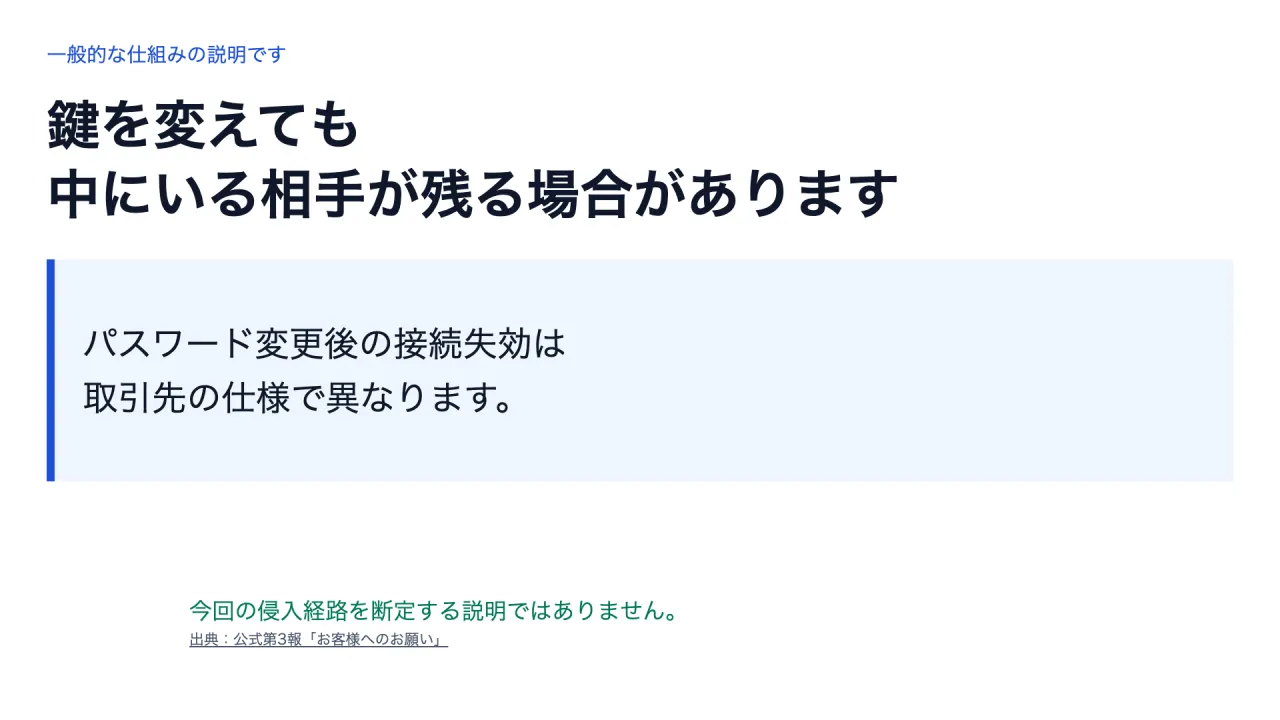
- Many legacy financial trading servers do not immediately invalidate existing active sessions when a user changes their password on the web portal.
- An attacker who established an active connection via exfiltrated credentials prior to the password reset can continue transmitting buy and sell orders until the session expires naturally or is forcefully terminated.
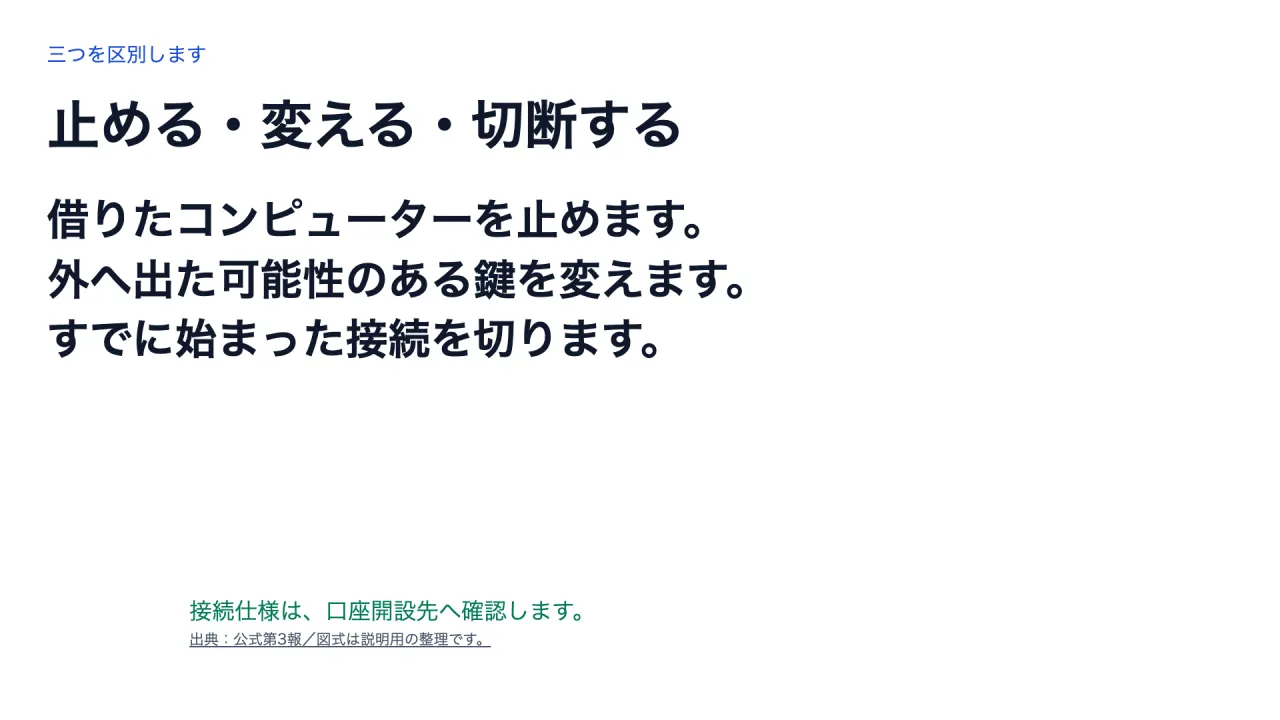
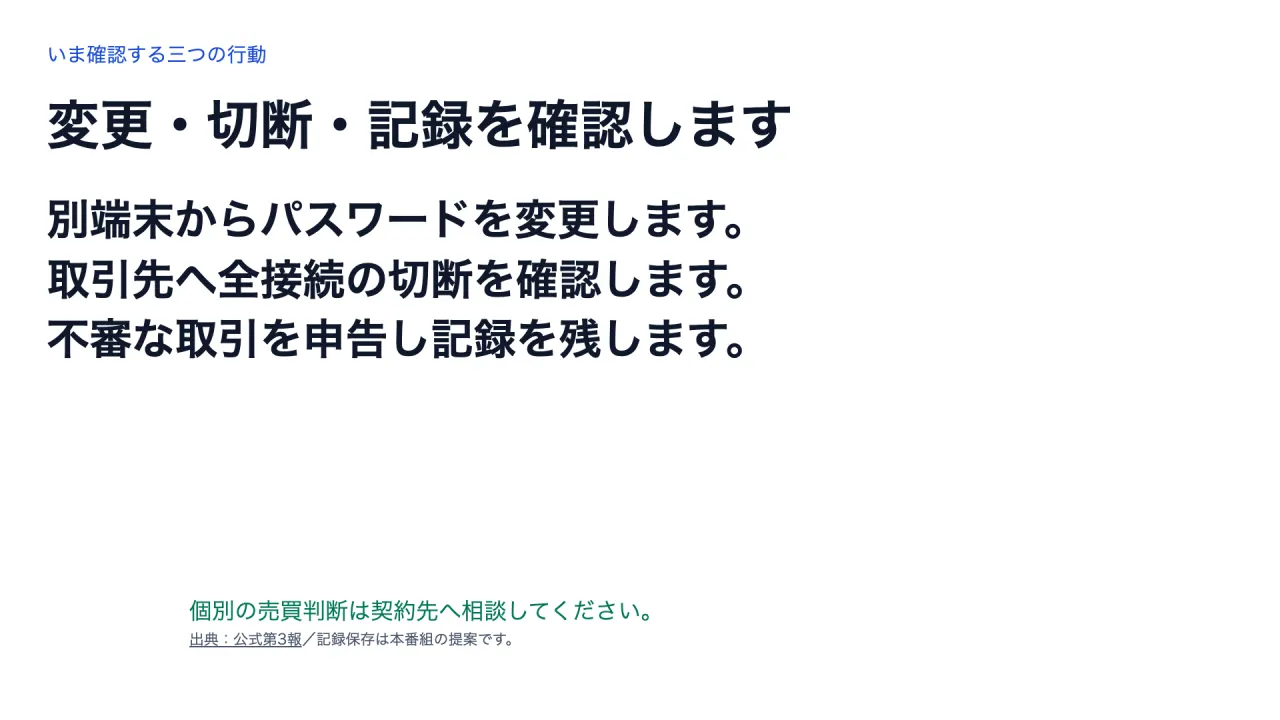
Therefore, GMO issued an urgent technical advisory: users must not only rotate passwords, but also verify the complete revocation of all active sessions across all connected brokerages. If a broker’s web console does not provide a “Terminate All Active Sessions” button, users must contact broker operational desks directly to mandate administrative disconnection.
| Operational Phase | Technical Action | System Owner | Critical Invariant |
|---|---|---|---|
| Phase 1: Quarantine | Emergency shutdown of virtual instances | Cloud Provider (GMO) | Halts lateral network traversal and further file scraping |
| Phase 2: Credential Rotation | Password change via isolated clean terminal | End User / Trader | Blocks threat actor from establishing future logins |
| Phase 3: Session Revocation | Forceful invalidation of active sessions and tokens | Upstream Brokerage / FX Firm | Terminates existing active connections held by attackers |
| Phase 4: Trade Audit | Reconciliation of trade ledgers and execution logs | User & Broker Desk | Identifies unauthorized market positions and realized losses |
Additionally, trading firms often maintain separate credential pairs for web management portals versus desktop trading terminals (e.g., MetaTrader client terminals). Changing the web portal password while leaving desktop terminal passwords unaltered leaves accounts completely exposed.
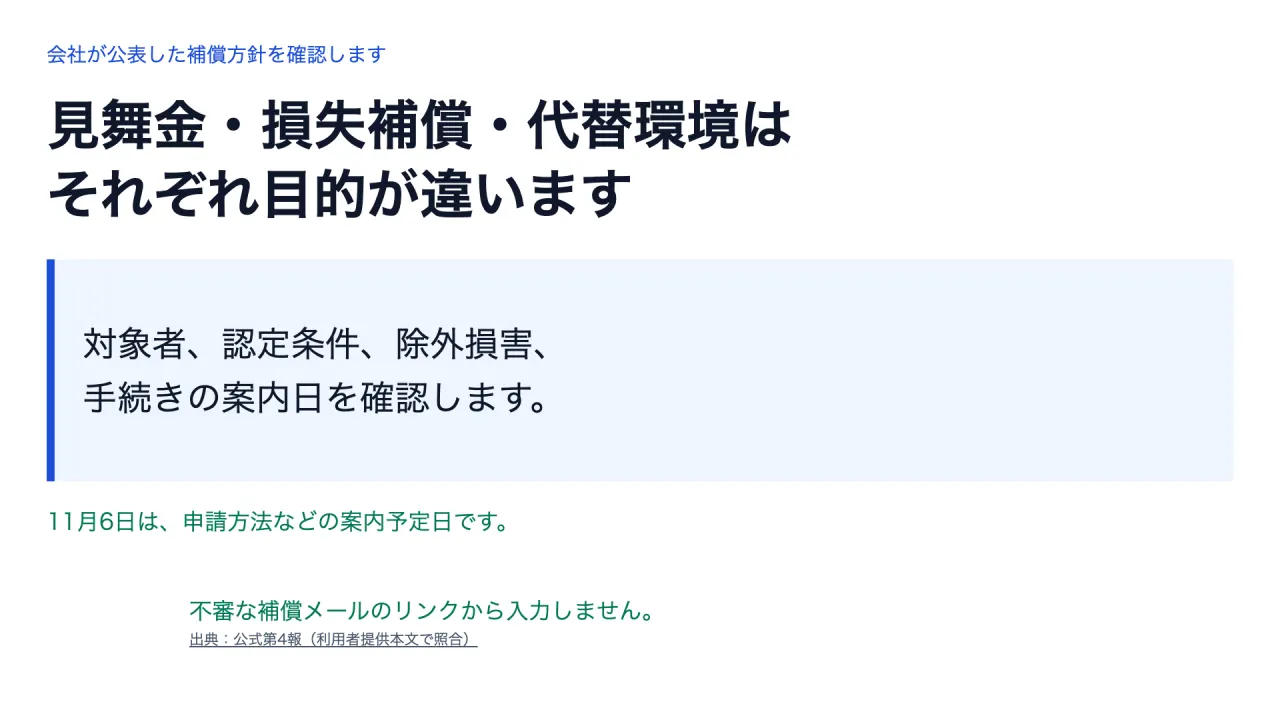
6. Structure of Remedies: Solatium, Trade Loss Compensation, and Platform Migration
In Report 4, GMO outlined a tripartite compensatory framework, establishing distinct parameters for each remedy.
1. Universal Solatium (Token of Apology)
- Amount: A flat 5,000 JPY paid to all current active subscribers.
- Eligibility: Granted automatically regardless of whether an individual subscriber incurred unauthorized access or financial losses.
- Timeline: Details regarding payment collection procedures scheduled for dispatch to registered emails by October 30, 2026 (23:59 JST).
2. Realized Trade Loss Compensation
- Scope: Covers direct realized losses (execution spread losses, transaction fees) resulting specifically from unauthorized transactions recognized by GMO’s investigation as caused by the breach.
- Exclusions: Explicitly excludes market fluctuation losses on legitimate positions, lost profits / opportunity costs (e.g., missed trading opportunities during server downtime), and indirect damages.
- Offset Mechanism: Any refunds or cancellations issued directly by upstream brokerages will be deducted from the compensatory settlement.
- Timeline: Application guidelines, required evidentiary documentation, submission windows, and payout schedules scheduled for announcement by November 6, 2026. (Crucially, November 6 represents the announcement date of the filing process, not the submission deadline).
3. Alternative Infrastructure Migration
- Remedy: Rather than restarting the compromised legacy infrastructure, GMO offered subscribers free migration to an independently managed, architecturally isolated cloud platform for a period of six months.
- Governance: Migration requires explicit subscriber consent. Users must evaluate operational differences, system compatibility, and subsequent commercial terms before consenting.
7. Legal and Governance Delineation: Active Cyber Defense in Perspective
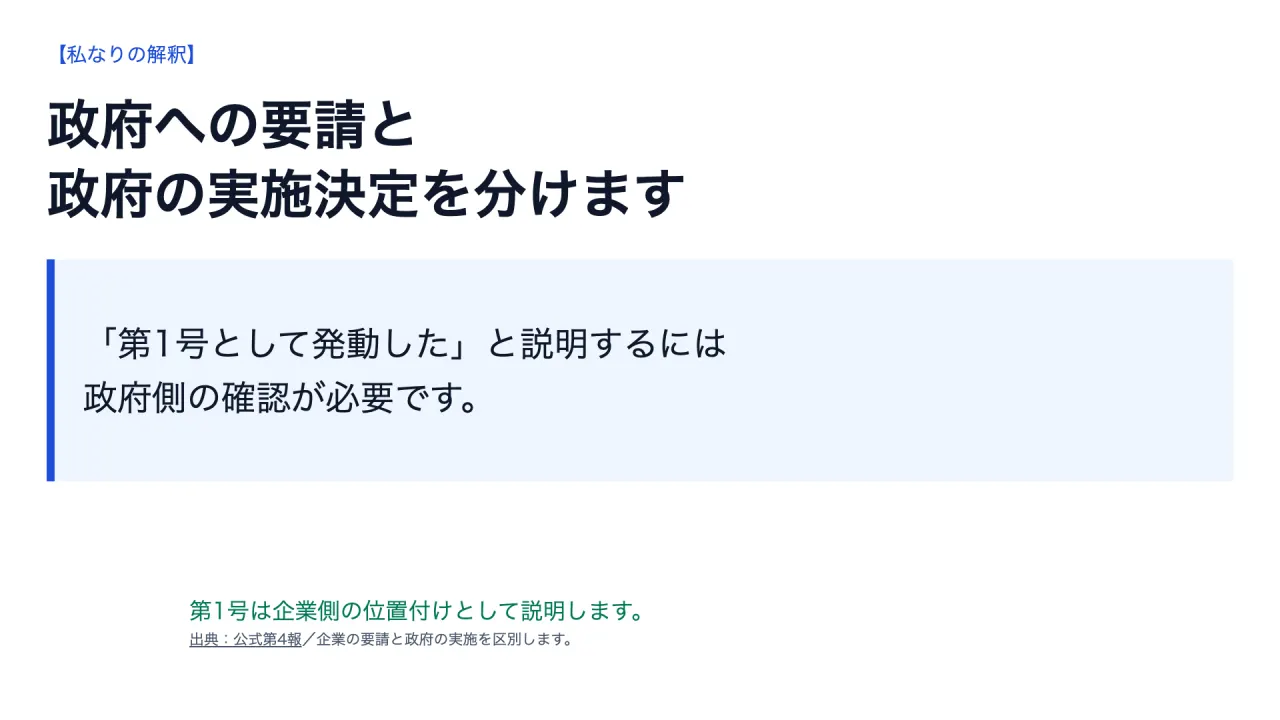
A widely debated element of Report 4 was GMO’s statement that it positioned the incident as the first case under Japan’s Active Cyber Defense (能動的サイバー防御) framework, submitting an emergency appeal to government authorities.
Corporate risk officers and policy analysts must maintain strict legal precision:
- A corporate request does NOT constitute a government determination.
- GMO publicly stated its corporate posture in requesting government intervention; this does not mean state cybersecurity authorities formally designated the incident as “Case Number One”, nor does it indicate that military or intelligence agencies launched counter-cyber operations against the adversary’s infrastructure.
Active Cyber Defense legislation in Japan establishes strict statutory criteria, oversight mechanisms, and designated operational boundaries regarding state surveillance and neutralizing measures against foreign threat infrastructure. Describing a company’s petition is an account of corporate crisis management, not a statutory finding of state action.
Similarly, an organization’s disclosure of an extortion note does not authenticate the adversary’s capabilities or nation-state affiliation. Claims regarding compromised victim totals or advanced exploits must be evaluated through verified digital forensics rather than extortion demands.
8. Enterprise Incident Response Playbook: Beyond Password Changes
The GMO Desktop Cloud breach exposes a universal architectural vulnerability for organizations that manage external credentials or run automated workloads in shared cloud environments.
To defend enterprise infrastructure against similar supply-chain compromises, security leaders should institute a three-stage containment protocol:
Stage 1: The Three-Way Containment Protocol (Halt, Rotate, Revoke)
When a cloud compute provider issues an intrusion alert:
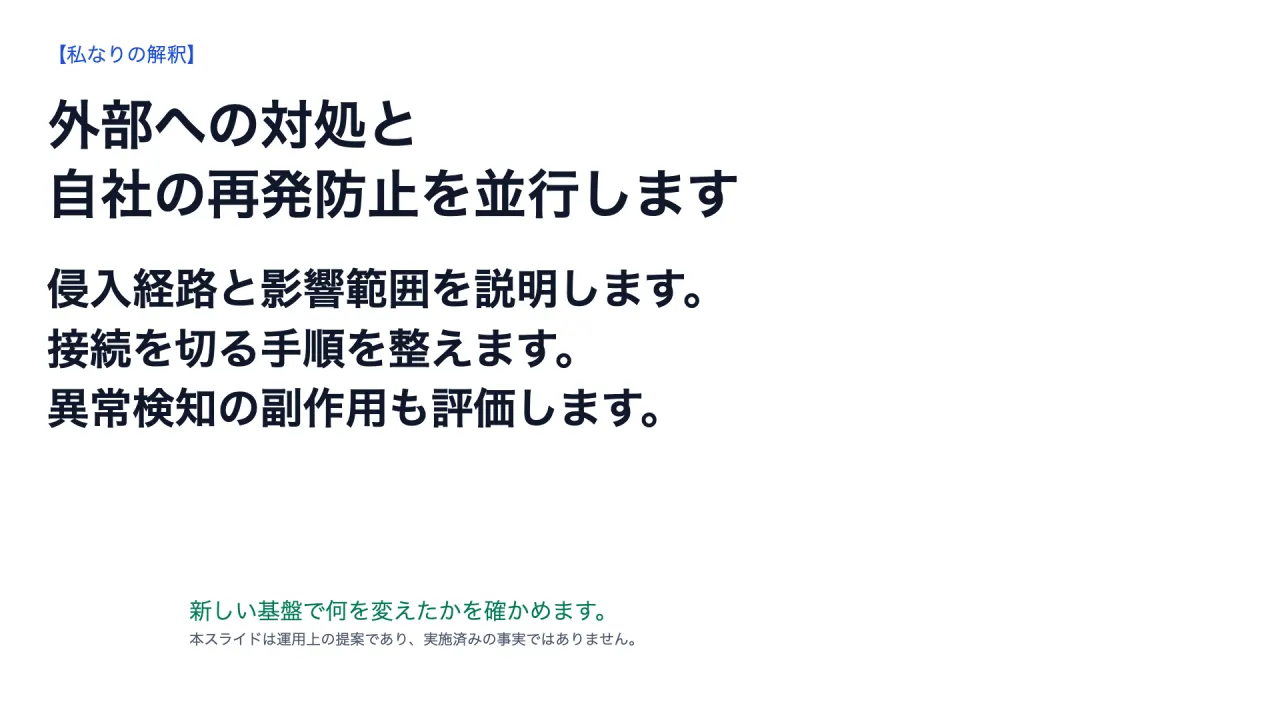
- Halt Instances: Power down exposed workloads to prevent data exfiltration.
- Rotate Master Credentials: Change account passwords from an uncompromised, physically distinct device (e.g., an offline corporate mobile phone).
- Sever Active Sessions: Force-revoke all active sessions, API keys, and bearer tokens across upstream service providers. Do not rely on password changes to cascade into session termination.
Stage 2: Audit Logs and Maintain Independent Ledgers
Export and archive external trading receipts, transaction IDs, and broker confirmation emails to offline storage. If an adversary tampers with local logs, independent external receipts provide the definitive audit trail required to validate compensatory claims.
Stage 3: Architectural Separation of Read and Write Roles
Modern automated systems should not utilize root trading credentials for automated data collection. Systems tracking market movements should operate on restricted, read-only API keys incapable of dispatching orders or initiating capital withdrawals. High-risk write operations must be ring-fenced behind dedicated microservices with strict multi-factor authentication (MFA) and anomaly thresholds.
Incident response is not measured by the speed with which a company claims resolution, but by the rigor with which it verifies the severance of active adversary access.
Primary Sources and References
- GMO Internet Group Official IR Disclosure (October 23, 2026): Notice Regarding Unauthorized Access to Onamae.com Desktop Cloud — GMO IR Library PDF
- Onamae.com Security Notice (Report 1, October 23, 2026): First Security Alert on Desktop Cloud Unauthorized Access — Onamae.com News Article 11584
- GMO Internet Group Security Alert (Report 3, October 23, 2026): Unauthorized Use of Trading Accounts and Session Disconnection Advisory — GMO Group Alert 20261023
- GMO Internet Group Security Alert (Report 4, October 24, 2026): Confirmation of Data Exfiltration, Solatium/Compensation Framework, and Government Consultation — GMO Group Alert 20261024
- Consuloji Deep Dive Video (Japanese): パスワードを変えたら対応完了なのか。金融口座の鍵と接続を分ける — Watch on YouTube