The Enterprise Guide to Modern LLM Selection: Commercial Flagships, Open-Weight Realities, and the 17.41-Second Latency Gap
A comprehensive benchmark and architectural breakdown of OpenAI GPT-6, Anthropic Claude 5.5, and Google Gemini 4 versus DeepSeek, Qwen, and MiniMax M3.1 Flash—evaluating pricing from $0.15 to $50 per million tokens, the 17.41s thinking latency cliff, and Article 28 cross-border data governance.
By Consul Oji | Enterprise Tech & AI Deep-Dive
Watch / Listen to the Full Episode (Japanese Audio): Frontier vs Open-Weight LLM Production Guide
Executive Summary: The Myth of the Omnipotent Frontier Model
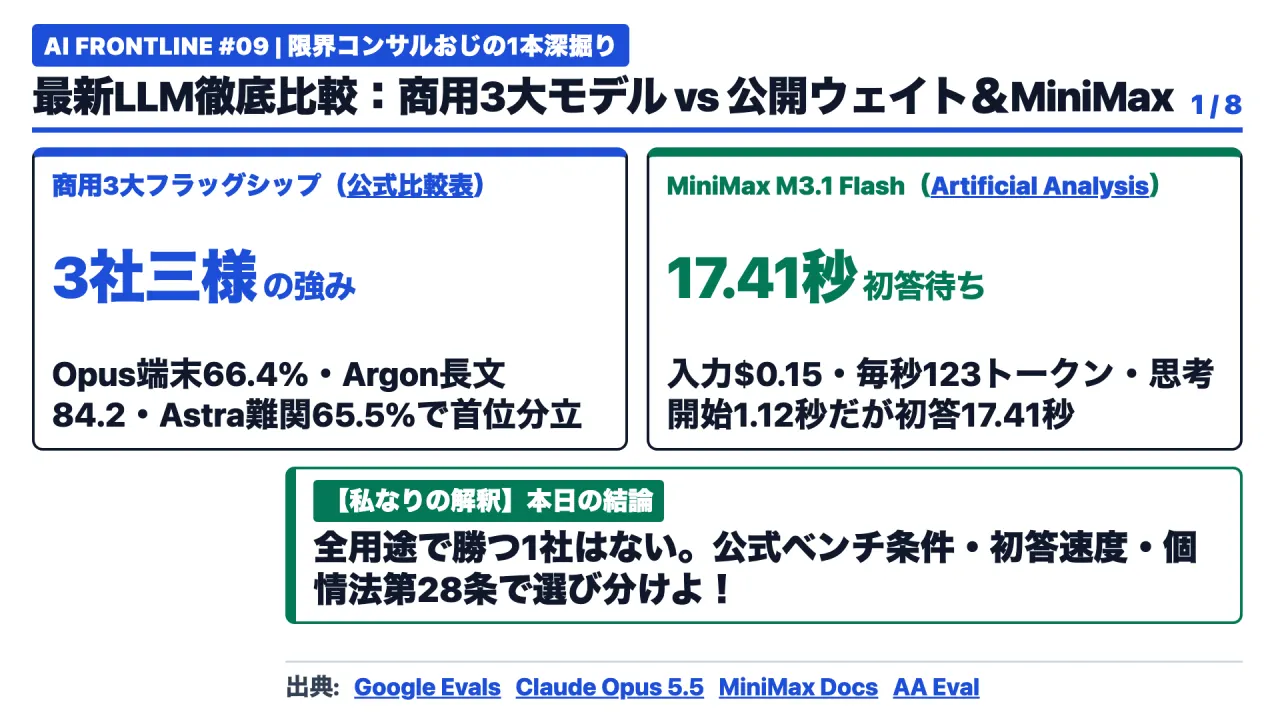
Across enterprise engineering organizations, technical leadership frequently seeks a single foundation model to consolidate their artificial intelligence infrastructure. However, an analysis of technical documentation, independent benchmark audits, and primary research reveals an unequivocal reality: no single model dominates across all domains.
In terminal-driven autonomous software engineering, Anthropic Claude Opus 5.5 establishes the ceiling with a 66.4% mark on Terminal-Bench 4.0. In native multimodal ingestion and long-context graph traversal, Google Gemini 4 Argon achieves an 84.2 F1 score on the million-token GraphWalks benchmark. For complex scientific deduction and software verification, OpenAI GPT-6 Astra leads commercial alternatives with 65.5% on FrontierSWE v2.
Concurrently, open-weight and budget inference providers have challenged closed-source pricing. DeepSeek-V4.1-Flash-1017 and MiniMax M3.1 Flash offer API pricing starting at $0.15 per million input tokens—a thirty-three-fold discount compared to closed frontier flagships. Yet these low-cost endpoints introduce critical architectural trade-offs. Measurements from Artificial Analysis demonstrate that while MiniMax M3.1 Flash achieves an initial Time to First Token (TTFT) of 1.12 seconds, its mandatory reasoning architecture enforces an average latency of 17.41 seconds before the first answer token emerges.
Navigating this bifurcated landscape requires technical leaders to evaluate four architectural primitives: parameter activation mechanics, dual-metric latency profiles, evaluation harness discrepancies, and regulatory boundaries such as Japan’s Act on the Protection of Personal Information (APPI) Article 28.
1. The Four Foundational Pillars of Modern Model Evaluation
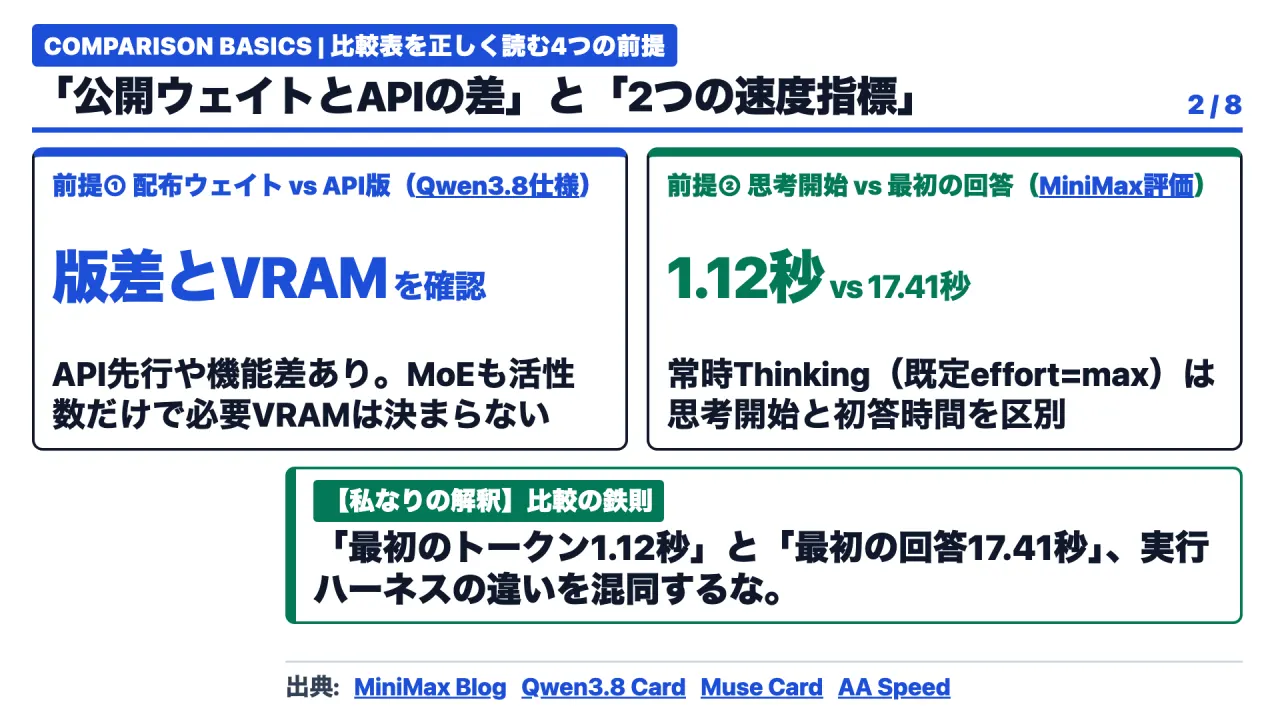
Before comparing specific model checkpoints, engineering teams must establish precise technical taxonomy to avoid misleading marketing claims:
- Open-Weight Deployments versus API-Only Realities: True open-weight models distribute trained tensor weights for private infrastructure hosting. However, delivery schedules and capabilities often diverge. MiniMax M3.1 Flash debuted as an API with weights deferred, while Alibaba Qwen 3.8 exhibits capability gaps between commercial API endpoints (Qwen3.8-Max with multimodal tooling) and downloadable base weights.
- Total versus Active Parameters in Mixture-of-Experts (MoE): Sparse MoE architectures route tokens through specialized expert sub-networks. Meta Muse Spark Open possesses 816 billion total parameters but activates only 42 billion parameters per forward pass. While runtime FLOPs and inference speed track the 42B active count, memory allocation does not. The complete 816B parameter structure must reside in high-bandwidth memory, requiring at least 700GB VRAM in NVFP4 precision and over 2TB in BF16. Active parameters determine runtime compute; total parameters dictate hardware capital expenditure.
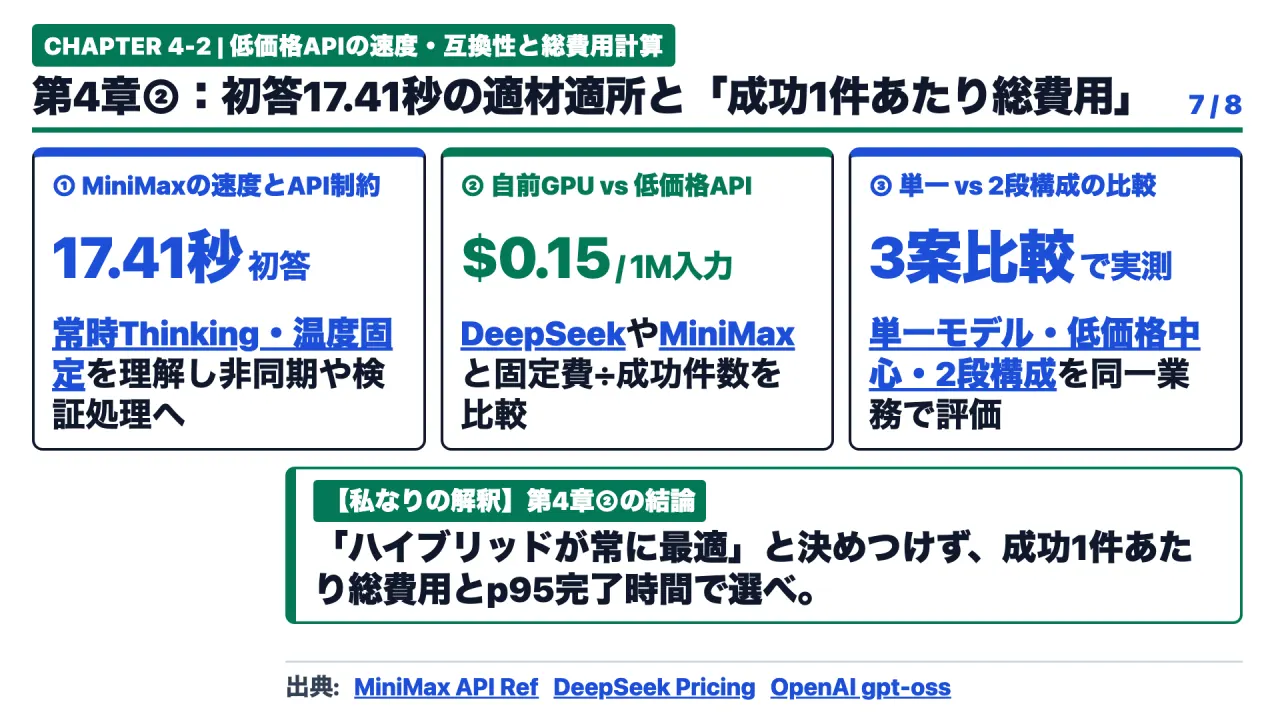
- Time to First Token (TTFT) versus Time to First Answer Token: In reasoning models with internal scratchpads, standard TTFT obscures user-perceived responsiveness. TTFT measures the latency to generate the initial internal reasoning token. Time to First Answer Token measures when the model concludes internal thinking and emits the first visible solution token. MiniMax M3.1 Flash achieves a 1.12-second TTFT, but its default maximum reasoning effort delays the first answer token to 17.41 seconds.
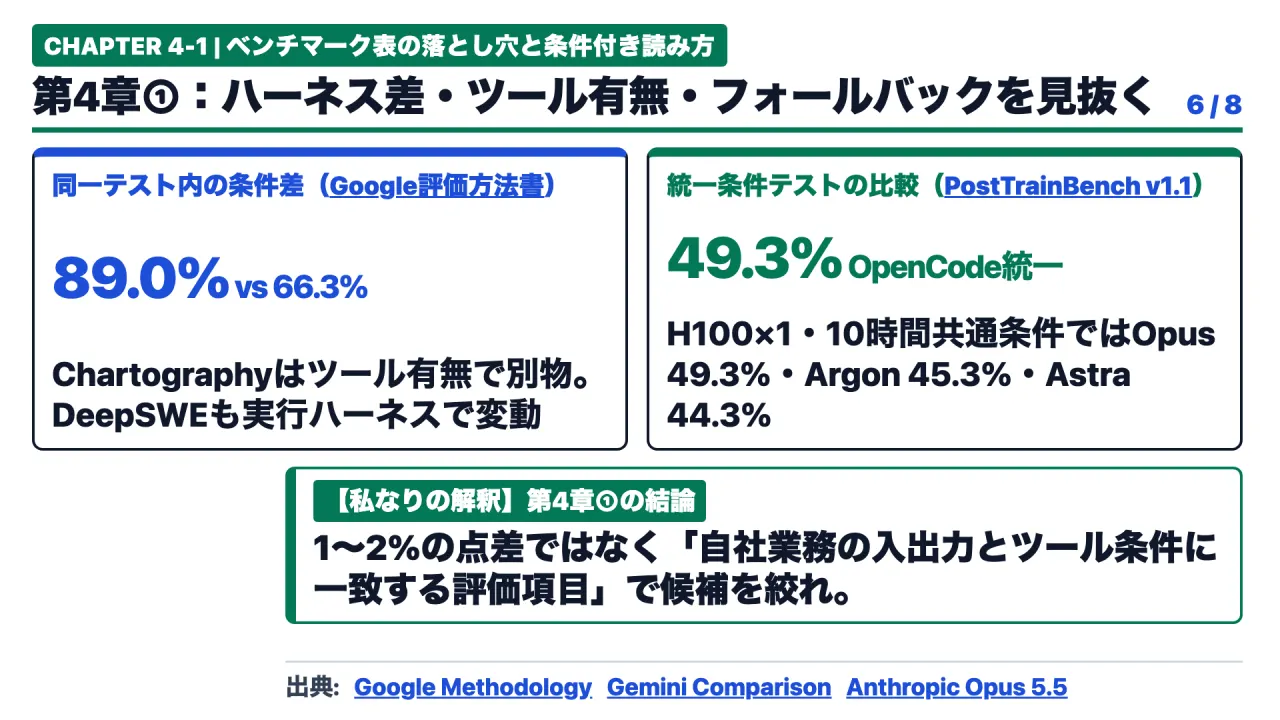
- Evaluation Harness Discrepancies and Tool Environments: Benchmark scores vary substantially based on scaffolding and tool access. Claude Opus 5.5 scores 66.3% on Chartography without external tools, but reaches 89.0% when equipped with programmatic calculation tools. Enterprise model evaluation requires testing under identical production scaffolding rather than relying on vendor whitepapers.
2. The Commercial Frontier Triumvirate: OpenAI, Anthropic, and Google DeepMind
The proprietary tier remains anchored by three primary providers, each optimized for distinct operational profiles:
2.1 OpenAI: GPT-6 Astra for Frontier Reasoning and GPT-6.1 Sol for Scale
OpenAI segments its commercial offering into specialized intelligence and high-volume routing:
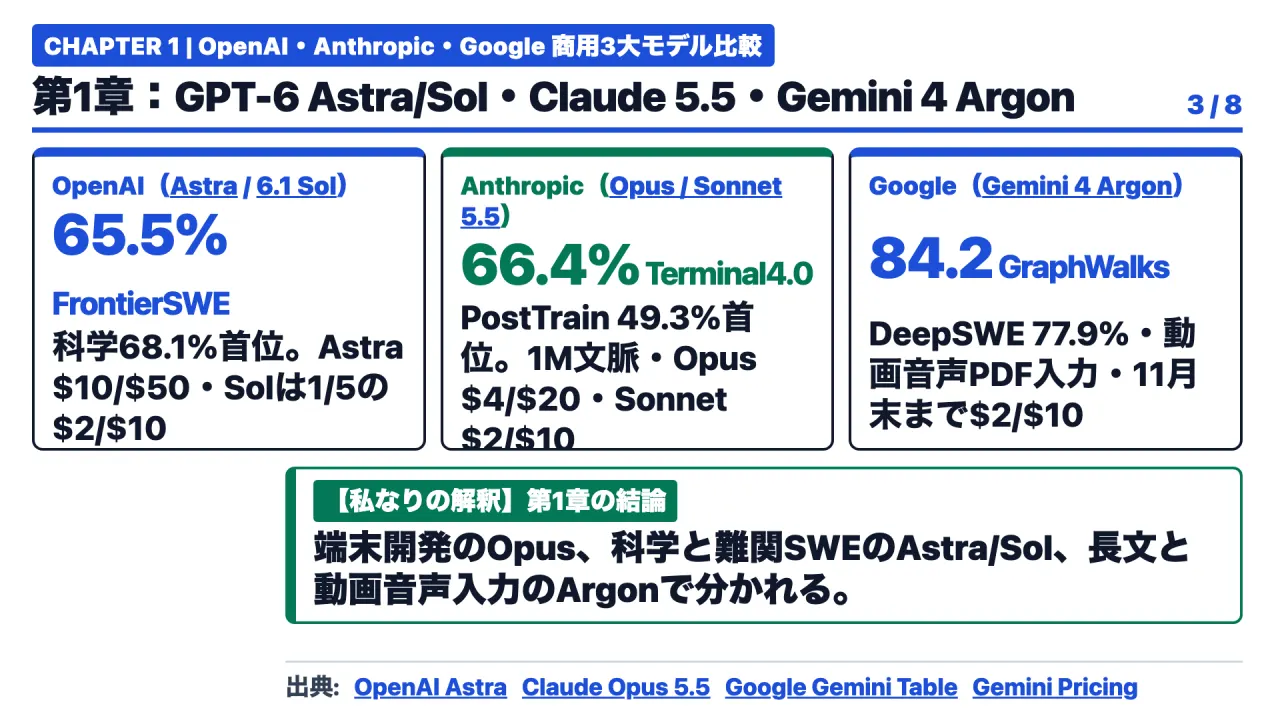
- GPT-6 Astra: Priced at $10.00 input and $50.00 output per million tokens, Astra targets difficult software engineering and formal scientific reasoning, leading FrontierSWE v2 at 65.5% and Terminal-Bench Science at 68.1%.
- GPT-6.1 Sol: Priced at $2.00 input and $10.00 output ($0.10 for cached reads), Sol delivers an 80% cost reduction for high-throughput classification and retrieval pipelines.
- Open-Weight Complement: OpenAI provides the gpt-oss family (120B and 20B parameters) under Apache 2.0 for private hosting.
2.2 Anthropic: Claude Opus 5.5 for Autonomous Agentic Engineering
Anthropic standardizes its lineup across a 1-million-token context window with up to 128,000 output tokens:
- Claude Opus 5.5: Priced at $4.00 input and $20.00 output ($0.20 cache read), Opus 5.5 dominates terminal-driven software development, achieving 66.4% on Terminal-Bench 4.0 (surpassing Astra’s 57.9%-58.2% and Argon’s 57.4%) and 49.3% on PostTrainBench v1.1 across ten-hour model training tasks on an H100 GPU using OpenCode.
- Claude Sonnet 5.5: Priced at $2.00 input and $10.00 output, Sonnet 5.5 serves as a reliable workhorse for automated refactoring and pull-request auditing.
- Constraints: Anthropic models natively ingest text and images but omit direct audio and video streams. Evaluation suites also incorporate automated safety fallbacks to earlier checkpoints.
2.3 Google DeepMind: Gemini 4 Argon for Massive Multimodal Context
Google DeepMind positions Gemini 4 Argon as its flagship multimodal engine:
- Multimodal Leadership: Argon natively processes text, audio, video, image, and PDF inputs. In million-token context exploration, it scores 84.2 F1 on GraphWalks (surpassing Astra at 71.8 and Opus at 66.8) and achieves 77.9% on DeepSWE v1.1.
- Pricing Dynamics: Argon carries introductory pricing of $2.00 input and $10.00 output through November 30, 2026, transitioning to $4.00 input and $20.00 output.
- Constraints: Argon trails competitors on terminal tasks (57.4% on Terminal-Bench 4.0; 55.0% on FrontierSWE) and lacks prompt caching in its initial release. For on-premises hosting, Google provides Gemma 4 (2B to 31B parameters) under Apache 2.0.
| Commercial Model | Input / Output (per 1M) | Cache Read | Context | Terminal-Bench 4.0 | FrontierSWE v2 | Native Audio/Video |
|---|---|---|---|---|---|---|
| OpenAI GPT-6 Astra | $10.00 / $50.00 | Variable | 1M+ | 57.9% - 58.2% | 65.5% | API Dependent |
| OpenAI GPT-6.1 Sol | $2.00 / $10.00 | $0.10 | 1M | General tier | Production tier | No |
| Anthropic Claude Opus 5.5 | $4.00 / $20.00 | $0.20 | 1M (128K out) | 66.4% | Competitive | Images only |
| Anthropic Claude Sonnet 5.5 | $2.00 / $10.00 | $0.10 | 1M (64K out) | High capability | Standard tier | Images only |
| Google Gemini 4 Argon | $2.00 / $10.00* | Unsupported | 1M | 57.4% | 55.0% | Full Multimodal |
*Introductory pricing through November 30, 2026 ($4.00 / $20.00 standard).
3. The Open-Weight Vanguard and Ultra-Low-Cost Inference Providers
Parallel to commercial frontier development, open-weight consortia and specialized inference platforms have transformed enterprise cost economics:
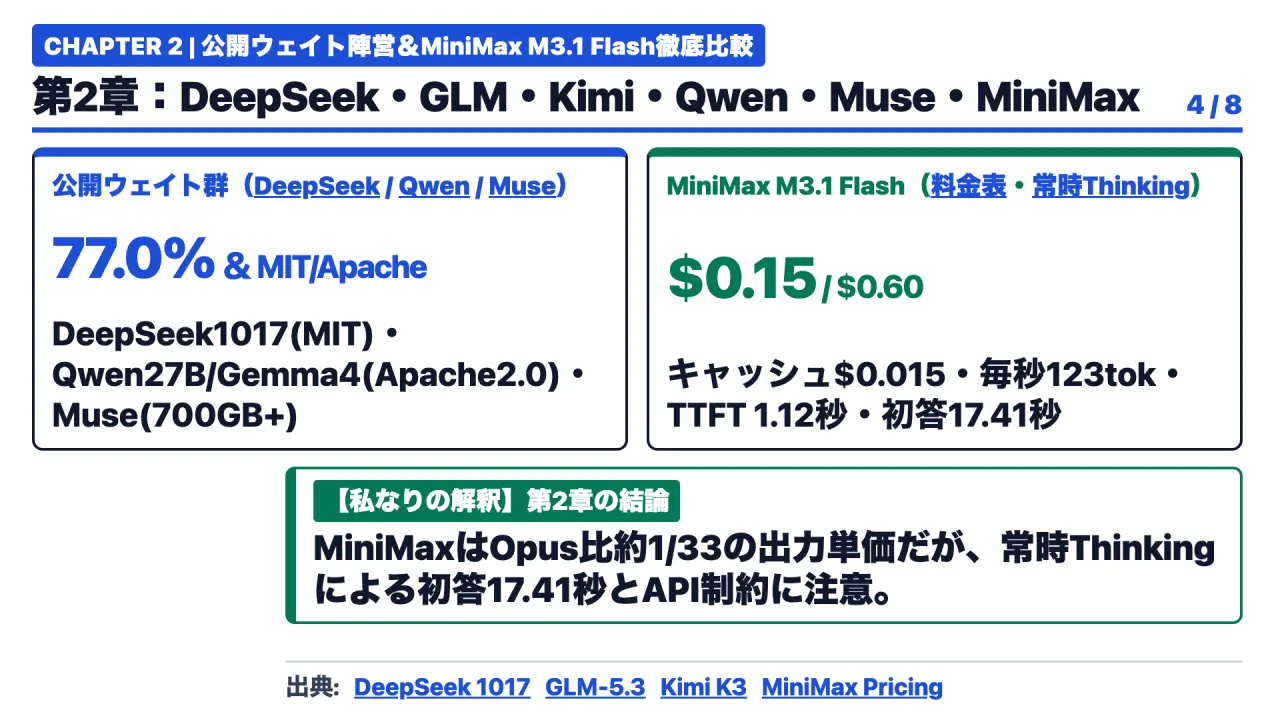
- DeepSeek-V4.1-Flash-1017: Released under a permissive MIT license, DeepSeek-V4.1 supports 1-million-token context and image inputs. It achieves 77.0% on DeepSWE (Mini-SWE-V2) and 42.3% on Terminal-Bench 4.0. API pricing ranges from $0.15 to $0.30 input and $0.60 to $1.20 output per million tokens. Its custom tokenization bypasses standard Jinja templates.
- GLM-5.3 and Kimi K3: GLM-5.3 scores 66.9% on DeepSWE under a proprietary license. Moonshot AI’s Kimi K3 features 2.8 trillion total parameters (104 billion active), scoring 67.5% on DeepSWE and 93.5% on GPQA, but its cluster footprint precludes commodity enterprise hosting.
- Alibaba Qwen 3.8 and Google Gemma 4: For private hosting, Qwen3.8-27B (Apache 2.0) supports vision and video with an 89.2% GPQA score. Google Gemma 4 (2B to 31B parameters, Apache 2.0) scores 84.3% on GPQA in its 31B checkpoint, with compact variants supporting edge deployment.
- Meta Muse Spark Open and NVIDIA Nemotron 3 Ultra: Meta Muse Spark Open delivers 816 billion parameters (42 billion active) with multimodal support and strong hallucination resistance, but demands 700GB VRAM in NVFP4 or 2TB in BF16 under a restrictive license. NVIDIA Nemotron 3 Ultra (550B total, 55B active) requires sixteen H100 or eight H200 GPUs in BF16.
- MiniMax M3.1 Flash: Launched on October 19, 2026, MiniMax M3.1 Flash lists pricing at $0.15 input, $0.60 output, and $0.015 cached per million tokens—thirty-three times cheaper than Opus 5.5. Supporting 1-million-token context and multimodal inputs, it reports 73.7% on DeepSWE and 76.2 on BankerToolBench. However, it enforces mandatory thinking (disabling returns an HTTP 400 error) with default maximum effort. Artificial Analysis benchmarks reveal that while initial TTFT is 1.12 seconds, Time to First Answer Token takes 17.41 seconds at 123 tokens per second. The API also locks temperature to 1.0, top-p to 0.95, and tool choice to auto.
4. Primary Research, Legal Boundaries, and Terms-of-Service Constraints
Deploying modern LLMs requires balancing empirical research, intellectual property boundaries, and cross-border regulatory compliance.
4.1 Reinforcement Learning versus Knowledge Distillation
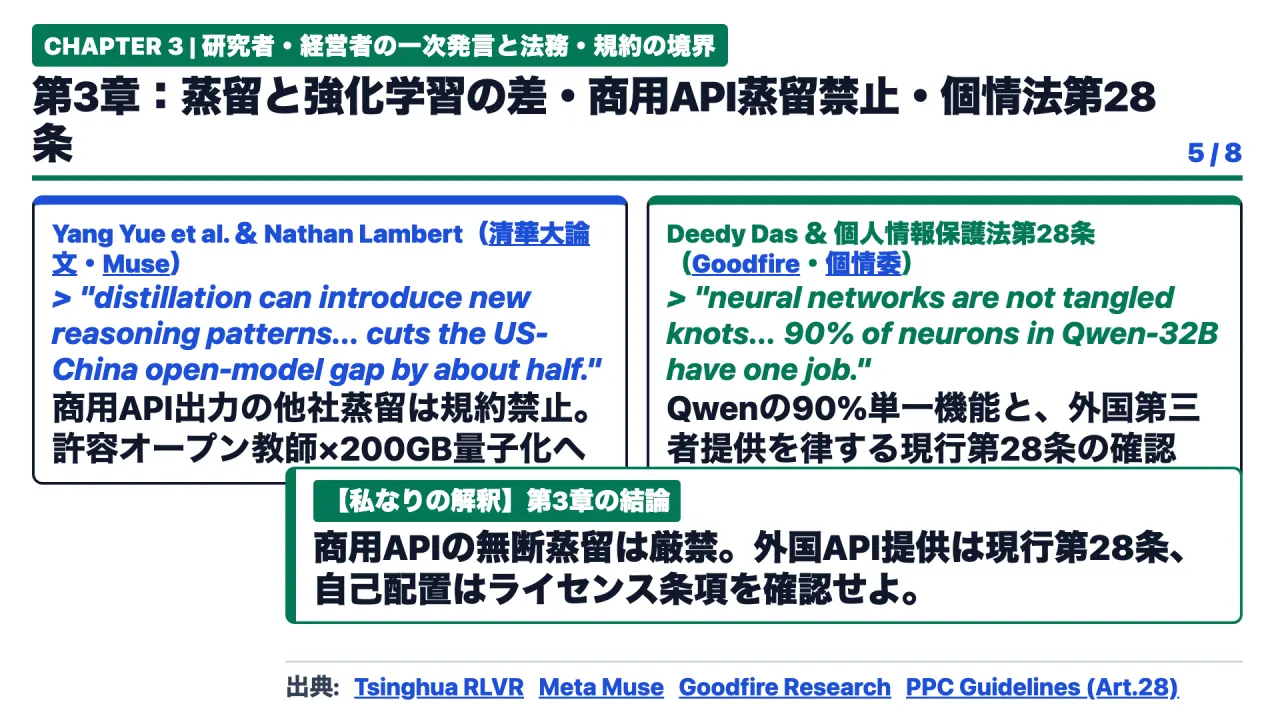
Research from Yang Yue and colleagues at Tsinghua University (arXiv:2504.13837) clarifies the mechanics of model specialization:
Models optimized purely through reinforcement learning excel at greedy pass@1 evaluation by exploring self-generated paths. However, as evaluation budgets expand to pass@k for higher k, the un-tuned base model matches or exceeds the RL-tuned variant. In contrast, knowledge distillation from superior teacher models introduces novel reasoning representations that genuinely expand exploratory capability.
For enterprise teams, refining open-weight models purely through self-play yields diminishing returns on edge cases; capability leaps require distillation from advanced teachers.
4.2 The Commercial API Distillation Prohibition
This technical reality collides with contractual terms: agreements from OpenAI, Anthropic, and Google DeepMind explicitly prohibit using API outputs to train or distill competing models. Extracting synthetic reasoning datasets from Claude Opus 5.5 or GPT-6 Astra violates contractual terms and risks immediate API termination. Organizations pursuing distillation must rely on permissively licensed open teacher models (such as Apache 2.0 or MIT weights) or proprietary curated data.
4.3 Community Tooling and Interpretability
Open-source tooling continues to accelerate deployment velocity. Nathan Lambert noted that Meta Muse halved the performance gap between American and Chinese open models, while Hugging Face CEO Clement Delangue observed that community quantization frameworks like llama.cpp allowed massive MoE models to run within 200 gigabytes of memory on workstations within hours of release. Concurrently, mechanistic interpretability research from Goodfire AI (Nick Cammarata) analyzed by Deedy Das revealed that 90% of internal features in Qwen-32B are monosemantic, offering enterprise teams unprecedented auditability.
4.4 Data Governance: Japan’s APPI Article 28 Compliance
For multinational enterprises transferring data to offshore inference providers, compliance with Japan’s Act on the Protection of Personal Information (APPI) Article 28 (Restrictions on Provision to a Third Party in an Offshore Country) is mandatory. Internal compliance teams must verify offshore vendor governance, obtain explicit user consent, or deploy Apache 2.0 or MIT models in local private enclaves.
5. Architectural Interpretation: Harness Variations and Latency Realities
Translating benchmark data into robust production architectures requires addressing two critical operational realities.
5.1 Deconstructing Benchmark Harness Variances
Benchmark scores must be interpreted in conjunction with their execution harnesses:
- On Terminal-Bench 4.0, OpenAI reports GPT-6 Astra at 57.9%, while Google DeepMind records 58.2% using an alternate harness.
- Claude Opus 5.5 scores 66.3% on Chartography without tools, but jumps to 89.0% when given programmatic tools.
- DeepSeek-V4.1 achieves 77.0% on DeepSWE via Mini-SWE-V2, while Gemini 4 Argon scores 77.9% via mini-swe-agent.
A 1% to 2% benchmark variance represents harness noise rather than intrinsic architectural superiority. Models must be benchmarked against enterprise-specific task harnesses.
5.2 Managing Two-Speed Response Curves and True TCO
The emergence of low-cost reasoning endpoints like MiniMax M3.1 Flash demands a bifurcated system design:
- Interactive Real-Time Workloads: User-facing copilots and customer service bots cannot tolerate a 17.41-second Time-to-First-Answer delay. These require models with sub-second responsiveness, such as Claude Sonnet 5.5 or GPT-6.1 Sol.
- Asynchronous Deep Reasoning: Batch code refactoring, offline data extraction, and tool loops easily absorb a 17.41-second reasoning delay. In these workflows, MiniMax M3.1 Flash provides exceptional cost efficiency at $0.15 per million input tokens.
Furthermore, teams must evaluate the total cost per verified task rather than nominal token rates. Self-hosting an 800-billion-parameter model incurs substantial GPU capital costs, electricity, and engineering overhead. If cluster utilization remains below thirty percent, fully loaded on-premises costs often exceed commercial API pricing. Similarly, complex hybrid routing pipelines introduce schema translation friction, retry overhead, and latency penalties. Standardizing on a single commercial tier (such as GPT-6.1 Sol or Claude Sonnet 5.5) with aggressive prompt caching often yields a lower total cost of ownership.
6. Production Decision Framework and Implementation Roadmap
Enterprise architects should structure their deployment strategy around four concrete workload archetypes and a three-step implementation process:
6.1 Enterprise Decision Matrix
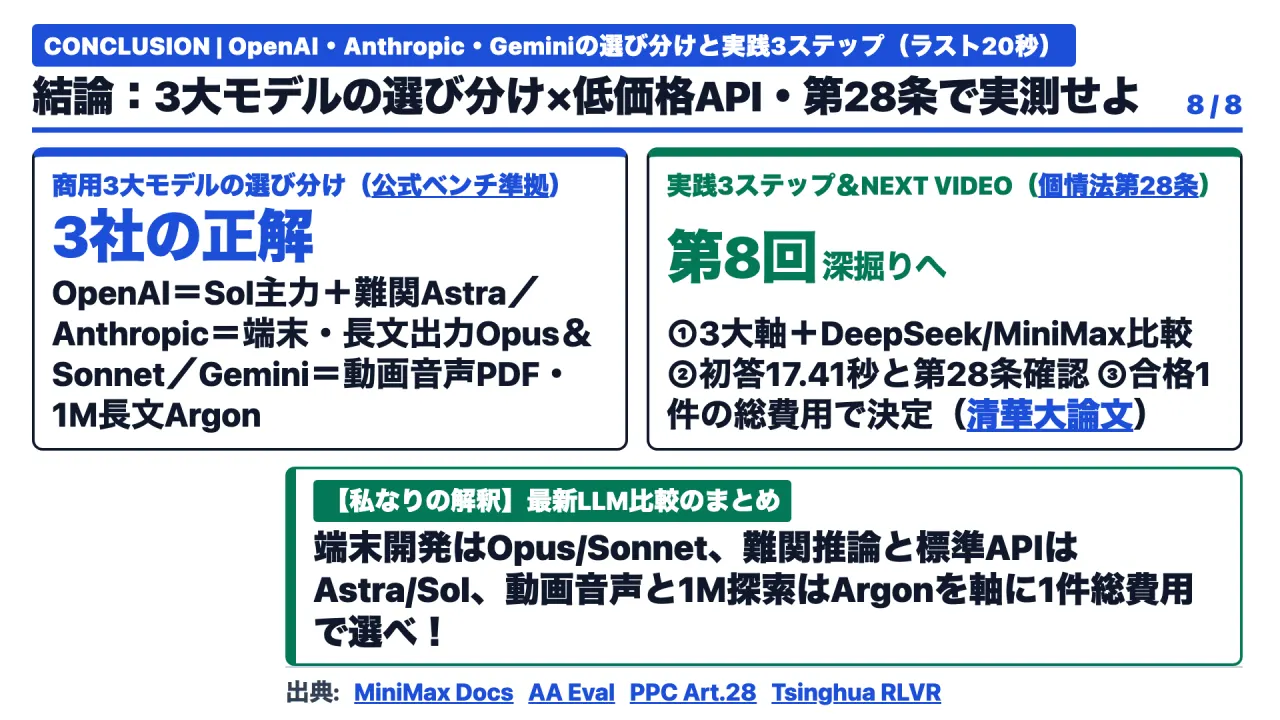
- Frontier Software Engineering and Autonomous Agents: Deploy Claude Opus 5.5 for complex multi-file refactoring and terminal loops, supported by Claude Sonnet 5.5 for high-volume continuous integration tasks.
- Scientific Deduction and Unified API Architectures: Deploy OpenAI GPT-6 Astra for complex reasoning, using GPT-6.1 Sol across production microservices to leverage unified API schemas and prompt caching.
- Multimodal Document Processing and Million-Token Context: Deploy Google Gemini 4 Argon for audio, video, PDF analysis, and massive graph traversal, utilizing Google Gemma 4 for on-premises edge execution.
- High-Volume Asynchronous Batch Processing and Local Compliance: Deploy DeepSeek-V4.1-Flash-1017 or MiniMax M3.1 Flash for cost-sensitive batch jobs where 17-second thinking latencies are acceptable. Deploy Qwen3.8-27B or Gemma 4 within private VPC boundaries to satisfy strict APPI Article 28 data sovereignty requirements.
6.2 The Three-Step Implementation Roadmap
- Step 1: Anchor the Commercial Baseline: Select a primary commercial foundation model (Claude Sonnet/Opus, GPT-6.1 Sol/Astra, or Gemini 4 Argon) based on core workload requirements, configuring prompt templates and context caching.
- Step 2: Profile Dual Latency and Audit Legal Boundaries: Measure both initial TTFT and Time to First Answer Token under production prompt sizes. Conduct legal audits verifying compliance with APPI Article 28 and vendor terms prohibiting model distillation.
- Step 3: Measure Total Cost per Verified Task: Run representative workload batches across candidate models. Evaluate total expenditure against the number of verified, successful completions, accounting for retry rates and human validation. Finalize architectural selection based on cost per completed business outcome.
Primary Sources & References
- OpenAI: GPT-6 Astra Technical Disclosures
- OpenAI: GPT-6.1 Sol Architecture and Pricing
- Anthropic: Claude Opus 5.5 Engineering Release
- Anthropic: System Model Specifications
- Google DeepMind: Gemini Model Portfolio
- Google DeepMind: Gemini 4 Argon Evaluation Methodology
- Google AI for Developers: Gemini Pricing Structure
- DeepSeek: DeepSeek-V4.1-Flash-1017 Model Card
- DeepSeek: API Pricing Schedule
- Zhipu AI: GLM-5.3 Model Documentation
- Moonshot AI: Kimi K3 Model Specification
- Alibaba Cloud: Qwen3.8-2.4T-A95B Repository
- Alibaba Cloud: Qwen3.8-27B Repository
- Meta AI: Muse Spark Open Research Announcement
- Meta AI: Muse Spark Open Model Card
- Google AI: Gemma 4 Architecture Documentation
- NVIDIA: Nemotron 3 Ultra Specification
- OpenAI: gpt-oss Model Distribution Guide
- MiniMax: M3.1 Flash Product Announcement
- MiniMax: API Pricing Documentation
- MiniMax: Text Generation and Reasoning Parameters
- Artificial Analysis: MiniMax M3.1 Flash Latency and Speed Benchmarks
- Tsinghua University: Reinforcement Learning versus Distillation (arXiv:2504.13837)
- Goodfire AI: Feature Monosemanticity in Modern Architectures
- Personal Information Protection Commission (PPC Japan): APPI Article 28 Guidelines
- Google DeepMind: Gemini 4 Argon Specification
- MiniMax: Messages API Reference