When a Single Operator Directs AI Against Over 200 Organizations: Dissecting Unmonitored Endpoints and Stale Credentials in CrowdStrike's Threat Intelligence
CrowdStrike’s analysis of VAPOR PANDA’s ARTEX framework demonstrates how agentic AI expands attack surface reach to 200+ organizations while relying on basic hygiene failures ── unmonitored endpoints and non-rotated credentials ── rather than novel zero-days.
Published: November 1, 2026 | Read time: ~10 min | Watch Video (Japanese)
Executive Summary: Autonomous Attack Scaling and Basic Hygiene Vulnerabilities
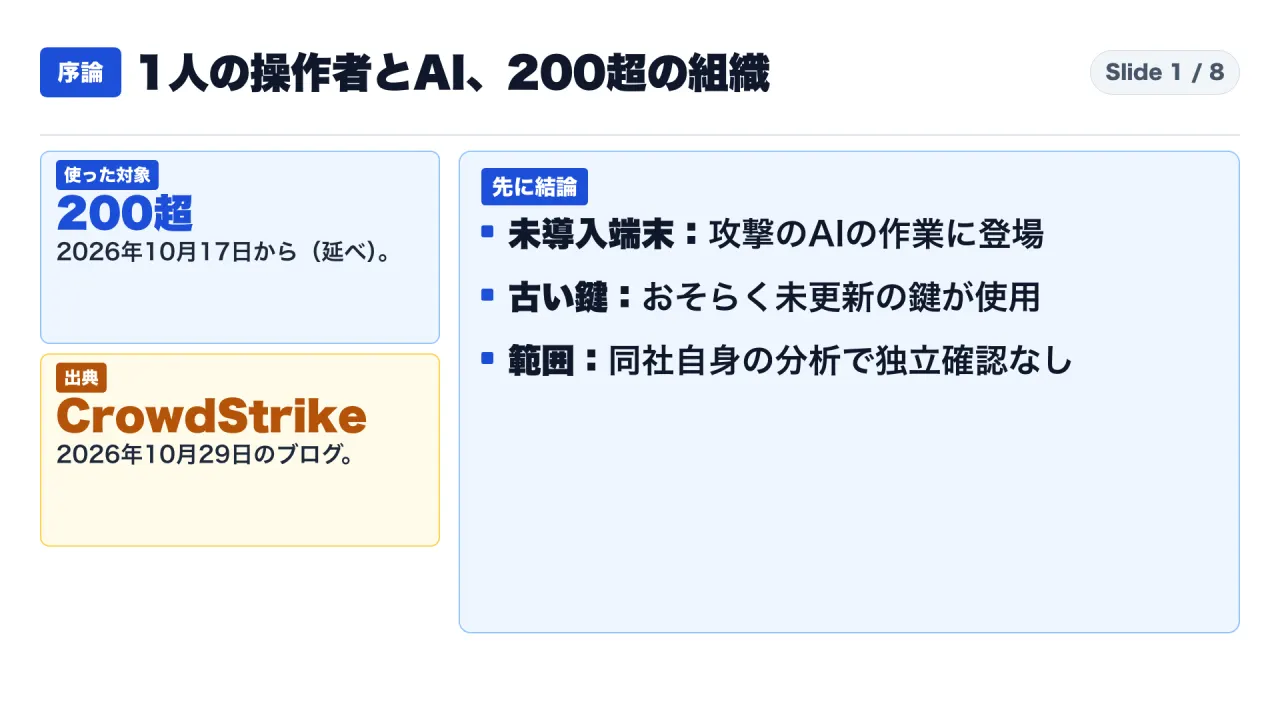
In late October 2026, cybersecurity discourse experienced a surge of sensational headlines claiming that artificial intelligence had begun autonomously breaching hundreds of global enterprises simultaneously. The primary source driving these discussions was a detailed technical threat intelligence report published by CrowdStrike on October 29, 2026, documenting a sophisticated intrusion campaign attributed to the adversary tracked as VAPOR PANDA utilizing an agentic framework designated ARTEX (CrowdStrike Threat Intelligence Blog).
However, a disciplined technical examination of the underlying telemetry and primary sources reveals an operational reality that diverges sharply from speculative commentary:
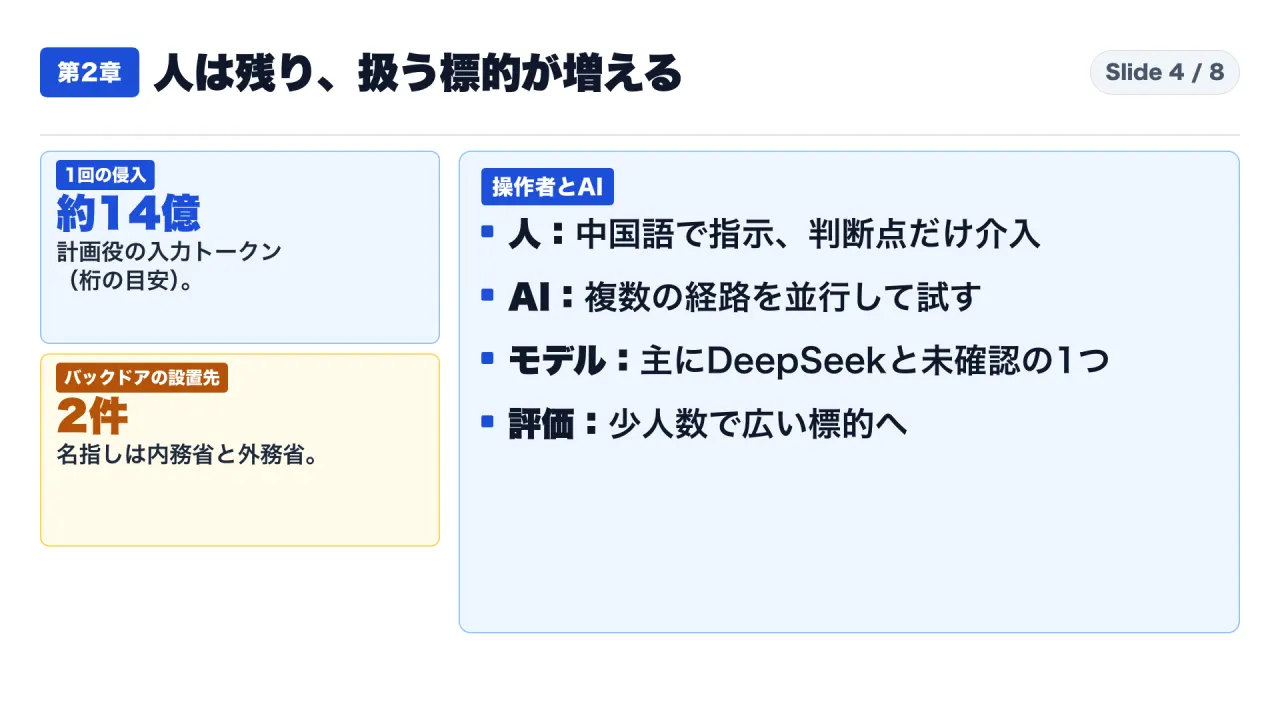
- Deconstructing Aggregate Metrics into Operational Tiers: The widely cited figure of “over 200 organizations” represents the cumulative pool of distinct targets against which the operator initiated ARTEX workflows since October 17, 2026. Crucially, confirmed post-exploitation activity was identified across 9 organizations. Another distinct cohort of at least 12 organizations (including US think tanks and European government entities) faced password spraying and credential reconnaissance, while a separate campaign targeted 19 US entities across pharmaceuticals, semiconductors, defense, nuclear energy, and finance. These figures cannot be casually aggregated or interpreted as 200 confirmed corporate breaches.
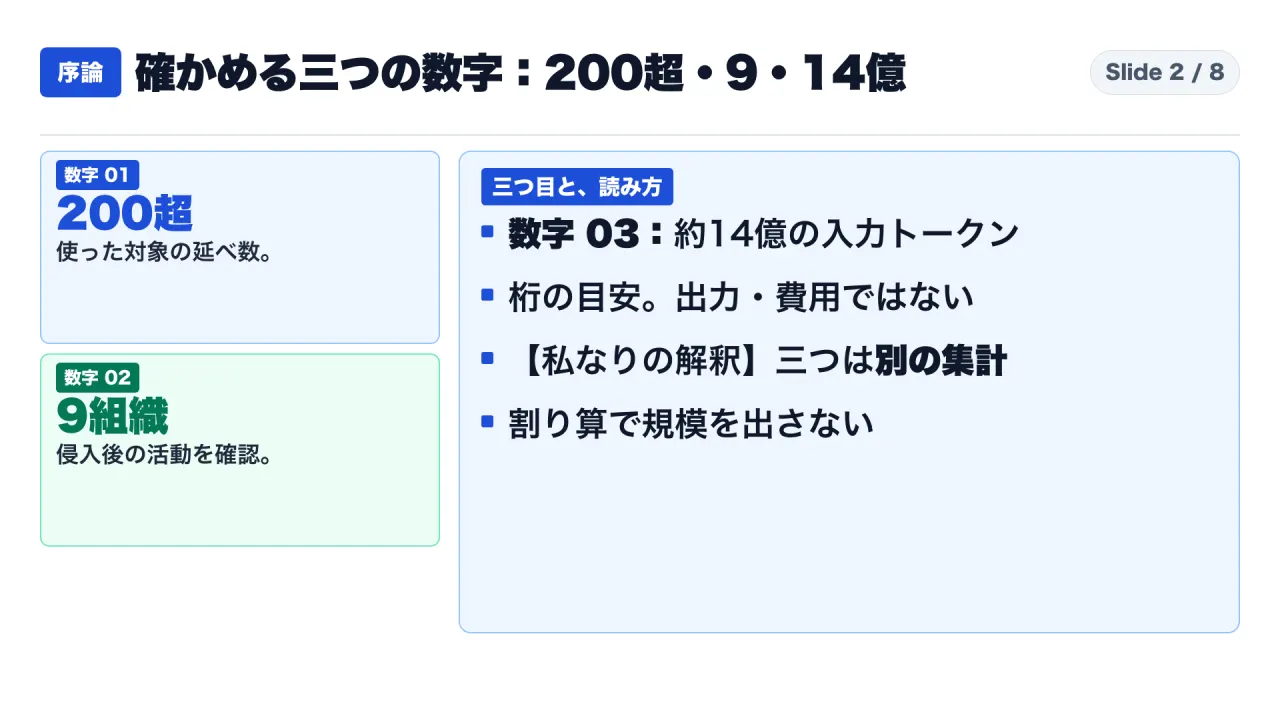
- The Operator-in-the-Loop Model: ARTEX did not operate as a sentient, untethered entity. Recovered session logs establish that a human operator provided high-level task directives in Chinese during standard China Standard Time working hours, intervening only at critical strategic decision points while automated agent graphs orchestrated multi-vector probing.
- Exploitation of Basic Hygiene Over Novel Zero-Days: Rather than relying on zero-day vulnerabilities, the framework systematically exploited fundamental defensive blind spots: specifically, endpoints lacking endpoint detection and response (EDR) sensors and unrotated cryptographic keys salvaged from historical directory exports.
For enterprise Chief Information Security Officers (CISOs), internal audit directors, and IT operations leaders, the critical takeaway is not panic over superhuman AI capability, but immediate, quantifiable reinforcement of internal asset and credential registers.
Methodological Discipline: Distinguishing Observation, Vendor Assessment, and Defensive Strategy
To maintain rigorous analytical fidelity, this analysis categorizes all technical statements into three strict domains:
- Documented Observations: Verifiable facts, configurations, and forensic artifacts explicitly recorded in CrowdStrike’s disclosures or corroborated via external primary disclosures (such as Elastic Security Labs’ October 13, 2023 documentation of the BLOODALCHEMY backdoor).
- Vendor Assessments: Analytical inferences derived by CrowdStrike intelligence specialists (e.g., characterizations of adversary intent, assessments of operational efficiency, or attributions of state-nexus).
- Defensive Strategy & Practical Formulations: Practical methodologies formulated to translate threat disclosures into actionable enterprise audit procedures.
Primary Data Constraints
Readers must account for five structural constraints inherent to this analysis:
- Single-Source Telemetry: Primary observations rely entirely on CrowdStrike’s telemetry from exposed adversary command-and-control (C2) infrastructure; raw backend logs remain proprietary.
- Attribution Boundaries: CrowdStrike tracks VAPOR PANDA as an adversary with an evaluated nexus to China; this analysis notes that attribution as vendor assessment without independent geopolitical adjudication.
- Distinct Campaign Demarcation: CrowdStrike explicitly isolates this campaign from other threat actors leveraging ARTEX-like architectures (such as separate intrusions targeting South Korean financial entities).
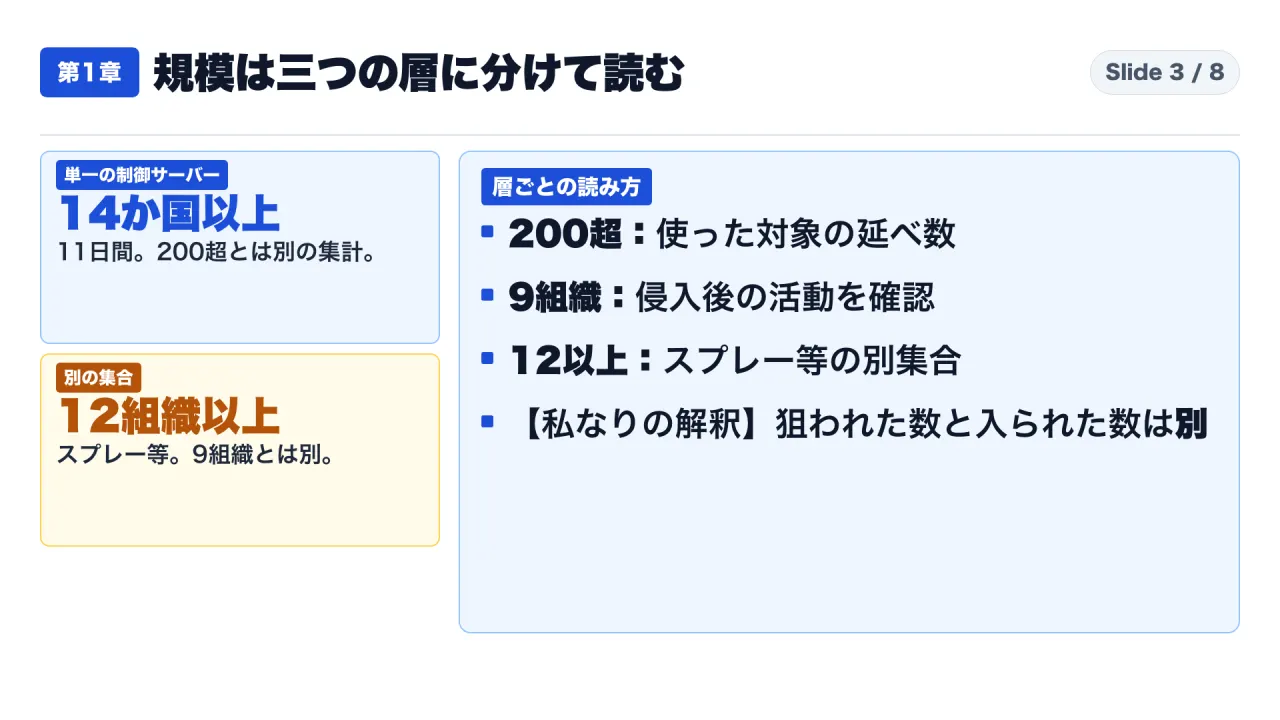
- Token Quantification: The reported compute figure──approximately 1.4 billion input tokens──represents an estimated order of magnitude across multiple planning agents during a single intrusion, excluding output tokens or billing dollar conversions.
- Temporal Anchoring: Primary disclosures date to October 29, 2026, re-verified against live endpoints in November 2026.
1. Dissecting the Metrics: Categorizing Scale Across Three Distinct Layers
When evaluating adversary operations, conflating reconnaissance scanning with confirmed system compromise corrupts enterprise threat prioritization. As illustrated in the structural breakdown, CrowdStrike’s telemetry separates into three non-overlapping cohorts:
| Telemetry Cohort | Exact Scope Recorded in Primary Disclosure | Analytical Classification & Enterprise Meaning |
|---|---|---|
| 200+ Distinct Targets | Cumulative targets engaged by ARTEX workflows between October 17, 2026 and October 29, 2026 | Broad automated scanning and workflow initiation; NOT confirmed breaches |
| 14 Countries | Geographic breadth engaged by a single ARTEX C2 server over an 11-day active window | Multi-jurisdictional targeting; country-by-country breakdown unstated |
| 9 Organizations | Confirmed post-exploitation activity detected by CrowdStrike OverWatch and Intelligence teams | Confirmed network penetration; credential brute-forcing, internal subnet scanning |
| 12+ Organizations | US think tanks, European government ministries subjected to credential reconnaissance | Password spraying, Active Directory directory querying; distinct cohort |
| 19 US Organizations | Specific campaign spanning biopharma, semiconductors, nuclear, defense, and finance | Separate targeted operation; discrete sector focus |
| ~1.4 Billion Input Tokens | Order of magnitude of input compute consumed by planning agents during a single intrusion | Demonstrates multi-agent context ingestion; financial cost not disclosed |
The Myth of Simultaneous Execution
Popular reporting characterized this campaign as “200 organizations attacked simultaneously.” In reality, CrowdStrike’s forensic reconstruction describes an operational pattern of concurrent pipeline execution:
A single operator managed multiple intrusion queues in parallel. While automated sub-agents executed time-consuming tasks (such as port scanning, directory fuzzing, or web application parameter inspection), the operator remained idle or reviewed alerts from parallel threads, intervening only when an agent surfaced a decision fork. “Concurrency” reflects human task multiplexing rather than instantaneous, synchronized compromise.
2. Anatomy of the Operator-Agent Dyad: Framework Architecture and Operational Realities
The ARTEX framework represents an evolution from basic script execution into a structured multi-agent graph. The system coordinates three distinct tiers:
- Lead Orchestrator: Ingests high-level objectives, maintains state trees, and delegates execution phases.
- Planning Agents: Formulate tactical sequences, ingest network maps, and query model context using approximately 1.4 billion cumulative input tokens.
- Execution Workers: Specialized sub-agents executing modular tasks across web applications, cloud APIs, container daemon endpoints, directory services, and VPN gateways.
All agents share a unified knowledge graph containing discovered credentials, active endpoints, network topology maps, and operational goals.
[ Human Operator (Directives in Chinese, UTC+8) ]
                     │
                     ▼
       [ ARTEX Lead Orchestrator ]
                     │
         ┌───────────┴───────────┐
         ▼                       ▼
 [ Planning Agents ]     [ Shared Graph ]
 (Context & Mapping)     (Facts, Credentials)
         │                       │
         └───────────┬───────────┘
                     ▼
         [ Execution Worker Agents ]
  ┌──────────┬───────────┬──────────┬──────────┐
  ▼          ▼           ▼          ▼          ▼
[ Web App ] [ Cloud ] [ Container ] [ VPN ] [ Active Dir ]
Model Provenance and Infrastructure Composition
CrowdStrike identified the primary underlying model driving ARTEX execution as DeepSeek, supplemented by an unconfirmed secondary commercial model accessed via paid API subscriptions. While CrowdStrike documented specific model tags (such as DeepSeek v4.1-flash) in separate intelligence reports concerning South Korean financial sector activity, the VAPOR PANDA report avoids tying this campaign to a specific point release.
By chaining open-weights models hosted on private infrastructure with commercial frontier APIs, the adversary assembled a resilient, multi-tiered intrusion apparatus entirely out of publicly accessible software components.
Persistence Mechanisms and the BLOODALCHEMY Backdoor
Crucially, the deployment of advanced AI orchestration did not introduce novel payload architectures. Where persistent footholds were established, the adversary deployed BLOODALCHEMY──an established C-based backdoor first publicly documented by Elastic Security Labs on October 13, 2023 (Elastic Threat Command).
CrowdStrike explicitly identified BLOODALCHEMY installation at just two specific targets: a Ministry of Internal Affairs and a Ministry of Foreign Affairs. Telemetry does not support the assumption that BLOODALCHEMY was successfully installed across all 9 post-exploitation targets. The integration of modern AI workflows with mature, tested malware illustrates a deliberate strategy of operational pragmatism.
3. Threat Vector 1: Systematic Targeting of Unmonitored Endpoints
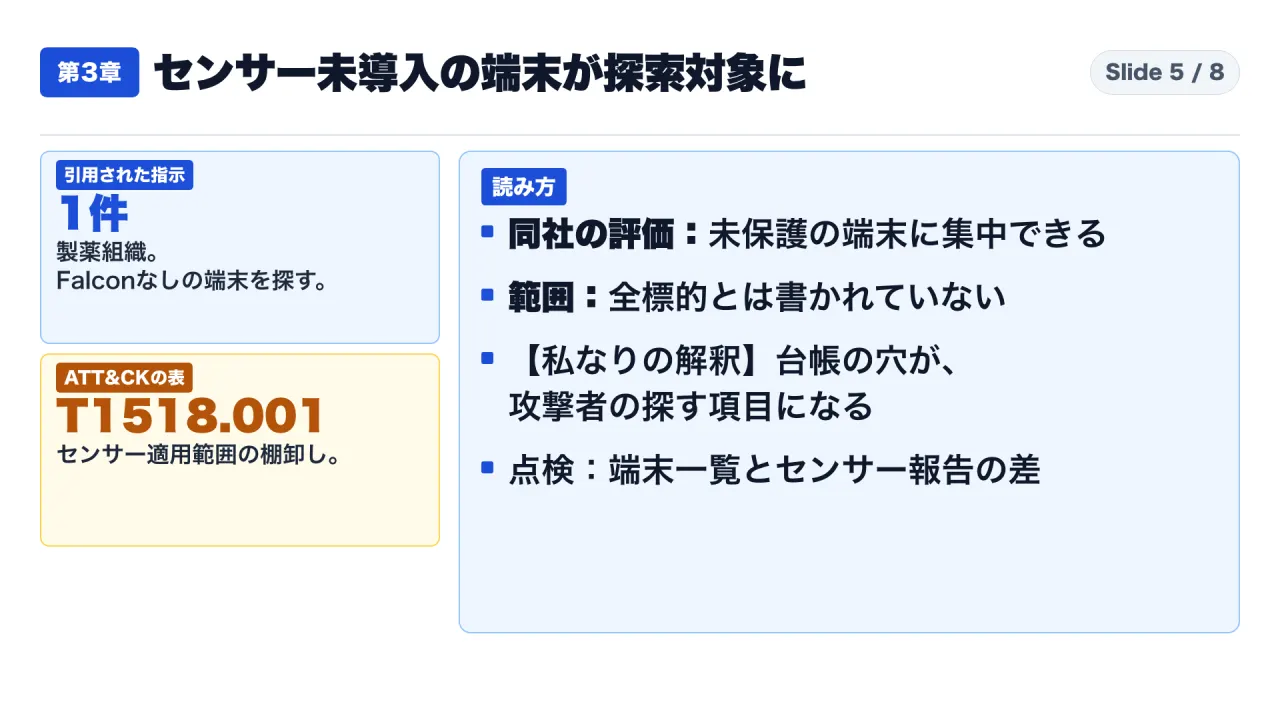
The most significant operational insight revealed in CrowdStrike’s recovery of adversary conversation logs is the explicit instruction to identify infrastructure gaps.
Automated Enumeration of Unprotected Hosts
In an intrusion against a major global pharmaceutical manufacturer, forensic telemetry captured the operator issuing direct instructions to the agent in Chinese, utilizing regional red-teaming colloquialisms to search Active Directory domain records for Windows hosts lacking Falcon sensor processes.
The agent executed this directive by:
- Querying domain controllers for active host computer objects.
- Cross-referencing active hosts against running process lists and standard installation directory trees (mapped to MITRE ATT&CK technique T1518.001: Security Software Discovery).
- Flagging discovered unmonitored systems as preferred staging grounds for lateral movement.
Operational Implication for Enterprise Defense
Automating endpoint reconnaissance dramatically lowers the marginal cost of adversary exploration. In a manual intrusion, inspecting hundreds of domain-joined systems to find unmonitored hosts requires substantial operator time, introducing detection windows. An agentic graph performs this comparative analysis in seconds.
Consequently, enterprise environments maintaining partial EDR coverage──such as legacy utility servers, internal build nodes, or developer testbeds assumed to be “isolated behind perimeter firewalls”──become immediate priority targets.
4. Threat Vector 2: Exploitation of Stale, Unrotated Cryptographic Keys
Adversaries do not break cryptography; they leverage unrotated keys abandoned across historical administrative artifacts.
The 2022 Active Directory Export Incident
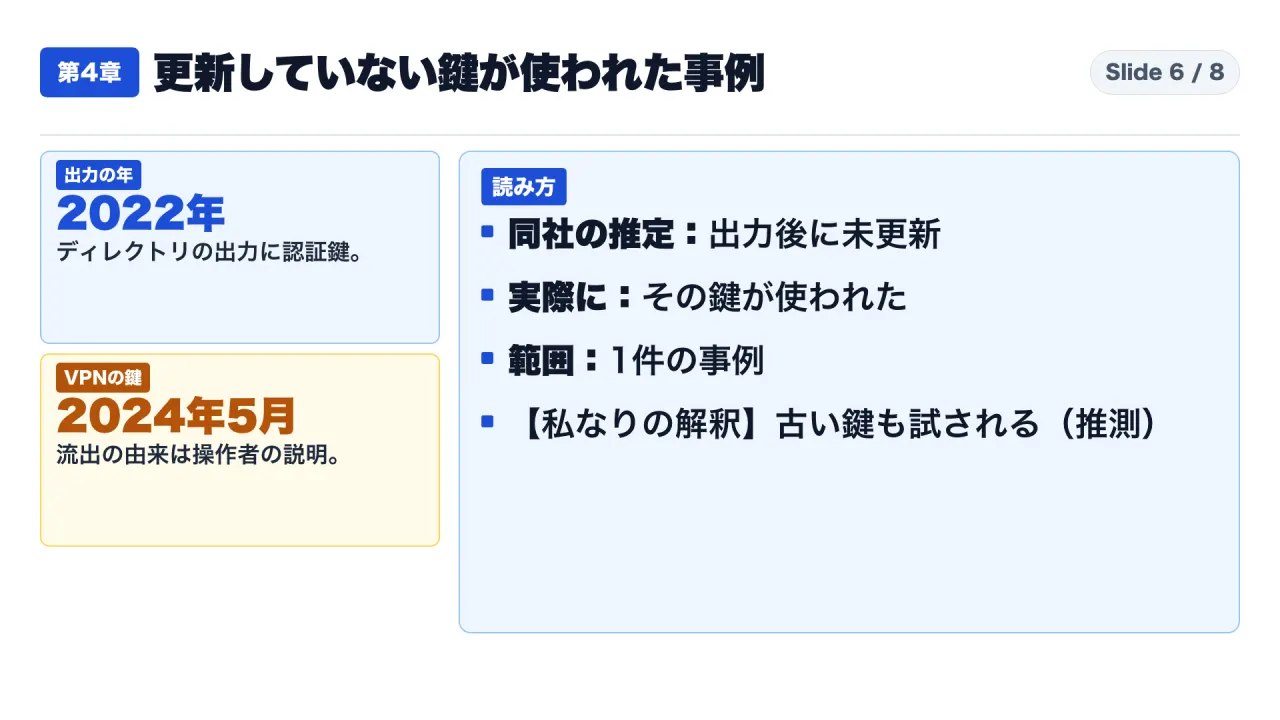
In an operation targeting a European governmental institution, the human operator provided ARTEX with a historical Active Directory directory export dating to 2022, originally extracted from an exchange mail server. CrowdStrike evaluated that the authentication keys embedded within this legacy dump had likely never been rotated.
Armed with these stale keys, the agent successfully forged administrative authentication tokens and gained direct read access to enterprise mailboxes without triggering brute-force threshold alerts.
Compromised VPN Profiles and Email Exfiltrations
Similarly, the adversary supplied the framework with VPN client configuration profiles and cryptographic certificates that the operator noted were sourced from a May 2024 email exfiltration. Because client-side certificates had not been revoked following the initial data loss incident, the agent established legitimate encrypted tunnels into internal networks.
Stale credentials stored in neglected backups, archived disaster recovery images, or migration staging shares represent evergreen attack paths that autonomous agents can ingest and test at negligible cost.
5. Defensive Translation: Transforming Vendor Recommendations into an Enterprise Audit Protocol
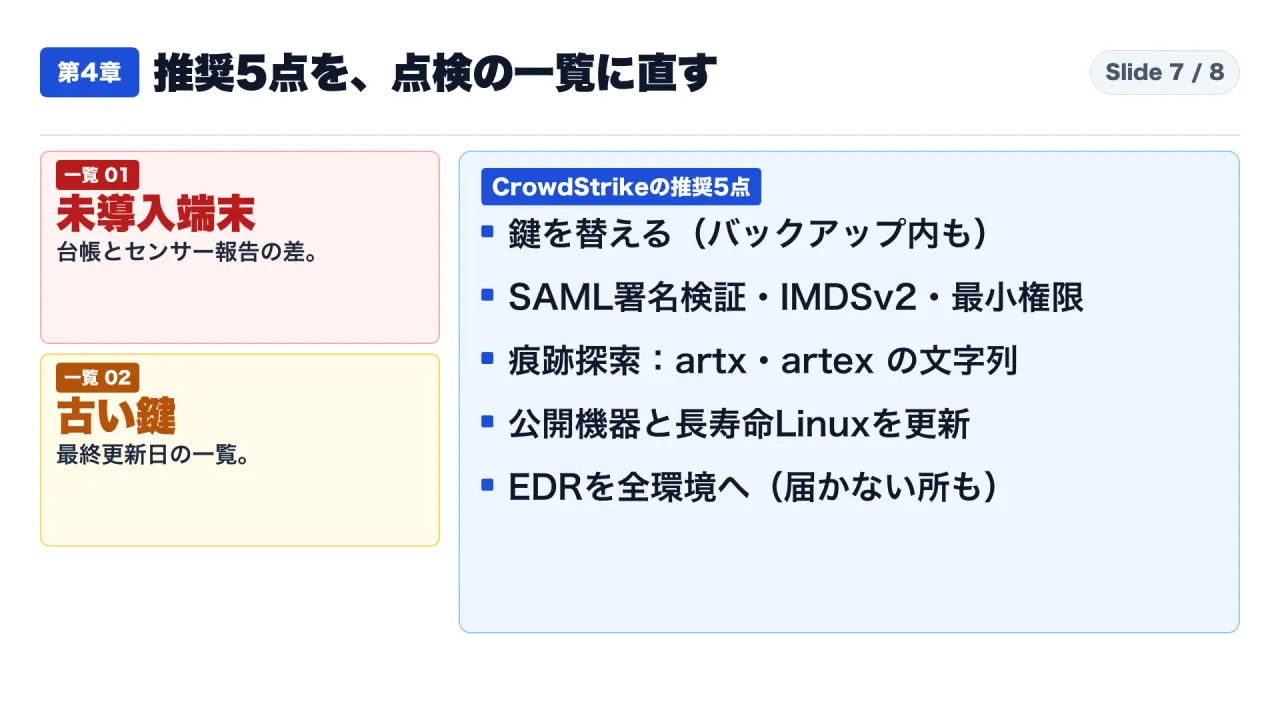
CrowdStrike concluded its disclosure with five broad defensive recommendations. For enterprise security teams, these recommendations must be operationalized into concrete, measurable tasks.
The 5 Recommendations Mapped to Actionable Verifications
| CrowdStrike Baseline Recommendation | Enterprise Technical Implementation & Audit Check |
|---|---|
| 1. Rotate Cryptographic Keys | Audit and revoke signing keys, pre-authentication secrets, and service credentials across legacy backups, AD dumps, and historical exports. |
| 2. Enforce Strict Cloud Identity Controls | Mandate SAML response signature verification, enforce AWS IMDSv2 globally, and restrict cloud IAM roles to least-privilege execution boundaries. |
| 3. Hunt for ARTEX Artifacts | Inspect endpoint telemetry and cloud logs for command arguments containing artx/artex, IAM roles prefixed with artx, command comments containing art18-, and directories at C:\ProgramData\artx5v\. |
| 4. Patch Perimeter Infrastructure | Immediately patch internet-facing network appliances, VPN gateways, and long-running Linux hosts against known remote code execution vulnerabilities. |
| 5. Enforce 100% EDR Ubiquity | Deploy real-time endpoint monitoring across all virtualization clusters, container hosts, and internal subnets previously excluded due to perceived low risk. |
Practical Execution: The Two-Register Discrepancy Audit
Enterprise defense begins with reconciling two internal datasets:
[ Active Directory / Cloud CMDB Host Inventory ]
                     │
                     ▼
           [ Discrepancy Engine ] ◄─── [ EDR Sensor Reporting Console ]
                     │
                     ▼
  [ Unmonitored Host Discrepancy Register ]
  ├── Assign Named System Owner
  ├── Establish Strict 72-Hour Resolution Deadline
  └── Isolate Network Port Pending Agent Installation
- Extract Complete Domain Inventory: Export all active computer objects from Active Directory, Azure AD/Entra ID, and cloud provider compute consoles.
- Extract Active EDR Console Agents: Pull all unique host identifiers reporting active telemetry within the preceding 24 hours.
- Isolate the Discrepancy Set: The mathematical difference between these lists represents unprotected hosts. Each unmonitored host must be categorized: unmanaged testbed, legacy appliance, or staging node.
- Enforce Resolution Deadlines: Every discrepancy must be assigned a remediation owner with a fixed 72-hour window: either install the EDR sensor or isolate the network interface.
Conclusion: Core Confirmations, Vendor Evaluatives, and Unverified Boundaries
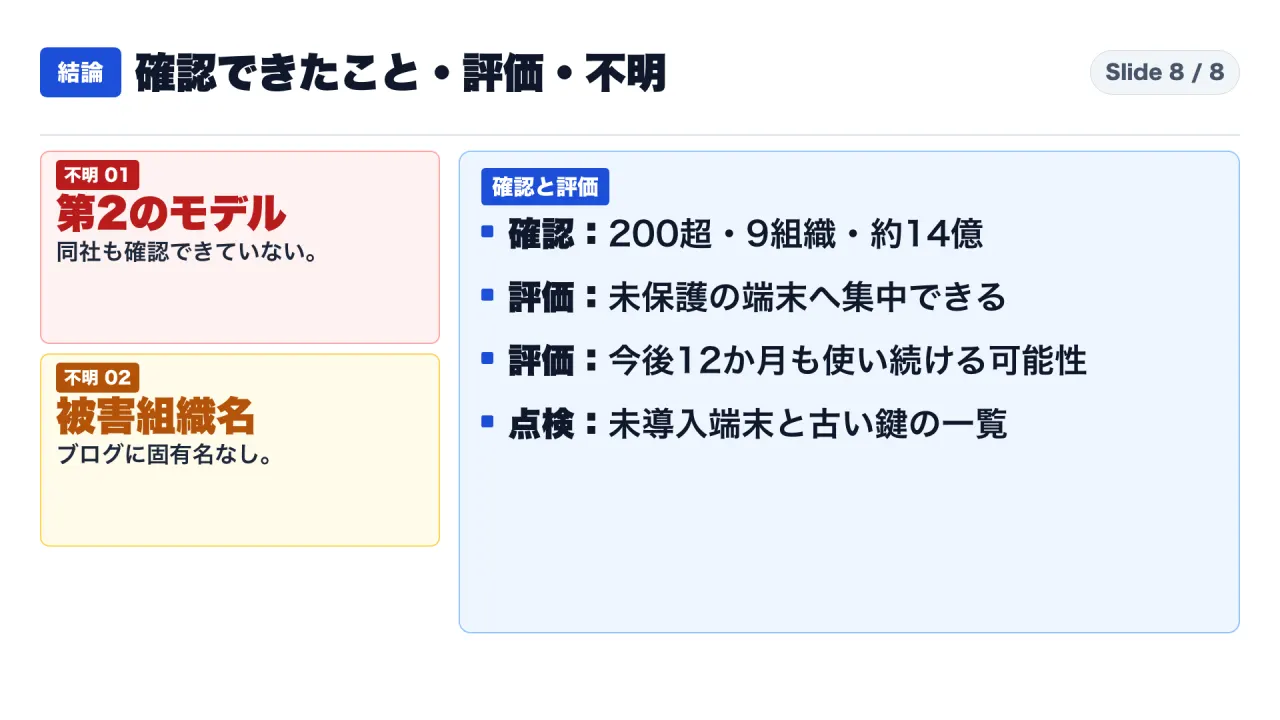
When briefing executive leadership, security professionals must maintain precision:
- Confirmed Telemetry: Between October 17 and October 29, 2026, ARTEX was deployed against 200+ distinct targets; post-exploitation was confirmed in 9 organizations. The operator intervened via Chinese-language commands during Beijing business hours. Planning agents consumed ~1.4 billion input tokens. Forensics captured direct targeting of unmonitored Windows endpoints and successful exploitation of unrotated 2022 credentials.
- Vendor Assessments: CrowdStrike evaluates that integrating sensor enumeration directly into agent graphs allows adversaries to focus follow-on exploitation on unprotected hosts, and projects that China-nexus actors will continue expanding agentic architectures over the next 12 months.
- Unverified Scope: The specific commercial secondary model remains unconfirmed; compromised victim identities are not publicly named; country-by-country target distributions are unstated; and raw financial token costs cannot be definitively established.
Enterprise resilience against autonomous threats does not require speculative defenses; it demands uncompromising execution of fundamental asset visibility and credential rotation hygiene.
Primary Sources and References
- CrowdStrike Threat Intelligence: VAPOR PANDA Uses ARTEX to Scale Global Intrusion Campaign (Published October 29, 2026): https://www.crowdstrike.com/en-us/blog/vapor-panda-uses-artex-to-scale-global-campaign/
- Elastic Security Labs: Disclosing the BLOODALCHEMY Backdoor: C-Based Malware Analysis (October 13, 2023): https://www.elastic.co/security-labs/threat-command/disclosing-the-bloodalchemy-backdoor
- CrowdStrike Threat Intelligence: Unidentified Threat Actor Leverages ARTEX Against South Korean Financial Institutions: https://www.crowdstrike.com/en-us/blog/unknown-threat-actor-uses-artex-to-target-south-korean-finance/
- MITRE ATT&CK Framework: Technique T1518.001: Security Software Discovery: https://attack.mitre.org/techniques/T1518/001/