Is DeepSeek's "Super-Agent" the Same Thing as Unified Harness Protocol? Inside Official Documents, One-Way Compatibility, and 5 Harness Selection Checks
A rigorous comparative analysis of DeepSeek’s dsh-superagent-prototype and the Unified Harness Protocol draft specification, examining cross-references, test discrepancies, and enterprise evaluation criteria.
Japanese Edition: Read the original Japanese article on Substack
Video Episode (Japanese Audio): Watch on YouTube
Executive Summary & Key Takeaways
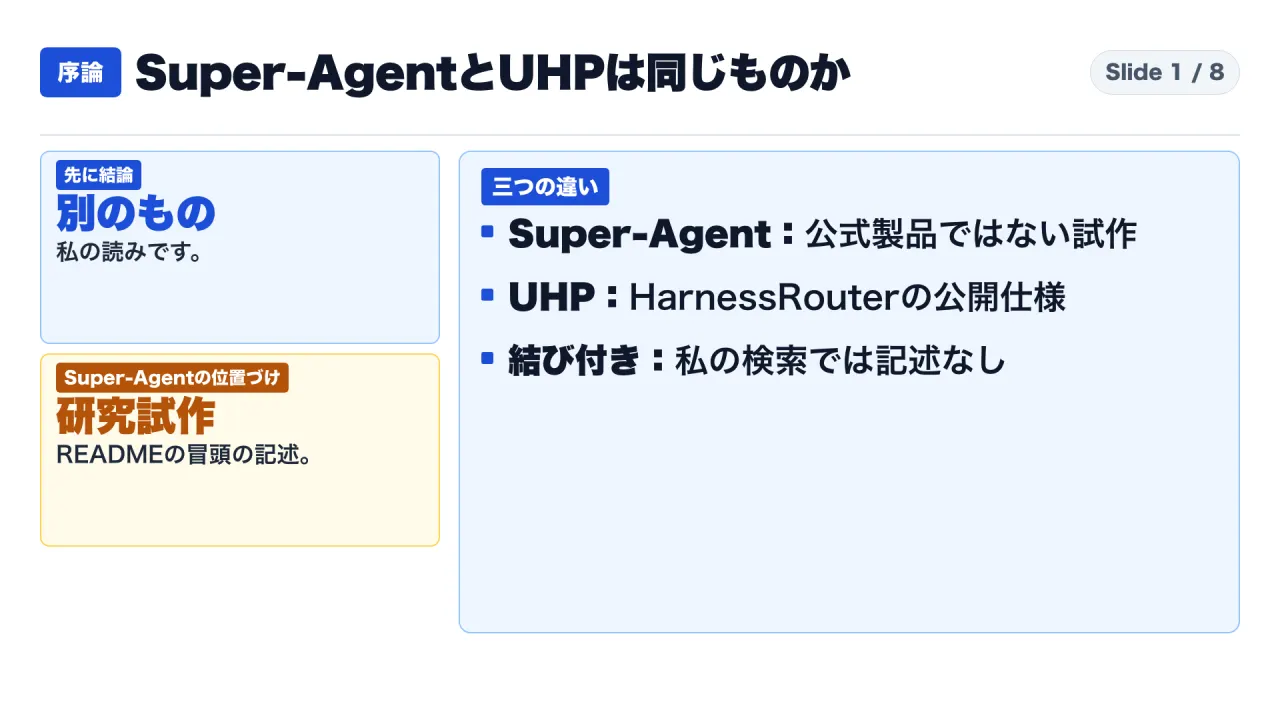
- Core Finding: DeepSeek’s repository prototype,
dsh-superagent-prototype, and the Unified Harness Protocol (UHP) are distinct technical artifacts. DeepSeek’s repository explicitly states at the top of its README that it is an unofficial “research prototype,” not an official product. Conversely, UHP is an open draft protocol maintained under the separateHarnessRouterrepository organization. - The One-Way Link: Across primary documentation surveyed on November 2, 2026, no bidirectional integration exists. The sole verifiable connection is strictly one-way:
HarnessRouterlistsDeepSeek Harnessas one of 30 supported backends. No file indsh-superagent-prototypereferences UHP or HarnessRouter. - Audience & Purpose: Written for enterprise IT leaders and engineering managers evaluating autonomous agent execution environments (“harnesses”). When open-source initiatives surface simultaneously across technical media, organizations often conflate experimental prototypes with industry standards. This report establishes clear criteria to separate marketing momentum from verifiable primary sources.
Methodological Framework: Documentation, Computation, and Interpretation
This report distinguishes three categories of statements:
- Documented Statements (Primary Sources): Verbatim or directly translated claims from official repository documentation, code comments, and published specifications.
- Independent Counts & Calculations: Values independently computed from public artifacts, specifically the tally of 102 test declarations in UHP’s test file (
checks.py). - Analytical Interpretation: Explicit engineering inferences formulated by the author, clearly designated as interpretations.
All primary artifacts were audited on November 2, 2026, via HTTP (curl). DeepSeek’s contextual article titled “Exploring Super-agent Design: Towards a More Autonomous Agent System” could not be retrieved from public endpoints; its unretrieved contents are excluded from this analysis.
Three Core Questions and Defining an “Agent Harness”
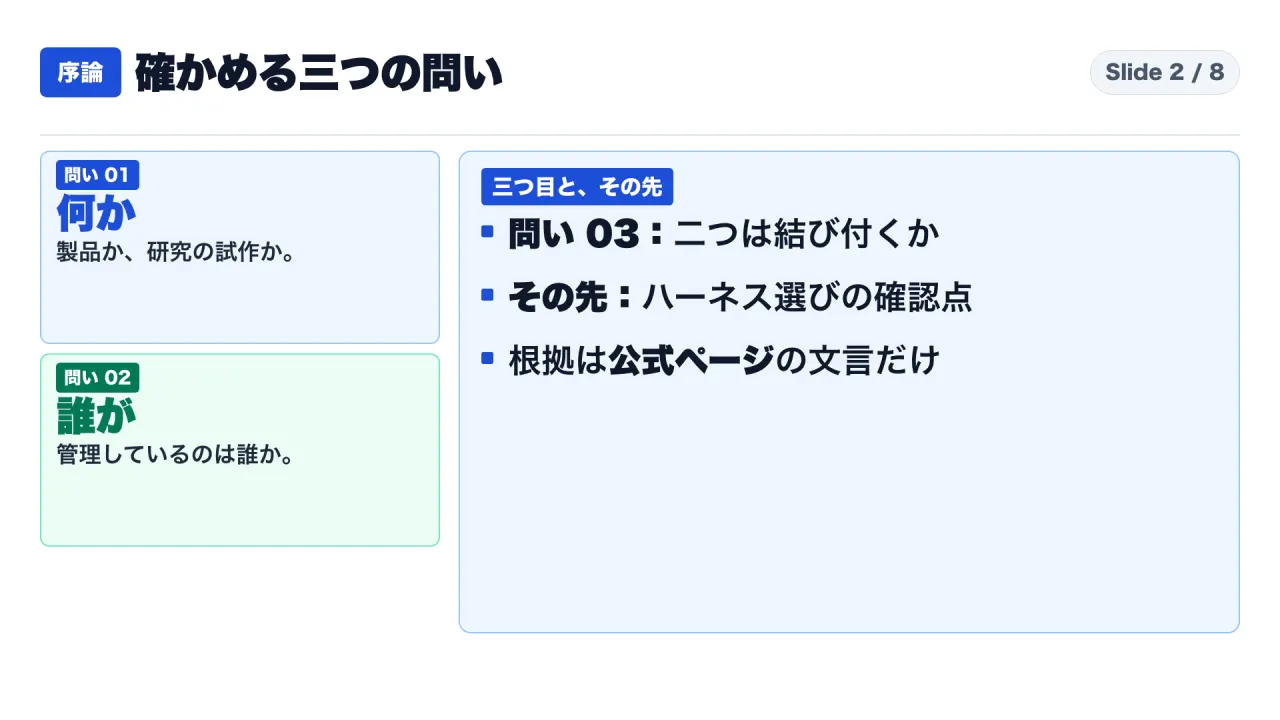
Engineering leaders must resolve three foundational questions:
- What is the entity? Is it a production product, a developer preview, or a research prototype?
- Who governs it? Which organization holds administrative control, copyright, and decision-making authority?
- Are they formally linked? Does a documented, bidirectional standard or mutual compliance agreement exist?
Defining the “Harness”
In UHP, a harness is formally defined as:
“The complete agent runtime that plans, executes tool calls, mutates local filesystems, and yields execution outputs.”
UHP cites production examples including Codex, Claude Code, and Hermes. A harness is not the underlying model itself, but the operational loop managing memory, shell access, tool invocations, and workspace state. Similarly, DeepSeek defines DeepSeek Harness as an open-source runtime, categorized as a “Public Preview” on November 2, 2026.
Section 1: DeepSeek’s Super-Agent Prototype
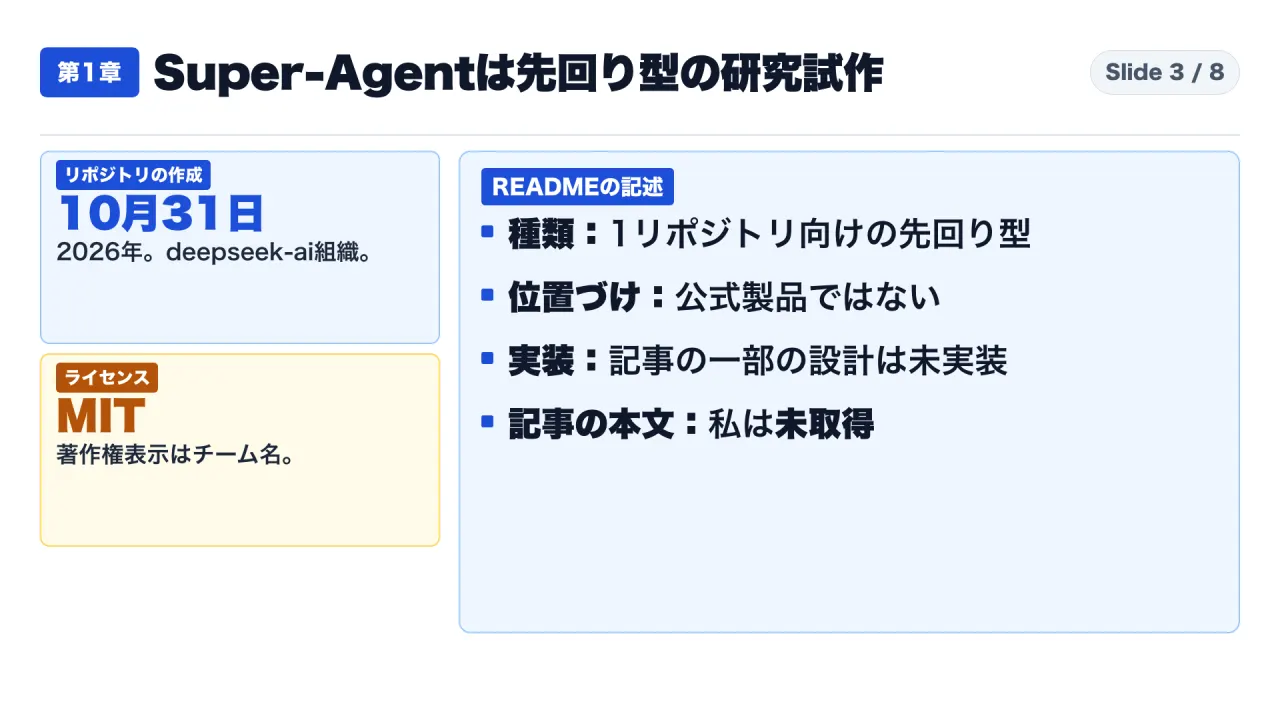
DeepSeek’s dsh-superagent-prototype repository was created on October 31, 2026, under the deepseek-ai organization:
| Property | Value | Source Verification |
|---|---|---|
| Organization Owner | deepseek-ai |
GitHub REST API |
| Creation Date | October 31, 2026 | GitHub REST API |
| Software License | MIT License | LICENSE (Copyright: “DeepSeek Harness Team”) |
| Commit History | 1 commit (“Add research prototype”) | GitHub Commit Log (November 2, 2026) |
| Stated Maturity | “Research prototype for reference; not an official product” | README.md Top Disclaimer |
The opening disclaimer of README.md states:
“This project is an experimental research prototype intended for conceptual exploration. It is not an official DeepSeek product. The implementation emerged from our team’s internal workflows, with substantial portions authored by coding agents. Treat this as research-grade code rather than production-ready software.”
The prototype implements a proactive coding agent for a single repository. It monitors GitHub issues and optionally Feishu webhooks, creating task sessions in isolated subdirectories and submitting pull requests. Structurally, it is implemented as a specialized “bundle” on top of DeepSeek Harness.
Architecturally, docs/000-philosophy.md emphasizes: “Maximize organizational value while consuming the absolute minimum of human attention.” The agent acts only when triggered or allowed by repository policy, communicating only when human action is needed. Early deployments must run in a passive “log-intent-only” mode before acquiring branch mutation privileges.
Section 2: Unified Harness Protocol (UHP) Draft Specification
UHP standardizes operational interfaces across heterogeneous agent runtimes:
“UHP is an open standard designed to operate complete agent harnesses on top of a shared foundational contract.”
While models share standardized inference endpoints, agent runtimes diverge in how systems launch jobs, stream progress, handle conversational turns, cancel tasks, extract artifacts, and capture failure reasons. UHP standardizes these lifecycle operations.
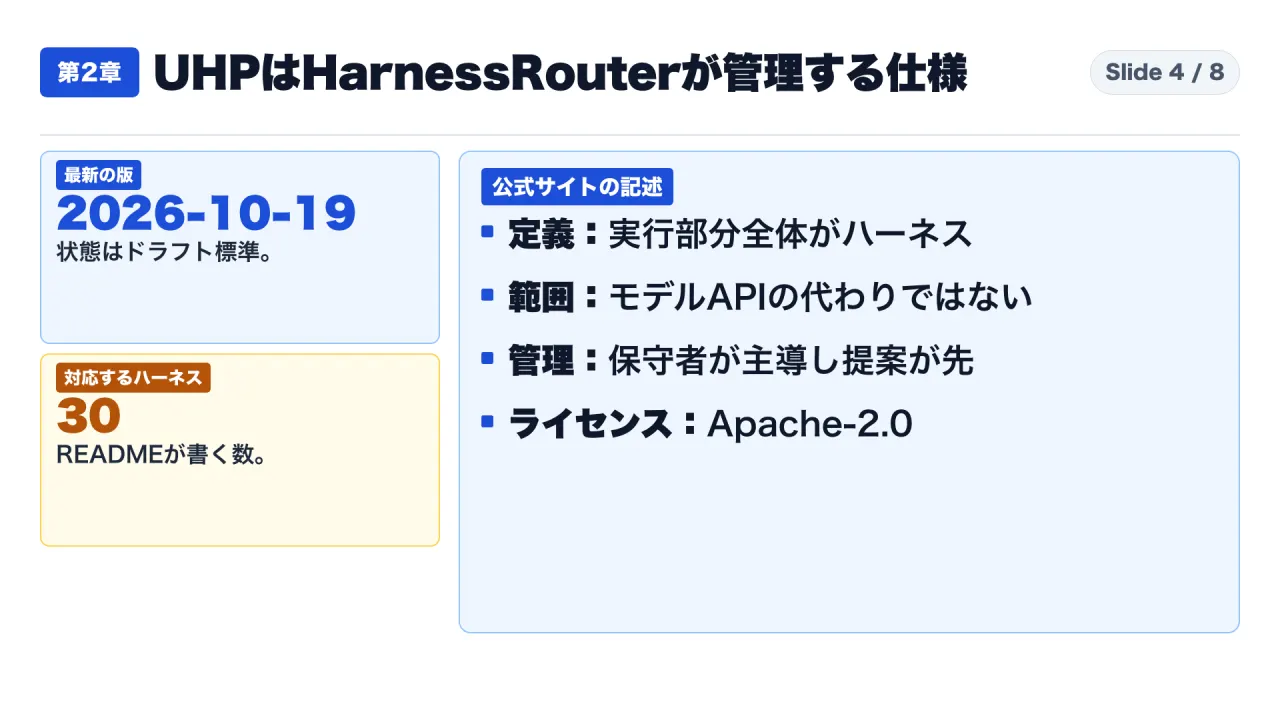
| Parameter | Official Specification Status (Audited November 2, 2026) |
|---|---|
| Latest Published Version | Version 2026-10-19 (preceded by 2026-10-04, 2026-09-28, 2026-09-12, 2026-08-11) |
| Protocol Maturity Level | “Draft Standard: stable enough for early implementation; versioned for breaking changes” |
| Open Source License | Apache-2.0 License |
| Governance Body | Defined and maintained within the HarnessRouter repository |
Per GOVERNANCE.md, UHP requires specification changes, reference implementations, and conformance tests to update synchronously. The HarnessRouter repository (created August 9, 2026) lists 30 supported backends, including Codex, Claude Code, Hermes, Pi, DeepSeek Harness, OpenCode, Kilo Code, Qwen Code, Gemini CLI, and Cline. DeepSeek Harness is simply one of thirty supported adapters.
Section 3: Cross-Referencing Evidence and Discrepancies
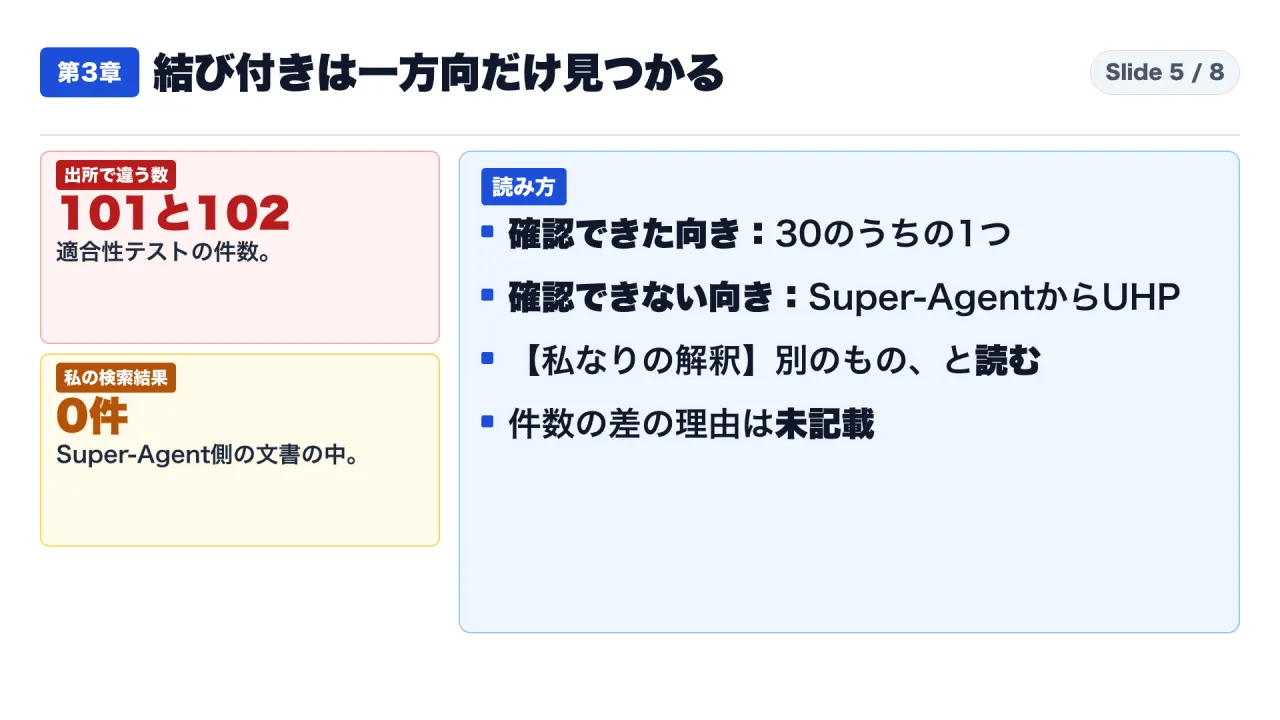
A full textual audit was conducted across all files in dsh-superagent-prototype (README.md, setup docs, docs/000-008, package.json, lockfiles) and the DeepSeek Harness portal:
- DeepSeek Documentation: Zero occurrences of
"UHP","Unified Harness", or"HarnessRouter". - HarnessRouter Documentation: Lists
DeepSeek Harnessas an adapter target alongside 29 other tools.
The linkage is strictly one-way. DeepSeek claims no UHP compliance, nor did DeepSeek develop UHP. Additionally, while HarnessRouter supports DeepSeek Harness, it documents no support for the dsh-superagent-prototype application bundle.
The 101 vs. 102 Conformance Check Discrepancy
| Document Source | Reported Conformance Check Count | Details |
|---|---|---|
Conformance Suite README.md |
101 checks | Categorized into three conformance levels |
| Official Website Overview | 102 checks | Listed in overview marketing text |
Author’s Code Audit (checks.py) |
102 check declarations | Count of @check( decorators in source code |
UHP’s CHANGELOG.md dated October 29, 2026, notes the introduction of check F-10. Inspection confirms F-10 is present in checks.py. The suite README was simply not updated to reflect F-10, while the website was. This illustrates why engineering teams must inspect source implementations directly.
Section 4: Ecosystem Protocol Map
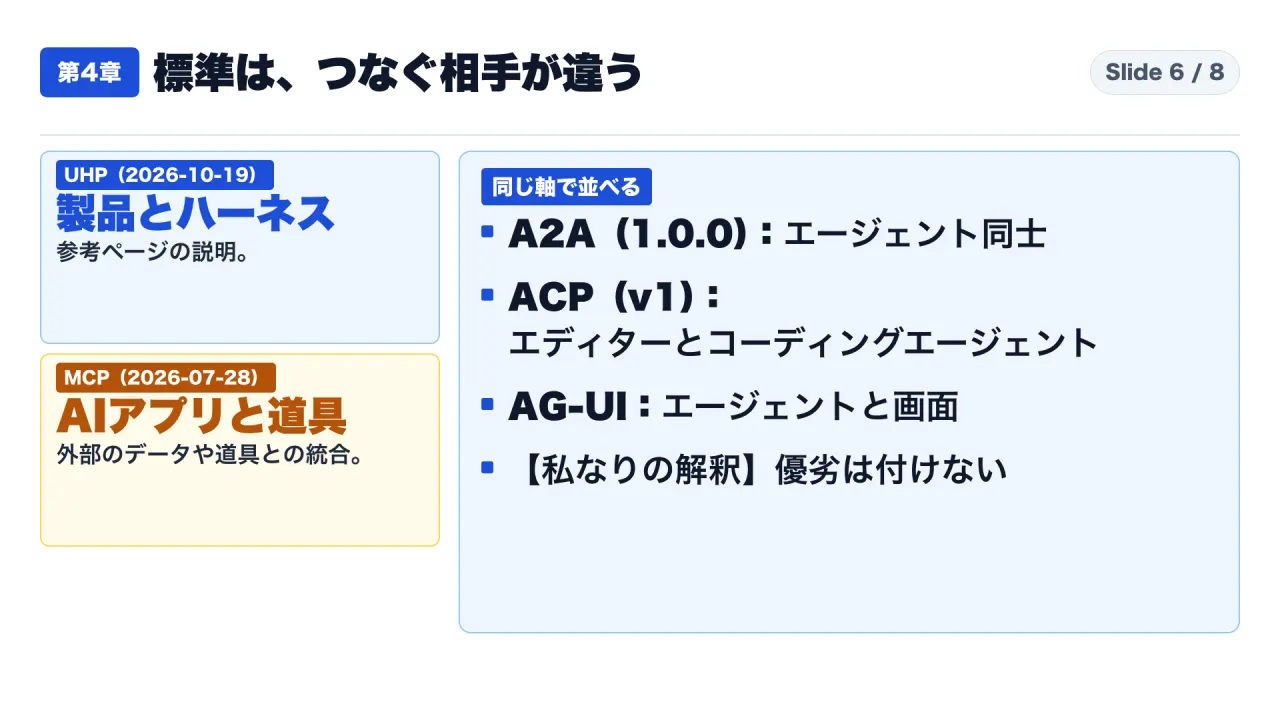
Protocols across the agent ecosystem address distinct architectural boundaries:
| Protocol | Primary Boundary Standardized | Latest Specification Version | Primary Governance |
|---|---|---|---|
| UHP (Unified Harness Protocol) | Connects enterprise platforms to complete agent harnesses | Version 2026-10-19 (Draft Standard) | HarnessRouter Project |
| MCP (Model Context Protocol) | Connects AI applications to external tools and data sources | July 28, 2026 Specification | Anthropic / Open Source |
| A2A (Agent-to-Agent Protocol) | Connects opaque agents across multi-agent systems | Version 1.0.0 | A2A Working Group |
| ACP (Agent Client Protocol) | Connects code editors directly to coding agents | v1 (Latest) / v2 (Draft) | ACP Working Group |
| AG-UI Protocol | Connects AI agent backends to user interfaces | Version Unspecified in Docs | AG-UI Project |
Per UHP’s ECOSYSTEM.md, these protocols can coexist: an enterprise platform dispatches tasks via UHP, while the underlying harness invokes enterprise data via MCP. Also note that ACP here refers strictly to editor-agent interaction, distinct from the unrelated “Agent Communication Protocol.”
Five Criteria for Enterprise Agent Harness Procurement
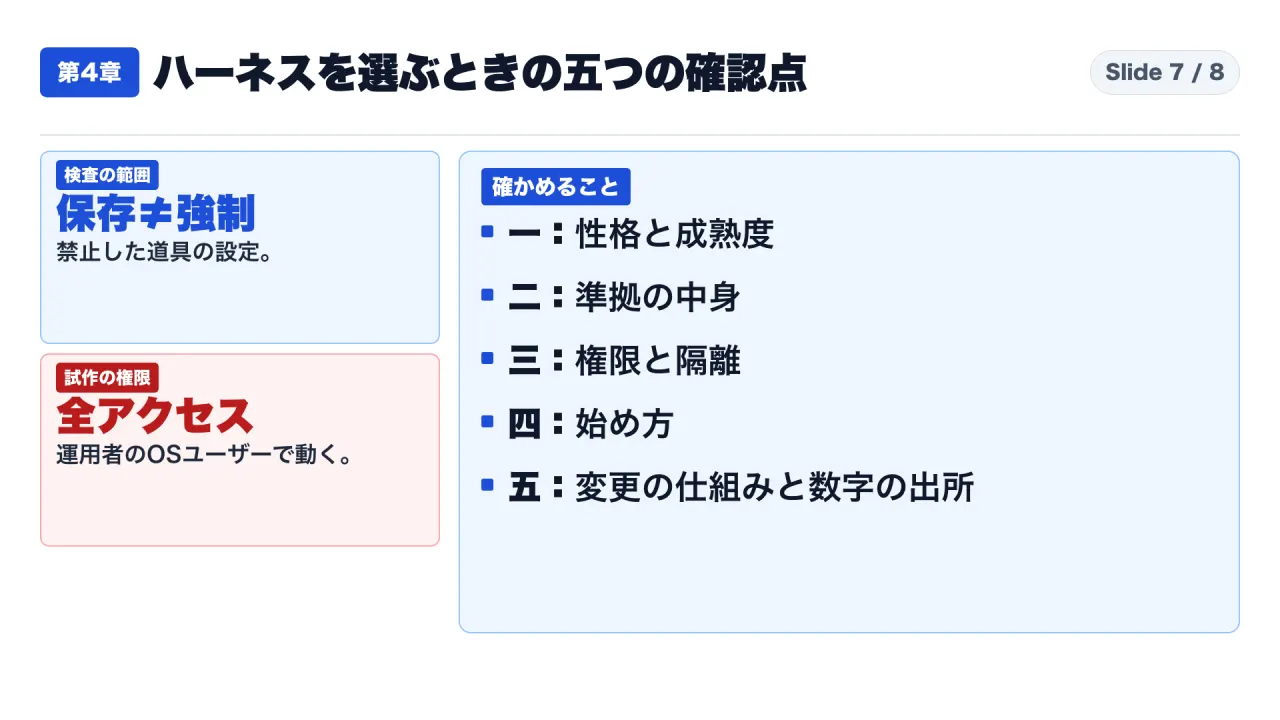
Enterprise review boards should evaluate agent runtimes across five dimensions:
1. Maturity Classification
Transcribe vendors’ exact self-reported status: DeepSeek’s Super-Agent is a “Research Prototype,” UHP is a “Draft Standard,” and DeepSeek Harness is a “Public Preview.” None represent enterprise-supported software. Presenting experimental code as production platforms creates severe operational risks.
2. Forensic Conformance Verification
In UHP, conformance requires running seven realistic agent workloads. As UHP cautions: “The conformance matrix represents empirical evidence, not an accredited certificate.” Crucially, the test suite verifies that restricted tool configurations are parsed and saved, but does not verify whether the runtime actually honors those tool restrictions during execution. Enforcing tool denials remains the responsibility of the harness.
3. Privilege Escalation and Process Isolation
DeepSeek’s docs/006-deployment.md notes that worker and dispatcher processes run under the operator’s ambient OS account with full filesystem access. Multi-user credential switching provides zero process-level sandboxing. GitHub Enterprise Server is unsupported.
Similarly, UHP’s security.md notes that because harness servers execute shell commands, mutate files, and manage model credentials for callers, their attack surface is far wider than model gateways. UHP mandates that runtimes must never claim immunity to malicious inputs, recommending execution step caps, strict timeouts, and hardened security tiers.
4. Controlled Deployment Cadence
DeepSeek recommends deploying with a strict allow-list of approved engineers, keeping the agent in a passive logging state before granting write access. Because agent alerts consume team focus, interventions must be gated behind explicit thresholds.
5. Spec-Code Co-Evolution
Verify whether an open protocol’s specification, implementation, and test suites are synchronized. While UHP forbids non-conforming spec changes, documentation lags like the 101 versus 102 check count still occur.
Enterprise Proposal Guidelines
Eliminate promotional claims in procurement documentation:
- Unacceptable Statement: “DeepSeek’s Super-Agent is a next-generation platform compliant with the industry-standard Unified Harness Protocol.”
- Defensible Revision: “On October 31, 2026, DeepSeek released
dsh-superagent-prototype, an open-source research prototype designated as non-production code. It runs on DeepSeek Harness, currently in public preview. UHP is an independent draft protocol governed by HarnessRouter, which lists DeepSeek Harness as one of 30 supported backends. As of November 2, 2026, no mutual compliance claims exist in primary documentation.”
Conclusion & Recommendations
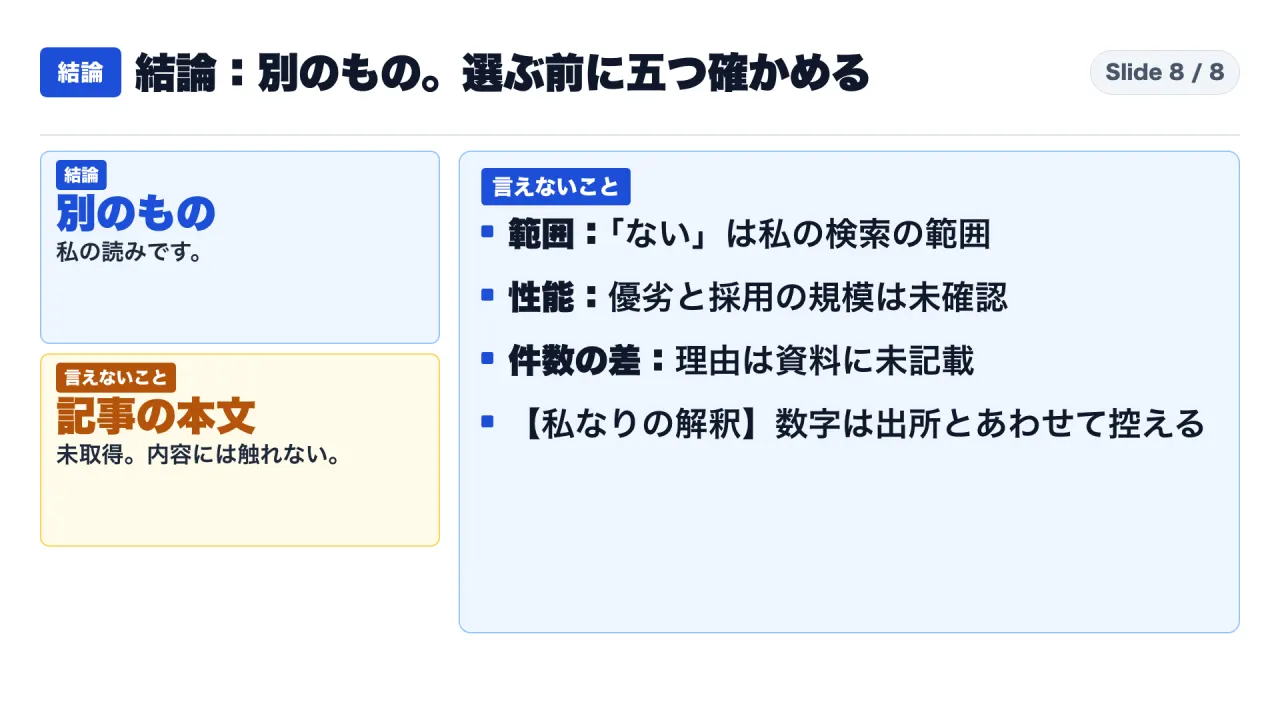
DeepSeek’s Super-Agent and UHP are distinct developments from different organizations. The sole verifiable connection is a one-way adapter listing in HarnessRouter’s registry.
Three immediate actions for technology leaders:
- Quote Official Maturity Designations: Require proposals to use exact vendor labels rather than subjective marketing summaries.
- Audit Conformance Boundaries: Inspect test logs to verify which safety constraints are verified versus excluded.
- Enforce Least Privilege: Never deploy autonomous coding agents under privileged developer accounts without container isolation and passive intent logging.
Limits of This Investigation
- DeepSeek’s research article (“Exploring Super-agent Design”) was inaccessible via public endpoints on November 2, 2026; its arguments are excluded.
- Absence of documentation does not preclude private collaboration between the teams.
- Runtime performance, benchmark accuracy, and stability were not evaluated.
- Conformance test count discrepancies reflect documentation state on November 2, 2026.
Final Verification Checklist
- Verified official product versus research prototype designation.
- Confirmed governing entity and draft status of the protocol specification.
- Audited primary documentation on both sides to check mutual integration.
- Inspected scope and exclusions of the conformance test suite.
- Verified OS execution privileges and filesystem isolation boundaries.
- Documented date-stamped evidence for all numerical and version claims.
Primary Sources & Documentation Links
dsh-superagent-prototypeRepository README: https://github.com/deepseek-ai/dsh-superagent-prototype/blob/main/README.mddsh-superagent-prototypePhilosophy Document (docs/000-philosophy.md): https://github.com/deepseek-ai/dsh-superagent-prototype/blob/main/docs/000-philosophy.mddsh-superagent-prototypeDeployment Guide (docs/006-deployment.md): https://github.com/deepseek-ai/dsh-superagent-prototype/blob/main/docs/006-deployment.mddsh-superagent-prototypeGitHub API Metadata: https://api.github.com/repos/deepseek-ai/dsh-superagent-prototypedsh-superagent-prototypeLicense: https://github.com/deepseek-ai/dsh-superagent-prototype/blob/main/LICENSE- DeepSeek Harness Official Portal: https://www.deepseek.com/en/harness/
- Unified Harness Protocol Official Portal: https://unifiedharnessprotocol.org/index.html
HarnessRouterRepository README: https://github.com/HarnessRouter/harnessrouter/blob/main/README.mdHarnessRouterGitHub API Metadata: https://api.github.com/repos/HarnessRouter/harnessrouter- UHP Conformance Test Suite README: https://github.com/HarnessRouter/harnessrouter/blob/main/protocol/conformance/README.md
- UHP Specification Changelog: https://github.com/HarnessRouter/harnessrouter/blob/main/protocol/CHANGELOG.md
- UHP Governance Model: https://github.com/HarnessRouter/harnessrouter/blob/main/protocol/GOVERNANCE.md
- UHP Version 2026-10-19 Security Considerations: https://github.com/HarnessRouter/harnessrouter/blob/main/protocol/versions/2026-10-19/security.md
- UHP Conformance Checks Source (
checks.py): https://github.com/HarnessRouter/harnessrouter/blob/main/protocol/conformance/uhp_conformance/checks.py - UHP Ecosystem Guide (
ECOSYSTEM.md): https://github.com/HarnessRouter/harnessrouter/blob/main/protocol/ECOSYSTEM.md - Model Context Protocol (MCP) Specification: https://modelcontextprotocol.io/specification
- Agent-to-Agent (A2A) Protocol Specification: https://a2a-protocol.org/latest/specification/
- Agent Client Protocol (ACP) Introduction: https://agentclientprotocol.com/get-started/introduction
- AG-UI Overview Documentation: https://docs.ag-ui.com/introduction