What Anthropic's Amended Form S-1/A Discloses for Q3 2026: Revenue Scaling, GAAP Losses, and $895B in Compute Commitments
A forensic audit of Anthropic amended IPO registration statement, examining 17.0 billion dollars in quarterly revenue, non-GAAP reconciliations, and long-term compute liabilities.
Japanese Edition: Read the original Japanese article on Substack
Video Episode (Japanese Audio): Watch on YouTube
Executive Summary: Exponential Revenue, Split Operating Profitability, and Long-Term Liabilities
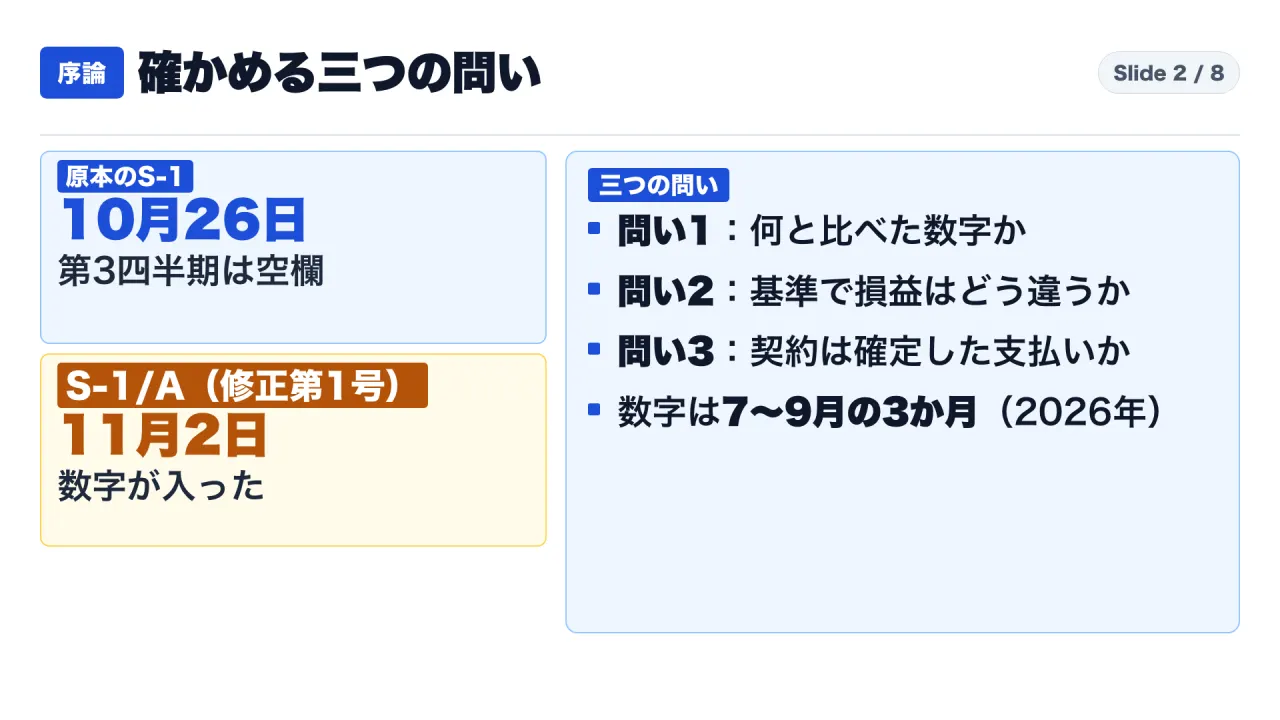
On November 2, 2026, Anthropic, PBC filed Amendment No. 1 to its Form S-1 registration statement (Form S-1/A, Accession Number 0001628280-26-068676) with the US Securities and Exchange Commission (SEC). In the initial Form S-1 filed on October 26, 2026, financial entries for the third quarter of 2026 (three months ended September 30, 2026) and total aggregate commitments were left blank. Amendment No. 1 provides the first official accounting disclosures for this period.
The newly disclosed figures reveal three dominant institutional findings:
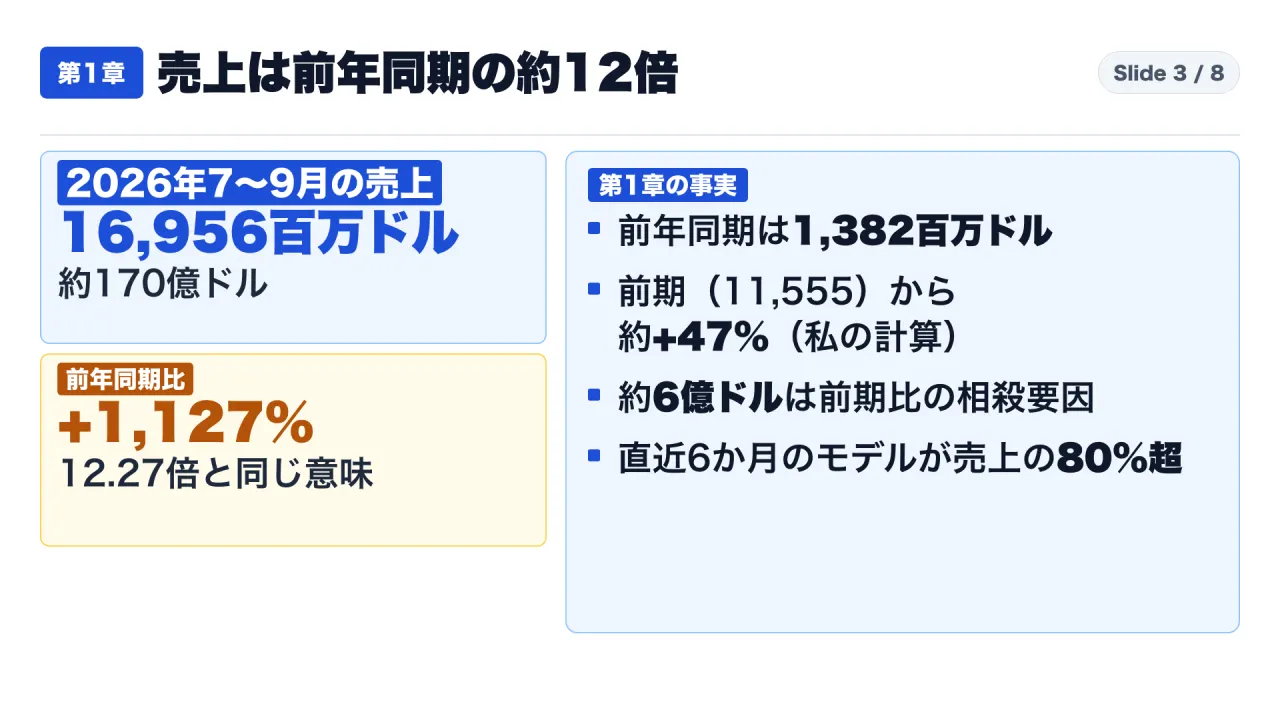
- Exponential Revenue Expansion: Q3 2026 revenue scaled to $16,956 million (approximately $17.0 billion), marking a 12.27x increase (or +1,127% year-over-year) compared to $1,382 million reported in Q3 2025 (author calculation). Quarter-over-quarter revenue grew 47% from $11,555 million in Q2 2026.
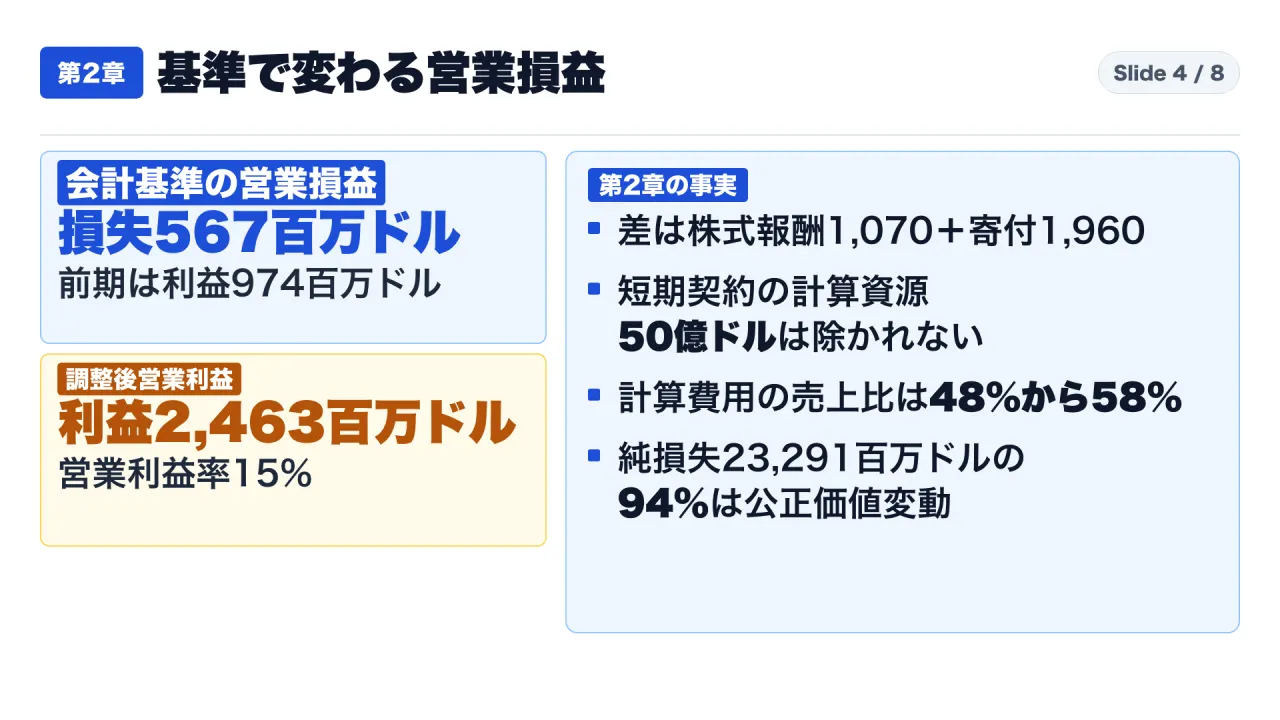
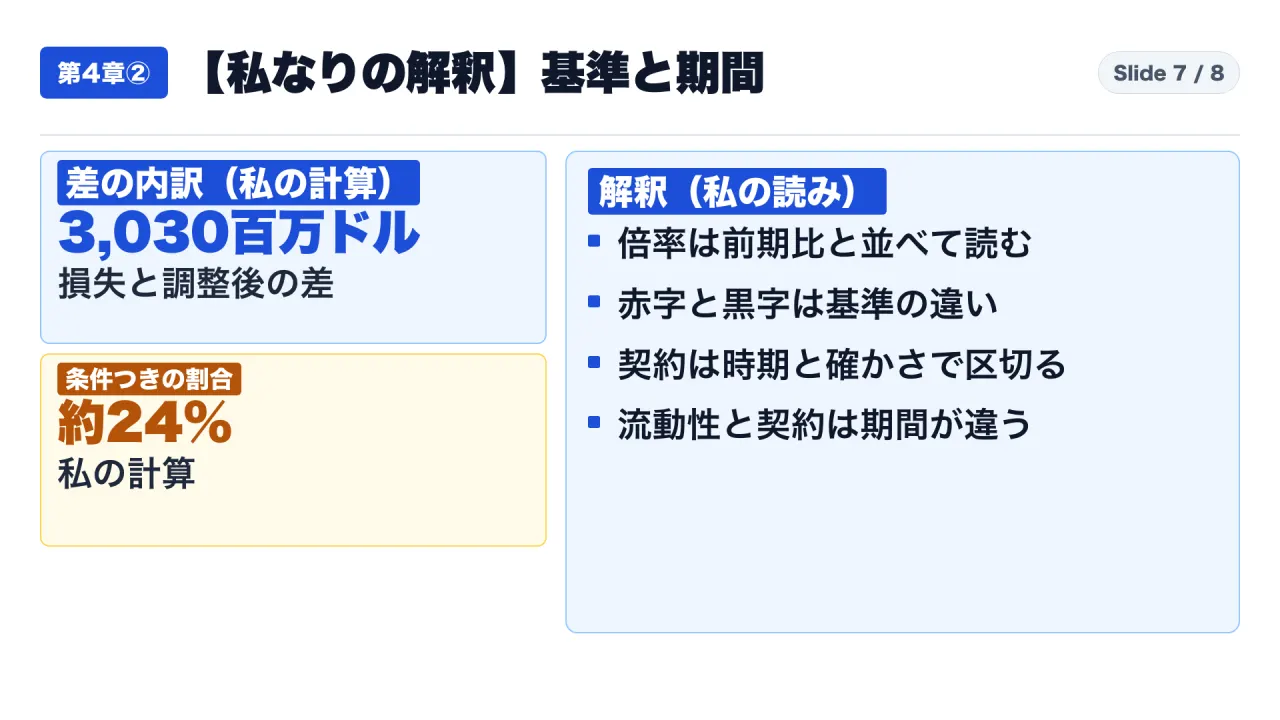
- Divergent GAAP vs. Non-GAAP Profitability: Under GAAP accounting, Anthropic recorded a Q3 operating loss of $(567) million (an operating margin of -3%), reversing from a $974 million GAAP operating profit in Q2 2026. However, under management Non-GAAP Adjusted Operating Income, Anthropic reported a profit of $2,463 million (a 15% adjusted margin). The $3,030 million spread between GAAP loss and Non-GAAP profit is driven by stock-based compensation and non-cash donation expenses.
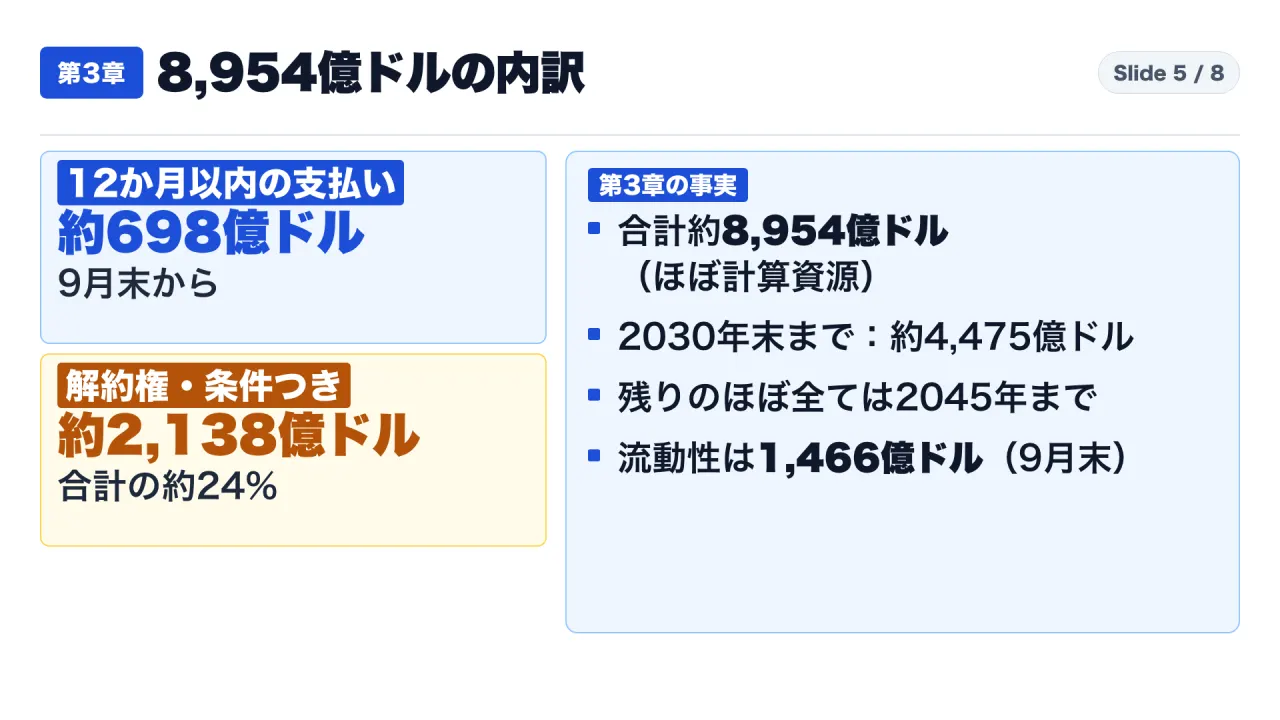
- Massive Compute Liabilities Across Decades: Aggregate committed infrastructure spend reached approximately $895.4 billion extending through 2045. Crucially, this commitment is bifurcated: approximately $69.8 billion (7.8%) is due within 12 months, and approximately $213.8 billion (23.9%) is subject to cancellation rights or financing conditions precedent.
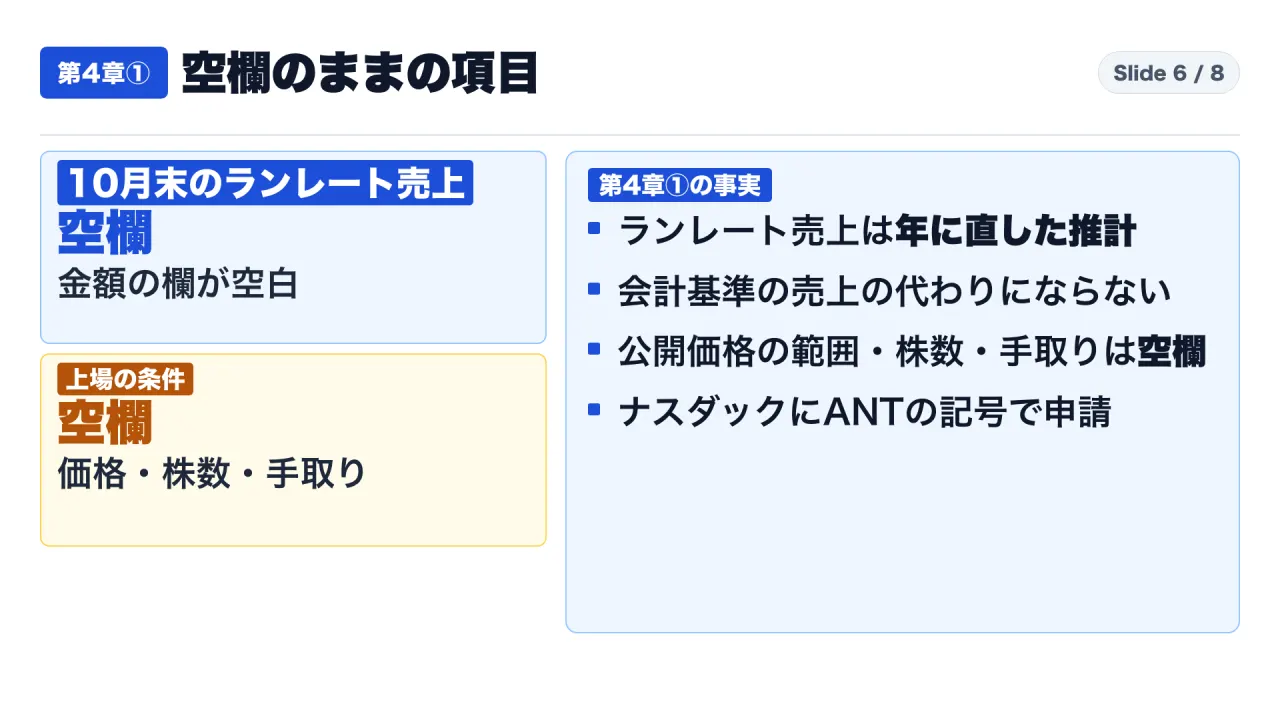
Meanwhile, critical parameters remain unstated: October 31 run-rate revenue, the IPO offering price range, share volume, and net proceeds remain blank placeholders. Understanding the duration, standards, and conditionality of these disclosures is vital for enterprise counterparties.

Methodological Framework: Facts, Analytical Ratios, and Unwritten Placeholders
To maintain enterprise analytical rigor, this audit separates information into distinct categories:
- Established Facts: Metrics and disclosures published directly in SEC filings, cross-referenced with official page numbers.
- Author Calculations: Mathematical ratios and percentages derived from reported accounting entries, displayed with explicit arithmetic formulas.
- Author Interpretations: Inferences regarding capital structure and operational velocity derived from verified facts.
- Unwritten Placeholders: Items explicitly left blank in the SEC filing.
Primary sources verified in November 2026 comprise:
- SEC Form S-1/A (Amendment No. 1): Filed November 2, 2026 (S1), CIK 0002130357, Accession Number 0001628280-26-068676.
- SEC Form S-1 (Original Registration): Filed October 26, 2026 (S2), Accession Number 0001628280-26-067168.
All quarterly figures in this audit specifically examine the three-month period from July 1, 2026 through September 30, 2026 (Q3 2026), avoiding confusion with nine-month cumulative totals or full-year metrics.
Key Financial Definitions
- Form S-1 and S-1/A: The initial registration statement filed with the SEC for public equity offerings, and its subsequent formal amendments.
- GAAP Operating Income/Loss: Revenue minus direct cost of revenue (compute and infrastructure), research and development, sales and marketing, and general administrative expenses under US Generally Accepted Accounting Principles.
- Adjusted Operating Income (Non-GAAP): A company-defined metric excluding stock-based compensation, non-cash donation expenses, and the Bartz copyright litigation settlement.
- Fair Value Adjustments: Non-cash mark-to-market revaluations of convertible debt instruments, recorded below the operating income line.
- Run-Rate Revenue: An annualized metric calculating trailing 28-day usage revenue multiplied by 13 plus monthly subscription fees multiplied by 12.
Section 1: Q3 Revenue Scales to $17.0 Billion: 12x Annual Expansion and the Base Effect
According to the quarterly financial tables in Form S-1/A, Anthropic generated $16,956 million in revenue during Q3 2026 (textually cited as $17.0 billion). In Q3 2025, revenue was $1,382 million.
Dividing $16,956 million by $1,382 million yields a 12.27x increase, corresponding exactly to management reported +1,127% year-over-year growth rate (author calculation). However, enterprise evaluators must contextualize this percentage against the small base denominator: prior-year quarterly revenue was under $1.4 billion.
Tracking quarterly sequential progression in 2026 illustrates substantial acceleration:
| Reporting Period | Quarterly Revenue ($ Millions) | Sequential Growth (QoQ) |
|---|---|---|
| Q1 2026 (Jan–Mar) | $4,731 | Baseline |
| Q2 2026 (Apr–Jun) | $11,555 | +144.2% |
| Q3 2026 (Jul–Sep) | $16,956 | +46.7% |
Sequential revenue grew by 46.7% between Q2 and Q3 2026 (16,956 / 11,555 = 1.467, author calculation).
Crucially, disclosures reveal that top-line expansion occurred despite pricing headwinds. Management notes that volume-driven revenue gains were partially offset by approximately $600 million in price reductions and contractual volume discounts introduced alongside next-generation model releases. This $600 million represents an offsetting reduction against sequential expansion rather than an absolute contraction in baseline revenue.
Furthermore, Anthropic discloses that model versions released during the six-month period ended September 30, 2026 contributed over 80% of total Q3 revenue. While this underscores rapid commercial adoption of updated models, it leaves open whether this velocity can persist into Q4 2026.
Section 2: Operating Profitability Split: GAAP $(567)M Loss vs. Non-GAAP $2.5B Profit
Operating profitability in Q3 2026 presents divergent profiles depending on the accounting standard applied.
Under US GAAP, Anthropic posted an operating loss of $(567) million (an operating margin of -3%), reversing from a GAAP operating profit of $974 million in Q2 2026. Disclosures identify two primary drivers for this operating loss:
- Short-Term Compute Commitments: $5.0 billion in short-term spot compute capacity procured to meet unforecasted training and inference surges. Management notes that short-term compute remains significantly more expensive per unit than long-term multi-year contracts.
- Non-Cash Charitable Matching: $2.0 billion in non-cash expenses associated with corporate philanthropic matching commitments.
Conversely, under management Non-GAAP Adjusted Operating Income, Anthropic reported an operating profit of $2,463 million (an adjusted operating margin of 15%), compared to $2.2 billion (19% margin) in Q2 2026.
The formal reconciliation table illustrates how GAAP losses transform into Non-GAAP profits (page 88):
| Reconciliation Item | Q3 2026 ($ Millions) |
|---|---|
| Operating Loss (US GAAP) | $(567) |
| Stock-Based Compensation Expense | $1,070 |
| Non-Cash Donation Expense | $1,960 |
| Bartz Litigation Settlement Expense | $0 |
| Adjusted Operating Income (Non-GAAP) | $2,463 |
Adding $1,070 million in stock compensation and $1,960 million in non-cash donations to the $(567) million operating loss yields exactly $2,463 million in adjusted operating income, explaining the entire $3,030 million variance (author calculation). Importantly, the $5.0 billion in short-term compute costs is not adjusted out; it remains embedded in both GAAP and Non-GAAP results, compressing margins across both metrics.
Compute and infrastructure costs consumed 58% of revenue ($9,863 million) in Q3 2026, up from 48% in Q2 2026 (though down dramatically from 251% in Q1 2025).
Below the operating line, Anthropic recorded a net loss of $23,291 million ($23.3 billion). Non-cash fair value mark-to-market adjustments on convertible notes accounted for $21,936 million—representing 94.2% of the total net loss (author calculation). For the nine-month period, net loss reached $104.0 billion ($94.3 billion from fair value changes). Because net loss is dominated by paper revaluations of convertible debt, enterprise analysts focus on operating income.
Section 3: The $895B Compute Liability: Duration, Conditionality, and Solvency
Form S-1/A discloses an aggregate committed spend of approximately $895.4 billion covering purchase obligations and lease commitments for compute capacity and data center infrastructure extending through 2045.
Analyzing the maturity schedule reveals that liabilities are back-loaded across multiple decades:
| Commitment Horizon | Committed Amount ($ Billions) | Percentage of Total |
|---|---|---|
| Due within 12 Months (through Sept 2027) | $69.8 | 7.8% |
| Due through December 31, 2030 | $447.5 | 50.0% |
| Thereafter (2031 through 2045) | $447.9 | 50.0% |
| Total Aggregate Committed Spend | $895.4 | 100.0% |
Liabilities due within the next 12 months represent $69.8 billion, or 7.8% of the aggregate total (69.8 / 895.4 = 0.0779, author calculation). Subtracting the $447.5 billion due through 2030 from the $895.4 billion total leaves $447.9 billion due between 2031 and 2045 (author calculation).
Equally significant is the contractual conditionality of these commitments:
- Conditional / Terminable Spend: Approximately $213.8 billion (23.9% of total commitments, 213.8 / 895.4 = 0.2388, author calculation) is subject to exercisable cancellation rights or conditions precedent. These conditions require counterparties to secure specialized financing, electrical grid interconnections, facility permits, or regulatory clearances. If counterparties fail to satisfy these conditions or miss milestone delivery dates, Anthropic retains the right to terminate obligations without penalty.
On the liquidity side, Anthropic held $146.6 billion in total available liquidity as of September 30, 2026 (excluding prospective IPO proceeds):
- Cash and cash equivalents: $95.6 billion
- Short-term marketable securities: $36.3 billion
- Undrawn revolving credit lines: $14.8 billion
- Total Liquidity: $146.6 billion (components reflect rounding)
Because the $895.4 billion commitment stretches across 19 years, directly subtracting commitments from current liquidity misrepresents corporate solvency. Near-term 12-month commitments ($69.8B) are fully covered by current liquid assets ($146.6B).
Section 4: What Remains Blank: Run-Rate Revenue and Public Offering Terms
Despite extensive quarterly disclosures, Form S-1/A preserves critical placeholder blanks:
- October 31 Run-Rate Revenue: The filing leaves the dollar value blank in the narrative stating run-rate revenue as of October 31, 2026 was $ [ ] billion (page 199). Run-rate revenue annualizes trailing 28-day usage and monthly fees, representing a distinct metric from backward-looking GAAP quarterly revenue.
- IPO Offering Price Range: The estimated price per share remains blank ($ [ ] to $ [ ] per share).
- Public Share Volume: The number of Class A shares offered to the public is unstated.
- Net Offering Proceeds: Expected net capital raised from the IPO remains undisclosed.
The company confirms it has applied to list its Class A common stock on the Nasdaq Global Select Market under the ticker symbol ANT.
Enterprise evaluators must treat blank placeholders as undisclosed data points rather than attempting to interpolate numbers from trailing Q3 revenue.
Section 5: Author Interpretations and the Enterprise Audit Checklist
Synthesizing verified disclosures yields four analytical deductions:
- Base Effect Reality: A 12x annual increase reflects comparison against a modest $1.38B prior-year base; sequential 47% QoQ growth provides a truer operational gauge.
- Accounting Standard Divergence: GAAP operating losses ($(567)M) and Non-GAAP operating profits ($2,463M) reflect standard stock compensation and donation add-backs. The $5.0B spot compute surge burdened both measures.
- Commitment Horizon Realism: Over $447 billion of compute liabilities mature after 2030, and $213.8 billion carries strict cancellation rights tied to counterparty power and facility milestones.
- Liquidity Alignment: Available liquidity of $146.6B adequately insulates near-term obligations ($69.8B due in 12 months), while multi-decade solvency relies on sustained top-line monetization.
The Five-Step Enterprise Evaluation Checklist
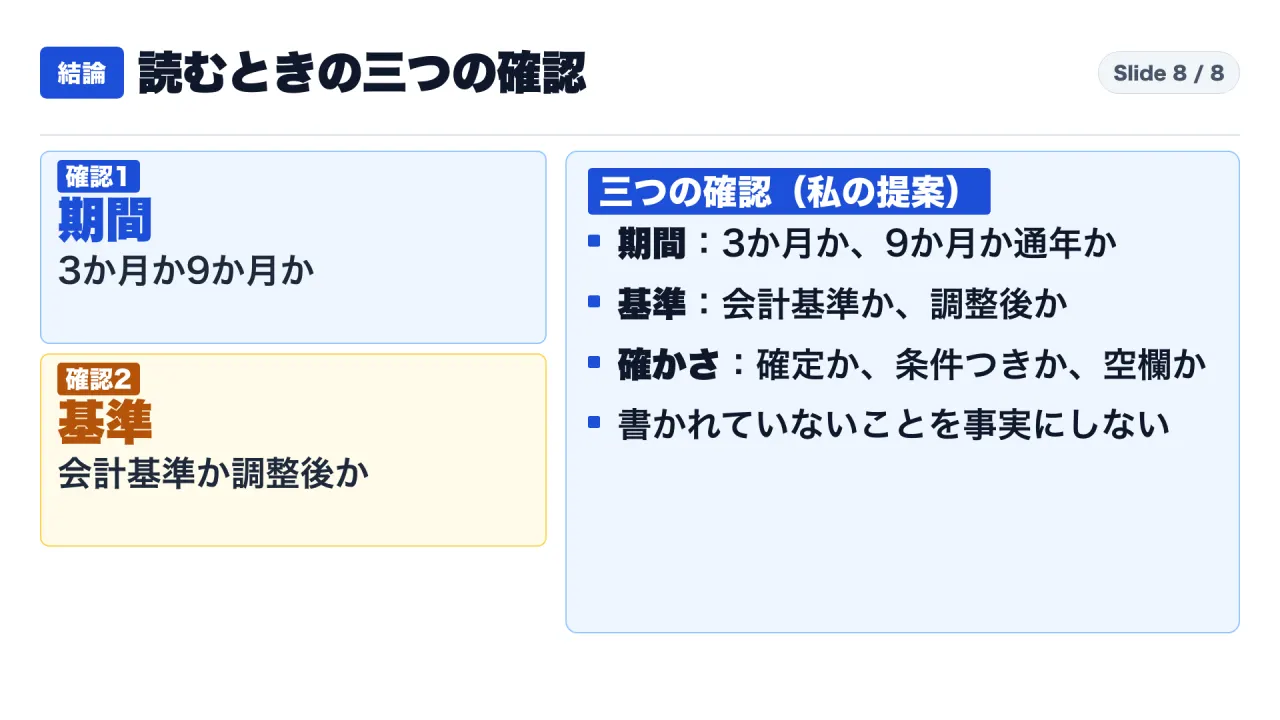
- Verify Exact Reporting Horizons: Never conflate single-quarter metrics (Q3 2026) with nine-month cumulative totals or annualized run rates.
- Reconcile Accounting Standards: Separate GAAP operating results from Non-GAAP adjusted figures; identify specific non-cash exclusions.
- Deconstruct Growth Multipliers: Inspect prior-year denominators to isolate base effects from true sequential momentum.
- Segment Infrastructure Liabilities: Separate aggregate multi-decade commitments into near-term cash obligations versus conditional agreements.
- Audit Missing Filings Data: Maintain a strict register of placeholder blanks (offering price, run rate) and avoid speculative extrapolation.
Frequently Asked Questions
Q: Does 12x revenue growth confirm stable long-term profitability? A: No. Disclosures show Q3 revenue grew 12.27x year-over-year against a small base ($1,382M), while GAAP operations generated a $(567)M loss. October run-rate revenue is unstated.
Q: Is Anthropic fundamentally unprofitable based on its $(567)M operating loss? A: Under GAAP, operations recorded a $(567)M loss, driven by $5.0B in spot compute and $2.0B in donation expenses. Under Non-GAAP accounting, adjusted operating income was $2,463M. Both standards must be reviewed together.
Q: Did the $600M price reduction decrease total revenue by $600M? A: No. Disclosures state that volume gains were partially offset by $600M in price reductions; it represents a moderating factor on sequential growth, not an absolute top-line contraction.
Q: Is Anthropic legally obligated to pay the entire $895.4B compute commitment? A: No. Approximately $213.8B (23.9%) is subject to termination if counterparties fail to obtain required financing, power, or facility permits. Additionally, $447.9B matures after 2030.
Q: Why was net loss so high at $23.3 billion? A: Approximately 94% of the Q3 net loss ($21,936M of $23,291M) was driven by non-cash mark-to-market fair value increases in convertible debt instruments, not operational cash burn.
Primary Sources & Reference Documentation
- S1: SEC Form S-1/A Registration Statement (Amendment No. 1, Filed November 2, 2026, Accession 0001628280-26-068676): https://www.sec.gov/Archives/edgar/data/2130357/000162828026068676/anthropicpbc-sx1ax1.htm
- S2: SEC Form S-1 Registration Statement (Original Filing, Filed October 26, 2026, Accession 0001628280-26-067168): https://www.sec.gov/Archives/edgar/data/2130357/000162828026067168/anthropicpbc-sx1.htm