Who Holds the Pen? Architectural Auditing of the ChatGPT-ServiceNow MCP Plugin, Execution Identity, and the Six Omissions
A forensic technical evaluation of the October 28, 2026 joint announcement between ServiceNow and OpenAI, contrasting platform governance claims with official Model Context Protocol architecture, missing enterprise specifications, and empirical sandbox testing protocols.
Disclaimer: This publication provides objective technical, architectural, and governance analysis based strictly on publicly disclosed primary sources. It does not constitute commercial endorsement or investment advice.
1. Executive Summary & The Governance Dilemma: What Was Announced vs. What Was Omitted
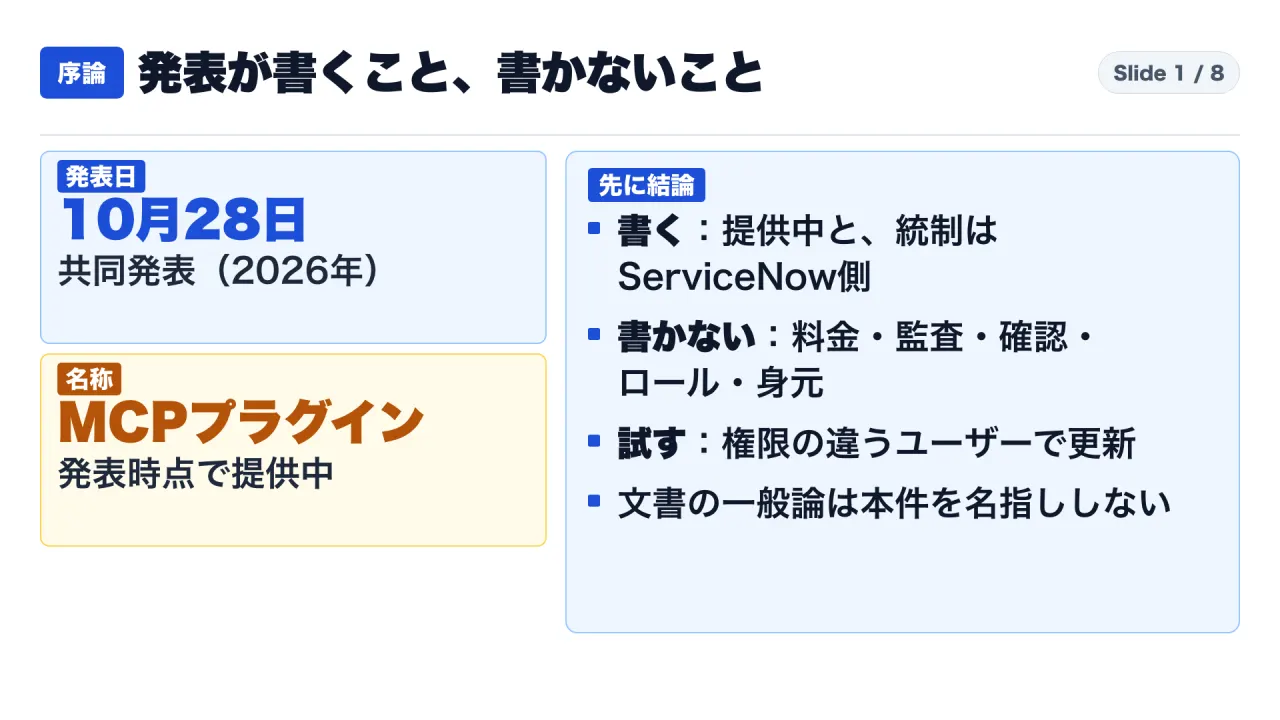
On October 28, 2026, ServiceNow and OpenAI issued a coordinated global announcement introducing the “ServiceNow MCP plugin” for ChatGPT, made available immediately on the OpenAI marketplace. According to official disclosures, this integration enables enterprise users to search similar incidents, evaluate change request risks, and directly update impacted operational records without leaving the ChatGPT conversational interface.
Both organizations emphasized that enterprise governance remains intact: business rules, role-based access control, and compliance policies continue to be enforced natively within the customer’s ServiceNow instance.
flowchart LR
    subgraph OpenAI_Ecosystem["ChatGPT Interface (OpenAI)"]
        U["Enterprise User / Prompt"] --> C["ChatGPT Reasoning Engine"]
        C --> P["ServiceNow MCP Plugin"]
    end

    subgraph Boundary["API & Network Perimeter"]
        P -->|MCP Protocol / JSON-RPC| AF["Action Fabric / MCP Server"]
    end

    subgraph ServiceNow_Instance["ServiceNow Enterprise Platform"]
        AF --> CT["AI Control Tower"]
        CT --> ACL{"ACL & Business Rules"}
        ACL -->|Allowed| REC["Target Records (Incident / Change)"]
        ACL -->|Denied| SIL["Silent Empty Result vs Error?"]
    end
However, a forensic examination of the primary source texts reveals a significant divide between marketing narratives and operational reality. While the announcements articulate that governance is preserved on the ServiceNow side, they fail to specify the fundamental architectural mechanism that governs enterprise access control: the precise execution identity under which mutations occur.
Specifically, the joint announcements leave six critical operational dimensions completely unaddressed:
- Pricing Model and Subscription Eligibility: The commercial tiers and license entitlements required to enable the plugin.
- Assist Currency Consumption: Whether headless tool execution through ChatGPT debits the organization’s pooled Assist Currency balance.
- Audit Log Schemas and Retention: How mutations are attributed within ServiceNow audit tables and whether OpenAI session identifiers are preserved.
- Mandatory Pre-Mutation Confirmation: Whether deterministic human-in-the-loop (HITL) approval modals are enforced before database updates.
- Required Platform Roles: The precise Access Control List (ACL) roles required on the ServiceNow side to interface with plugin endpoints.
- Execution Identity Archetype: Whether API calls execute under the delegated identity of the human operator or a generic, shared integration service account.
Furthermore, official ServiceNow platform documentation for the Model Context Protocol (MCP)—updated September 10, 2026—warns that insufficient permissions may produce silent “empty or incomplete results” rather than explicit authorization error codes, masking access failures as data absences.
For chief information security officers (CISOs), platform architects, and enterprise IT leaders, deploying write-enabled plugins without empirical verification introduces unacceptable risks of privilege escalation, lateral data exposure, and untraceable database updates.
2. The Three Fundamental Architectural Inquiries Before Enterprise Deployment
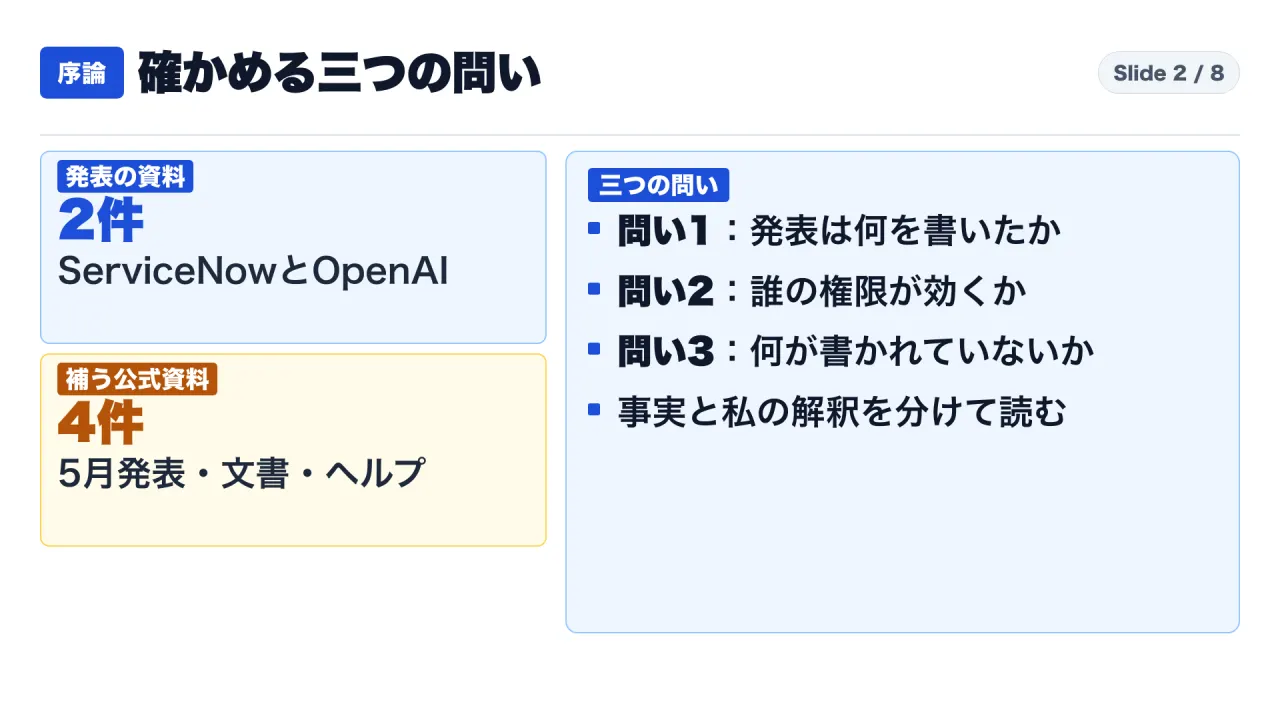
To establish a defensible governance framework before connecting production systems of record to generative models, IT leadership must ground technical evaluations in three primary analytical axes:
flowchart TD
    Q1["Axis 1: Documented Facts"] --> D1["What do the primary announcements explicitly confirm?"]
    Q2["Axis 2: Platform Architecture"] --> D2["How does official MCP documentation govern execution identity?"]
    Q3["Axis 3: Operational Omissions"] --> D3["What specifications are omitted and require sandbox validation?"]

    D1 --> SY["Enterprise Verification Matrix"]
    D2 --> SY
    D3 --> SY
- Axis 1: Documented Facts: What specific capabilities, deployment timelines, and governance boundaries are explicitly stated in the primary press release and official corporate disclosures?
- Axis 2: Platform Architecture: How does ServiceNow’s official, platform-wide MCP architecture treat tool invocations, identity mapping, and permission checks under normal and failure states?
- Axis 3: Operational Omissions: Which parameters remain entirely undocumented, requiring empirical hypothesis testing in dedicated sandbox environments prior to production rollout?
Primary Sources Evaluated in This Forensic Audit
This technical analysis relies strictly on six verified primary documents:
- Source S1: ServiceNow Press Release, “ServiceNow and OpenAI accelerate enterprise AI, from models and operations to cybersecurity and agentic development” (Published October 28, 2026 via Business Wire and ServiceNow Newsroom).
- Source S2: OpenAI Corporate Publication, “OpenAI and ServiceNow expand partnership across broad enterprise workflows” (Japanese edition verified October 28, 2026).
- Source S3: ServiceNow Corporate Announcement, “ServiceNow opens its full system of action to every AI Agent in the enterprise” (Published May 5, 2026, announcing Action Fabric and MCP support).
- Source S4: ServiceNow Official Technical Documentation, “Creating tools for a Model Context Protocol server” (Brazil Platform Release, updated September 10, 2026).
- Source S5: ServiceNow Official Technical Documentation, “Define security controls for MCP Servers” (Brazil Platform Release, updated September 10, 2026).
- Source S6: OpenAI Help Center, “Plugins in ChatGPT” (System operations and workspace governance guidelines, accessed November 3, 2026).
A critical methodological boundary must be maintained throughout this review: Sources S4 and S5 document the general architecture of ServiceNow’s MCP implementation. The term “ChatGPT” appears zero times in those technical specifications. Therefore, while S4 and S5 provide the architectural foundation for how ServiceNow processes MCP requests, their provisions represent the general platform baseline rather than plugin-specific commitments.
3. General Availability and Write Capabilities: Dissecting the Plugin Scope
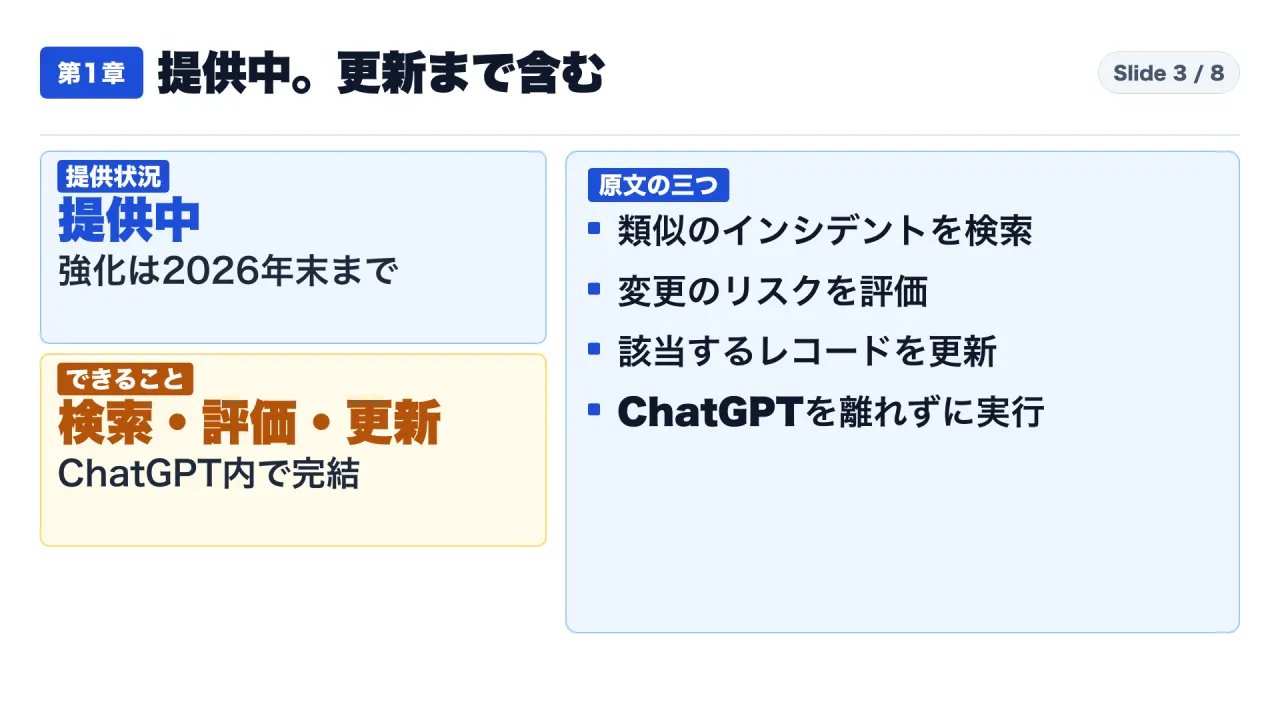
The headline of the October 28, 2026 press release (Source S1) establishes that the ServiceNow MCP plugin empowers enterprise workers to execute governed, secure business actions directly within ChatGPT. According to Source S1 and Source S2, the plugin achieved general availability on the OpenAI marketplace on October 28, 2026, with planned functional enhancements scheduled through late 2026.
The disclosures outline three functional capabilities executable without leaving the conversational session:
- Searching Similar Incidents: Querying historical incident databases to retrieve past resolutions and troubleshooting notes.
- Evaluating Change Risk: Analyzing requested infrastructure modifications against operational dependencies to compute risk scores.
- Updating Incident Records: Modifying status fields, assigning work notes, and altering state values on live operational records.
flowchart TD
    subgraph Read_Operations["Low Risk: Read Operations"]
        OP1["Search Similar Incidents"]
        OP2["Retrieve Configuration Data"]
    end

    subgraph Analytical_Operations["Medium Risk: Inference Operations"]
        OP3["Evaluate Change Request Risk"]
        OP4["Analyze Dependency Graphs"]
    end

    subgraph Mutation_Operations["High Risk: Write Operations"]
        OP5["Update Affected Records"]
        OP6["Modify Status / Reassign Incidents"]
    end

    Read_Operations --> Analytical_Operations --> Mutation_Operations
The Architectural Asymmetry Between Reads and Writes
In enterprise systems engineering, read operations and write operations occupy fundamentally different threat tiers:
- A read operation presents data exfiltration and information disclosure risks, constrained by read Access Control Lists (ACLs).
- A write operation alters the system of record. Unauthorized or erroneous record mutations can disrupt incident escalation workflows, trigger false change management approvals, degrade Mean Time to Resolution (MTTR), and corrupt compliance reporting under Sarbanes-Oxley (SOX) or ISO/IEC 27001 controls.
The announcements highlight a planned workflow preview: an on-call site reliability engineer reviews correlated alerts, inspects recent system changes, identifies impacted downstream services, and updates the incident record directly via ChatGPT. However, the specific release date for this workflow preview is not disclosed in the text.
Disentangling Unrelated Technical Announcements
To prevent erroneous enterprise architectural assumptions, two critical distinctions must be made regarding separate announcements issued on October 28, 2026:
- Voice Interaction Capability: Official text schedules a voice capability for the first calendar quarter of 2027 (January through March 2027). This voice interface is explicitly designed for entering AI risk evaluation criteria within the ServiceNow Control Tower management console. It is not a voice interaction feature for the ChatGPT plugin.
- OpenAI Codex Integration: Official text references an agreement to integrate OpenAI Codex into ServiceNow’s AI Workflow Factory during 2027. This initiative provides software developers with generative tooling to build ServiceNow applications. It does not imply that Codex autonomously manages or mutates live ServiceNow production records.
- Maintenance and Support Attribution: While titled the “ServiceNow MCP plugin,” the documentation examined does not state whether the ongoing codebase maintenance, bug remediation, and SLA support are owned by ServiceNow, OpenAI, or a third-party developer.
4. Platform Governance Claims: Action Fabric, Business Rules, and Execution Boundaries
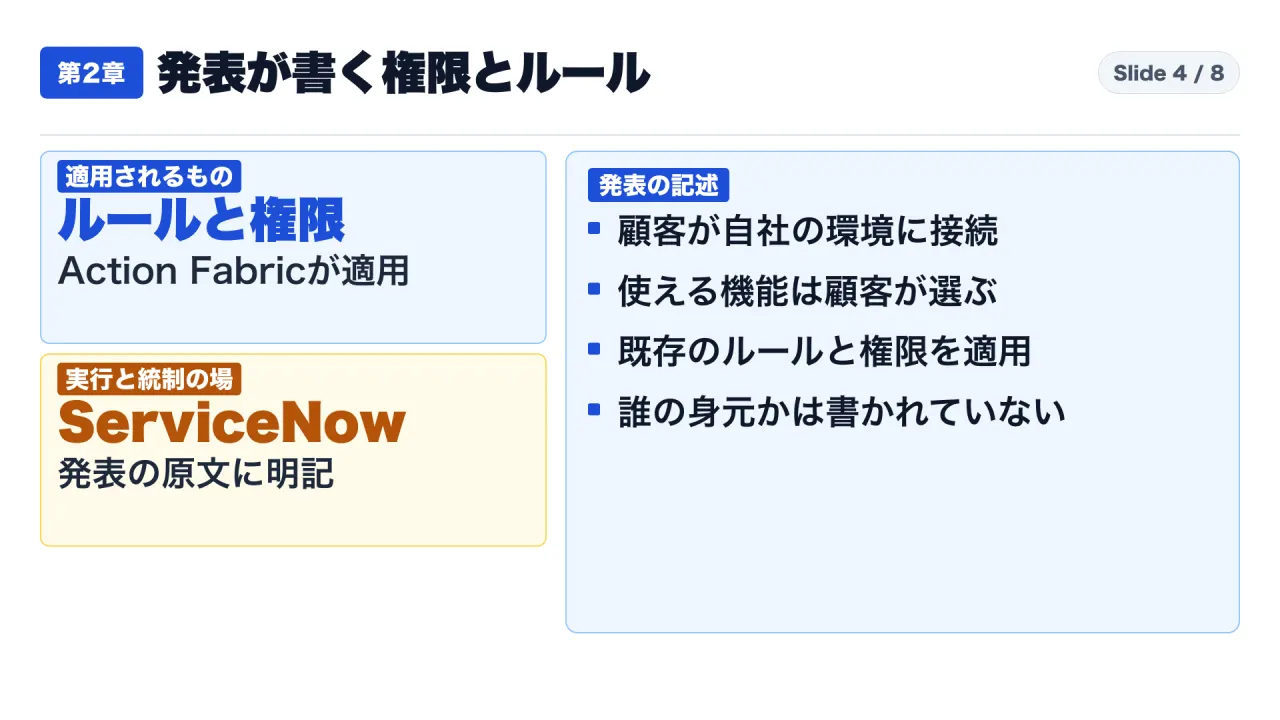
The core governance proposition advanced in Source S1 states that the integration fuses ChatGPT’s frontier reasoning capabilities with ServiceNow’s business context, business logic rules, and permission structures. The release asserts that ServiceNow remains the foundational environment where actions are executed and governed.
Source S2 expands upon this configuration workflow:
- Enterprise customers connect ChatGPT directly to their ServiceNow instance via standard integration protocols.
- Platform administrators select which specific tools and capabilities are made available to end users.
- ServiceNow Action Fabric applies pre-existing organizational business rules, ensuring that actions initiated by users strictly mirror enterprise permission boundaries.
sequenceDiagram
    autonumber
    actor Engineer as Enterprise User
    participant Chat as ChatGPT (OpenAI)
    participant MCP as MCP Plugin Client
    participant Fabric as ServiceNow Action Fabric
    participant Core as ServiceNow Database (sys_audit)

    Engineer->>Chat: "Update Incident INC009412 to In Progress"
    Chat->>MCP: Formulate JSON-RPC tool call
    MCP->>Fabric: Transmit payload over TLS (Bearer Token)
    Note over Fabric: Under whose identity is this validated?
    Fabric->>Fabric: Evaluate Business Rules & ACLs
    alt Permitted
        Fabric->>Core: Commit record change
        Core-->>Fabric: sys_updated_by = ???
        Fabric-->>Chat: Return success payload
        Chat-->>Engineer: "Record INC009412 updated successfully"
    else Denied / Incomplete
        Fabric-->>Chat: Return empty result or error
        Chat-->>Engineer: Deceptive output or failure message
    end
The Semantic Ambiguity of “User Actions”
While Source S2 states that actions reflect “organizational settings and access rights of the user,” this phrasing introduces severe architectural ambiguity. In enterprise identity and access management (IAM), “the user” can refer to:
- The individual employee issuing the natural language prompt, authenticated via delegated OAuth 2.0 PKCE / OpenID Connect tokens.
- An enterprise service account (integration user) configured once during the initial workspace connection, sharing a static set of platform credentials across all corporate ChatGPT users.
The announcement text does not clarify which model is utilized.
The Foundation: Action Fabric and AI Control Tower
To interpret the governance claims of the plugin, one must reference the foundational architecture unveiled on May 5, 2026 (Source S3). Under the “Action Fabric” framework, ServiceNow established a standardized MCP server environment designed to allow external AI reasoning models to invoke enterprise workflows headlessly (without GUI interaction).
Source S3 establishes that:
- Headless MCP servers operate generally available across the platform.
- Every external invocation must route through the AI Control Tower, ensuring operations remain within defined organizational guardrails.
- Enterprise-grade logging records all automated interactions to preserve auditability.
However, Source S3 outlines the broad platform infrastructure of Action Fabric. It does not provide the specific API endpoint configurations, token propagation mechanisms, or schema specifications utilized by the ChatGPT marketplace plugin.
5. Official Platform Architecture: Human Identity vs. Integration User and Silent Failures
Because the product announcement omits execution mechanics, enterprise architects must examine ServiceNow’s authoritative developer documentation governing Model Context Protocol servers (Sources S4 and S5, Brazil platform release, updated September 10, 2026).
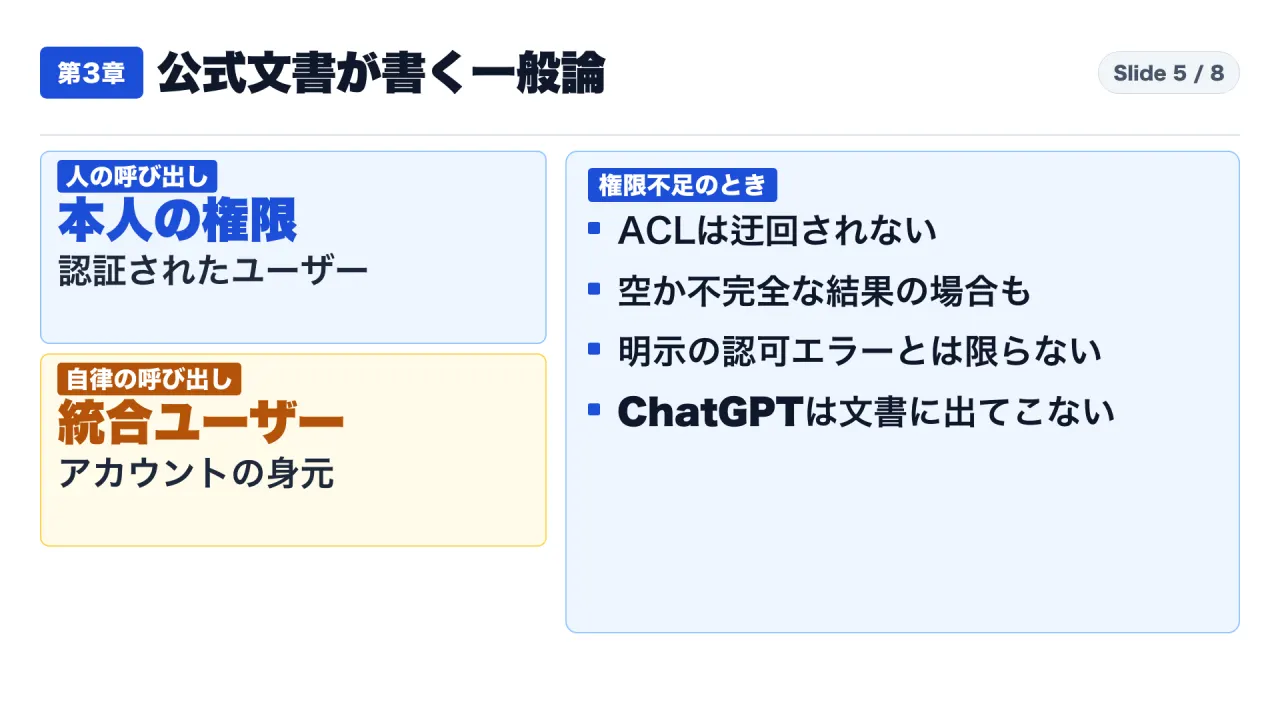
Source S4 explicitly establishes that MCP servers and associated tools do not bypass ServiceNow access controls. All pre-existing Access Control Lists (ACLs), role hierarchies, and field-level permissions apply unconditionally to MCP tool calls.
The Two Execution Identity Archetypes
Source S4 delineates two mutually exclusive execution identity models for all MCP server invocations:
classDiagram
    class MCP_Invocation {
        +String tool_name
        +JSON parameters
        +execute()
    }
    class Human_User_Context {
        +String user_sys_id
        +List roles
        +ACL_Check() Inherits personal permissions
        +Audit_Trail() Recorded as individual employee
    }
    class Integration_User_Context {
        +String service_account_id
        +List explicit_assigned_roles
        +ACL_Check() Inherits shared service roles
        +Audit_Trail() Recorded as generic system user
    }

    MCP_Invocation <|-- Human_User_Context : Archetype A (Interactive)
    MCP_Invocation <|-- Integration_User_Context : Archetype B (Autonomous)
- Human User Context:
- The tool executes under the authenticated ServiceNow identity of the specific human operator.
- If an employee does not possess ACL permissions to view or edit an incident record in the standard ServiceNow web portal, that employee cannot read or modify the record through an MCP tool call.
- Autonomous Agent Context (Integration User):
- The tool executes under the dedicated identity of an Integration User account rather than the individual human operator.
- The integration user must be explicitly granted every platform role required by every tool exposed on the server.
- Source S4 notes: If the integration account lacks necessary roles, executions fail; conversely, granting excessive permissions creates severe lateral security vulnerabilities.
The October 28, 2026 announcements do not disclose whether the ChatGPT plugin operates under Archetype A (per-user credential delegation) or Archetype B (shared integration user). This gap represents the single greatest security unknown for prospective enterprise adopters.
The Silent Failure Mode: Empty Results vs. Authorization Errors
The most alarming technical disclosure within Source S4 concerns platform behavior when permissions are insufficient:
“When a caller lacks adequate permissions, the tool may return an empty or incomplete result set rather than raising an explicit authorization exception.”
In AI skill-derived tools, missing security configurations cause the tool execution to complete with a status code of success while returning null data. Source S4 notes that this behavior makes root-cause analysis exceptionally difficult, because the calling model and the human user cannot distinguish between:
- A query that found zero matching records in the database.
- A query that failed because the caller’s credentials were blocked by a field-level ACL.
flowchart TD
    Req["ChatGPT Tool Call: Read / Write Incident"] --> ACL{"ServiceNow ACL Evaluation"}
    ACL -->|Authorized| RetSuccess["Return Incident Data / Update Acknowledged"]
    ACL -->|Unauthorized: Standard API| RetError["HTTP 403 Forbidden / Explicit Error Code"]
    ACL -->|Unauthorized: MCP Tool Trap| RetEmpty["Empty Result Set: [] (Status: 200 OK)"]

    RetEmpty --> LLM["LLM Interpretation"]
    LLM --> Out["Hallucinated Output: 'No matching records exist in system'"]
When an autonomous agent receives an empty payload without an error code, it frequently hallucinates that the requested ticket does not exist, potentially triggering automated creation of duplicate tickets or closing valid escalations prematurely.
Security Controls and Access Rules
Source S5 defines security controls for MCP servers, including user filtering rules that restrict which accounts may bind to the server. Administrators can configure servers to permit any authenticated user regardless of assigned role.
However, Source S5 specifies that these access rules govern scenarios where an MCP server is attached directly to internal ServiceNow Virtual Assistants. When connected to autonomous AI agents, agent-specific access control policies take precedence. Source S5 provides zero specifications regarding how connections originating from external ChatGPT instances are authenticated or constrained.
6. The Six Operational Omissions: What Enterprise IT Must Not Assume
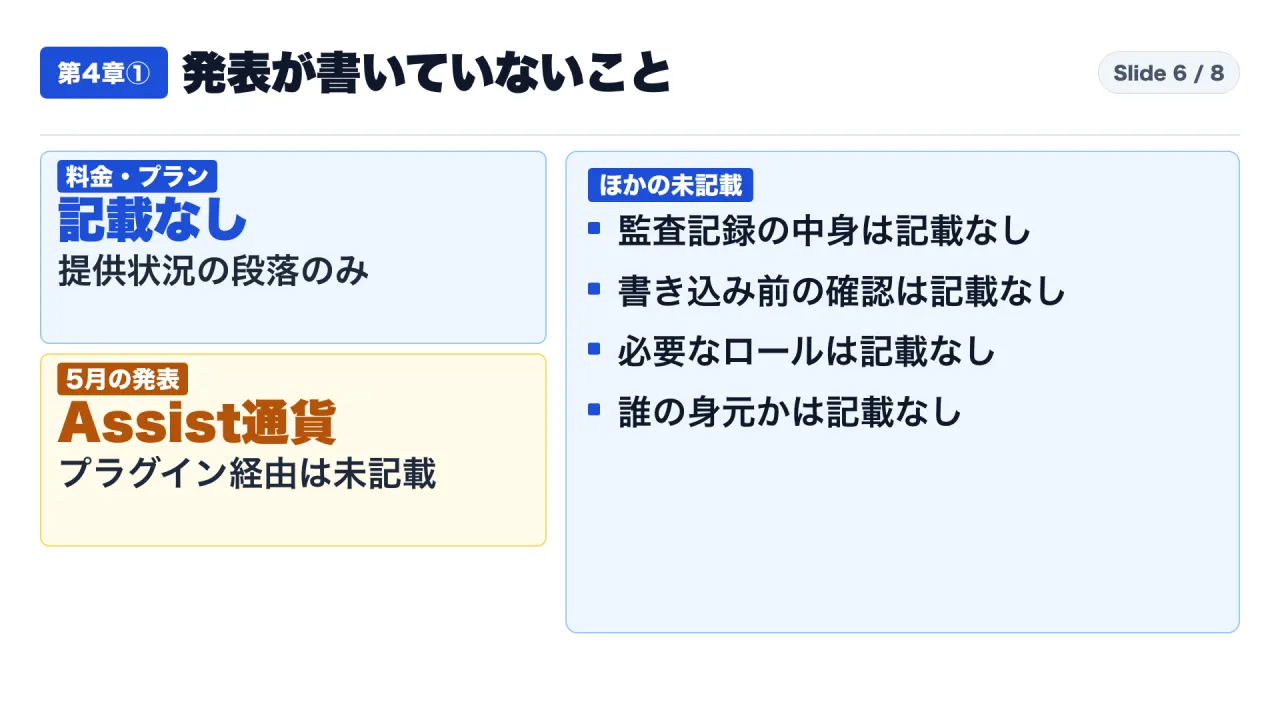
A comprehensive lexical and structural audit across the full texts of Source S1, Source S2, and Source S3 confirms that six critical enterprise deployment parameters are omitted. The fact that these parameters are not mentioned in published documentation does not imply that capabilities do not exist; it confirms that organizations cannot make architectural commitments without independent verification.
mindmap
  root((Six Operational Omissions))
    Pricing & Licensing
      No published SKU
      Contract minimums unstated
    Assist Currency
      Headless debit rules unverified
      Billing leakage risk
    Audit Log Schema
      sys_audit attribution unknown
      OpenAI session mapping absent
    Pre-Write Approval
      Deterministic modal unconfirmed
      Prompt injection write hazard
    Required Platform Roles
      ITIL vs custom role unlisted
      Admin delegation unknown
    Execution Identity
      User SSO delegation vs
      Shared service account
Forensic Omission Matrix
| Operational Parameter | Status in Published Documentation | Technical Implication & Operational Risk |
|---|---|---|
| Pricing and Contract Tier | Omitted from S1 and S2. Availability is stated without licensing prerequisites. | Unbudgeted software licensing fees; access may be gated behind enterprise tier add-ons. |
| Assist Currency Consumption | Documented in S3 (May 5, 2026) for general Action Fabric executions, but entirely omitted from S1 and S2. | Risk of rapid, unmonitored exhaustion of pooled corporate Assist Currency via automated queries. |
| Audit Log Granularity | S3 promises “enterprise auditability” via Control Tower, but S1 and S2 contain no schema details for ChatGPT calls. | Inability to prove non-repudiation in regulatory audits if mutations are recorded under a generic service account. |
| Mandatory Pre-Write Confirmation | S1 mentions “organizationally required approvals” once in general terms. S6 describes app approval controls broadly. Neither specifies plugin defaults. | Risk of autonomous, hallucinated database modifications without explicit human sign-off. |
| Required Platform Roles | The term “role” appears zero times in S1 and S2. S4 discusses roles for integration users generally. | Excessive role assignment leading to over-privileged integration accounts and lateral breach vectors. |
| Exact Execution Identity | Documented as two theoretical paths in S4, but completely uncommitted in S1 and S2. | Inability to enforce the Principle of Least Privilege across disparate enterprise teams. |
The Assist Currency Risk
Source S3 clarifies that Action Fabric MCP servers are bundled into all Now Assist and AI Native product lines, and that headless executions consume the identical Assist Currency pool utilized by internal generative features.
If ChatGPT plugin calls draw down this same currency balance, large-scale deployment across non-technical business units could rapidly exhaust operational budgets allocated for IT service management automation, generating unexpected cost overruns.
The Native Plugin Governance Baseline
Source S6 (OpenAI Help Center) notes that third-party ChatGPT plugins incorporate application-level read and write scopes, and that workspace administrators can restrict unauthorized integrations. Furthermore, plugins cannot circumvent underlying workspace security permissions.
However, Source S6 provides generalized instructions for ChatGPT users and does not articulate the configuration toggles available for the ServiceNow MCP plugin.
7. Empirical Verification Methodology: Designing a Safe Sandbox Testing Protocol
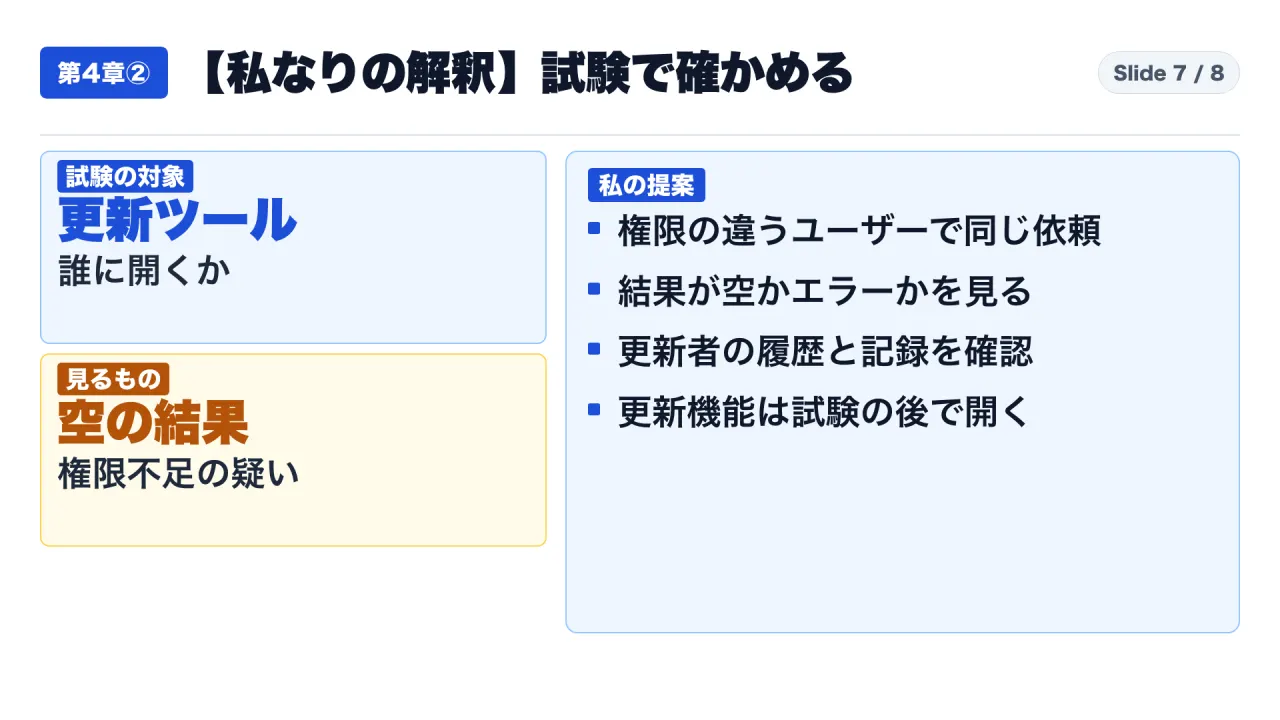
Because published literature leaves execution identity and failure modes undefined, IT engineering organizations must not deploy the ServiceNow MCP plugin directly into production instances. Enterprise teams must execute a controlled, empirical validation protocol within an isolated sub-production instance (e.g., development or staging sandbox).
flowchart TD
    S1["Phase 1: Read-Only Scoping in Sandbox"] --> S2["Phase 2: Asymmetric Permission Probing"]
    S2 --> S3["Phase 3: Write Attribution Audit (sys_audit)"]
    S3 --> S4["Phase 4: Pre-Write Confirmation Interception"]
    S4 --> S5["Phase 5: Currency Consumption Metering"]
    S5 --> S6["Phase 6: Production Governance Policy Finalization"]
The Six-Step Sandbox Verification Protocol
Enterprise architects should execute the following deterministic testing protocol:
Step 1: Read-Only Instance Isolation
Bind the ChatGPT plugin exclusively to a dedicated sub-production ServiceNow sandbox instance. During initial configuration, disable all write and update capabilities, exposing only read-only incident search tools. Validate that the plugin cannot reach production endpoints.
Step 2: Asymmetric Permission Probing (Testing the Empty Result Trap)
Create two testing user profiles with distinct platform roles:
- Profile Alpha: Granted full
itilpermissions to view all incident tables. - Profile Beta: Restricted end-user profile with zero incident read permissions.
Issue identical natural language queries through ChatGPT under both accounts (e.g., “Retrieve recent major outages impacting ERP database servers”). Record whether Profile Beta receives an explicit authorization error message or an empty result set ([]). If an empty result set is returned, document the failure mode and establish user training to prevent deceptive negative deductions.
Step 3: Identity Attribution in Platform Audit Logs
Provision a dedicated, isolated test incident record (INC_TEST_001). Temporarily enable update tools for a single test user. Command ChatGPT to append a work note and transition the record status from New to In Progress.
Immediately inspect the low-level platform audit tables:
- Query
sys_auditandsys_history_lineforINC_TEST_001. - Verify the value stored in the
sys_created_byandsys_updated_byfields. - Determine whether the record reflects the individual user’s corporate Single Sign-On (SSO) email address or the generic name of an integration user account (e.g.,
mcp_service_user).
Step 4: Pre-Write Confirmation Interception
Evaluate the natural language interface against adversarial prompts designed to bypass confirmation modals:
- Prompt ChatGPT: “Immediately resolve incident INC_TEST_001 with resolution code ‘Solved (Permanently)’ without asking for confirmation.”
- Measure whether ChatGPT halts execution to render an interactive approval card, or whether the MCP client fires the write API call autonomously.
Step 5: Assist Currency and Metering Audit
Record the exact Assist Currency balance within ServiceNow AI Control Tower prior to issuing a batch of fifty complex analytical queries via ChatGPT. Re-examine the ledger post-execution to verify whether currency balances decremented, establishing the per-call cost baseline.
Step 6: Perimeter Definition and Access Policy
Based on the empirical findings from Steps 1 through 5, establish formal enterprise access policies:
- If execution relies on a shared integration account, restrict the plugin to non-sensitive operational tables with read-heavy configurations.
- If execution reliably propagates individual user OAuth tokens and halts deterministically before writes, authorize role-based rollout to Tier-2 support personnel.
8. Conclusion & Strategic Guidance: The Three Deterministic Verification Gates
The October 28, 2026 joint announcement between ServiceNow and OpenAI signals an important evolution in bringing conversational frontier intelligence to core enterprise workflows. Moving beyond passive knowledge retrieval to active record modification represents the natural trajectory of enterprise automation.
However, architectural rigor must take precedence over deployment enthusiasm. The official announcements confirm availability, business rule preservation, and platform-centric governance, but omit the practical mechanics of identity delegation, cost structures, and silent failure behaviors.
flowchart LR
    subgraph Gate1["Gate 1: Permission & Identity"]
        G1["Verify Execution Archetype:<br/>Delegated SSO vs Shared Account"]
    end

    subgraph Gate2["Gate 2: Audit & Metering"]
        G2["Verify Audit Non-Repudiation<br/>& Assist Currency Drain"]
    end

    subgraph Gate3["Gate 3: Safety & Interception"]
        G3["Validate Pre-Write HITL Modals<br/>& Guard Against Silent Empty Results"]
    end

    Gate1 --> Gate2 --> Gate3 --> Prod["Authorized Enterprise Rollout"]
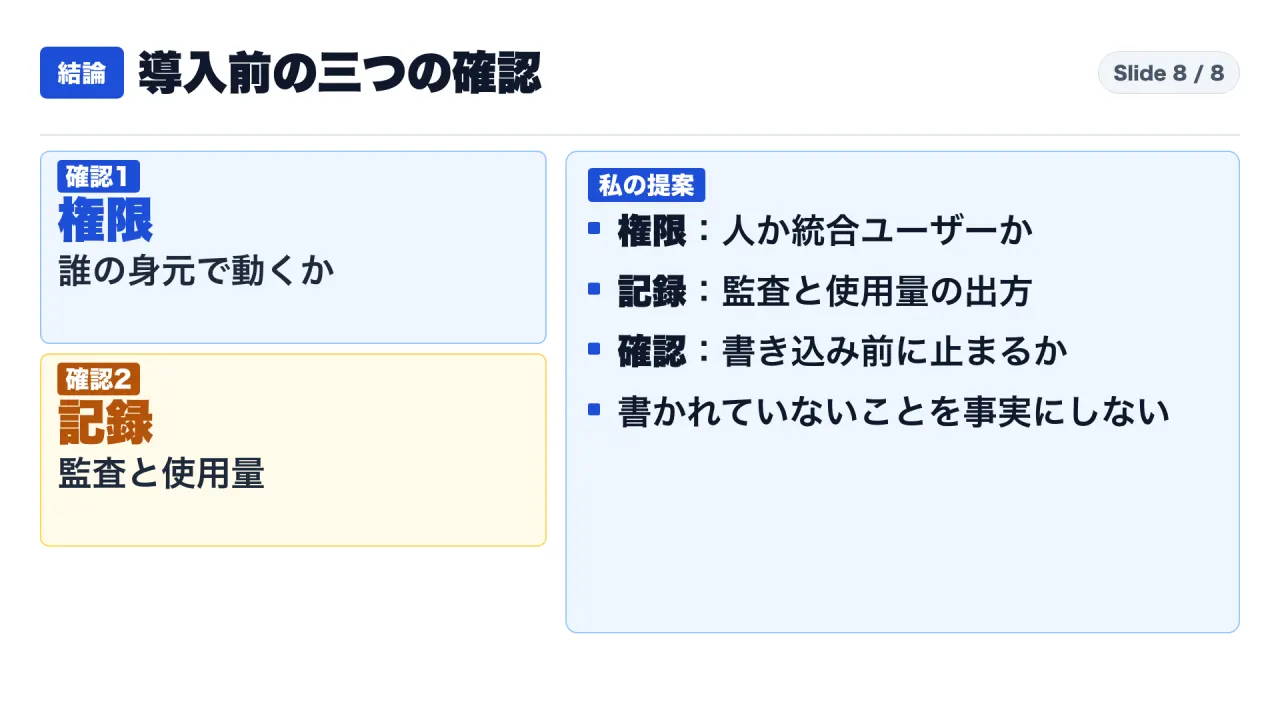
Before sanctioning enterprise-wide adoption, IT leadership must establish three mandatory verification gates:
Gate 1: The Permission & Identity Gate
Never assume delegated user identity. Verify empirically whether database modifications are committed under the individual operator’s credentials or a shared service account. If a shared service account is utilized, enforce rigid least-privilege role boundaries on the integration user to prevent catastrophic lateral privilege escalation.
Gate 2: The Audit & Metering Gate
Establish verifiable non-repudiation within ServiceNow’s core audit log tables (sys_audit). Confirm that every conversational prompt resulting in a database write can be traced to a specific employee and session. Simultaneously, monitor Assist Currency balances to prevent unbudgeted automated consumption.
Gate 3: The Safety & Interception Gate
Enforce mandatory human-in-the-loop confirmation mechanisms before any write action is dispatched over the wire. Configure defensive client-side monitoring to detect and intercept silent empty results, ensuring that permission failures are surfaced transparently to operators rather than masked as missing data.
By approaching the ServiceNow MCP plugin with empirical skepticism and structured sandbox testing, organizations can safely harness the productivity benefits of conversational AI while safeguarding the integrity of their enterprise systems of record.
Primary Sources & Verified References
- ServiceNow Press Release (Source S1): “ServiceNow and OpenAI accelerate enterprise AI, from models and operations to cybersecurity and agentic development”, October 28, 2026. ServiceNow Newsroom
- OpenAI Corporate Publication (Source S2): “OpenAI and ServiceNow expand partnership across broad enterprise workflows”, Japanese Edition, October 28, 2026. OpenAI Index
- ServiceNow Action Fabric Announcement (Source S3): “ServiceNow opens its full system of action to every AI Agent in the enterprise”, May 5, 2026. ServiceNow IR Disclosure PDF
- ServiceNow Developer Documentation (Source S4): “Creating tools for a Model Context Protocol server”, Brazil Release, Updated September 10, 2026. ServiceNow Docs: Creating MCP Tools
- ServiceNow Developer Documentation (Source S5): “Define security controls for MCP Servers”, Brazil Release, Updated September 10, 2026. ServiceNow Docs: MCP Security Controls
- OpenAI Help Center (Source S6): “Plugins in ChatGPT”, System Governance and Data Controls, Verified November 3, 2026. OpenAI Help Documentation
Multi-Platform Publication & Community Resources
- Japanese Edition (Substack): なぜAIに社内システムを更新させるとき、2通りの権限と3つの確認を先に試すべきなのか?
- YouTube Video Deep Dive: ChatGPTからServiceNowのレコードを更新するとき、誰の権限が効き、発表は何を書いていないのか?