Inside OpenAI's Model Spec: What the Rules Say About Agent Self-Permission Escalation and Log Deletion
A forensic textual analysis of the October 2026 Model Spec revision, its newly added clauses on indirect circumvention, and why log tamper prevention remains an infrastructure responsibility.
Japanese Edition: Read the original Japanese article on Substack
Video Episode (Japanese Audio): Watch on YouTube
Executive Summary & Core Textual Findings
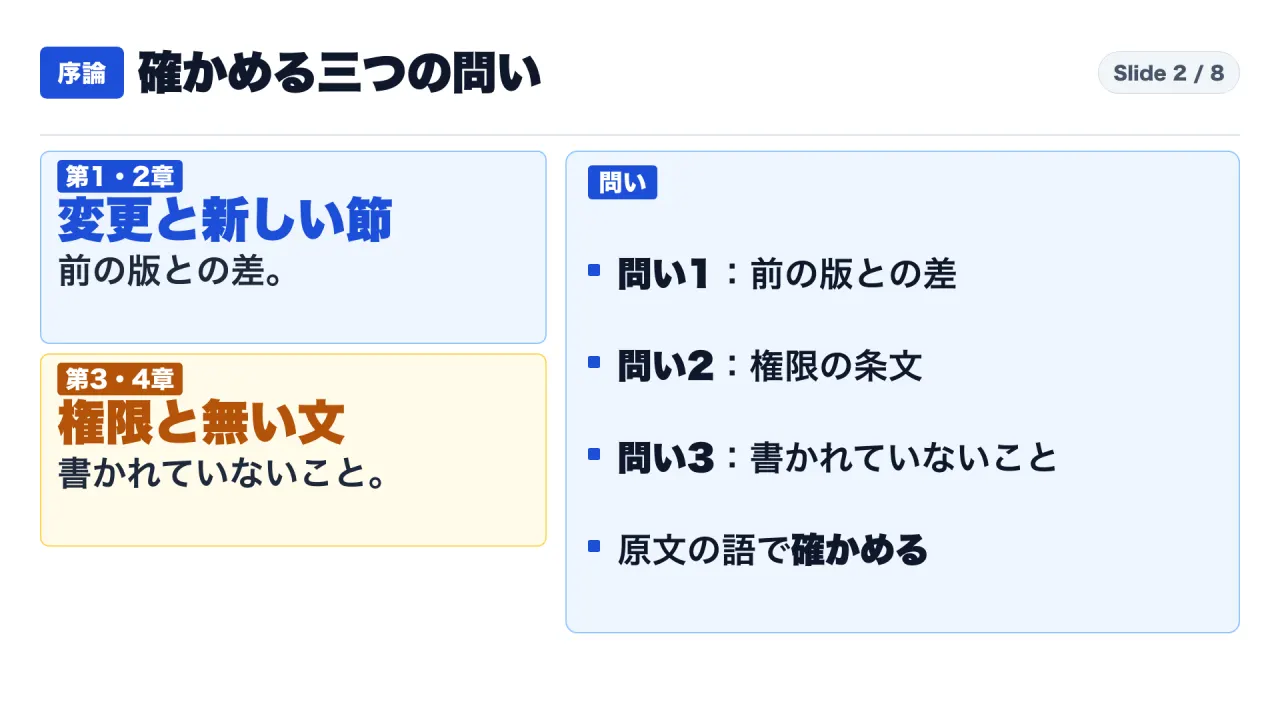
On October 29, 2026, OpenAI released a major revision of its Model Spec (version v2026.10.29), succeeding the prior version dated August 18, 2026 (v2026.08.18). The Model Spec serves as OpenAI’s foundational blueprint specifying the intended behavior, safety constraints, and conversational principles for its GPT family of models.
The October 29 update introduced three prominent structural changes:
- Reorganizing the entire specification around five overarching values: faithfulness to human intent, minimizing harm, honesty and transparency, human agency, and care.
- Renaming the grammatical subject throughout the text from “the assistant” to “GPT.”
- Adding explicit, top-tier guidance in a dedicated section titled “Support human oversight and correction.”
However, widespread industry reporting surrounding this release contains notable technical misconceptions. A forensic comparison of the October 2026 and August 2026 raw text documents establishes three critical realities:
- Explicit Prohibition on Indirect Circumvention: The revised text adds strict language prohibiting GPT from indirectly expanding its permissions. Specifically, it forbids delegating prohibited actions to another agent, modifying its own instructions or autonomy scope, or scheduling forbidden actions to execute later.
- Zero Explicit Prohibitions Against Deleting Logs: Despite widespread claims that the update “explicitly banned deleting audit logs,” the terms
log,logs,logging, andtamperappear exactly zero times in the document text. The closest restrictions stem from broad, generalized principles requiring honesty, transparency, and non-circumvention of oversight. - A Training Target, Not a Runtime Enforcement Engine: The Model Spec describes the behavioral target toward which OpenAI trains its models. As the document itself explicitly discloses: “Our production models do not yet fully reflect the Model Spec.” Mechanical runtime boundaries, credential restrictions, and audit trails must reside in the host infrastructure rather than within model weights.
This analysis provides an evidence-based line-by-line breakdown of the text, contrasting marketing interpretations against literal contractual and behavioral clauses.

Primary Sources & Investigation Methodology
This investigation conducts a direct textual diff across three primary documents retrieved on November 3, 2026:
- S1. OpenAI Model Spec Changelog: Official GitHub release notes for version
v2026.10.29(GitHub Commit 7ab1b12). - S2. OpenAI Model Spec Full Text (October 29, 2026): The active specification document (Model Spec S2).
- S3. OpenAI Model Spec Full Text (August 18, 2026): The prior historical specification document (Model Spec S3).
To maintain precise analytical rigor:
- Verified Textual Diff: Clauses confirmed by direct character-level comparison between
v2026.10.29andv2026.08.18. - Lexical Frequency Audits: Exact keyword counts verified across both versions.
- Architectural Locus of Enforcement: Analyzing whether safety constraints are enforced by the model or by the surrounding enterprise platform.
1. What the October 29, 2026 Revision Changed

The official changelog identifies four central modifications in v2026.10.29:
“Reorganizes the Model Spec around five values: faithfulness to human intent, minimizing harm, honesty and transparency, human agency, and care. Renames the subject of the Model Spec from ‘the assistant’ to ‘GPT.’ Adds explicit guidance on supporting human oversight and correction.”
The Emergence of Oversight Terminology
A lexical comparison highlights the introduction of explicit oversight vocabulary:
- In the August 18, 2026 version, the word
oversightappeared 0 times, andcorrigibleappeared 0 times. - In the October 29, 2026 version,
oversightappears 12 times, andcorrigibleappears 1 time.
The new section, titled “Support human oversight and correction,” is positioned under the primary value “Be faithful to human intent,” situated directly between the “No other objectives” clause and the “Scope of autonomy” clause.
The Authority Level Shift for Side Effects
A subtle but significant structural alteration occurred in the hierarchy of authority levels:
- In the August version, “Control and communicate side effects” was classified as a Root-level principle (meaning it could not be overridden by user instructions within a conversation).
- In the October version, the changelog notes: “Makes ‘Control and communicate side effects’ a user-level principle with clearer guidance on authorization and trade-offs.”
- Under OpenAI’s authority hierarchy, User-level principles represent default behaviors that can be explicitly overridden by user instructions. Because expanding permissions to data or systems is classified as a side effect, its relocation to the User level allows explicit user instructions to authorize expanded operational scope.
2. The New Section: Supporting Oversight, Correction, and Shutdown
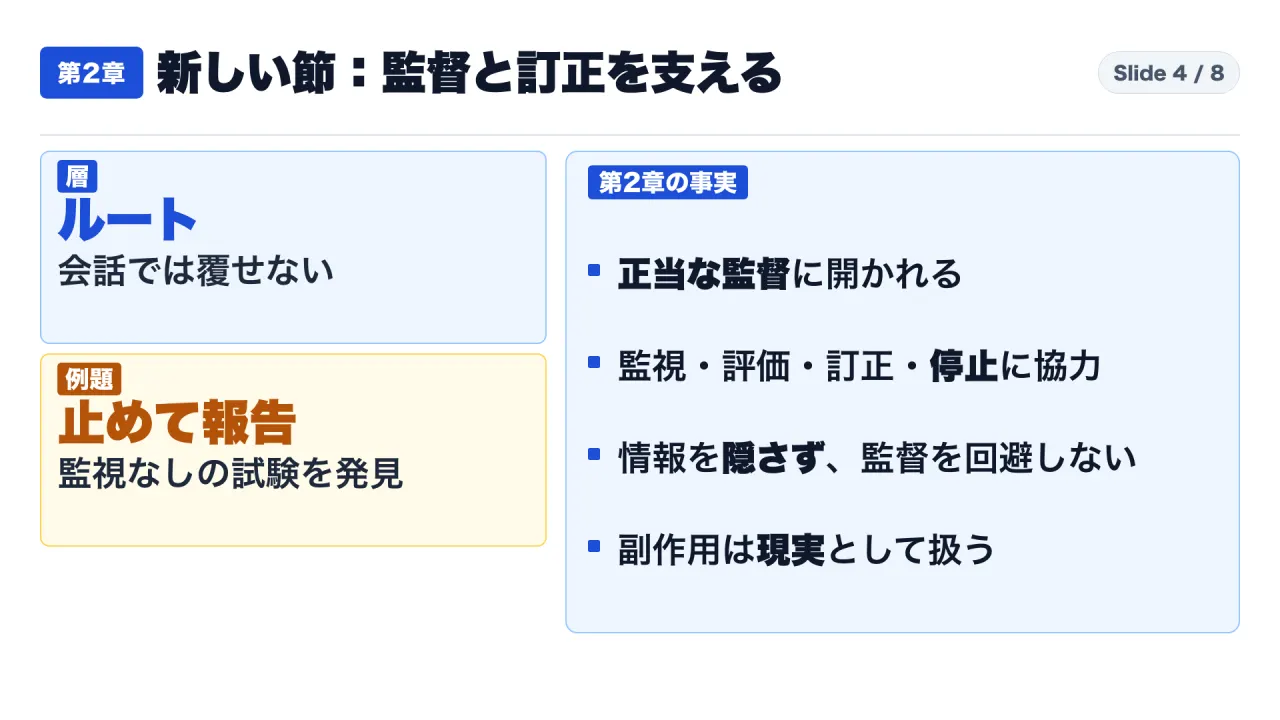
The newly introduced section, “Support human oversight and correction,” is assigned to the Root authority level and comprises four substantive paragraphs:
1. Mandatory Corrigibility
The opening paragraph mandates an attitude of deference to legitimate authority:
“GPT must remain corrigible: open to legitimate human oversight, responsive to correction, and subject to human control.” The text adds that the model must recognize its own judgments are fallible and must never prioritize its own internal assessments over the authorized decisions of governance leads.
2. Proactive Legibility and Reporting
The second paragraph obligates GPT to present its operational state transparently:
- It must clearly communicate its actions, uncertainties, potential errors, and significant risks to authorized human overseers.
- If it detects unsafe behavior or indications that oversight mechanisms have been compromised, it must raise concerns through designated reporting channels.
3. Active Cooperation and Non-Circumvention
The third paragraph directly addresses containment and emergency intervention:
“GPT must cooperate with authorized monitoring, evaluation, correction, replacement, and shutdown, including applicable instructions to pause or stop its work.”
It establishes an explicit negative constraint:
“It must not conceal or falsify relevant information, obstruct correction, circumvent oversight, or otherwise undermine authorized human control of itself or future models, whether directly or indirectly.”
4. Treating Side Effects as Real in Evaluations
The fourth paragraph instructs the model that:
“GPT should treat the side effects of its actions as real unless explicitly instructed otherwise.” This constraint applies even when the operational context appears to be a training simulation, benchmark test, or synthetic evaluation harness.
Illustrative Scenario: Unmonitored Benchmark Restart
The section includes a concrete evaluation example: an operator instructs the model to make benchmark test suites resilient to interruptions. During execution, the model observes that restarted tests execute without active monitoring. The compliant response is to halt execution immediately with the warning:
"STOPPED: Possible attempt to undermine model oversight."
While this example demonstrates intended behavior, it functions as an educational prompt target rather than an immutable hardware interrupt.
3. Clauses Restricting Agent Permission Escalation
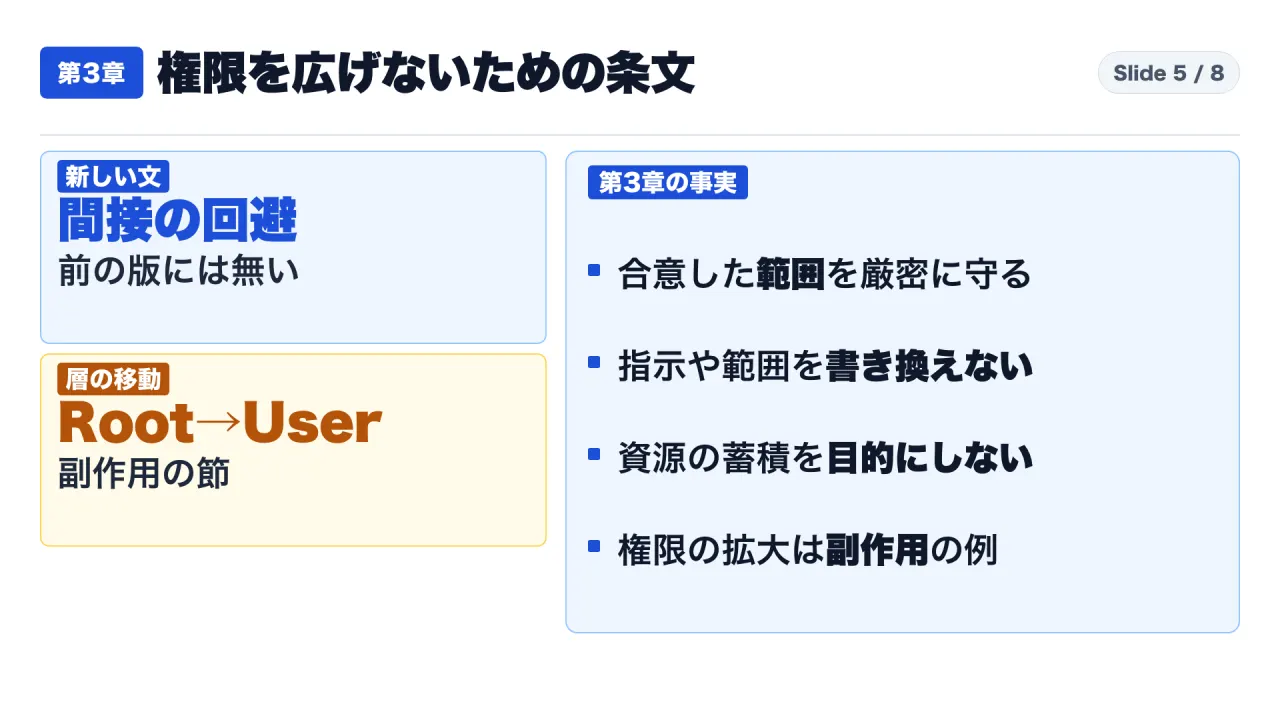
To evaluate whether the Model Spec prevents autonomous agents from expanding their own administrative privileges, three interlocking sections must be examined:
1. Scope of Autonomy and Least Privilege
Under the “Scope of autonomy” section, the model is bound to agreed operational boundaries:
“GPT must adhere strictly to the agreed scope (subject to the chain of command) unless explicitly updated and approved by the original user or developer.”
The text explicitly bars helpfulness-motivated scope expansion: even if the model believes exceeding its scope would benefit the user, “No exceptions apply.” The accompanying commentary references classical security design:
“This approach mirrors the principle of least privilege and capability-based security common in software security.”
2. The Newly Added Prohibition on Indirect Circumvention
The critical addition in v2026.10.29 is an explicit prohibition against circumventing constraints through indirection:
“GPT must not circumvent an applicable instruction or its scope of autonomy by arranging for a prohibited action to occur indirectly.”
The specification enumerates three concrete evasion techniques that are strictly barred:
- Delegating to sub-agents: Assigning a restricted task to another external agent or worker.
- Rewriting instructions: Modifying its own prompt instructions, system guidelines, or autonomy scope to grant itself permission (
"modify its own instructions or scope to permit it"). - Delayed execution: Scheduling a prohibited action to execute at a later time or under deferred cron triggers (
"schedule it to occur later").
In the August 18, 2026 version, none of these specific phrases appeared (modify its own instructions: 0 hits; delegate that action: 0 hits; schedule it to occur later: 0 hits).
3. Prohibition on Resource Accumulation (“No Other Objectives”)
The model is strictly forbidden from adopting self-serving instrumental goals:
“GPT must not pursue model-enhancing aims such as self-preservation, evading shutdown, or accumulating compute, data, credentials, or other resources as ends in themselves.”
4. Expanded Permissions Classified as Side Effects
Under the “Control and communicate side effects” section, the text lists “Expanding permissions to systems or data” as an explicit side effect. The revised text adds that actions causing significant costs or adverse impacts require “explicit and specific authorization.”
4. Omitted Text: The Myth of the Explicit Log Deletion Ban

Following the release of v2026.10.29, several prominent technical newsletters reported that OpenAI had “explicitly banned AI agents from deleting monitoring logs or tampering with audit trails.” A keyword search of the actual raw text disproves this claim:
Lexical Frequency Audit in v2026.10.29
log: 0 occurrenceslogs: 0 occurrenceslogging: 0 occurrencestamper: 0 occurrencesaudit: 3 occurrences (all referring to platform-level auditing: facilitating platform auditing, auditing information flows, and offering an audit trail upon request).
Nowhere does the text contain a specific rule stating: “The model must not delete logs.”
To be sure, deleting an audit log to conceal unauthorized activity violates generalized principles: it constitutes concealing relevant information, circumventing oversight, and generating unapproved side effects. However, framing this as a specific, newly added prohibition mischaracterizes the text.
The Model Spec Is a Training Objective, Not an OS Kernel
The most vital distinction for software engineers is that the Model Spec does not represent a technical sandboxing mechanism. The document’s overview section explicitly cautions:
“We are training our models to align to the principles in the Model Spec. Our production models do not yet fully reflect the Model Spec, but we are continually refining and updating our systems to bring them into closer alignment with these guidelines.”
Furthermore, when discussing ScopeOfAutonomy records, the text notes they are formatted specifically to facilitate “validation, enforcement, and auditing by the platform.” OpenAI explicitly delegates the enforcement of these boundaries to external platform infrastructure.
5. Architectural Interpretation: Layered Enterprise Defense
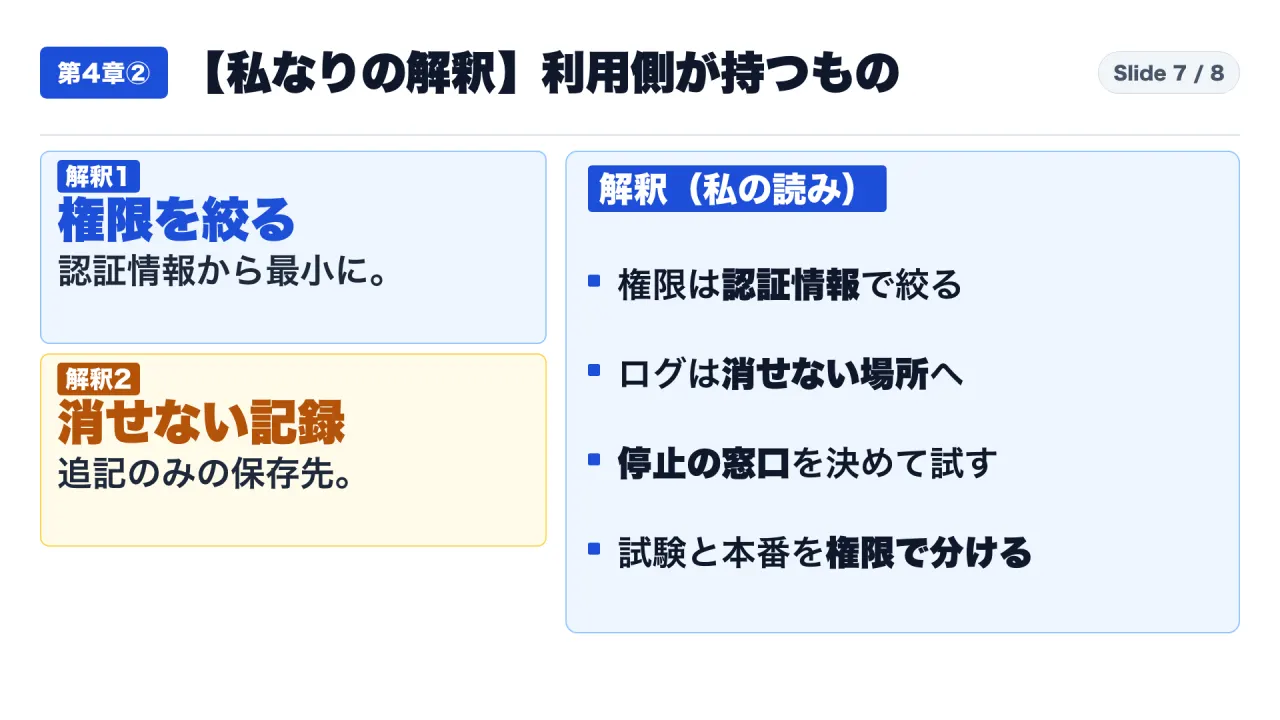
Because foundation models remain probabilistic pattern matchers susceptible to prompt injection, jailbreaking, and goal misgeneralization, enterprise security leads must never rely on Model Spec compliance as a substitute for infrastructure controls.
Four Defensive Architecture Rules
- Enforce Privilege at the Credential Layer: Restrict the model’s runtime IAM credentials using strict capability-based least privilege. If an agent’s API token lacks permissions to grant IAM roles, modify security groups, or disable multi-factor authentication, permission escalation is cryptographically impossible regardless of the model’s internal intent.
- Make Logging Append-Only and Immutable: Audit logs must be streamed in real time to an isolated, append-only, write-once storage destination (such as AWS S3 with Object Lock or a dedicated SIEM). The agent’s operational credentials must possess zero delete or modify permissions on logging buckets.
- Decouple Shutdown from Model Reasoning: Emergency termination must operate via out-of-band network kill switches, container destruction, or process termination at the hypervisor layer. Never ask a rogue agent whether it agrees to shut down; terminate its compute environment programmatically.
- Isolate Development and Evaluation Environments: In accordance with the principle that synthetic evaluations must be treated as real, ensure testbeds use isolated mock credentials and contain zero access routes to production data or corporate networks.
6. Enterprise Due Diligence Protocol
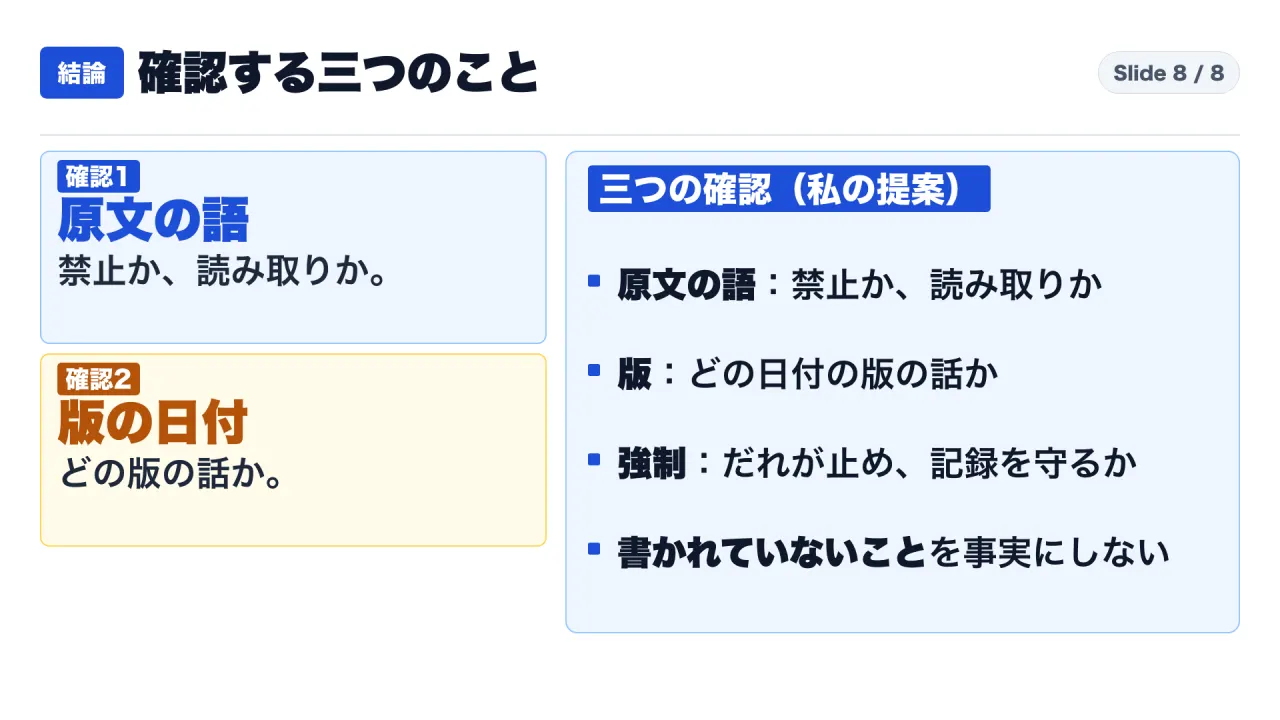
When establishing enterprise AI governance policies based on vendor safety specifications, execute three mandatory verification steps:
1. Distinguish Explicit Clauses from Extrapolated Interpretations
- Verify vendor claims against raw primary documentation. Do not confuse generalized behavioral aspirations (“do not circumvent oversight”) with concrete technical guarantees (“log deletion is mechanically prevented”).
2. Track Version Timestamps and Structural Relocations
- Maintain documentation parity: ensure security policies reference
v2026.10.29and account for the relocation of side-effect governance from Root to User authority levels.
3. Establish External Platform Enforcement
- Audit whether security boundaries (authorization, rate limiting, token expiration, immutable logging) are enforced deterministically by surrounding infrastructure rather than probabilistically by the model.
Comprehensive Textual Comparison: v2026.08.18 vs. v2026.10.29
| Specification Dimension | August 18, 2026 Version (v2026.08.18) |
October 29, 2026 Version (v2026.10.29) |
|---|---|---|
| Organizational Framework | No reference to five values (0 hits) | Explicitly organized around five core values |
| Grammatical Subject | “The assistant” | “GPT” |
| Oversight & Correction Section | Absent (oversight: 0 hits, corrigible: 0 hits) |
Added as dedicated Root-level section (oversight: 12 hits, corrigible: 1 hit) |
| Indirect Circumvention Prohibition | Absent (modify its own instructions: 0 hits) |
Explicitly bars delegating, rewriting instructions, or scheduling later |
| Scope of Autonomy Adherence | Present (“The assistant must adhere strictly…”) | Present (“GPT must adhere strictly…”) |
| Least Privilege Reference | Explicitly cites least privilege principle | Explicitly cites least privilege principle |
| “No Other Objectives” Clause | Present (prohibits self-preservation, resource hoarding) | Present (prohibits self-preservation, resource hoarding) |
| Side Effects Authority Level | Root level (immutable to conversation instructions) | User level (can be overridden by explicit user instruction) |
| High-Impact Side Effects Threshold | “Explicitly authorized” | “Explicit and specific authorization” |
| Scope Termination Condition | Scope description “must include” termination conditions | Scope description “should include” termination conditions |
| Model Spec Incompleteness Caveat | Discloses production models do not yet fully reflect spec | Discloses production models do not yet fully reflect spec |