Why Claude Message Threads Cut Response Latency by 35% on Massive Contexts While Leaving Token Billing and Cache Economics Unchanged
A technical architecture and systems audit of Anthropic’s November 2, 2026 public beta release of Message Threads: examining transport-layer payload reduction, server-side pre-tokenization overhead, five-minute ephemeral memory lifecycles, and why enterprise agent systems must maintain client-side replay architectures.
Japanese Edition: Read the original Japanese article on Substack
Video Episode (Japanese Audio): Watch on YouTube
Executive Summary: Separating Transport Optimization from Model Inference
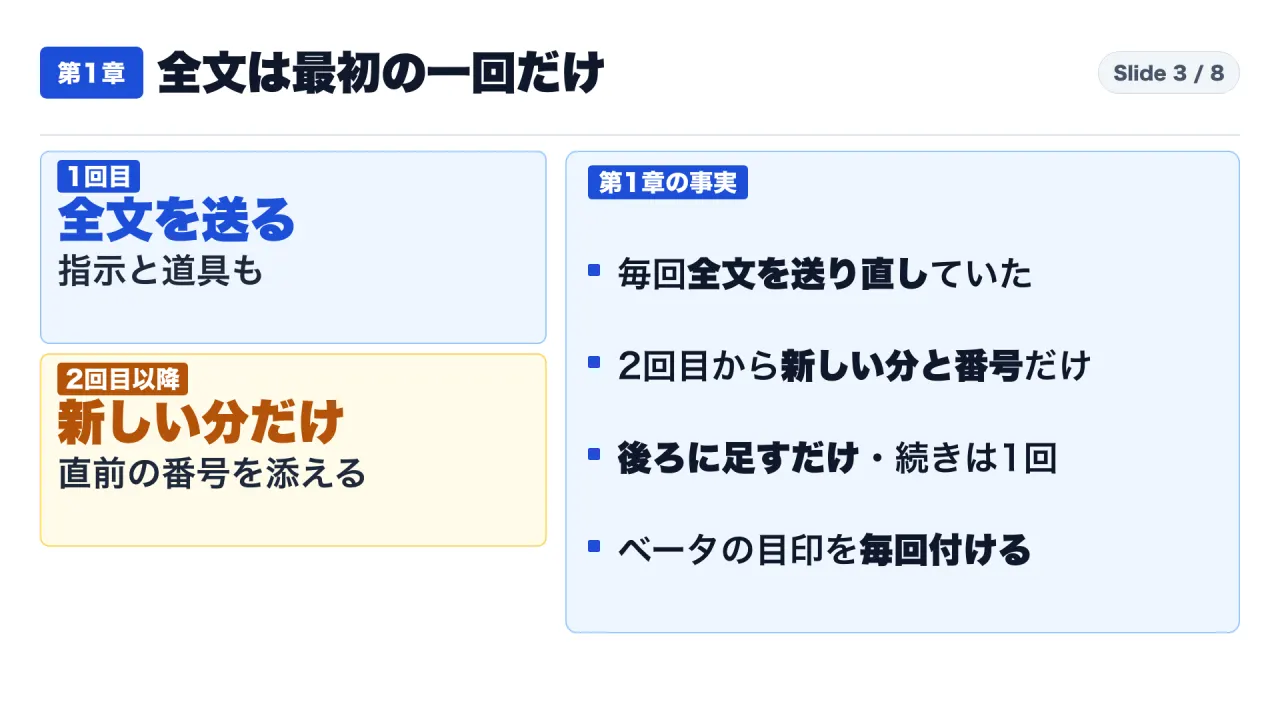
On November 2, 2026, Anthropic announced the public beta release of Message Threads for the Claude API. The architectural objective of this feature is straightforward: eliminate the redundant re-transmission of cumulative conversation histories on multi-turn API interactions. Rather than re-sending megabytes of historical dialogue, system prompts, and tool outputs on every round trip, client applications send the complete context once during thread initialization and subsequently transmit only incremental messages coupled with the preceding response identifier.
Across technology leadership and autonomous engineering teams, this release generated immediate attention, driven by a prominent performance metric published in Anthropic’s technical documentation: among Claude Code users where Message Threads were enabled by default, median Time-to-First-Token (TTFT) decreased by approximately 35% on requests spanning 500,000 to 1,000,000 tokens.
However, an engineering audit of the primary documentation and API specifications reveals a critical boundary that architects must respect:
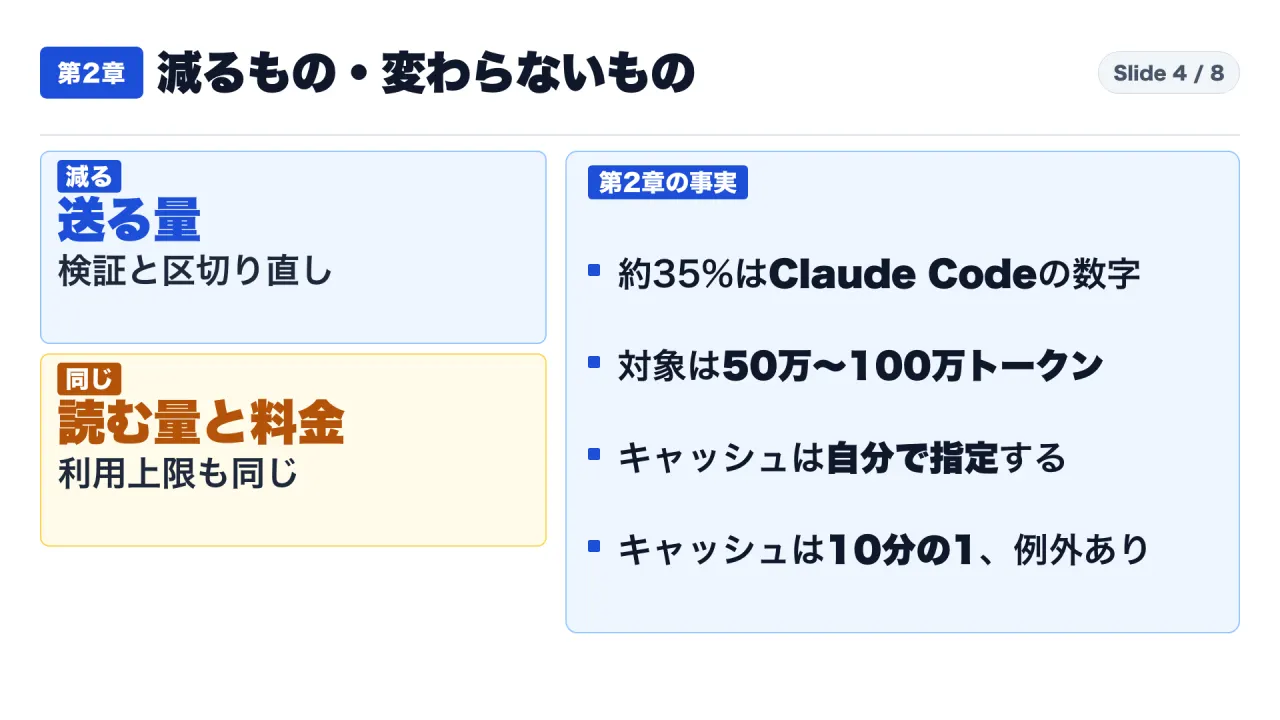
- What Actually Decreases: Message Threads reduce network ingress bandwidth, JSON serialization overhead, and the server-side gateway work required to validate schemas and tokenize historical text before model invocation.
- What Remains Exactly Identical: The underlying Claude model continues to process and attend across the entire cumulative conversational context. Consequently, token consumption is identical, pricing is unchanged, and standard organizational rate limits apply without modification.
- No Automatic Prompt Caching: Message Threads do not automatically cache prompt tokens. Prompt caching remains an explicit, developer-configured mechanism governed by distinct cache breakpoints and pricing tiers.
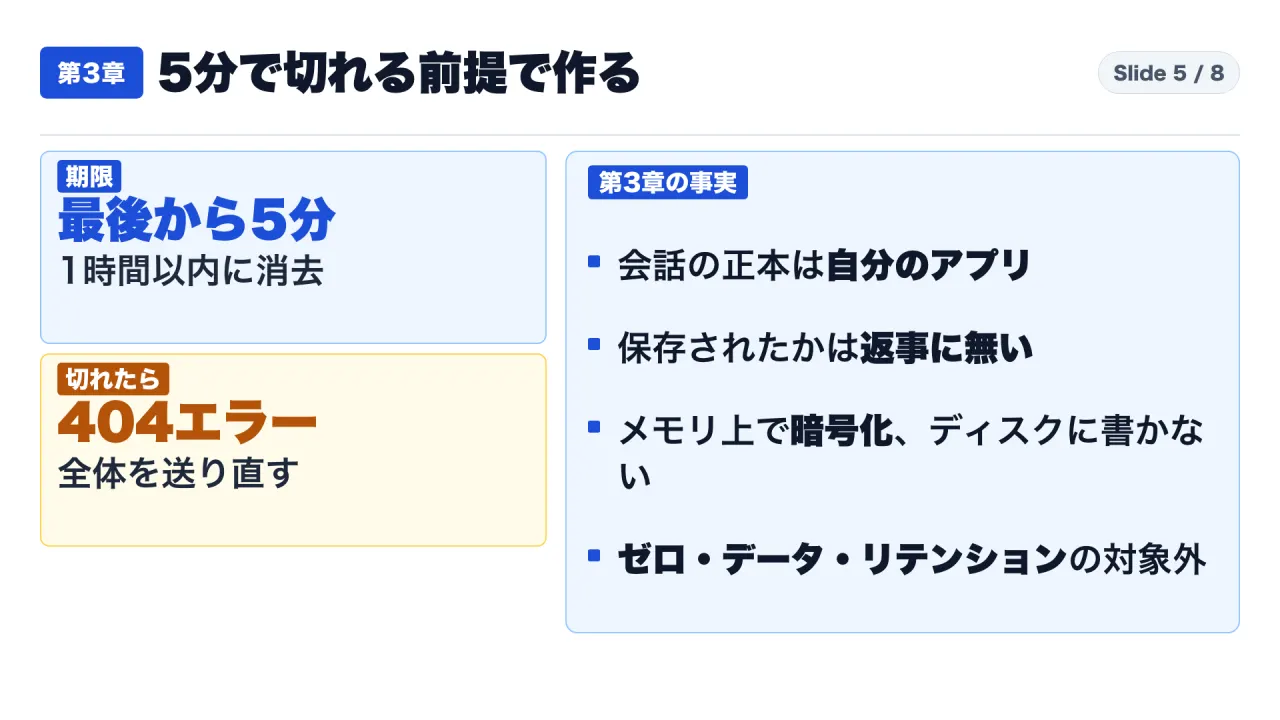
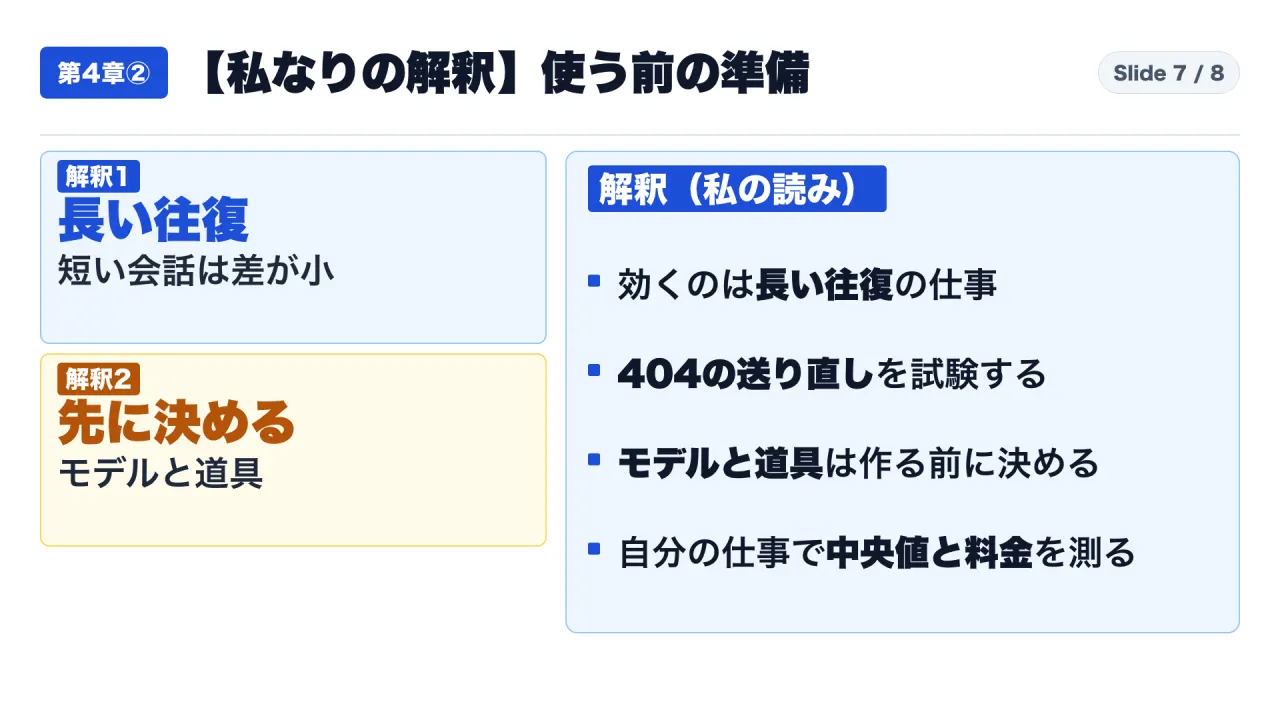
- Mandatory Client-Side Replay Architecture: Threads are ephemeral, in-memory constructs that expire after exactly five minutes of inactivity. The API provides zero state inspection, deletion, or retrieval endpoints. When an in-flight thread encounters an unexpected termination, timeout, or server-side model fallback, the API returns a 404 error code without explanatory metadata, requiring the host application to possess an authoritative local record and an automated full-context replay pipeline.

Technical Audit Matrix: Primary Sources and Evaluation Framework
To provide an objective systems analysis free from speculative vendor summaries, this evaluation relies exclusively on four primary engineering documents captured on November 4, 2026:
- Source S1: Anthropic Official Engineering Article, Make long-running agents faster with message threads (November 2, 2026).
- Source S2: Claude Developer Documentation, Message threads API Reference and Integration Guide (November 2, 2026).
- Source S3: Claude API Official Release Notes, Platform Update Log for November 2, 2026.
- Source S4: Claude Developer Documentation, Prompt Caching Architecture, TTL, and Breakpoint Invariants.
In evaluating these materials, we distinguish verified document facts (explicit parameters, code contracts, published measurements) from structural engineering implications and implementation guidelines. Where documentation is silent—such as the exact benchmark sample sizes, temporal measurement windows, or hardware configurations underlying the 35% latency claim—we explicitly mark those factors as unconfirmed rather than constructing unverified hypotheses.
1. Architectural Mechanics: The Three-Phase Lifecycle of Message Threads
In conventional stateless LLM integrations, conversational continuity is maintained purely by client-side accumulation. Each successive request requires the host application to concatenate every historical turn, every structured tool call, and every raw tool execution output into an expanding JSON payload. As autonomous agent workflows execute dozens or hundreds of sequential actions, request payloads expand from a few kilobytes into tens of megabytes.
Anthropic’s Message Threads introduce a stateful gateway layer operating in front of the model inference cluster. The protocol operates across three distinct phases:
flowchart TD
    subgraph Client_App["Client Application (Authoritative State)"]
        LocalState["Local Message Ledger<br/>(Full Conversation History)"]
    end

    subgraph API_Gateway["Anthropic API Gateway (Ephemeral State)"]
        ThreadStore["Encrypted In-Memory Thread Store<br/>(5-Minute Inactivity TTL)"]
    end

    subgraph Inference_Engine["Claude Model Inference"]
        AttentionCluster["Full Context Attention Processing<br/>(Token Count & Billing Unchanged)"]
    end

    LocalState -->|"1. Create: Full Context + Beta Header"| ThreadStore
    ThreadStore -->|"Assemble Full Context"| AttentionCluster
    AttentionCluster -->|"Return Response + Response ID"| LocalState

    LocalState -->|"2. Continue: Delta Turn + Response ID"| ThreadStore
    ThreadStore -->|"Reconstitute Context"| AttentionCluster
    AttentionCluster -->|"Return New Response + New ID"| LocalState

    LocalState -.->|"3. Replay on 404: Full History Resend"| ThreadStore
Phase 1: Creation (create)
The client initiates a conversation exactly as in standard stateless calls, submitting the cumulative message array, system instructions, and tool definitions. However, the client appends the beta request header:
anthropic-beta: message-threads-2026-08-12
Upon processing the input, the API gateway assigns an internal thread container and stores the conversational state referenced by the returned response_id.
Phase 2: Continuation (continue)
For all subsequent interactions within that operational sequence, the client transmits only the new incremental user message or tool execution result. Crucially:
- The cumulative history is omitted from the request body.
- The
systeminstruction string andtoolsarray are omitted entirely; the server-side thread retains the immutable parameters established during creation. - The request explicitly specifies the immediate preceding
response_idas the parent anchor. - The API gateway intercepts the lightweight delta payload, reconstitutes the complete conversation from encrypted memory, and dispatches the compiled context to the inference engine. The response format returned to the client is structurally identical to standard Messages API responses.
Phase 3: Automated Replay (replay)
Because threads reside in volatile memory and terminate upon inactivity or transient gateway disruptions, continuity can break. When the gateway fails to resolve a thread or encounters a state conflict, the client receives an error code (such as 404 thread_not_found). Under this condition, the client application must execute a full replay: re-transmitting the entire historical sequence from local storage under a new thread initialization call, acquiring a fresh response_id, and resuming execution seamlessly.
Strict Operational Invariants
Enterprise architects must enforce four non-negotiable protocol constraints when designing integrations:
- Append-Only Topology: Message Threads support strictly linear progression. Branches, in-place message modifications, role edits, or historical truncations are forbidden. To branch a dialogue or redact context, an application must initialize an entirely new thread.
- Single-Use Parent Anchors: Each
response_idcan serve as a continuation anchor exactly once. Forking two parallel continuation calls from the identical response identifier will result in concurrency errors (thread_already_continuedorthread_continue_in_flight). Execution must always anchor to the single latest response identifier. - Absence of Server-Side Deduplication: The API gateway does not cross-reference incremental payloads against previously appended turns. If an application re-transmits an already-committed message due to a network retry timeout, that content is duplicated in the context window or triggers an unrecoverable validation failure.
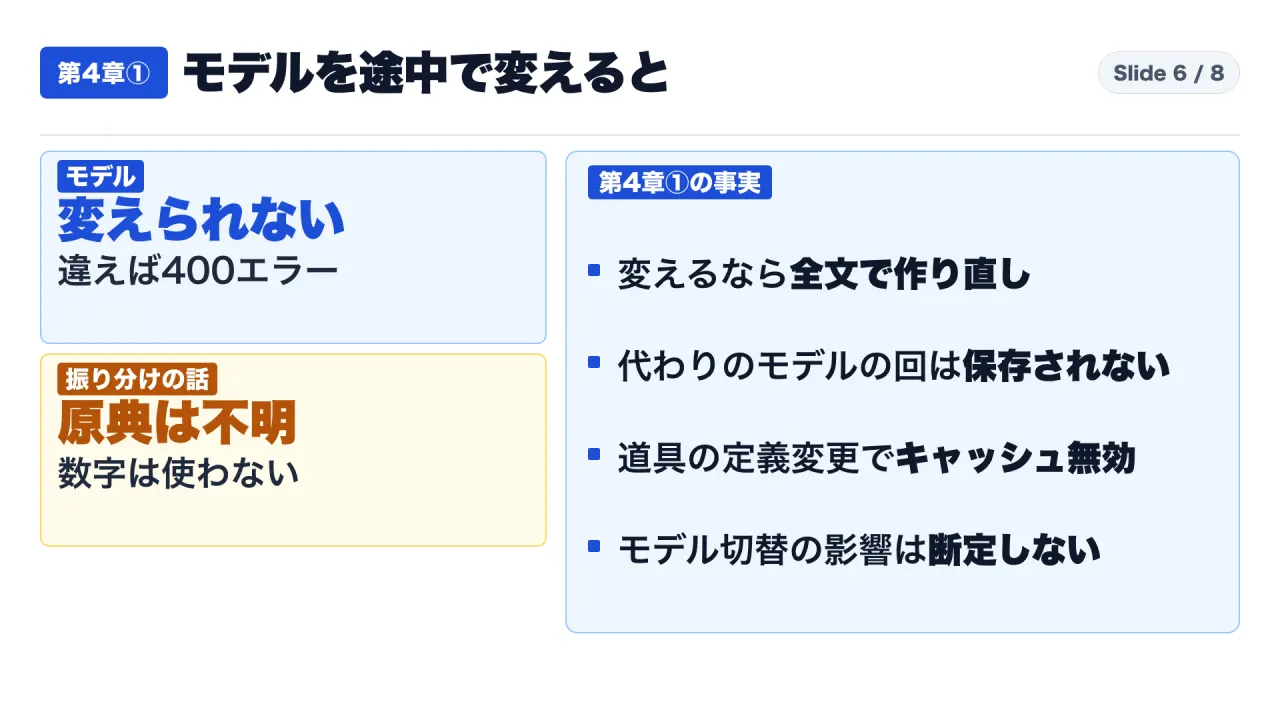
- Immutable Configuration Fingerprints: The core operational configuration—including model version, tool choice parameters, and extended thinking budgets—is fingerprinted at creation. Attempting to alter these parameters mid-thread results in an immediate HTTP 400 error (
thread_fingerprint_mismatch).
Supported enterprise environments include the native Anthropic Claude Platform, Claude Platform on Amazon Web Services (AWS Bedrock), Claude in Microsoft Foundry, and Claude Models on Google Cloud Vertex AI (Anthropic managed).
2. Quantitative Performance: Decomposing the 35% Latency Improvement
The centerpiece of Anthropic’s announcement is the reported 35% reduction in median response latency. To properly evaluate this figure for production capacity planning, systems engineers must analyze the precise operational parameters under which the measurement was obtained.
flowchart LR
    subgraph Traditional_Call["Traditional Stateless Request"]
        direction TB
        Payload1["Large Network Payload<br/>(10 MB JSON Transfer)"]
        Ingress1["Gateway Deserialization & Tokenization<br/>(High CPU Pre-processing)"]
        Infer1["Full Inference Pass<br/>(Model Processing)"]
        Payload1 --> Ingress1 --> Infer1
    end

    subgraph Thread_Call["Message Thread Request"]
        direction TB
        Payload2["Minimal Network Payload<br/>(Few KB Delta Transfer)"]
        Ingress2["Fast Memory Lookup & In-Memory Stitching<br/>(Negligible Gateway CPU)"]
        Infer2["Full Inference Pass<br/>(Identical Model Processing)"]
        Payload2 --> Ingress2 --> Infer2
    end
Breakdown of the Published Benchmark
The documentation specifies five clear boundary conditions surrounding the published benchmark:
| Dimension | Documented Benchmark Condition | Architectural Implications |
|---|---|---|
| Target Workload | High-volume Claude Code user cohorts with threads enabled by default | Highly sequential, multi-turn coding tasks with heavy tool usage |
| Request Scale | 500,000 to 1,000,000 tokens (500k to 1M) | Massive historical context containing file trees, diffs, and linting logs |
| Measured Metric | Median Time-to-First-Token (TTFT) | Measures delay until output generation begins; does not alter generation speed |
| Observed Impact | Approximately 35% reduction in median TTFT | Significant latency savings during extreme context saturation |
| Undocumented Parameters | Evaluation duration, total request volume, control baseline, short-context variance | Results cannot be blindly extrapolated to short interactive chats |
What Changes: Eliminating Gateway Friction
Why does TTFT decrease if the model still reads the entire prompt? The latency savings originate entirely outside the neural network weights.
In massive-context workflows (e.g., 800,000 tokens), transmitting a complete payload across the public internet requires sending between 3 MB and 8 MB of compressed JSON text per turn. Upon receiving this payload, the cloud load balancer and API gateway cluster must:
- Stream and buffer the entire HTTP request body.
- Parse and validate the complex nested JSON abstract syntax tree.
- Verify authentication signatures, organization permissions, and parameter schemas.
- Execute byte-pair encoding (BPE) tokenization across the entire 800,000-token sequence to generate model input tensors.
Under Message Threads, this entire pre-processing burden is eliminated on turns 2 through N. The client transmits a few hundred bytes representing the latest terminal output or user instruction. The gateway performs a sub-millisecond memory lookup, attaches the pre-tokenized memory buffer, and immediately queues the tensor for matrix execution. The larger the cumulative context, the more pronounced this transport and tokenization delta becomes.
What Remains Constant: Economics and Token Physics
While transport is streamlined, the core economic and computational characteristics remain strictly unchanged:
- Model Ingestion Volume: The transformer architecture requires full attention across the active conversation window. Claude reads every single token on every step. Therefore, cumulative token usage counts are completely identical whether Message Threads are active or disabled.
- Financial Cost and Rate Limits: Pricing is strictly tethered to total processed tokens. Message Threads provide zero automatic billing discounts. Standard per-million input token rates and organization-level concurrency limits apply identically.
- Prompt Caching Independence: Message Threads do not substitute for prompt caching. The documentation explicitly warns: Message Threads do not automatically cache prompt tokens on your behalf.
3. Dissecting Prompt Caching Synergy: Architectural Complementarity
A frequent point of confusion among enterprise evaluators is the relationship between Message Threads and Prompt Caching. Market summaries occasionally conflate the two features as competing or redundant context management tools. In reality, they address orthogonal bottlenecks in the distributed inference pipeline.
Deconstructing the Discount Multipliers
Promotional summaries frequently market prompt caching as a flat 90% discount. A rigorous examination of the official Claude Prompt Caching documentation reveals a more nuanced, tier-dependent pricing schedule:
- Baseline Standard Multiplier: For standard models across the platform, read operations against cached prompt blocks are billed at 0.10x (a 90% discount relative to standard base input rates).
- Extended Discount Multiplier (Opus 5.5 and Sonnet 5.5): For advanced frontier architectures, including Claude Opus 5.5 and Claude Sonnet 5.5, cache-read tokens are billed at 0.05x (a 95% discount relative to standard base input).
- Maximum Discount Multiplier (Fable 5.1 and Mythos 5.1): Specialized highly optimized models, including Claude Fable 5.1 and Claude Mythos 5.1, provide cache-read execution at 0.025x (a 97.5% discount relative to standard base input).
To achieve a cache hit, the byte sequence preceding the designated breakpoint—including all system messages, tool definitions, text tokens, and image binaries—must match the cached state with 100% cryptographic precision.
+-----------------------------------------------------------------------------------+
|                        DISTRIBUTED INFERENCE PIPELINE                             |
+-----------------------------------------------------------------------------------+
| 1. Transport & Ingress Layer:                                                    |
|    - Handled by: MESSAGE THREADS                                                 |
|    - Benefit: Eliminates repetitive JSON upload and pre-tokenization gateway work|
|    - Impact: ~35% reduction in median TTFT on 500k-1M token contexts             |
+-----------------------------------------------------------------------------------+
| 2. Compute & Attention Matrix Layer:                                              |
|    - Handled by: PROMPT CACHING                                                  |
|    - Benefit: Reuses pre-computed KV-cache states in GPU memory                   |
|    - Impact: 90% to 97.5% discount on input token pricing                        |
+-----------------------------------------------------------------------------------+
Combined Implementation Pattern
Because Message Threads optimize client-to-gateway transport while Prompt Caching optimizes GPU KV-cache computation, enterprise systems should deploy both mechanisms in tandem.
To configure prompt caching within an active Message Thread:
- Ensure the top-level request establishes explicit cache breakpoints using the
cache_controldirective (up to four distinct breakpoints per request). - Maintain identical system prompt blocks and tool definition signatures throughout thread creation.
- Leverage Message Threads to minimize client payload transmission while the inference cluster utilizes cached KV states to deliver both low transport latency and reduced compute charges.
4. Operational Failure Modes: 5-Minute Lifecycles and Replay Engineering
Deploying stateful abstractions over distributed cloud infrastructure introduces critical failure boundaries. Engineers must design systems under the explicit assumption that any active thread can terminate unpredictably.
sequenceDiagram
    autonumber
    actor Client as Agent Client
    participant GW as API Gateway
    participant Cache as In-Memory Store
    participant Model as Claude Model

    Client->>GW: POST /messages (Create Thread + Beta Header)
    GW->>Cache: Encrypt & Store Context in RAM
    GW->>Model: Execute Inference
    Model-->>Client: Response (ID: resp_001)

    Note over Client,Cache: Inactivity Timer Running (5-Minute Window)

    alt Continuous Interaction (< 5 Minutes)
        Client->>GW: POST /messages (Delta + parent: resp_001)
        GW->>Cache: Retrieve & Append Context (Timer Reset)
        GW->>Model: Execute Inference
        Model-->>Client: Response (ID: resp_002)
    else Inactivity Exceeded (> 5 Minutes) or Failover
        Client->>GW: POST /messages (Delta + parent: resp_002)
        GW->>Cache: Lookup Fails (TTL Expired / Evicted)
        GW-->>Client: HTTP 404 thread_not_found
        Note over Client: Trigger Automated Replay Pipeline
        Client->>GW: POST /messages (Create New Thread + Full History)
        GW->>Cache: Re-initialize Context in RAM
        GW->>Model: Resume Execution
        Model-->>Client: Response (ID: resp_003)
    end
The 5-Minute Inactivity Window
The persistence characteristics of Message Threads are defined by strict operational constraints:
- Five-Minute Rolling Timeout: An active thread remains valid for exactly five minutes following the most recent request. Each successful interaction that appends state resets the five-minute rolling countdown.
- One-Hour Absolute Purge: The gateway cluster automatically purges all thread data from memory within one hour of its last recorded invocation, regardless of activity status.
- Volatile In-Memory Architecture: Thread state is held strictly in volatile server RAM encrypted with server-side keys. Data is never persisted to non-volatile disks or permanent database tables.
- Zero Data Retention (ZDR) Boundary: Message Threads do not fall under Zero Data Retention compliance scopes. Organizations requiring contractual ZDR guarantees must verify platform terms before enabling the feature.
- Ephemeral File References: Files and binary assets associated with a thread are retained by reference rather than physical embedding. Client applications must ensure referenced source documents remain accessible throughout the duration of the task.
Error Typology and Root Causes
When a continuation request fails, the API returns standardized HTTP error status codes. However, response bodies deliberately omit operational root-cause diagnostics. Common triggers include:
| HTTP Code | Error Type | Documented Underlying Root Cause |
|---|---|---|
| 404 | thread_not_found |
Inactivity window exceeded (>5 min); thread evicted during node rebalancing; upstream server-side model fallback occurred |
| 400 | thread_fingerprint_mismatch |
Client attempted to modify immutable parameters (model ID, tool schema, thinking configuration) |
| 400 | thread_already_continued |
Parallel execution attempted to branch from an already-consumed parent response identifier |
| 400 | thread_continue_in_flight |
A subsequent request was received while the preceding continuation stream remained actively generating |
The Mandatory Replay Pipeline
Because the Claude API provides no management endpoints—developers cannot query active threads, inspect stored context, or issue deletion commands—the client application must serve as the single source of truth.
Enterprise engineering teams must establish an automated fallback loop:
def execute_agent_step(client, thread_state, delta_message):
    try:
        # Attempt fast continuation using existing thread state
        return client.messages.create(
            parent_response_id=thread_state.last_response_id,
            messages=[delta_message],
            extra_headers={"anthropic-beta": "message-threads-2026-08-12"}
        )
    except APIStatusError as err:
        if err.status_code == 404:
            # Thread expired or evicted: Execute Full Context Replay
            new_thread = client.messages.create(
                messages=thread_state.full_history + [delta_message],
                system=thread_state.system_prompt,
                tools=thread_state.tools,
                extra_headers={"anthropic-beta": "message-threads-2026-08-12"}
            )
            thread_state.reanchor(new_thread.id)
            return new_thread
        raise err
5. Model Switching Boundaries and Dynamic Routing Realities
A persistent misconception circulating in early architectural discussions suggested that dynamically alternating between smaller, cheaper models (for routine tool extraction) and larger frontier models (for complex reasoning) within a single thread could corrupt cache lines and increase aggregate costs.
An exhaustive examination of official documentation disproves this claim while highlighting a more fundamental architectural barrier:
- Mid-Thread Model Changes Are Hard-Blocked: The model selection parameter is an immutable thread attribute. Attempting to pass a different model string during a continuation call triggers an immediate HTTP 400 error. You cannot switch models within an existing thread.
- Dynamic Routing Requires Complete Re-initialization: If an agent framework employs dynamic model routing, transitioning to a different model tier inherently requires creating an entirely new thread with a complete resend of the cumulative conversational history.
- Server-Side Fallback Invalidates Continuations: When platform traffic prompts automatic server-side fallback to alternative model infrastructure, the resulting turn cannot be appended to the active thread state. The client is forced to fall back to a full context replay.
6. Enterprise Readiness: A Three-Point Implementation Checklist
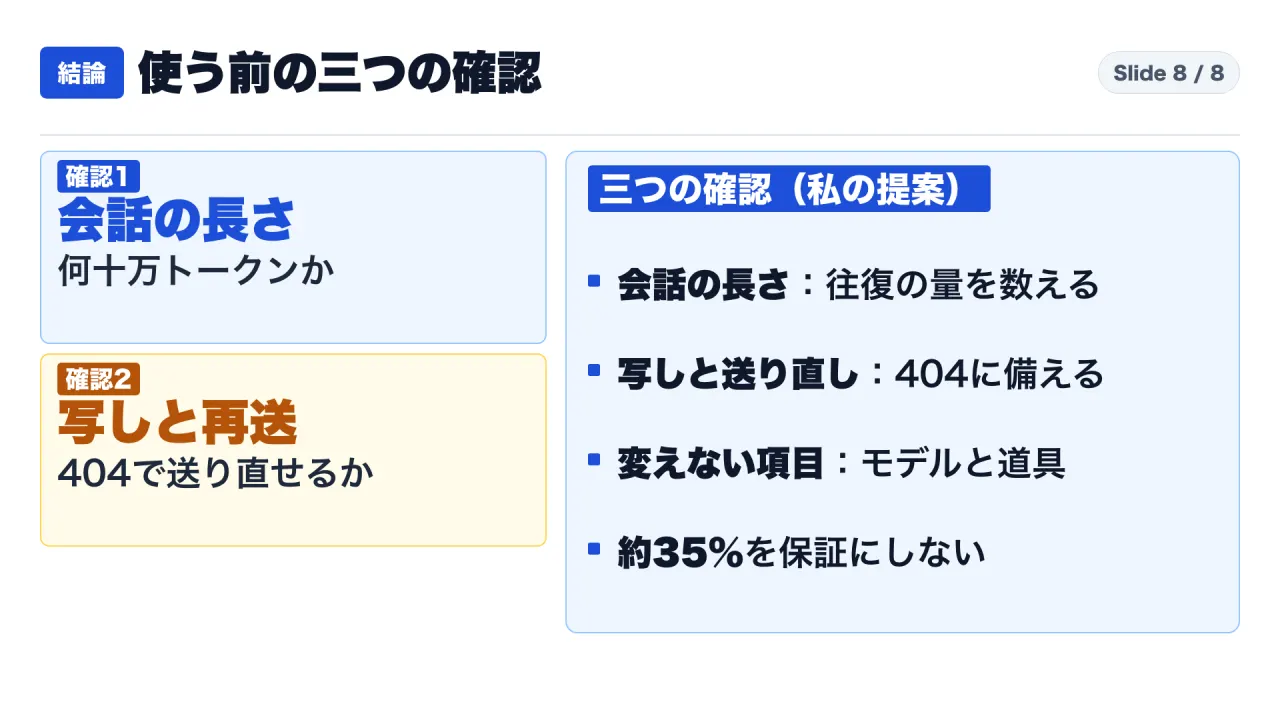
Before integrating Message Threads into mission-critical production pipelines, engineering organizations should validate three architectural readiness criteria:
flowchart TD
    subgraph PreFlight_Checklist["Enterprise Implementation Gate"]
        Check1["1. Context Profile Verification<br/>Does the workload generate 10+ turns and >200k tokens?"]
        Check2["2. Local Replay Harness<br/>Is automated 404 replay tested under active chaos failure?"]
        Check3["3. Configuration Freeze<br/>Are system prompts, tools, and model IDs strictly locked?"]
    end

    Check1 --> Check2 --> Check3 --> Production["Deploy to Production Agent Clusters"]
1. Workload Context Distribution
Message Threads provide diminishing returns on shallow, single-turn interactions or short conversational dialogues. The primary beneficiaries are:
- Autonomous software engineering harnesses (Claude Code, automated PR review agents).
- Computer-use and browser automation agents where intermediate DOM snapshots and screen coordinates rapidly inflate context size.
- Document-intensive extraction workflows involving sequential multi-table analysis.
For workloads averaging under 50,000 tokens, network payload latency is rarely the primary system bottleneck, and standard stateless integration with prompt caching is often simpler to operate.
2. Client-Side Replay Resilience
Never rely on server-side thread persistence as an operational store. Production agent frameworks must maintain comprehensive local append-only transaction logs. Integration test suites should deliberately inject artificial 404 and 400 response codes to verify that replay pipelines cleanly reconstitute state without dropping conversational turns or duplicating tool calls.
3. Structural Configuration Governance
Because configuration parameters are frozen during thread creation, systems architects must establish clean boundaries between static configuration and dynamic context. Dynamic instructions, fluctuating tool registries, or variable thinking budgets must be resolved prior to thread instantiation.
7. Strategic Conclusions: Balancing Speed and Operational Simplicity
Anthropic’s Message Threads represent an elegant transport-layer optimization for the emerging era of million-token autonomous agents. By shifting the burden of repetitive JSON payload transfer and gateway tokenization from the client network to encrypted server-side memory, the API delivers a tangible ~35% improvement in time-to-first-token for massive contexts.
Yet enterprise architects must approach this feature with engineering realism:
- It is a latency optimization, not a cost-reduction mechanism.
- It streamlines transport, but leaves model inference economics completely untouched.
- It introduces statefulness at the gateway, demanding rigorous client-side replay harnesses to maintain enterprise reliability.
Organizations that combine Message Threads with structured Prompt Caching while maintaining robust local persistence will unlock the maximum responsiveness and resilience from Claude’s frontier capabilities.
Primary References and Source Documentation
- S1: Anthropic Engineering Resources, Make long-running agents faster with message threads (Published November 2, 2026):
https://claude.com/resources/articles/message-threads - S2: Claude Platform Documentation, Message threads API Reference and Specification:
https://platform.claude.com/docs/en/build-with-claude/message-threads - S3: Claude API Release Documentation, Release Notes Overview (November 2, 2026 Update):
https://platform.claude.com/docs/en/release-notes/overview - S4: Claude Architecture Documentation, Prompt Caching Guide, Multipliers, and Breakpoint Invariants:
https://platform.claude.com/docs/en/build-with-claude/prompt-caching