Why Latent Sparse Attention Achieves 72.4x Speedups on a Single Layer but 9.21x Across the Full Model: Deconstructing 10M Token Prefill, Linear KV Cache Growth, and Table 3 Realities
A forensic architectural analysis of Prefrontal AI and ETH Zurich’s LSA paper, Amdahl’s Law in 64-layer hybrid models, short-context regression traps, and real-world 8-minute TTFT latencies.
Japanese Edition: https://consuloji.substack.com/p/1000lsa
YouTube (Japanese audio): https://youtu.be/qME2eHH_GcY
Executive Summary & Core Thesis
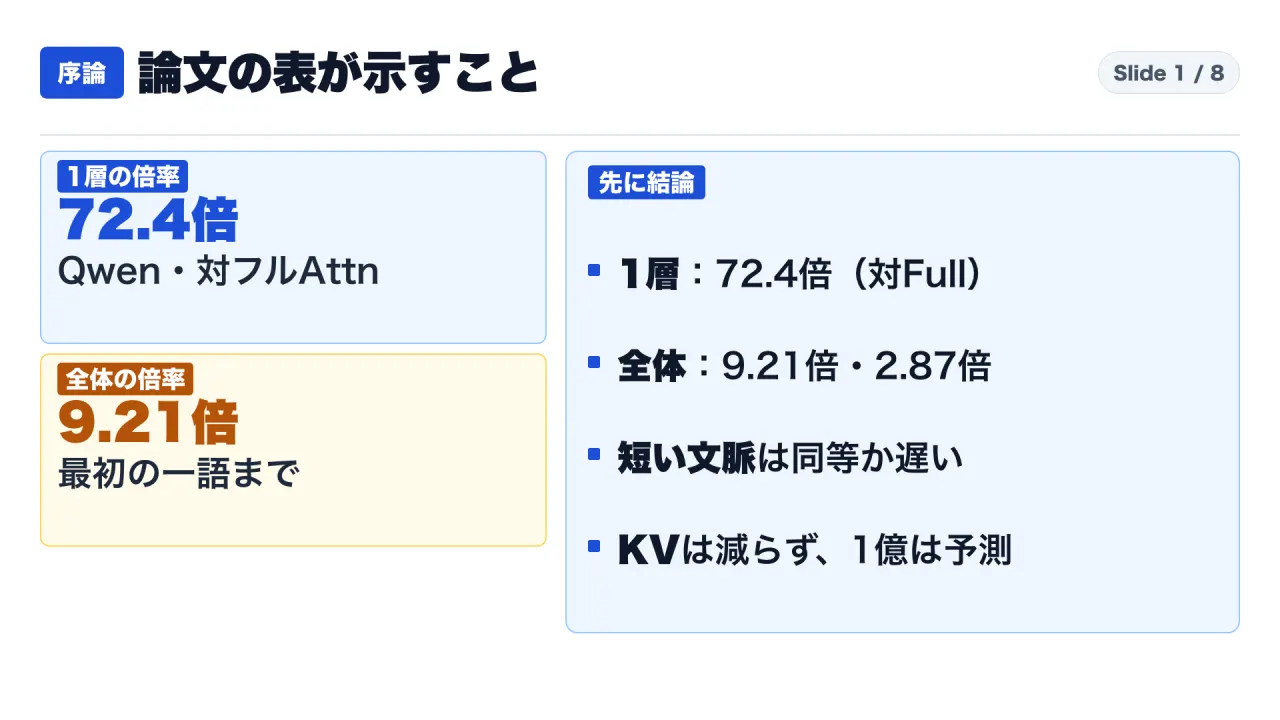
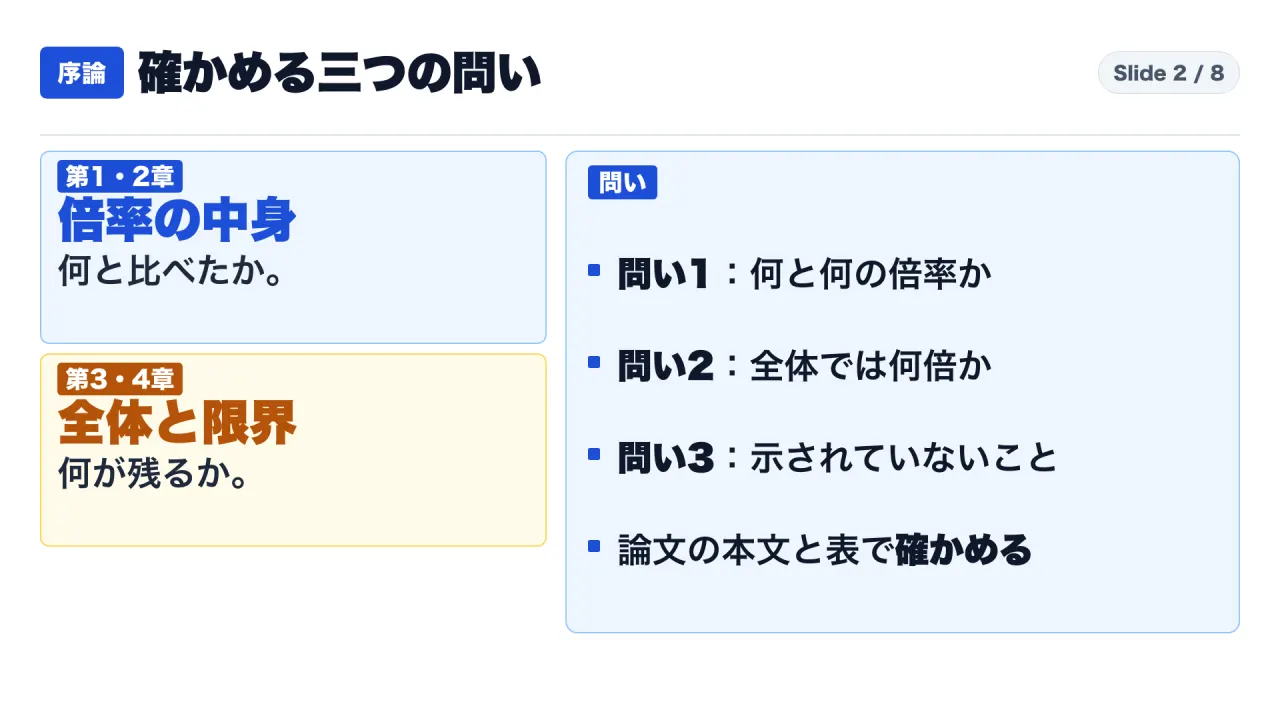
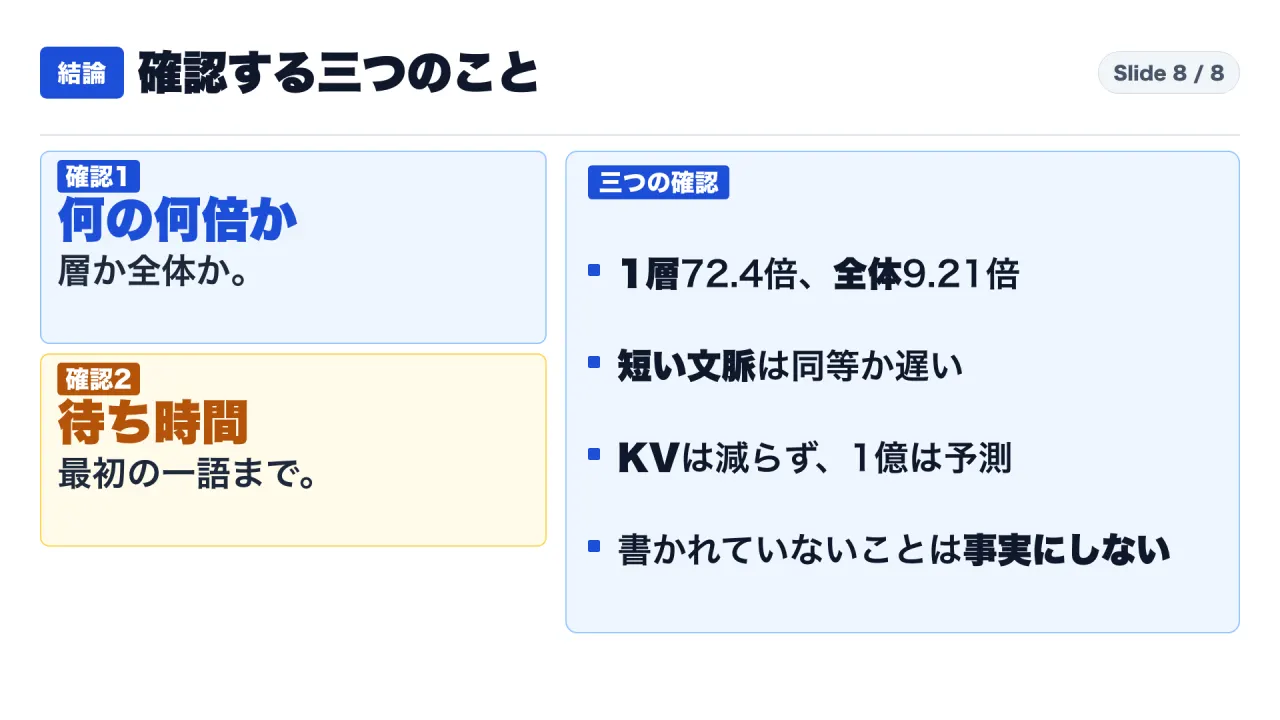
- Core Thesis: On October 30, 2026, researchers from Prefrontal AI and ETH Zurich published a preprint titled “Latent Sparse Attention: Towards Subquadratic Ultra-Long Context Attention” (arXiv:2610.42147). The paper introduced Latent Sparse Attention (LSA), a mechanism designed to bypass quadratic compute bottlenecks in 10-million-token contexts by clustering keys hierarchically within a learned latent space. Social media headlines rapidly seized on eye-popping benchmarks: “72.4x prefill acceleration and 42.5x decoding speedups.” However, a forensic audit of the paper’s experimental setup and Table 3 reveals three critical architectural realities: (1) Single-layer isolation versus end-to-end runtime: The 72.4x prefill and 42.5x decode speedups were measured on a single isolated attention layer on 1x H200 GPU against full attention; across the full 64-layer Qwen3.8-27B model on an 8x H200 cluster, end-to-end Time To First Token (TTFT) improved by 9.21x (from 4,582.2 seconds to ~497 seconds, or ~8.3 minutes), while decoding throughput (TPOT) accelerated by 2.87x; (2) Amdahl’s Law in hybrid architectures: Qwen3.8-27B contains 64 total layers, but only 16 are Gated Attention layers—the remaining 48 layers are linear Gated DeltaNet layers whose compute overhead is unaffected by LSA, mathematically bounding full-model speedups; and (3) KV cache invariance: LSA optimizes the quadratic indexer search phase (which consumes 98% of prefill FLOPs at 10M tokens), but does not compress Key-Value memory storage, which continues to scale linearly O(N), requiring 8x 141GB H200 GPUs to hold a single 10M-token sequence. Furthermore, all 100-million-token projections represent mathematical extrapolation rather than empirical hardware benchmarks.
- Who Should Read This: AI infrastructure architects, machine learning systems engineers optimizing vLLM/SGLang inference engines, technical leads evaluating ultra-long-context models for repository-scale code analysis or scientific document ingestion, and CTOs budgeting enterprise GPU clusters.
- Key Architectural & Systems Takeaways:
- The baseline divergence: Why Qwen3.8-27B was benchmarked against Full Attention (yielding 72.4x layer speedup), whereas GLM-5.3-Flash was benchmarked against its own native sparse attention (yielding 22.7x layer speedup).
- The short-context regression trap: Why LSA exhibits neutral or negative acceleration below 1 million tokens (at 512k tokens, decode latency is 13% slower than full attention on H200, and TTFT is 32% slower on B300) due to latent clustering and kernel dispatch overhead.
- A concrete infrastructure evaluation framework: four sizing criteria to verify whether your enterprise workloads justify sparse attention retrofits.
Primary Sources & Technical Baseline
This architectural audit is grounded strictly in the published preprint, open-source repository documentation, and official model cards verified between November 4 and November 5, 2026:
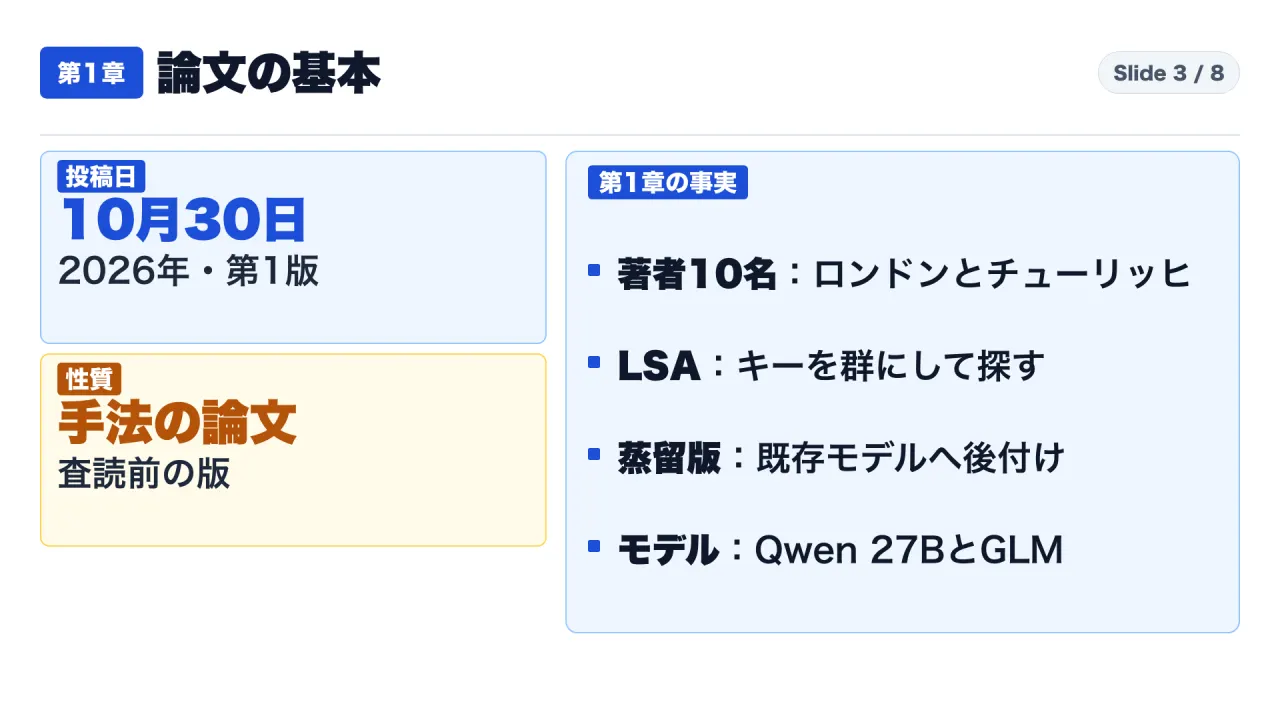
- 1. Research Preprint (arXiv:2610.42147v1, October 30, 2026; v2 diff verified November 3, 2026): “Latent Sparse Attention: Towards Subquadratic Ultra-Long Context Attention” by Prefrontal AI (London, UK) and ETH Zurich (Zurich, Switzerland) (arXiv Abstract and PDF Full Text).
- 2. Official GitHub Codebase & Inference Harness (November 4, 2026): Model implementation, SGLang runtime patch, and reproduction scripts (GitHub Repository).
- 3. Official Model Card: Qwen/Qwen3.8-27B (Apache-2.0 License): Architectural specifications, layer topologies (16 attention / 48 Gated DeltaNet), and native context limits (Hugging Face Qwen3.8-27B).
1. Architectural Foundations: How Latent Sparse Attention Works
Standard multi-head attention scales quadratically O(N^2) in compute during the prefill phase because each query token must compute dot-product attention scores against every preceding key token. In ultra-long sequences of 10 million tokens, standard attention becomes computationally intractable, consuming hours of GPU cluster time before producing a single token.
1-1. The Latent Indexing Mechanism
Existing sparse attention methods (such as block-sparse or routing networks) attempt to identify the top-k most relevant keys. However, the authors demonstrate that at 10 million tokens, the indexer itself becomes the bottleneck: 98% of total prefill runtime is consumed simply searching for relevant keys.
LSA addresses this bottleneck by restructuring the search space:
- Hierarchical Latent Clustering: Key states are projected into a lower-dimensional learned latent space and partitioned into hierarchical clusters (using flat or tree-structured topologies).
- Cluster-Level Query Scoring: Queries evaluate cluster centroids rather than scanning individual key vectors, pruning non-essential tokens with subquadratic complexity.
- Two Training Regimes:
- Distilled LSA (D-LSA): A plug-and-play adapter that retrofits pre-trained model checkpoints (such as Qwen3.8-27B) by distilling attention patterns using a small projection head without retraining base model weights.
- Native LSA (N-LSA): Trained from scratch using standard next-token prediction loss, evaluated on a small 0.5B model up to 128k context.
1-2. Hybrid Model Topologies: Qwen3.8-27B Under the Hood
Understanding LSA requires inspecting the architecture of the primary testbed, Qwen3.8-27B:
- Layer Allocation: Comprises 64 total hidden layers, organized as 16 repeating blocks. Each block contains 3 linear Gated DeltaNet layers followed by 1 Gated Attention layer.
- Attention Density: Exactly 16 of the 64 layers (25%) are global attention layers; the remaining 48 layers (75%) are linear recurrent mechanisms.
- Context Extension: The official Qwen3.8-27B model card specifies a native context of 262,144 tokens, extendable up to 1,000,000 tokens. The LSA researchers extended this to 10,000,000 tokens using YaRN (Yet another RoPE extensioN) with a scale factor of 40.
2. Deconstructing the 72.4x Headline: Single-Layer Isolation vs. Full-Model Execution
The metric that dominated media summaries was that LSA is “72.4x faster.” To understand this figure, one must examine Section 4.3 of the preprint.
2-1. Isolated Layer Benchmarks
The 72.4x speedup was achieved under strictly isolated micro-benchmarks:
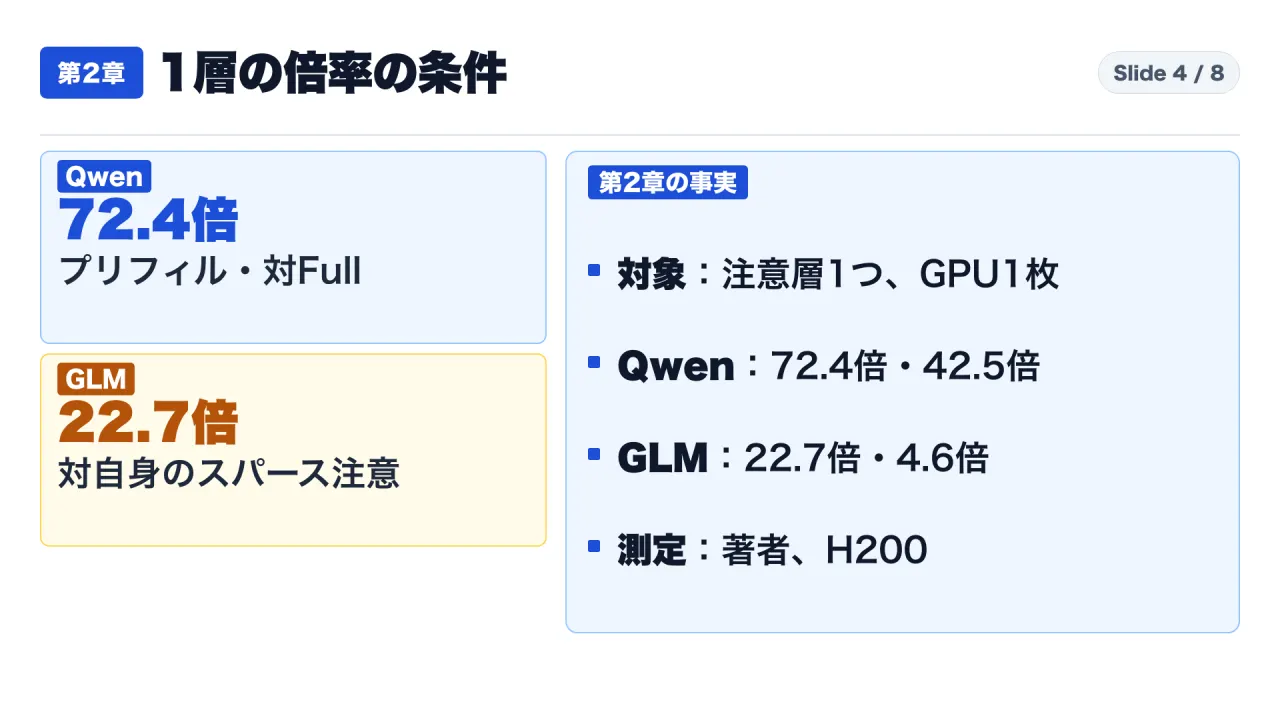
- Scope: Evaluated on a single attention layer module (including input projection, indexer, and sparse attention compute) executed on 1x NVIDIA H200 GPU.
- Prefill Measurement: Clocked across a chunk of the final 32,768 queries following a 10-million-token prefix.
- Baseline Divergence: Crucially, the comparison baselines differed between models:
| Evaluated Architecture | Prefill Speedup (Single Layer) | Decode Speedup (Single Layer) | Context Length | Comparison Baseline Mechanism |
|---|---|---|---|---|
| Qwen3.8-27B | 72.4x | 42.5x | 10,000,000 tokens | Full Attention (Standard Quadratic Baseline) |
| GLM-5.3-Flash | 22.7x | 4.6x | 10,000,000 tokens | GLM’s Native Sparse Attention (Not Full Attention) |
For Qwen3.8-27B, the 72.4x multiplier reflects acceleration against an unoptimized full quadratic attention operator. For GLM-5.3-Flash, the 22.7x multiplier reflects acceleration over GLM’s pre-existing sparse attention kernel. Conflating the two baselines misrepresents real-world performance gains.
3. End-to-End Performance: Table 3 and Amdahl’s Law in Practice
What happens when LSA is deployed across the entire neural network rather than an isolated micro-benchmark? The answer is documented in Table 3 of the preprint.
3-1. Cluster Configuration & Hardware Setup
In Table 3, the authors evaluate end-to-end inference on the complete Qwen3.8-27B model:
- Hardware Cluster: A single node of 8x NVIDIA H200 GPUs (141GB HBM3e each, totaling 1,128GB VRAM).
- Parallelism Strategy: Tensor Parallelism 8 (TP8) for prefill, combined with Decode Context Parallelism 8 (DCP8) during token generation.
- Workload: Batch size 1, processing a 10-million-token prompt followed by generating 256 output tokens (reporting the median of 3 runs).
3-2. The Full-Model Benchmarks
| Attention Mechanism | TTFT @ 512k Context | TTFT @ 1M Context | TTFT @ 10M Context | TPOT @ 512k Context | TPOT @ 1M Context | TPOT @ 10M Context |
|---|---|---|---|---|---|---|
| Full Attention (Baseline) | 21.7 sec | 65.3 sec | 4,582.2 sec (~76.4 min) | 7.8 ms | 9.1 ms | 32.1 ms |
| Block Sparse Attention (Flat) | 1.61x | 2.30x | 8.02x (~571 sec) | 0.89x (8.8 ms) | 0.91x (10.0 ms) | 0.89x (36.1 ms) |
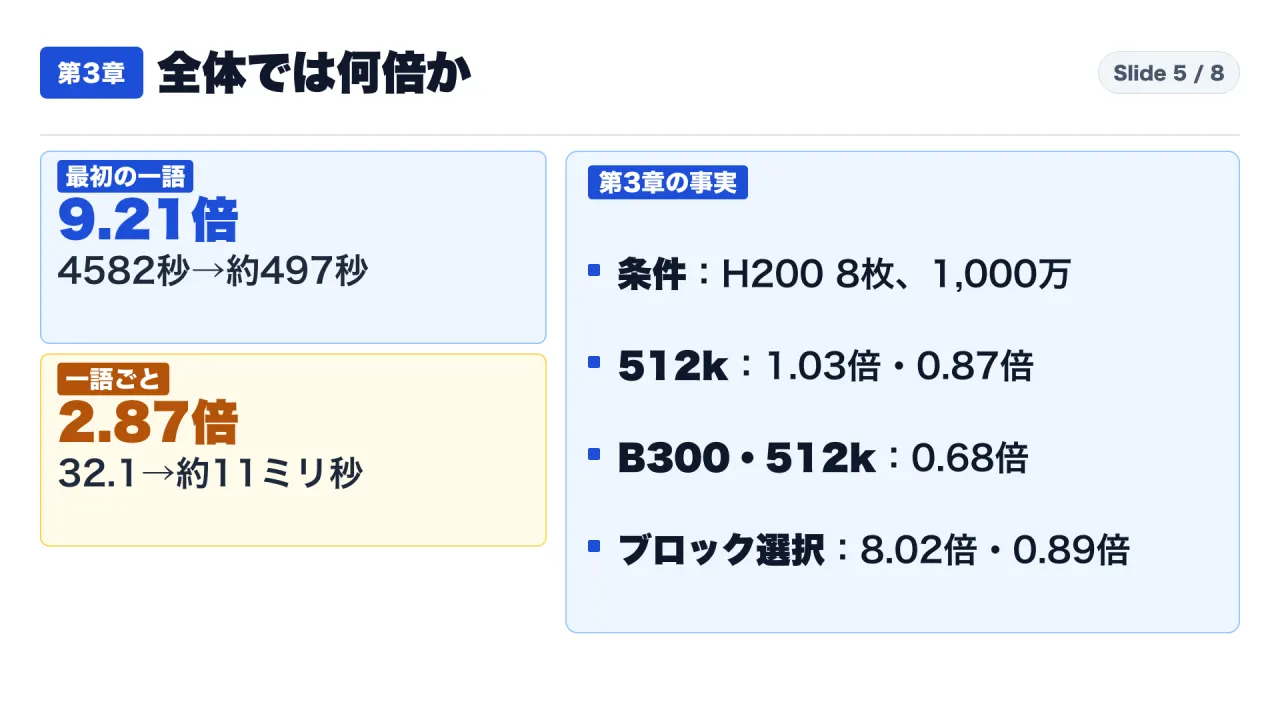
| D-LSA (Flat) | 1.03x | 1.51x | 9.21x (~497 sec / 8.3 min) | 0.87x (9.0 ms) | 1.00x (9.1 ms) | 2.87x (11.2 ms) |
| D-LSA (Tree) | 0.96x | 1.41x | 8.83x (~519 sec / 8.6 min) | 0.87x (9.0 ms) | 1.00x (9.1 ms) | 2.87x (11.2 ms) |
Note: Data transcribed directly from Table 3 of arXiv:2610.42147. Baseline figures represent raw execution times; all other entries represent speedup multipliers relative to baseline.
3-3. Analytical Takeaways from Table 3
- The 8-Minute TTFT Reality: Under standard full attention, waiting for the first generated token on a 10M-token prompt takes 4,582.2 seconds (over 1 hour and 16 minutes). D-LSA (Flat) reduces this to 497.5 seconds (~8.3 minutes), achieving a 9.21x speedup. While a 9x reduction is an engineering triumph, an 8-minute wait time remains prohibitive for real-time interactive user interfaces.
- Amdahl’s Law in Action: Why did a 72.4x single-layer speedup compress to 9.21x across the full model? Because Qwen3.8-27B contains 48 Gated DeltaNet layers alongside its 16 attention layers. The Gated DeltaNet layers consume linear compute and are completely unaffected by LSA. In accordance with Amdahl’s Law, when 75% of a model’s layers remain unaccelerated, the theoretical maximum speedup of the entire system is sharply capped.
- Marginal Advantage Over Block Sparse Attention on Prefill: Table 3 includes an off-the-shelf Block Sparse Attention (Flat) baseline, which already achieves an 8.02x speedup on 10M prefill (571 seconds). D-LSA’s 9.21x represents an incremental 1.15x improvement over standard block-sparse indexing during prefill. However, D-LSA’s true architectural advantage appears in decoding: Block Sparse Attention slows down decoding to 0.89x (36.1 ms vs. 32.1 ms), whereas D-LSA accelerates decoding by 2.87x (11.2 ms).
- The Short-Context Regression Trap: Below 1 million tokens, LSA provides minimal benefit or actively degrades latency:
- At 512k tokens on H200, D-LSA decoding latency is 0.87x (13% slower than baseline full attention).
- On NVIDIA B300 hardware at 512k tokens, D-LSA TTFT is 0.68x (32% slower than baseline).
- Because hierarchical latent clustering introduces fixed algorithmic and kernel invocation overhead, LSA only becomes computationally advantageous when context lengths exceed 1 million tokens.
4. The KV Cache Invariant: Memory Footprint and the 100M-Token Fallacy
A critical misconception in developer discussions is that LSA eliminates the memory footprint of long contexts. The authors explicitly refute this assumption.

4-1. Compute vs. Memory Storage Separation
LSA optimizes the compute complexity of searching for keys, but does not alter the physical storage of Key-Value states:
- The Key-Value cache continues to grow strictly linearly O(N) with context length.
- Storing the uncompressed KV cache for 10 million tokens in Qwen3.8-27B requires hundreds of gigabytes of high-bandwidth memory. This is precisely why the authors required an 8x H200 GPU node (1,128GB total VRAM) to execute a single concurrent request.
- LSA does not solve the fundamental infrastructure memory wall; it merely ensures GPUs spend less time idling during key retrieval.
4-2. The 100-Million-Token Extrapolation
Headlines proclaiming “LSA enables 100-million-token context windows” are based on theoretical modeling, not hardware benchmarks:
- In Section 4.5, the authors explicitly state that figures for 100 million tokens are extrapolated (predicted) based on theoretical scaling curves.
- The maximum empirical context benchmarked on physical hardware in the paper is 10 million tokens.
4-3. Accuracy Tradeoffs Across Benchmarks
Does sparse approximation degrade model intelligence?
- RULER Benchmark (Retrieval and Aggregation): On Qwen3.8-27B, D-LSA (Flat) scored 63.9 at 10M context, marginally outperforming full attention (59.9). On PaperTrail (scientific document retrieval), D-LSA scored 29.1 vs. 19.8.
- Sampling Caveat: The authors note that while RULER evaluations up to 1M context used 100 test prompts per task, the 10M evaluation was downsampled to 20 prompts per task due to compute constraints.
- GLM-5.3-Flash Degradation: On GLM-5.3-Flash, LSA suffered a 2 to 8 point accuracy penalty between 2M and 5M context compared to GLM’s native baseline.
- Native LSA (N-LSA): Evaluated on a 0.5B model at 128k context, validation loss matched full attention exactly (1.085 vs. 1.085), but RULER 128k accuracy dropped from 34.7 to 32.2 (within 3.5 points). Claims of “zero accuracy loss” are technically inaccurate.
5. Enterprise Infrastructure Playbook: 4 Pre-Deployment Sizing Checkpoints
For engineering teams considering LSA implementations in custom inference stacks, the paper’s findings translate into four practical deployment criteria:
Checkpoint 1: Context Length Distribution Audit
Analyze your production request distribution:
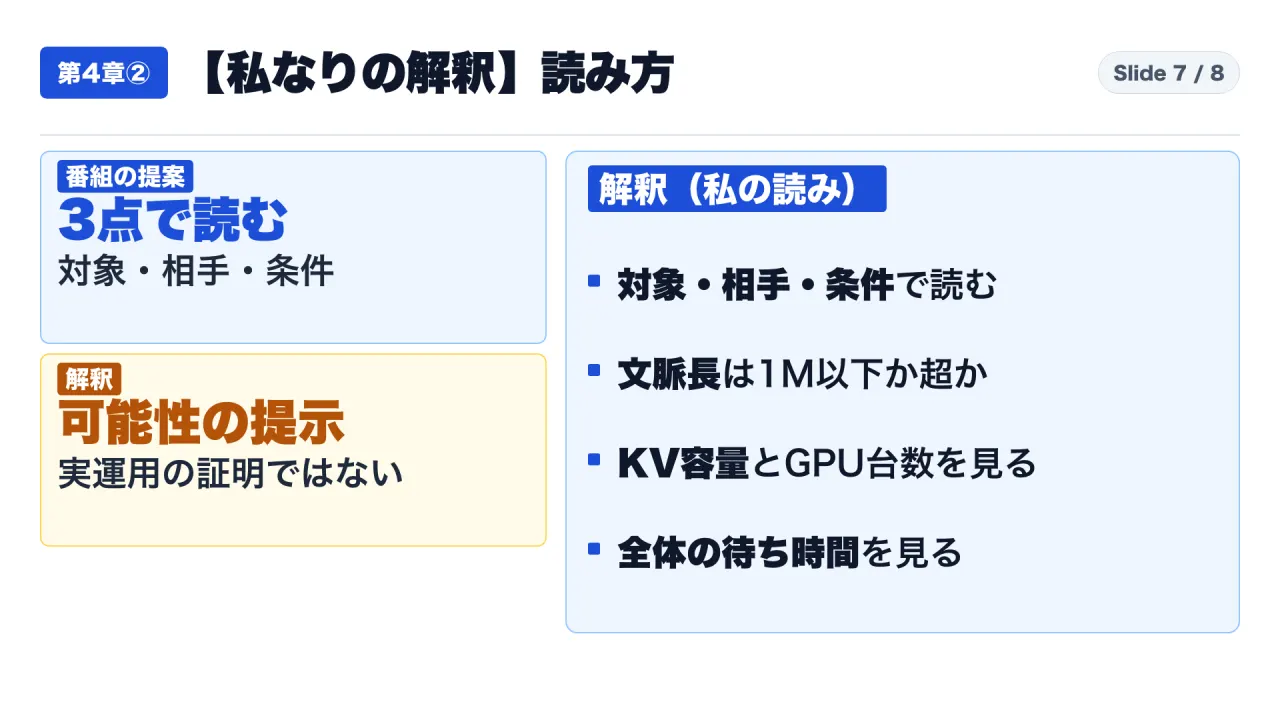
- If more than 90% of user queries fall below 1 million tokens, deploying LSA will likely increase latency and reduce throughput due to indexer kernel overhead.
- LSA should only be integrated into specialized inference pipelines dedicated exclusively to batch document ingestion or codebase-wide analysis exceeding 2 million tokens.
Checkpoint 2: VRAM and Node Topology Sizing
Because LSA does not compress KV cache memory:
- Budget cluster capacity based on strict linear KV cache growth. Serving 10M-token contexts on a 27B model requires a minimum of 8x 141GB H200 or 8x 192GB B300 nodes per concurrent batch stream.
- If memory capacity is constrained, combine LSA with orthogonal KV cache quantization (such as FP4/INT4 KV quantization) or cross-layer sharing techniques.
Checkpoint 3: User Latency SLA Realism
- Factor in the 8-minute Time To First Token (TTFT) baseline. Ultra-long-context inference cannot be exposed to synchronous web or chat interfaces without causing HTTP gateway timeouts.
- Architect workflows around asynchronous job queues, webhook notifications, and streaming status telemetry.
Checkpoint 4: Software Stack Compatibility
- The open-source LSA release requires custom modifications to the SGLang runtime and explicitly mandates disabling CUDA graphs during the prefill phase. Ensure your MLOps deployment pipeline supports patched inference kernels before architectural commitment.
Primary Sources & References
- arXiv: Latent Sparse Attention: Towards Subquadratic Ultra-Long Context Attention (arXiv:2610.42147v1, Oct 30, 2026)
- arXiv PDF: Latent Sparse Attention Full Research Preprint (PDF Text)
- GitHub: Prefrontal-AI / latent-sparse-attention Official Repository & Documentation
- Hugging Face: Qwen/Qwen3.8-27B Official Model Card & Layer Architecture
Note: This article is for informational purposes only and does not constitute investment advice or a price forecast. Podcast audio is synthesized from the host’s voice.