Why Palantir Revenue Surged +96% to $2.31B While Bookings Grew Just +6%: Deconstructing U.S. Commercial vs. Government TCV, Flat RPO, and Enterprise Procurement Contracts
A forensic analysis of Palantir’s Q3 2026 Form 10-Q, the +148% US Commercial revenue milestone, ratable revenue versus lifetime TCV mechanics, and why customer termination clauses govern real backlog durability.
Japanese Edition: https://consuloji.substack.com/p/palantir966
YouTube (Japanese audio): https://www.youtube.com/watch?v=lUbh1eYKXGY
Executive Summary & Key Takeaways
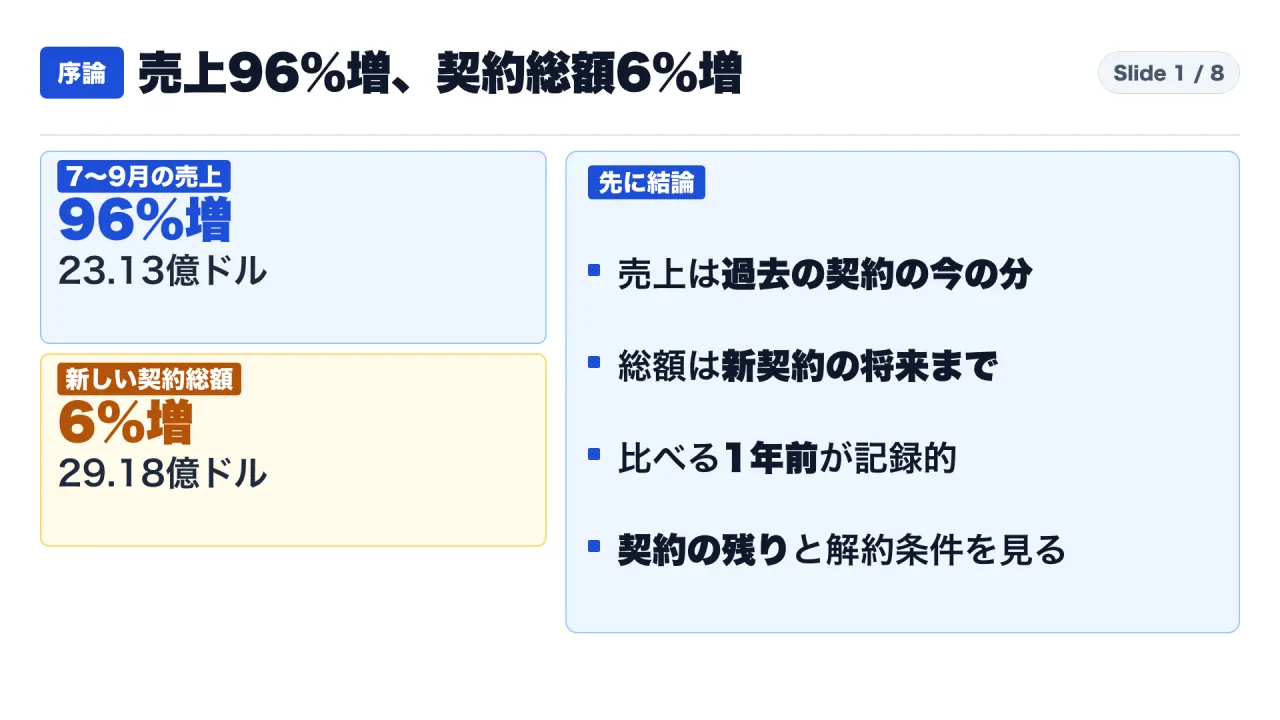
- Core Thesis: In its Q3 2026 financial results (filed via Form 8-K on November 2, 2026, and Form 10-Q on November 3, 2026), Palantir Technologies Inc. (NYSE: PLTR) delivered a headline blowout: consolidated quarterly revenue surged +96% YoY (+20% QoQ) to $2.313 billion, crossing the $2 billion quarterly threshold for the first time. For the first time in corporate history, U.S. Commercial revenue ($984 million, +148% YoY / +29% QoQ) surpassed U.S. Government revenue ($953 million, +96% YoY / +18% QoQ). Yet forward-looking bookings presented a stark divergence: Total Contract Value (TCV) booked in Q3 grew just +6% YoY to $2.918 billion (down -13.5% sequentially from $3.373 billion in Q2), while U.S. Commercial TCV rose +11% YoY to $1.463 billion (down -31.4% sequentially from $2.132 billion in Q2). Furthermore, total Remaining Performance Obligations (RPO) remained flat at $4.9 billion between June 30 and September 30, 2026. This divergence is the mathematical outcome of ratable ASC 606 revenue recognition versus lifetime option-inclusive bookings, compounded by tough comparisons against a record-setting Q3 2025.
- Who Should Read This: Enterprise software procurement officers, chief information officers evaluating enterprise AI platforms (AIP/Foundry), financial analysts covering enterprise software accounting, and institutional tech investors.
- Key Architectural & Financial Takeaways:
- The critical accounting mismatch: Revenue reflects ratable recognition from multi-year contracts signed 12 to 36 months prior, whereas TCV represents the full potential lifetime value of newly executed contracts assuming 100% option exercise and zero customer termination.
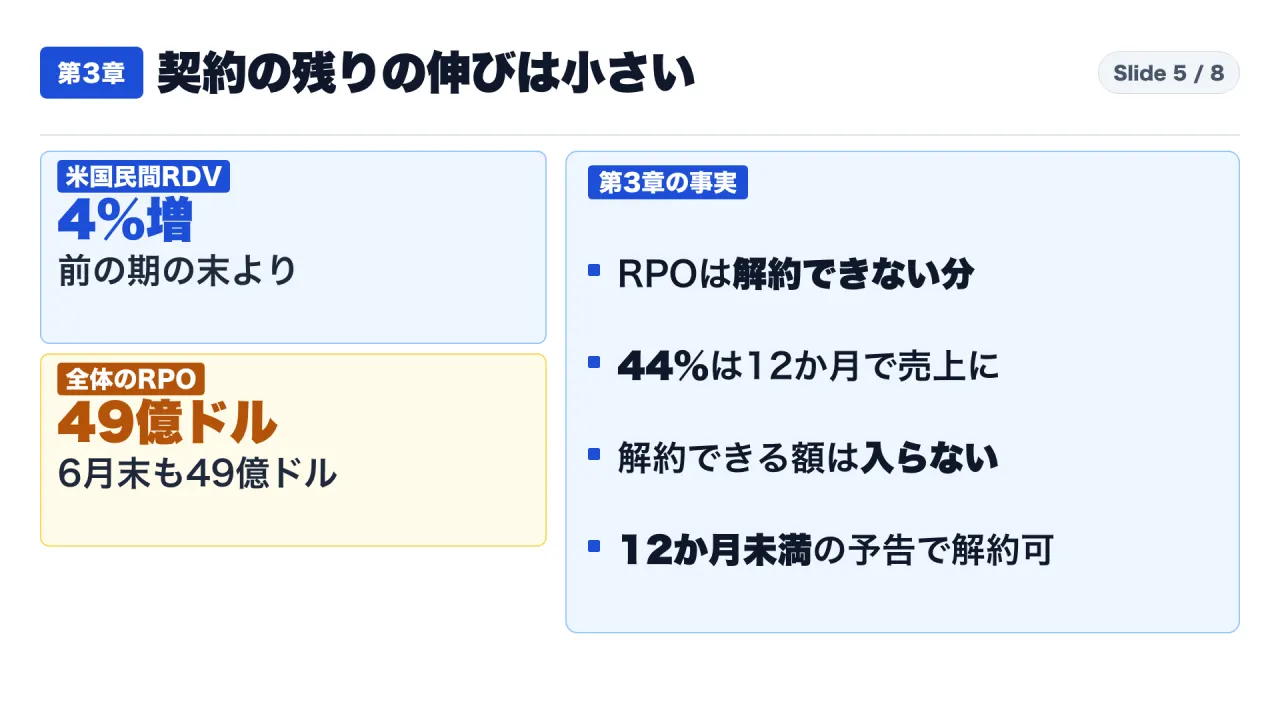
- Deconstructing backlog metrics: Why U.S. Commercial Remaining Deal Value (RDV) grew only +4% sequentially (to $6.517 billion) compared to +27% in Q2, and why GAAP RPO excludes cancelable contracts and agreements under 12 months.
- Debunking market rumors: Clarifying why social media claims of “Commercial overtaking Government in contribution margin for the first time” were factually incorrect (Commercial contribution margin already led in Q2 2026), and auditing claims of shifting 6-month enterprise deal lengths.
Primary Sources & Regulatory Baseline
This investigation is grounded strictly in primary SEC filings, financial statements, and central bank foreign exchange data verified on November 4, 2026:
- 1. Palantir Q3 2026 Earnings Release (Form 8-K Exhibit 99.1, filed November 2, 2026): Consolidated income statements, operational metrics, segment highlights, and contractual definitions (SEC EDGAR 8-K).
- 2. Palantir Q3 2026 Form 10-Q Quarterly Report (filed November 3, 2026): Note 3 (Revenue & RPO disclosure), Note 12 (Segment reporting and contribution margin), and Item 1A Risk Factors (SEC EDGAR 10-Q).
- 3. Palantir Q2 2026 Form 8-K & Form 10-Q (filed August 3–4, 2026): Baseline sequential revenue ($1.935B), segment contribution, and TCV performance (SEC EDGAR Q2 8-K and SEC EDGAR Q2 10-Q).
- 4. Palantir Q3 2025 Earnings Release (Form 8-K Exhibit 99.1, filed November 3, 2025): Baseline comparison period detailing the prior year’s record-setting bookings (SEC EDGAR Q3 2025 8-K).
- 5. Federal Reserve Foreign Exchange Rates H.10 (October 30, 2026): Standard reference rate of $1.00 USD = 157.47 JPY applied for dual-currency reporting (Federal Reserve H.10).
1. Top-Line Acceleration: U.S. Commercial Surpasses Government for the First Time
In the third quarter of 2026, Palantir’s consolidated revenue expanded to $2.313 billion, accelerating from +93% YoY growth in Q2 to +96% YoY in Q3. Sequentially, top-line revenue expanded by +20% QoQ over Q2’s $1.935 billion.
1-1. The Domestic Crossover Milestone
The defining operational milestone in the Q3 release was the domestic market transition:
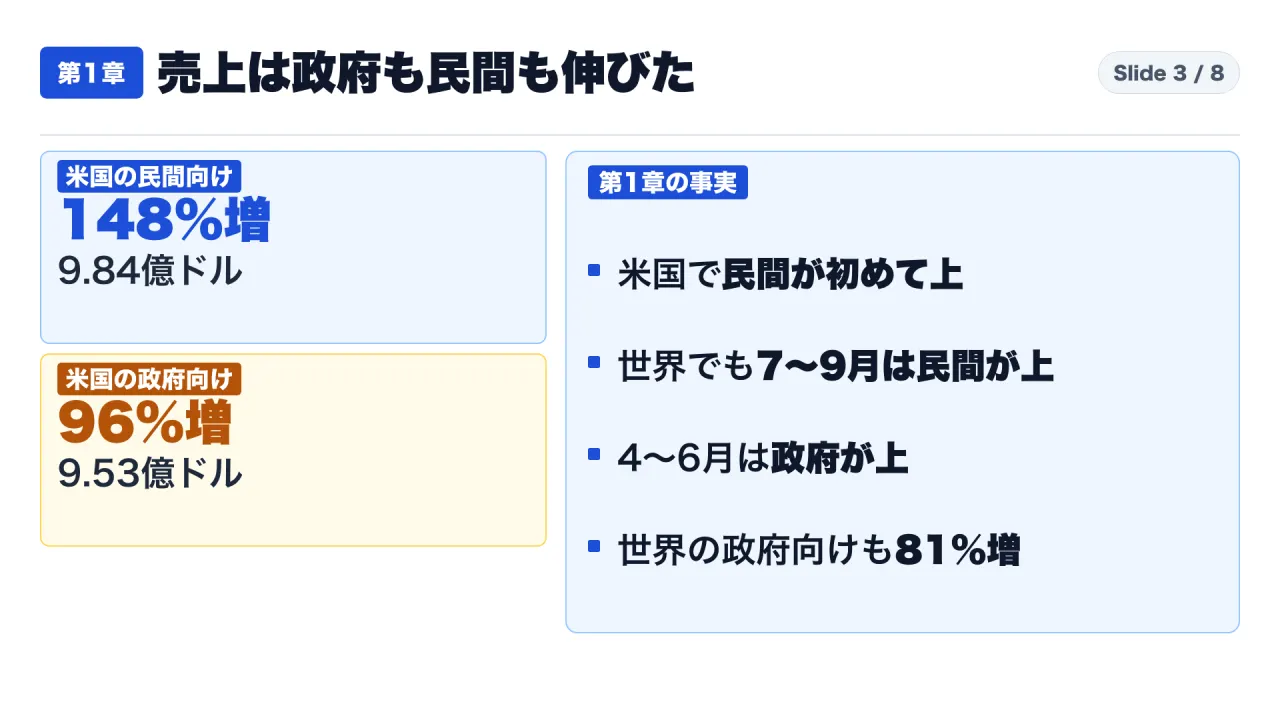
- U.S. Commercial Revenue: Reached $984 million (approximately 155 billion JPY), surging +148% YoY and +29% QoQ. In twelve months, Palantir’s domestic enterprise business scaled 2.5x.
- U.S. Government Revenue: Reached $953 million (approximately 150 billion JPY), growing +96% YoY and +18% QoQ.
- Historical Significance: The official press release explicitly noted: “U.S. commercial revenue surpassed U.S. government revenue for the first time ever.” In Q2 2026, U.S. Government stood at $809 million, outpacing U.S. Commercial at $764 million.
1-2. Worldwide Segment Proportions
On a global basis, commercial momentum was equally pronounced:
- Global Commercial Revenue: Reached $1.168 billion (+113% YoY), up from $945 million in Q2.
- Global Government Revenue: Reached $1.146 billion (+81% YoY), up from $990 million in Q2.
For the first nine months of 2026, Palantir’s revenue split was remarkably balanced: Government accounted for 51% of total revenue, while Commercial represented 49%. Commercial enterprise adoption of the Artificial Intelligence Platform (AIP) has become the primary growth engine.
2. The TCV Deceleration Paradox: Record Comps and Booking Volatility
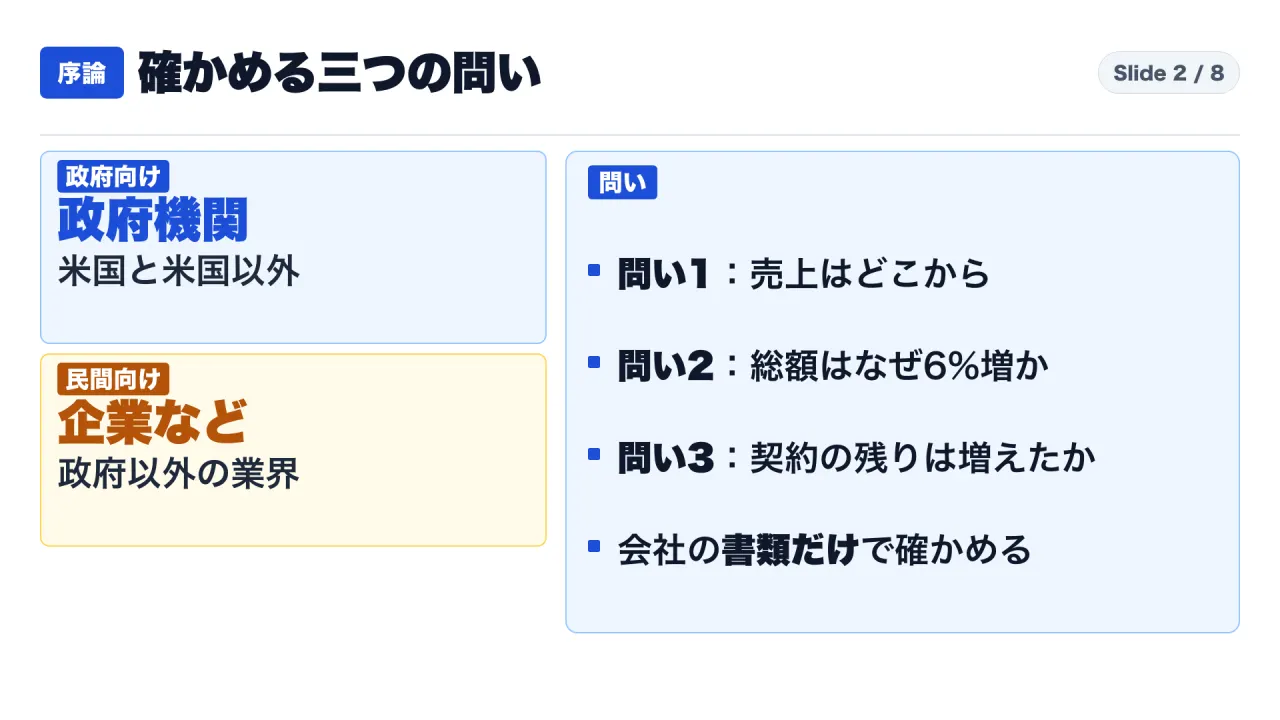
During Q3 2026, Palantir booked $2.918 billion in Total Contract Value (TCV), representing an increase of just +6% YoY. In the domestic enterprise sector, U.S. Commercial TCV totaled $1.463 billion, up +11% YoY.
2-1. Base-Effect Mathematics and Sequential Contraction
The primary driver behind the low year-over-year growth rate is comparison-period mathematics:
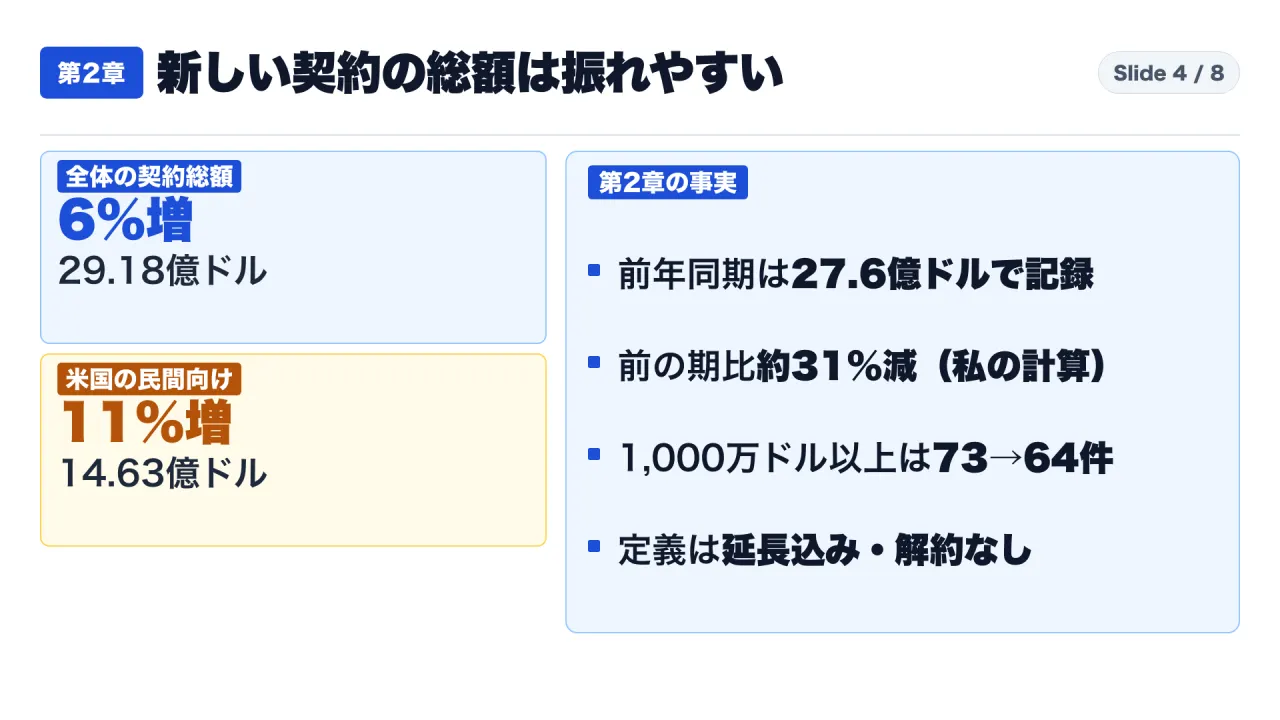
- In Q3 2025, Palantir recorded an extraordinary booking quarter: consolidated TCV was $2.760 billion (+151% YoY), while U.S. Commercial TCV was $1.310 billion (+342% YoY), both designated as “record-setting.”
- Growing +6% over a +151% comparison period represents substantial continued dollar volume ($2.918B vs. $2.760B), but the percentage rate compresses.
- Sequentially, consolidated TCV dropped from $3.373 billion in Q2 to $2.918 billion in Q3 (-13.5% QoQ), while U.S. Commercial TCV declined from a record $2.132 billion to $1.463 billion (-31.4% QoQ).
- Large enterprise deal count showed modest moderation at the very top tier: contracts valued at $10M or more declined from 73 in Q2 to 64 in Q3. Mid-tier enterprise deals valued at $5M or more expanded from 98 in Q2 to 107 in Q3, while deals >=$1M totaled 212 (vs. 220 in Q2).
| Financial Metric | Q2 2026 | Q3 2026 | Sequential Delta (QoQ) | Year-over-Year Delta (YoY) |
|---|---|---|---|---|
| Consolidated Revenue | $1.935B | $2.313B | +19.5% | +96.0% |
| U.S. Commercial Revenue | $764M | $984M | +28.8% | +148.0% |
| U.S. Government Revenue | $809M | $953M | +17.8% | +96.0% |
| Consolidated TCV Bookings | $3.373B | $2.918B | -13.5% | +6.0% |
| U.S. Commercial TCV | $2.132B | $1.463B | -31.4% | +11.0% |
| Contracts >= $1M / $5M / $10M | 220 / 98 / 73 | 212 / 107 / 64 | -8 / +9 / -9 deals | N/A |
2-2. Contractual Definitions: What TCV Actually Measures
In Form 8-K “Additional Definitions”, Palantir states:
“Total contract value (‘TCV’) is the total potential lifetime value of contracts entered into with, or awarded by, our customers at the time of contract execution… TCV, ACV, and RDV each presume the exercise of all contract options available to our customers and no termination of contracts.”
The filing immediately clarifies: “The majority of our contracts are subject to termination provisions, including for convenience.” TCV represents an idealized lifetime ceiling assuming 100% option exercise and zero contract cancellations. When multi-year contracts shift execution dates by a few weeks across quarter boundaries, TCV swings sharply.
3. Backlog Telemetry: Decoupling RDV and ASC 606 RPO
Because TCV represents gross inflows of new bookings, analyzing remaining backlog provides a more stable indicator of revenue sustainability. Here, Palantir reports two distinct metrics: Remaining Deal Value (RDV) and Remaining Performance Obligations (RPO).
3-1. U.S. Commercial Remaining Deal Value (RDV)
Palantir’s U.S. Commercial RDV reached $6.517 billion as of September 30, 2026:
- On a year-over-year basis, RDV expanded +79% YoY over Q3 2025.
- On a sequential basis, RDV expanded by +4% QoQ over the $6.238 billion recorded at the end of June 2026.
- In Q2 2026, U.S. Commercial RDV surged +27% QoQ. The sequential deceleration to +4% indicates that during Q3, rapid revenue recognition ($984 million burned) nearly matched the net addition of newly committed deal value.
3-2. GAAP RPO Invariance: Why It Remained Flat at $4.9 Billion
Under U.S. GAAP (ASC 606), Remaining Performance Obligations appear in Form 10-Q Note 3. At both June 30 and September 30, 2026, Palantir’s total RPO was reported at approximately $4.9 billion:
- Timing of Recognition: As of September 30, Palantir expects to recognize approximately 44% within 12 months, and approximately 37% over 13 to 36 months (vs. 43% and 36% at June 30).
- Exclusion Criteria: Note 3 explicitly excludes:
- Cancelable contracted revenue, which includes customer deposits.
- Contracts with an original expected duration of one year or less.
- Contracts subject to termination for convenience with less than twelve months’ notice.
In short: RPO measures legally non-cancelable committed revenue under GAAP, whereas RDV reflects potential lifetime deal value including optional extension periods.
4. Auditing Market Rumors: Reconciling AI Summaries Against SEC Disclosures
Following the earnings release, several AI-generated market summaries circulated claims that distorted Palantir’s actual SEC disclosures.

Rumor 1: “Commercial Surpassed Government in Contribution Margin for the First Time”
- The Claim: Commentators asserted that Q3 2026 marked the first time Commercial contribution margin exceeded Government contribution margin.
- The Fact-Check (SEC 10-Q Note 12): This claim is factually incorrect. Commercial contribution margin was $898 million in Q3 2026 (vs. $797 million for Government). However, in Q2 2026, Commercial contribution margin was already $735 million, exceeding Government contribution margin of $701 million. The historic “first time ever” declaration applied strictly to U.S. Revenue ($984M vs. $953M), not segment contribution profit.
Rumor 2: “Proliferation of 6-Month Contracts for >$10M Enterprise Deals”
- The Claim: Analyses claimed Palantir is seeing a trend toward short 6-month contracts among large $10M+ enterprise customers, creating churn risk.
- The Fact-Check (Form 10-Q Audit): Neither the Q3 Form 8-K nor the Form 10-Q mentions a 6-month enterprise deal compression. The 10-Q standard disclosure states: “While we generally offer contract terms of one to five years in length, our customers sometimes enter into shorter-term contracts.” Standard risk disclosures describing hypothetical customer renewals do not constitute empirical operational trends.
| Circulated Public Narrative | Formal SEC Filing Reality | Verification Status |
|---|---|---|
| Revenue grew +96% YoY (prior quarter +93%) | Confirmed: Q3 revenue was $2.313B (+96%), Q2 was $1.935B (+93%) | VERIFIED (8-K S1 & S3) |
| U.S. Commercial revenue grew ~148% YoY | Confirmed: U.S. Commercial reached $984M (+148% YoY / +29% QoQ) | VERIFIED (8-K S1) |
| New bookings (TCV) grew only +11% | Clarified: Consolidated TCV grew +6%; +11% applies to U.S. Commercial TCV | CLARIFIED (8-K S1) |
| Commercial beat Government in profit for 1st time | Incorrect: Crossover occurred in U.S. Revenue; Commercial profit already led in Q2 | REFUTED (10-Q Note 12) |
| >$10M deals shifting to 6-month durations | Unsubstantiated: 10-Q cites general 1-5 year terms; zero mention of 6-month shift | UNVERIFIED / ABSENT |
| Government revenue grew over +80% | Confirmed: Global Government grew +81% YoY; U.S. Government grew +96% YoY | VERIFIED (8-K S1 & 10-Q) |
5. Architectural & Procurement Synthesis: Ratable Revenue vs. Lifetime Bookings
Why does this financial divergence matter to technology executives and software buyers?
5-1. The Time-Horizon Mismatch
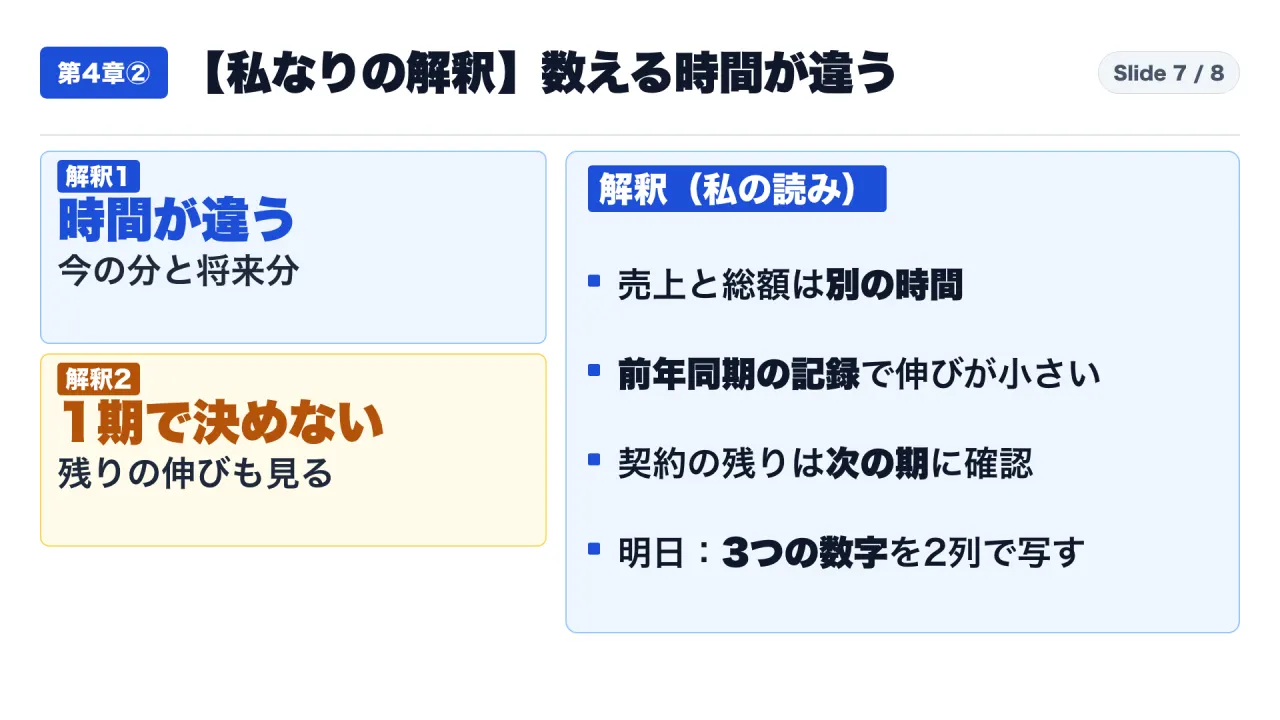
- Revenue recognizes the past: Under ASC 606, enterprise software revenue is recognized ratably over contract execution. Palantir’s Q3 revenue of $2.313 billion represents performance delivered during that specific 90-day window, drawing heavily from multi-year contracts executed in 2023, 2024, and 2025.
- TCV recognizes the hypothetical future: TCV records the cumulative commitment of contracts signed during the quarter, assuming every renewal option is exercised and no contract is terminated early. A company can experience explosive quarterly revenue growth while TCV growth moderates temporarily, simply because previous bookings are converting to revenue faster than new multi-year agreements are finalized.
5-2. The Enterprise Procurement Checklist
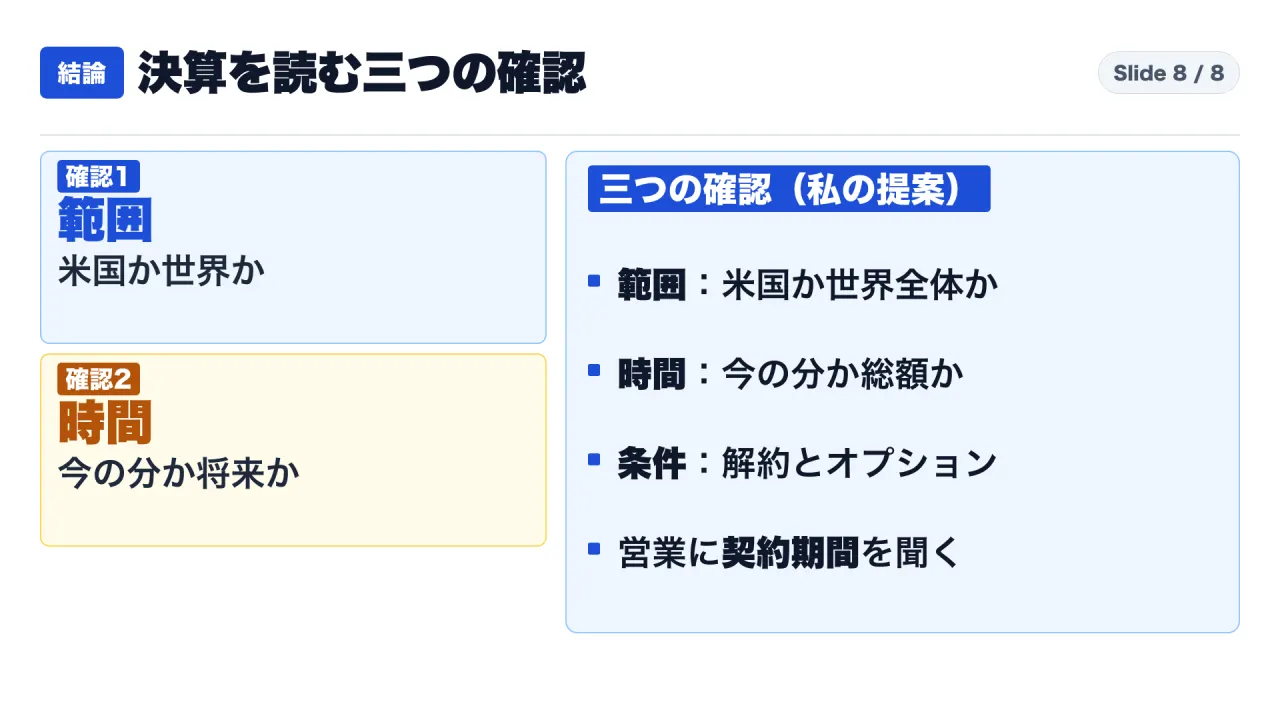
For corporate IT leaders negotiating software licenses with Palantir, Databricks, Snowflake, or ServiceNow, Palantir’s contractual definitions offer three essential procurement safeguards:
- Base Duration vs. Optional Periods: When a vendor presents a “Total Contract Value” proposal, force sales reps to unbundle the initial committed base period (e.g., 12 to 24 months) from optional renewal extensions. Never allow optional periods to lock your organization into unbudgeted run-rate commitments.
- Convenience Termination Windows: Review early termination provisions. Palantir’s 10-Q confirms that many enterprise agreements allow termination for convenience with less than 12 months’ written notice. Ensure your enterprise contract includes reciprocal convenience termination rights rather than rigid multi-year lock-in.
- Option Inclusion Auditing: Clarify whether proposed software discounts are contingent upon exercising optional expansion tiers. If usage fails to scale as expected, verify whether your organization retains the right to let options lapse without incurring retroactive pricing penalties on base tiers.
Primary Sources & References
- SEC EDGAR: Palantir Technologies Inc. Q3 2026 Form 8-K Exhibit 99.1 Press Release (Nov 2, 2026)
- SEC EDGAR: Palantir Technologies Inc. Q3 2026 Form 10-Q Quarterly Report (Nov 3, 2026)
- SEC EDGAR: Palantir Technologies Inc. Q2 2026 Form 8-K Exhibit 99.1 Press Release (Aug 3, 2026)
- SEC EDGAR: Palantir Technologies Inc. Q2 2026 Form 10-Q Quarterly Report (Aug 4, 2026)
- SEC EDGAR: Palantir Technologies Inc. Q3 2025 Form 8-K Exhibit 99.1 Press Release (Nov 3, 2025)
- Federal Reserve Board: Foreign Exchange Rates H.10 Current Release
Note: This article is for informational purposes only and does not constitute investment advice or a price forecast. Podcast audio is synthesized from the host’s voice.