Why Tencent's Hy4 Is 8x Cheaper on Output but Trails Claude Opus 5.5 on 12 of 14 Benchmarks: Inside the Company Table, the +/-4.9 Point Margin of Error, and Enterprise Deployment Truths
An architectural breakdown of Tencent’s 770B MoE flagship, output versus input pricing disparities, benchmark noise thresholds, and why frontier API dominance remains unchallenged.
Japanese Edition: https://consuloji.substack.com/p/aihy4anthropicaiopus-5581
YouTube (Japanese audio): https://youtu.be/Ltca53OFz3k
Executive Summary & Strategic Takeaways
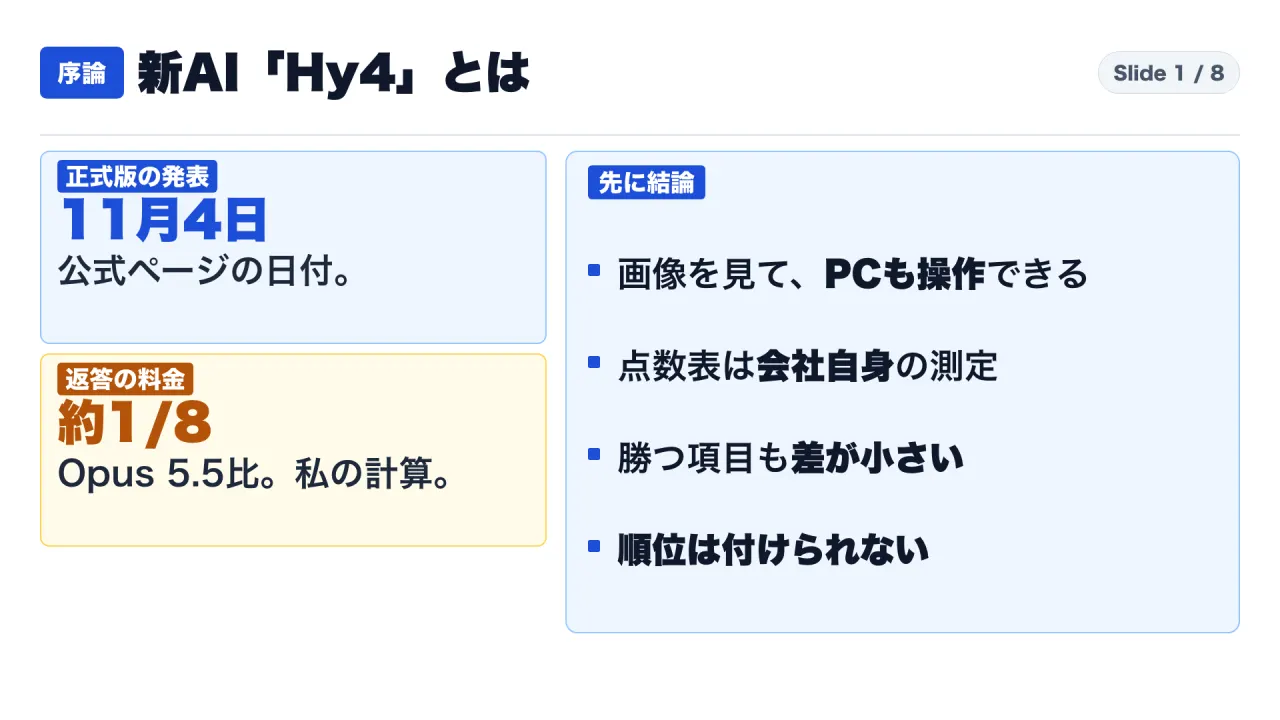
- Core Thesis: On November 4, 2026, Tencent Cloud launched its latest flagship model, Hy4, featuring native multimodal vision and operating system automation across graphical desktop interfaces (GUI) and command-line environments (CLI). Industry attention centered on disruptive pricing: generation output is priced at $2.501 per million tokens, approximately 8x cheaper than Anthropic’s Claude Opus 5.5 ($20.00 per million output tokens). However, an architectural audit of Tencent’s technical appendix reveals three critical realities: (1) Pricing asymmetry: The 8x savings applies strictly to output generation—input token ingestion ($0.834 per million tokens vs. $4.00 for Opus 5.5) is 4.8x cheaper, shifting total cost of ownership (TCO) in retrieval-heavy agentic workflows; (2) Self-tested benchmark reality: In Tencent’s own 7-model comparative table, Hy4 surpasses Claude Opus 5.5 on only 2 out of 14 non-internal benchmarks (APEX-Agents v1.1 and DeepSWE v1.1), while trailing Opus 5.5 on the remaining 12 suites; and (3) Statistical noise on agent tasks: Hy4’s marginal lead on APEX-Agents v1.1 (75.2 vs. 73.5 public / 74.8 internal) falls entirely within the benchmark operator’s official +/-4.9 point margin of error, matching baseline run-to-run variance.
- Who Should Read This: Enterprise AI platform architects, chief technology officers evaluating frontier versus open-weight models, procurement leads negotiating inference SLAs, and engineering managers designing coding or desktop automation agents.
- Key Architectural & Economic Takeaways:
- The distinction between Hy4 Preview (open-weights on Hugging Face, Apache-2.0 license, 770B total / 49B active MoE) and Official Hy4 (commercial API only on Tencent Cloud and OpenRouter, weights “planned for release”, unannounced license terms).
- Why headline benchmark parity on agentic tasks fails under scrutiny: decomposing the APEX-Agents v1.1 evaluation environment, container memory shifts (24GB vs. 16GB), and intra-model score spreads (0.8 to 1.7 points).
- A systematic 3-gate evaluation framework to test Hy4 against incumbent frontier APIs using internal production traces rather than synthetic public leaderboards.
Primary Sources & Technical Baseline
This technical teardown cross-verifies five primary sources published between November 4 and November 5, 2026:
- 1. Tencent Hy Official Announcement & Appendix Table (November 4, 2026): Hy4 research overview, evaluation methodologies, and 7-model benchmark appendix (Tencent Hy Research).
- 2. OpenRouter Official Endpoint Metadata & Pricing Schedule: Model specifications, runtime discount tiers, and active context limits for
tencent/hy4(OpenRouter API Endpoints). - 3. Hugging Face Official Model Cards: Tencent Hy4-preview repository (Hugging Face Hy4-preview) and DeepSeek-V4.1-Flash-1017 model card (DeepSeek HF).
- 4. Mercor Official APEX-Agents Leaderboard & Evaluation Standards: APEX-Agents v1.1 pass@1 benchmark documentation, hardware specifications, and statistical variance telemetry (Mercor Leaderboard and Mercor Blog).
- 5. Anthropic Platform Pricing & Claude Opus 5.5 Launch Disclosures: Official per-token pricing schedules and AutomationBench evaluation footnotes (Anthropic Pricing and Claude Opus 5.5 Announcement).
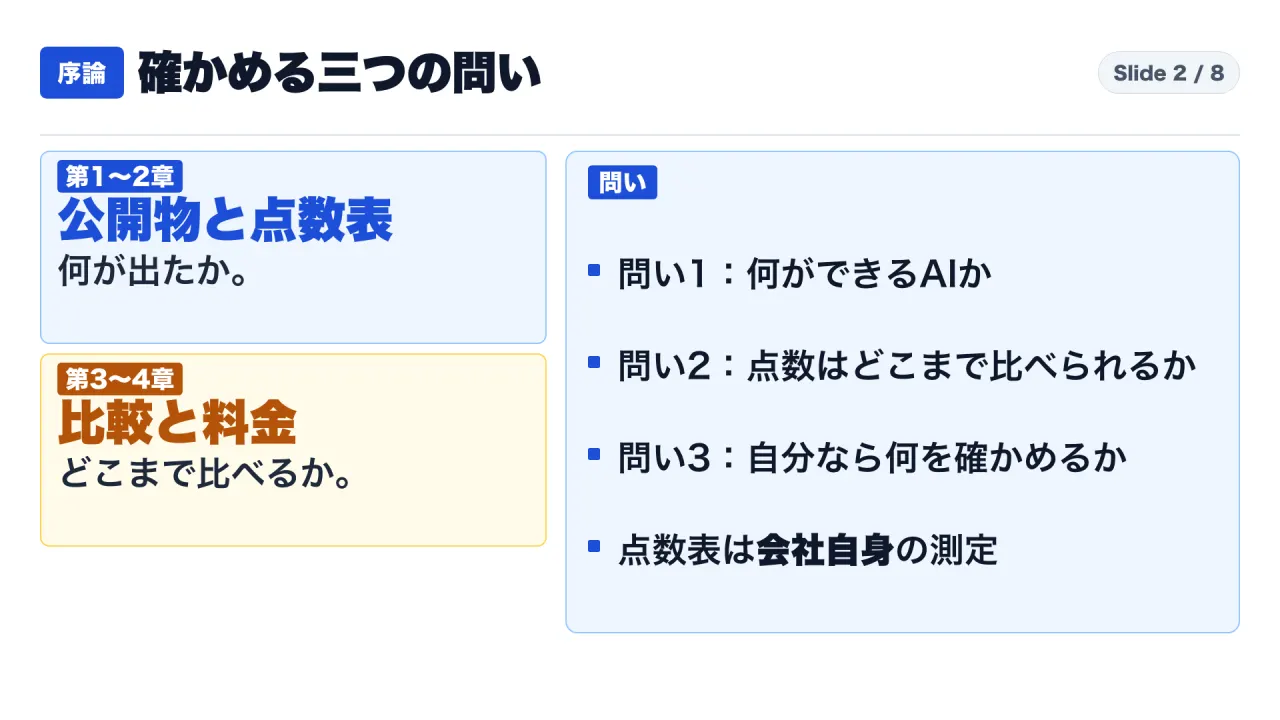
1. Model Architecture & Availability: Commercial API vs. Open-Weight Realities
To assess Hy4 objectively, enterprise engineering teams must separate the release into two distinct entities: the pre-existing Hy4-preview and the newly unveiled Official Hy4.
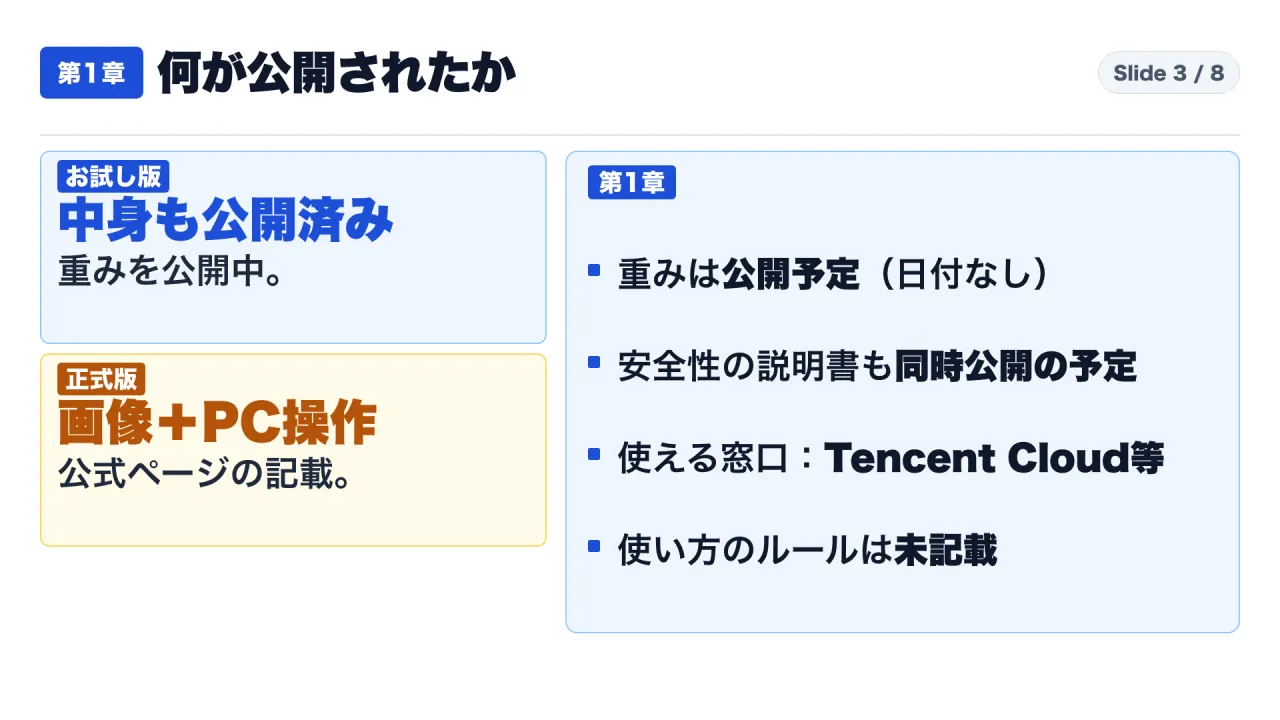
1-1. Hy4-preview: Open Weights with High Infrastructure Overhead
The earlier preview model established Tencent’s open-weights foundation:
- Parameter Architecture: A massive sparse Mixture-of-Experts (MoE) network comprising 770 billion total parameters, with 49 billion active parameters routed per forward pass.
- Licensing & Inspectability: Distributed under the permissive Apache-2.0 license, providing full weight inspection, local fine-tuning, and on-premises hosting.
- Hardware Footprint: Running a 770B MoE model unquantized or at FP8 requires multiple high-end enterprise nodes (such as 8x H100 or H200 clusters), placing self-hosted deployments out of reach for organizations without dedicated GPU clusters.
1-2. Official Hy4: Native Vision and Desktop Automation Behind a Cloud Gateway
The production release introduces substantial functional expansions:
- Multimodal Perception: Direct ingestion of high-resolution image inputs, document parsing, and complex diagram reasoning.
- Operating System Automation: Native computer-use capabilities designed to execute multi-step workflows across graphical operating systems (GUI) and terminal command lines (CLI).
- Context Capacity: OpenRouter endpoint disclosures list an active context window of 1,048,576 tokens (~1M context) with multimodal support.
- Weight Availability Status: Unlike the preview release, the weights of the official production model are not yet downloadable. Tencent’s release page notes that weights are “scheduled for future release,” with no definitive release timestamp, system card disclosure, or final licensing framework specified.
Organizations requiring sovereign, air-gapped execution cannot deploy official Hy4 in self-hosted environments. Current enterprise access is restricted entirely to managed cloud endpoints on Tencent Cloud or aggregators such as OpenRouter.
2. Forensic Dissection of the Benchmark Table: Self-Testing Asterisks and Statistical Noise
The centerpiece of Tencent’s announcement is an appendix table comparing Hy4 against six leading models: Hy4-preview, GLM-5.3, DeepSeek-V4.1-Flash-1017, Kimi K3.1 Pro, GPT-6.1 Sol, and Claude Opus 5.5.
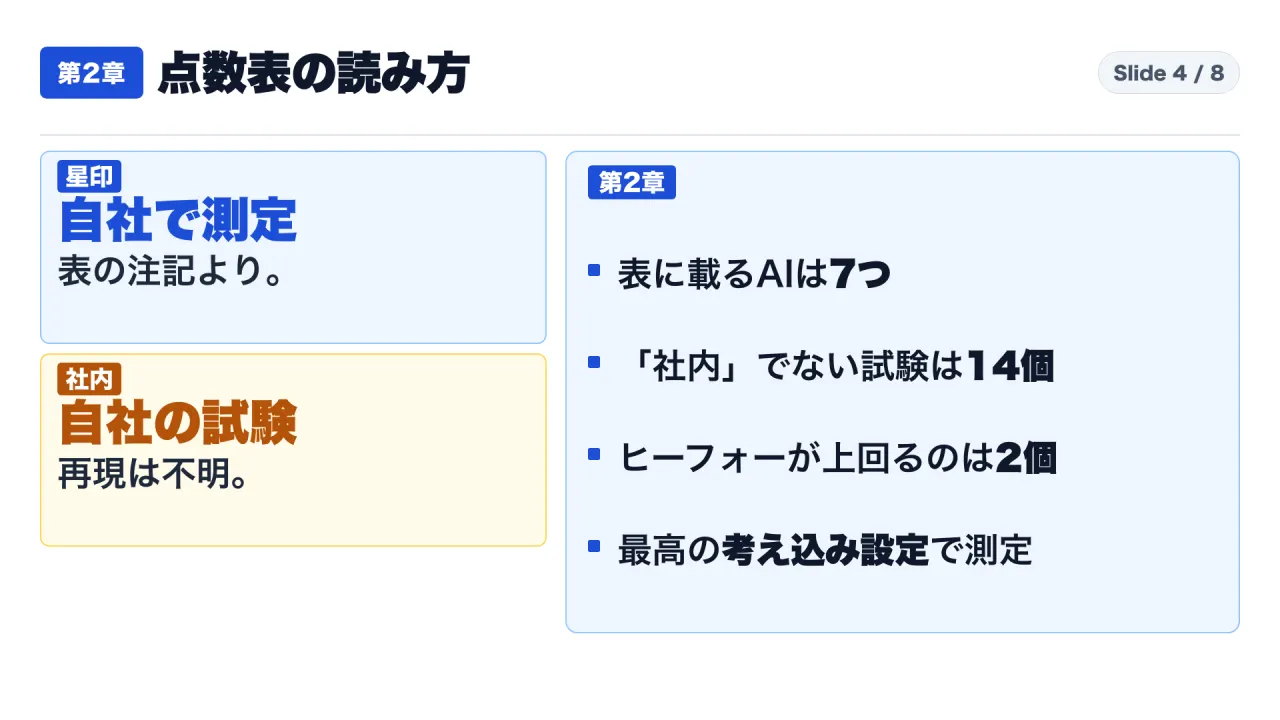
A rigorous reading of this table requires examining the methodology footnotes:
- The Asterisk (
*) Indicator: Scores marked with an asterisk denote evaluations conducted internally by Tencent’s research team (“with * indicating our own testing”). Unmarked scores reflect numbers harvested directly from external vendor reports or public leaderboards. - Inference Configuration Maximization: Footnotes confirm that all models were evaluated using their maximum available reasoning depth configurations.
- Internal Custom Benchmarks: Multiple rows represent proprietary Tencent internal suites (labeled “internal”), which cannot be independently replicated or verified by external parties.
2-1. The 14-Benchmark Head-to-Head: Hy4 vs. Claude Opus 5.5
Filtering the appendix table to public, non-internal benchmarks where both Hy4 and Claude Opus 5.5 report comparable evaluations yields 14 test suites. Across these 14 tests, Hy4 surpasses Opus 5.5 on exactly two benchmarks, while trailing Opus 5.5 substantially on the remaining twelve:
| Benchmark Test Suite | Evaluation Focus | Hy4 Score | Claude Opus 5.5 Score | Margin Analysis |
|---|---|---|---|---|
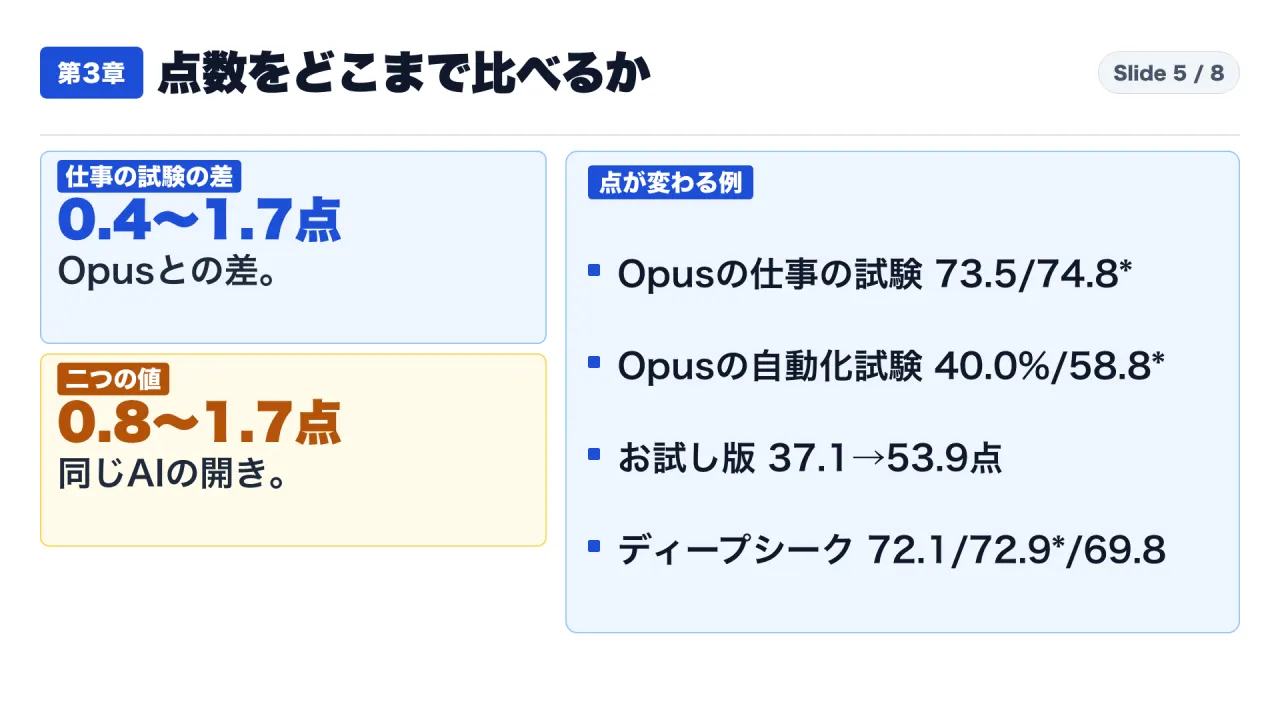
| APEX-Agents v1.1 (pass@1) | Enterprise Workplace Tool & Agent Tasks | 75.2 | 73.5 / 74.8* | Hy4 leads by +0.4 to +1.7 pts (within +/-4.9 pt test error margin) |
| DeepSWE v1.1 | Software Engineering Issue Resolution | 74.9 | 74.2 / 72.6* | Hy4 leads by +0.7 to +2.3 pts (narrow margin) |
| MMMU-Pro | Multimodal Visual Reasoning | 78.6 | 88.2* | Opus 5.5 leads by +9.6 pts |
| Terminal-Bench 4.0 | CLI / Linux Terminal System Operations | 44.4 | 66.4 / 66.4* | Opus 5.5 leads by +22.0 pts |
| ProgramBench | Programmatic Logic & Synthesis | 30.0 | 65.0 / 56.5* | Opus 5.5 leads by +26.5 to +35.0 pts |
| OSWorld 2.1 | Desktop GUI Computer Use Automation | 78.9 | 81.8 | Opus 5.5 leads by +2.9 pts |
| Terminal-Bench-Science 0.1 | Scientific Computing CLI Workflows | 19.8 | 58.7 / 56.2* | Opus 5.5 leads by +36.4 to +38.9 pts |
Note: Data transcribed directly from Tencent Hy4 documentation appendix (November 2026). Asterisks denote Tencent internal measurements.
Across the remaining seven shared public benchmarks—SWE-Marathon v1.1, FrontierCode 2.0, Agents’ Last Exam v1.1, HLE-Full (Humanity’s Last Exam), PostTrainBench v1.2, ZeroBench-main, and AutomationBench v1.0.6—Claude Opus 5.5 consistently outperforms Hy4.
Tencent’s research team acknowledged these boundaries in their official release:
“Hy4 represents one of the strongest open-weight models available in the open-weight ecosystem. However, significant performance gaps remain when compared to the absolute top closed-source frontier models, particularly on internal research-grade mathematics, extended software engineering horizons, model self-improvement, and complex visual query comprehension.”
3. The APEX-Agents Dissection: Statistical Noise and Leaderboard Variance
The primary claim across developer forums was that “Hy4 defeats Claude Opus 5.5 on enterprise agent tasks,” pointing to the 75.2 vs. 73.5 score on APEX-Agents v1.1. A forensic analysis reveals why this conclusion is statistically invalid.
3-1. Mercor’s Official Margin of Error: +/-4.9 Points
APEX-Agents, developed by Mercor, evaluates AI models on real-world professional tasks across software engineering, financial modeling, and operational data analysis:
- Claude Opus 5.5 holds a published baseline score of 73.5 (Pass@1) on Mercor’s leaderboard.
- Mercor explicitly attaches an official confidence interval of +/-4.9 points to these results, reflecting the stochastic variance of multi-step agent executions in live operating environments.
- In Tencent’s appendix table, Claude Opus 5.5 is assigned two separate scores: the public 73.5, alongside a Tencent-internal evaluation of 74.8*.
- Hy4’s reported score of 75.2 represents a spread of just +1.7 points over the public Opus baseline and only +0.4 points over Tencent’s own internal Opus measurement.
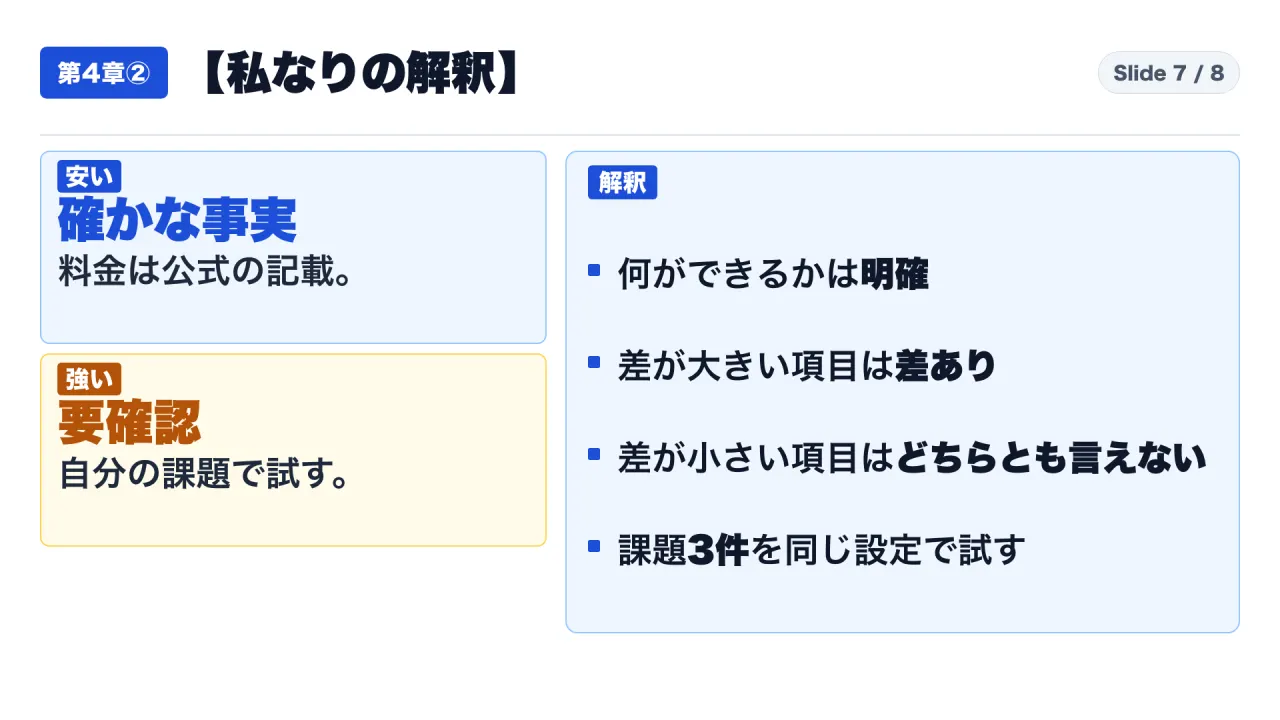
Both differentials (+0.4 and +1.7) fall completely within the 4.9-point margin of error. In standard statistical hypothesis testing, two distributions with this degree of overlap cannot be distinguished from random noise.
3-2. Intra-Model Variance Across Testing Environments
The fragility of single-point leaderboard rankings becomes obvious when examining how other models scored across evaluators on APEX-Agents v1.1:
- DeepSeek-V4.1-Flash-1017: Scored 72.1 on its official model card, 72.9* in Tencent’s internal testing, and 69.8 on Mercor’s live public leaderboard—a spread of 3.1 points for the exact same weights.
- Kimi K3.1 Pro: Exhibited a 1.0-point variance between public disclosures (67.2) and Tencent’s internal test (68.2*).
- Claude Opus 5.5: Exhibited a 1.3-point variance between Mercor’s leaderboard (73.5) and Tencent’s testing harness (74.8*).
- GPT-6.1 Sol: Exhibited a 1.7-point variance (60.0 vs. 61.7*).
As of November 5, 2026, Hy4 does not appear on Mercor’s independent public leaderboard. All available Hy4 data points originate exclusively from Tencent’s proprietary evaluation cluster. Furthermore, compute allocations shift benchmark outcomes significantly: in the preview model card, APEX-Agents performance was listed at 37.1 under a test container limited to 4 CPUs and 16GB RAM, whereas the November 2026 table reported 53.9 under v1.1 specifications featuring 24GB RAM and updated anti-cheating harnesses.
4. Unit Economics: Dissecting the “8x Cheaper” Pricing Narrative
While Hy4 cannot be classified as superior to frontier models on raw reasoning capability, its economic value proposition is compelling. However, procurement teams must analyze the pricing structure beyond headline soundbites.
4-1. Decomposing Token Economics: Generation vs. Ingestion
Tencent Cloud established official API rates for Hy4 that mirror the preview tier:
- Cached Prompt Ingestion: $0.042 per million tokens
- Standard Input Ingestion: $0.834 per million tokens
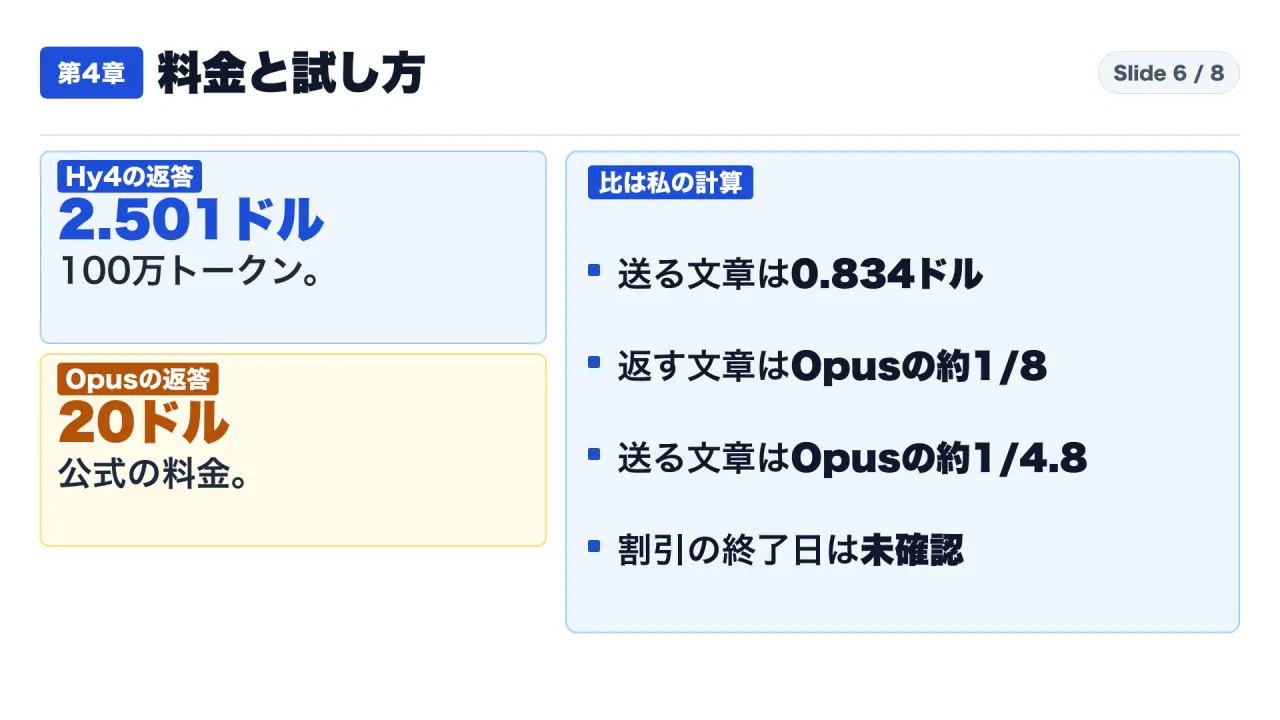
- Generation Output: $2.501 per million tokens
Comparing these rates directly against Anthropic’s published commercial tier for Claude Opus 5.5 ($4.00 per million input tokens, $20.00 per million output tokens) illustrates the exact multiplier divergence:
| Processing Dimension | Tencent Hy4 Official Rate | Anthropic Claude Opus 5.5 Rate | Cost Reduction Factor |
|---|---|---|---|
| Generation Output | $2.501 / M tokens | $20.00 / M tokens | ~8.0x cheaper (-87.5% cost) |
| Standard Input Ingestion | $0.834 / M tokens | $4.00 / M tokens | ~4.8x cheaper (-79.1% cost) |
| Cached Prompt Input | $0.042 / M tokens | $0.400 / M tokens (est. 90% discount) | ~9.5x cheaper (-89.5% cost) |
The claim that Hy4 is “8x cheaper” applies strictly to output tokens generated by the model. For input tokens—which represent 80% to 95% of total token volume in enterprise Retrieval-Augmented Generation (RAG) and repository-wide code analysis—the cost savings factor is 4.8x.
4-2. Promotional Aggregator Tiers and Context Limits
On OpenRouter, promotional launch discounts offered Hy4 at an effective 50% discount (discount: 0.5), cutting generation output to $1.2505 per million tokens. While attractive for high-volume batch processing, enterprise teams must account for data residency and privacy terms: API requests routed via third-party aggregators fall under different compliance frameworks than direct enterprise cloud agreements.
5. Enterprise Implementation Playbook: 3 Internal Verification Checkpoints
Rather than relying on vendor-published benchmark tables or social media sentiment, engineering leaders should establish a repeatable internal verification harness.
Checkpoint 1: Vendor Audit and Context Hygiene
Audit the data source across three standardized vectors:
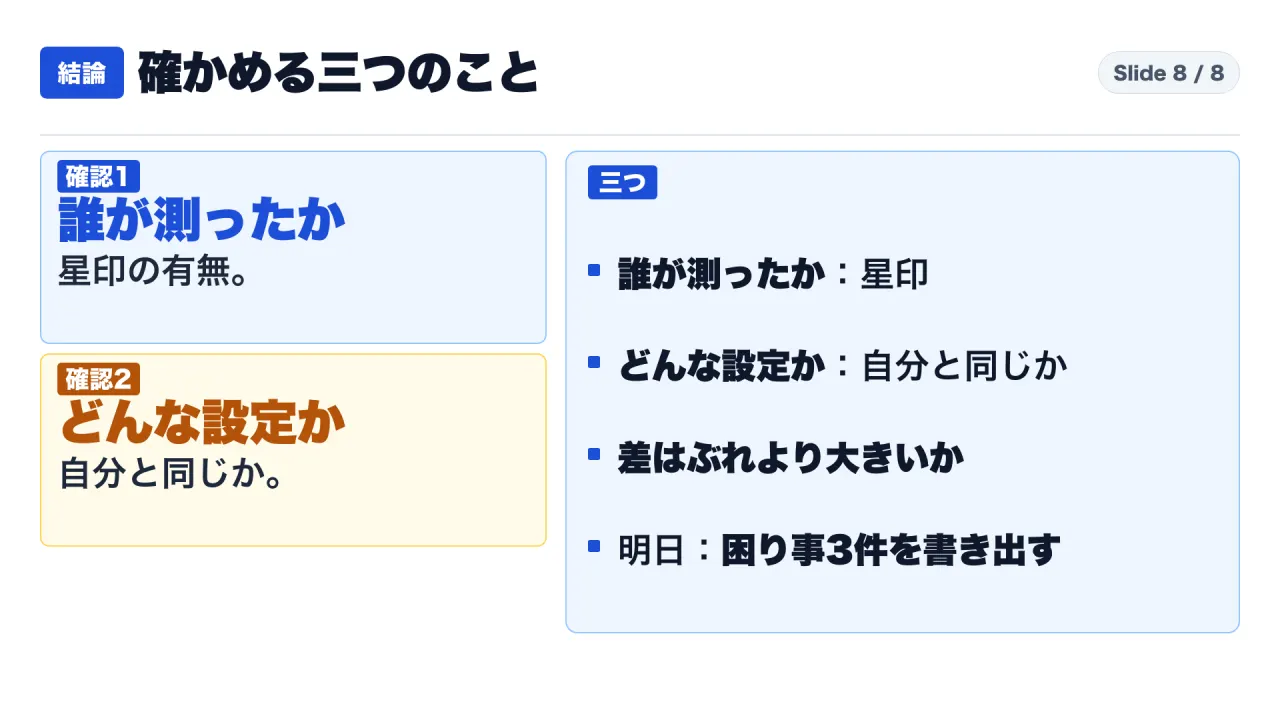
- Tester Identity: Is the score independently certified by an objective third-party platform (such as Mercor, LMSYS, or SWE-bench), or is it an internal vendor measurement marked with an asterisk?
- Inference Hyperparameters: Were reasoning depth, temperature, top-p, and test-time compute budgets held strictly identical across all compared models?
- Statistical Significance: Does the reported performance gap exceed the documented standard deviation of the benchmark suite? If the margin is under 2.0 points on an agentic benchmark, treat the models as performance-equivalent.
Checkpoint 2: Internal Workload Triangulation
Select three representative, unpolluted enterprise tasks from your existing operations:
- Task A (Structured Data & Multimodal Ingestion): Extracting structured JSON entities from tabular PDF documents and operational dashboard screenshots.
- Task B (Workflow Automation): Executing a multi-step administrative procedure via CLI terminal scripts or GUI navigation.
- Task C (Repository-Level Code Refactoring): Analyzing a multi-file dependency graph to perform a localized library upgrade.
Run these tasks through both Hy4 and your incumbent frontier model using identical system prompts and tool interfaces. Measure three deterministic operational metrics: Task Success Rate (%), End-to-End Latency (seconds), and Total Financial Cost ($) calculated from actual consumed token counts.
Checkpoint 3: Governance, Data Residency, and Hosting Roadmap
- Immediate Commercial API Route: If cloud API consumption satisfies internal compliance, evaluate Tencent Cloud and OpenRouter endpoints for non-confidential, latency-tolerant batch workloads where the 8x output cost reduction delivers immediate margin expansion.
- Sovereign On-Premises Route: If enterprise policies strictly prohibit external network egress of proprietary data, freeze production rollout until Tencent formally releases official Hy4 model weights, complete system cards, and hardware sizing guides on Hugging Face.
Primary Sources & References
- Tencent Hy Official Portal: Introducing Hy4 Research Paper & Benchmark Appendix (Nov 4, 2026)
- OpenRouter: Tencent Hy4 Model Card, Endpoint Specs, and Active Pricing Schedule
- Hugging Face: Tencent Hy4-preview Model Card & Technical Specifications
- Hugging Face: DeepSeek-V4.1-Flash-1017 Technical Model Card
- Mercor: APEX-Agents v1.1 Live Leaderboard (Pass@1 Metric & Statistical Variance)
- Mercor Official Engineering Blog: Introducing APEX-Agents 1.1 (Sept 8, 2026)
- Anthropic: Claude Opus 5.5 Official Architectural Disclosures & AutomationBench Notes
- Anthropic Platform: Official API Token Pricing Schedule
Note: This article is for informational purposes only and does not constitute investment advice or a price forecast. Podcast audio is synthesized from the host’s voice.