Inside Google Gemini Spark ── Why 24/7 Personal Autonomous Agents Are Blocked on Enterprise Workspace Accounts, the 5 Hard Constraints, and How GAS-Powered MCP Bridges Unlock Custom APIs
An architectural analysis of Google’s dedicated microVM agent infrastructure, the 50-schedule and 15-concurrency limits, and why corporate governance isolates autonomous bots from enterprise domains.
Japanese Edition: https://consuloji.substack.com/p/gemini-spark24ai50
YouTube (Japanese audio): https://youtu.be/4zLqMAO-N1Y
Executive Summary: The Asynchronous Paradigm Shift
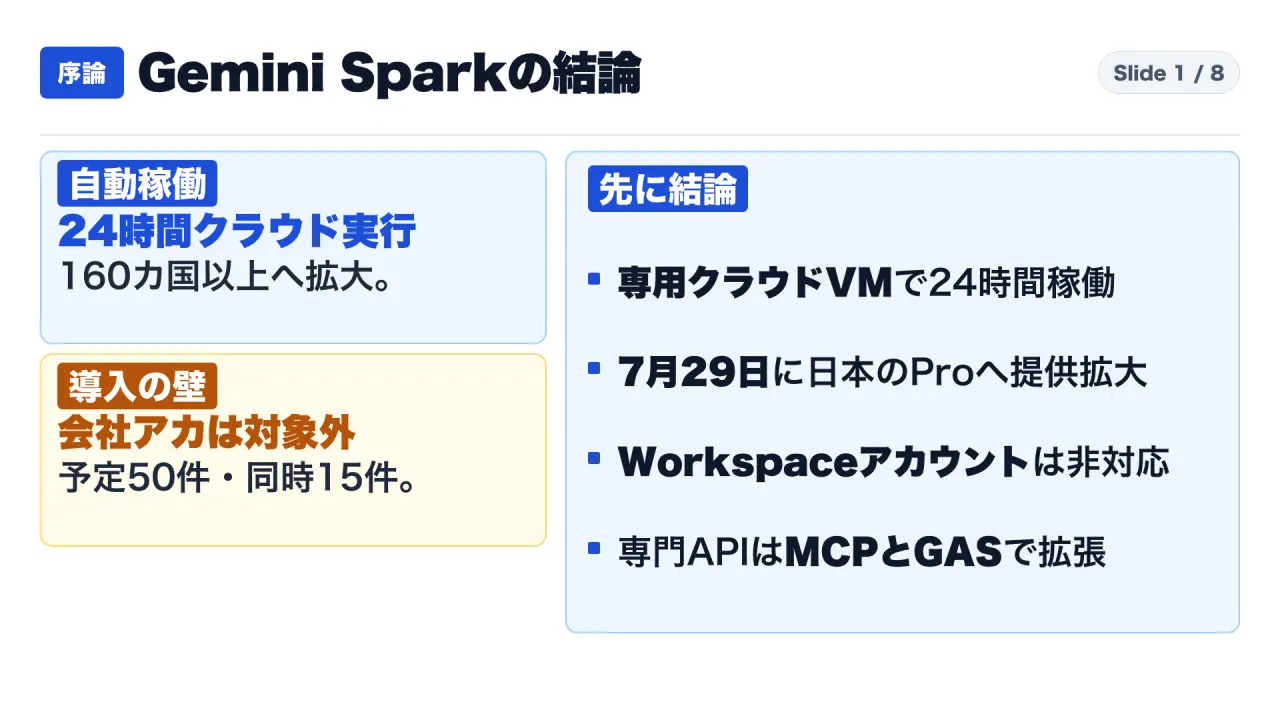
At Google I/O 2026 on May 19, 2026, Google introduced Gemini Spark, an autonomous agent platform designed to execute multi-step tasks continuously in the background, independent of local client hardware. Subsequent rollouts expanded Spark to Google AI Pro subscribers in Japan on July 29, 2026, followed by Chrome-based automated browsing and global availability across more than 160 countries on July 30, 2026.
Across thirteen primary technical sources—encompassing Google official research announcements, help center documentation, Google Help Community threads, and independent engineering stress tests—three critical architectural facts emerge:
- A Cloud-Native MicroVM Substrate Built on High-Velocity Inference: Gemini Spark operates on dedicated cloud virtual machines backed by an execution harness and Model Context Protocol (MCP) tool integration. To sustain background execution economically, Google relies on Gemini 3.5 Flash, delivering a 4x increase in output token velocity (and 12x within the Antigravity developer environment). Gemini monthly active users (MAU) expanded from 400 million to over 900 million, while internal token consumption surged from 500 billion tokens daily in March 2026 to over 3 trillion tokens daily by May 2026. For an enterprise processing 1 trillion tokens daily, routing 80% of traffic to Gemini 3.5 Flash saves over $1 billion annually.
- The Workspace Isolation Boundary and Five Hard Constraints:
Gemini Spark enforces rigid criteria: users must be at least 18 years old, possess a personal Google account (
@gmail.com), hold an active Google AI Pro or Ultra ($100/month) plan, enable “Keep Activity,” and consent to Personal Intelligence. It is strictly unavailable in the EEA, the UK, Switzerland, and Nigeria. Crucially, Gemini Spark cannot be enabled on corporate Google Workspace accounts, nor can personal accounts bridge into corporate Workspace tenants. Enterprise compliance, Data Loss Prevention (DLP), and identity boundaries isolate personal microVM agents from enterprise directories. - Sandbox Network Walls and the Google Apps Script (GAS) MCP Bridge: While native connectors interface with Gmail, Calendar, Docs, and Sheets, Spark’s sandbox blocks outbound HTTP POST requests and caps GET query strings at approximately 2,000 characters. Furthermore, native connectors lack direct access to specialized APIs like Google Analytics 4 (GA4). However, independent developer benchmarks confirm that deploying Google Apps Script (GAS)—elevated to a Generally Available (GA) core Workspace service on June 22, 2026—as a sovereign MCP server bypasses these sandbox restrictions, providing credentialed access to enterprise analytics and external endpoints.
| Dimension | Native Spark Sandbox Specification | Enterprise Reality / Failure Boundary | Mitigation / Production Alternative |
|---|---|---|---|
| Compute Runtime | Dedicated Cloud MicroVM; background daemon | Hard caps: max 50 schedules, max 15 concurrent tasks | Scope schedules to high-leverage workflows |
| Account Identity | Personal Google Account (@gmail.com) only |
Corporate Google Workspace accounts strictly barred | Vertex AI Agent Builder; Google ADK 2.0 |
| Skill Extensibility | SKILL.md bundles in root; max 100 MB |
Zero external web requests or scripts allowed within skills | Route external logic through authenticated MCP tool servers |
| Network Egress | Native Google Workspace connectors + 40 apps | Outbound HTTP POST blocked; GET restricted to ~2,000 chars | Google Apps Script (GAS) MCP web app or Antigravity Bridge |
| Safety Governance | 3-tier model (Low / Medium / High approval) | High-risk actions (email send, payments) pause for human sign-off | Stage drafts asynchronously; execute approval at dawn |
1. The Infrastructure Substrate: Why Google Pivoted to Asynchronous Cloud Agents
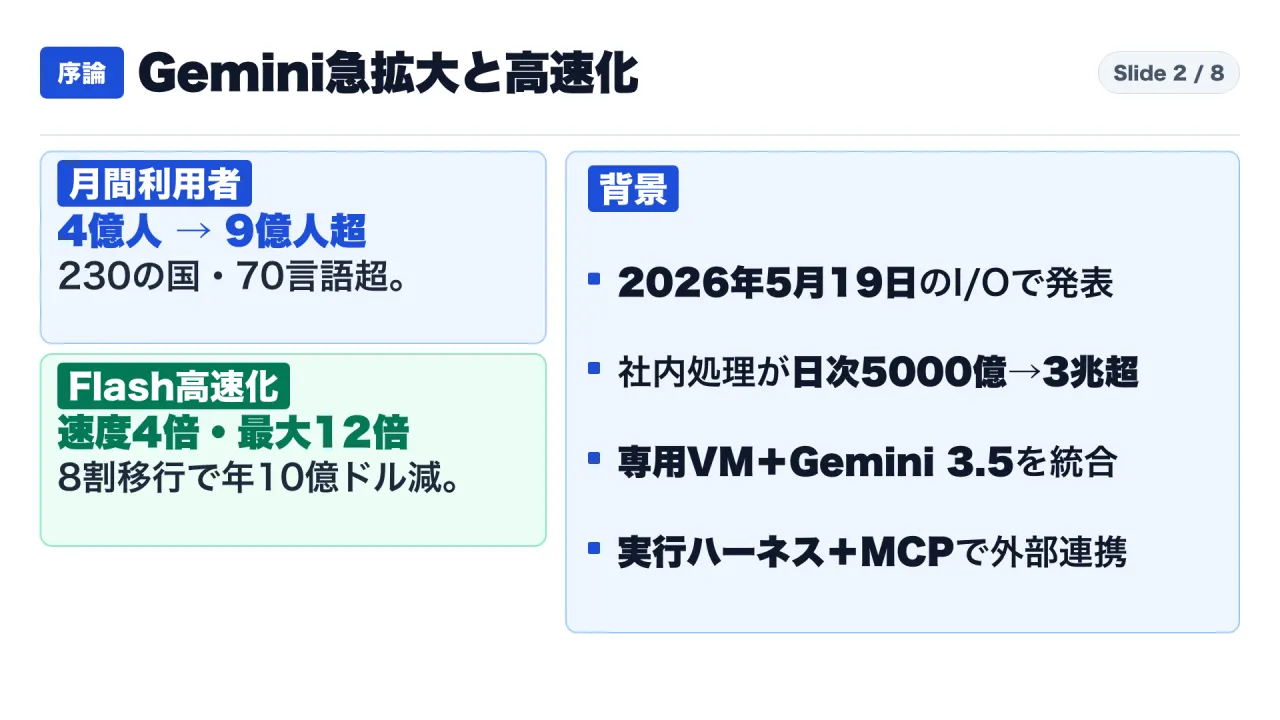
During Google I/O 2026, CEO Sundar Pichai announced that generative AI had shifted from synchronous conversational sessions to long-horizon, autonomous background agents.
In conventional chat, inference occurs synchronously while the user waits. Background agents, by contrast, continuously monitor email feeds, track calendars, and execute multi-step research while the user is offline, consuming orders of magnitude more tokens.
Google deployed a four-layer architecture to make continuous agent operations viable:
- Dedicated Cloud MicroVM: An isolated virtual machine provisioned per user, decoupled from local hardware.
- Agent Execution Harness: A stateful runtime managing queues, context persistence, and retries.
- Model Context Protocol (MCP) Interface: A standardized layer connecting the model to external data sources and execution tools.
- Skills and Memory Layer: Persistent behavioral templates and semantic retrieval directories.
Powering this harness is Gemini 3.5 Flash. By quadrupling output token velocity, Gemini 3.5 Flash slashes latency in multi-turn reasoning loops. In corporate deployments processing 1 trillion tokens daily, transitioning 80% of workload volume to Gemini 3.5 Flash yields annualized cost reductions exceeding $1 billion, establishing viable unit economics for persistent background computing.
2. Core Mechanics: Tasks, Skills, Schedules, and the Workspace Barrier
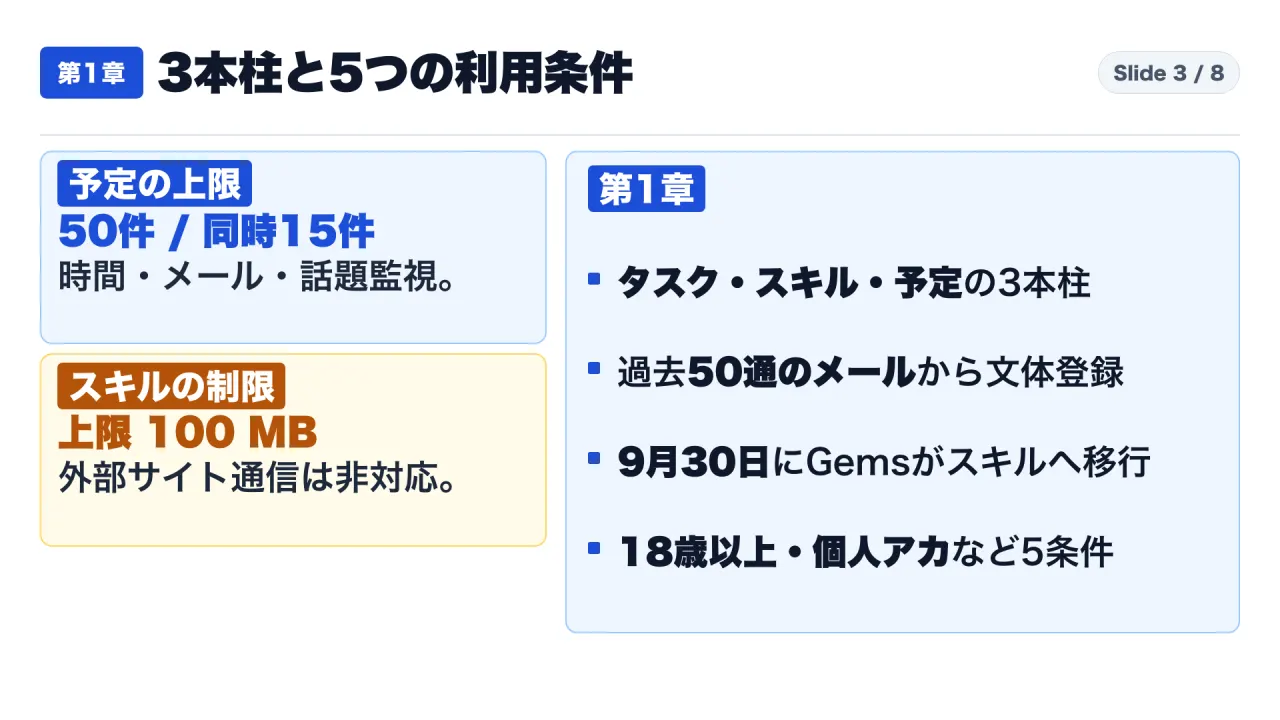
Gemini Spark operates via three structural primitives defined in official documentation:
- Tasks (Goal State): Multi-step objectives (e.g., auditing invoices or compiling market dossiers) that retain state in the microVM until completed.
- Skills (Procedural Knowledge): Reusable behavioral frameworks. On September 30, 2026, Google phased out legacy “Gems,” automatically migrating them to the standardized “Skills” framework. A primary implementation is the Ghostwriter Skill, which analyzes an archive of 50 sent emails to extract an individual’s syntactic style and tone, applying those constraints to draft generation.
- Schedules (Autonomous Event Triggers): Background execution triggers spanning three modalities:
- Time-Based: Recurrent chron triggers (e.g., daily at 07:00 or monthly).
- Gmail Monitors: Asynchronous filters triggered by priority correspondence or invoice receipts.
- Topic Monitors: Web monitors tracking regulatory updates or product releases.
Technical Constraints and Eligibility Boundary
Google imposes rigid technical and policy boundaries:
- Eligibility: User age 18+, personal Google account only (
@gmail.com), active Pro/Ultra ($100/mo) plan, “Keep Activity” enabled, Personal Intelligence consent. Excluded regions: EEA, UK, Switzerland, Nigeria. - Execution Limits: Maximum 50 active schedules, maximum 15 concurrent tasks. Approximate execution timing (unsuited for sub-second tasks).
- Skill Specifications: Root must contain
SKILL.md(lowercase and hyphens only), total package size under 100 MB, and zero external scripts or network requests within skills.
The exclusion of corporate Workspace accounts is an immutable boundary. In Google Help Community Thread 458970752, corporate administrators confirmed that Spark cannot be activated on enterprise domains, even if employees purchase separate $100/month personal Ultra accounts. Corporate security models require immutable audit logs and DLP controls, which prevent personal microVM agents from freely indexing corporate repositories without administrative oversight.
3. Human-in-the-Loop Governance and Chrome Autonomous Browsing
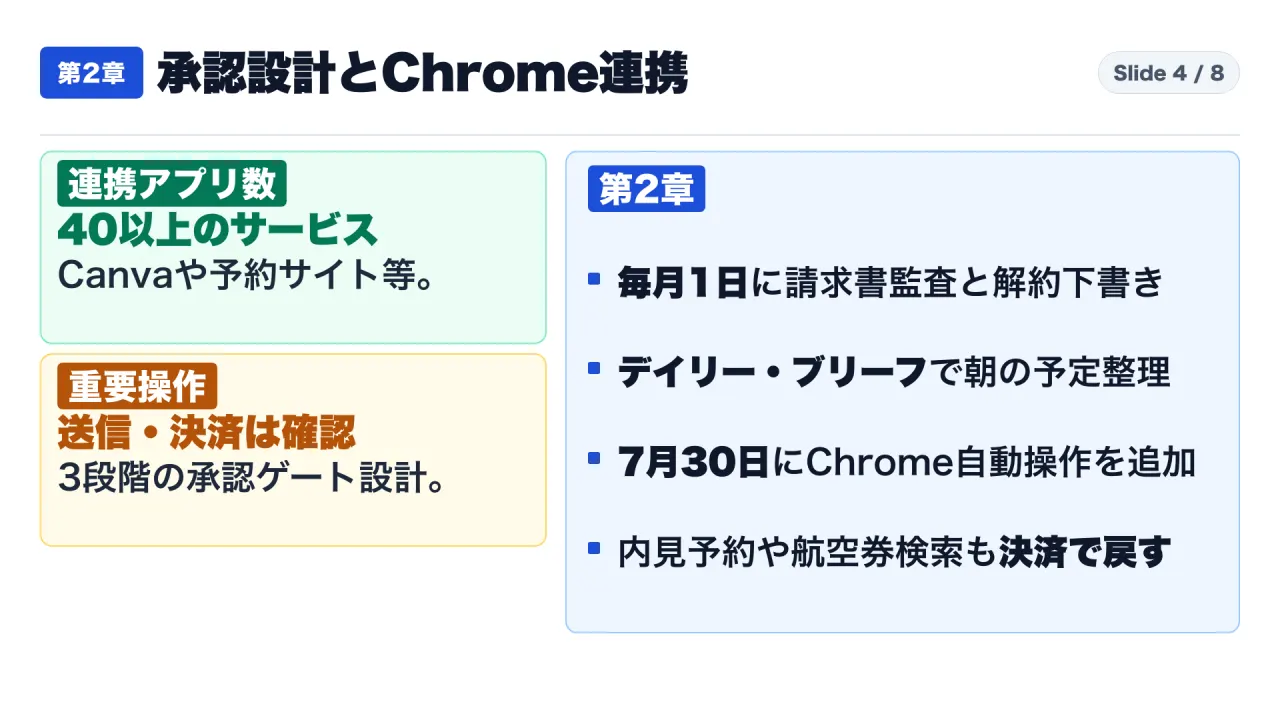
Operating autonomous agents in the background introduces severe failure modes, such as misdirected emails, deleted assets, or unintended purchases. To mitigate these risks, Google implemented an Approval-First Governance Model across three risk tiers:
- Low-Risk (Autonomous Completion): Summarizing emails, web research synthesis, compiling comparison tables, and generating unsent email drafts. Optimal for overnight background execution.
- Medium-Risk (Pre-Mutation Confirmation): Creating or editing Google Docs, Sheets, and Slides, or drafting calendar events. Suitable for staging rows in isolated tracking spreadsheets.
- High-Risk (Explicit Human Sign-Off Mandatory): Dispatching live emails, altering file permissions, deleting data, confirming reservations, and executing payments or purchases. The agent suspends execution until the user manually approves.
The primary production pattern is: delegate research and document staging to overnight background execution (Low to Medium Risk), reserving live dispatches and payments (High Risk) for explicit human authorization in the morning.
Chrome Autonomous Browsing
On July 30, 2026, Google added desktop Chrome automated browsing in the United States. Spark leverages Chrome’s authenticated browser profile to navigate websites lacking APIs, such as scheduling apartment viewings or pre-filling travel reservations. To safeguard users, Chrome auto-browse incorporates defenses against indirect prompt injections embedded in untrusted web pages, automatically transferring control back to the human operator for payment or final confirmation.
4. Empirical Stress Testing: The Tanaike Benchmark and Native Sandbox Walls
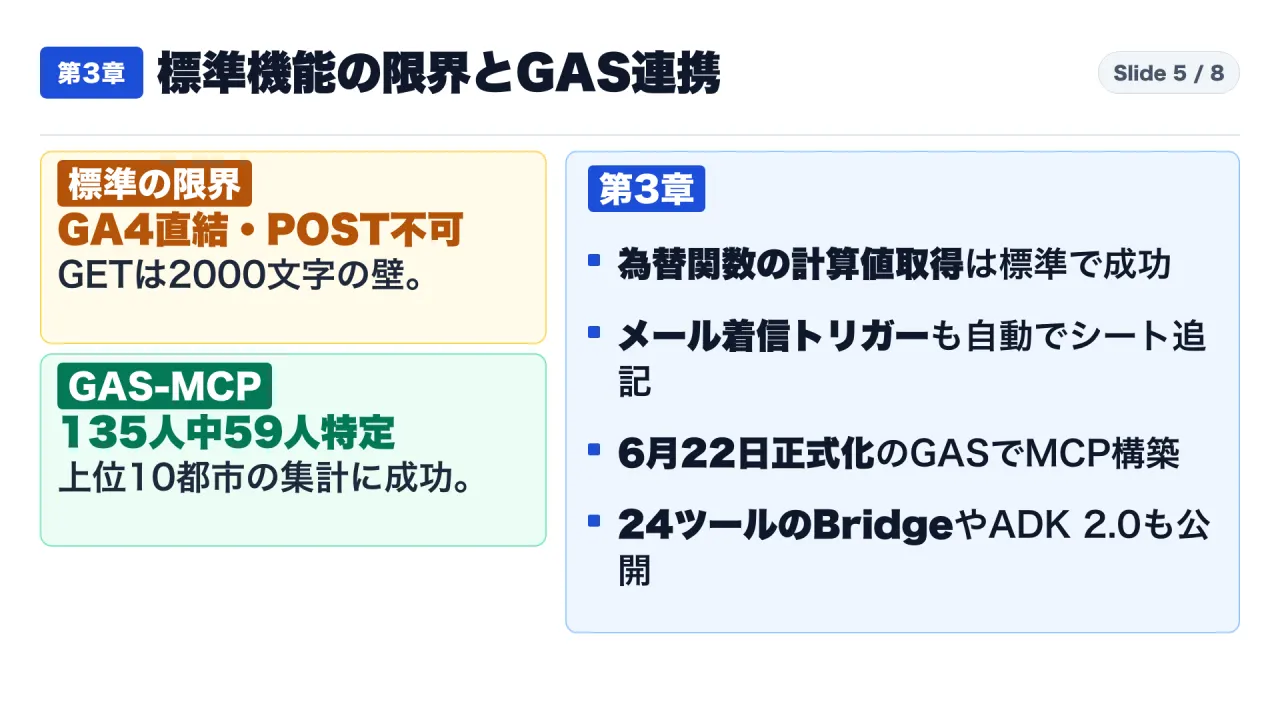
Google Developer Expert Kansuke Tanaike conducted an exhaustive five-stage empirical evaluation of Gemini Spark’s native Workspace connectors in August 2026:
- Prompt 1 (Formula Resolution in Sheets): Prompted Spark to create a spreadsheet, insert
=GOOGLEFINANCE("CURRENCY:USDJPY")in cellA1, and report the rate. Spark waited for the Sheets backend to evaluate the formula and returned the live numeric quote. - Prompt 2 (Semantic Drive Search): Located “2026 Project Plans” across Drive and synthesized milestones into three bullet points accurately.
- Prompt 3 (Contextual Meeting Scheduling): Extracted proposed meeting windows from an email thread and staged the calendar event successfully.
- Prompt 4 (Autonomous Event Ingestion): Instructed Spark to establish an automated Gmail monitor appending incoming messages to a Google Sheet. On August 3, 2026, at 14:13:16 JST, a test email was ingested and appended to
Sheet1without user intervention. - Prompt 5 (Specialized API Query): Requested Spark to query a Google Analytics 4 (GA4) property for top cities by active users. Spark rejected execution, stating it lacked tooling connected to the Google Analytics Data API.
Tanaike uncovered two hard network constraints:
- Outbound HTTP POST Prohibition: External POST attempts triggered the runtime error:
"Outbound HTTP requests are unavailable in this environment, so the POST request could not be completed automatically." - HTTP GET Query Truncation: GET query parameters were truncated at approximately 2,000 characters, corrupting complex payloads.
5. Architectural Remediation: Google Apps Script (GAS) as a Sovereign MCP Gateway
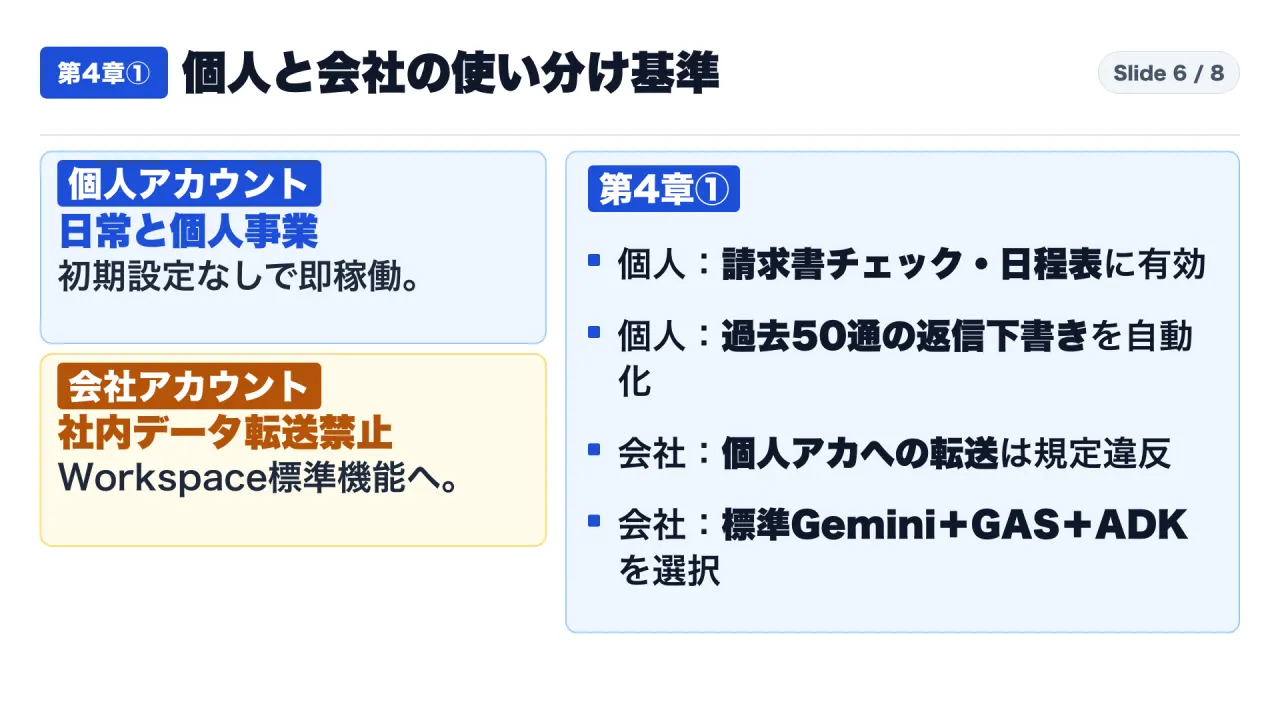
To overcome native sandbox limitations, Tanaike deployed Google Apps Script (GAS)—elevated to a General Availability (GA) core Workspace service on June 22, 2026—as an intermediate gateway.
Because GAS natively inherits authenticated execution privileges across Google APIs (Analytics Data API, BigQuery, external URL Fetch), it operates as a secure proxy:
[ Gemini Spark MicroVM ] ──MCP (Streamable HTTP)──> [ GAS Web App ] ──Authenticated API──> [ GA4 / BigQuery / Webhooks ]
Deploying the open-source @gas-mcp adapter, Tanaike exposed an authenticated MCP endpoint within GAS and registered it as a custom application in Gemini Spark.
Upon re-running Prompt 5 (GA4 City Aggregation):
- Spark recognized the custom MCP tool
get_ga4_dataand presented an approval dialogue. - Upon user authorization, the GAS web app queried the GA4 Data API and returned structured telemetry.
- Spark successfully generated the report: 135 total active users, with Singapore ranking first with 59 users (43.7% of total traffic), accompanied by a complete ten-city breakdown table.
This pattern is supported by adjacent frameworks:
- Gemini Antigravity Bridge: Connects cloud Spark instances to local developer IDEs via 24 MCP tools with Zero-Trust sandboxing (DOI:
10.5281/zenodo.22259022). - Google Agent Development Kit (ADK) 2.0: An open-source, code-first Python framework (Apache 2.0) for enterprise multi-agent workflows with native MCP support.
6. Strategic Governance: Corporate vs. Personal Agent Boundaries
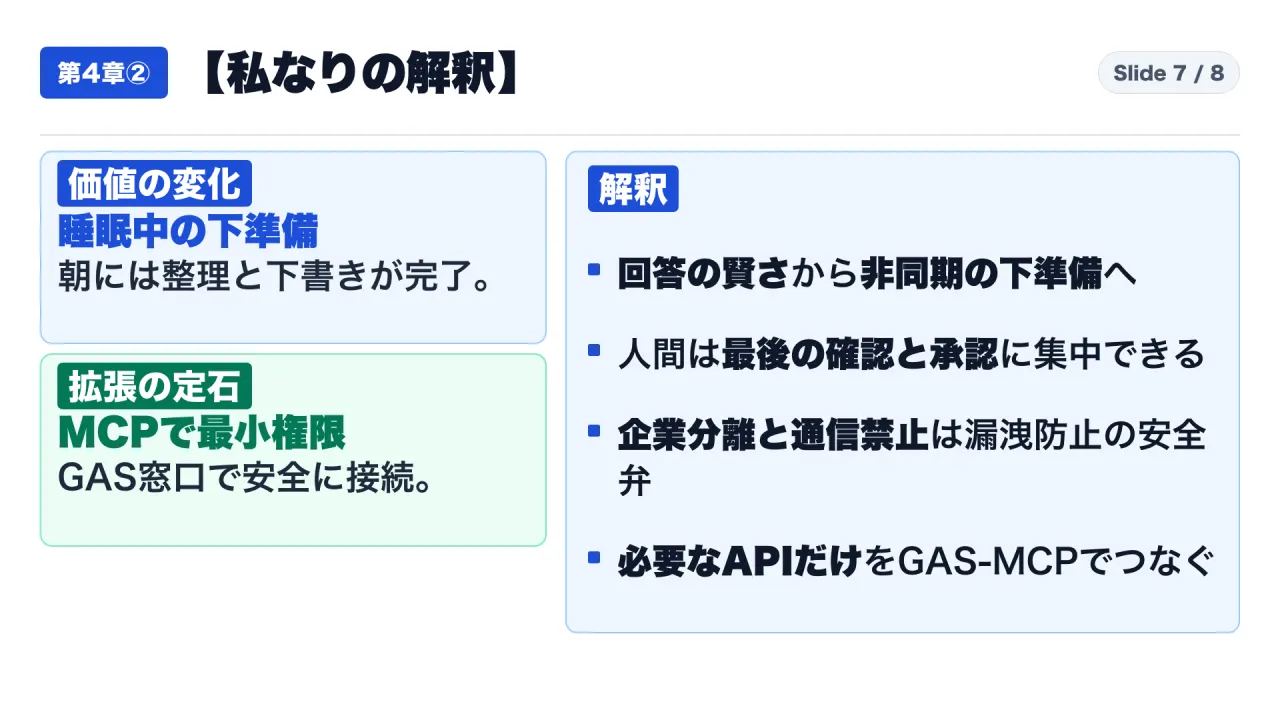
Synthesizing verified specifications yields three core governance principles:
1. Maintain Strict Domain Isolation
- Personal Scope: Solo workflows, personal scheduling, invoice tracking, and personal website analytics.
- Prohibited Shadow IT: Forwarding corporate emails to personal
@gmail.comaccounts to feed Gemini Spark violates enterprise compliance and security policies. - Enterprise Solutions: Organizations requiring background orchestration within Workspace domains must utilize Vertex AI Agent Builder, enterprise GAS triggers, or Google ADK 2.0.
2. Recognize Deliberate Security Boundaries
The prohibition of outbound HTTP POST requests and the exclusion of Workspace accounts are intentional safeguards against prompt injection and data exfiltration. Unrestricted outbound POST capabilities in background agents would enable adversaries to exfiltrate private data via crafted emails.
3. Design for Least-Privilege MCP Micro-Gateways
Rather than granting broad permissions, enterprise architectures should expose narrow, purpose-built MCP tool functions via Google Apps Script or Cloud Run. Each tool must enforce strict input validation, schema boundaries, and explicit human approval gates.
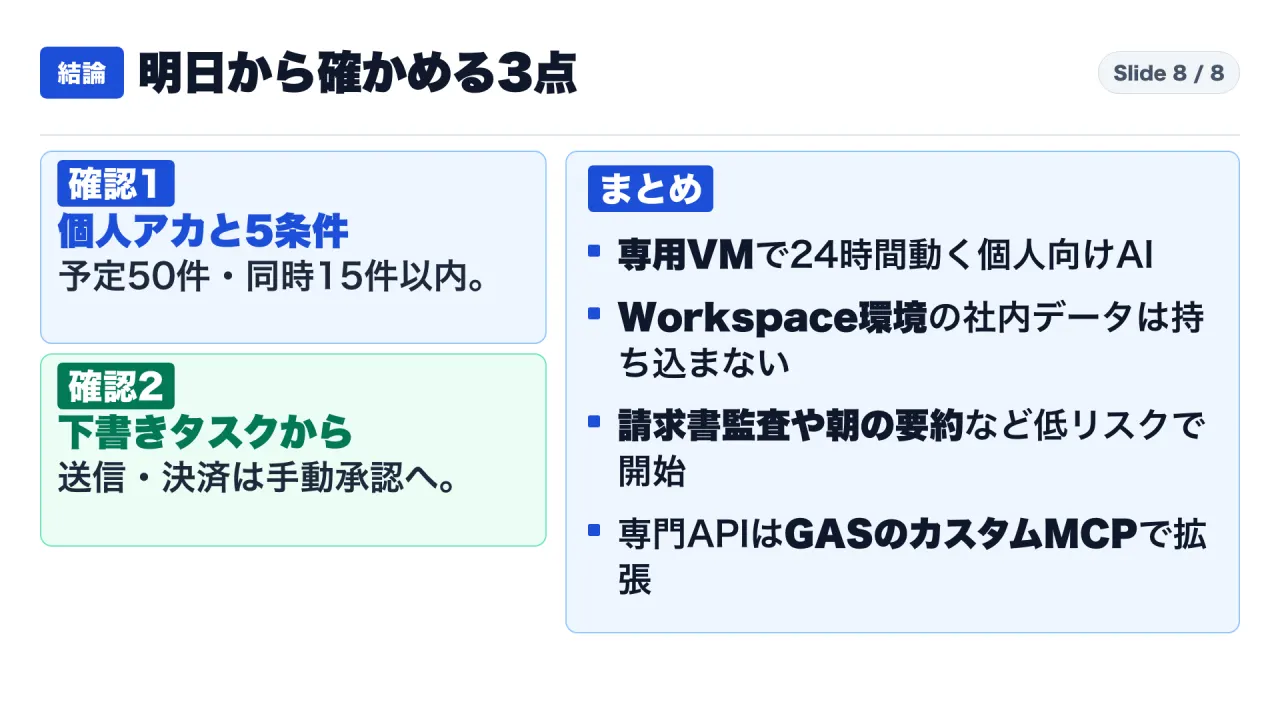
7. Actionable Implementation Roadmap
For practitioners adopting autonomous microVM agents, follow this three-stage sequence:
- Verify Prerequisites and Quotas: Confirm execution within a personal Google account meeting all five criteria. Audit active schedules against the 50-schedule cap and 15-task concurrency ceiling.
- Prioritize Asynchronous Low-Risk Pipelines: Focus initial implementations on Low to Medium Risk tasks:
- Schedule daily 07:00 executive briefings compiling unread emails and calendar schedules.
- Establish monthly invoice audits parsing digital receipts and staging cancellation drafts.
- Build custom Ghostwriter Skills trained on representative emails to draft replies automatically.
- Extend Specialized Capabilities via Authenticated MCP Gateways: Avoid embedding complex scripts within skill markdown files. Deploy Google Apps Script web applications exposing minimal MCP tool endpoints to query enterprise APIs, ensuring all external access passes through explicit user approval gates.
Primary Sources
- Google Japan Blog: Google I/O 2026 Keynote by Sundar Pichai
- Google Official Blog (The Keyword): The Next Evolution of the Gemini App by Josh Woodward
- Google Japan Blog: Gemini Spark Expands to Pro Users in Japan
- Google Official Blog (The Keyword): Gemini Spark Chrome Updates and Global Rollout
- Google Help Center: Create and Manage Schedules for Tasks in Gemini (Answer 17094710)
- Google Help Center: Create and Manage Skills for Gemini Apps (Answer 17094296)
- Google Help Center: Gemini Apps Release Notes (Answer 17171264)
- Google Help Community: Using Google Spark with Workspace Accounts (Thread 458970752)
- GitHub: Awesome Gemini Spark Skills Repository
- GitHub: Gemini Spark Approval Levels Specification
- GitHub: Gemini Antigravity Bridge Architecture
- GitHub Gist: Kansuke Tanaike — Integrating Google Apps Script with Gemini Spark
- GitHub: Google Agent Development Kit (ADK) 2.0 Repository
Note: This article is for informational purposes only and does not constitute investment advice or a price forecast. Podcast audio is synthesized from the host’s voice.