Why Chinese Open-Weight AI Licenses Are the Most Permissive: A 4-Camp Matrix Across Alibaba, DeepSeek, Meta, and Mistral
Comparing commercial terms, VRAM requirements, and enterprise architectures across Qwen 3, DeepSeek-R1, Llama 4, and Mistral Large 4.
Japanese Edition: https://consuloji.substack.com/p/ai22
YouTube (Japanese audio): https://youtu.be/gFngOarZLDk
Executive Summary & Strategic Takeaways
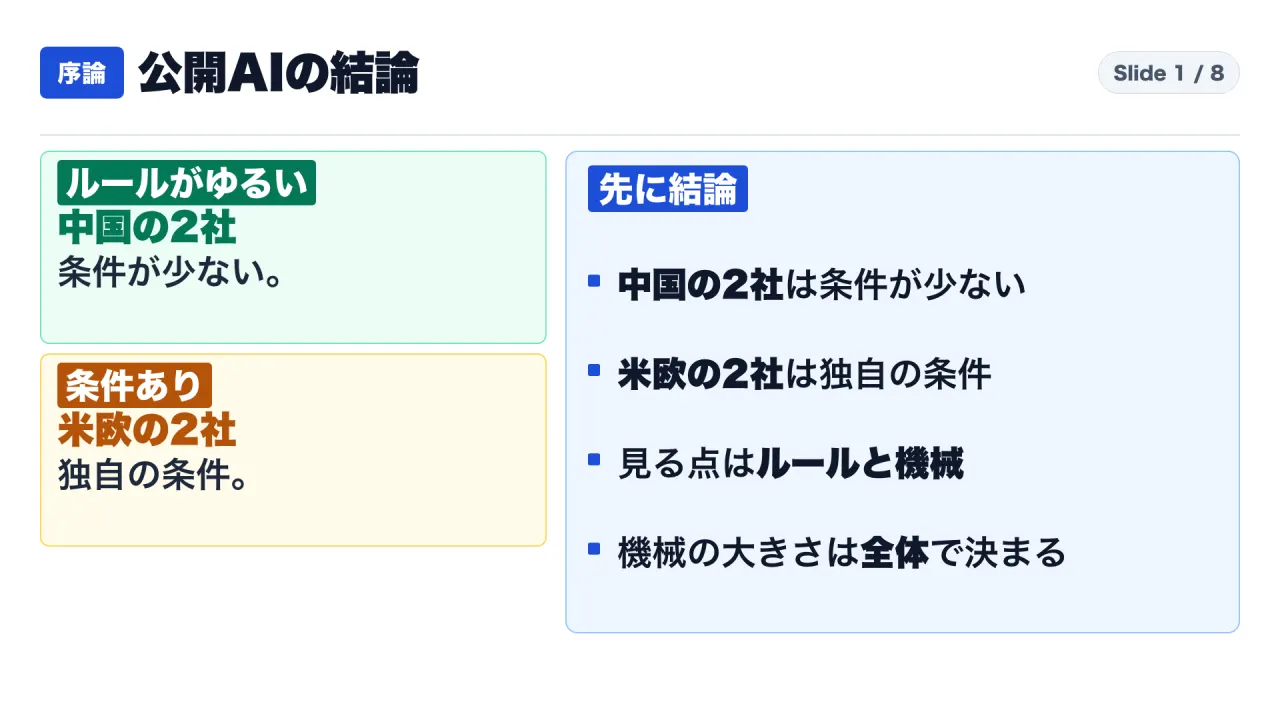
When enterprise technology teams transition from proprietary hosted application programming interfaces (APIs) to self-hosted open-weight artificial intelligence, two technical variables dictate feasibility: legal licensing boundaries and physical hardware memory requirements. While public perception often treats “open-weight” as synonymous with unrestricted, royalty-free software, an empirical audit of the primary model cards, licensing agreements, and tensor configuration files across the four leading global open-weight camps as of November 2026 reveals a counterintuitive reality:
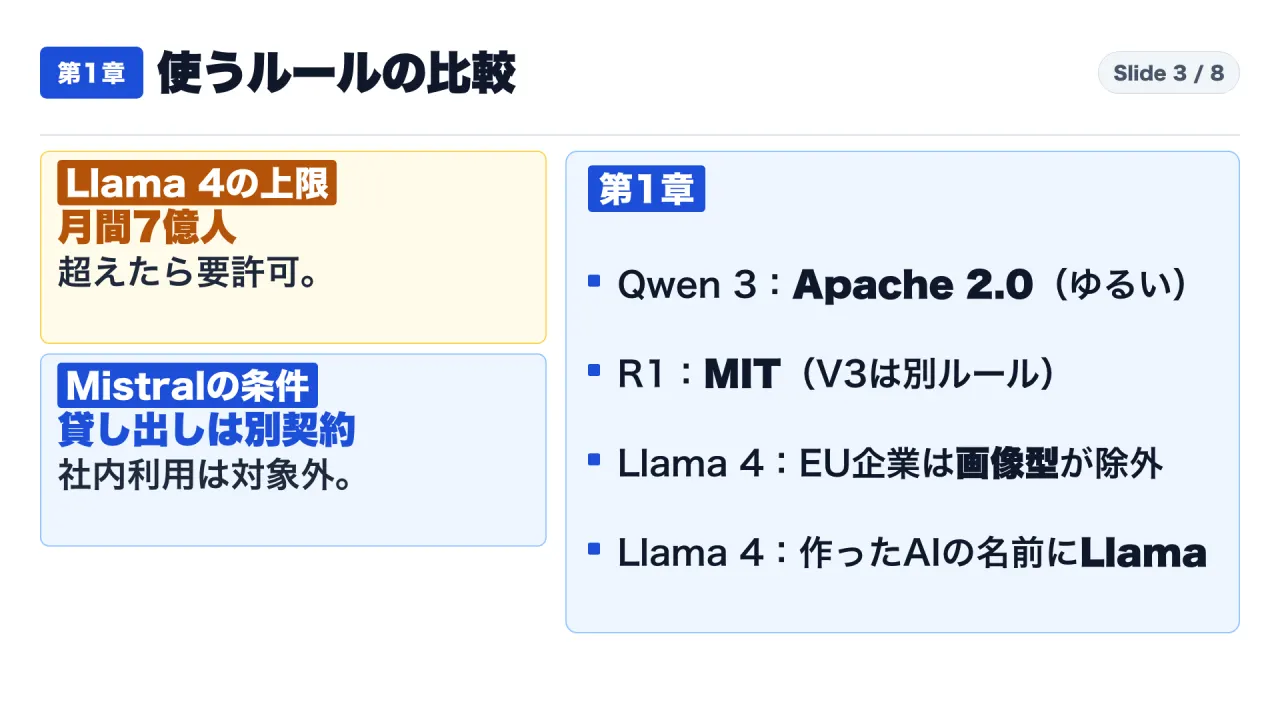
- The Inversion of Licensing Freedom: Chinese foundation model providers offer the most permissive open-source licenses in the global ecosystem. Alibaba’s Qwen 3 is released under Apache 2.0, imposing zero revenue thresholds, zero user caps, and unrestricted commercial redistribution rights. DeepSeek’s flagship reasoning model, DeepSeek-R1, is distributed under the MIT License, explicitly permitting commercial exploitation, modification, and model distillation. Conversely, Western providers impose strict guardrails. Meta’s Llama 4 Community License mandates individual licensing for platforms exceeding 700 million monthly active users, requires strict brand naming rules, and explicitly withholds multimodal capabilities from entities headquartered in the European Union. France’s Mistral AI distributes Mistral Large 4 under a custom license that requires separate commercial agreements for Model-as-a-Service (MaaS) resale under Article 2, while strictly exempting internal enterprise use under Article 3.
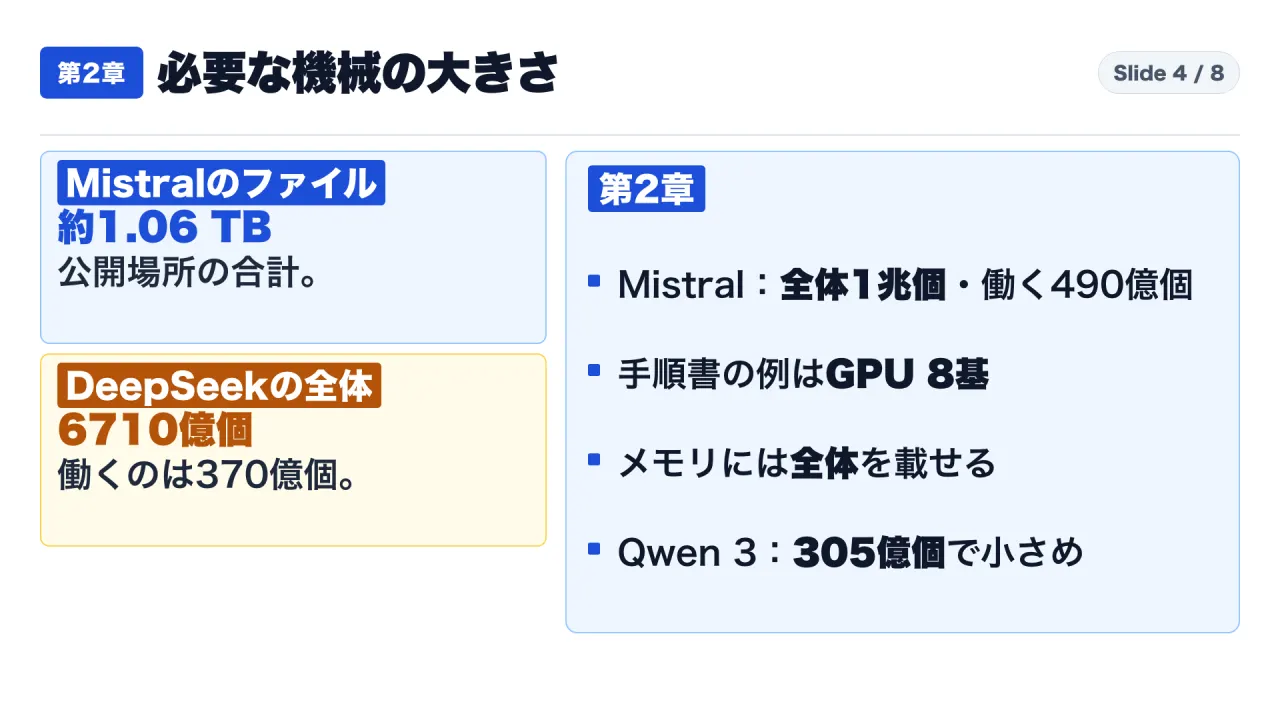
- The Mixture-of-Experts (MoE) Hardware Sizing Trap: Enterprise infrastructure sizing is determined by total model parameters, not advertised active parameters per token. While sparse MoE architectures route tokens through fractional sub-networks, all expert parameters must remain permanently resident in memory to prevent severe PCIe bus bandwidth bottlenecks. Deploying Mistral Large 4 (1 trillion total parameters, 49 billion active) requires hosting 1.06 terabytes of quantized weights across a minimum of eight enterprise GPUs (
--tensor-parallel-size 8). Conversely, Alibaba’s Qwen3-30B-A3B (30.5B total, 3.3B active) and Qwen3-32B dense models provide cost-effective alternatives accessible on localized infrastructure. - Three Enterprise Adoption Archetypes: Corporate selection bifurcates across three practical vectors: (1) Sovereign institutions (defense, public sector, banking) requiring US/EU provenance under Mistral or Llama; (2) Cost-optimized internal Japanese and multilingual production systems deploying Apache 2.0-licensed Qwen 3 or Tokyo Institute of Technology and AIST’s Qwen3 Swallow; and (3) Frontier distillation pipelines utilizing MIT-licensed DeepSeek-R1 as an unconstrained teacher model to train domain-specific small models.
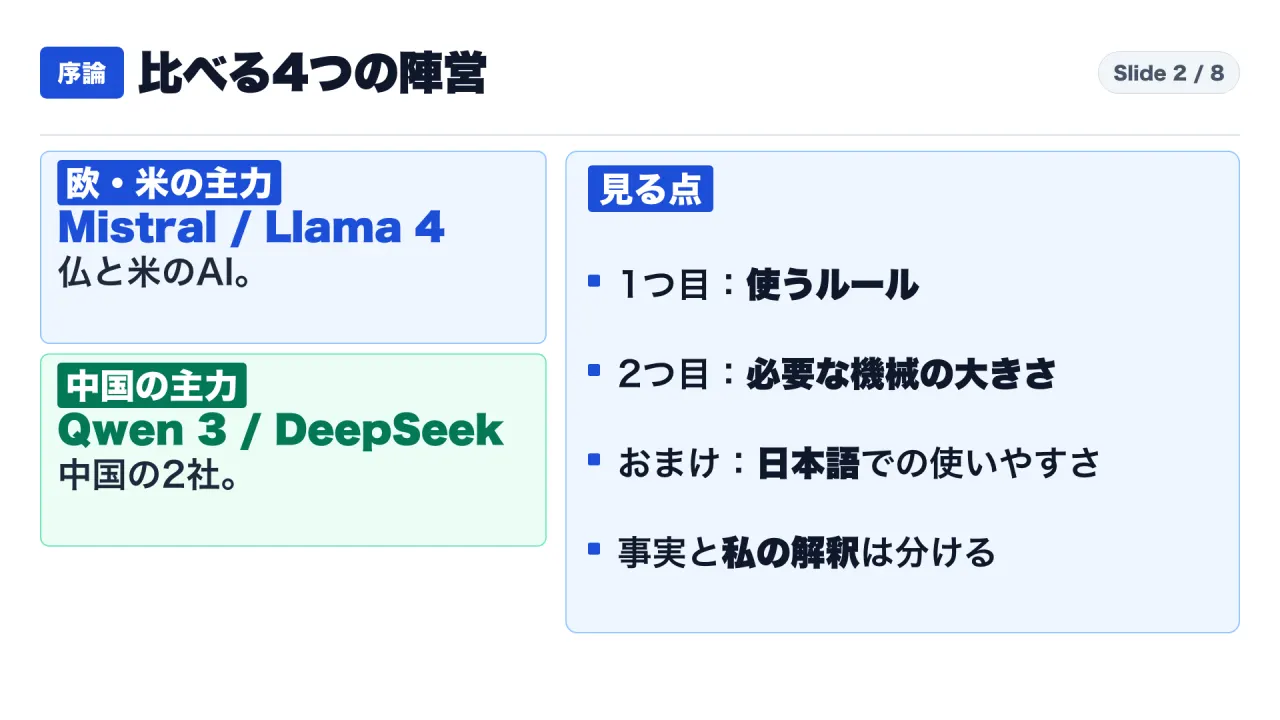
1. The 4-Camp Landscape: Model Architecture and Licensing Overview
Open-weight deployment contrasts sharply with closed APIs. Downloading learned weights guarantees private data residency and cost predictability, but introduces strict legal and hardware constraints across four distinct camps:
| Dimension | Mistral AI (France) | Meta (United States) | Alibaba Cloud (China) | DeepSeek (China) |
|---|---|---|---|---|
| Representative Models | Mistral Large 4 (“Le Chonk”) | Llama 4 (Scout, Maverick) | Qwen3-30B-A3B, Qwen3-32B | DeepSeek-R1, DeepSeek-V3 |
| Governing License | Mistral Ecosystem Open-Weight License (Modified MIT) | Llama 4 Community License Agreement | Apache 2.0 | MIT (R1); Custom DeepSeek License (V3 weights) |
| Primary Commercial Restrictions | Model-as-a-Service resale requires commercial contract (Art. 2). Internal enterprise use unrestricted (Art. 3). | >700M MAU requires Meta permission. “Built with Llama” attribution mandatory. EU multimodal exclusion. | Zero commercial restrictions. Uncapped users and revenue. Attribution retained. | Zero commercial restrictions on R1. Distillation and commercial modification explicitly permitted. |
| Total Parameters (Active per Token) | 1.002 Trillion (49 Billion active) | Scout: 109B (17B active); Maverick: 400B (17B active) | Qwen3-30B: 30.5B (3.3B active); Qwen3-32B: 32.8B dense | 671B total + 14B MTP (37 Billion active) |
| Linguistic Profile | 160+ languages (EU official languages prioritized). | 12 officially supported languages; Japanese excluded. | 100+ languages natively. Academic adaptation via Qwen3 Swallow. | Multilingual math/code focus. High benchmark reasoning. |
2. Legal Deep-Dive: Why Chinese Licenses Out-Permit Western Frameworks
A forensic review of operative legal texts (S2, S5, S6, S8, S12) reveals that Chinese technology conglomerates have embraced standard open-source licenses, while Western providers introduce covenants safeguarding commercial dominance and navigating regulatory compliance.
The Chinese Camps: Standard Open Source Without Ceilings
Alibaba distributes its Qwen 3 model series under Apache 2.0 (S8). This license grants perpetual, worldwide rights to reproduce, modify, and distribute software and weights with zero revenue caps, zero user thresholds, and zero restrictions against offering hosted API services. Enterprises can modify Qwen 3 weights and deploy them into proprietary commercial SaaS products without revenue-sharing obligations.
DeepSeek released its frontier reasoning model, DeepSeek-R1, under the standard MIT License (S11, S12). Repository documentation explicitly affirms that commercial exploitation, modification, and model distillation—using DeepSeek-R1 outputs to train student models—are unrestricted. An essential nuance applies to DeepSeek-V3: while its repository code is MIT-licensed, its model weights are governed by a proprietary DeepSeek Model License (S13) requiring separate compliance verification.
Meta: Llama 4’s Three Protective Clauses
Meta’s Llama 4 Community License Agreement (S5) incorporates three defensive mechanisms:
- The 700 Million Monthly Active User (MAU) Ceiling (Article 2): If an enterprise’s monthly active users exceeded 700 million in the month prior to Llama 4’s release, it possesses zero license rights unless Meta explicitly grants a commercial agreement. This prevents hyperscale competitors (Google, Amazon, ByteDance) from utilizing Llama 4 in consumer ecosystems.
- Mandatory Attribution and Naming Covenants (Article 1): Any product powered by Llama 4 must display “Built with Llama,” and derivative models must prefix their name with “Llama.”
- The European Union Multimodal Carve-Out (Acceptable Use Policy): In the policy appendix (S6), Meta explicitly withholds rights to multimodal (vision-and-text) Llama 4 models from individuals residing in, or corporations headquartered within, the European Union, reflecting regulatory friction under the EU AI Act and GDPR.
Mistral AI: Targeted Protection Against Resellers
France’s Mistral AI adopted the “Mistral Ecosystem Open-Weight License” for Mistral Large 4 (S1, S2):
- Article 2 (Model-as-a-Service Restriction): Any entity providing third parties with model access as a service—where external customers provide arbitrary prompts or system instructions—must execute a commercial license with Mistral AI.
- Article 3 (Internal Enterprise Exemption): The license explicitly exempts internal enterprise usage. Deploying Mistral Large 4 to serve internal employees, analyze corporate databases, or embed the model inside a dedicated end-user application does not trigger the MaaS commercial licensing requirement.
3. The Physical Hardware Sizing Trap: Total Parameters vs. Active Parameters
A prevalent operational pitfall in enterprise infrastructure planning is sizing server hardware based on advertised “active parameters.”
Sparse Mixture-of-Experts (MoE) architectures achieve computational efficiency by routing each token through a gating network that activates only a small subset of specialized feed-forward layers. While Mistral Large 4 contains over 1 trillion total parameters, only 49 billion parameters execute per token forward pass.
However, inference memory requirements are determined by total parameter count. In high-throughput serving, dynamic expert offloading over PCIe buses introduces catastrophic bandwidth bottlenecks that reduce token generation speeds to unacceptable levels. To achieve real-time response latency, every single expert must reside continuously within Video Random Access Memory (VRAM).
Case Study: Mistral Large 4’s 1.06 Terabyte Footprint
The physical resource requirements of Mistral Large 4 illustrate this hardware reality:
- Raw Storage Volume: Primary repository metadata on Hugging Face (S4) confirms an aggregate file volume of 1,060,619,283,859 bytes (approximately 1.06 terabytes).
- Quantization Baseline: Tensor configurations (S3) show that these weights are pre-quantized in an optimized 8-bit format. Even in compressed form, the model exceeds one terabyte of disk and memory space.
- Serving Topologies: Official deployment instructions (S1) specify a minimum tensor parallelism of eight GPUs (
--tensor-parallel-size 8). Hosting the model requires an interconnected cluster of high-memory enterprise GPUs (such as eight NVIDIA H100 80GB nodes).
Similarly, DeepSeek-V3 and R1 incorporate 671 billion base parameters plus 14 billion multi-token prediction parameters (685B total), activating 37 billion parameters per token (S13). Serving full-precision checkpoints requires dedicated multi-node GPU clusters.
The Mid-Market Viability of Qwen 3
For organizations lacking multi-million-dollar AI hardware budgets, Alibaba’s Qwen 3 provides accessible alternatives:
- Qwen3-30B-A3B (S8): A sparse MoE model containing 30.5 billion total parameters, of which only 3.3 billion are active. It fits comfortably on single-workstation or dual-GPU setups.
- Qwen3-32B (S9): A dense model containing 32.8 billion active parameters, offering stable reasoning without routing complexity.
4. Linguistic Capability and the Distillation Revolution
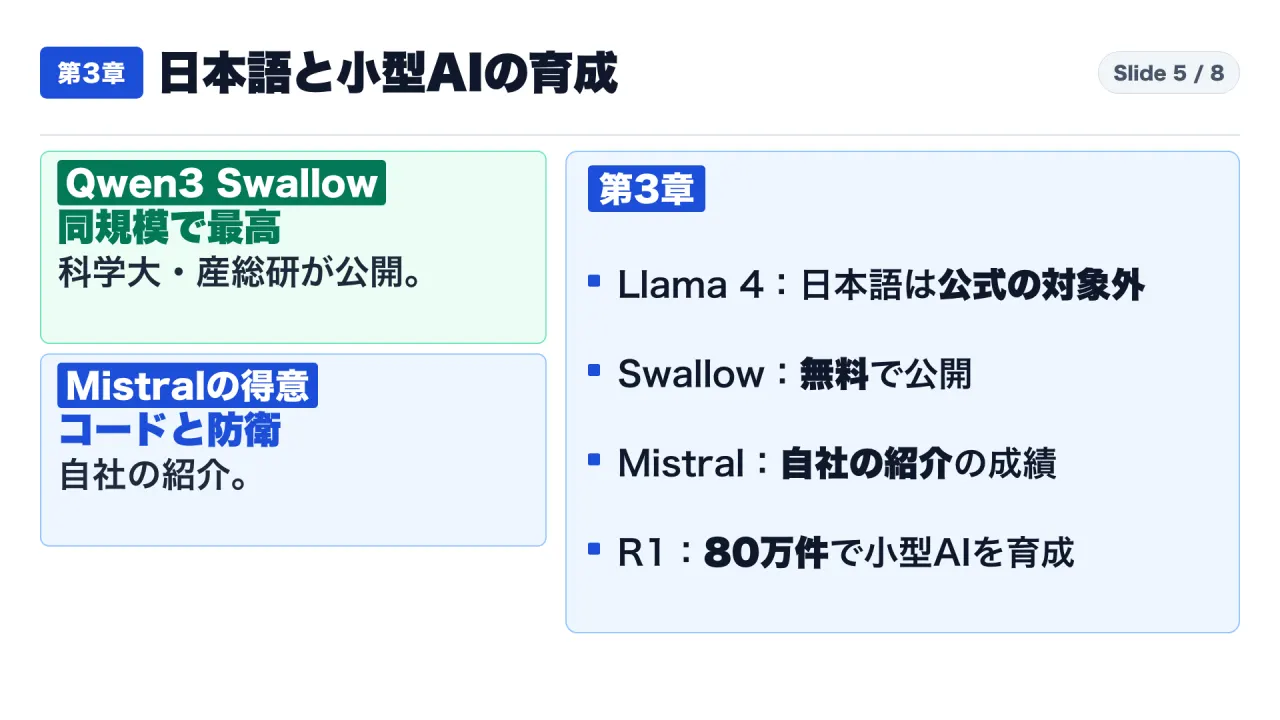
Model selection depends equally on native linguistic capabilities and downstream training utility:
Linguistic Specialization: The Japanese Context
- Meta Llama 4: Supports only 12 official languages, explicitly omitting Japanese from its supported tier (S7). Organizations deploying Llama 4 in Japanese environments must assume sole legal and operational responsibility for safety alignment.
- Alibaba Qwen 3: Natively trained across more than 100 languages. In February 2026, researchers from Tokyo Institute of Technology (now Institute of Science Tokyo) and AIST released Qwen3 Swallow (S10). Released under Apache 2.0, Qwen3 Swallow achieved Japanese benchmark scores of 0.732 on the 30B-A3B variant and 0.792 on the 32B variant—ranking as the highest-performing open model in its parameter class.
- Mistral Large 4: Officially supports over 160 languages, demonstrating strong European multilingual capabilities, 48% on the Artificial Analysis coding index, and 51% on cybersecurity defense benchmarks (S1, S14).
The Distillation Paradigm: DeepSeek-R1 as the Universal Teacher
The strategic value of DeepSeek-R1 lies in its role as a reasoning teacher model. DeepSeek demonstrated that generating 800,000 reasoning traces from R1 enabled the distillation of high-performance small models—including DeepSeek-R1-Distill-Qwen-32B—that outperform closed commercial models like OpenAI o1-mini across mathematical benchmarks (S11). Because R1’s MIT license explicitly permits distillation, enterprises can deploy R1 in isolated cloud environments to generate synthetic datasets, fine-tuning compact 7B or 32B models for local production deployment without licensing infringement.
5. Enterprise Architectural Decision Framework: Three Strategic Archetypes
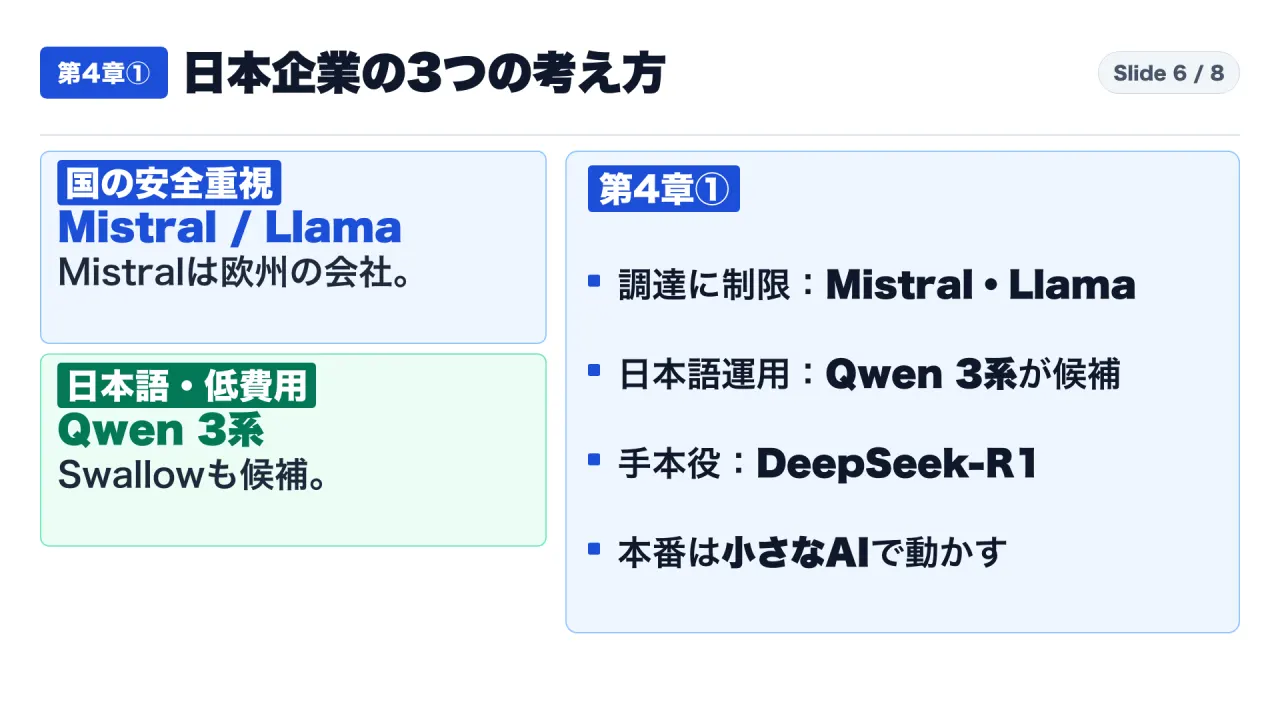
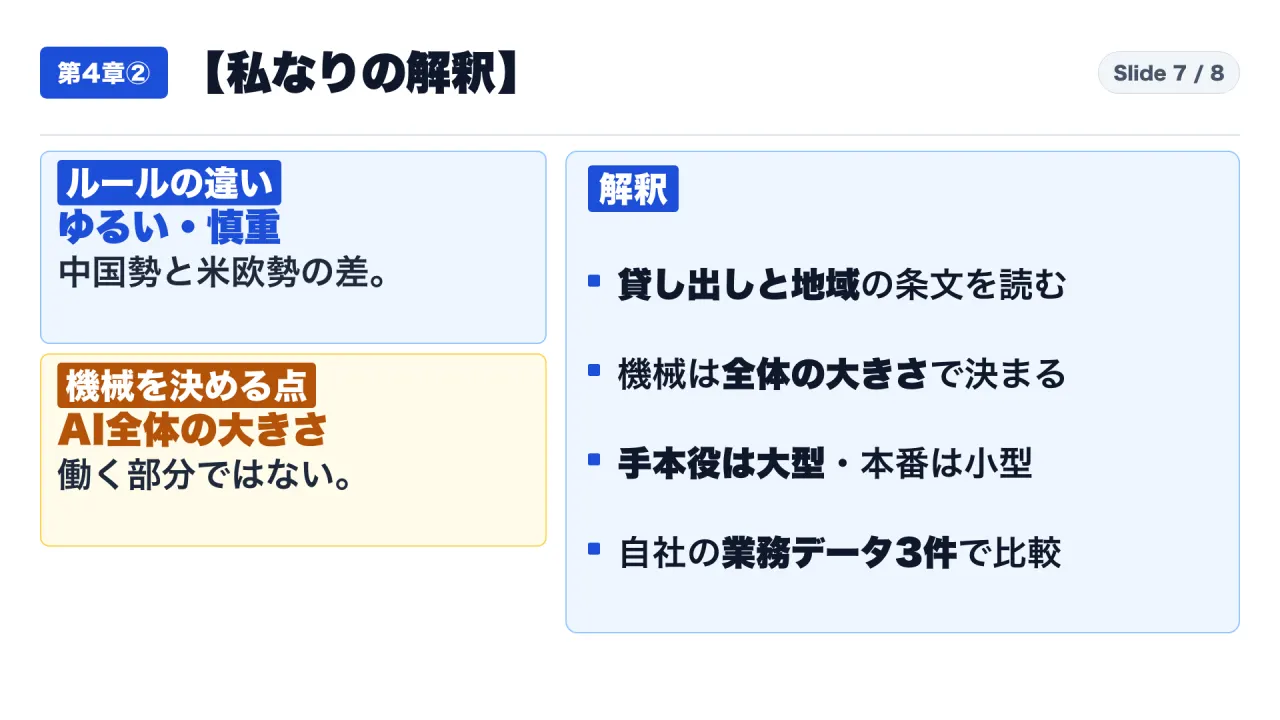
Enterprise technology leaders should align model adoption with three strategic organizational profiles:
Archetype 1: Sovereign, Defense, and Regulated Infrastructure
Organizations in national security, government procurement, or critical infrastructure face strict supply-chain compliance rules prohibiting Chinese-origin AI software. For these institutions, selection narrows to Mistral AI and Meta.
- Recommended Path: Deploy Mistral Large 4 for internal code generation, document analysis, and cybersecurity defense. Because internal enterprise use is unrestricted under Article 3 of Mistral’s license, organizations avoid commercial royalties while maintaining European data sovereignty. If multimodal capabilities are required, Llama 4 may be deployed provided the organization is not legally registered in the European Union.
Archetype 2: Cost-Optimized Internal Multilingual Applications
Enterprises with no geopolitical supply-chain restrictions seeking to build high-performance, private corporate knowledge bases on accessible hardware should bypass trillion-parameter models.
- Recommended Path: Standardize on Qwen3-32B or Qwen3 Swallow 30B-A3B under Apache 2.0. These models deliver superior Japanese and multilingual performance, require modest GPU allocations (a single NVIDIA A100 or dual L40S nodes), and carry zero revenue or user-scaling liabilities.
Archetype 3: The Private Distillation Pipeline
Enterprises requiring specialized, low-latency edge models with frontier reasoning capabilities should establish a two-tier teacher-student architecture.
- Recommended Path: Host DeepSeek-R1 on temporary on-demand cloud clusters to synthesize reasoning trajectories. Distill those outputs into compact, Apache 2.0-licensed Qwen student models for high-throughput edge execution, leveraging R1’s MIT license to build proprietary enterprise intellectual property.
6. Actionable Implementation Checklist and Enterprise FAQs
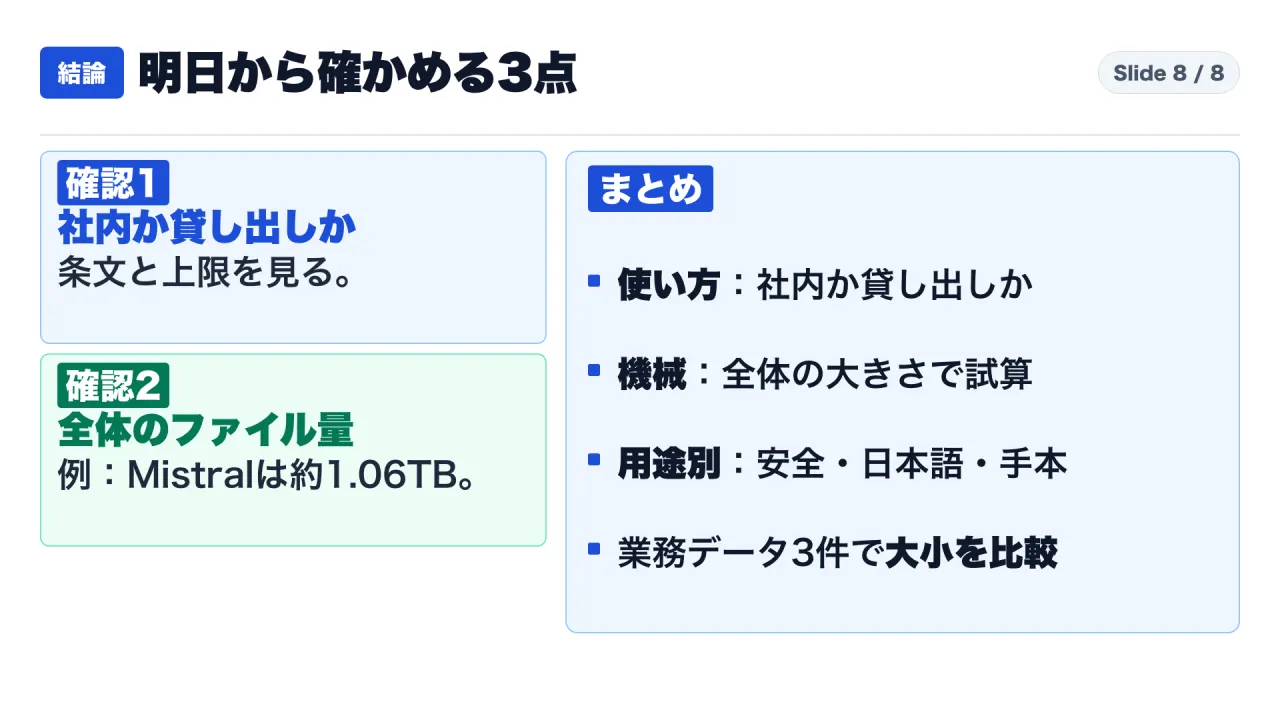
Prior to committing infrastructure capital, engineering and legal teams must complete three verification gates:
- Contractual Boundary Audit: Document whether the intended application constitutes internal corporate use or external Model-as-a-Service resale. Cross-reference planned deployment against Mistral Article 2 and Meta Article 2 before writing code.
- Total Checkpoint VRAM Sizing: Calculate GPU infrastructure requirements against total repository checkpoint bytes rather than active parameter claims, factoring in KV-cache memory overhead at maximum context lengths.
- Domain Evaluation Bake-Off: Benchmark candidate models against a curated test suite of at least 20 domain-specific enterprise prompts to verify terminology comprehension before committing to extensive fine-tuning.
Frequently Asked Questions
Q1: Does embedding Mistral Large 4 into customer SaaS require a commercial license under Article 2?
Analysis: Article 2 restricts Model-as-a-Service where customers provide arbitrary prompts. Embedding Mistral Large 4 inside a specialized application (e.g., ticket classifier) behind fixed application logic generally qualifies as an integrated product rather than MaaS. Organizations should confirm exact API data flows with counsel.
Q2: How does Meta’s EU exclusion impact multinational corporations with European subsidiaries?
Analysis: Llama 4’s Acceptable Use Policy withholds multimodal rights from entities having their principal place of business in the EU. A multinational entity headquartered in the US or Japan may legally utilize multimodal Llama 4, but exposing development rights to EU-based corporate entities creates regulatory exposure. Multinational organizations should isolate EU engineering units or deploy Mistral Large 4 as an EU-compliant alternative.
Q3: Can an enterprise legally use DeepSeek-R1 to train a commercial model that competes with DeepSeek?
Analysis: Yes. DeepSeek-R1 is licensed under MIT, which permits unrestricted modification, commercial use, and distillation. Unlike proprietary platforms prohibiting competitive model training, DeepSeek’s open-weight release imposes no such barrier.
Primary Sources
- S1: Mistral Large 4 Model Card, Mistral-Large-4-1T-A52B: https://huggingface.co/mistralai/Mistral-Large-4-1T-A52B/raw/main/README.md
- S2: Mistral AI, Mistral Ecosystem Open-Weight License Agreement: https://huggingface.co/mistralai/Mistral-Large-4-1T-A52B/raw/main/LICENSE
- S3: Mistral Large 4 Tensor Configuration, config.json: https://huggingface.co/mistralai/Mistral-Large-4-1T-A52B/raw/main/config.json
- S4: Hugging Face API Metadata, Mistral-Large-4-1T-A52B Repository Stats: https://huggingface.co/api/models/mistralai/Mistral-Large-4-1T-A52B
- S5: Meta Platforms, Llama 4 Community License Agreement: https://raw.githubusercontent.com/meta-llama/llama-models/main/models/llama4/LICENSE
- S6: Meta Platforms, Llama 4 Acceptable Use Policy: https://raw.githubusercontent.com/meta-llama/llama-models/main/models/llama4/USE_POLICY.md
- S7: Meta Platforms, Llama 4 Model Card and Supported Languages: https://raw.githubusercontent.com/meta-llama/llama-models/main/models/llama4/MODEL_CARD.md
- S8: Alibaba Cloud, Qwen3-30B-A3B Model Card: https://huggingface.co/Qwen/Qwen3-30B-A3B/raw/main/README.md
- S9: Alibaba Cloud, Qwen3-32B Dense Model Card: https://huggingface.co/Qwen/Qwen3-32B/raw/main/README.md
- S10: Tokyo Institute of Technology & AIST, Qwen3 Swallow Project Documentation: https://swallow-llm.github.io/qwen3-swallow.ja.html
- S11: DeepSeek AI, DeepSeek-R1 Model Card and Distillation Telemetry: https://huggingface.co/deepseek-ai/DeepSeek-R1/raw/main/README.md
- S12: DeepSeek AI, DeepSeek-R1 MIT License: https://huggingface.co/deepseek-ai/DeepSeek-R1/raw/main/LICENSE
- S13: DeepSeek AI, DeepSeek-V3 Model Card and Architecture Specifications: https://huggingface.co/deepseek-ai/DeepSeek-V3/raw/main/README.md
- S14: Mistral AI Official Blog, Mistral Large 4 (Le Chonk) is Now Open Weight: https://mistral.ai/news/mistral-large-4-oss/
- S15: Meta AI Official Blog, The Llama 4 Herd: Multimodal AI Architecture: https://ai.meta.com/blog/llama-4-multimodal-intelligence/
Note: This article is for informational purposes only and does not constitute investment advice or a price forecast. Podcast audio is synthesized from the host’s voice.