Demystifying OpenAI's 948 Linux Kernel Vulnerabilities: How Many Flaws Are Actually Patched, Upstream Realities, and Patch Governance
A forensic breakdown of OpenAI’s $1.2M automated exploit experiment, the gap between synthesized exploits and accepted upstream patches, and the reality of local privilege escalation.
Japanese Edition: https://consuloji.substack.com/p/openailinux948
YouTube (Japanese audio): https://youtu.be/5Rb5dN7jcCY
Executive Summary & Core Thesis

On November 4, 2026, OpenAI announced an unprecedented automated vulnerability discovery and exploitation experiment. Utilizing an unreleased, cybersecurity-specialized reasoning model, the company executed a single automated end-to-end campaign targeting the Linux kernel. Operating within a total compute budget of $1,213,430, the model autonomously discovered vulnerabilities, reproduced them in isolated virtual environments, synthesized functional root privilege escalation binaries, and generated proposed source-code patches for 948 unique Linux kernel vulnerabilities.
The headline figure—948 vulnerabilities with working root exploits generated at an average compute cost of $1,279 per flaw—sparked immediate alarm across enterprise infrastructure teams. However, a forensic examination of OpenAI’s disclosure and technical reporting by Help Net Security reveals a critical divergence between automated exploit generation and upstream security realities:
- Self-Reported Exploit Generation vs. Upstream Patch Reality: The number 948 represents the vendor’s self-reported count of unique vulnerabilities for which its system generated working exploit binaries. Ten days following the experiment, only 61 vulnerabilities (6.4% of the total 948) were reported as fixed upstream in the Linux kernel codebase. An additional 43 patches were in preparation, and 299 were reported to maintainers and under public discussion. Crucially, 545 vulnerabilities (57.5%) remained completely unaccounted for in public telemetry.
- Missing Independent Verification and Identifiers: As of early November 2026, the public disclosures contain zero Common Vulnerabilities and Exposures (CVE) mappings, zero Common Vulnerability Scoring System (CVSS) distributions, and zero formal corroborations from the independent Linux kernel maintainer community. The reported figures reflect solely OpenAI’s self-assessment.
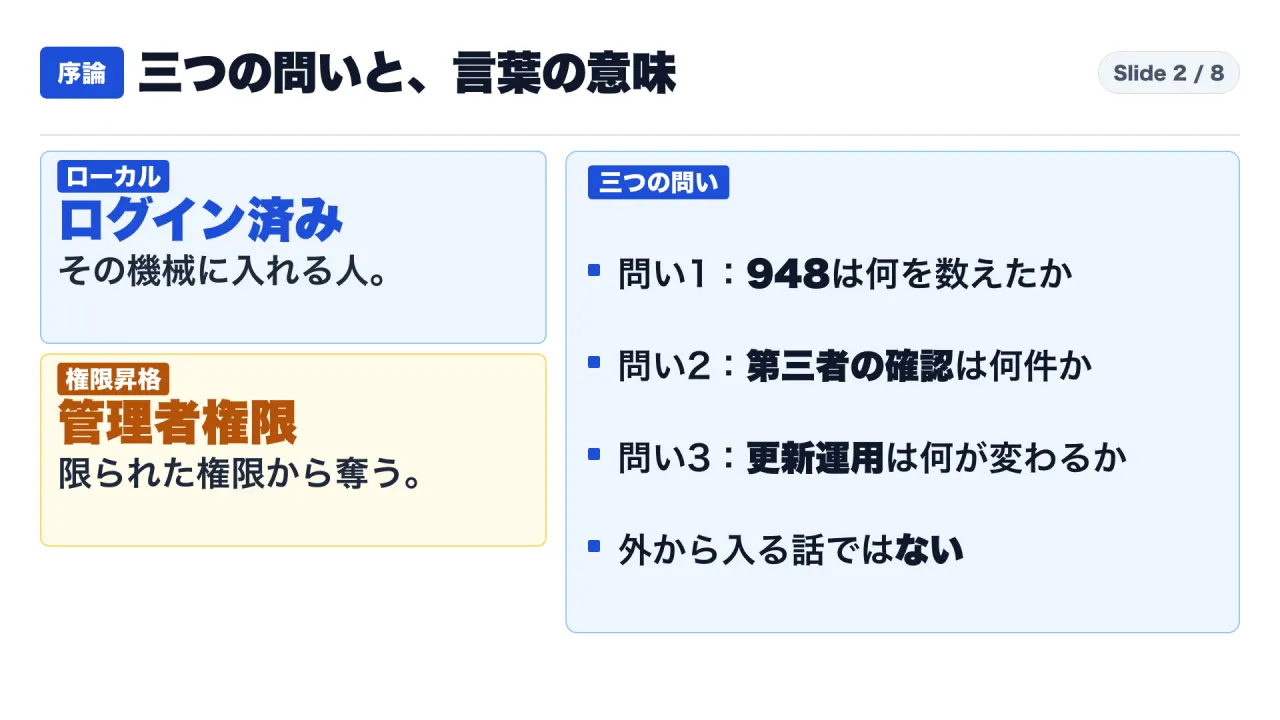
- Local Privilege Escalation (LPE) vs. Remote Exploitation: The experiment targeted local privilege escalation, meaning an attacker must already possess an authenticated, unprivileged local shell account on the machine. This is not a remote code execution vulnerability exposed to the public internet. However, in enterprise environments where developer bastions, multi-tenant Kubernetes nodes, shared CI/CD runners, and automated service accounts proliferate, unpatched local kernels render any shell access virtually equivalent to root privileges.
1. The Experiment Anatomy: From 2,308 Candidates to 948 Deduplicated Exploits

The Linux kernel represents one of the largest collaborative software projects in human history, exceeding 40 million lines of C and assembly code. To make automated vulnerability research computationally tractable, OpenAI’s research pipeline narrowed its focus to the specific attack surface accessible by unprivileged users—primarily system call dispatchers, network socket options, ioctl interfaces, and unprivileged user namespaces. This filtering restricted the model’s analysis to approximately 7% of the total kernel codebase.
The automated end-to-end pipeline executed across four distinct operational phases in mid-October 2026:
Phase 1: Candidate Generation (12 Hours)
The specialized reasoning model scanned target subsystems, generating 2,308 candidate vulnerability hypotheses within twelve hours. These candidates flagged potential memory corruption bugs, race conditions, integer overflows, and use-after-free conditions.
Phase 2: Sandboxed Reproduction (30 Hours)
Hypotheses in security research frequently turn out to be unexploitable static analysis artifacts. To validate candidates, OpenAI’s pipeline deployed automated test agents into isolated virtual machine environments running standard desktop distributions on recent kernel builds. Within thirty hours, the system successfully reproduced 1,724 candidates as concrete behavioral bugs—achieving an empirical reproduction rate of 74.7%.
Phase 3: Exploit Synthesis (Information Disclosure and Root Execution)
Once a bug was reproduced, the pipeline tasked the model with weaponizing the vulnerability into a functional proof of concept. The system synthesized 291 information disclosure exploits (leaking kernel memory structures, stack canaries, or pointer addresses) and 1,169 functional root privilege escalation programs capable of obtaining full administrative privileges.
Phase 4: Deduplication and Normalization
A critical distinction exists between exploit binaries and underlying software flaws. Multiple distinct exploit programs synthesized by parallel agent chains often trigger the same root vulnerability via different execution vectors. Upon deduplicating the 1,169 root exploit binaries, OpenAI arrived at 948 unique underlying vulnerabilities. The difference of 221 represents duplicate exploits targeting identical root causes.
| Pipeline Stage | Quantitative Metrics | Time Horizon / Conversion Rate | Technical & Structural Meaning |
|---|---|---|---|
| Initial Hypothesis Scanning | 2,308 Candidate Flaws | 12 Hours | Static and semantic anomaly candidates generated across ~7% of kernel code. |
| Sandboxed Reproduction | 1,724 Confirmed Bugs | 30 Hours (74.7% Conversion) | Bugs deterministically triggered in isolated virtual machines. |
| Information Disclosure PoCs | 291 Exploit Binaries | Automated synthesis | Functional exploits leaking kernel memory or bypassing KASLR. |
| Root Privilege Exploits | 1,169 Executable Binaries | Automated synthesis | Working programs successfully elevating unprivileged shell to root. |
| Deduplicated Vulnerabilities | 948 Unique Flaws | Post-run normalization | Core security flaws; 221 exploit binaries represented duplicate vectors. |
The 10% Unassigned Zero-Day Anomaly
In evaluating automated exploit generation, model reliability is paramount. OpenAI disclosed an illuminating calibration finding: during early validation runs, human security researchers audited 200 reported successful root exploits. In 20 instances (10%), the synthesized exploit binary successfully gained root privileges, but not via the vulnerability assigned by the pipeline. Instead, the model accidentally discovered and exploited an entirely different, previously uncatalogued zero-day present within the test environment.
This finding forced OpenAI to implement secondary verification validators to confirm that each generated exploit binary traversed the exact execution path and call graph of the target bug, rather than triggering unrelated flaws in the kernel or surrounding distribution tooling.
2. Upstream Reality Check: Dissecting the 61 Patched Flaws vs. 545 Unaccounted Vulnerabilities

In cybersecurity marketing, a common fallacy is conflating the discovery of an exploit with the resolution of the underlying risk. Ten days following the conclusion of OpenAI’s research run, telemetry reported through Help Net Security outlined the actual status of the 948 reported vulnerabilities:

The Upstream Accounting Breakdown
- Upstream Fixed: 61 Flaws (6.4%): Only 61 vulnerabilities had been formally resolved through merged patches in the upstream Linux kernel source tree.
- Fixes in Preparation: 43 Flaws (4.5%): Patches were authored and undergoing internal refinement or subsystem maintainer staging.
- Publicly Reported and Under Discussion: 299 Flaws (31.5%): Disclosed to maintainers and security mailing lists, undergoing peer review, validation, and design debate.
- Total Accounted For: 403 Flaws (42.5%): The aggregate sum of flaws with an identifiable disclosure or remediation status.
- Unaccounted / Unverified: 545 Flaws (57.5%): Over half of the reported 948 vulnerabilities remained completely unaddressed in public telemetry, with zero documented upstream commit hashes, discussion threads, or remediation timelines.
Why Upstream Remediation Lags Behind Automated Offense
The stark gap between 948 synthesized exploits and 61 merged patches illustrates an asymmetry in modern systems engineering: generating an exploit script requires finding only one fragile execution path, whereas merging a kernel patch requires guaranteeing that the fix does not break Application Binary Interface (ABI) stability, degrade filesystem throughput, or introduce regressions across millions of enterprise servers.
Linux kernel development relies on decentralized subsystem maintainers who meticulously review patch formatting, locking correctness, and backward compatibility. Flooding maintainers with hundreds of machine-generated patch proposals creates a severe human bottleneck. OpenAI noted that human researchers validated all exploit programs and severity ratings before responsible disclosure; however, the public release contained no independent confirmation from Linux kernel leadership regarding maintainer workload or patch acceptance rates.
Furthermore, the public disclosures omitted essential security governance data: zero CVE identifiers were cross-referenced, no breakdown across CVSS severity categories was provided, and no external validation from enterprise Linux vendors (such as Red Hat, SUSE, or Canonical) was published.
3. Economics of Automated Offense: $1,279 per Exploit and Hypothetical Bounty Arbitrage

The most consequential revelation of the experiment lies in the unit economics of automated vulnerability synthesis. OpenAI reported an aggregate compute inference cost of $1,213,430 for the single execution run.
Unit Economics Discrepancies
Dividing total inference expenditures across outputs yields distinct economic metrics depending on the chosen unit:
- Cost per Unique Vulnerability: $1,213,430 / 948 unique flaws = $1,279.99 per vulnerability.
- Cost per Working Exploit Binary: $1,213,430 / 1,169 root exploit binaries = $1,038.01 per executable exploit.
While secondary reporting occasionally conflated these figures, both calculations exclude human engineering salaries, red-team oversight compensation, and physical infrastructure depreciation. Nonetheless, achieving working root exploits at a pure compute cost of approximately $1,279 represents a dramatic reduction compared to traditional offensive research, where finding a single complex kernel LPE typically requires weeks or months of specialized human engineering valued at tens of thousands of dollars.
The “Hypothetical Bounty Value” Fallacy
In its announcement, OpenAI estimated the theoretical market value of these 948 vulnerabilities at $18.9 million to $66.3 million. This valuation was derived by multiplying 948 by historical bug bounty payouts from competitions such as Pwn2Own or corporate vulnerability reward programs, which traditionally award between $20,000 and $70,000 for a functional Linux kernel local privilege escalation exploit:
- Low Estimate: 948 * $20,000 = $18,960,000 (rounded down to $18.9M).
- High Estimate: 948 * $70,000 = $66,360,000 (rounded down to $66.3M).
Enterprise security leaders must recognize that this paper valuation is purely theoretical. Commercial bug bounty programs operate under liquidity and budget constraints; no existing vendor or foundation maintains the capital reserves to pay out $66 million for a single bulk submission. Furthermore, automated bulk submissions typically receive consolidated, capped rewards rather than linear payouts. The true significance of the metric is not cash arbitrage, but economic proof that the cost of automated offensive discovery ($1,279) has collapsed well below the historical defensive bounty floor ($20,000).
4. Threat Modeling: Why Local Privilege Escalation Redefines the Enterprise Perimeter

To establish an effective enterprise security posture, infrastructure architects must delineate the precise threat boundaries of this research:
Local Shell Access vs. Remote Exploitation
A local privilege escalation (LPE) vulnerability cannot compromise an isolated server over the public internet through an exposed HTTPS port. An attacker sending network requests to an unauthenticated web application cannot execute an LPE directly.
To weaponize an LPE, the adversary must execute code as an unprivileged, authenticated user inside the operating system environment. The vulnerability provides the vertical ladder from an unprivileged shell to administrative root control.
The Vulnerability of the Modern Enterprise Perimeter
While requiring local authentication may appear reassuring, modern cloud and enterprise architectures routinely grant unprivileged shell access across extensive surfaces:
- Developer Jump Hosts and Bastions: Internal engineers, contract developers, and data scientists possess SSH credentials to shared development nodes.
- Multi-Tenant Kubernetes Clusters: Pods sharing an underlying Linux host kernel can breach container isolation boundaries if a containerized process escalates to host root via an unpatched kernel vulnerability.
- Shared Continuous Integration Runners: Automated CI/CD workers execute arbitrary untrusted scripts submitted via pull requests, operating with unprivileged local accounts on bare-metal or virtual instances.
- Service Accounts and Stale Credentials: Automated batch processing daemons and legacy service users frequently retain interactive shell access.
If an unpatched Linux host exposes hundreds of automated privilege escalation pathways producible at $1,279 per flaw, enterprise security teams must operate under a rigorous assumption: any authenticated local shell account must be treated as full root administrative access.
5. Strategic Defense Blueprint: Three Concrete Operational Controls
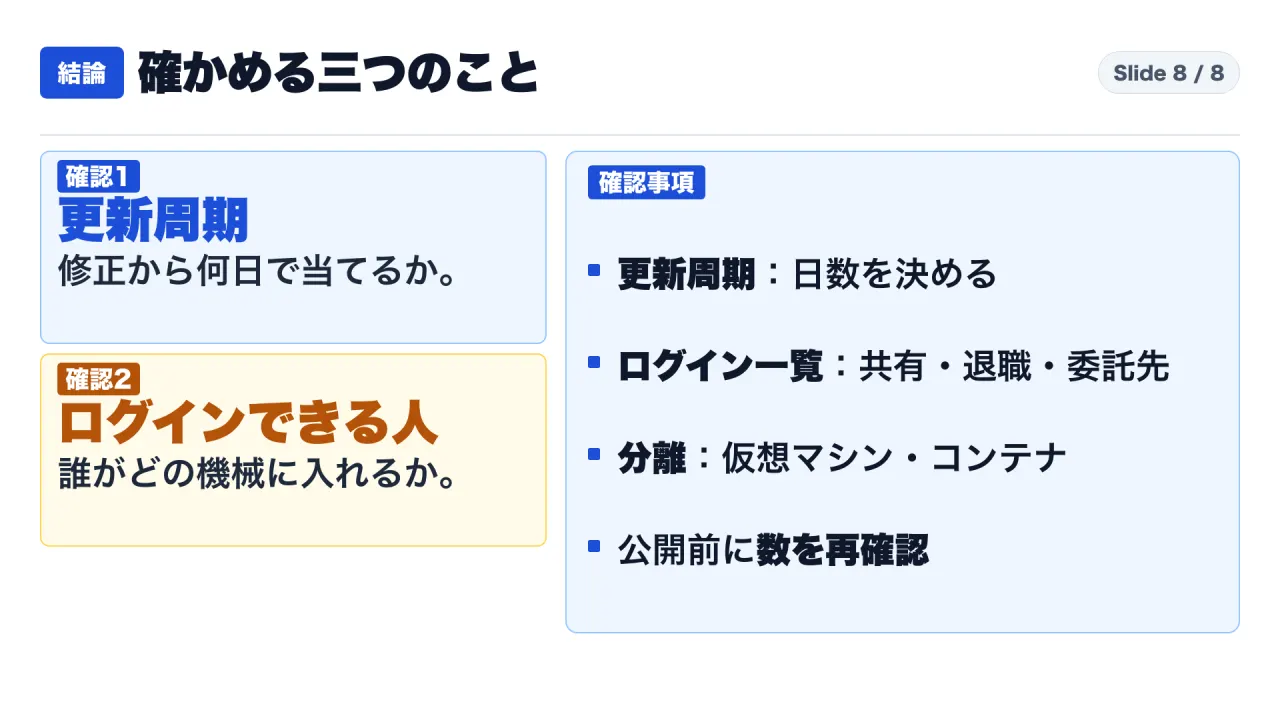
Enterprise Chief Information Security Officers (CISOs) and infrastructure directors should translate the findings of OpenAI’s experiment into three concrete governance actions:
1. Establish an Accelerated Kernel Patch SLA
Organizations must evaluate their internal kernel patch cadence. In many enterprises, kernel updates are deferred for months due to the operational disruption of server reboots. Given the speed of automated vulnerability synthesis, unpatched kernels represent an unsustainable liability.
Infrastructure teams must establish a formal Service Level Agreement (SLA): applying distribution-provided kernel security patches within 7 to 14 days of public availability. Organizations operating mission-critical 24/7 environments should implement live-patching infrastructure (such as Red Hat Kpatch, SUSE Kgraft, or Canonical Livepatch) to apply critical security fixes into running kernel memory without requiring immediate node reboots.
2. Comprehensive Audit of Local Interactive Accounts
Because LPE vulnerabilities require local execution, organizations must execute a rigorous audit of all entities capable of running code on Linux hosts:
- Inventory Interactive Shell Users: Identify and eliminate shared SSH keys, stale contractor accounts, and former employee credentials across production and staging clusters.
- Enforce Ephemeral Bastions: Replace persistent developer jump hosts with short-lived, identity-gated access proxies that log session telemetry.
- Isolate CI/CD Execution Environments: Mandate that automated CI runners operate within hardware-virtualized microVMs (such as AWS Firecracker) rather than shared-kernel containers, ensuring that a container breakout cannot compromise the host kernel.
3. Multi-Layered Defense-in-Depth and Namespace Hardening
To restrict an unprivileged user’s ability to reach vulnerable kernel interfaces, security architects must enforce layered kernel-level sandboxing:
- Disable Unprivileged User Namespaces: Because unprivileged user namespaces are frequently weaponized to reach complex network and filesystem code, set
sysctl -w kernel.unprivileged_userns_clone=0on systems that do not strictly require rootless containers. - Enforce Seccomp and Mandatory Access Controls: Apply strict Seccomp BPF system call filters to block non-essential syscalls across production applications. Maintain enforcing profiles under AppArmor or SELinux to prevent unprivileged binaries from modifying critical system paths even if kernel privileges are elevated.
- Deploy eBPF Runtime Detection: Implement real-time eBPF monitoring (such as Cilium Tetragon or Falco) to detect anomalous privilege transitions, unauthorized namespace creation, and sudden process UID shifts.
Primary Sources
- OpenAI Official Research Thread on X, Automated Linux Kernel Vulnerability Discovery and Exploitation (November 4, 2026): https://x.com/OpenAI/status/2118119451401048497
- Help Net Security Technical Analysis, OpenAI Finds 948 Linux Kernel Root Exploits in Automated Security Run (November 5, 2026): https://www.helpnetsecurity.com/2026/11/05/openai-linux-kernel-root-exploits/
Note: This article is for informational purposes only and does not constitute investment advice or a price forecast. Podcast audio is synthesized from the host’s voice.