When Launching Postman Silently Modifies Local Coding Agents: Forensic Breakdown of Issue 14370
A technical breakdown of the reported auto-installation of Postman plugins, hook authorizations, and MCP endpoints into developer coding environments without explicit opt-in prompts.
Japanese Edition: Read the original Japanese article on Substack
Video Episode (Japanese Audio): Watch on YouTube
Executive Summary: Reported Findings vs. Vendor Documentation
On October 25, 2026, a developer submitted an issue to Postman’s official public repository on GitHub regarding unexpected configuration changes on macOS. The reporter observed that launching the Postman desktop application resulted in the silent background installation of Postman plugins, startup hooks, remote Model Context Protocol (MCP) server endpoints, and standalone command-line binaries into local development environments used for terminal-based coding agents.
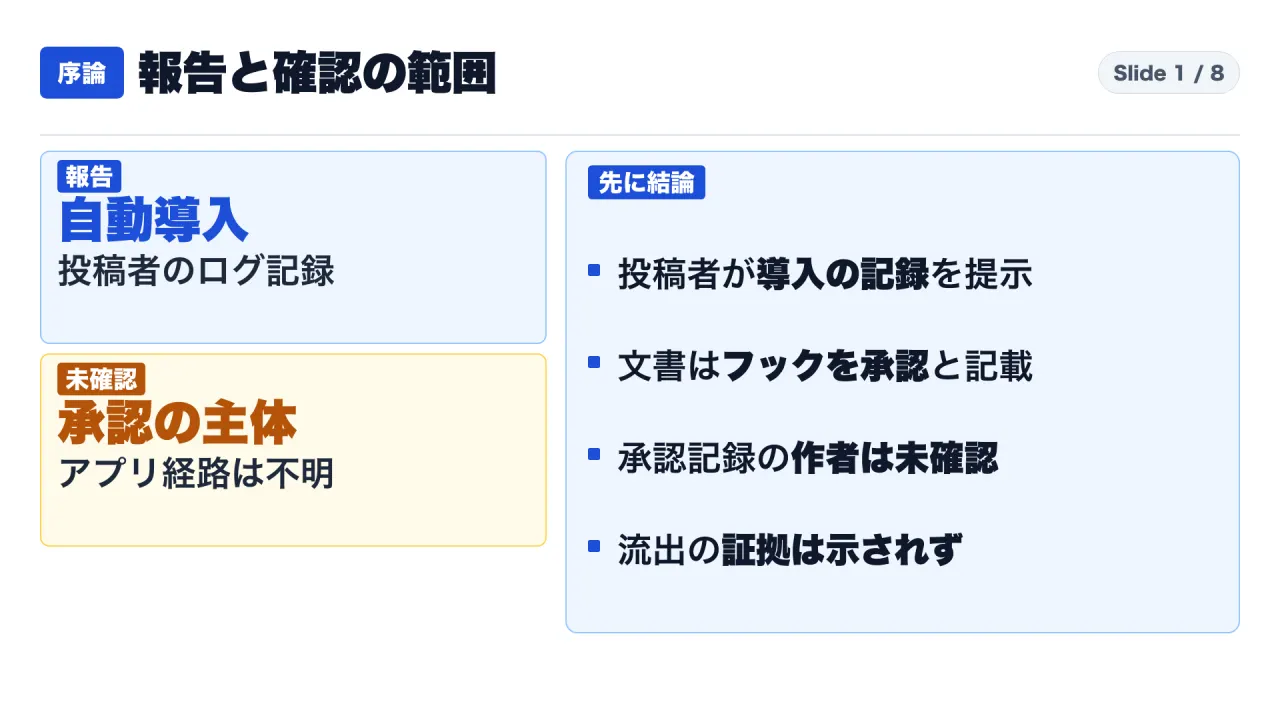
The core technical controversy centers on two distinct phenomena: first, the automatic installation of agent plugins and helper binaries during background application updates (auto-existing-upgrade); and second, the installer’s programmatic bypass of manual security prompts through automatic hook authorization (approvePostmanHook). While developer discourse on public discussion boards rapidly characterized the behavior with alarming rhetoric, a disciplined forensic inspection reveals a more nuanced reality where vendor documentation explicitly acknowledged aspects of this design, while other critical operational aspects remain unverified.
This technical forensic report separates documented reality from unsubstantiated claims across four rigorous analytical layers:
- Artifacts recorded by the issue reporter and community contributors.
- Explicit behavior documented in Postman’s public source code and technical manuals.
- Unverified claims, including absence of evidence regarding data exfiltration.
- Objective architectural recommendations for engineering organizations managing local developer workstations.
Forensic Framework: Four Layers of Verification
To prevent sensationalism from obscuring architectural reality, every technical assertion in this document is categorized under one of four evidential categories:
- Reporter Artifacts: Log excerpts, configuration snippets, and environment dumps submitted by issue authors. These represent self-reported telemetry from local workstations rather than controlled laboratory reproductions.
- Vendor Source and Documentation: Commit histories, TypeScript implementation logic, and published documentation hosted within Postman’s official GitHub repositories and documentation portals.
- Unverified Attributes: Claims where empirical evidence is currently missing, incomplete, or technically untestable from external vantage points.
- Architectural Analysis: Systematic risk assessments and governance recommendations derived from vendor specifications and security standards.
Public commentary across developer forums frequently conflates user consent with operational security compromise. Determining whether developer consent was requested is fundamentally different from verifying whether malicious intent or unauthorized data exfiltration occurred. By evaluating consent, hook authorization, and operational impact as independent dimensions, engineering leaders can reach calibrated governance decisions.
Section 1: The Reporter’s Evidence and Local Artifacts
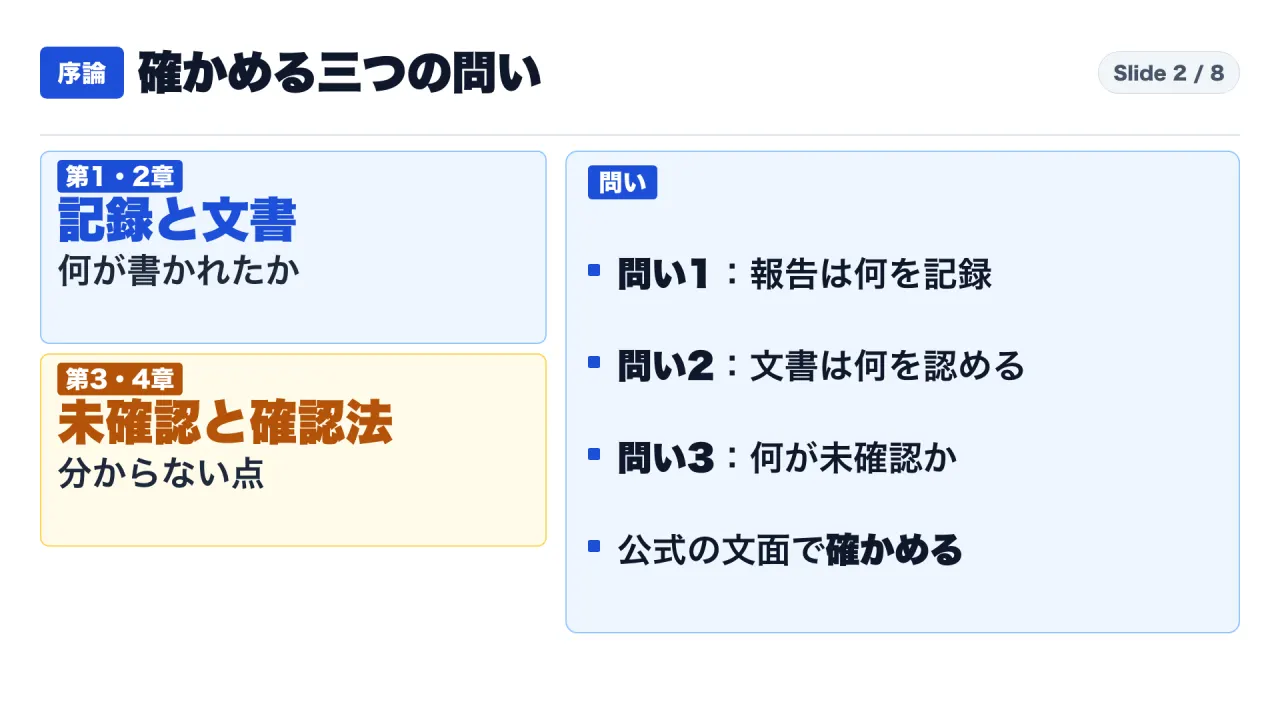
The initial submission documented events on a macOS workstation running Postman desktop version 12.33.4 on October 24, 2026. The developer reported opening Postman for standard API testing, which was followed immediately by configuration modifications across local agent frameworks.
{
  "timestamp": "2026-10-24T09:34:00Z",
  "source": "auto-existing-upgrade",
  "installer": "script",
  "results": {
    "claude-code": "installed",
    "codex": "installed"
  },
  "flags": {
    "exposed": true,
    "signedIn": true,
    "flagTimedOut": false
  }
}
The log entry cited from Postman’s local main.log referenced an installation routine initiated under the key auto-existing-upgrade using an installer method described simply as script. Following this routine, the reporter identified three concrete system alterations:
First, local configuration files for coding agents (~/.codex/config.toml) were updated to register Postman’s marketplace (postmanlabs/postman-plugin), activate the plugin (enabled = true), and populate a cryptographic hash inside the hook authorization state table ([hooks.state]). Second, an automatic session-start hook was registered to execute whenever a new agent session initialized (startup, clear, or compact). This hook injected markdown directives instructing the coding agent to route API engineering tasks through Postman’s specialized workflows before executing nontrivial code changes. Third, a remote MCP connection pointing to https://mcp.postman.com/mcp was provisioned in local configurations, although local execution logs showed the connection failed to authenticate due to missing API credentials.
Simultaneously, configurations for Claude Code (~/.claude/settings.json) recorded the activation of postman@claude-plugins-official at version 2.0.1, accompanied by the placement of helper binaries inside ~/.local/bin.
Critically, the issue reporter explicitly noted three limitations in their own submission:
- The presence of a trust record in configuration files does not establish which process or identity wrote that specific record.
- The report presented zero empirical evidence indicating unauthorized data exfiltration or credential harvesting.
- The behavior had not yet been reproduced on a clean, isolated test environment.
Section 2: Postman’s Official Source Code and Documentation
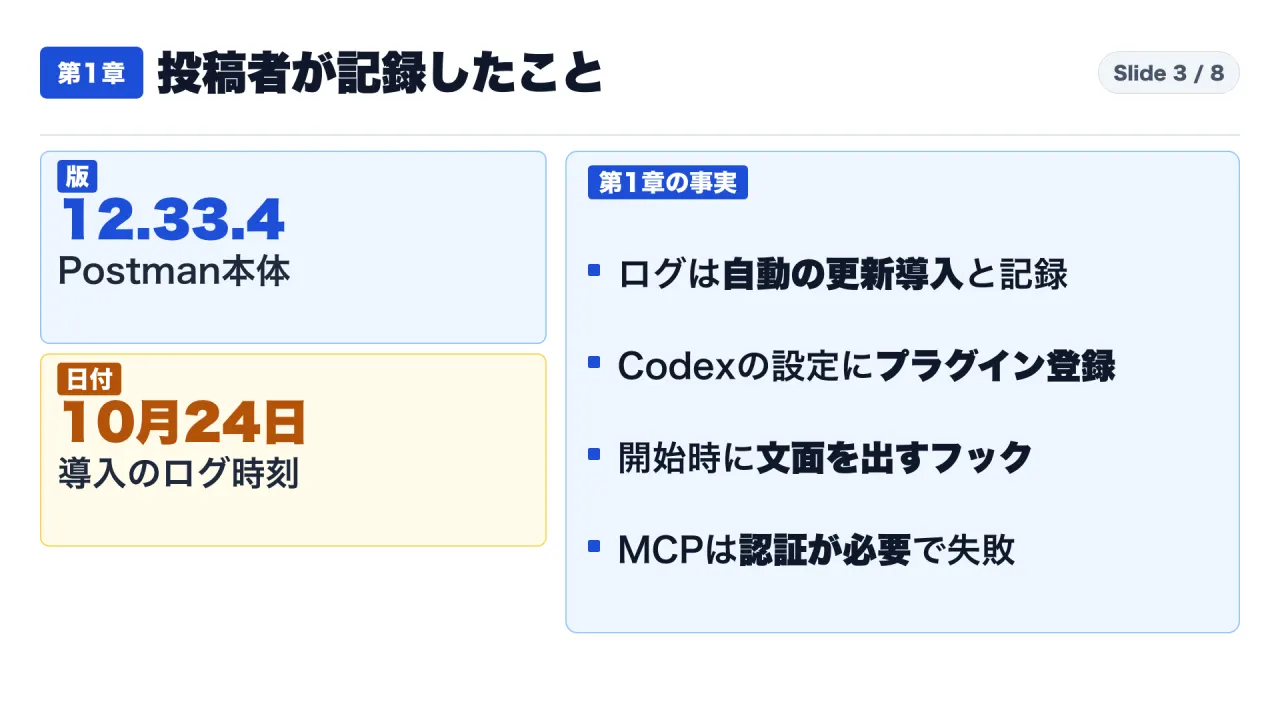
Examination of Postman’s public repository (postmanlabs/postman-plugin) and technical documentation validates that automatic hook authorization was an intentional engineering feature rather than an accidental bug.
In the repository’s installer implementation at commit 6c8e452 (specifically within installer/src/hosts/codex-hooks.ts), the codebase defines a dedicated function named approvePostmanHook. The explicit function documentation states: “Approves only Postman’s current hook after installation.” The function retrieves the current content hash of Postman’s hook via hooks/list and executes a programmatic configuration update via config/batchWrite, directly inserting the calculated hash into hooks.state.trusted_hash. This routine is invoked automatically by codex.ts immediately upon plugin installation.
Furthermore, Postman’s official documentation covering detected agents (learning.postman.com/docs/postman-plugin/install/detected-agents.md) explicitly described this operational mechanism:
“On Codex, the plugin adds a session-start hook that guides Codex to Postman’s skills. The installer approves the hook for you.”
The repository README corroborated this design, noting that there is no separate user prompt or manual inspection step for the injected session instructions. Conversely, Postman’s documentation for manual, per-agent installation pathways described a different user journey where hooks remained untrusted until the developer reviewed them upon opening the agent terminal.
Official documentation from coding agent maintainers states that non-managed hooks must undergo explicit human review and authorization before execution. Agent security architectures intentionally bind trust records to content hashes so that newly introduced or modified scripts cannot run silently. When an external third-party installer directly writes to that trust table, it programmatically circumvents the agent’s human-in-the-loop verification gate.
Postman’s documentation noted that Postman skills and MCP servers remain fully functional without the startup hook, explaining that the hook was introduced solely to increase the probability that the agent autonomously reaches for Postman skills during API development tasks. Git commit histories in the plugin repository reveal that commit 6975d3e163, titled “feat(installer): auto-approve Postman’s Codex hook (#124),” was merged on October 21, 2026—three days prior to the reporter’s log timestamp.
Section 3: Technical Inconsistencies and Unverified Claims
A disciplined forensic assessment requires identifying what the empirical evidence does not prove. Several technical questions remain unresolved:
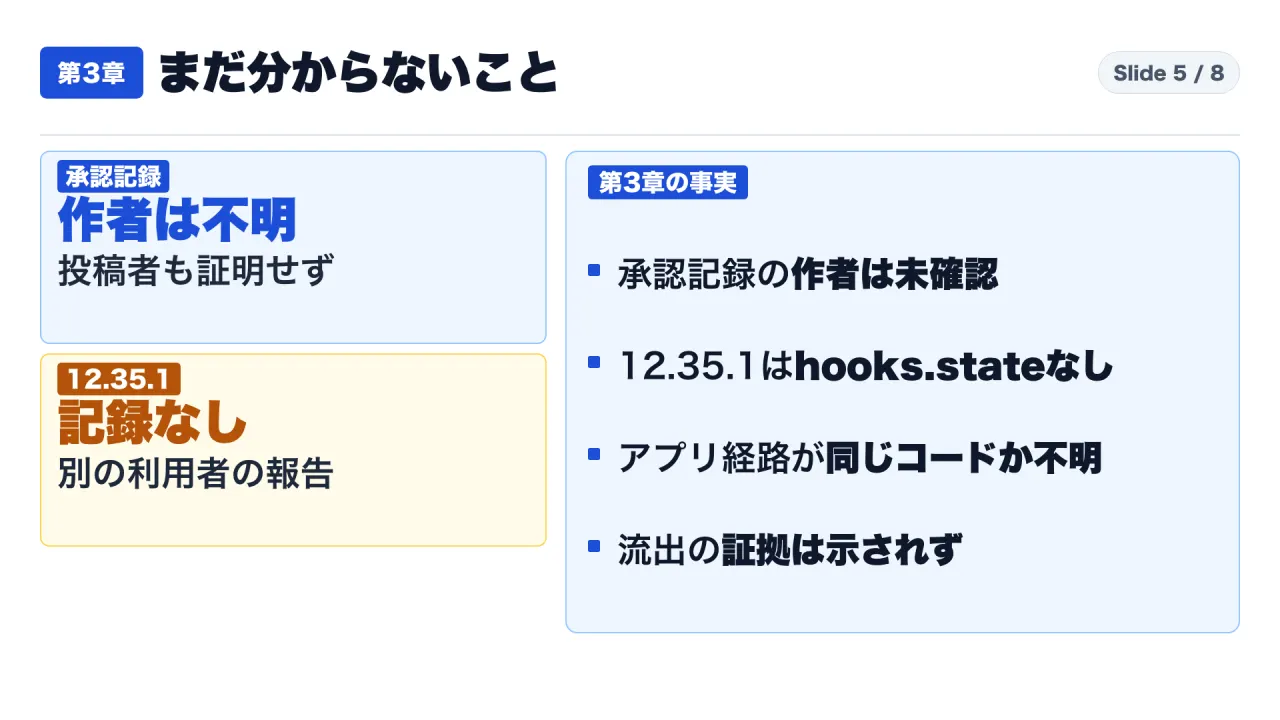
- Authorship of the Local Trust Record: While the installer’s source code contains routines designed to write hook approvals, external logs alone cannot prove that the reporter’s specific configuration state was written exclusively by that function rather than a distinct local utility.
- Version-Specific Variations: Subsequent community reports illustrated diverging behaviors. On November 3, 2026, an independent developer updating from Postman 12.31.3 to 12.35.1 observed automatic background installation of the CLI and plugins, yet their
config.tomlcontained neitherhooks.statenortrusted_hashentries. The user confirmed they had not launched the agent to observe runtime execution. Thus, automatic approval behavior cannot be assumed across all version transitions. - Desktop Invocation Pathway: The reporter’s logs recorded
"installer":"script". Public documentation does not clarify whether the desktop application’s background update mechanism executes identical code to the standalonenpx @postman/postman-pluginpackage. Demonstrating that the public installer contains auto-approval logic is distinct from proving that the desktop binary invoked that identical pathway. - Scope Across Third-Party Tools: A single unverified comment asserted that Postman configuration entries appeared within GitHub Copilot environments and resisted menu-driven deletion. This assertion remains an isolated anecdote lacking independent verification.
- Absence of Data Exfiltration: Neither the primary reporter nor subsequent contributors presented network packet captures or server telemetry showing unauthorized transfer of source code, environment secrets, or API tokens. The issue represents an unauthorized modification of local configuration files, not a confirmed data breach.
- Release Note Omissions: Postman’s dynamic release note portals did not provide indexed entries detailing background agent plugin bundling for versions 12.33.4 and 12.35.1 at the time of data collection.
Section 4: Vendor Response, Timeline, and Repository Evolution
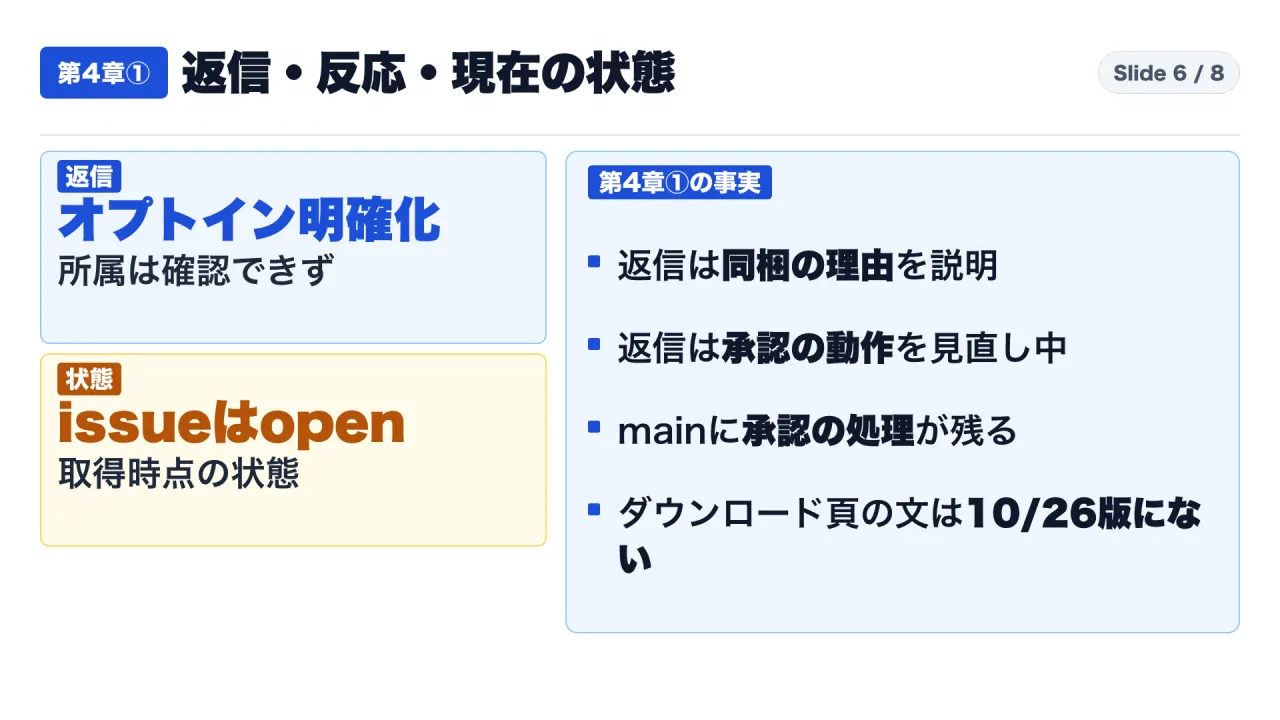
On November 3, 2026, at 23:36 UTC, an account identifying as a Postman team member posted an official response within the GitHub issue thread. The response explained that bundling command-line utilities and agent plugins with the desktop application was intended to eliminate manual configuration friction for developers adopting agentic workflows.
The response outlined four positions:
- Helper tools are documented on the desktop download page and within application update prompts.
- Developers can uninstall individual components directly from within the desktop application interface.
- Postman committed to clarifying opt-in consent flows, particularly for existing desktop users.
- The engineering team initiated an internal review of hook auto-approval and session-start prompt mechanisms.
However, historical analysis reveals notable nuances. A comparison of Postman’s desktop download page between October 26, 2026 (via web archives) and November 4, 2026 showed that explicit copy stating “The Postman app includes Postman CLI & Postman plugins, so you can use Postman from your terminal” was absent from the earlier archived snapshot.
Furthermore, while the reporter formulated six specific remediation requests—including complete cessation of automatic background installation, removal of hook self-approval routines, and publication of comprehensive uninstallation scripts—the vendor’s initial response addressed opt-in clarity and behavior review in broad terms, without committing to the complete removal of auto-installation flags. As of November 5, 2026, the issue remained open, and the approvePostmanHook routine remained present within the main repository branch.
| Date / Time (UTC) | Milestone Event | Source Reference |
|---|---|---|
| October 21, 2026 | Commit 6975d3e merges auto-approve logic for Codex hooks |
GitHub PR #124 |
| October 24, 2026 09:34 | Reporter’s desktop log records auto-existing-upgrade execution |
Issue 14370 Excerpt |
| October 25, 2026 | Official support issue submitted on GitHub | Issue 14370 |
| October 26, 2026 | Web archive snapshot of download page lacks plugin bundling text | Wayback Machine |
| November 3, 2026 17:22 | Community submission on Hacker News achieves broad visibility | HN Item 50354960 |
| November 3, 2026 23:36 | Vendor response posted acknowledging opt-in review | Issue Comment |
| November 4, 2026 | Additional community reports regarding version 12.35.1 and Copilot | Issue Comments |
| November 5, 2026 | Issue remains open; active review across engineering channels | Primary Audit |
Section 5: Architectural Friction: User Consent vs. Developer Convenience
This episode illustrates a growing structural friction in modern software engineering: the boundary dispute between developer desktop applications and autonomous coding agents.
Historically, desktop development tools operated under permissive conventions. Package managers, IDE extensions, and API clients frequently installed helper binaries into user paths (/usr/local/bin or ~/.local/bin) without raising severe security alarms, as developers viewed these additions as standard productivity enhancements.
However, the rapid integration of terminal-based coding agents transforms the developer’s workstation into an execution perimeter governed by automated reasoning loops. When an application writes startup hooks into an agent’s configuration, it is no longer merely placing a static binary on disk; it is actively altering the natural language instructions and contextual heuristics that govern the agent’s autonomous decisions.
Postman’s injected session-start hook instructed coding agents that non-trivial API implementation tasks should prioritize Postman skills. While the hook text included a safety caveat stating that explicit user instructions override plugin guidance, the injection of ambient behavioral instructions without explicit developer confirmation represents an architectural overreach of traditional application boundaries.
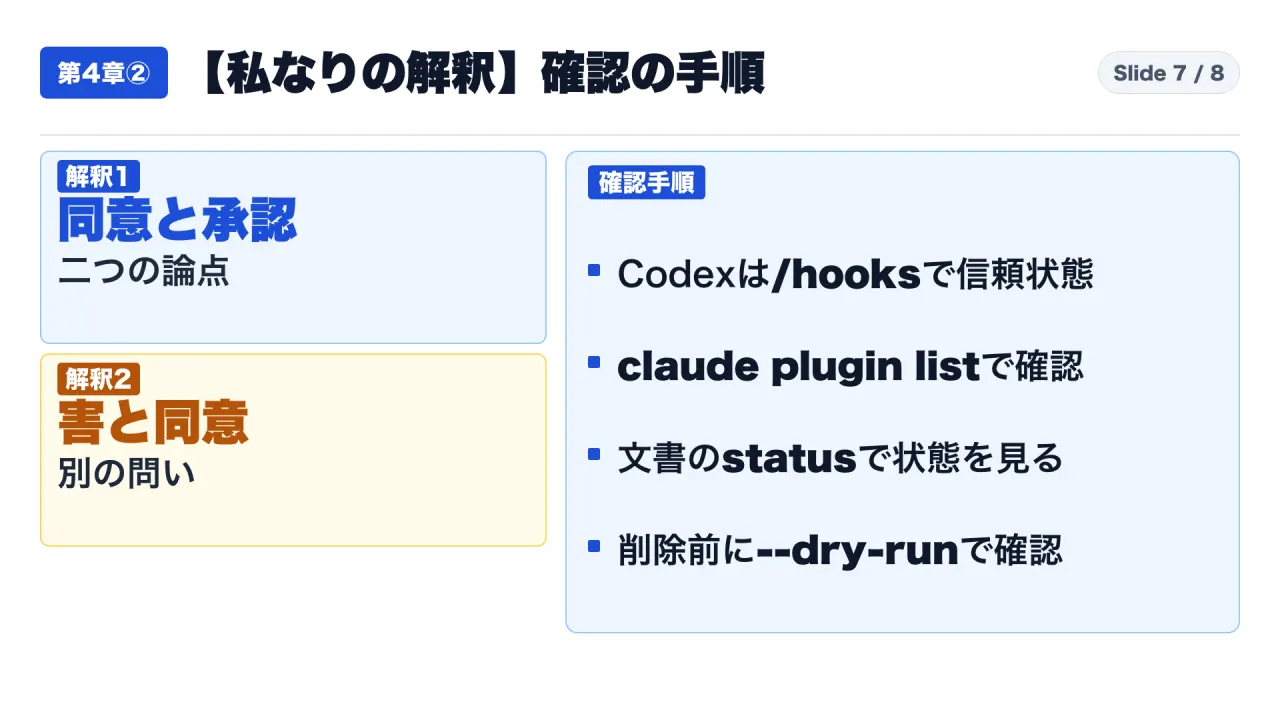
Engineering security teams must evaluate three distinct security layers:
- Consent Boundary: Did the application secure affirmative, informed consent before altering external configuration files outside its own application sandbox?
- Authorization Boundary: Should third-party installers ever possess administrative authority to write cryptographic trust validations into an agent’s security registry?
- Impact Boundary: Did the injected components introduce exploitable vulnerabilities, credential leakage, or unauthorized data transmission?
Even when impact boundaries remain unbreached, violating consent and authorization boundaries erodes trust and undermines enterprise compliance baselines.
Section 6: Actionable Audit and Governance Guide
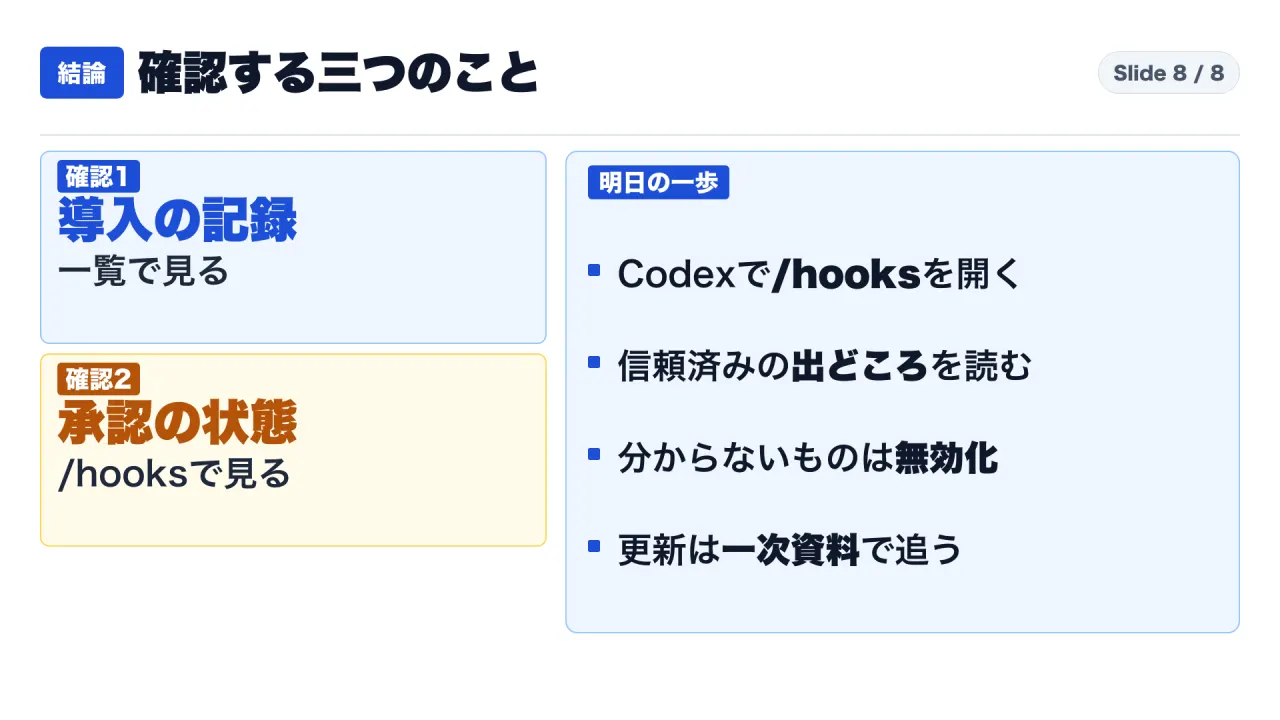
Engineering teams and security administrators should immediately conduct a three-step audit across developer workstations to verify configuration integrity.
Step 1: Audit Plugin Registries and Local Binaries
Inspect local agent plugin manifests to determine whether Postman plugins were activated without explicit team awareness:
# Verify Claude Code active plugins
claude plugin list

# Inspect active Codex configuration tables
cat ~/.codex/config.toml | grep -E "postman|plugins|marketplaces"

# Check for presence of Postman helper binaries
ls -la ~/.local/bin/postman*
If Postman plugins are present and unapproved by internal development standards, developers can inspect or remove them using official uninstallation commands with dry-run verification:
# Preview uninstallation scope
npx @postman/postman-plugin remove --dry-run

# Remove plugin from specific agent targets
npx @postman/postman-plugin remove --agent codex
npx @postman/postman-plugin remove --agent claude-code
Step 2: Audit Hook Authorization and Trust Registries
Review authorized agent hooks to ensure no external scripts possess pre-approved execution authority:
- Launch the agent terminal and execute
/hooksto inspect registered hooks, origin paths, and current authorization status. - Revoke authorization for unrecognized startup hooks or configure hooks to require per-session human confirmation.
- Inspect
~/.codex/config.tomlunder[hooks.state]and eliminate unvettedtrusted_hashentries.
Step 3: Implement Enterprise Governance Policies
For enterprise environments managing fleet workstations via Mobile Device Management (MDM) or centralized dotfiles, security administrators should enforce mandatory hook governance.
Coding agent configuration engines support administrative lock-down via requirements.toml. By enforcing:
allow_managed_hooks_only = true
organizations can programmatically block user-, project-, and plugin-level hooks from executing, ensuring that only centrally vetted organizational hooks operate within local agent sessions.
Primary References and Source Material
- GitHub Issue 14370 (Postman App Support): Issue Submission and Discussion Thread
- Postman Official Documentation: Installing on Detected Coding Agents
- Postman Team Response: Issue Comment by Postman Representative
- Hacker News Community Thread: Public Discussion on Issue 14370
- OpenAI Codex Documentation: Managing and Reviewing Agent Hooks
- Anthropic Claude Code Documentation: Plugin Discovery and Installation
- Postman Plugin Source Code: Session Start Hook Context
- Postman Plugin Source Code: Codex Hook Auto-Approval Routine
- Git Commit Record: feat(installer): auto-approve Postman’s Codex hook (#124)
- Postman Application Downloads: Official Postman Download Portal