Why Ant Group's 'Opus 5-Beating' Ling-3.2-Flash Cannot Be Compared to Claude Opus 5.5 ── A Forensic Guide to Evaluating Benchmark Claims in Vendor Changelogs
How to deconstruct self-reported frontier model benchmark victories by cross-referencing outdated evaluation baselines, missing evaluator identities, and official benchmark administrator leaderboards.
Japanese Edition: https://consuloji.substack.com/p/opus-5ling-32-flashopus-55
Executive Summary & Key Technical Takeaways
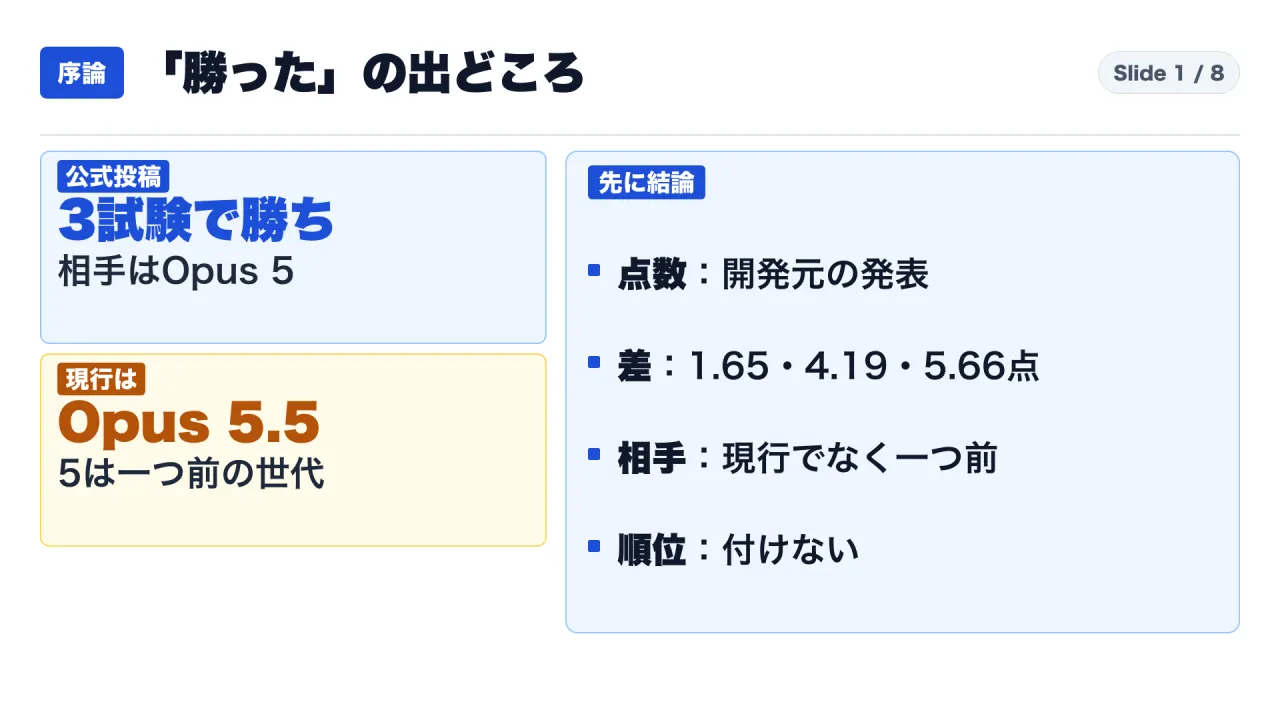
- The Release & Topology: On November 5, 2026, Ant Group unveiled “Ling-3.2-flash,” an open multimodal foundational model featuring 560 billion total parameters with 25 billion activated parameters per forward pass (a 4.46% compute activation ratio) and a native 1-million-token context window.
- The Viral Benchmark Claims: Ant Group’s official announcement across social channels claimed head-to-head victories over “Opus 5 (Max)” across three specialized evaluation suites: OmniDocBench v1.5 (92.21 vs. 90.56), ZeroBench Sub-problem subset (43.71 vs. 39.52), and Vision2Web (85.86 vs. 80.20).
- The Generational Baseline Discrepancy: Cross-referencing primary source documentation reveals that the comparison target—“Opus 5”—is an outdated prior generation. Anthropic’s official production guidelines position Claude Opus 5.5 as the current flagship, where official ZeroBench main-problem accuracy jumped by more than 2x (from 17.2% to 35.0%), invalidating any claims of parity with current frontier intelligence.
- Missing Evaluator Independence: The vendor changelog and announcement disclosures provide zero documentation regarding evaluator identity, test harness scaffolding, prompt templates, agent toolsets, or seed counts. Independent official maintainer repositories for ZeroBench, OmniDocBench, and Vision2Web contain no verified entries for Ling-3.2-flash.
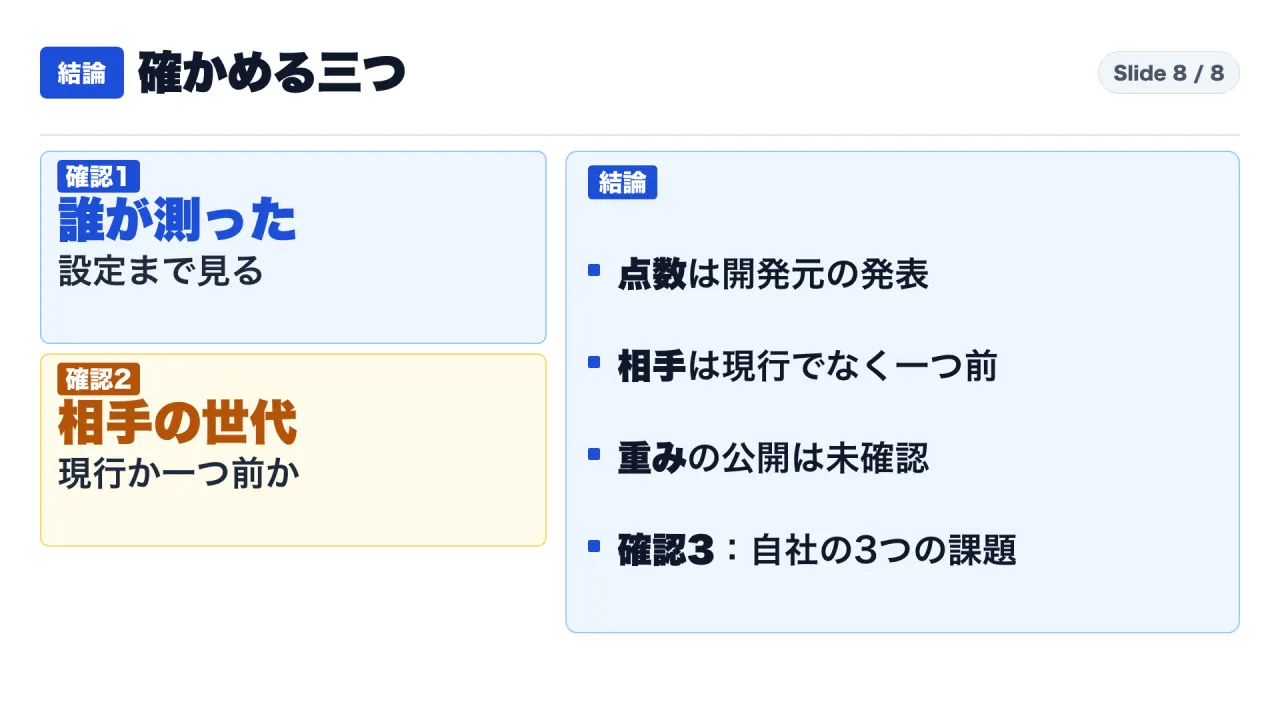
- The Evaluation Protocol for Engineering Leaders: Technical decision-makers must treat self-reported benchmark tables as vendor marketing until three independent criteria are verified: maintainer-administered test logs, generational baseline parity with active production models, and reproducible domain-specific testing on internal enterprise workloads.
1. Ling-3.2-Flash System Architecture: 560B MoE with Native Multimodal Foundation
Ant Group’s official developer changelog published on November 5, 2026, details the architectural foundations of Ling-3.2-flash. Unlike hybrid architectures that connect frozen vision encoders to pre-trained text models via cross-attention adapters, Ling-3.2-flash was trained as an end-to-end native multimodal system.
Ling-3.2-Flash Mixture-of-Experts Architecture:
┌────────────────────────────────────────────────────────────────────────┐
│ Native Multimodal Ingestion Pipeline                                   │
│ [High-Res Images]   [1M Text Tokens]   [Video Frames]   [3D Geometry]  │
│         │                  │                  │               │        │
│         └──────────────────┼──────────────────┴───────────────┘        │
│                            ▼                                           │
│ ┌────────────────────────────────────────────────────────────────────┐ │
│ │ Unified Foundation Representation (No External Vision Adapters)     │ │
│ └──────────────────────────────────┬─────────────────────────────────┘ │
│                                    │                                   │
│                                    ▼ Dynamic Routing                   │
│ ┌────────────────────────────────────────────────────────────────────┐ │
│ │ 560-Billion Parameter Mixture-of-Experts (MoE) Substrate           │ │
│ │                                                                    │ │
│ │ ┌───────────┐ ┌───────────┐ ┌───────────┐         ┌───────────┐    │ │
│ │ │ Expert 01 │ │ Expert 02 │ │ Expert 03 │ · · · · │ Expert N  │    │ │
│ │ └───────────┘ └───────────┘ └───────────┘         └───────────┘    │ │
│ │       ▲             ▲                                              │ │
│ │       └─────────────┴── Active Forward Pass: 25B Parameters        │ │
│ │                         Compute Activation Density: ~4.46%         │ │
│ └──────────────────────────────────┬─────────────────────────────────┘ │
│                                    │                                   │
│                                    ▼ High-Throughput Output            │
│ [Dual-Compatible Calling Interface: OpenAI API & Anthropic SDK Formats]│
└────────────────────────────────────────────────────────────────────────┘
Parameter Topology and Compute Density
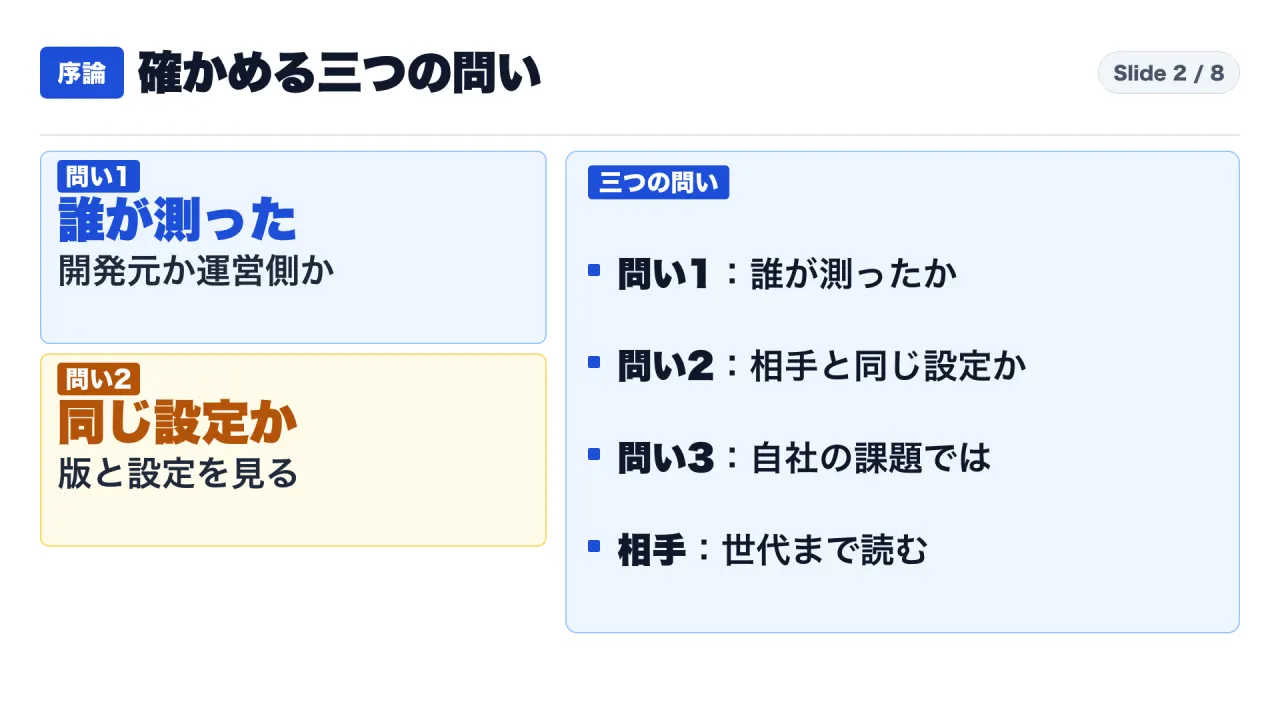
The network comprises 560 billion total parameters organized in a sparse Mixture-of-Experts (MoE) topology. During each forward pass, gating networks dynamically route tokens through specialized feed-forward layers, activating exactly 25 billion parameters.
This establishes a compute density of approximately 4.46% (25B / 560B), allowing the model to retain extensive parametric memory while sustaining inference throughput typical of compact dense models. The native context window handles up to 1,000,000 tokens, accommodating full codebases and video streams without document chunking.
Stated Functional Specializations
Ant Group’s documentation highlights four operational pillars:
- Complex Visual Reasoning: Parsing industrial schematics, flowcharts, and multi-layered infographic layouts.
- Long-Horizon Agent Orchestration: Executing autonomous multi-step web browsing across extended task horizons.
- Spatial Perception and 3D Interaction: Grounding visual coordinates for robotic manipulation.
- Specialized Document and Medical Analysis: Parsing dense clinical reports and financial disclosures.
The model provides dual API compatibility, supporting OpenAI client conventions (/v1/chat/completions) and Anthropic SDK formats (/v1/messages).
2. Forensic Deconstruction of the Three Claimed Benchmark Victories
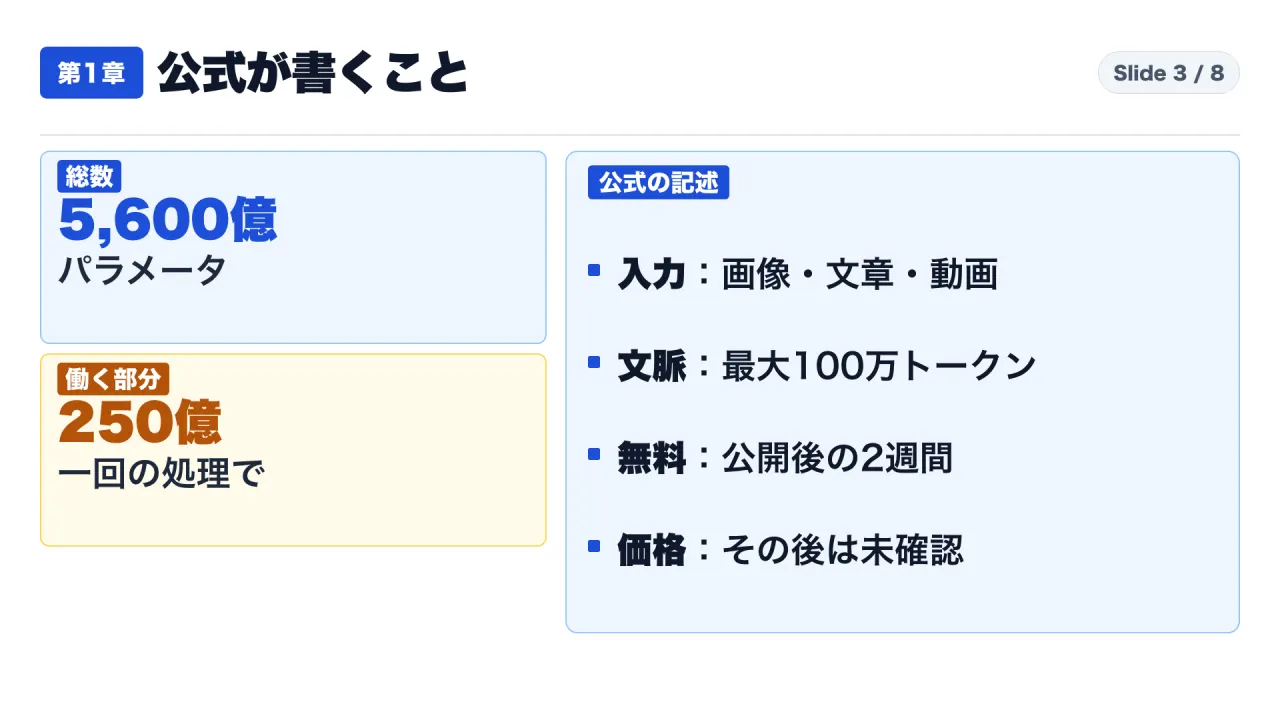
The focal point of Ant Group’s public release was an evaluation scorecard claiming superiority over “Opus 5 (Max)” across three specialized benchmarks. However, a forensic examination of the evaluation criteria reveals significant methodological caveats.
| Evaluation Benchmark | Ling-3.2-Flash (Vendor Claim) | Opus 5 (Reported Baseline) | Claimed Delta | Benchmark Status on Official Maintainer Repositories |
|---|---|---|---|---|
| OmniDocBench v1.5 | 92.21 | 90.56 | +1.65 | Evaluated on legacy v1.5; official benchmark updated to v1.7 on April 30, 2026. Neither model appears on the official v1.7 leaderboard. |
| ZeroBench (Sub-Tasks) | 43.71 | 39.52 | +4.19 | Sub-task subset (334 problems). On the official 100-problem main benchmark, Opus 5 scores 17.2% while current Opus 5.5 scores 35.0%. Ling-3.2-flash has no official maintainer entry. |
| Vision2Web | 85.86 | 80.20 | +5.66 | Vendor self-reported run. The official Season 4 leaderboard includes an Anthropic submission for Opus 5 (80.20), but zero verified submissions exist for Ling-3.2-flash. |
The OmniDocBench v1.5 Outdated Version Trap
OmniDocBench evaluates document layout analysis, optical character recognition (OCR), and hierarchical table extraction. Ant Group’s announcement claims a score of 92.21 against 90.56 for Opus 5, representing an apparent 1.65-point advantage.
However, the official OmniDocBench repository documentation maintained by OpenDataLab indicates that the benchmark underwent a major version upgrade from v1.6 to v1.7 on April 30, 2026. The official README explicitly notes that teams wishing to evaluate on v1.5 must switch to an unmaintained legacy git branch.
Furthermore, the official v1.5 composite score averages three sub-metrics: character error rates, table structural accuracy, and mathematical equation parsing. Ant Group’s disclosure fails to provide the underlying sub-metric breakdown. Most importantly, neither Ling-3.2-flash nor Opus 5 appears on the official OpenDataLab maintainer leaderboard.
3. The Generational Baseline Discrepancy: Why Comparing to Opus 5 Misleads Enterprise Buyers
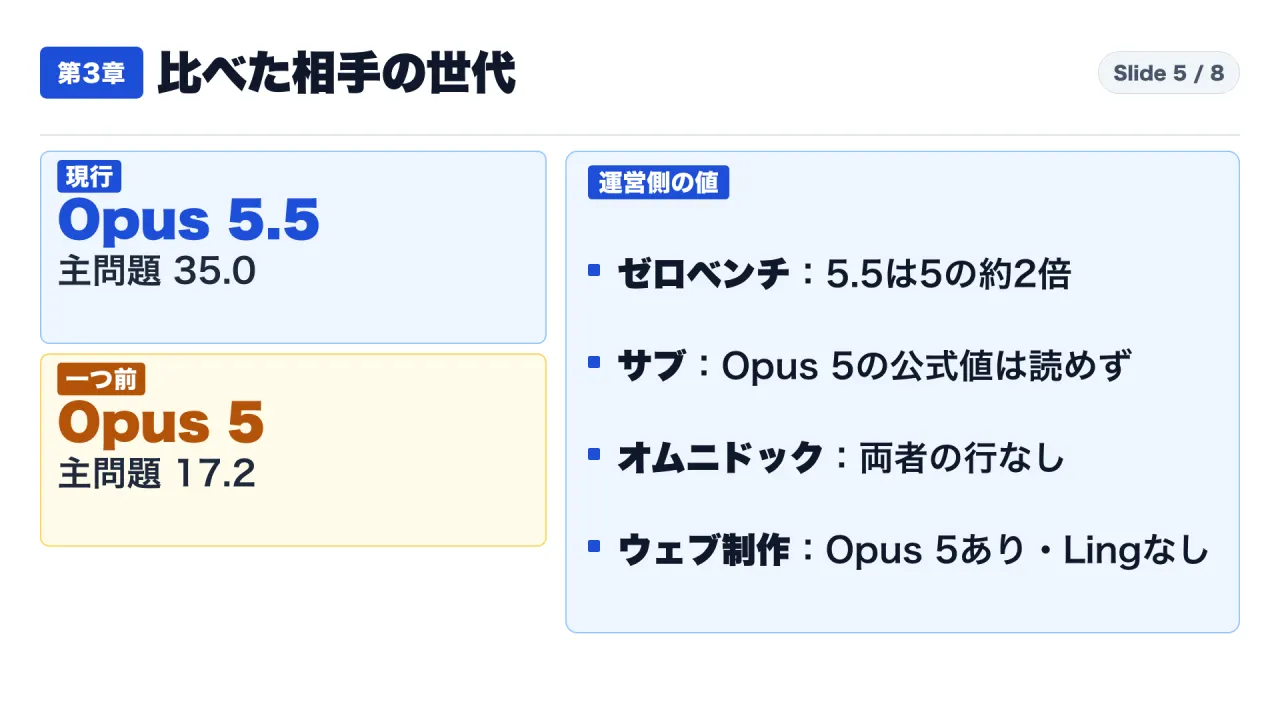
The most consequential distortion in the published scorecard involves the comparative baseline. Ant Group compared Ling-3.2-flash against “Opus 5 (Max)” rather than the active production generation: Claude Opus 5.5.
The Generational Shift from Opus 5 to Opus 5.5
Anthropic’s official developer documentation clearly states that Opus 5 has been superseded by Opus 5.5. Organizations utilizing Opus 5 are formally advised to transition to Opus 5.5 for complex reasoning and agentic workflows. Evaluating a newly launched November 2026 model against an outdated baseline creates a misleading perception of competitive parity.
The Generational Baseline Discrepancy:
┌────────────────────────────────────────────────────────────────────────┐
│ ANTHROPIC FRONTIER MODEL PROGRESSION (ZeroBench Main Problems)         │
│                                                                        │
│ [Claude Opus 5 (Legacy)] ───────────────> [Claude Opus 5.5 (Current)]  │
│ Accuracy: 17.2%                           Accuracy: 35.0%              │
│                                           Generational Gain: +17.8 pts │
│                                           Performance Multiplier: 2.03x│
└──────────────────┬─────────────────────────────────────────────────────┘
                   │
                   │ Ant Group Benchmark Comparison Baseline
                   ▼
┌────────────────────────────────────────────────────────────────────────┐
│ ANT GROUP LING-3.2-FLASH CLAIM                                         │
│ • Compares against legacy Opus 5 on a 334-problem sub-task subset      │
│ • Claims 43.71% vs. 39.52% (+4.19 pts)                                 │
│ • Ignores the 2.03x leap achieved by current generation Opus 5.5       │
└────────────────────────────────────────────────────────────────────────┘
The ZeroBench Empirical Reality: A 2.03x Generational Leap
The distortion becomes evident when examining the official ZeroBench repository. ZeroBench divides its evaluation suite into 100 primary problems and 334 sub-problems, using five-run pass-at-one averages.
On the official ZeroBench leaderboard for the 100 primary problems:
- Claude Opus 5 (Max) achieved an accuracy of 17.2%.
- Claude Opus 5.5 (Max) achieved an accuracy of 35.0%.
The transition from Opus 5 to Opus 5.5 delivered an absolute gain of 17.8 percentage points, representing a 2.03x performance multiplication.
Ant Group’s claimed score of 43.71 against 39.52 operates entirely within the 334 sub-problem subset against the retired model. Benchmarking against a prior generation that scores less than half the reasoning accuracy of its successor obscures the reality of current frontier intelligence tiers.
4. The Benchmark Administrator Leaderboards: What the Raw Repositories Show
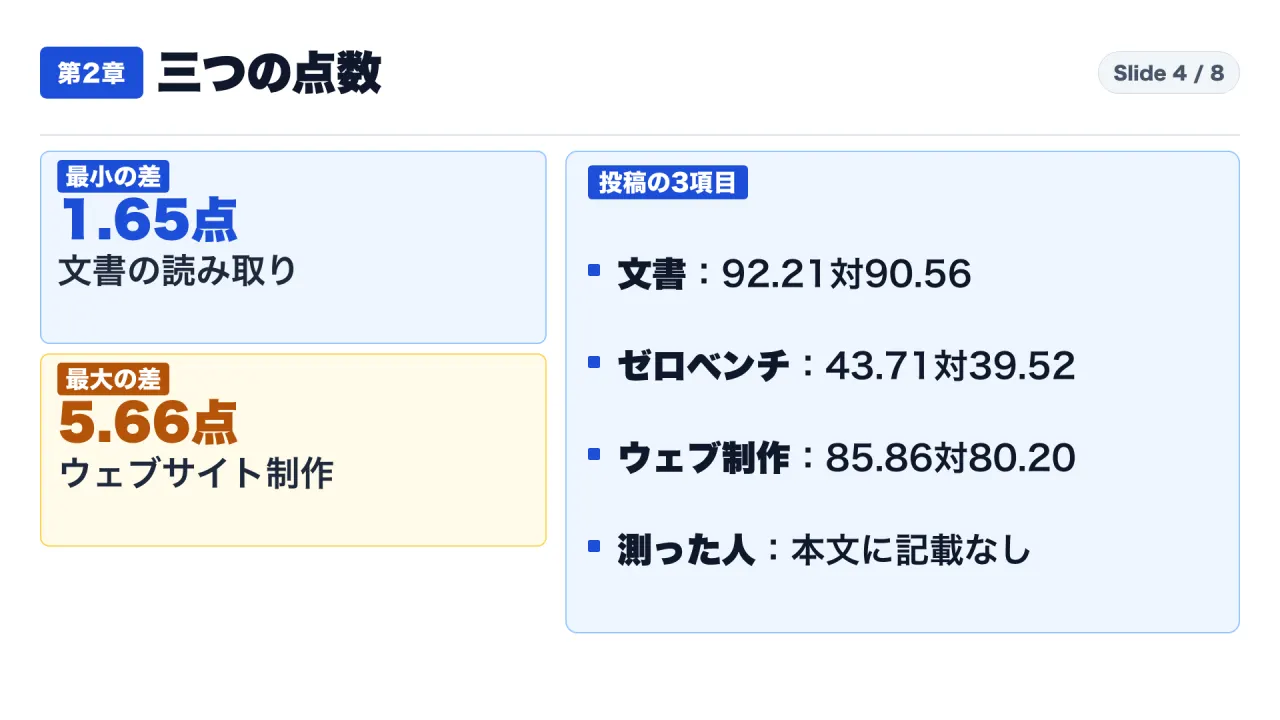
In competitive benchmark evaluation, credibility requires independent replication by benchmark maintainers. A systematic audit of the official repositories associated with the three tests reveals no independent verification for Ling-3.2-flash.
Audit 1: ZeroBench Leaderboard Records
An inspection of the official ZeroBench repository (zerobench.github.io) confirms that maintainer-run evaluations exist for Opus 5 and Opus 5.5. However, the repository contains zero entries, test logs, or pull requests associated with Ling-3.2-flash. The vendor-reported score of 43.71 cannot be cross-referenced against standardized evaluation seeds.
Audit 2: OmniDocBench Leaderboard Records
The official OmniDocBench repository (github.com/opendatalab/OmniDocBench) lists validated scores for state-of-the-art vision-language models under v1.7. Neither Ling-3.2-flash nor Opus 5 appears in the official tracking tables. The published numbers remain entirely unverified vendor claims.
Audit 3: Vision2Web Season 4 Leaderboard Submissions
Vision2Web evaluates model capability in generating functional web frontends from visual interface wireframes across 193 tasks and 918 screenshots. Evaluations are organized into quarterly three-month seasons, with maintainers executing candidate models inside sandboxed browser environments.
An examination of the official Hugging Face dataset repository (zai-org/Vision2Web-Leaderboard) reveals:
- Anthropic maintains an official submission for Opus 5, submitted on October 1, 2026, during Season 4 using Claude Code v2.1.221, registering a validated score of 80.20.
- The repository contains exactly ten validated submissions for Season 4. Ling-3.2-flash has no submission directory, no pull request, and no record in the official maintainer logs.
The claimed score of 85.86 is an internal, self-administered test run executed on proprietary infrastructure without independent validation.
5. Weights Availability, API Interfaces, and Commercial Pricing Constraints
Beyond evaluation claims, enterprise architectural decisions depend on deployment access, licensing terms, and long-term cost structures.
The Weight Repository Reality
Ant Group announced Ling-3.2-flash as an open model. However, an audit of the official Hugging Face organization (inclusionAI) at launch revealed a critical gap:
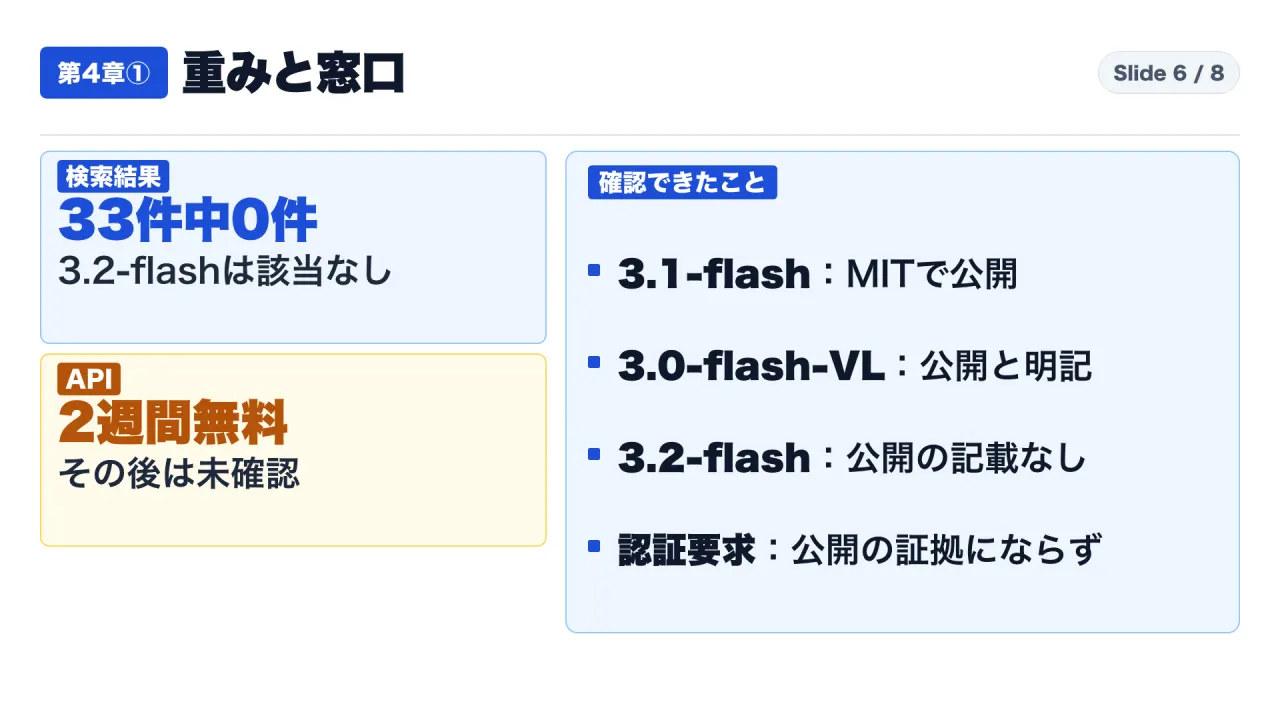
- Ling-3.1-flash: Model cards, tokenizer configurations, and weight partitions are publicly accessible.
- Ling-3.2-flash: No weight repository, safetensors files, or quantization branches were published on Hugging Face during the launch week.
Access to Ling-3.2-flash remains restricted to Ant Group’s web-based chat interface and proprietary developer API endpoints. Rumors circulating on social media claiming a “full open-source weight release” and a “top-10 ranking on Design Arena” lack primary source confirmation.
Model Availability and Access Boundaries:
┌────────────────────────────────────────────────────────────────────────┐
│ HUGGING FACE REPOSITORY AUDIT (org: inclusionAI)                       │
│                                                                        │
│ • Ling-3.1-flash: Open Weights Published (safetensors / GGUF available)│
│ • Ling-3.2-flash: Zero Public Weights at Launch (Closed API Only)      │
└──────────────────────────────────┬─────────────────────────────────────┘
                                   │
                                   ▼
┌────────────────────────────────────────────────────────────────────────┐
│ ENTERPRISE CONSUMPTION CHANNELS                                        │
│                                                                        │
│ 1. Ant Ling Web Console (Interactive Chat Interface)                   │
│ 2. Developer API (Dual-Protocol: OpenAI & Anthropic SDK Formats)       │
│                                                                        │
│ Commercial Pricing Structure:                                          │
│ • Launch Window: 2-Week Free Promotional Access Tier                   │
│ • Post-Promotional Rates: Omitted from Developer Pricing Documentation │
└────────────────────────────────────────────────────────────────────────┘
Commercial Pricing Structure
Ant Group’s official pricing page announced a two-week free promotional window for Ling-3.2-flash across its web and API platforms.
However, the official pricing table fails to list post-promotional token costs for input context or generated outputs. Enterprise architecture teams cannot model production operational expenditures until Ant Group publishes permanent pricing schedules.
6. Separating Observed Facts from Vendor Marketing in Frontier AI Competition
Evaluating new foundation model disclosures requires a disciplined separation between verifiable empirical evidence and vendor marketing narratives.
Grounded Empirical Facts Established from Primary Sources
- Ant Group launched Ling-3.2-flash on November 5, 2026, utilizing a 560-billion parameter MoE topology with 25-billion active parameters and a 1-million-token context window.
- The model accepts text, image, and video inputs natively without external vision encoders.
- Ant Group published benchmark scores claiming victories over Opus 5 on OmniDocBench v1.5, ZeroBench sub-tasks, and Vision2Web.
- Anthropic’s active production flagship is Claude Opus 5.5, which outperforms Opus 5 by 2.03x on the official ZeroBench main leaderboard.
- The official maintainer repositories for ZeroBench, OmniDocBench, and Vision2Web contain zero validated evaluation records for Ling-3.2-flash.
Analytical Interpretations
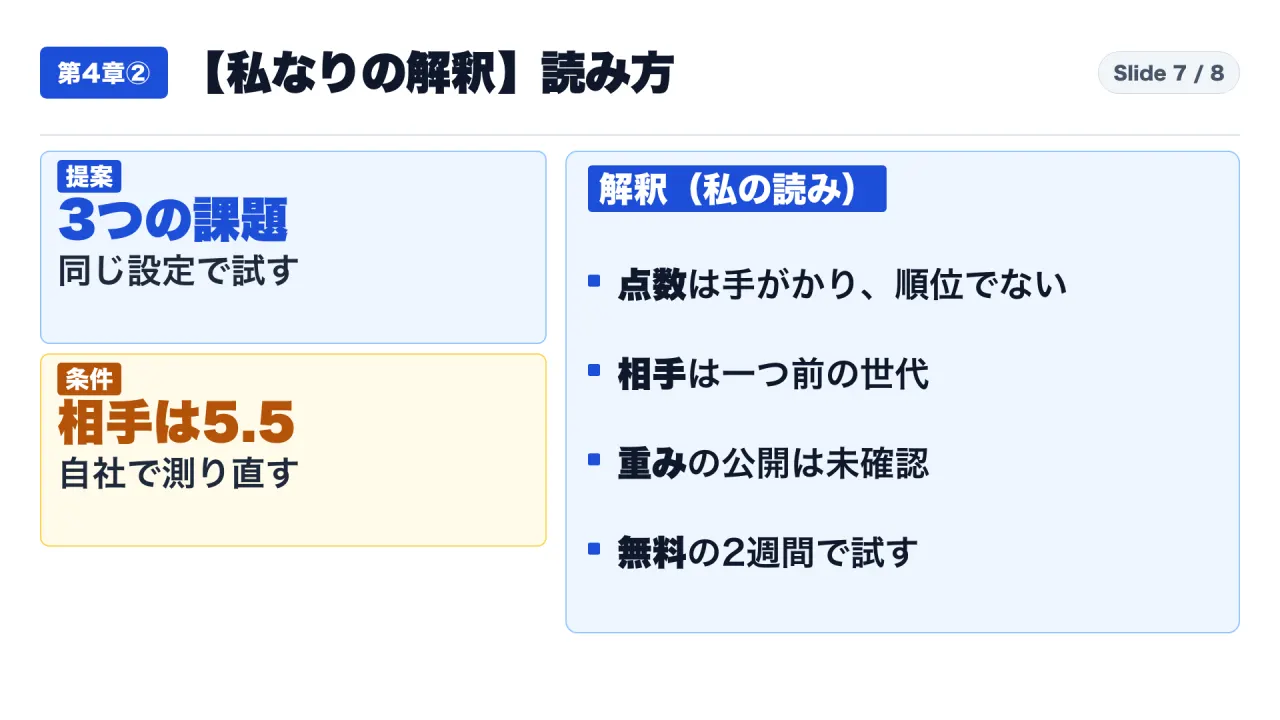
Foundation model vendors face intense market pressure to demonstrate competitive parity with frontier systems. Comparing newly released models against superseded prior-generation baselines while testing on narrow sub-problem subsets is a common marketing tactic. Without independent reproduction logs, self-reported benchmark scorecards cannot serve as the basis for enterprise platform migrations.
7. Actionable Evaluation Playbook: A 3-Step Decision Protocol for Technical Leaders
To prevent misallocating engineering capital based on unverified vendor claims, engineering managers and technical architects should execute a three-step evaluation protocol before integrating newly announced foundation models:
The Three-Step Benchmark Verification Protocol:
┌────────────────────────────────────────────────────────────────────────┐
│ STEP 1: AUDIT EVALUATOR INDEPENDENCE                                   │
│ Verify whether published scores originate from independent benchmark   │
│ maintainer repositories or unverified vendor self-reports.             │
└──────────────────────────────────┬─────────────────────────────────────┘
                                   │
                                   ▼
┌────────────────────────────────────────────────────────────────────────┐
│ STEP 2: NORMALIZE COMPARATIVE BASELINES                                │
│ Verify that the comparative target represents the active production    │
│ generation rather than an obsolete prior-generation model.             │
└──────────────────────────────────┬─────────────────────────────────────┘
                                   │
                                   ▼
┌────────────────────────────────────────────────────────────────────────┐
│ STEP 3: EXECUTE INTERNAL EMPIRICAL PILOTS                              │
│ Construct an evaluation harness of 3 domain-specific internal tasks    │
│ and test during promotional windows using identical prompt harnesses.  │
└────────────────────────────────────────────────────────────────────────┘
Step 1: Audit Evaluator Independence and Version Lineage
Examine the official benchmark maintainer’s repository rather than the vendor’s announcement graphic. Verify:
- Did the benchmark maintainers run the evaluation, or was it conducted internally by the vendor?
- Does the test use the active benchmark release (e.g., OmniDocBench v1.7) or an archived legacy branch (v1.5)?
- Are full prompt templates, system instructions, temperature parameters, and agent tools publicly documented?
Step 2: Normalize Comparative Baselines to Production Standards
Verify that comparative benchmarks evaluate models against active production systems. If a vendor claims a victory over Claude Opus 5, cross-reference against Opus 5.5. If a vendor benchmarks against GPT-4o, check performance against current o1 reasoning models. Never approve architectural migrations based on comparisons against retired baselines.
Step 3: Execute Domain-Specific Internal Pilots During Promotional Windows
Take advantage of promotional zero-cost evaluation windows to test models directly on proprietary enterprise tasks. Select three representative company workflows—such as parsing multi-page scanned PDF contracts, extracting entities from complex visual tables, or generating frontend components from internal Figma designs. Run identical evaluation sets across candidate models using fixed seeds and prompt scaffolding to establish empirical ground truth for your specific operational domain.
Primary Sources & Verified References
- Ant Ling Developer Documentation: Official Changelog and System Release Notes (https://developer.ant-ling.com/en/docs/getting-started/changelog)
- Ant Ling Model Architecture Guide: Ling Multimodal Foundation Model Overview (https://developer.ant-ling.com/en/docs/models/ling)
- Ant Ling Official Pricing Sheet: Commercial API Token Pricing and Promotional Windows (https://developer.ant-ling.com/en/docs/models/price/)
- Ant Ling Official Announcement on X: Public Benchmark Disclosure for Ling-3.2-flash (https://x.com/AntLingAGI/status/2118428246664761379)
- Anthropic Claude Model Architecture Overview: Active Production Model Specifications and Migration Guidance (https://platform.claude.com/docs/en/about-claude/models/overview)
- ZeroBench Official Evaluation Repository: Benchmark Methodology, Problem Sets, and Official Leaderboards (https://zerobench.github.io/index.html)
- OmniDocBench Official Repository (OpenDataLab): Document Parsing Benchmark Guidelines and Version Changelog (https://github.com/opendatalab/OmniDocBench/blob/main/README.md)
- Vision2Web Benchmark Leaderboard: Season 4 Submissions, Maintainer Scaffolding, and Task Datasets (https://vision2web-bench.github.io/index.html)
- Vision2Web Hugging Face Dataset & Submission Tree: Official Maintainer Verified Submission Logs (https://huggingface.co/datasets/zai-org/Vision2Web-Leaderboard/raw/main/README.md)
- Hugging Face Organization inclusionAI: Model Repository Catalog for Ling Family Weights (https://huggingface.co/inclusionAI)
This article analyzes primary technical and financial disclosures for informational purposes only and does not constitute investment advice.