Why Gemini Omni 1.2 Flash Costs $1.04 for a 15-Second Video ── Inside the 31.4% Price Cut, Token Billing Math, and Unresolved Enterprise Discrepancies
A cross-examination of 12 primary Google disclosures validates the $12.00 per million token economics and 720p rendering costs while exposing undocumented benchmarks, API rate caps, and conflicting enterprise availability claims.
Japanese Edition: https://consuloji.substack.com/p/googleaiomni-12-flash15104
Executive Summary & Key Technical Takeaways
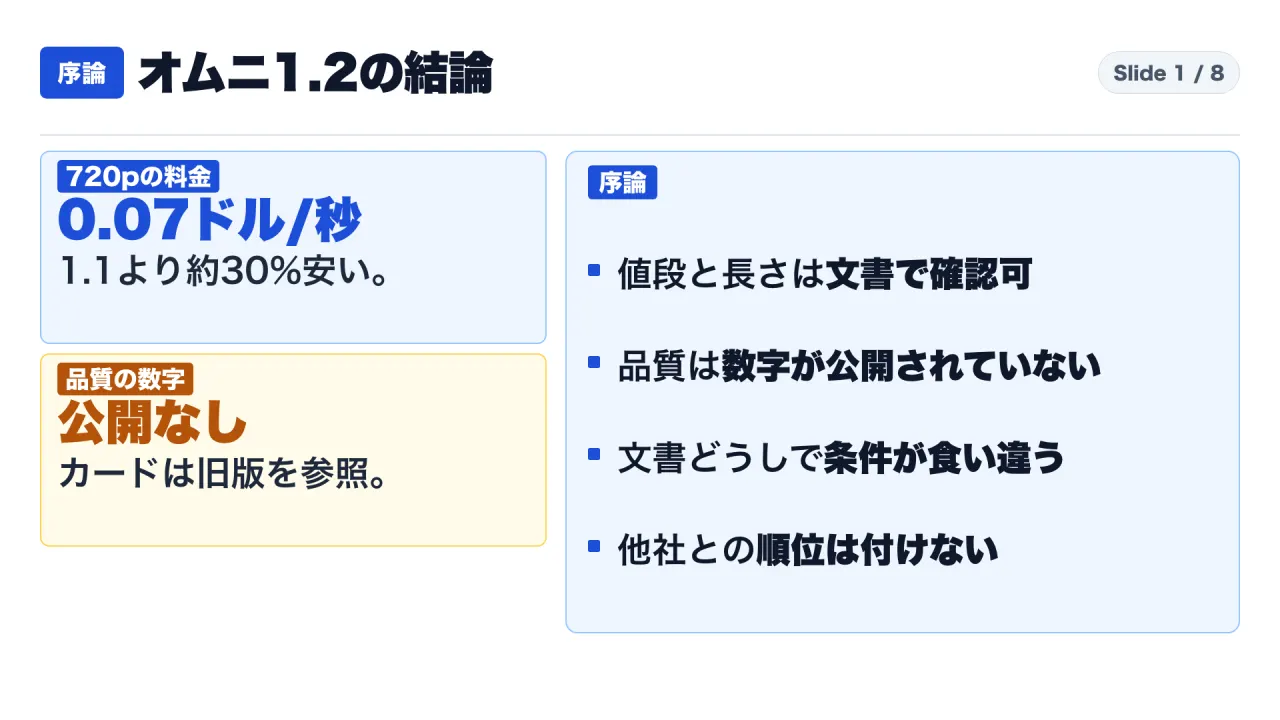
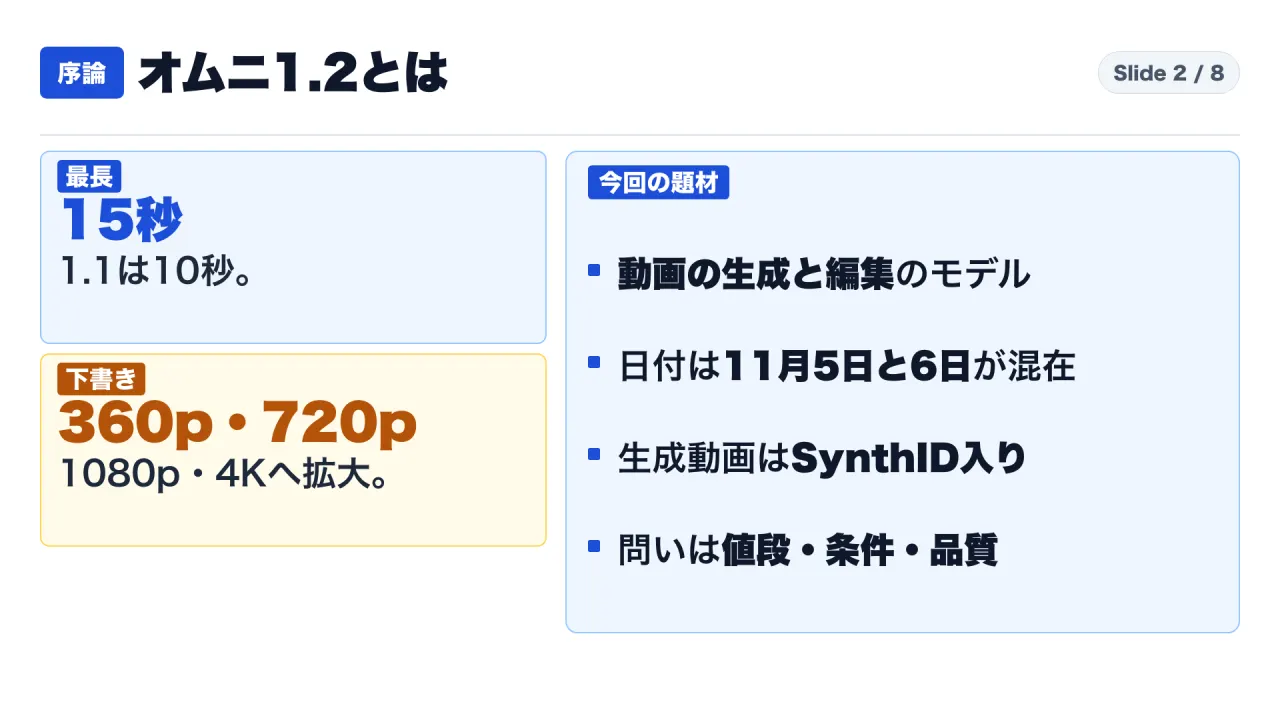
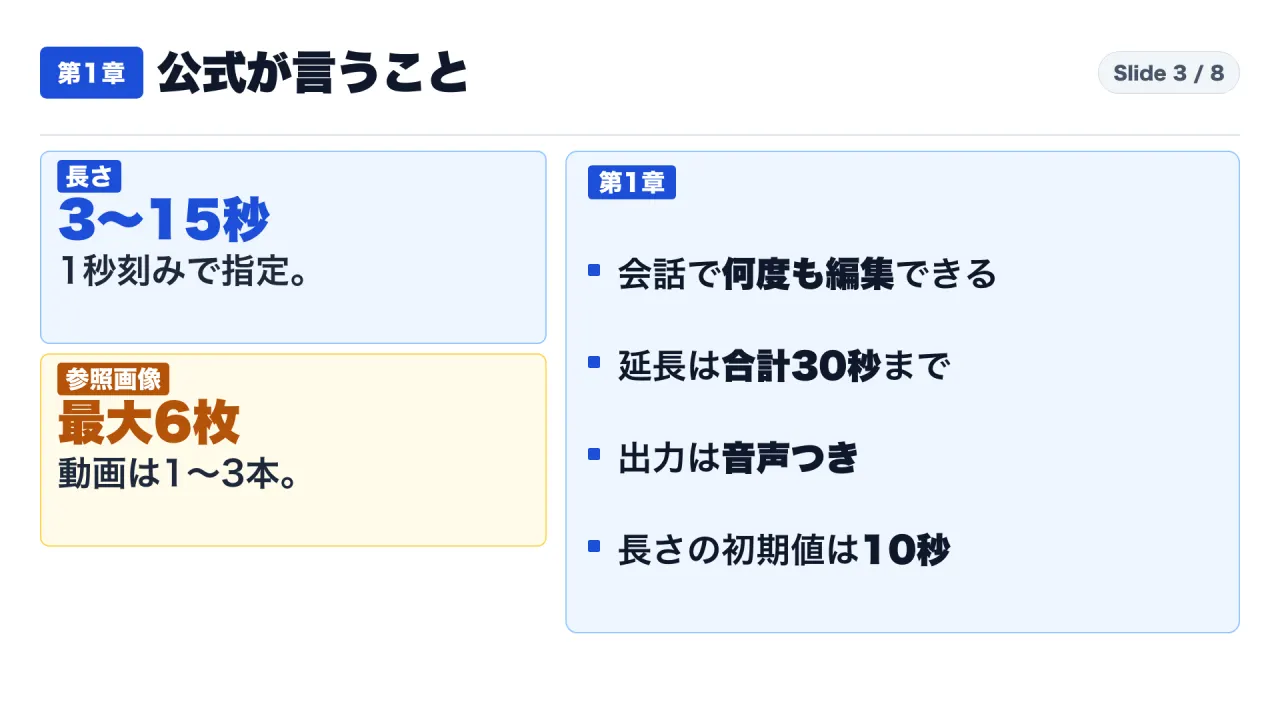
- Core Analytical Thesis: In November 2026, Google DeepMind and Google Cloud announced the General Availability (GA) of Gemini Omni 1.2 Flash, a multimodal video and audio generation model. A forensic audit across 12 primary technical disclosures confirms that rendering a standard 720p, 15-second video clip costs approximately $1.04 (exactly $1.04256) under the newly reduced output rate of $12.00 per 1 million tokens—a 31.43% price reduction (marketed as “30% cheaper”) from the prior Omni 1.1 rate of $17.50. Maximum single-clip generation duration expanded from 10 to 15 seconds (parameterized from 3 to 15 seconds in 1-second increments, defaulting to 10 seconds if omitted), with sequential extension capabilities supporting up to 30 seconds.
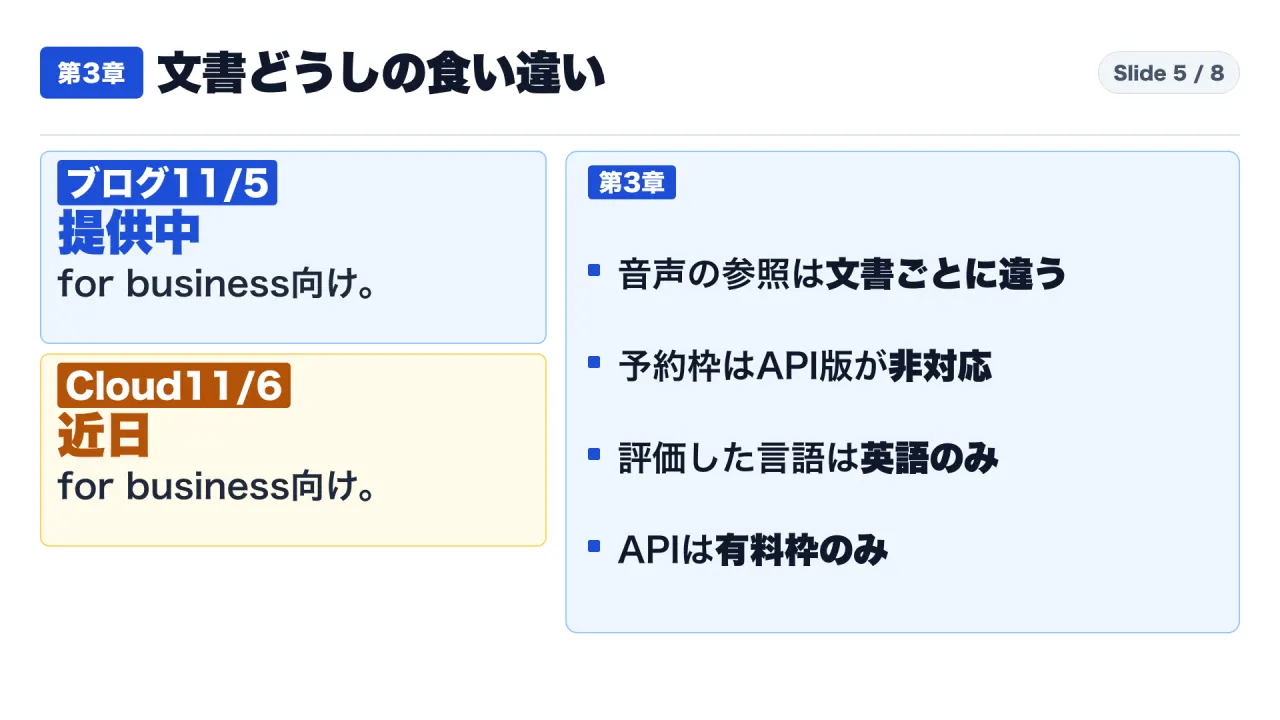
- The Token-Billing Architecture: Video billing operates on granular token metering rather than flat per-second pricing. While 360p draft generation costs $0.35 for 15 seconds (1,931 tokens/second), enterprise workflows face compounding costs during multi-turn conversational editing: re-ingesting a 15-second video context incurs up to $0.13 per turn in input token fees ($1.50 per 1M input tokens). Furthermore, developer tier endpoints (Tier 1) enforce severe operational ceilings: 8 requests per minute (8 RPM) and 40 requests per day (40 RPD) with zero free-tier allocation.
- Three Structural Discrepancies Across Official Channels: Cross-verifying documentation across the Google Official Blog, Google Cloud Blog, and Gemini API developer guides reveals conflicting operational parameters: (1) launch timing and Gemini for Business status (GA vs. “coming soon”), (2) audio reference/cue ingestion (supported vs. allowlist-only vs. unsupported in API guides), and (3) Provisioned Throughput availability.
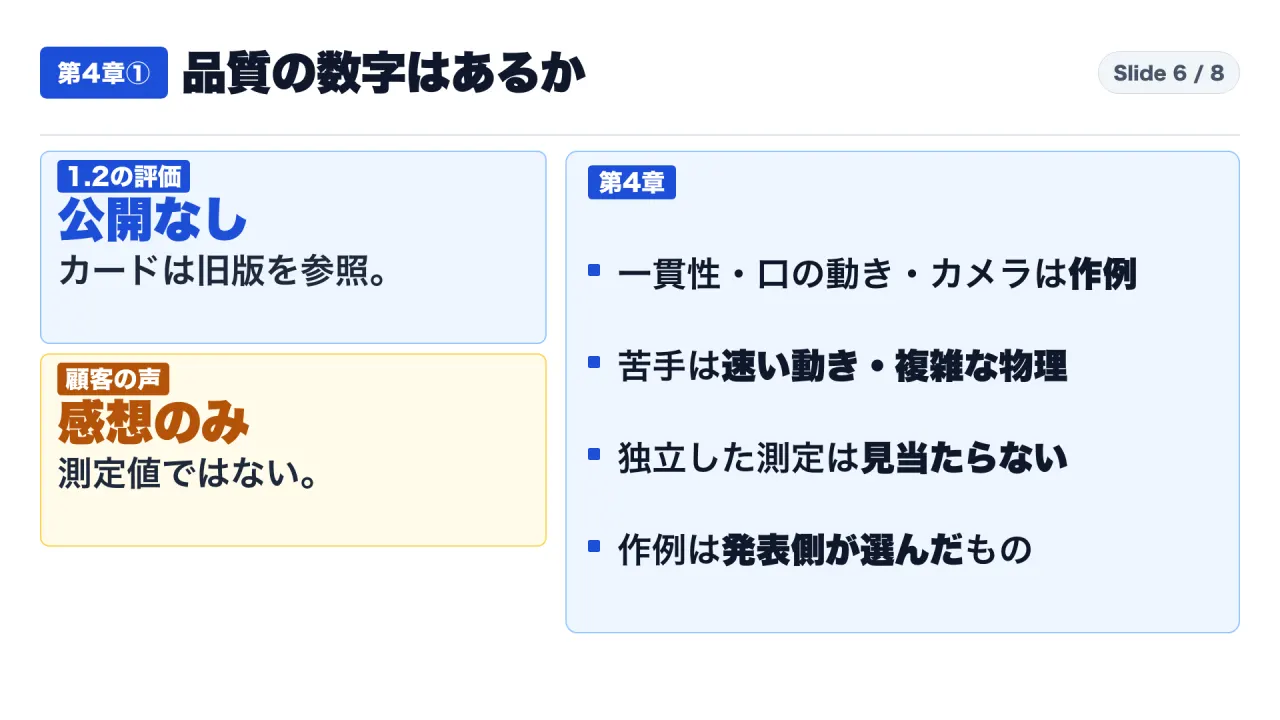
- The Empirical Benchmark Vacuum: DeepMind’s official Model Card contains zero quantitative benchmark scores or comparative error metrics specific to version 1.2, explicitly delegating evaluation sections to legacy Omni 1.1 documentation. Production adoption requires treating vendor demonstration reels with caution, especially given documented failure modes in fast sports action, abrupt narrative shifts, and complex physics.
Background & Primary Sources Verified
This technical investigation cross-references 12 primary developer documents, pricing tables, model cards, and official announcements published between November 5 and November 6, 2026:
- Google Official Blog (November 5, 2026): “Introducing Gemini Omni 1.2 Flash”.
- Google Cloud Blog (November 6, 2026): “Gemini Omni 1.2 Flash is now generally available”.
- Google AI for Developers API Pricing: Official token rate schedules.
- Google AI for Developers Omni Guide: Technical parameter constraints and SDK implementation guides.
- Google AI for Developers Changelog: Deprecation schedules and version lifecycle logs.
- Google AI for Developers Rate Limits: Production quota tier schedules.
- Google Cloud Model Documentation: Vertex AI enterprise deployment page.
- Google DeepMind Official Model Card: System architecture, safety boundaries, and evaluation disclosures.
- Google Cloud Vertex AI Pricing: Enterprise compute and storage tables.
- Google Official Announcement Telemetry: Social release verification.
- Google AI Studio Operations Telemetry: Developer environment rollout announcement.
- OpenAI Platform Documentation (Comparative Baseline): Official deprecation notice confirming Sora 2 model and video API shutdown on September 24, 2026.
1. The Token Economics of Video: Deconstructing the $1.04 15-Second Clip
Unlike legacy rendering infrastructure billed per second of GPU time, Gemini Omni 1.2 Flash meters video synthesis through tokenized representation blocks.
Verifying the 31.4% Rate Reduction
On the Gemini API pricing schedule, video output token rates were adjusted as follows:
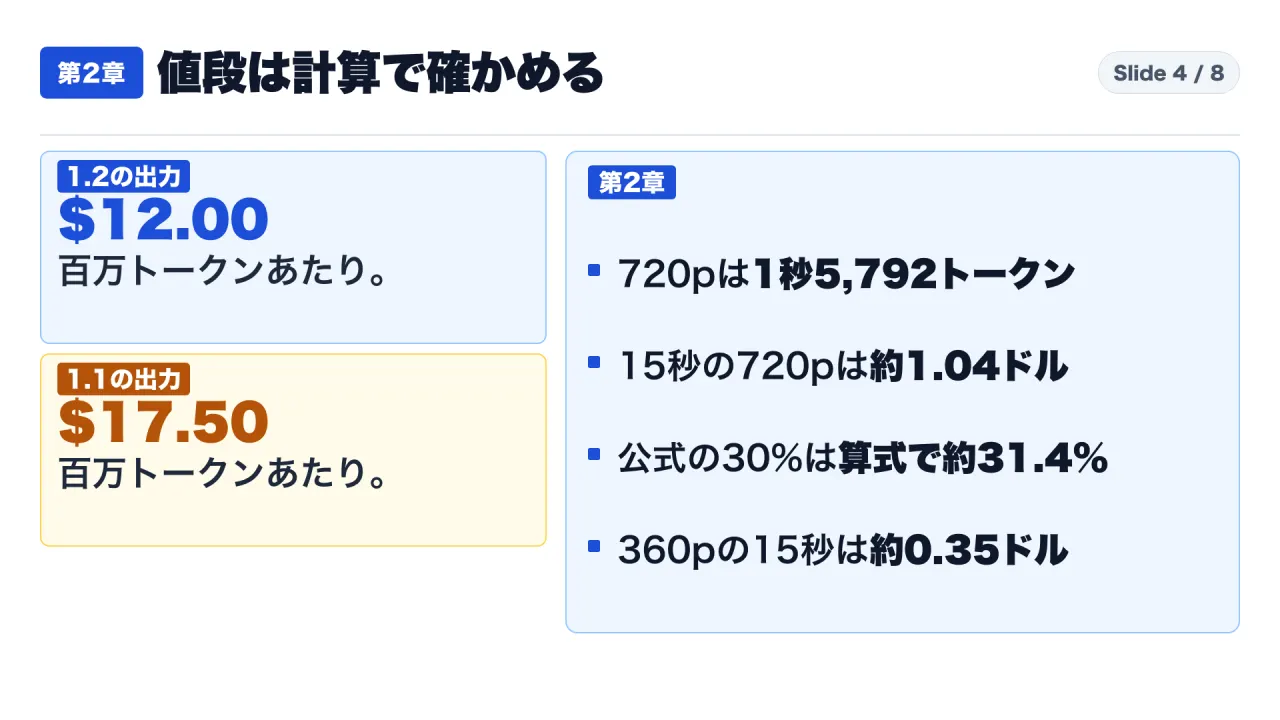
- Prior Generation (Gemini Omni 1.1): $17.50 per 1 million output tokens.
- Current Generation (Gemini Omni 1.2 Flash): $12.00 per 1 million output tokens.
- Exact Rate Reduction:
(17.50 − 12.00) ÷ 17.50 = 5.50 ÷ 17.50 ≈ 31.43%.
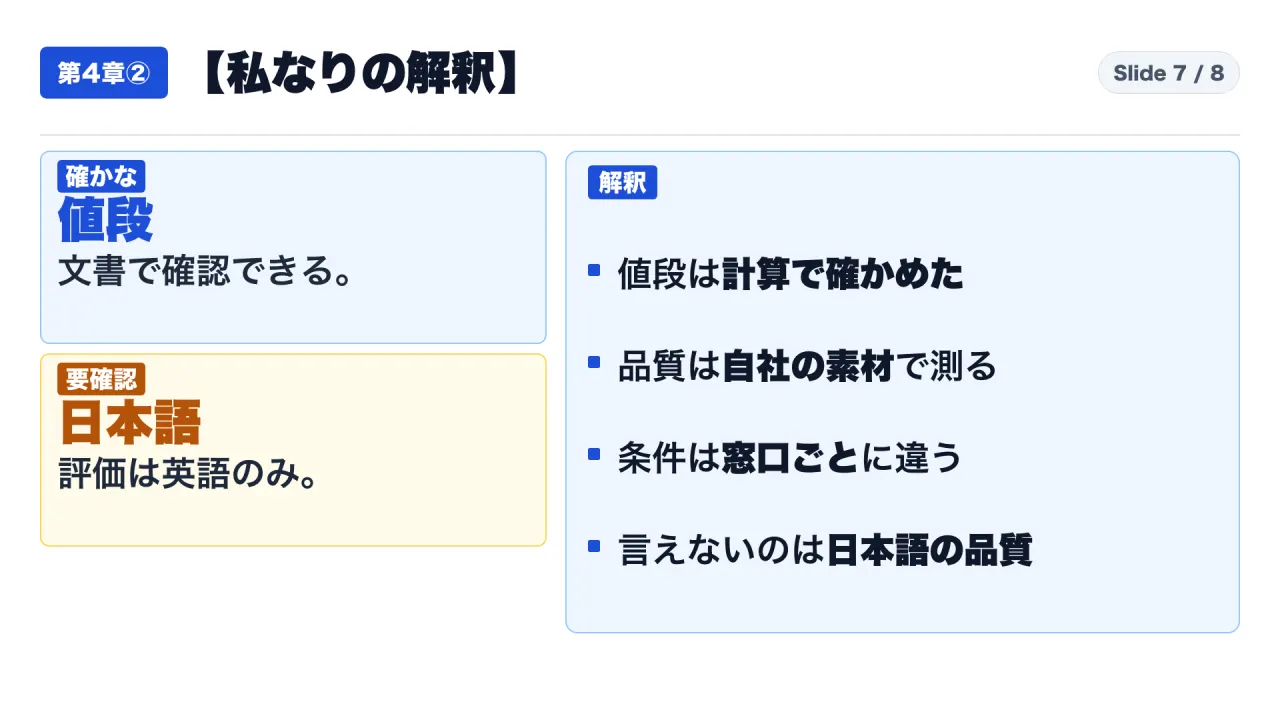
Google’s marketing materials describe this reduction as “approximately 30% cheaper,” rounding down the mathematical discount. For a standard 720p video, generation consumes 5,792 tokens per second. Billed across 15 seconds, total volume is 86,880 tokens, yielding an exact cost of $1.04256 ($1.04), down from $1.52 on version 1.1.
Resolution-Tier Cost Breakdown
Token generation volume scales directly with target spatial resolution. Pricing documentation establishes exact token allocation rates across four resolution tiers:
| Resolution Tier | Output Tokens per Second | Cost per Second | 10-Second Generation Cost | 15-Second Generation Cost | Recommended Production Role |
|---|---|---|---|---|---|
| 360p Draft | 1,931 tokens/sec | $0.02317 / sec | $0.2317 (~$0.23) | $0.3476 (~$0.35) | Rapid prototyping, layout ideation, prompt convergence |
| 720p Standard | 5,792 tokens/sec | $0.06950 / sec | $0.6950 (~$0.70) | $1.0426 (~$1.04) | Social distribution, mobile feed ads, web-native players |
| 1080p Upscaled | 8,688 tokens/sec | $0.10426 / sec | $1.0426 (~$1.04) | $1.5638 (~$1.56) | Desktop display, commercial marketing, brand showcases |
| 4K Enterprise | 17,376 tokens/sec | $0.20851 / sec | $2.0851 (~$2.09) | $3.1277 (~$3.13) | Broadcast media, digital out-of-home (DOOH), archive master |
Google’s engineering guidance explicitly recommends a staged development funnel: developers should synthesize initial storyboards at 360p ($0.35 per 15s), iterate camera trajectories and object placements via conversational editing, and upscale solely approved candidates to 1080p ($1.56) or 4K ($3.13).
2. Production Friction: Multi-Turn Input Fees, Strict Rate Limits, and Dec 3 Deprecation
While base generation pricing is deterministic, real-world production costs depend heavily on conversational editing parameters and deployment quotas.
The Hidden Multi-Turn Input Cost
Omni 1.2 Flash supports conversational editing, enabling prompts such as “change the background lighting” or “extend the scene by 5 seconds.” However, executing these edits requires passing the previously rendered video back into the model as an Input Context Block.
Under Vertex AI and Gemini API pricing rules:
- Video input is metered at up to 5,792 tokens per second of uploaded video.
- Input pricing is billed at $1.50 per 1 million input tokens.
- For a 15-second video (86,880 input tokens), each conversational editing turn incurs an input charge of up to $0.13032 (~$0.13) before accounting for the newly generated output tokens.
If an engineering team executes three iterative revision cycles on a 720p clip, input fees add approximately $0.39, raising cumulative spend from $1.04 to $1.43 for the final revision asset.
Severe Rate Ceilings and Deprecation Timelines
- Zero Free Tier & Developer Quotas: Gemini Omni 1.2 Flash is restricted entirely to paid tiers. Developer accounts on the entry-level paid tier (Tier 1) face strict operational ceilings: 8 requests per minute (8 RPM) and 40 requests per day (40 RPD). Teams conducting iterative testing can exhaust daily quotas within an hour.
- Mandatory December 3 Migration: The Gemini API changelog establishes that on December 3, 2026, all endpoints routing to Omni 1.1 will be automatically redirected to Omni 1.2 Flash, with billing updated to 1.2 rates. Teams with hardcoded model identifiers must audit their prompt harnesses prior to this transition.
- The Competitive Void (Sora 2 Deprecation): Market comparisons positioning Omni 1.2 Flash against OpenAI’s Sora 2 are technically invalid. OpenAI documentation confirms that the Sora 2 model and its associated video generation API were officially deprecated and terminated on September 24, 2026.
3. The Cross-Document Collision: Three Direct Discrepancies Across Official Disclosures
Cross-verifying the launch documentation reveals noticeable technical discrepancies across Google’s public channels:
- Launch Dates and “Gemini for Business” Status:
- The Google Official Blog (dated November 5) states that Omni 1.2 Flash is Generally Available (GA) across both the Gemini API and Gemini for Business.
- The Google Cloud Blog (dated November 6) states that Gemini for Business availability is “coming soon”.
- Operational Reality: Enterprise Workspace administrators cannot assume the capability is live across corporate accounts.
- Audio Reference and Cue Ingestion:
- The Google Official Blog highlights audio cues as an active feature for pacing and mood control.
- The Google Cloud Blog clarifies that audio reference input is gated under an allowlist-only program.
- The Gemini API Developer Guide explicitly notes that audio input is “not supported in the current version.”
- Operational Reality: Public API developers cannot supply audio reference files to guide visual synthesis.
- Provisioned Throughput Support:
- Google Consumer and Cloud Blogs highlight Provisioned Throughput support for enterprise scaling.
- The Gemini API Developer Guide lists Provisioned Throughput as unsupported on standard endpoints.
- Operational Reality: Dedicated throughput reservation is exclusive to custom Vertex AI enterprise contracts.
These discrepancies stem from marketing materials conflating high-tier Vertex AI enterprise features with standard developer API capabilities. Technical architects must align their implementation plans with the documentation of the specific endpoint they license.
4. The Empirical Benchmark Vacuum: Missing Model Card Metrics and Operational Limitations
A central finding in our audit is the complete absence of independent, reproducible benchmark metrics for version 1.2.
The Missing Numbers in the Model Card
DeepMind’s official Gemini Omni 1.2 Flash Model Card omits standard quantitative evaluation disclosures. In the sections governing Evaluation Methodology, Quantitative Benchmarks, and Known Limitations, the document contains a brief administrative statement delegating all evaluations to legacy Omni 1.1 documentation.
The model card publishes zero quantitative scores demonstrating improvement in temporal coherence, physics simulation, or prompt compliance. Promotional quotes from partners (such as InVideo noting the tool is “one of the best tested”) reflect qualitative customer sentiment rather than empirical benchmarks.
Three Acknowledged Technical Failure Modes
Google’s technical blog explicitly identifies three visual domains where Omni 1.2 Flash continues to struggle:
- High-Velocity Sports Movements: Rapid athletic actions exhibit visual distortion, motion blur, and structural deformation.
- Abrupt Narrative Script Changes: Sudden scene transitions or sharp perspective pivots cause visual tearing and character drift.
- Complex Physical Interactions: Multi-object collisions and fluid mechanics frequently violate real-world physical laws.
Language and Regional Guardrails
- English Language Exclusivity: The API guide explicitly specifies: “English is fully supported. Other languages have not been evaluated; they may execute, but output quality will vary unpredictably.” Non-English prompts operate without quality guarantees.
- EEA and UK Operational Bans: Video editing and extension capabilities are completely disabled across the European Economic Area (EEA), Switzerland, and the United Kingdom.
- Voice Modification Restrictions: While the neural architecture can theoretically modify speaker identity, DeepMind has hard-coded a complete restriction on altering human vocal likenesses to prevent deepfake generation.
- SynthID Watermarking: All synthesized video frames embed an invisible, cryptographically verifiable SynthID watermark, enabling automated detection via Google verification tools.
5. The 360p Draft Pipeline: A 3-Step Production Protocol for Enterprise Teams
To navigate these pricing rules and technical boundaries without burning compute budgets, engineering teams should implement a disciplined three-stage production workflow.
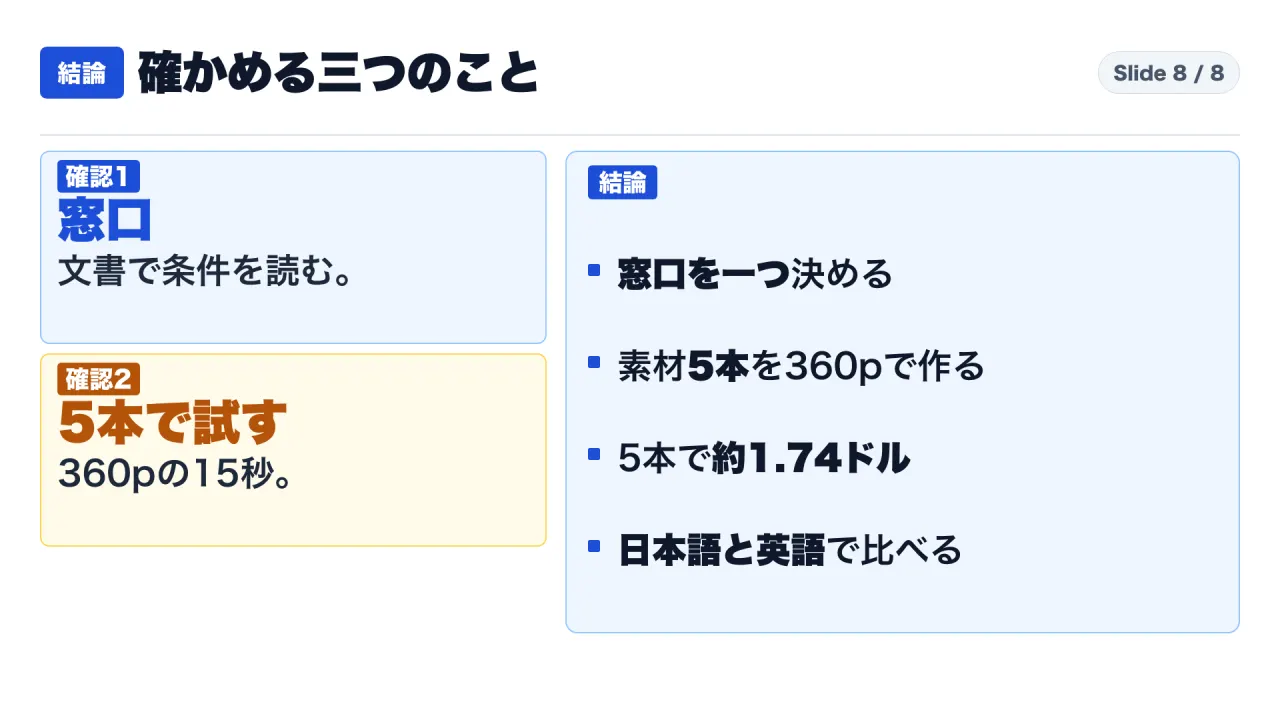
Phase 1: Rapid 360p Candidate Screening
Never initiate exploration at 720p ($1.04) or 4K ($3.13). Generate five alternative interpretations of a concept at 360p, 15 seconds (parameterized explicitly as duration: 15, otherwise the system defaults to 10 seconds). Generating five 360p prototypes consumes approximately $1.74 in total API fees (5 × $0.3476), allowing creative teams to discard physics failures cheaply.
Phase 2: Ingestion-Controlled Revisions
When refining approved candidates, limit multi-turn conversational edits to a maximum of two cycles. Because each iteration re-ingests 86,880 input tokens ($0.13), excessive conversational turns rapidly erode the economic advantage of the base rate reduction. If a clip requires more than two revisions, refactor the root prompt text and regenerate from scratch.
Phase 3: Selective High-Definition Upscaling
Once an asset passes creative and legal review, submit the approved 360p seed for single-pass upscaling to 1080p ($1.56) or 4K ($3.13). Ensure all downstream deployment platforms retain the embedded SynthID watermark to maintain compliance with emerging AI disclosure regulations.
6. Actionable Takeaways: Three Implementation Mandates for Technical Leaders
To deploy Gemini Omni 1.2 Flash effectively, engineering leaders should enforce three operational policies:
- Pin Specifications to Interface-Specific Documentation:
- Disregard broad marketing overviews when architecting systems. If deploying via the Gemini API, design against the developer guides (8 RPM / 40 RPD limits, zero audio references). If deploying on Vertex AI, negotiate Provisioned Throughput and private safety terms independently.
- Implement Dual-Prompt Testing for Non-English Deployments:
- Because English is the only evaluated language, non-English teams should build an automated pre-translation layer. Send both the native language prompt and an LLM-translated English prompt through identical 360p test harnesses, logging variance in prompt alignment and visual artifacts.
- Prepare for the December 3 Omni 1.1 Cutover:
- Audit all production applications for references to
gemini-omni-1.1. Validate system prompts against 1.2 Flash behavior ahead of the automatic routing cutover on December 3, 2026, to prevent unexpected latency spikes or multi-turn billing surprises.
- Audit all production applications for references to
Primary Sources & Reference Links
- Google Official Announcement: Introducing Gemini Omni 1.2 Flash (November 5, 2026)
- Google Cloud Official Announcement: Gemini Omni 1.2 Flash is now Generally Available (November 6, 2026)
- Google AI for Developers: Gemini API Token Pricing Documentation
- Google AI for Developers: Gemini API Omni Developer Implementation Guide
- Google AI for Developers: Gemini API Release Changelog
- Google AI for Developers: Gemini API Quota and Rate Limit Documentation
- Google Cloud Platform: Vertex AI Generative AI Enterprise Pricing Tables
- Google DeepMind: Gemini Omni 1.2 Flash Official Model Card
- OpenAI Platform Documentation: Sora 2 Deprecation and Termination Record (September 24, 2026)
This article analyzes primary technical and financial disclosures for informational purposes only and does not constitute investment advice.