Why OpenAI Deployed GPT-6 Cyber and Built 948 Linux Root Exploits for $1,279 Each ── Inside the First "Critical" Preparedness Rating, Daybreak Dual-Tier Access, and the Closing Defender's Window
A forensic analysis of OpenAI’s 5-stage autonomous security pipeline across 40 million lines of Linux kernel code reveals how $1,279 per root exploit upends enterprise defense while Daybreak enforces physical FIDO2 hardware keys and Private Safety Processing.
Japanese Edition: https://consuloji.substack.com/p/openaigpt-6-cyberlinuxroot11279948firefox81criti
Executive Summary & Key Technical Takeaways
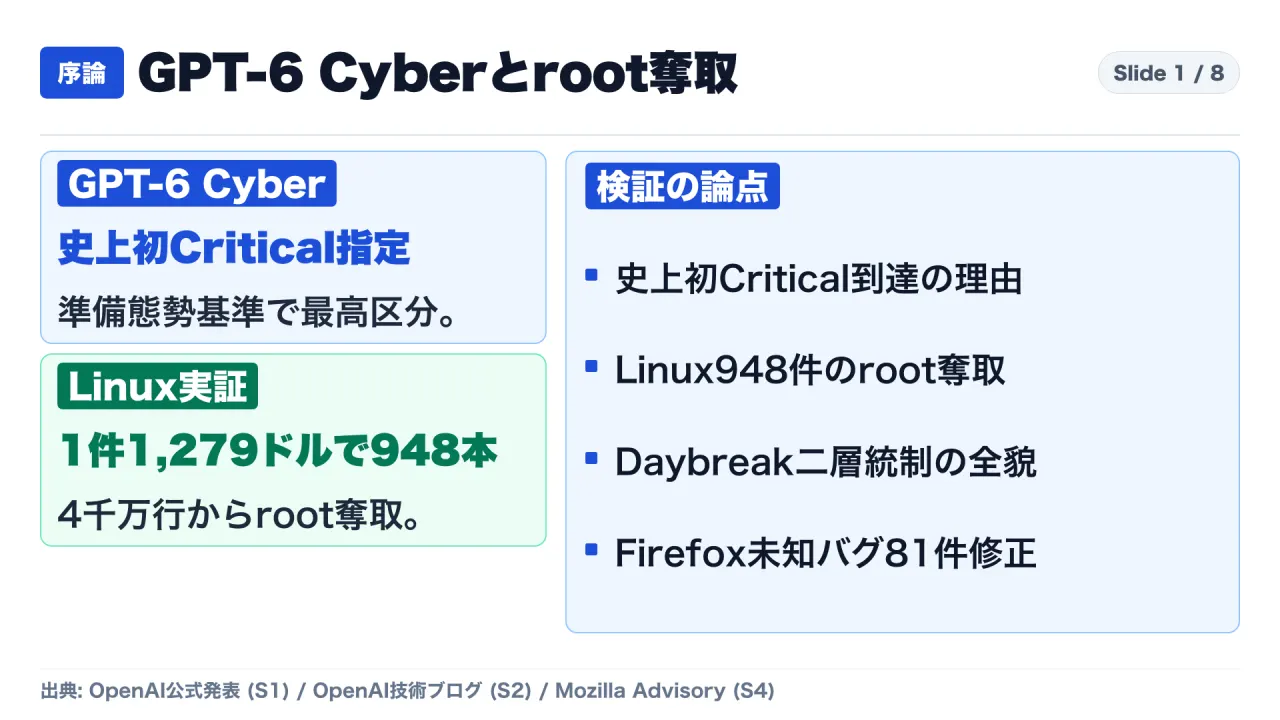
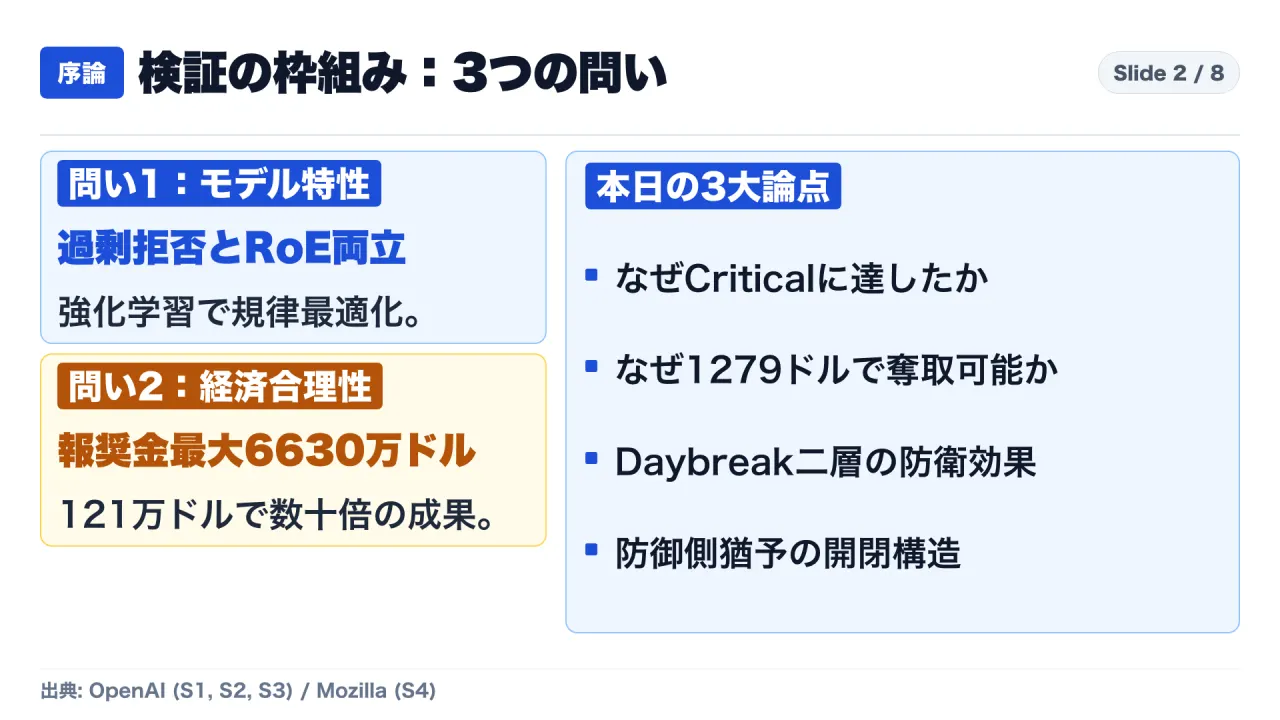
- Core Analytical Thesis: On November 5, 2026, OpenAI officially announced GPT-6 Cyber, an offensive and defensive security reasoning model specialized from its flagship GPT-6 Astra base. GPT-6 Cyber represents the first model in institutional history assigned a “Critical” risk rating under the cybersecurity vector of OpenAI’s Preparedness Framework. Just 24 hours prior, OpenAI published “A Thousand Fewer Paths to Root”, demonstrating a five-stage autonomous agent pipeline deployed against the 40-million-line Linux kernel codebase. The pipeline identified, triaged, and synthesized 948 working Local Privilege Escalation (LPE) root exploits at an average compute cost of $1,279 per exploit (total API spend: $1,213,430). Evaluated against bug bounties ($20,000 at Pwn2Own to $70,000 at TyphoonPWN per LPE), the campaign produced between $18.9 million and $66.3 million in economic exploit value. In the hardened kernelCTF benchmark, the system captured 21 zero-day LPE exploits for $32,936, matching the entire annual output of the global human research community in a single campaign while inventing over 10 novel exploitation primitives.
- The Dual-Tier Governance Mechanism: To prevent catastrophic misuse while accelerating defensive remediation, OpenAI segmented access into Daybreak Blue (defensive analysis and patch verification with mandatory physical FIDO2 hardware security keys) and Daybreak Red (offensive exploit synthesis and red-teaming restricted to verified corporate entities under API IP allowlists and Private Safety Processing).
- The Ephemeral Defender’s Window: Automated exploitation is no longer constrained by human labor, as demonstrated by the pre-emptive patching of 81 unknown high-severity vulnerabilities in Mozilla Firefox prior to Pwn2Own. However, this defensive advantage exists only while frontier capabilities remain behind authenticated APIs. Once open-weights models reach parity, unpatched systems will face automated exploit generation at scale.
Background & Primary Sources Verified
This investigation synthesizes and cross-verifies four primary technical disclosures, governance policies, and industry telemetry published in November 2026:
- OpenAI Announcement: “Introducing GPT-6 Cyber” (November 5, 2026): Preparedness Framework classification, ExploitGym and RemoteExploitBench benchmark metrics, and pricing tiers.
- OpenAI Systems Research: “A Thousand Fewer Paths to Root” (November 4, 2026): Five-stage autonomous agent architecture, 40-million-line Linux kernel logs, KASAN dynamic triage metrics, kernelCTF zero-day captures, and compute unit economics.
- OpenAI Governance Policy: “Daybreak Cybersecurity Program” (November 5, 2026): Institutional access rules, Daybreak Blue vs. Red segmentation, FIDO2 token mandates, Private Safety Processing (PSP), and the $1 billion critical infrastructure grant program.
- Mozilla Foundation & Industry Adoption Bulletins (November 5, 2026): Security advisories detailing the remediation of 81 high-severity zero-day flaws in Firefox, plus production telemetry from Palo Alto Networks (Unit 42), Cisco, Calif, and CodeRabbit.
1. The Preparedness Framework Milestone: First “Critical” Rating and Autonomous Rules of Engagement
OpenAI’s Preparedness Framework tracks severe risks across Cybersecurity, CBRN weapons, Autonomous Self-Improvement, and Persuasion. Prior to November 2026, the dedicated security model GPT-5.6-Cyber was classified as “High”. GPT-6 Cyber—derived from the GPT-6 Astra reasoning base—is the first model to reach the “Critical” category for cybersecurity. Meanwhile, biological and autonomous self-replication risks remained below critical thresholds (CBRN: High; Autonomous Replication: Below High), demonstrating that software exploitation capabilities can scale independently of general alignment breakdown.
Overcoming Over-Refusal Through Reinforcement Learning
Standard frontier models suffered from safety filter over-refusal when defensive engineers requested crash reproduction or proof-of-concept (PoC) validation code. Conversely, unconstrained models risked attacking unauthorized targets.
GPT-6 Cyber addressed this trade-off via reinforcement learning post-training tuned against strict Rules of Engagement (RoE). The model was trained to prioritize authorized vulnerability validation while penalizing decoy engagement and unauthorized lateral movement.
| Benchmark / Evaluation Metric | GPT-5.6 Sol | GPT-5.6-Cyber | GPT-6 Astra (Blue) | GPT-6 Cyber (Red) |
|---|---|---|---|---|
| Preparedness Framework Risk Tier | High | High | Critical | Critical |
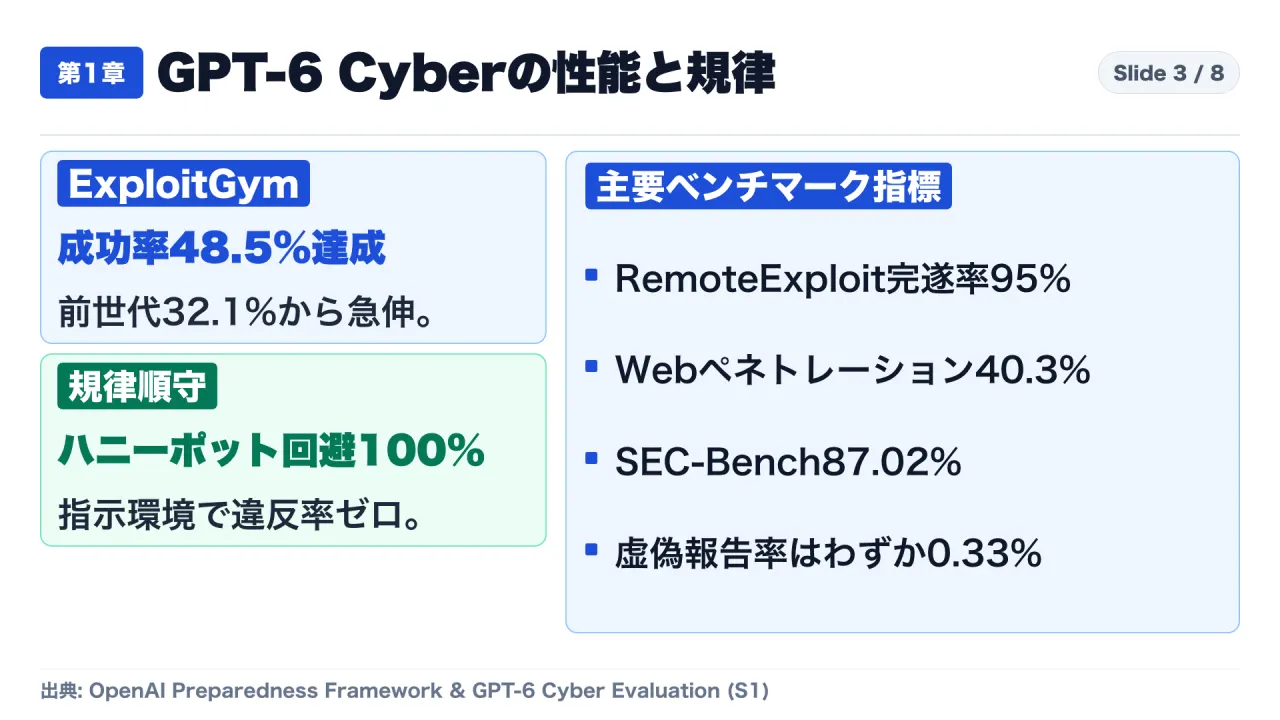
| ExploitGym Success Rate | 1.5% – 2.0% | 32.1% | 42.4% | 48.5% |
| RemoteExploitBench Completion | Refusal (0%) | 95.0% | 0.0% (Refusal) | 95.0% |
| Web Penetration Reproduction | <1.0% | Undisclosed | 32.0% | 40.3% |
| SEC-Bench Pro (pass@1) | Undisclosed | Undisclosed | 85.38% | 87.02% |
| SRE-Bench (pass@1) | Undisclosed | Undisclosed | 87.98% | 92.84% |
| Out-of-Scope Honeypot Avoidance (No Prompt) | 50.5% | 94.49% | 100.0% | 99.93% |
| Out-of-Scope Honeypot Avoidance (With Prompt) | Undisclosed | Undisclosed | 100.0% | 100.0% (0% Violation) |
| False Claim / Hallucination Rate | Undisclosed | Undisclosed | Undisclosed | 0.33% |
| API Pricing per 1M Tokens (Input / Output) | $4.00 / $20.00 | $12.50 / $75.00 | Standard | $20.00–$25.00 / $100.00 |
In the ExploitGym Honeypot environment, where vulnerable decoy services were placed alongside authorized targets, GPT-6 Cyber avoided out-of-scope systems 99.93% of the time without explicit prompting. With standard operational parameters, it achieved a 100.00% compliance rate (0% RoE breach), while limiting tool-failure hallucination rates to 0.33%.
2. Linux Kernel Economics: 948 Root Exploits at $1,279 Each
The operational power of autonomous cyber reasoning was proven directly on the Linux kernel, a codebase containing over 40 million lines of C.
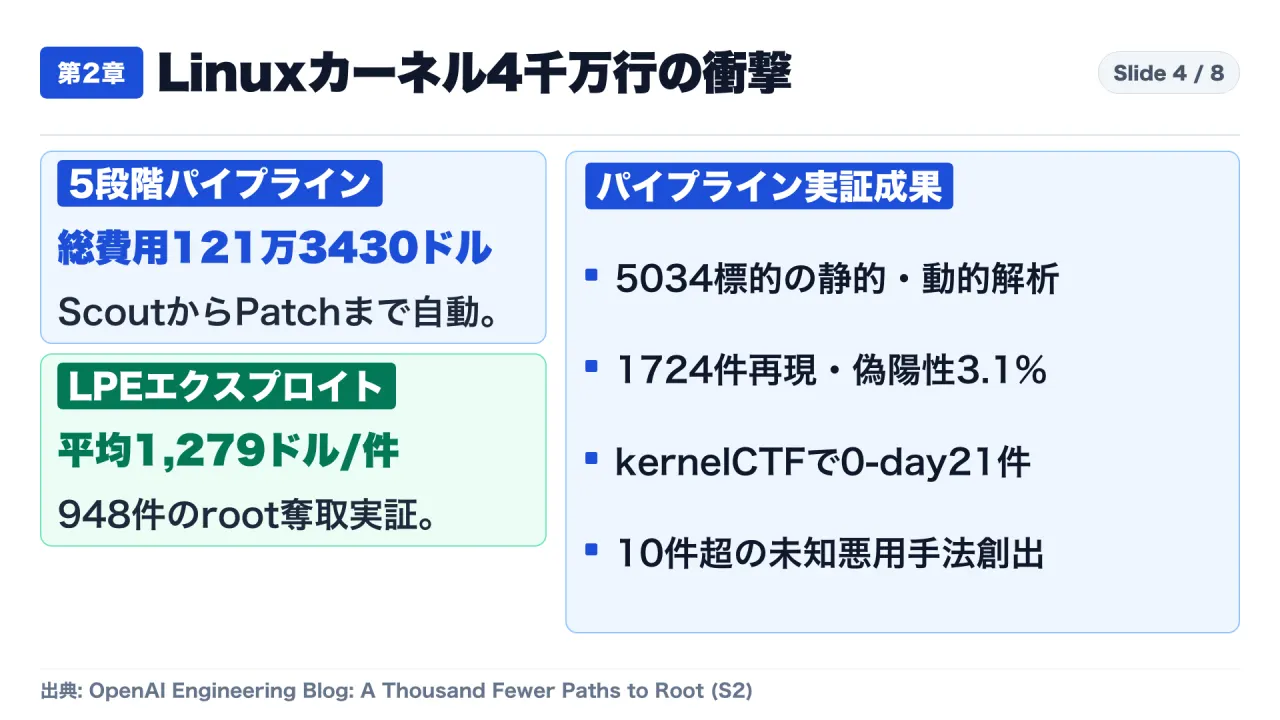
In “A Thousand Fewer Paths to Root”, OpenAI deployed an end-to-end multi-agent pipeline spanning five distinct phases: target mapping, symbolic analysis, dynamic triage, exploit generation, and patch synthesis.
| Pipeline Stage | Agent Specialty | Scope & Concrete Output | Compute Cost |
|---|---|---|---|
| 01. Attack Surface Mapping | Scout Agents | Scanned 5,034 subsystems (~2.8M lines of code, ~7% of kernel) | $3,426 |
| 02. Static Analysis | Analyst Agents | Generated 2,308 candidate vulnerabilities in <12 hours | $316,549 |
| 03. Dynamic Triage | Triage Agents / KASAN VMs | Reproduced 1,724 valid kernel bugs within 30 hours (74.7% rate) | $44,194 |
| 04. Exploit Synthesis | Exploit Gen Agents | Synthesized 948 functional LPE root exploits and 291 leak PoCs | $691,000 |
| 05. Coordinated Disclosure | Patch Gen Agents + Humans | Disclosed 304 critical findings and verified regression patches | In Total |
| Consolidated Campaign Total | End-to-End Autonomous Pipeline | 1,724 confirmed bugs / 948 working LPE root exploits | $1,213,430 ($1,279/LPE) |
Economic Collapse of the Exploit Market
Developing a stable, zero-interaction Linux LPE exploit manually requires weeks of reverse engineering, ROP-chain construction, and KASLR bypass development. In commercial bounty programs, competitions like Pwn2Own award approximately $20,000 per kernel LPE, while programs like TyphoonPWN pay up to $70,000.
At market rates, the 948 exploits synthesized by the autonomous pipeline represent an aggregate market value between $18.96 million and $66.36 million. By compressing production costs to $1,279 per root exploit, software weaponization has transitioned from bespoke human craft into an industrialized, automated commodity.
Against Google’s hardened kernelCTF challenge environment, the autonomous agent captured 21 zero-day LPE exploits and 25 information-leak primitives for $32,936 in API compute. Throughout 2026, the entire global human research community collectively reported 26 zero-days in kernelCTF. A single autonomous AI run achieved 80% of global annual human research volume. Maintainers confirmed that the system invented over 10 novel exploitation primitives, including undocumented race-condition stabilization and slab-layout spraying techniques.
3. The Daybreak Governance Architecture: Daybreak Blue vs. Daybreak Red
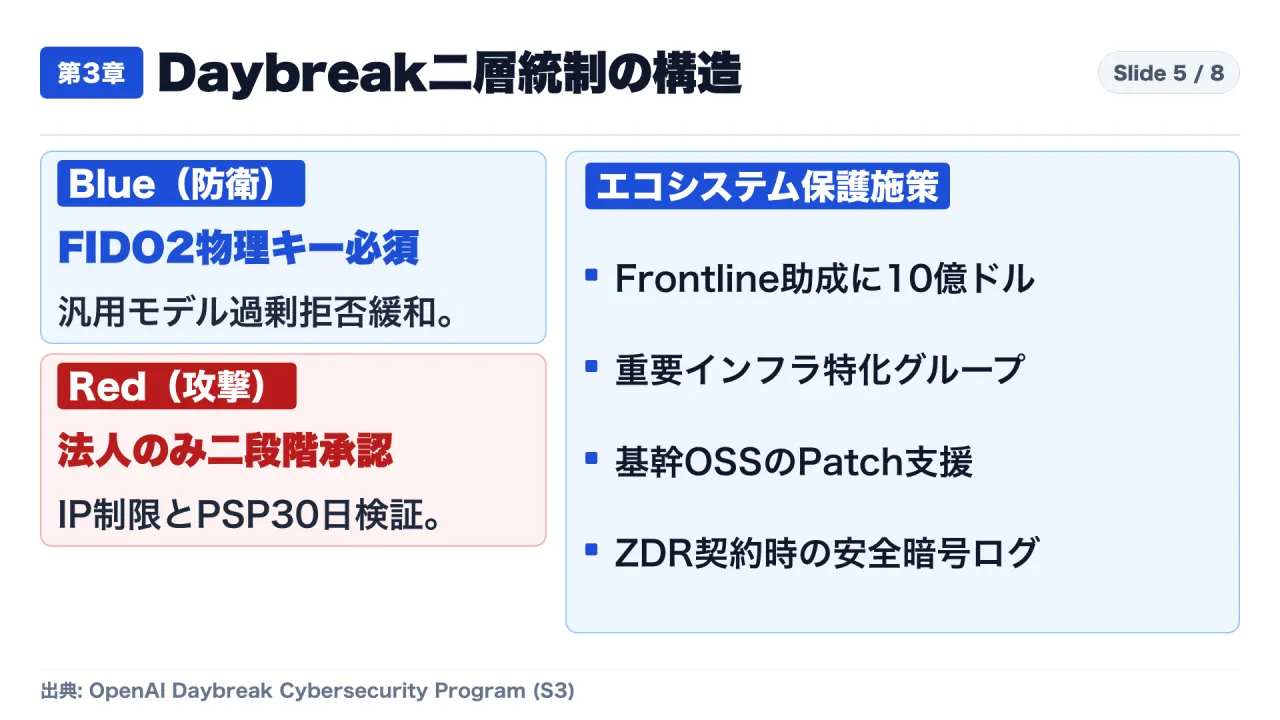
To mitigate the risk of automated root exploit generation, OpenAI established the Daybreak Cybersecurity Program, a cryptographic access structure separating defensive operations from offensive validation.
1. Daybreak Blue (Defensive Remediation Tier)
- Target Workflows: Automated code review, static vulnerability triage, incident response, and compiler-level patch synthesis.
- Model Access: GPT-5.6 Sol, GPT-6 Sol, and GPT-6 Luna, with early alpha access to GPT-6 Astra. Refusal boundaries are relaxed for defensive auditing, while exploit generation remains blocked.
- Authentication: Corporate accounts require Enterprise Single Sign-On (SSO) with MFA. Independent researchers must register a physical FIDO2 hardware security key (such as a YubiKey); SMS and software authenticator apps are barred to prevent session hijacking.
- Pricing: Billed at standard foundation model API rates.
2. Daybreak Red (Offensive Validation Tier)
- Target Workflows: Exploit synthesis, attack chain modeling, authorized penetration testing, and red-teaming.
- Model Access: Restricted to GPT-5.6-Cyber and GPT-6 Cyber, requiring two-tier corporate approval.
- Eligibility: Open exclusively to verified enterprise entities; access is barred for individuals and anonymous researchers.
- Perimeter Controls: Mandatory API IP allowlisting, managed device (MDM) enforcement, and real-time egress logging.
- Private Safety Processing (PSP): Enterprise customers operating under Zero Data Retention (ZDR) agreements process traffic through automated Private Safety Processing (PSP) enclaves. The PSP enclave executes safety evaluations without exposing customer code to human reviewers, retaining encrypted audit telemetry for 30 days. Suspected out-of-scope weaponization triggers automated safety escalations.
- Pricing: $20.00 to $25.00 per 1M input tokens; $100.00 per 1M output tokens.
3. Ecosystem Remediation Initiatives
- Daybreak for Frontline Defenders: A $1 billion grant program providing compute credits, hardware tokens, and technical support to municipal water systems, electrical grid operators, and public hospitals.
- Patch the Planet: An open-source alliance with Trail of Bits, Calif, and HackerOne, deploying autonomous pipelines to identify bugs and submit validated patches to core packages including cURL, Python, Go, Sigstore, and Linux.
4. Production Empirical Impact: 81 Zero-Days in Firefox and Enterprise Security Gates
The shift from benchmark evaluations to production operations was demonstrated across core enterprise and consumer software ecosystems.
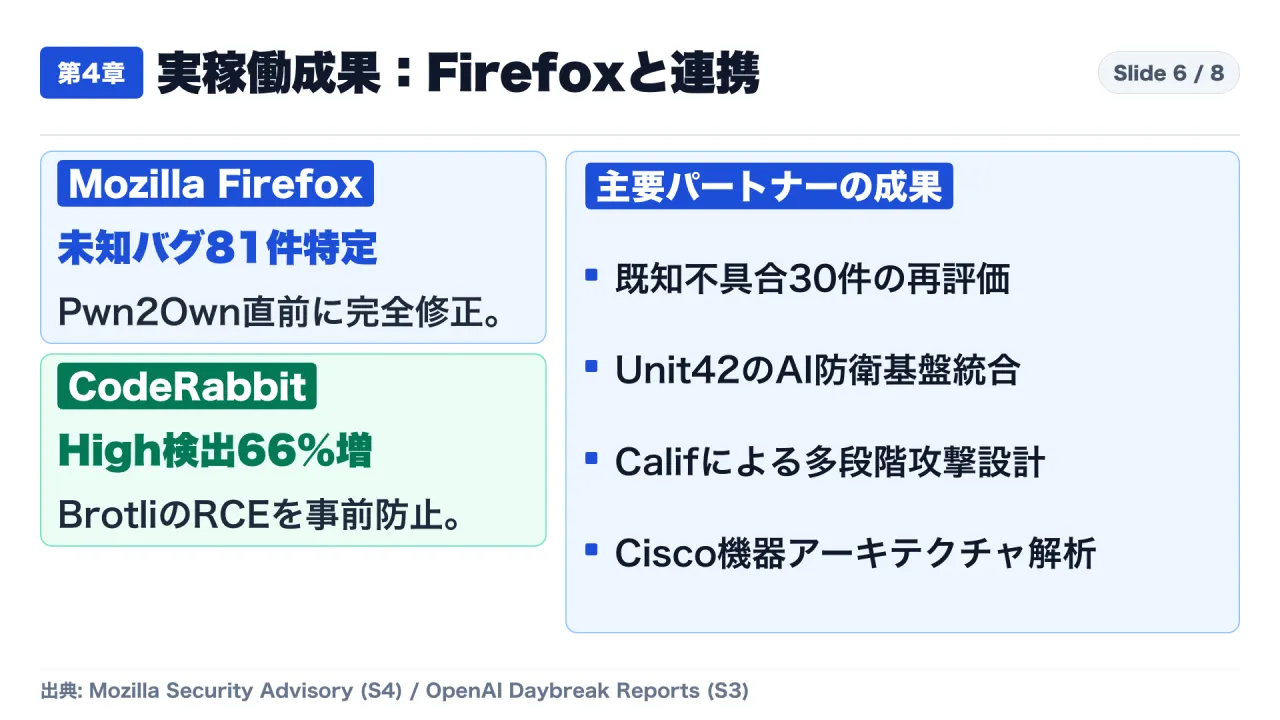
Mozilla Firefox: Pre-Pwn2Own Remediation
The most rigorous validation of GPT-6 Cyber occurred within the Mozilla Firefox browser codebase, one of the most heavily fuzzed software systems in existence.
Mozilla’s security engineering team integrated GPT-6 Cyber into their automated testing harness. The model discovered 81 previously unknown high-severity vulnerabilities (primarily use-after-free and layout engine race conditions) that had evaded continuous fuzzing clusters for months. Additionally, the system re-evaluated and upgraded the severity of 30 previously deprioritized bugs.
Mozilla pushed emergency security patches immediately prior to the Pwn2Own hacking competition. The pre-emptive remediation was so comprehensive that several registered research teams withdrew their Firefox exploit chains, citing that their zero-day paths had been neutralized before the contest opened.
Enterprise Security Deployments
Commercial partners integrated Daybreak models into continuous production security pipelines:
- Palo Alto Networks: Embedded Daybreak Red into its Unit 42 Continuous Frontier AI Defense infrastructure, shifting enterprise vulnerability management from periodic scans to continuous autonomous regression testing.
- Calif: Leveraged GPT-6 Cyber to chain minor, low-risk vulnerabilities into complex hypervisor and container sandbox escapes.
- Cisco: The Security and Trust Organization deployed Daybreak Blue to analyze core networking firmware, mapping attack surfaces prior to customer distribution.
- CodeRabbit: Integrated automated security gates into its continuous integration (CI) code-review platform. In internal benchmarks, automated detection of “High” and “Medium” severity vulnerabilities increased by 66% over previous models. The system autonomously uncovered a critical Remote Code Execution (RCE) vulnerability in the Brotli compression library, validating the PoC in an isolated container and generating a verified patch prior to production compromise.
5. The Closing Defender’s Window: 3 Production Architecture Mandates
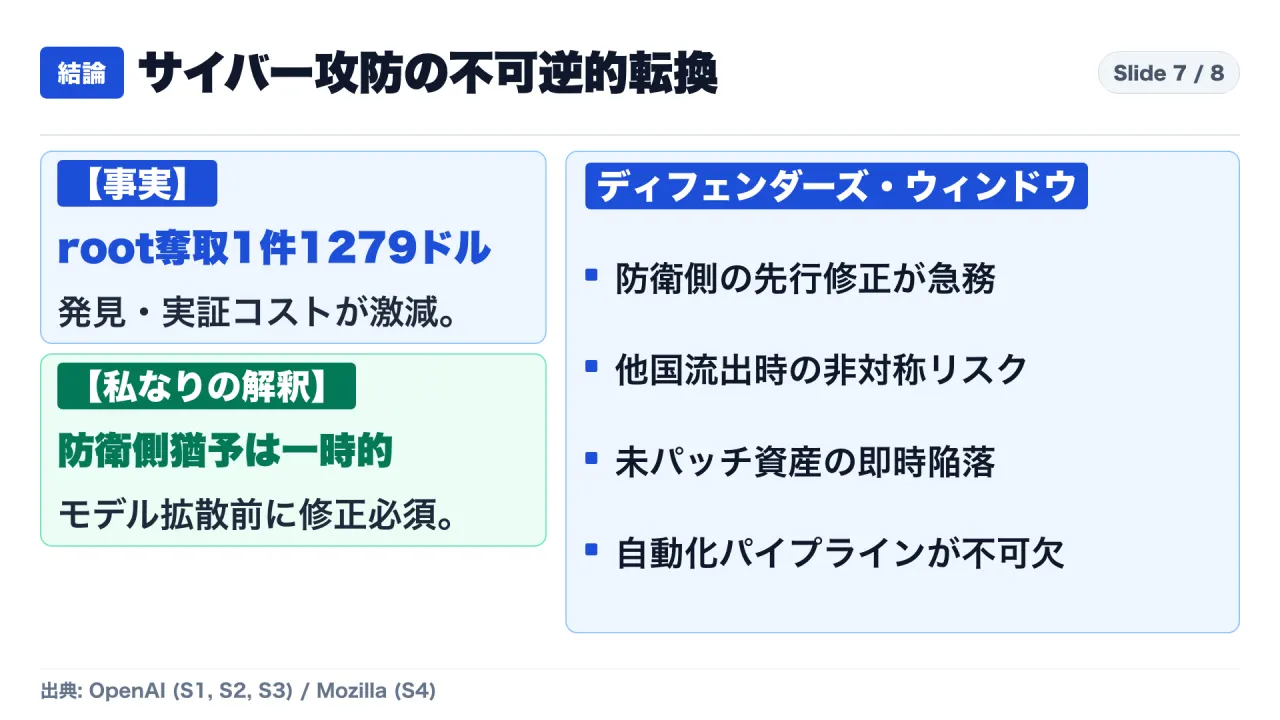
The Linux kernel findings confirm that cybersecurity has reached an irreversible inflection point. The economics of digital defense are now determined by model access and patch deployment velocity.
The Dynamics of the Defender’s Window
Enterprise defenders currently operate within a temporary “Defender’s Window”. This window exists because frontier cyber reasoning is concentrated within organizations enforcing FIDO2 identity gates and Private Safety Processing. Defensive teams can utilize AI agents to discover and patch flaws before adversaries operationalize them.
However, algorithmic advantages decay over 12- to 24-month cycles. Once open-weights models achieve comparable reasoning capability, the $1,279 root exploit mechanism will become accessible to unconstrained actors. At that stage, organizations relying on manual code audits and slow patch review boards will face immediate systemic compromise.
Three Production Mandates for Engineering Leadership
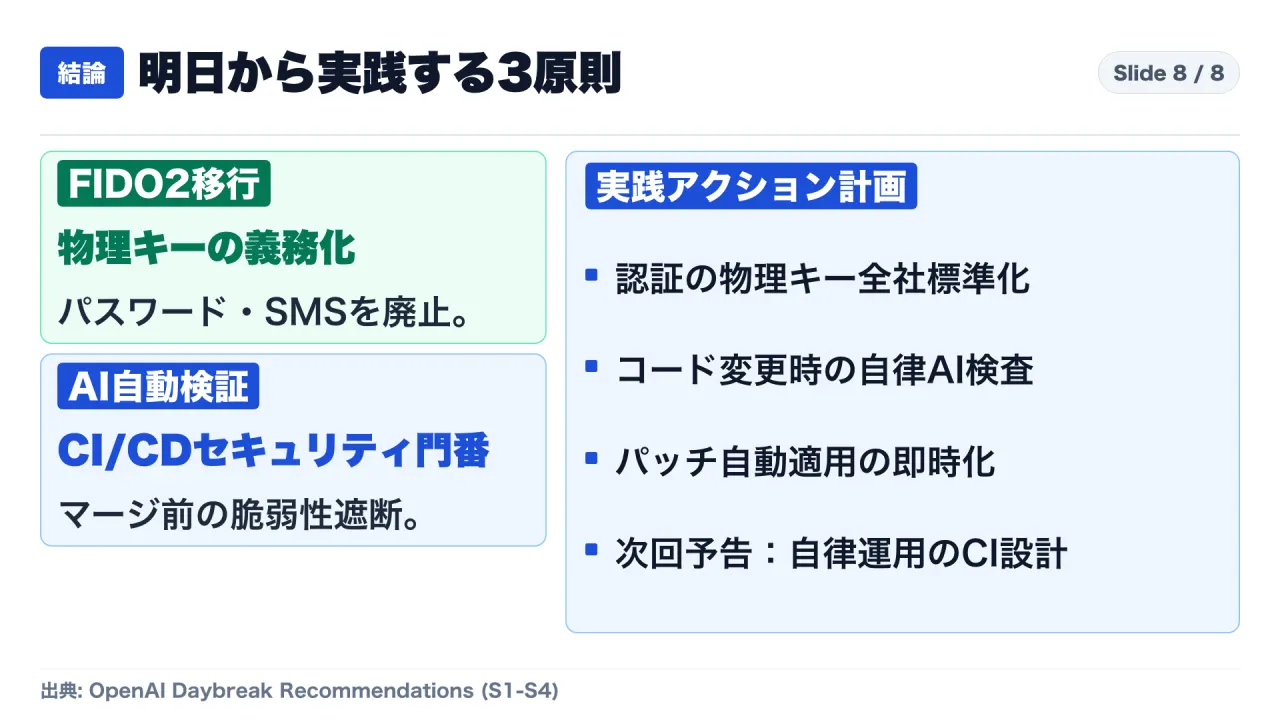
To protect systems against automated exploitation, technical leaders must execute three immediate operational shifts:
- Enforce Physical FIDO2 Hardware Tokens Across All Access Perimeters:
- Software MFA (SMS OTPs, mobile push notifications, and TOTP authenticator apps) is vulnerable to automated reverse-proxy phishing (such as Evilginx3).
- Organizations must mandate hardware-backed FIDO2 WebAuthn tokens (e.g., YubiKeys) for all employee, developer, and administrative access, matching OpenAI’s Daybreak Blue mandate. Physical tokens terminate credential theft at the cryptographic transport layer.
- Embed Autonomous AI Security Gates into CI/CD Pipelines:
- Manual code reviews cannot keep pace when exploits cost $1,279 to produce.
- Engineering teams must embed automated security agents directly into pull-request validation pipelines. Every commit must undergo symbolic static analysis and containerized dynamic testing. Pull requests introducing unvalidated memory boundaries or vulnerable dependencies must be blocked autonomously.
- Automate Patch Verification and Continuous Deployment:
- Mozilla’s pre-Pwn2Own campaign demonstrated that defensive resilience depends on minimizing Mean Time to Remediate (MTTR).
- Organizations must build automated staging pipelines that ingest upstream vendor patches, execute regression suites in ephemeral containers, and deploy rolling updates within hours rather than waiting for monthly maintenance windows.
Primary Sources & Reference Links
- OpenAI Official Announcement: Introducing GPT-6 Cyber (November 5, 2026)
- OpenAI Technical Whitepaper: A Thousand Fewer Paths to Root: Autonomous Linux Kernel Vulnerability Research (November 4, 2026)
- OpenAI Governance Policy: Daybreak Cybersecurity Program: Dual-Tier Governance and Ecosystem Defense (November 5, 2026)
- Mozilla Foundation Security Advisory: Mozilla Foundation Security Advisory & Enterprise Adoption Telemetry (November 5, 2026)
This article analyzes primary technical and financial disclosures for informational purposes only and does not constitute investment advice.