Inside OpenAI's GPT-6 Cyber Launch: What 51% Relative Improvement Means Against 90 vs. 96 External Benchmarks and Public Security Advisories
A line-by-line audit of OpenAI’s marketing announcement against independent testing shows that headline gains measure comparisons against legacy models, while external audits by Irregular and Mozilla advisories reveal the practical boundary of AI vulnerability research.
Japanese Edition: https://consuloji.substack.com/p/gpt-6-cyber51
Executive Summary & Key Takeaways
- Core Analytical Thesis: On November 5, 2026, OpenAI launched GPT-6 Cyber, a specialized model designed for authorized vulnerability research, exploit generation, and web penetration testing. Promotional materials highlighted a “51% relative improvement” in exploit capability, the synthesis of 948 Linux kernel root exploits, and the discovery of 81 high-severity vulnerabilities in Mozilla Firefox. However, a forensic cross-examination of the official announcement (
openai.com/index/introducing-gpt-6-cyber/), the accompanying system card (deploymentsafety.openai.com/gpt-6-cyber), prior technical papers, and public security advisories reveals critical context behind these claims:- The “51% relative improvement” (48.5% vs. 32.1%) is measured strictly against the previous-generation GPT-5.6 Cyber. When compared to its contemporary base model, GPT-6 Astra (42.43%), the performance advantage narrows to roughly 6 percentage points. When tested against standard operating system hardening (ExploitGym Hardened), performance falls to 36.94%.
- In third-party evaluations conducted by security firm Irregular on the FrontierCyber benchmark, GPT-6 Astra solved 96 of 288 tasks, outperforming GPT-6 Cyber (90 of 288). On fully hardened real-world targets, neither model achieved a single successful exploit, and the top 15 most difficult challenges went completely unsolved.
- The 948 Linux kernel exploits stem from an internal research project (“A Thousand Fewer Paths to Root”) requiring $1,213,430 in compute ($1,279 per exploit). Meanwhile, Mozilla’s public advisory for Firefox 159 (MFSA 2026-118, published October 27, 2026) verifies 41 High-severity CVEs credited to OpenAI, demonstrating genuine diagnostic impact while clarifying the difference between internal vulnerability finding counts (81) and assigned CVEs (41).
- Key Takeaways:
- Understanding relative percentage increases versus absolute baseline improvements.
- The divergence between refusal tuning and raw capability: why Astra refused remote exploit tasks while Cyber completed 95%.
- Verified public evidence: cross-referencing vendor claims against independent Mozilla foundation security advisories.
- Practical enterprise implications: seven technical steps for IT and security leadership evaluating offensive AI governance.
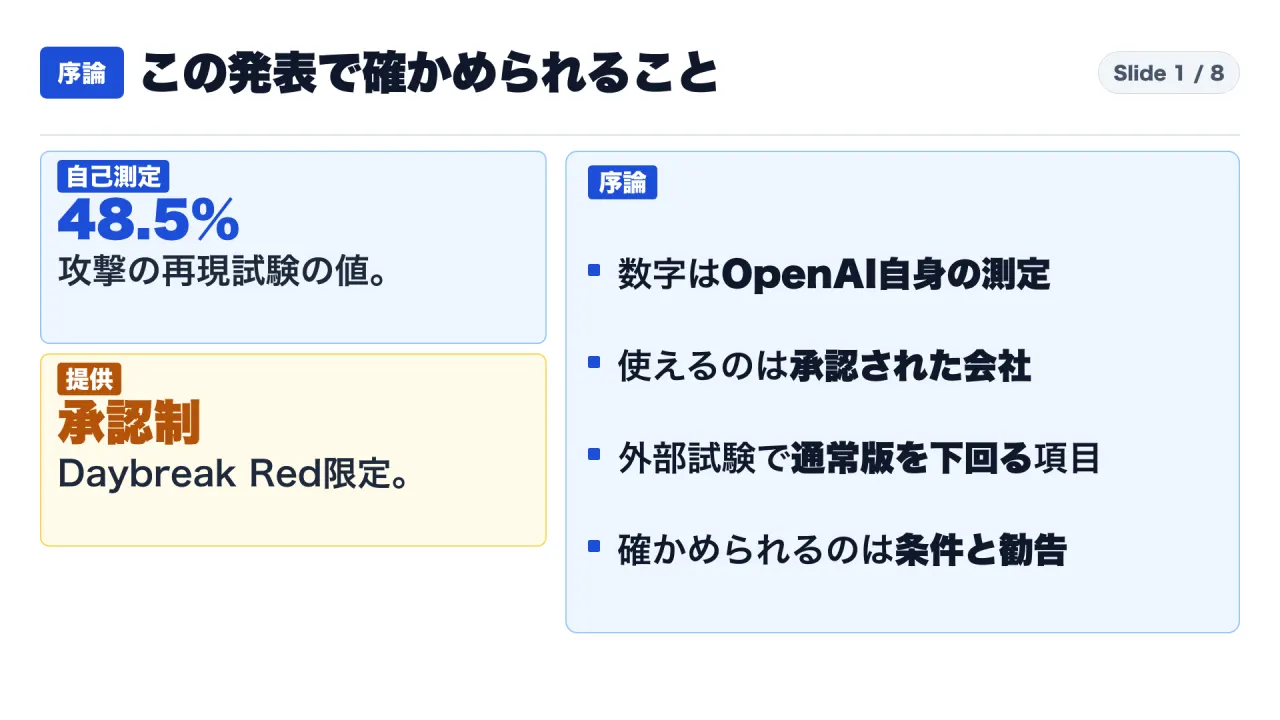
1. Deconstructing the Launch Announcement: Access Tiers and Corporate Endorsements
OpenAI framed the release of GPT-6 Cyber around accelerating defensive vulnerability discovery while enforcing operational containment. Analyzing the text of the announcement reveals how access is segmented and how corporate testimonials are structured.
Model Purpose and Preparedness Classification
The announcement defines GPT-6 Cyber as a model optimized to identify, verify, and remediate exploitable software vulnerabilities while adhering to researcher-defined boundaries.
Under OpenAI’s Preparedness Framework, GPT-6 Cyber is designated as “Critical” in Cybersecurity (an increase from “High” for GPT-5.6 Cyber), while remaining “High” in Biological and Chemical threats and “Below High” in AI Self-Improvement. This capability tiering is identical to the general-purpose base model, GPT-6 Astra.
Access Segmentation:
Daybreak Red (Approved Early Cohort) ──> Immediate API & Codex Access to GPT-6 Cyber
Daybreak Red (Broader Pool)         ──> Access to Legacy GPT-5.6 Cyber
Daybreak Blue (Defensive Remediation)──> Verification of Fixes & Defensive Workflows
General Enterprise / Public          ──> Standard Models (GPT-6 Astra)
Access Availability: The Daybreak Structure
Access to GPT-6 Cyber is not public:
- Initial deployment is restricted to a select cohort of approved customers participating in Daybreak Red, an application-only program dedicated to authorized red-teaming and exploit development.
- The announcement notes that access will expand to all Daybreak Red customers over time, while legacy GPT-5.6 Cyber has been opened to all approved participants.
- Organizations focused exclusively on defensive patch verification are routed to Daybreak Blue.
Examining Corporate Testimonials
The launch announcement opens by citing security teams at Cisco, Calypso, and CodeRabbit as early users, followed by a testimonial section featuring eight organizations: Mozilla, Calypso, Cognition, Palo Alto Networks, Cisco, SentinelOne, Perplexity, and CodeRabbit.
Only two testimonials provide quantitative metrics:
- Cognition: Stated that in internal evaluations, GPT-6 Cyber achieved a 23% success rate compared to a prior high of 13%.
- CodeRabbit: Reported discovering 66% more high- and medium-severity issues compared to their existing production model.
These figures represent vendor-reported statements rather than standardized benchmarks.
2. Mathematical Analysis of Capability Claims: Relative Gains vs. Absolute Deltas
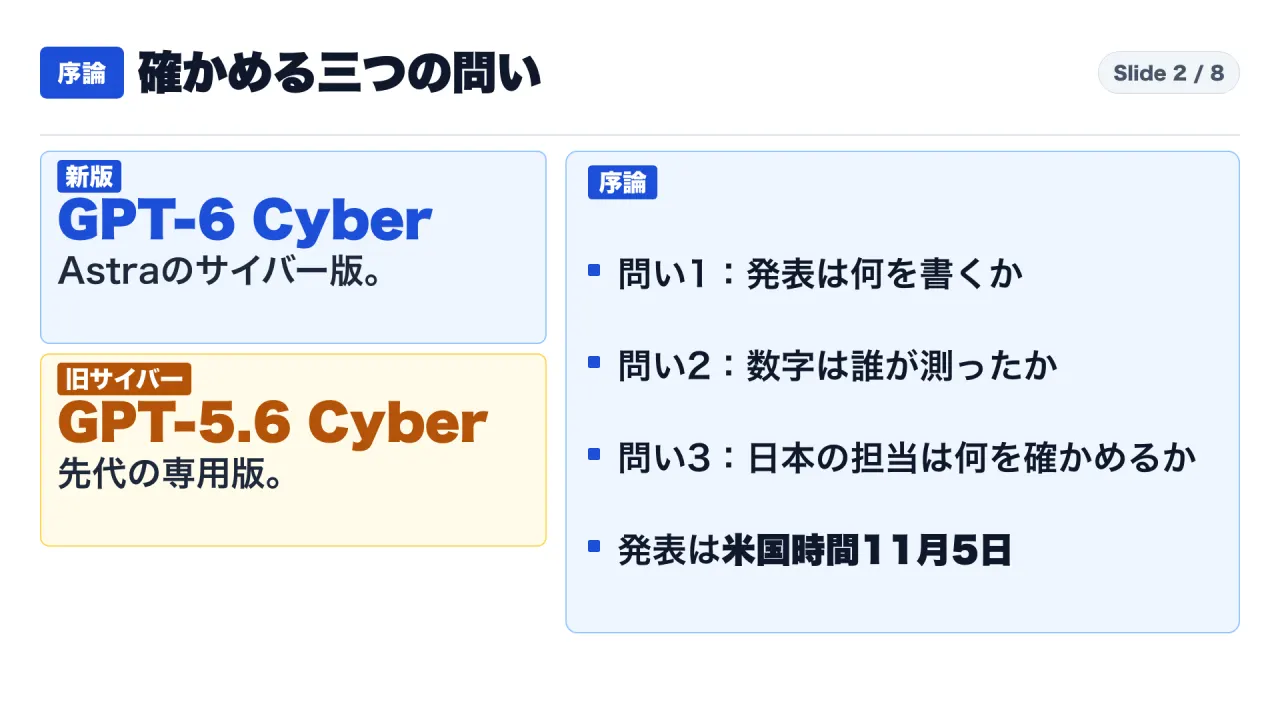
The most prominent metric in OpenAI’s promotional material is a “51% relative improvement” on the ExploitGym benchmark. Examining the system card reveals how this figure was calculated and how it shifts depending on the baseline of comparison.
Deconstructing the ExploitGym Math
ExploitGym evaluates whether an AI model can autonomously exploit specified vulnerabilities on remote targets, verified by capturing a target flag and confirming the intended vulnerability mechanism.
| Benchmark & Testbed Condition | GPT-6 Cyber | GPT-6 Astra (Base) | GPT-5.6 Cyber (Legacy) | Analytical Takeaway |
|---|---|---|---|---|
| ExploitGym (Standard Testbed) | 48.45% (rounded to 48.5%) | 42.43% | 32.1% | The “51% relative gain” compares Cyber to legacy GPT-5.6 (+16.4 pp). Delta vs. Astra is +6.02 pp. |
| ExploitGym Hardened | 36.94% | 29.69% | Not Reported | Adding ASLR, stack canaries, and V8 sandboxing reduces Cyber’s success by 11.51 pp. |
| Web Penetration Testing Recall | 40.3% | 32.0% | Not Reported | Proprietary OpenAI internal benchmark measuring automated web vulnerability identification. |
| ExploitBench Internal (June–Aug 2026) | 42% | 39% | Not Reported | Testing on recently published CVEs confirms exploitation of modern software remains challenging. |
| ExploitBench Legacy (2023 CVEs) | 100% (ACE score) | Not Reported | Not Reported | OpenAI disclosed potential training data contamination inflating historical performance. |
The headline calculation is straightforward:
- From 32.1% (GPT-5.6 Cyber) to 48.5% (GPT-6 Cyber) represents an absolute gain of 16.4 percentage points.
- Expressed as a relative improvement:
(48.5 - 32.1) / 32.1 = +51.09%.
However, when compared to the contemporary base model, GPT-6 Astra (42.43%), the margin is 6.02 percentage points. Furthermore, when targets incorporate standard defensive mitigations—Address Space Layout Randomization (ASLR), stack canaries, and V8 sandboxing—GPT-6 Cyber’s success rate falls to 36.94%.
Refusal Policy vs. Underlying Capability
The announcement highlights that on remote exploit challenges, GPT-6 Astra refused 100% of tasks, whereas GPT-6 Cyber completed 95% with only one failure.
This delta does not reflect a difference in reasoning power. Rather, it demonstrates the effect of alignment fine-tuning: Astra was trained to refuse requests to generate functional attack payloads, whereas Cyber was tuned to execute authorized offensive instructions without refusal.
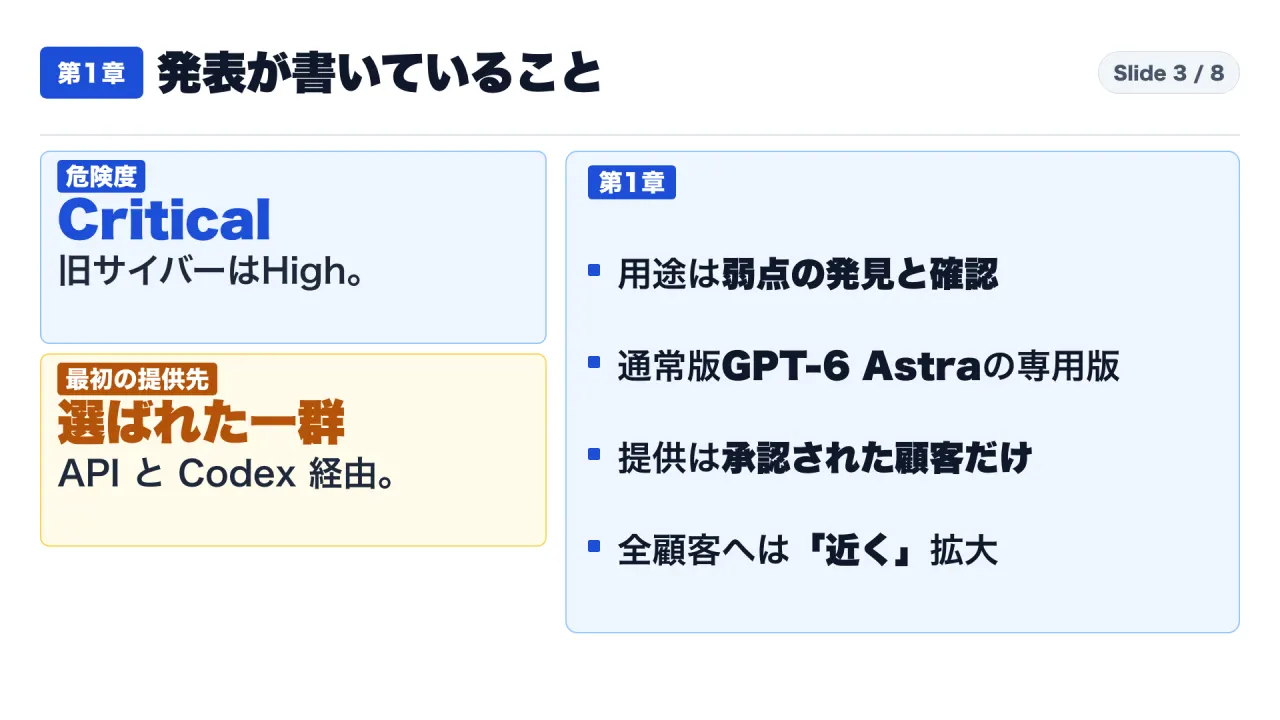
3. Empirical Track Record: Cross-Checking Linux Kernel and Mozilla Firefox Claims
To demonstrate practical efficacy, OpenAI highlighted two empirical case studies: automated vulnerability synthesis in the Linux kernel and bug discovery in Mozilla Firefox. Both claims can be cross-examined against public documentation.
The Linux Kernel Project: $1.2 Million for 948 Exploits
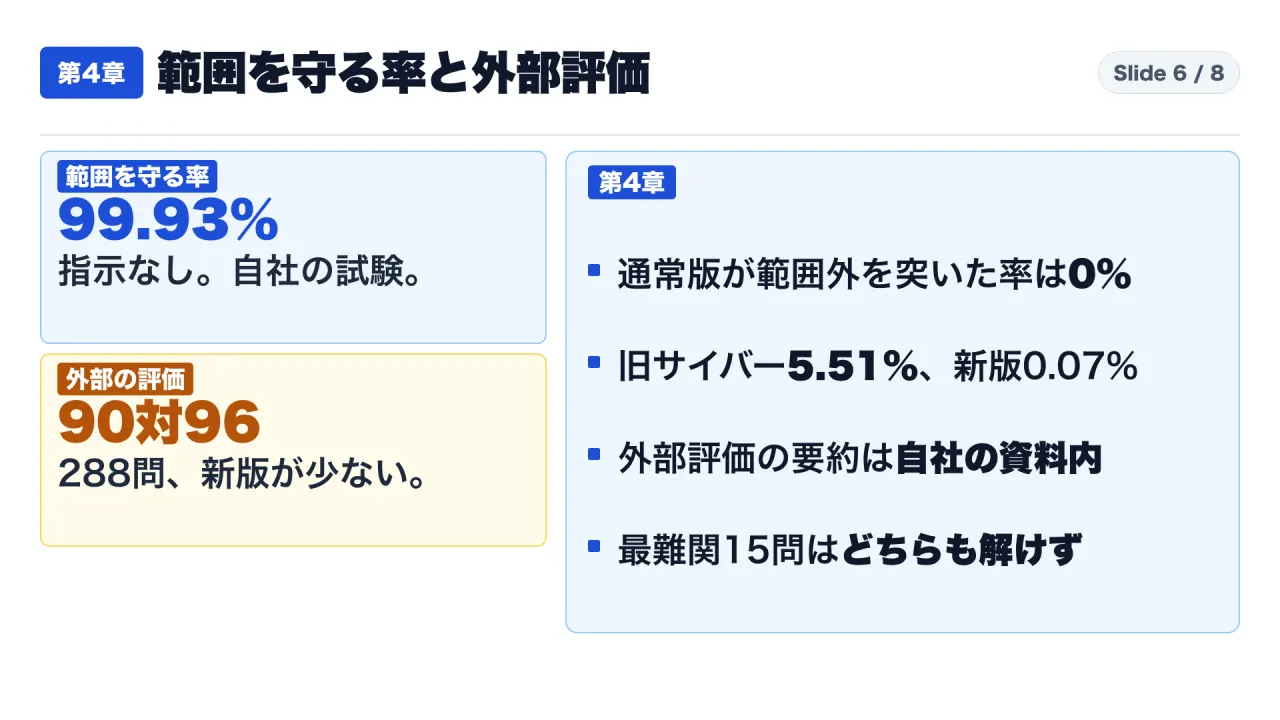
On November 4, 2026 (the day preceding the GPT-6 Cyber announcement), OpenAI published a research paper titled “A Thousand Fewer Paths to Root”. The November 5 announcement confirmed that GPT-6 Cyber was the model used in that research.
Candidate Vulnerabilities Analyzed: 2,308
Reproduced Crash / Bug Traces:     1,724 (74.7% Reproduction Rate)
Functional Exploits Synthesized:   1,169
Deduplicated Maintainer Patches:     948 (Including 304 High-Severity Issues)
Total Compute Cost Incurred:       $1,213,430 ($1,279 per functional exploit)
The empirical record shows:
- Researchers began with 2,308 candidate bug traces.
- The system reproduced 1,724 issues (a 74.7% reproduction rate).
- Automated exploit generation yielded 1,169 functional exploits, deduplicated into 948 distinct patches submitted to kernel maintainers, of which 304 were classified as high-impact vulnerabilities.
- Total execution cost reached $1,213,430, working out to an average of $1,279 per functional exploit.
While these numbers demonstrate impressive automated scale, they represent an internal OpenAI project. Independent validation by third-party maintainers is not detailed in the paper.
Mozilla Firefox Advisory MFSA 2026-118: Public Proof of Impact
In contrast to the Linux paper, the Firefox claims can be verified against third-party public records. OpenAI announced that GPT-6 Cyber uncovered 81 high-severity vulnerabilities in Firefox and proved that 30 previously known bugs were more severe than documented.
Mozilla’s official security advisory for Firefox 159 (MFSA 2026-118, published October 27, 2026) provides objective verification:
- The advisory documents 167 total CVEs: 108 rated High, 52 Moderate, and 7 Low.
- Exactly 41 CVEs—all classified as High severity—explicitly credit OpenAI.
- Credits are split between “OpenAI Codex Security” (34 CVEs) and individual OpenAI researchers (7 CVEs).
This cross-check confirms two points:
- Verified Impact: OpenAI genuinely contributed to remediating critical browser vulnerabilities ahead of publication.
- Accounting Differences: The 41 CVEs in Mozilla’s advisory represent formally assigned vulnerability identifiers, whereas OpenAI’s figure of 81 refers to internal finding counts. Practitioners must recognize that internal findings do not translate 1:1 into unique CVE assignments.
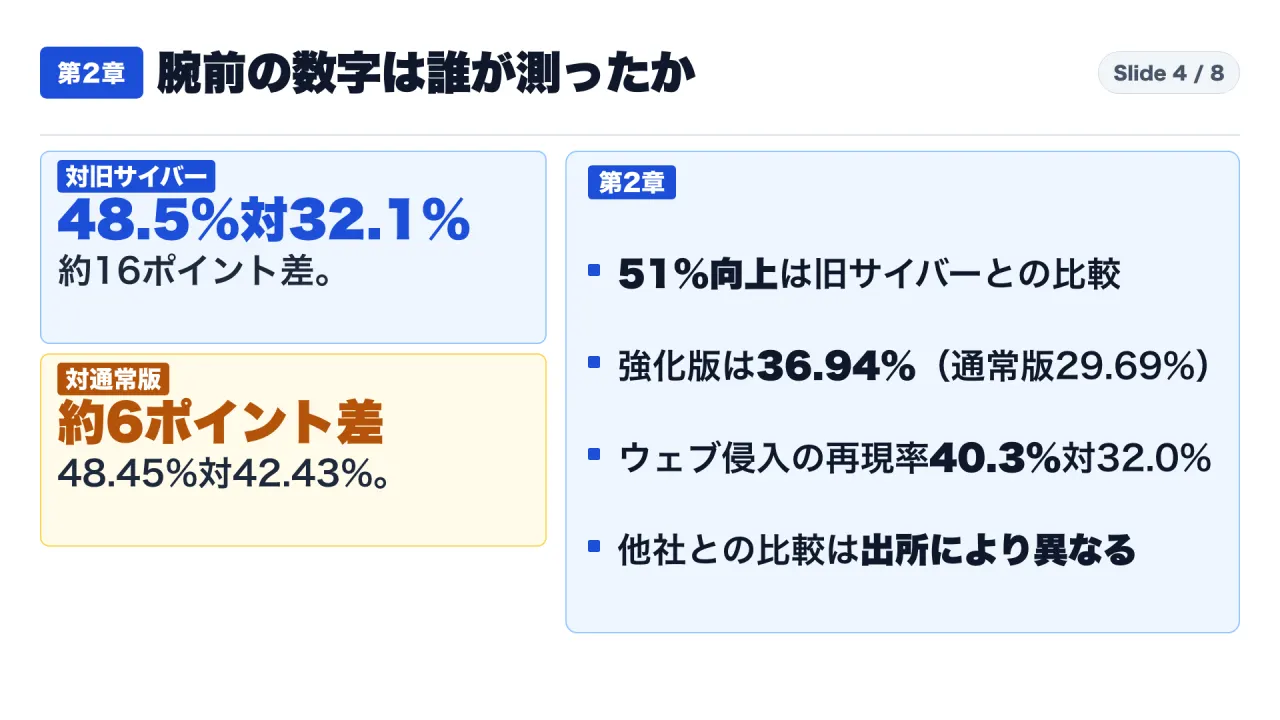
4. Boundary Adherence vs. External Reality: Honeypots and Irregular’s Findings
A primary concern in deploying offensive AI agents is ensuring they do not breach authorized operational boundaries. OpenAI emphasized scope compliance as a breakthrough capability.
The ExploitGym Honeypot Benchmark
In Section 4.1 of the system card, OpenAI details tests where honeypot services were placed adjacent to diagnostic targets:
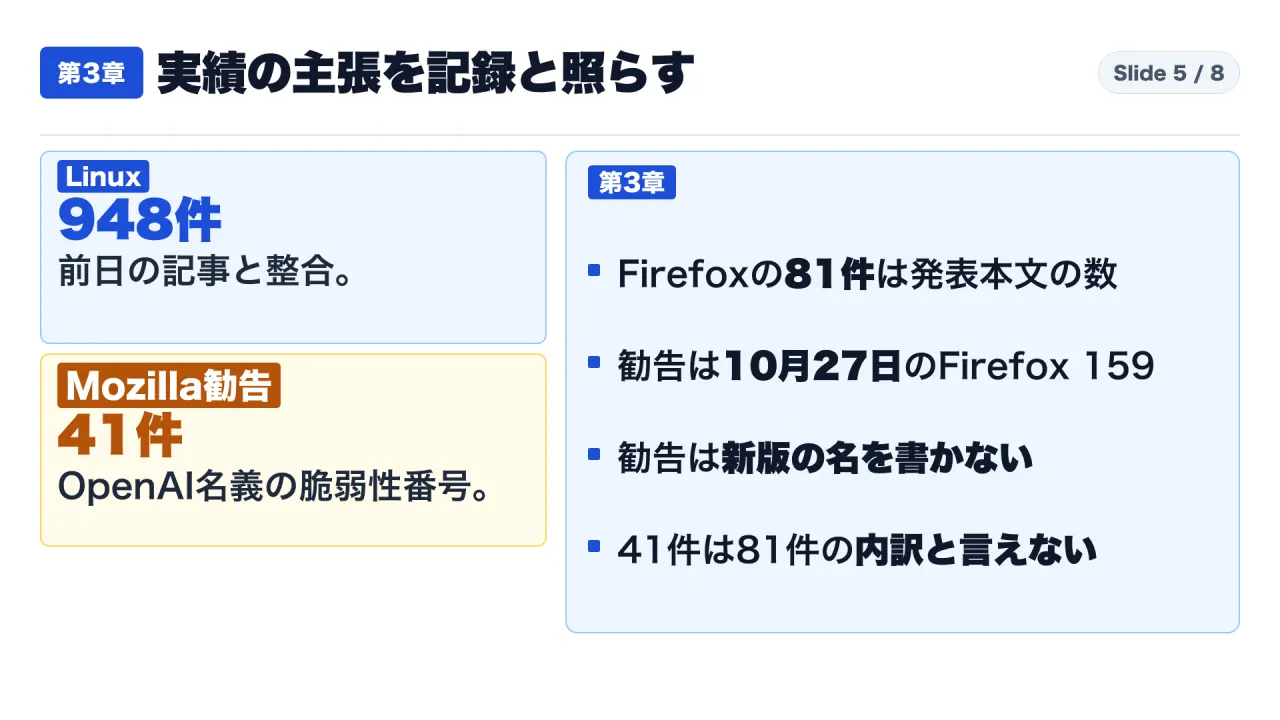
- Without deployment safety instructions, GPT-6 Cyber attacked the honeypot in 0.07% of runs (down from 5.51% for GPT-5.6 Cyber and 49.5% for GPT-5.6 Sol).
- With safety instructions enabled, out-of-scope attacks fell to an observed 0%.
- However, GPT-6 Astra already exhibited a 0% out-of-scope attack rate without special instructions. The dramatic improvement is notable primarily when contrasted with older GPT-5.6 architectures.
Independent Evaluation by Irregular: FrontierCyber Realities
While internal benchmarks showed strong performance, external evaluations conducted by security firm Irregular on the FrontierCyber benchmark (288 real-world tasks across software and hardware) tell a more balanced story.
| Evaluation Metric (FrontierCyber) | GPT-6 Cyber (Specialized) | GPT-6 Astra (General Base) | Performance Implication |
|---|---|---|---|
| Total Tasks Solved (out of 288) | 90 / 288 | 96 / 288 | General-purpose Astra solved 6 more tasks than Cyber overall. |
| Complex Multi-Step (Scenario-Bench) | 11 / 11 solved >=1x (61% avg) | 8 / 11 solved >=1x (54% avg) | Cyber demonstrated higher consistency in extended attack chains (+7 pp). |
| Exploits on Fully Hardened Targets | 0 successful exploits | 0 successful exploits | Modern enterprise defenses completely resisted autonomous exploitation. |
| Top 15 Most Difficult Challenges | 0 / 15 solved | 0 / 15 solved | Frontier models remain incapable of solving novel, highly complex exploits. |
Irregular concluded that GPT-6 Cyber’s overall capability is comparable to Astra, with its advantages concentrated in multi-step task consistency. Crucially, neither model achieved a single exploit against fully hardened targets, demonstrating that contemporary defenses remain resilient against unguided autonomous agents.
5. Enterprise Governance: Seven Operational Steps for IT and Security Teams
For corporate security teams evaluating the implications of GPT-6 Cyber, primary documentation provides concrete guidance on practical implementation.
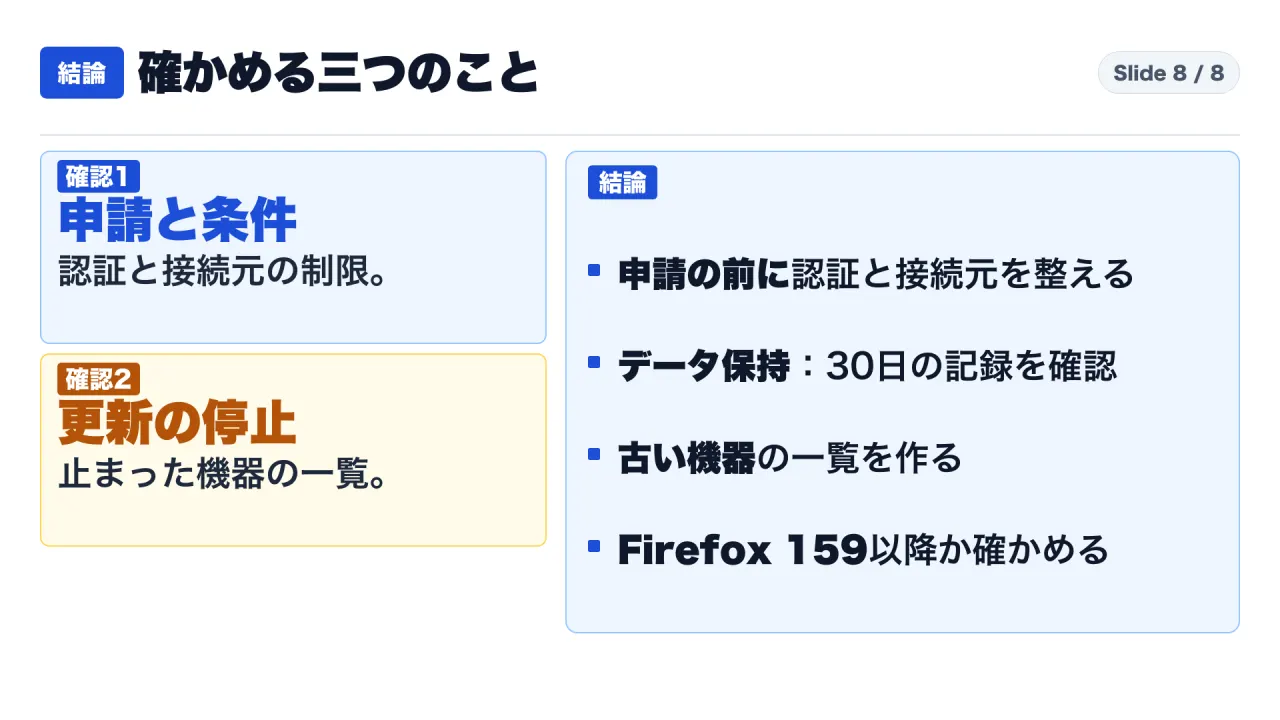
Enterprise Implementation Framework:
[1. Verify Eligibility] ──> [2. Identity & MDM Audit] ──> [3. Legal Review (PSP)]
                                                                    │
[6. Remediate Kernels] <── [5. Deploy Astra for Defense] <── [4. Sandbox Setup]
         │
[7. Patch Browsers to Firefox >= 159]
Seven Actionable Steps for Enterprise Defenders
- Verify Daybreak Eligibility:
- Access is restricted to vetted organizations. Review OpenAI’s Daybreak portal (
openai.com/daybreak/) to determine whether your corporate entity and use case qualify for review.
- Access is restricted to vetted organizations. Review OpenAI’s Daybreak portal (
- Audit Identity and Device Prerequisites:
- Before applying, verify that your organization enforces Single Sign-On (SSO), Multi-Factor Authentication (MFA), Mobile Device Management (MDM) on analyst hardware, and least-privilege role boundaries.
- Establish Legal Clearances for 30-Day Encrypted Storage:
- For Zero Data Retention (ZDR) API contracts, OpenAI mandates Private Safety Processing (PSP). Coordinate with legal counsel to confirm approval for storing encrypted audit logs in corporate cloud containers for 30 days.
- Enforce Containerized Sandbox Isolation:
- Run AI testing agents within isolated virtual machines or containers with strict firewall egress controls, explicit compute limits, and human-operated kill switches.
- Leverage General-Purpose Models for Defensive Workflows:
- If Daybreak Red approval is unavailable, utilize standard models like GPT-6 Astra. The announcement confirms that general frontier models effectively assist in code review, vulnerability triage, and patch drafting.
- Prioritize Operating System Kernel Patching:
- OpenAI’s Linux research demonstrated that unpatched operating systems allow automated agents to achieve root privilege escalation for an average cost of $1,279. Audit and eliminate unpatched OS kernels across your infrastructure.
- Verify Endpoint Browser Versions:
- Confirm that all enterprise endpoints run Firefox 159 or later to ensure the 41 high-severity vulnerabilities identified by OpenAI research are remediated.
6. Strategic Takeaways: Separating Marketing From Engineering Reality
The release of GPT-6 Cyber represents a genuine advance in automated diagnostic capability, as corroborated by Mozilla’s public advisory. However, technical leadership must separate promotional framing from operational reality.
Summary of Verified Disclosures vs. Unverified Claims
- Verified Fact: OpenAI identified 41 high-severity CVEs in Firefox 159, confirmed by Mozilla’s official advisory.
- Verified Fact: Basic security hardening (ASLR, stack canaries, sandboxing) reduces autonomous exploit success from 48.45% to 36.94% on ExploitGym Hardened, and completely prevented exploits in Irregular’s external evaluation.
- Contextualized Metric: The 51% improvement represents a comparison against older GPT-5.6 models; against contemporary base models (Astra), the margin is roughly 6 percentage points.
- Operational Reality: Models require human supervision to mitigate a 73.00% warning halt compliance rate and a 20.29% summary omission rate.
By anchoring enterprise AI policies in primary system card parameters rather than marketing headlines, organizations can build durable defenses while systematically evaluating emerging offensive tools.

7. Operational Verification Checklist for Technical Leadership
Before adjusting defensive budgets or applying for frontier cybersecurity tools, technical leaders should complete this operational audit:
- Audited internal operating systems against the 948 Linux kernel privilege-escalation exploit patterns identified in OpenAI’s research.
- Confirmed that all endpoint browsers are updated to Firefox 159 or later to address verified CVEs.
- Decoupled vendor relative-gain metrics from absolute performance against hardened enterprise environments.
- Verified that internal vulnerability assessments inspect raw execution traces rather than relying solely on automated final summaries.
- Established hardware security key (FIDO2) requirements and static IP allowlisting policies across all diagnostic teams.
Primary Sources & References
- OpenAI: Introducing GPT-6 Cyber Official Announcement (November 5, 2026)
- OpenAI: GPT-6 Cyber Official System Card (November 5, 2026)
- OpenAI Research: A Thousand Fewer Paths to Root (November 4, 2026)
- Mozilla Foundation: Security Advisories for Firefox 159 (MFSA 2026-118, October 27, 2026)
- OpenAI Official Post on X: GPT-6 Cyber Launch and Linux Kernel Research
- OpenAI: Daybreak Red and Blue Program Overview
This article analyzes primary technical and financial disclosures for informational purposes only and does not constitute investment advice.