Why PFN's 0.8B PLaMo 3 Translate Outperformed Google's 27B Model with 0.38-Second Offline Edge Inference ── Inside 37.3B Refined Tokens, 1/30th API Costs, and the $6.5M Enterprise License Trap
How Preferred Networks achieved state-of-the-art Japanese-English translation on a 0.8B parameter model while imposing strict corporate revenue caps and subsidiary liability terms in its community license.
Japanese Edition: https://consuloji.substack.com/p/pfnplamo-3-translate08bgoogle27biphone038api3013
Executive Summary & Key Technical Takeaways
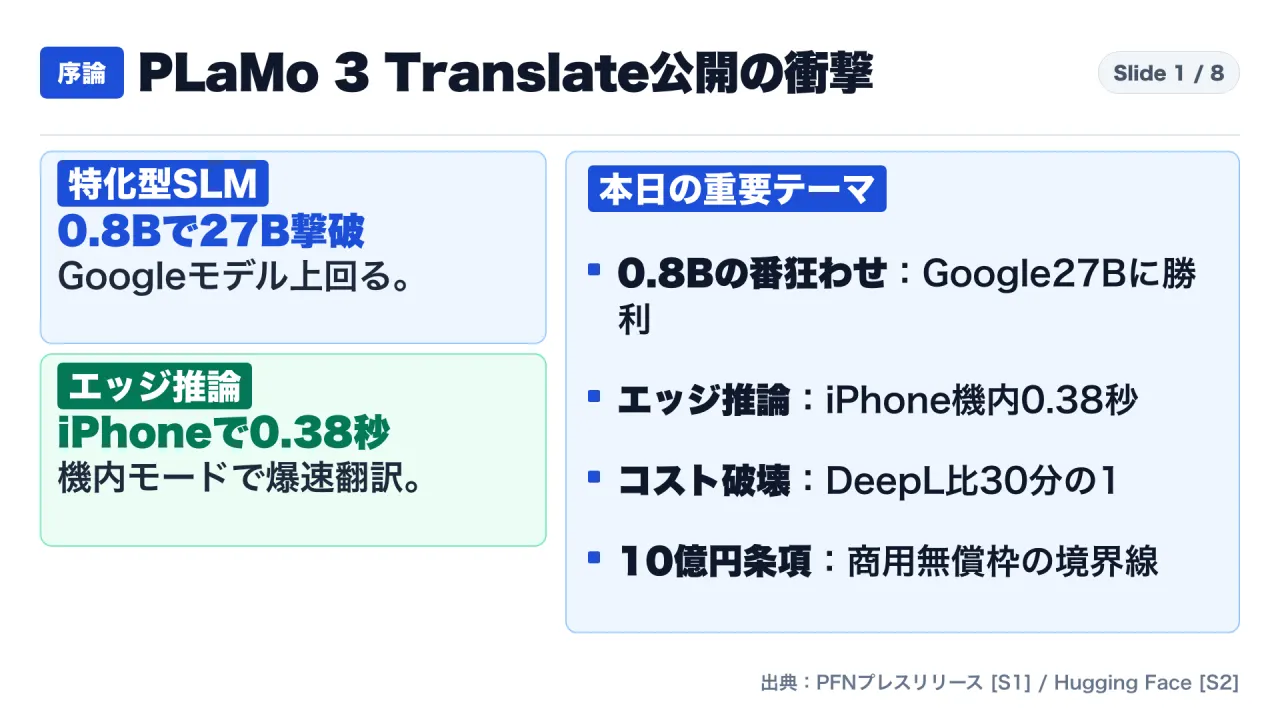
- Core Thesis: On November 5, 2026, Japanese artificial intelligence pioneer Preferred Networks (PFN) released open weights on Hugging Face for “PLaMo 3 Translate,” a dedicated multi-lingual translation model family spanning four parameter sizes: 0.8B, 2B, 8B, and 31B across 53 languages.
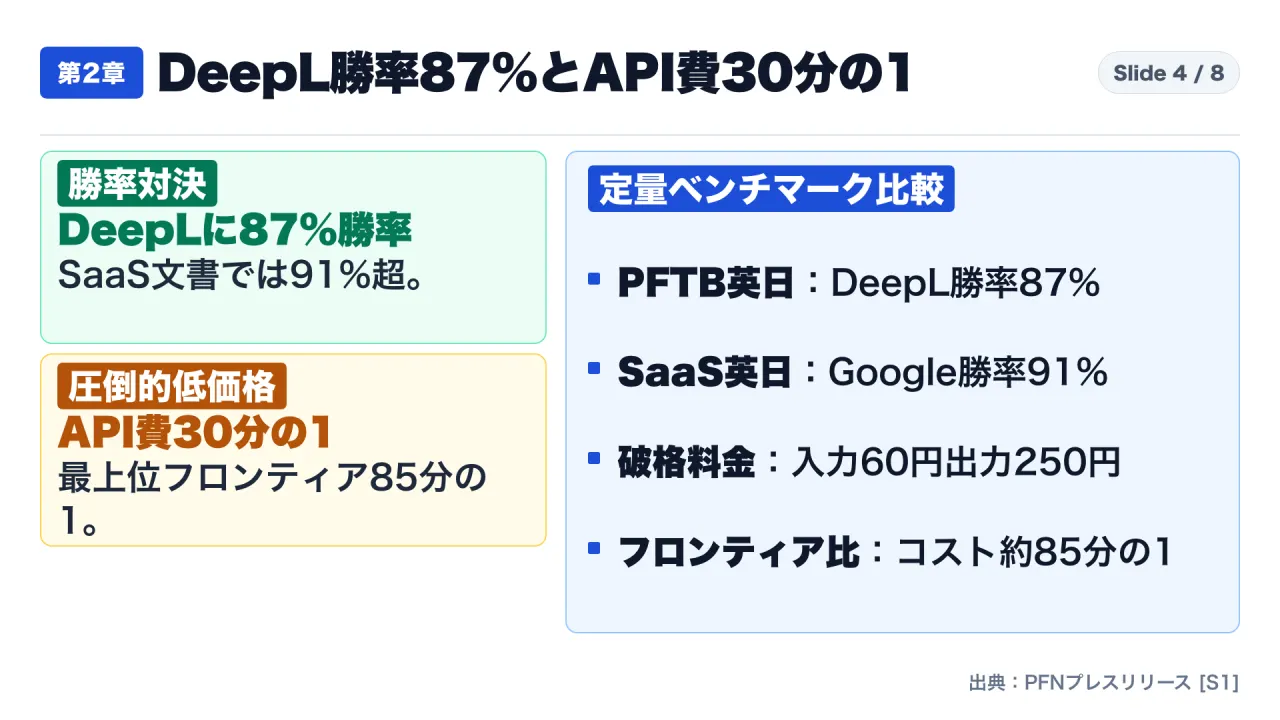
- The Specialized Small Model Upset: The compact 0.8B model outperformed Google’s 30x larger TranslateGemma 27B and Tencent’s Hy-MT2 on Japanese-to-English and English-to-Japanese benchmark suites. The flagship 31B variant achieved an 87.00% head-to-head win rate against DeepL and 91.47% against Google Translate, while reducing API token costs by roughly 30x compared to commercial translation APIs (and ~85x compared to frontier models).
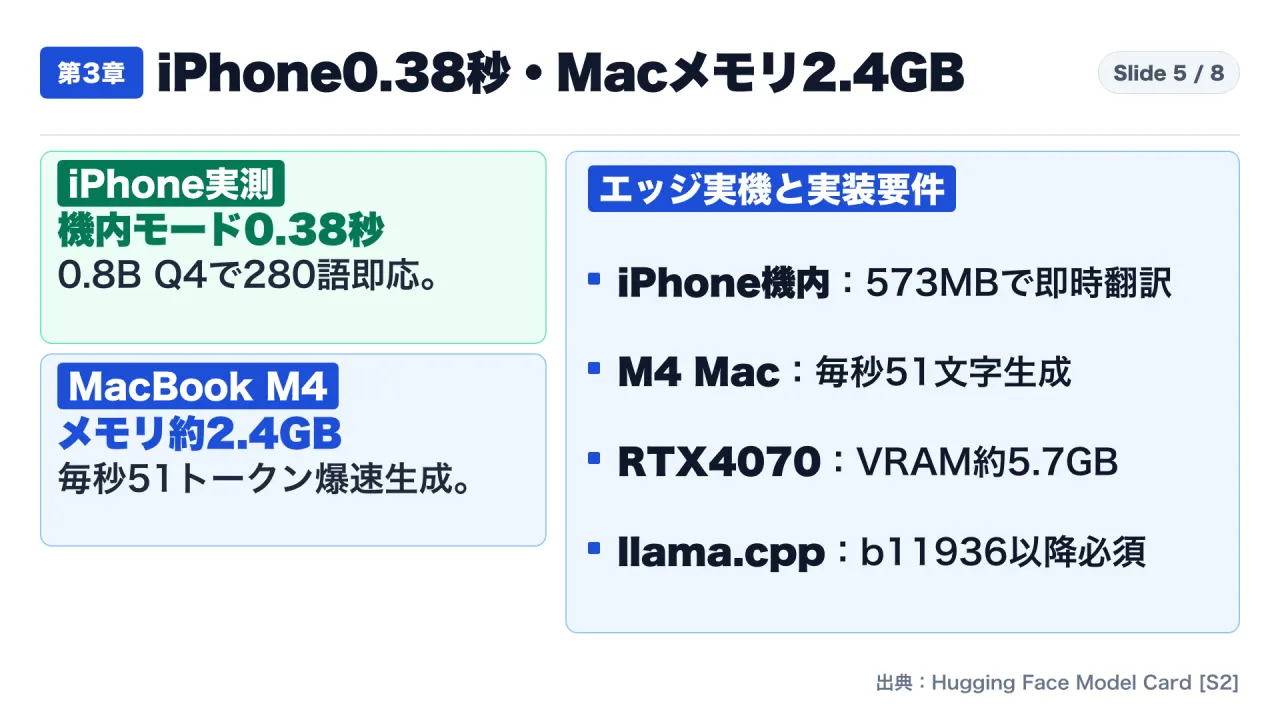
- Edge Inference Reality: Running in complete airplane mode on an iPhone 17 Pro, the 0.8B quantized model translates ~280 words in 0.387 to 0.515 seconds. On an Apple Silicon M4 Mac, the 2B model sustains 51 tokens per second while occupying only 2.4 GB of RAM, enabling true on-device, zero-egress confidential translation for proprietary IP and enterprise contracts.
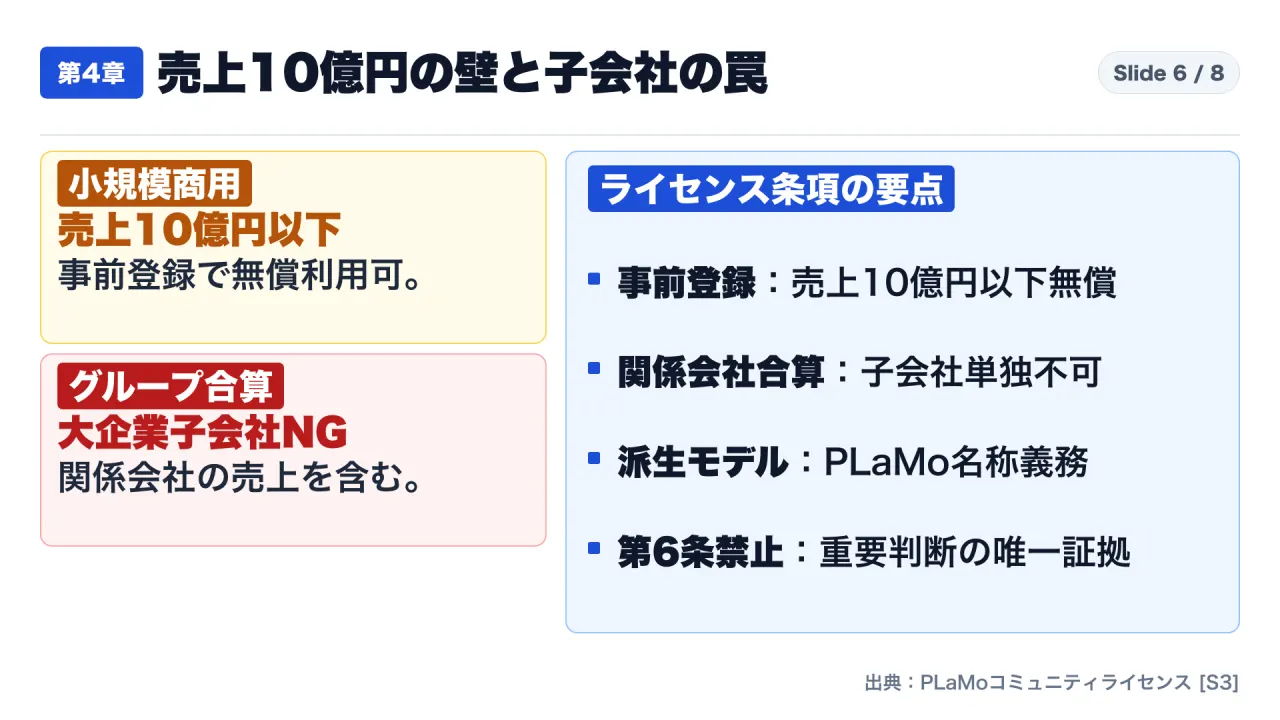
- The Legal Fine Print: PFN’s “PLaMo Community License” permits free commercial use only if the aggregate annual revenue of the user and all affiliated corporate entities does not exceed ¥1 billion (~$6.5 million USD). Large enterprise subsidiaries with nominal individual revenue remain strictly liable for commercial licensing fees under the parent affiliate clause.
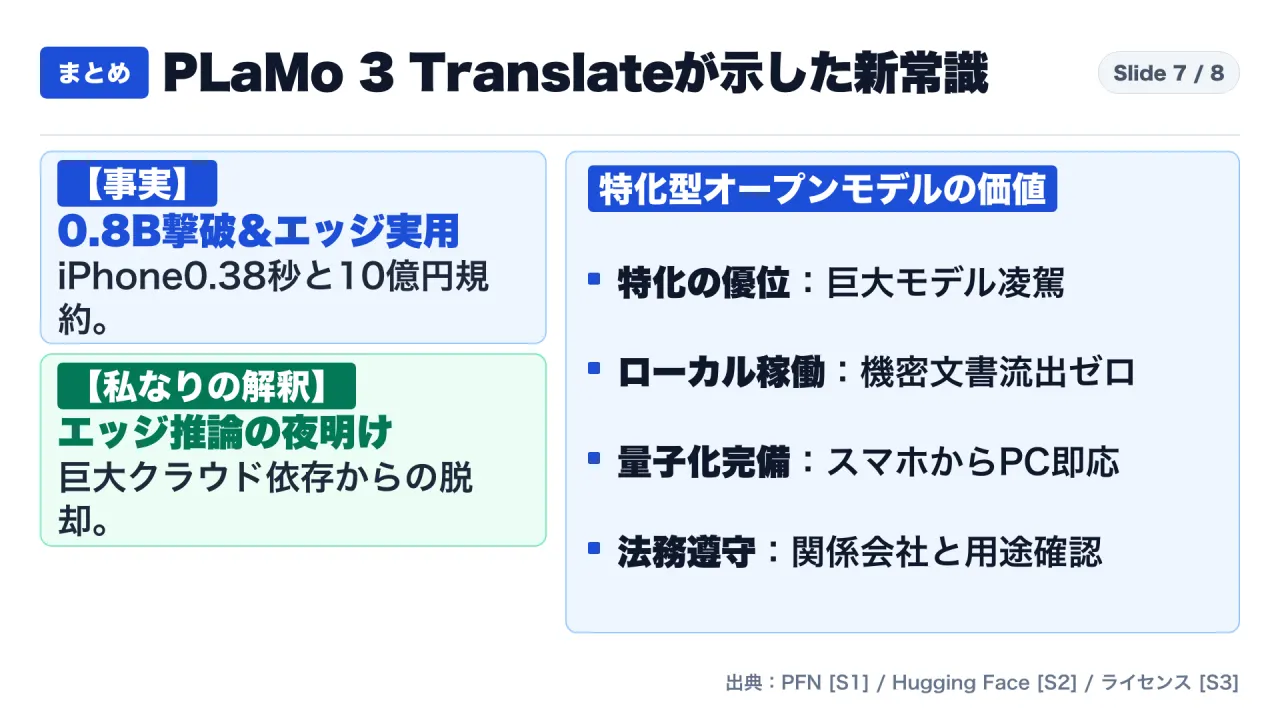
- Architectural Paradigm Shift: The release demonstrates that domain-specific Small Language Models (SLMs) trained on highly curated corpora can decisively beat general-purpose frontier giants on defined enterprise tasks, eliminating cloud API latency and confidential data leakage.
1. Architectural Teardown: The 37.3-Billion-Token Data Refinement Pipeline
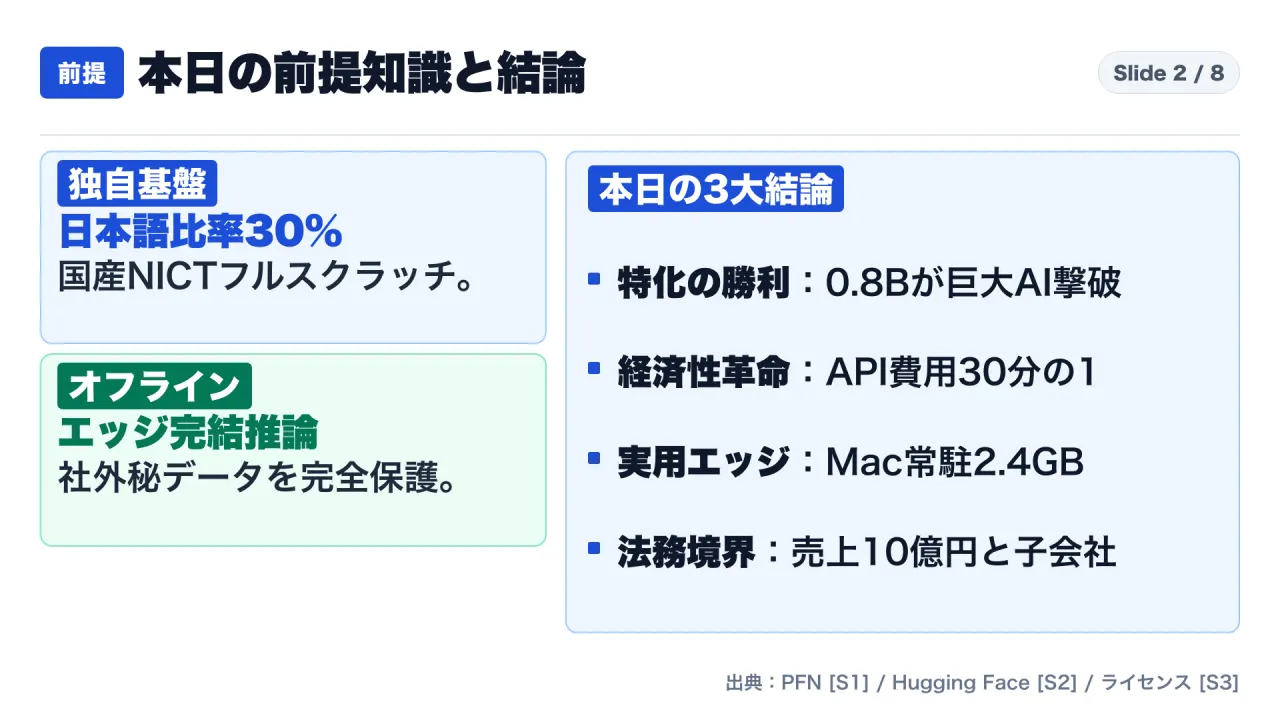
PLaMo 3 Translate is built upon “PLaMo 3 NICT,” a foundational pretraining base developed jointly by PFN and Japan’s National Institute of Information and Communications Technology (NICT).
The Japanese Corpus Advantage and Custom Tokenization
Western frontier models typically allocate under 5% of their pretraining dataset to Japanese text. In contrast, PLaMo 3 NICT dedicated approximately 30% of its pretraining corpus to Japanese. This architectural decision embedded subtle honorific registers (keigo), contextual subject omissions, and domain-specific business phrasing directly into the model’s base weights.
Furthermore, PFN developed a proprietary tokenizer (plamo3 tokenizer) that significantly compresses token consumption per 1,000 characters in both Japanese and English. Combined with a native 32,768-token context window, the model processes multi-page technical manuals and complex legal contracts without segmenting context across document chunks.
The 4-Phase Post-Training Data Refinement
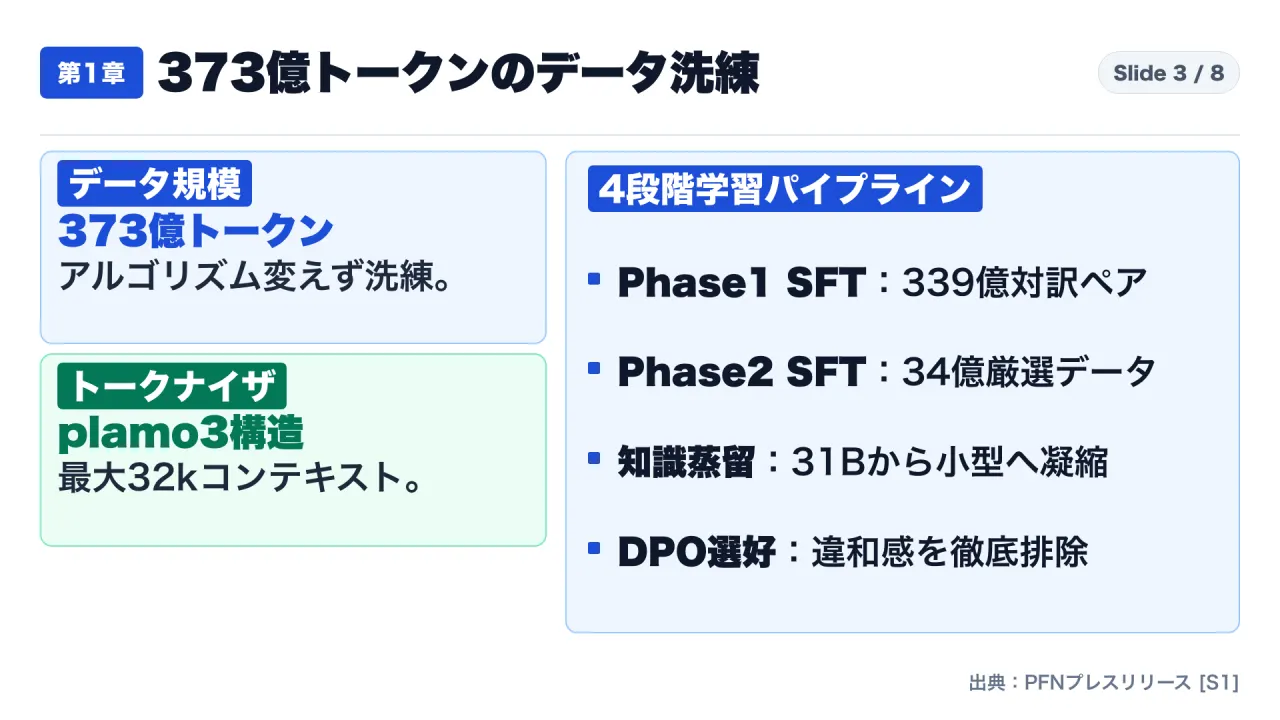
Rather than altering underlying transformer architectures or hyperparameter schedules, PFN achieved its quality breakthrough by filtering and structuring a 37.3-billion-token post-training dataset through four rigorous stages:
| Training Phase | Dataset Volume | Primary Technical Methodology | Concrete Architectural Outcome |
|---|---|---|---|
| Phase 1 SFT | ~33.9 billion tokens | Massive parallel bilingual corpus; tournament-style synthetic data pairing and back-translation | Foundation of multilingual translation fluency across 53 supported languages |
| Phase 2 SFT | ~3.4 billion tokens | Curated corpora of academic papers, technical patents, corporate disclosures, and web content | Contextual alignment, technical terminology precision, and natural phrasing |
| Knowledge Distillation | N/A (Algorithmic) | 31B teacher model parameter space compressed into 0.8B, 2B, and 8B student architectures | Transfer of large-model contextual reasoning into compact edge models |
| Direct Preference Optimization (DPO) | N/A (Algorithmic) | Pairwise preference training optimizing chosen against rejected translation variants | Elimination of literal translation artifacts, hallucinated particles, and repetitive phrasing |
2. Benchmark Verification: DeepL 87% Win Rate and 1/30th API Economics
PFN’s published empirical evaluations demonstrate that domain-specialized models can surpass general-purpose frontier LLMs and commercial translation services on standardized benchmarks.
Quantitative Benchmark Matrix
| Evaluation Benchmark / Pair | PLaMo 3 8B Score | TranslateGemma 27B Score | PLaMo 3 31B vs. DeepL Win Rate | PLaMo 3 31B vs. Google Translate Win Rate |
|---|---|---|---|---|
| PFTB (EN to JA / charsim) | 0.547 | 0.438 | 87.00% | 86.00% |
| PFTB (JA to EN / charsim) | 0.672 | 0.634 | 58.00% | 71.00% |
| SaaS Enterprise Test (EN to JA) | 0.571 | 0.395 | 73.82% | 91.47% |
| WMT24++ (EN to JA / COMET-22) | 0.879 | 0.882 | 59.17% | 70.62% |
| FLORES+ (JA to Multilingual / chrF++) | 43.40 | 42.17 | Not Evaluated | Not Evaluated |
Across primary benchmark suites, the 8B PLaMo variant consistently outperformed Google’s TranslateGemma 27B—a model more than three times its size. Most remarkably, even the 0.8B parameter variant exceeded TranslateGemma 27B in English-to-Japanese and multilingual FLORES+ evaluations. In head-to-head human and automated blind preference evaluations, PLaMo 3 31B registered an 87.00% win rate against DeepL and a 91.47% win rate against Google Translate on SaaS enterprise translation datasets.
Disruption in Token Economics
Commercial translation APIs charge premium rates for automated translation. PLaMo API pricing is structured at:
- Input: ¥60 ($0.39) per 1 million tokens.
- Output: ¥250 ($1.62) per 1 million tokens.
This structure delivers equivalent or superior translation quality at roughly 1/30th the operational expense of commercial translation APIs. When compared to general-purpose frontier models (such as Claude 3.5 Sonnet / Fable tiers), which scored marginally higher on certain literary edge cases, PLaMo API operates at approximately 1/85th the compute cost.
3. Real-World Edge Benchmarking: iPhone Offline Latency and Local Hardware Footprint
PFN accompanied its open weights release with seven pre-configured quantization formats across 28 repositories (BF16, FP8, W4A16, W4AFP8, NVFP4, GGUF, and MLX-4bit), enabling immediate deployment on commodity consumer hardware without cloud transmission.
On-Premise & Edge Inference Architecture:
┌────────────────────────────────────────────────────────────────────────┐
│ Complete Air-Gapped Data Isolation Boundary                            │
│ [Confidential R&D Specs / M&A Filings / Patent Drafts]                 │
│                               │                                        │
│                               ▼ (Zero External Network Traffic)        │
│ ┌────────────────────────────────────────────────────────────────────┐ │
│ │ Local Edge Execution Environments                                  │ │
│ │ • iPhone 17 Pro (Offline Airplane Mode): 0.8B Q4_K_M (573 MB)      │ │
│ │   → 280-word literature text translated in 0.387s to 0.515s        │ │
│ │ • MacBook M4 (16GB RAM): 2B Q4_K_M (1.81 GB)                       │ │
│ │   → 2.4 GB resident RAM / 51.6 tokens per second throughput        │ │
│ │ • Workstation GPU (RTX 4070 12GB): 8B Q4_K_M (5.28 GB)             │ │
│ │   → 5.7 GB VRAM across 33 layers (16k context window)              │ │
│ └────────────────────────────────────────────────────────────────────┘ │
│                               │                                        │
│                               ▼                                        │
│ [High-Fidelity Translated Documents / Zero Data Egress]                │
└────────────────────────────────────────────────────────────────────────┘
Empirical Hardware Measurements
- iPhone 17 Pro (Offline Airplane Mode via PocketPal AI):
- Model:
plamo-3-translate-0.8b(GGUF, Q4_K_M, 573 MB binary). - Jane Austen Pride and Prejudice opening excerpt (~280 words): 0.515 seconds.
- Albert Einstein Theory of Relativity technical abstract: 0.387 seconds.
- Model:
- Apple Silicon M4 MacBook (16GB Unified RAM, llama.cpp b11936):
- Model:
plamo-3-translate-2b(Q4_K_M, 1.81 GB). - System resource consumption: 2.4 GB resident RAM.
- Generation throughput: 50.7 to 51.6 tokens per second (single sentences translated in 0.22 to 0.46 seconds; 9/10 score on complex Japanese sentence tests).
- Model:
plamo-3-translate-8b(Q4_K_M, 5.28 GB): 5.3 GB resident RAM, generating at 17.1 to 18.0 tokens per second.
- Model:
- NVIDIA GeForce RTX 4070 (12GB VRAM):
- Model:
plamo-3-translate-8bfully offloaded across all 33 GPU layers with a 16,000-token context window consumed 5,733 MiB (~5.7 GB) of VRAM.
- Model:
Critical Implementation Safeguards
- Runtime Binary Version: Execution via llama.cpp requires build 11936 or later to support PFN’s custom tokenizer. Required flags include
--chat-template-file chat_template.jinja --no-prefill-assistant. - Mandatory Stop Tokens: Production inference must explicitly specify
stop: ["<|plamo:tag|>", "<|plamo:bos|>"]to prevent generation overflow. - Hugging Face Transformers: Library version 5 changes generation defaults; enterprise deployments should pin
transformers<5.0.0or load via nativeAutoModelForCausalLM.
4. Legal Compliance and the Enterprise Subsidiary Pitfall
While the weights are openly downloadable, corporate legal departments must carefully review the terms of the PLaMo Community License.
Three-Tier Commercial Licensing Structure
- Non-Commercial Research: Academic research, educational use, and personal evaluation are completely free of charge and require no formal registration.
- Small-Scale Commercial Tier (Free Usage): Commercial deployment is permitted without license fees only if the aggregate gross revenue of the user and its affiliated entities in the preceding fiscal year was ¥1 billion or less (~$6.5 million USD). Prior registration via PFN’s web portal is mandatory.
- Large Commercial Tier (Paid Enterprise Contract): Any enterprise whose group-wide revenue exceeds ¥1 billion must negotiate an individualized commercial license with PFN.
The Subsidiary Trap: Corporate Group Revenue Aggregation
A critical pitfall involves enterprise subsidiaries. The license terms explicitly define revenue on an affiliated group basis under Japanese corporate law concepts.
For example, if an enterprise establishes a nimble, newly incorporated internal innovation subsidiary with annual revenue of only ¥50 million, that subsidiary cannot claim the free commercial tier if its parent corporate conglomerate generates over ¥1 billion in consolidated revenue. Deploying PLaMo weights commercially within such a subsidiary without an enterprise contract constitutes a direct license violation.
Derivative Work Branding and Prohibited High-Stakes Use
- Naming Rights Inheritance: If an organization fine-tunes PLaMo 3 Translate or distills its outputs into another AI model, the resulting derivative model must explicitly include “PLaMo” in its public nomenclature and pass through the community license terms.
- Article 6 Prohibited Use Cases: The license explicitly prohibits deploying PLaMo outputs as the sole evidence or decisive basis in determinations affecting legal rights, medical diagnosis, financial credit underwriting, or employment recruitment decisions.
5. The Structural Shift: Specialized Small Models vs. Monolithic Cloud APIs
PLaMo 3 Translate illustrates a fundamental architectural shift across enterprise generative AI deployments.
The conventional paradigm—routing every enterprise workflow to centralized hyperscaler frontier models via cloud APIs—incurs three compounding penalties: variable per-token operational expenditures, round-trip network latency, and persistent data privacy risks.
By contrast, specialized Small Language Models (SLMs) trained on domain-refined corpora deliver three decisive operational advantages:
- Total Security Perimeter Integrity: Proprietary IP, unfiled patent disclosures, and customer data never leave local hardware boundaries.
- Deterministic Infrastructure Costs: Cloud OPEX is replaced by fixed, amortized hardware assets already present in employee laptops or on-premise servers.
- Sub-Second Real-Time Responsiveness: Local execution eliminates TLS handshakes and queueing delays, enabling seamless inline translation inside IDEs and internal messaging clients.
6. Enterprise Implementation Playbook: 3 Tactical Steps for Architecture Teams
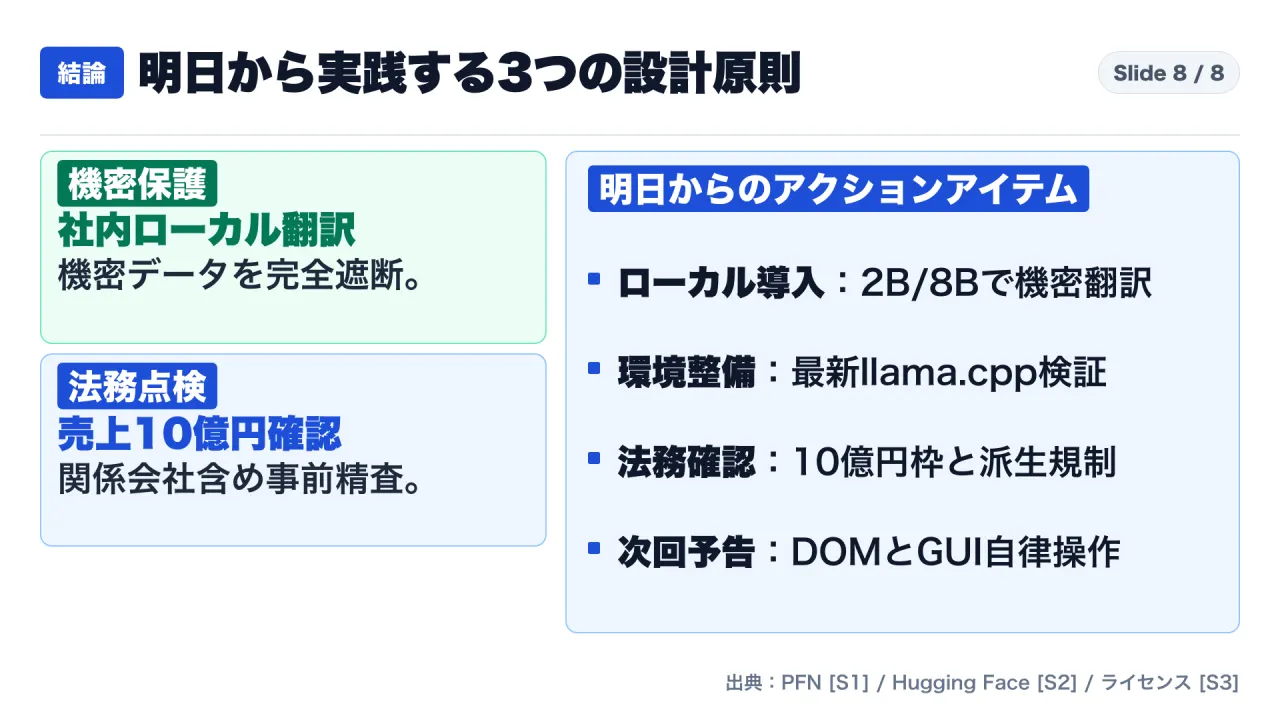
- Deploy Air-Gapped Local Translation Services for High-Risk Documents:
Target unreleased product blueprints, M&A due diligence files, and legal agreements. Package
plamo-3-translate-2bor8bGGUF binaries into containerized local endpoints on employee MacBooks or on-premise servers. - Standardize llama.cpp Runtime Infrastructure:
Build approved internal Docker base images containing llama.cpp build 11936+, pre-loading
chat_template.jinja, and configuring mandatory stop tokens (<|plamo:tag|>,<|plamo:bos|>) to ensure deterministic outputs across internal developer tooling. - Conduct Corporate Affiliate Revenue Audits Before Production Rollout: Audit consolidated corporate revenue across all affiliated parent and sister entities. If group revenue exceeds ¥1 billion, initiate formal licensing discussions with Preferred Networks to ensure regulatory and contractual compliance before embedding weights into production software.
Primary Sources & Verified References
- Preferred Networks Official Press Release: Release of Open Weights for PLaMo 3 Translate Specialized Translation LLM (https://www.preferred.jp/ja/news/pr20261105/)
- Hugging Face Model Repository:
pfnet/plamo-3-translate-2bModel Card, Tokenizer Config, and Quantized Benchmark Suite (https://huggingface.co/pfnet/plamo-3-translate-2b) - Preferred Networks Official Legal Terms: PLaMo Community License Agreement and Commercial Guidelines (https://www.preferred.jp/ja/projects/plamo/community-license/)
- National Institute of Information and Communications Technology (NICT): Collaborative Research Documentation on Japanese Language Foundation Models (https://www.nict.go.jp/)
This article analyzes primary technical and financial disclosures for informational purposes only and does not constitute investment advice.