Why ING Put $500M in AI Datacenter Loans Up for Sale as Asian Tech Stocks Plunged ── Inside the Stargate Force Majeure, KOSPI Circuit Breakers, and the $900B WeWork-Style Debt Mismatch
How construction delays and power grid bottlenecks triggered credit tightening across AI datacenter loans, sparking an 8.8% plunge in Korean equities and exposing a structural asset-liability divide.
Japanese Edition: https://consuloji.substack.com/p/ingstargate5ai889000wework46
Executive Summary & Key Analytical Takeaways
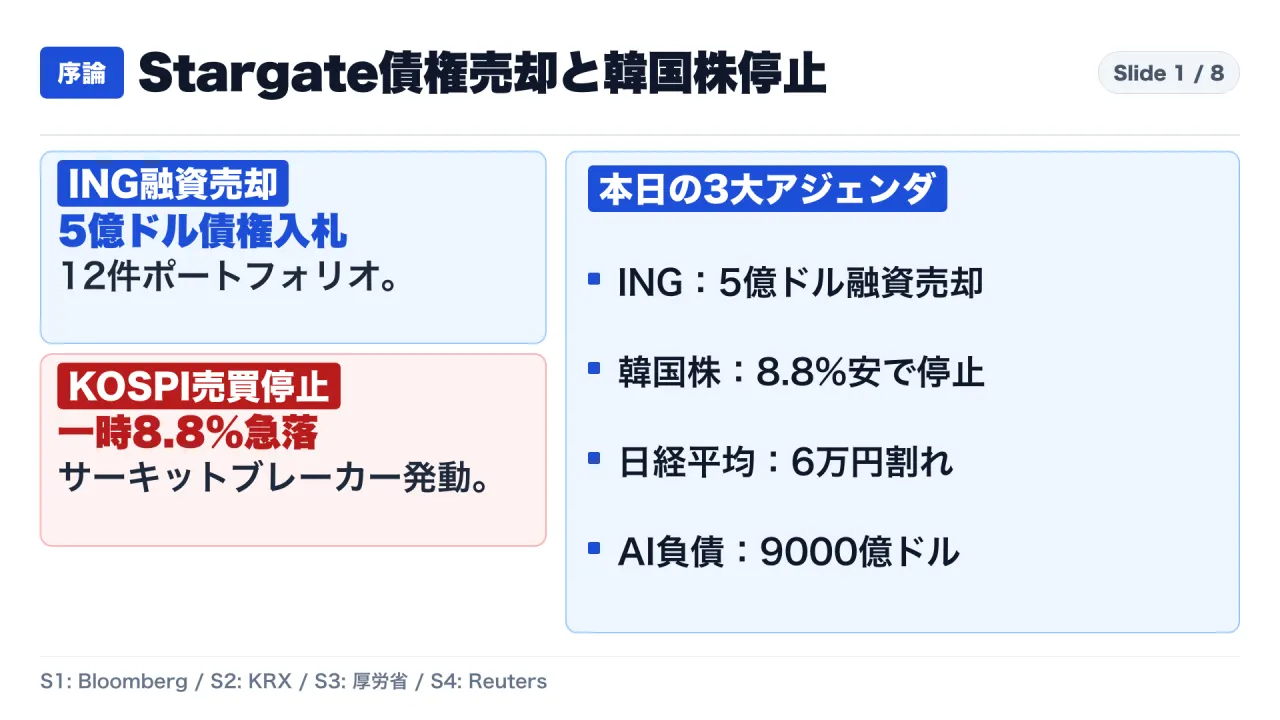
- Core Thesis: On November 6, 2026, global financial and technology markets experienced a coordinated structural fracture. Dutch banking giant ING Group initiated an auction to offload a $500 million portfolio of 12 datacenter loans, including a $25 million credit facility for the OpenAI-SoftBank-Oracle “Stargate” project in Doña Ana County, New Mexico, where Oracle had invoked Force Majeure due to substation delays. This signaled that heavy electrical equipment bottlenecks and grid interconnection delays had crossed from physical engineering obstacles into the debt capital markets.
- The Asian Market Contagion: Following a single-day $2.3 trillion to $3.0 trillion market capitalization wipeout across US technology equities (Nasdaq down 5.5%, SOX semiconductor index down 12.0%), Asian exchanges faced violent selling. South Korea’s KOSPI plunged 8.8% intraday, breaking below the 5,000 threshold and triggering a mandatory 20-minute circuit breaker halt as SK Hynix fell 13% and Samsung Electronics dropped 10%. Taiwan’s TAIEX fell 8.3%.
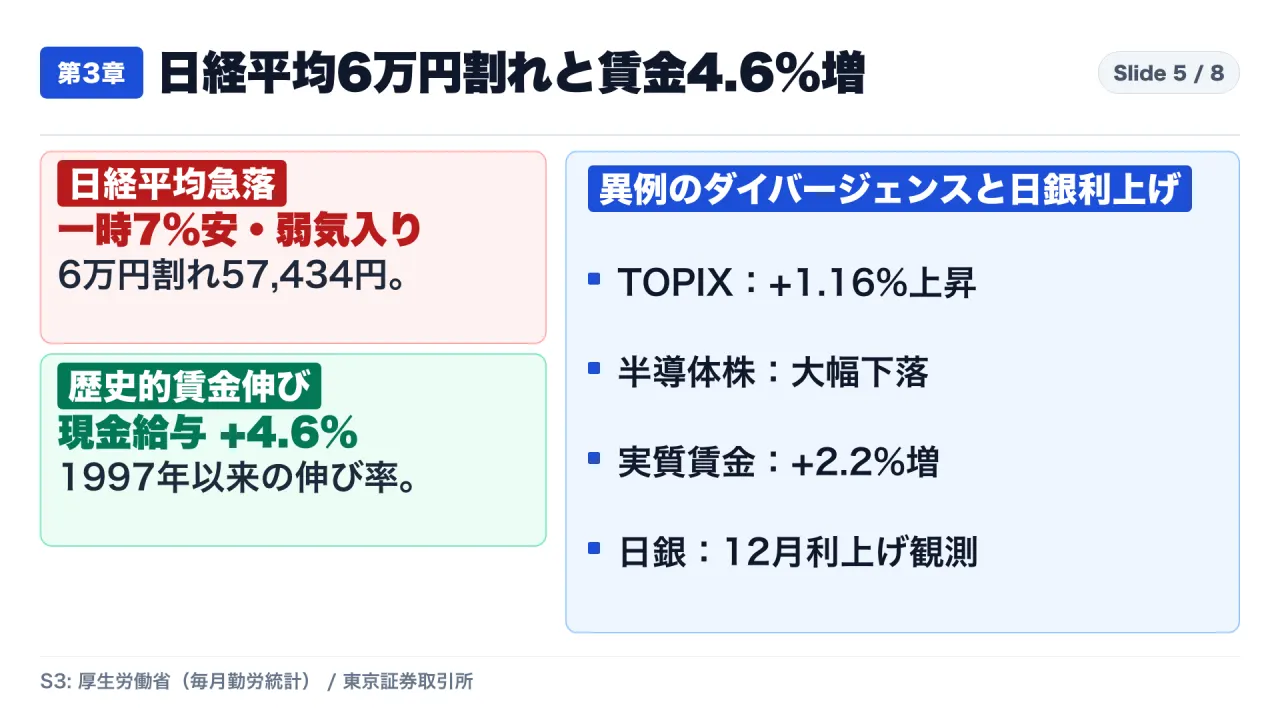
- The Japanese Market Divergence: While Japan’s semiconductor-weighted Nikkei 225 dropped over 7% intraday to 57,434 (entering technical bear market territory down >20% from its June 2026 peak of 72,366), the broader TOPIX index rallied +1.16%. The catalyst was Japan’s Ministry of Health, Labour and Welfare reporting a 4.6% year-on-year surge in September total cash wages (real wages +2.2%), cementing expectations for a Bank of Japan December interest rate hike and triggering an aggressive rotation into domestic banking, insurance, and cash-generative value equities.
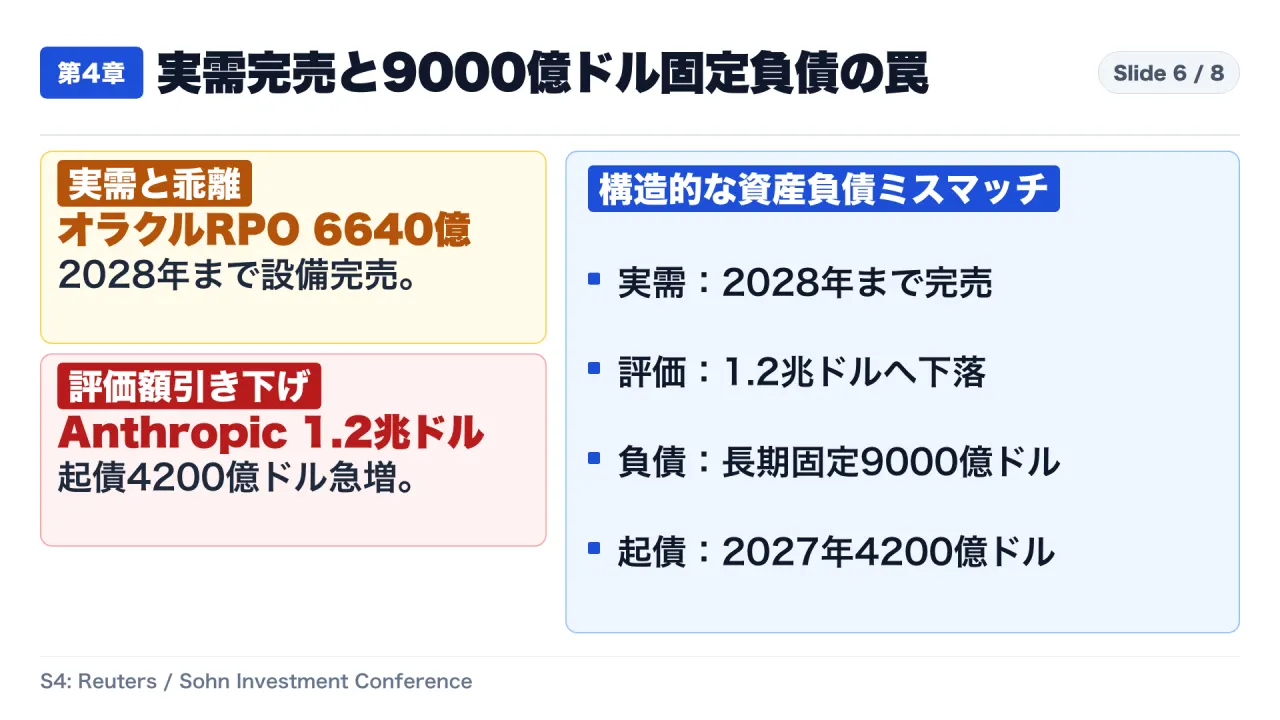
- The $900 Billion Fixed Debt Trap: Although operational datacenter capacity remains pre-booked through 2028 and Oracle’s Remaining Performance Obligation (RPO) reached $664 billion, private AI valuations face severe multiple compression. Anthropic’s IPO valuation range was marked down from $2 trillion to $1.2T–$1.3 trillion, and OpenAI’s funding round was capped at ~$11 billion against a $30 billion target. AI foundation labs face an estimated $900 billion in long-term non-cancellable lease and power commitments against short-term, churnable API subscription revenue—a classic “WeWork-style asset-liability mismatch” compounding an “Airline Paradox” where massive capital intensity dilutes return on invested capital (ROIC).
1. Credit Markets Blink: ING’s $500M Loan Auction and Oracle’s Force Majeure
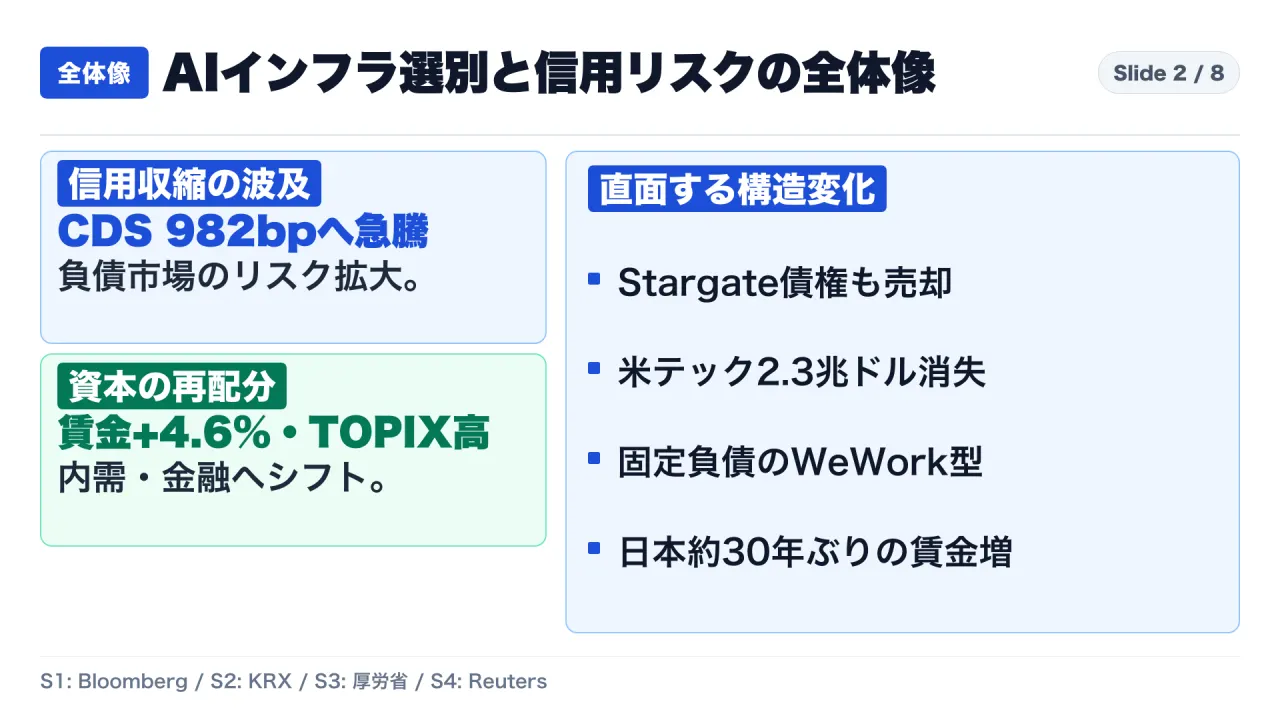
Historically, the rapid construction of AI datacenters has been funded through private project finance, syndicated commercial bank debt, and high-yield asset-backed loans collateralized by GPU clusters. On November 6, 2026, Bloomberg disclosed that European banking major ING Group opened bidding on a 12-loan datacenter portfolio valued at approximately $500 million, with a minimum bid threshold of $10 million and a bid deadline of November 19, 2026.
The catalyst that unsettled debt markets was the inclusion of a $25 million loan tranche issued to the Doña Ana County, New Mexico campus of Project Stargate—the national-scale computing initiative spearheaded by OpenAI, SoftBank Group, and Oracle. Disclosures confirmed that Oracle formally issued a Force Majeure notice to the site developer, citing insurmountable utility connection delays and substation transformer lead times.
Credit default swap (CDS) spreads across the sector widened immediately. CoreWeave’s 5-year CDS spread jumped to 982 basis points, signaling sharp distress in debt-financed GPU leasing models, while Oracle’s CDS spread widened to 288 basis points.
| Entity / Project | Asset / Metric Under Review | Quantitative Condition / Value | Structural Implications & Credit Significance |
|---|---|---|---|
| ING Loan Portfolio | Debt Auction Volume | 12 facilities totaling ~$500M ($10M minimum bid) | Major European commercial bank exiting direct datacenter credit exposure |
| Stargate (New Mexico) | Auctioned Credit Tranche | $25M facility (Force Majeure declared) | Oracle invokes contractual relief on flagship OpenAI/SoftBank infrastructure campus |
| CoreWeave | 5-Year CDS Spread | Spiked to 982 bps | Severe credit repricing for specialized GPU asset-collateralized borrowing |
| Oracle Corporation | 5-Year CDS Spread | Widened to 288 bps | Balance sheet pressure from rapid datacenter lease commitments |
| Texas ERCOT Interconnection | Large-Load Queue | 474 GW queued (~22.5 GW grandfathered) | New Governor Gina Hinojosa eliminates incentives; mandates ratepayer protections |
| Electrical Equipment Supply | Procurement Lead Times | Transformers 144 weeks; turbines booked to 2031 | 18-month datacenter shell vs. 3-year substation energization mismatch |
| Amazon | Projected 2026 CapEx | ~¥220 billion ($220B) | Immense capital expenditure suppressing quarterly free cash flow |
| Meta Platforms | External Debt Raised | $97.5 billion | Transitioning from balance sheet cash to external bond financing |
The Physical Root Causes: 144-Week Lead Times and Ratepayer Politics
The underlying friction is physical rather than financial. Datacenter shells can be erected in 12 to 18 months, but generator step-up (GSU) transformers average a 144-week (2.8-year) manufacturing lead time, while heavy-duty gas turbines are sold out through 2031.
This physical mismatch is amplified by political resistance. In Texas, where roughly 25% of planned US datacenter capacity is concentrated, ERCOT’s large-load queue reached 474 GW. Newly elected Democratic Governor Gina Hinojosa grandfathered ~22.5 GW of projects already under active construction but eliminated municipal tax abatements, mandated union labor, banned the pass-through of electrical transmission upgrades to residential utility bills, and abolished non-disclosure agreements (NDAs) for tech tenants. Nationally, 40 out of 41 local ballot referendums rejected datacenter zoning proposals, demonstrating the rise of “ratepayer politics.”
2. The Asian Semiconductor Cascade: KOSPI Circuit Breakers and Supply Chain Liquidation
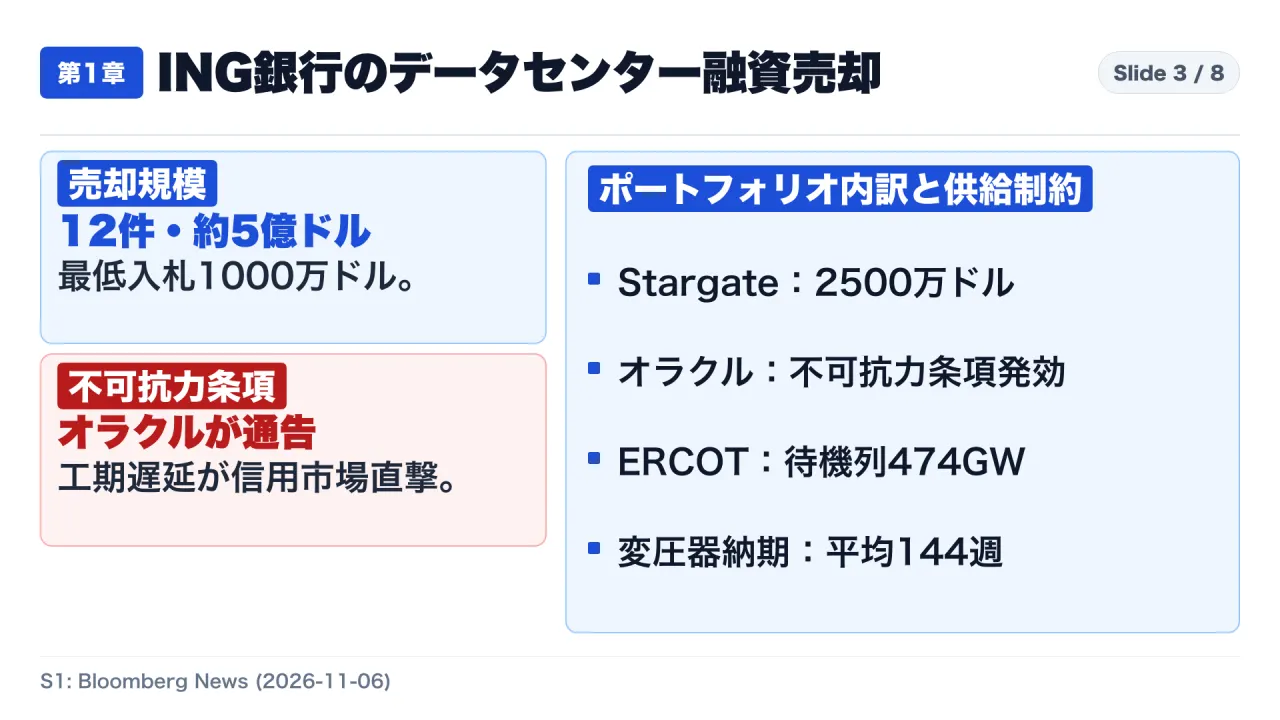
The credit repricing in the US tech sector triggered an immediate liquidation wave across Asian equity markets. Wall Street experienced a single-day loss of $2.3 trillion to $3.0 trillion in equity value as the Nasdaq Composite fell 5.5%, the Nasdaq 100 dropped 6.4%, and the Philadelphia Semiconductor Index (SOX) collapsed 12.0%.
When Asian markets opened on November 6, South Korea’s Korea Exchange (KRX) bore the direct impact of high-beta semiconductor exposure. The benchmark KOSPI index plunged 8.8% intraday, breaching the 5,000-point level and forcing the exchange to trigger a 20-minute circuit breaker trading halt alongside a futures sell-sidecar.
| Market Index / Equities | Price Movement & Trough Level | Regulatory Circuit Breakers & Measures | Primary Operational Drivers |
|---|---|---|---|
| US Nasdaq Composite | -5.5% drop | $2.3T–$3.0T aggregate market cap wiped out | CapEx monetization and return on capital scrutiny |
| US SOX Semiconductor | -12.0% collapse | Broad-based selling across chip equipment | Datacenter construction and power energization delays |
| Korea KOSPI Index | -8.8% intraday (broke below 5,000) | 20-minute market-wide trading halt (circuit breaker) | High-beta Asian supply chain margin calls |
| SK Hynix | -11.7% to -13.0% intraday | Downward pressure on memory leaders | High Bandwidth Memory (HBM3E/HBM4) customer concentration |
| Samsung Electronics | ~-10.0% close | Substantial drag on broader index weighting | Memory pricing pressure and advanced packaging delays |
| Taiwan TAIEX Index | -8.3% drop | TSMC decline of 8.5% | Foundry order adjustments and US hyperscaler pacing |
SK Hynix—the dominant supplier of High Bandwidth Memory (HBM3E) to NVIDIA—plunged as much as 13%, while Samsung Electronics fell roughly 10%. In Taipei, the TAIEX dropped 8.3% as TSMC fell 8.5%. Investors recognized that if US datacenter completions are delayed by transformer shortages and loan sales, GPU shipments and memory orders face unavoidable schedule revisions.
3. Japan’s Remarkable Divergence: Nikkei 225 Bear Market vs. TOPIX Value Inflow
Japanese equity markets exhibited an extraordinary internal divergence on November 6, 2026, demonstrating how index construction and domestic macroeconomic fundamentals interact under global stress.
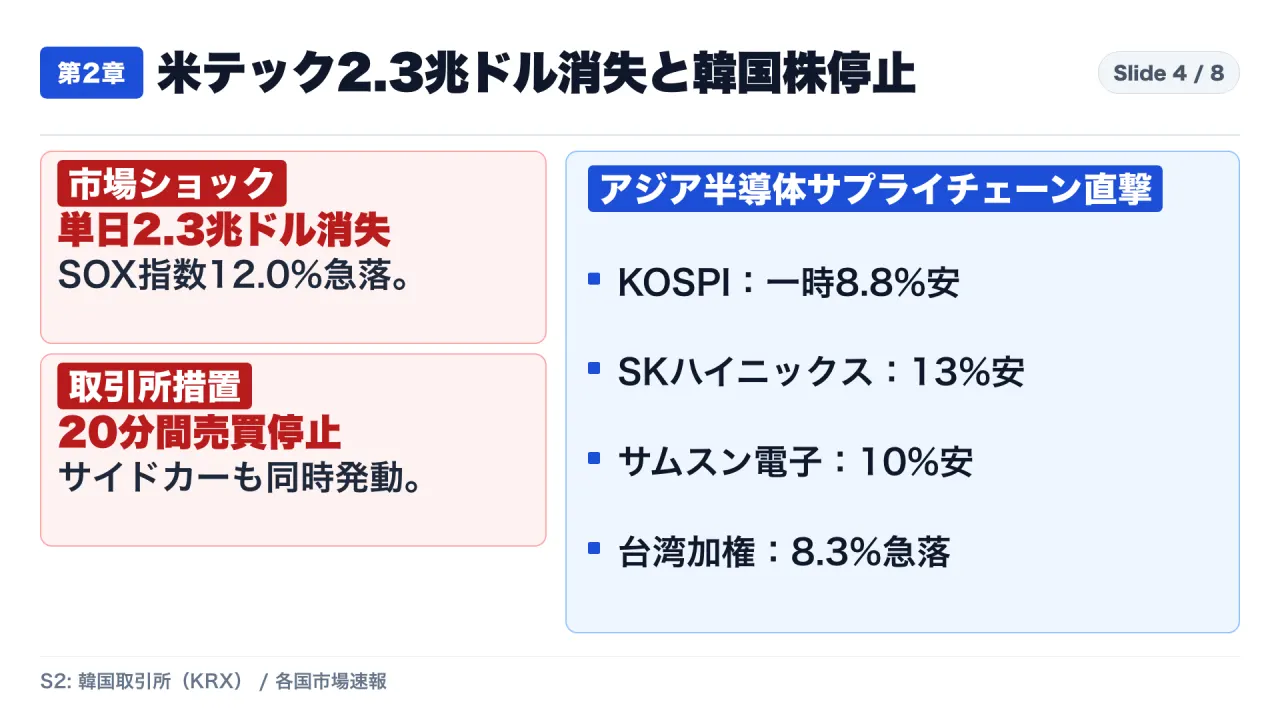
The Nikkei 225 is a price-weighted index heavily skewed toward semiconductor manufacturing equipment. Driven down by Advantest (-15%), Tokyo Electron (-9.5%), and SoftBank Group (-11%), the Nikkei 225 fell more than 7% intraday to 57,434, breaking below 60,000. Having declined over 20% from its June 2026 record peak of 72,366, the Nikkei 225 officially entered technical bear market territory.
Conversely, the market-capitalization-weighted TOPIX index rallied +1.16%. The catalyst was the preliminary September Monthly Labour Survey published by Japan’s Ministry of Health, Labour and Welfare:
- Nominal Cash Wages: +4.6% YoY (beating market consensus of +3.8%, marking the fastest growth since 1997).
- Real Wages: +2.2% YoY (beating consensus of +1.3%).
- Same-Establishment Wage Growth: +4.4% YoY (beating consensus of +2.9%).
This multi-decade high in real wage growth reinforced expectations that the Bank of Japan will implement a 25-basis-point policy rate hike at its December monetary policy meeting. Domestic and international capital fled speculative tech multiples to rotate into Japanese megabanks, life insurance companies, and domestic value equities benefiting from rising net interest margins and falling crude oil prices.
4. The $900 Billion Structural Trap: WeWork Mismatch and the Airline Paradox
To navigate this volatility, institutional analysts must separate physical capacity utilization from equity multiple compression.
Sold-Out Capacity vs. Valuation Multiple Contraction
On a physical level, AI datacenter capacity remains constrained. Commercial wholesale colocation capacity is pre-booked through 2027 and 2028. Oracle’s Remaining Performance Obligation (RPO) rose by $209 billion year-over-year to $664 billion.
However, public equity markets had priced AI leaders to perfection. Minor delays in infrastructure completion triggered sharp multiple contraction. In private markets, Anthropic’s contemplated IPO valuation was marked down from $2.0 trillion to $1.5 trillion, and subsequently to $1.2T–$1.3 trillion (with certain institutional bids indicating $1.0 trillion). Similarly, OpenAI’s latest capital raise closed at ~$11 billion at an ~¥1.25 trillion ($1.25T) valuation, falling well short of its initial $30 billion objective.
Meanwhile, hyperscaler capital expenditure is projected to reach $750 billion to $800 billion in 2026. Because free cash flow cannot fully support this outlay, debt financing has surged, with projected 2027 tech bond issuance estimated at $420 billion.
| Evaluation Metric | Bull Case Data (Physical Capacity Scarcity) | Bear Case Data (Credit & Multiple Compression) |
|---|---|---|
| Datacenter Capacity | Pre-sold through 2028; Oracle RPO at $664B | Enterprise ROI audits under scrutiny; tenant deferral risk |
| AI Unicorn Valuations | Rapid enterprise adoption across software workflows | Anthropic IPO target cut to $1.2T–$1.3T; OpenAI round trimmed to $11B |
| Financing Structure | High asset backing in advanced compute infrastructure | Projected 2027 tech debt issuance expands to $420B at elevated interest rates |
| Capital Efficiency | Generative AI driving enterprise productivity | Airline Paradox: High CapEx, regulation, and commoditization eroding ROIC |
The $900B Asset-Liability Mismatch in AI Foundation Labs:
┌────────────────────────────────────────────────────────────────────────┐
│ Long-Term Non-Cancellable Liabilities (~$900 Billion Total)           │
│ • 5-to-15-year commercial datacenter triple-net lease agreements      │
│ • Long-term multi-gigawatt power purchase commitments (PPAs)          │
│ • $420B in debt service obligations expanding in 2027                  │
└───────────────────────────────────┬────────────────────────────────────┘
                                    │ Severe structural duration mismatch
                                    ▼
┌────────────────────────────────────────────────────────────────────────┐
│ Short-Term Variable Revenue Streams                                    │
│ • Metered API consumption (cancelable on 0-day notice)                │
│ • Monthly per-seat SaaS subscriptions (cancelable on 30-day notice)   │
│ • Deflationary price competition across token generation               │
└───────────────────────────────────┬────────────────────────────────────┘
                                    │
                                    ▼
┌────────────────────────────────────────────────────────────────────────┐
│ The Credit Resolution: ING Auction, Force Majeure, and CDS Widening   │
└────────────────────────────────────────────────────────────────────────┘
The WeWork Mismatch and the Airline Paradox
Hedge fund managers at the Sohn Investment Conference highlighted two structural parallels:
- The WeWork Asset-Liability Mismatch: Foundation AI labs have entered into an estimated $900 billion in long-term, non-cancellable datacenter leases and multi-gigawatt power purchase agreements. However, their revenue streams consist of metered API calls and monthly subscriptions that enterprise customers can cancel or downscale at will. If token inference pricing continues its deflationary collapse, labs remain locked into hundreds of billions in fixed lease obligations.
- The Airline Paradox: As Warren Buffett famously noted regarding commercial aviation, an industry can fundamentally revolutionize society while failing to generate sustainable returns on invested capital (ROIC) for equity holders due to extreme capital intensity, price wars, and debt burdens.
5. Dissecting the Fault Lines: Verified Facts vs. Analytical Interpretation
Verified Primary Facts
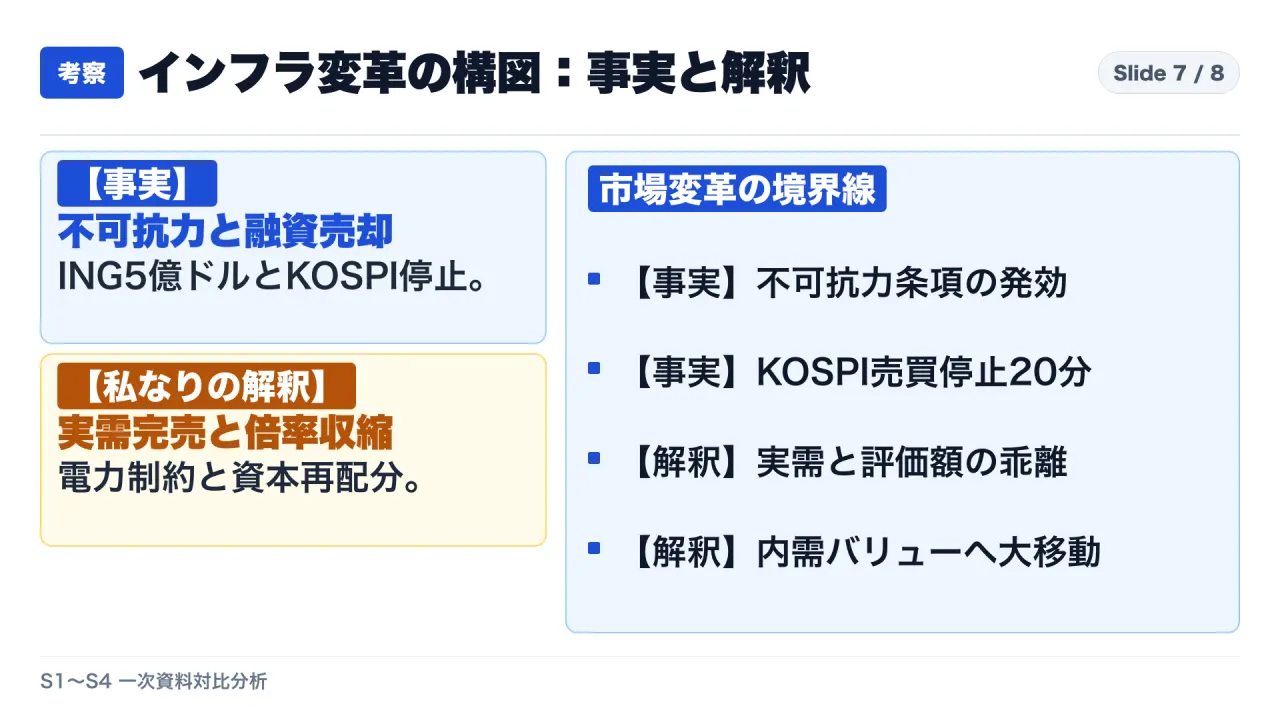
- ING Group launched an auction to sell 12 datacenter loans totaling ~$500 million, including a $25 million facility for the Stargate project in New Mexico.
- Oracle formally declared Force Majeure on the Stargate developer due to substation energization delays.
- Texas ERCOT interconnection queue stood at 474 GW with ~22.5 GW grandfathered under newly tightened regulations.
- GSU transformer lead times average 144 weeks, and heavy gas turbines are sold out through 2031.
- South Korea’s KOSPI plunged 8.8% intraday, triggering a 20-minute trading halt, while SK Hynix fell 13% and Samsung dropped 10%.
- Japan’s September total cash earnings rose 4.6% YoY (highest since 1997), driving TOPIX up +1.16% even as the Nikkei 225 fell 7% into bear territory.
- AI labs carry ~$900 billion in long-term lease commitments, while 2027 tech debt issuance is projected at $420 billion.
Strategic Analytical Interpretation
The critical gating factor in artificial intelligence has moved beyond GPU silicon allocations to balance sheet solvency, electrical equipment delivery, and municipal power approvals. While demand for compute remains indisputable, linear CapEx expansions funded by short-term credit are encountering strict financial boundaries.
6. Strategic & Operational Guidance for Enterprise Decision-Makers
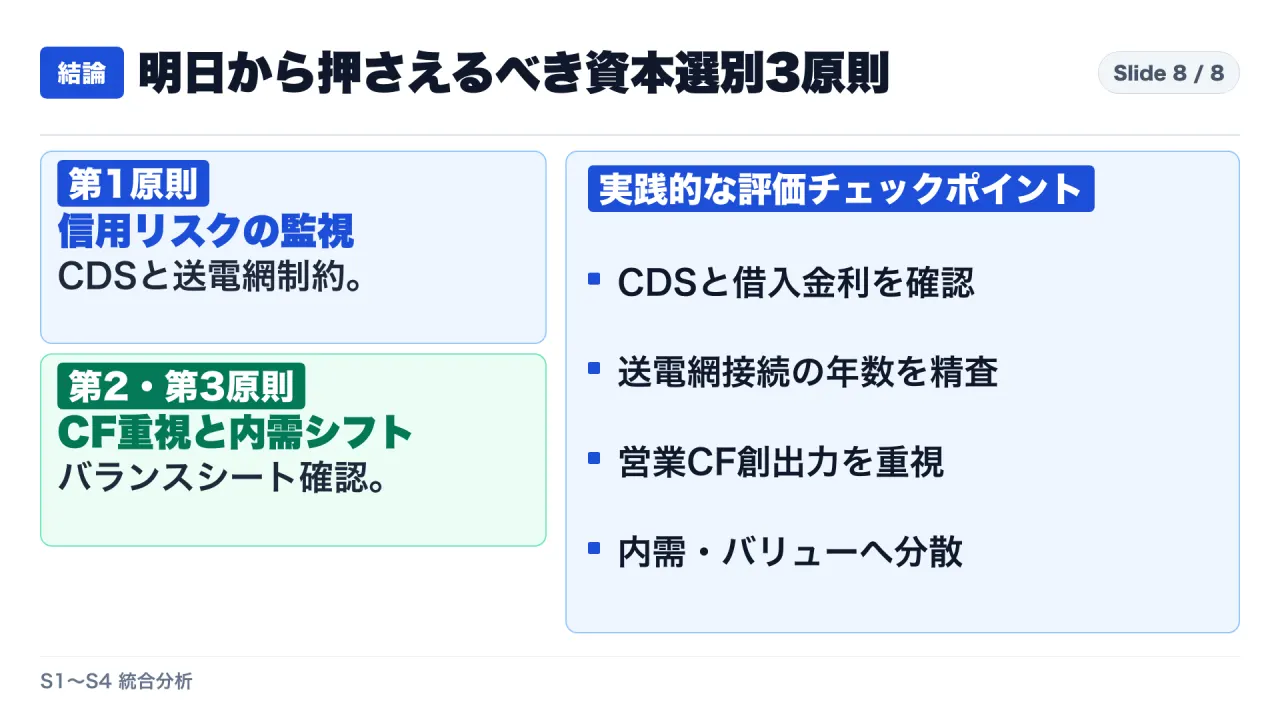
- Monitor Credit Default Spreads and Substation Lead Times: When evaluating infrastructure partners, audit CDS spreads, loan covenants, and equipment delivery schedules (144-week transformer backlogs) rather than relying on vendor press releases.
- Isolate Physical Capacity from Public Market Multiple Compression: Recognize that private unicorn markdowns and bond market selloffs reflect cost-of-capital adjustments rather than an evaporation of physical compute demand. Target operators with investment-grade balance sheets that do not rely on high-yield debt.
- Diversify Portfolios into Cash-Flow-Generative Assets: Rebalance exposure away from pure semiconductor beta into sectors benefiting from wage growth, interest rate normalization, and tangible domestic cash flows.
Primary Sources & Verified References
- Bloomberg News: Official Report on ING’s $500M Datacenter Loan Sale and Stargate Force Majeure Disclosures (https://www.bloomberg.com/news/articles/2026-11-06/ing-puts-500m-data-center-loan-portfolio-up-for-sale-stargate)
- Korea Exchange (KRX): KOSPI Circuit Breaker Trading Halt Records and Market Data (https://global.krx.co.kr/contents/GLB/05/0501/0501110000/GLB0501110000.jsp)
- Ministry of Health, Labour and Welfare (MHLW) Japan: Monthly Labour Survey Preliminary Release (September 2026) (https://www.mhlw.go.jp/toukei/itiran/roudou/monthly/r08/2609p/2609p.html)
- Reuters Financial Coverage: Global Markets Analysis on AI CapEx, Airline Paradox, and Debt Issuance Trends (https://www.reuters.com/markets/global-markets-ai-capex-airline-paradox-wework-mismatch-2026-11-06/)
This article analyzes primary technical and financial disclosures for informational purposes only and does not constitute investment advice.