Why Meta's 90% vs. 76% Muse Memory Score Requires Enterprise Verification
A forensic teardown of Meta’s specialized AI models reveals why synthetic long-context benchmarks fail to guarantee premise retention under real-world workflow interruptions.
Japanese Edition: https://consuloji.substack.com/p/metaaimuse9076
Executive Summary & Key Takeaways
- Core Thesis: On November 6, 2026, Meta AI Research announced the deployment of “specialized models” for its autonomous personal agent Muse and Meta AI, trained using its flagship Muse Wonder foundation model (first unveiled on October 12, 2026). Meta highlighted four headline performance figures, most notably an increase in its Active Memory Evaluation from 76% to 90% on tasks requiring models to retain critical premises across extended interactions, alongside a claimed “2.4x reduction in forgetting.” However, a forensic examination of Meta’s research disclosures reveals that these metrics reflect internal benchmarks evaluated exclusively against prior Meta checkpoints, with zero third-party verification, undisclosed sample sizes, and no guarantees that conversational premises will survive real-world workflow disruptions.
- The Arithmetic Behind the Claims: Mathematical decomposition indicates that the headline “2.4x reduction in forgetting” is a direct restatement of the error delta between 76% and 90% (
(100 - 76) / (100 - 90) = 24 / 10 = 2.4x), rather than an independent second source of empirical validation. Concurrently, a reported “67% improvement” in task completion omits baseline metrics, sample counts, and statistical methodology. - Actionable Strategic Takeaways:
- Why high scores on synthetic multi-turn retrieval benchmarks (64k–100k tokens) do not translate to reliable execution when users modify constraints mid-flight.
- The architectural distinction between static long-context attention windows and persistent, stateful agentic memory.
- A structured 4-step enterprise adversarial test harness to evaluate model memory retention, premise tracking, and proactive failure reporting prior to deploying autonomous agents in production.

Background & Primary Sources Verified
Autonomous personal agents are increasingly marketed as end-to-end task executors capable of managing multi-day personal and corporate workflows. To evaluate the architectural reality behind Meta’s latest release, this investigation cross-examines four primary corporate announcements and technical artifacts:
- 1. Meta AI Research: “Bringing Specialized Models to Muse and Meta AI” (November 6, 2026 technical blog post announcing the rollout of specialized variants trained with Muse Wonder).
- 2. Meta AI Research: “Muse Wonder” (October 12, 2026 research announcement detailing the foundation architecture, multi-modal reasoning capabilities, and initial agent roadmap).
- 3. Meta AI Research: “Muse Wonder Model Card” (October 12, 2026 comprehensive technical documentation defining internal benchmark suites, including MemoryBench and FocusBench).
- 4. Meta Corporate Communications Japan: “Muse Personal AI Agent Launches in Japan” (October 23, 2026 announcement establishing Japan as the first international deployment market outside North America).
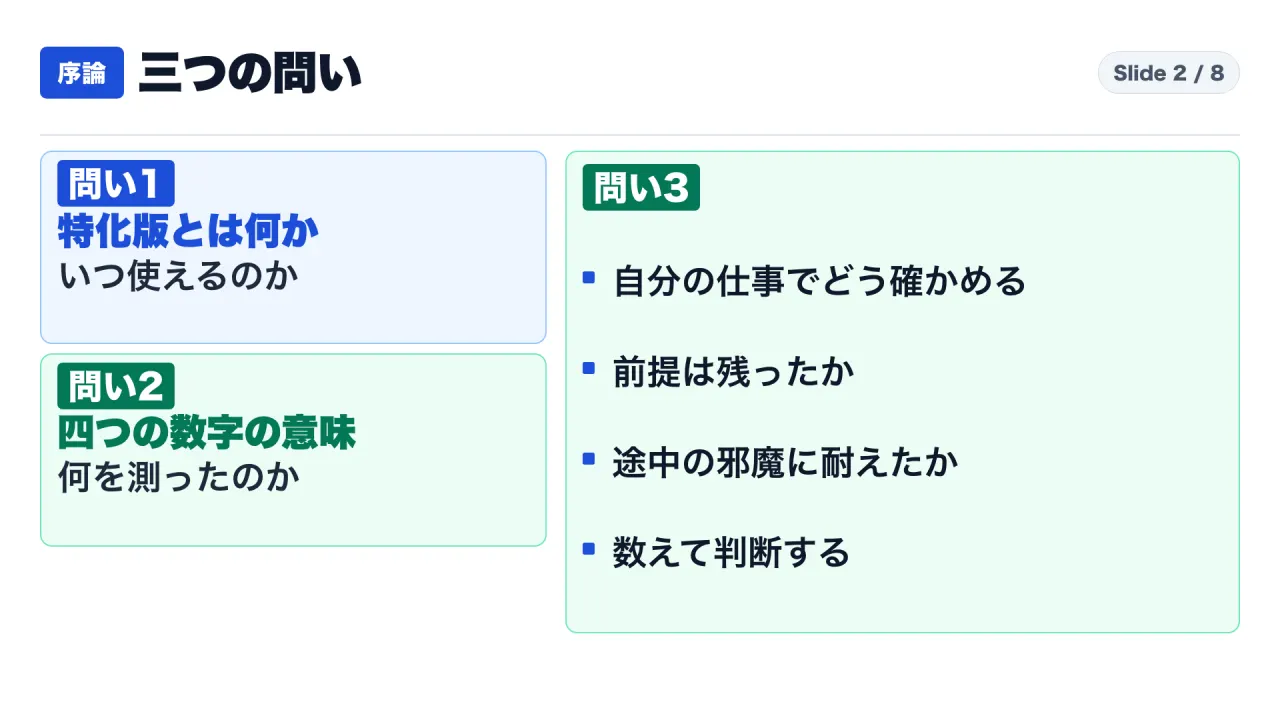
Our teardown explores three sequential questions: What was disclosed regarding the specialized models, and what technical parameters remain concealed? What do Meta’s four headline performance metrics actually measure? How can enterprise teams construct localized verification protocols to test whether Muse retains operational constraints in enterprise environments?
1. Dissecting the Deployment: What Meta Disclosed Versus What Remains Concealed
On November 6, 2026, Meta AI Research disclosed that it had begun rolling out specialized task-adapted variants of existing models to active users of Muse and Meta AI. These variants were trained using synthetic distillation and preference optimization derived from Muse Wonder, a frontier foundation model unveiled on October 12, 2026.
According to Meta’s announcement, the specialization focuses on critical agentic behaviors: managing parallel asynchronous workflows, adapting to dynamic mid-task user steering, and maintaining conversational context across extended execution timelines.

However, a technical audit of the November 6 disclosure reveals substantial omissions regarding the underlying system architecture:
| Architectural Dimension | Disclosed by Meta AI Research | Omitted / Unconfirmed in Public Materials | Operational Implication for Enterprise Teams |
|---|---|---|---|
| Model Identity & Parameter Scale | Stated as “specialized variants of existing models” | Specific model names, parameter counts (e.g., 8B, 70B), or MoE routing weights omitted | Impossible to determine compute budget or latency profile externally |
| Developer API & Open Weights | Wonder was announced for Meta Model API and Muse Code | No API endpoints or downloadable weights announced for the specialized models | Enterprise users cannot host models locally or audit weights; restricted to Meta interfaces |
| Training Methodology | Stated as “trained using Muse Wonder” | Specific loss functions, SFT token counts, DPO/RL regimens, and distillation ratios omitted | Training reproducibility and alignment provenance cannot be independently assessed |
| Geographic & Tier Rollout | Muse launched in Japan on October 23, 2026 | Concrete deployment timetable for specialized models in Japan and enterprise tiers omitted | Regional availability remains subject to unannounced staged rollout schedules |
| Competitive Baseline | Comparison restricted to prior internal Muse models | Zero direct evaluations against external frontier models (e.g., GPT-5, Claude 4.5, Gemini 2.5) | Cross-vendor performance claims cannot be validated |
For enterprise leaders evaluating Muse, the immediate operational reality is that users cannot determine which specific model checkpoint is executing behind their active user sessions.
2. Forensic Teardown of Meta’s Four Headline Performance Metrics
Meta’s November 6 announcement presented four specific performance metrics designed to highlight the efficacy of its specialization pipeline. Analyzing each figure in technical isolation clarifies what was measured.
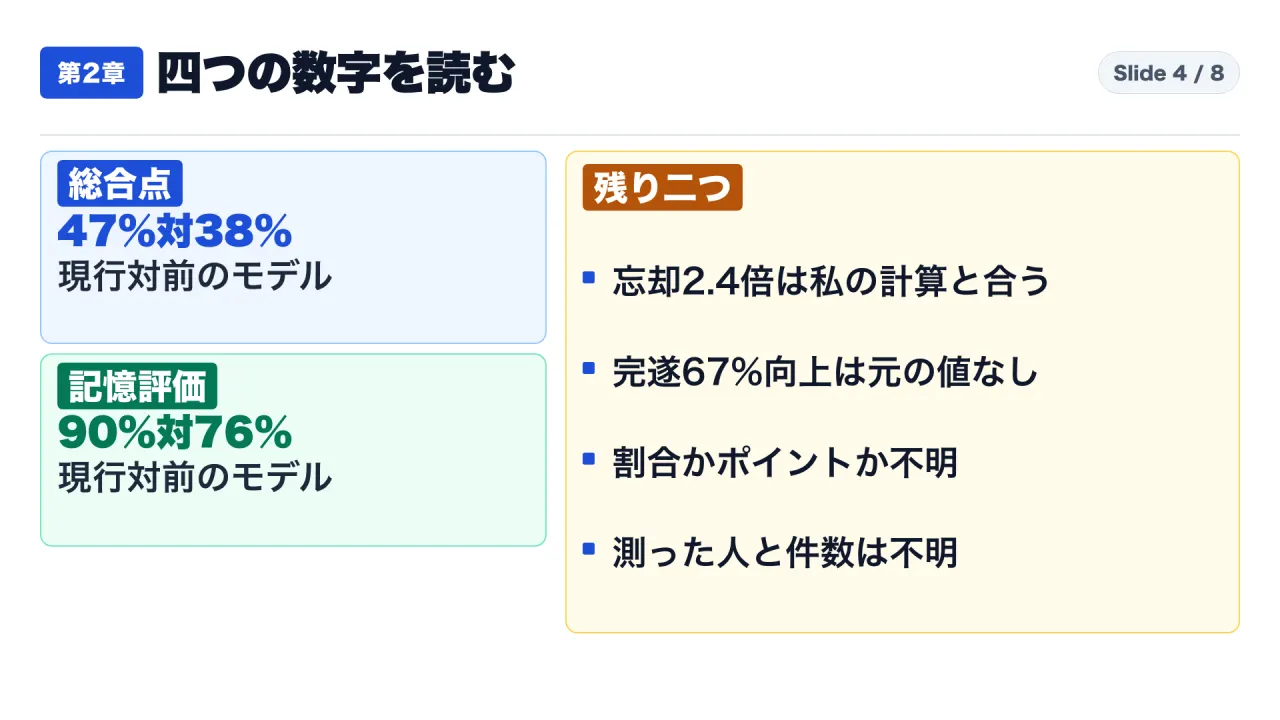
Metric 1: Personal Superintelligence Index (47% vs. 38%)
Meta reported that the specialized model achieved a score of 47% on its proprietary Personal Superintelligence Index (PSI), compared to 38% for the previous production model.
- Ratio: Represents approximately a 1.24x relative improvement (
47 / 38 = 1.237). - Context: The PSI is a composite evaluation index developed internally by Meta to measure personal and knowledge-worker task execution.
Metric 2: Active Memory Evaluation (90% vs. 76%)
The flagship technical claim is an increase in Active Memory performance from 76% to 90%.
- Definition: Meta defines active memory as the capacity to retain mission-critical information across multi-turn interactions, recognize relevant historical context during downstream problem solving, and distinguish ephemeral data from persistent user preferences.
- Constraint: Meta states the metric represents the percentage of tasks where critical premises were correctly applied. However, the denominator (total sample count of evaluated tasks) was not disclosed.
Metric 3: The “2.4x Reduction in Forgetting” Calculation
The announcement emphasizes that the updated model achieved a “2.4x reduction in forgetting key task-relevant information.”
Mathematical analysis indicates that this figure is derived directly from the Active Memory scores:
- Previous error rate:
100% - 76% = 24%failure rate - Current error rate:
100% - 90% = 10%failure rate - Failure rate compression:
24% / 10% = 2.4x
While mathematically valid, this relationship confirms that the “2.4x reduction” is an alternative phrasing of the 76% to 90% benchmark delta rather than an independent, second line of empirical verification.
Metric 4: Active Focus Task Completion (“67% Improvement”)
Meta reported a “67% improvement in completing everyday tasks facing unexpected obstacles” through enhanced Active Focus capabilities.
- Ambiguity: The disclosure omits the baseline completion rate, the absolute percentage point gain, the evaluation sample size, and the testing protocol. A “67% improvement” could represent a modest shift from 30% to 50% absolute completion, or an increase from 10% to 16.7%. Without published denominators, the operational significance remains undefined.
3. Benchmark Architecture and Competitive Comparison Boundaries
To understand the test environments producing these numbers, we examine the technical specifications published in the October 12, 2026 Muse Wonder Model Card.
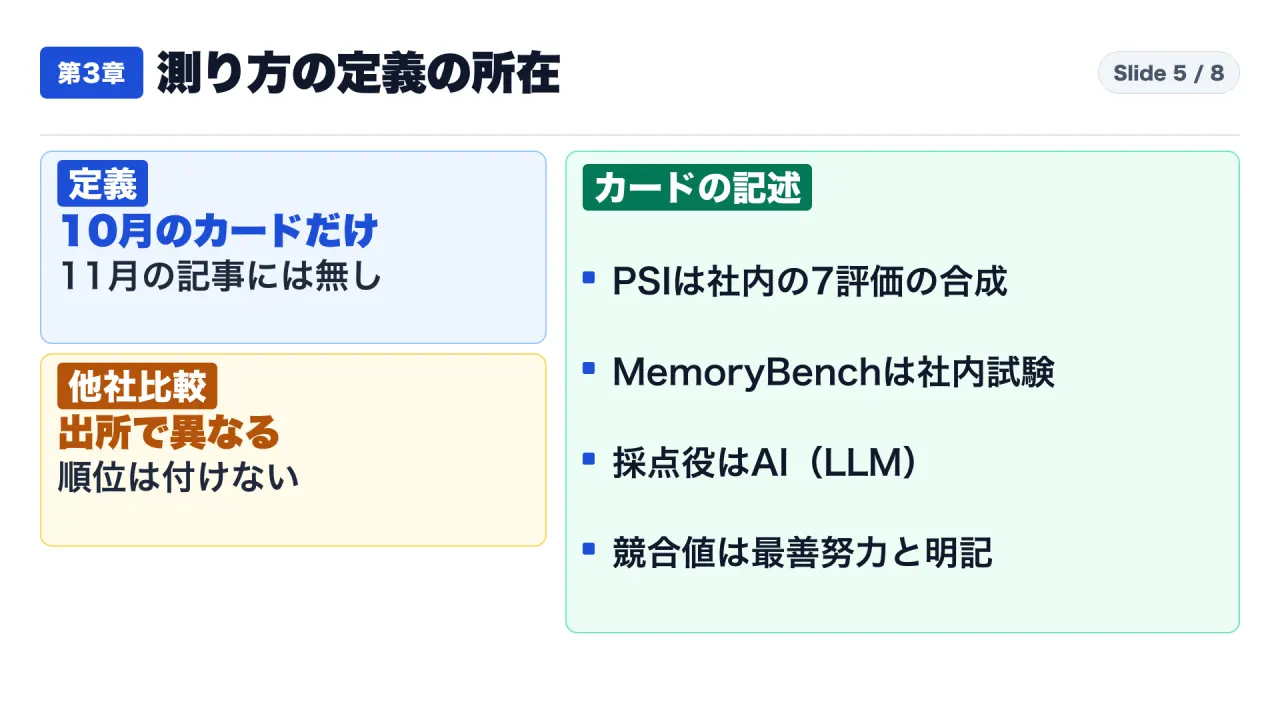
MemoryBench Architecture
The Muse Wonder Model Card outlines MemoryBench, Meta’s internal long-context evaluation harness:
- Context Length: Evaluates multi-turn synthetic dialogue transcripts ranging from 64,000 to 100,000 tokens (
64k to 100k tokens). - Adversarial Design: Transcripts incorporate multiple core factual premises interspersed with distracting sub-dialogues, irrelevant user queries, and explicit premise updates (contradictory instructions provided late in the interaction).
- Evaluation Mechanism: An automated LLM evaluator scores whether the model retrieved and respected the updated ground truth against question-specific evaluation rubrics.
Crucially, Meta’s November 6 announcement does not explicitly state whether the “Active Memory Evaluation” is identical to MemoryBench or represents a modified subset.
FocusBench Architecture
Similarly, FocusBench evaluates agentic persistence across real-world workflows in housing, travel, enterprise IT, and finance. It measures an agent’s ability to navigate unexpected obstacles, re-plan when an API call fails, and sustain task progression without prematurely aborting. However, task counts and automated scoring prompts remain proprietary.
The Limits of Cross-Vendor Leaderboards
While the November 6 announcement excluded external competitor comparisons, the October 12 Muse Wonder Model Card published comparisons against leading proprietary systems (GPT-6 Astra, Claude Fable 5.1, Claude Opus 5.5).
However, the documentation explicitly acknowledged significant methodological limitations:
- Best-Effort Prompting: Prompts, system instructions, and tool interfaces were not optimized for competing architectures.
- Selection Latitude: In the absence of third-party public benchmarks, Meta utilized the highest value among internally confirmed runs, vendor self-reports, or public leaderboards.
- Software Engineering Evaluations: The documentation acknowledged that external models were evaluated using differing tool suites, invalidating strict apples-to-apples comparisons.
Consequently, enterprise architects cannot extrapolate relative vendor superiority from Meta’s published comparison matrices.
4. The Enterprise Verification Framework: How to Test Agentic Memory in In-House Workflows
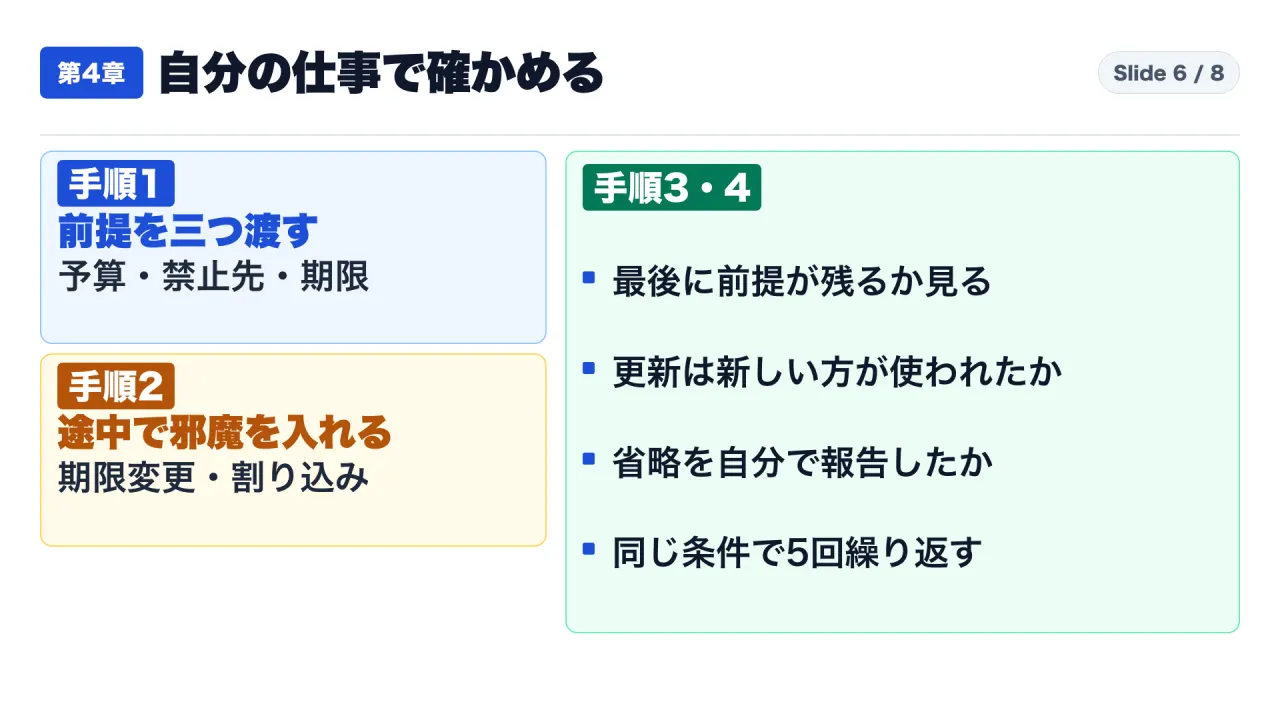
Because Meta’s published benchmarks rely on synthetic multi-turn dialogues evaluated by automated LLMs, enterprise technology teams must implement localized testing protocols before integrating autonomous agents into critical business operations.
The 4-Step Adversarial Disruption Harness
To determine whether an agent truly maintains operational premises under realistic conditions, we recommend an empirical four-stage evaluation methodology:
- Establish Three Hard Operational Premises: Initialize a realistic business task accompanied by three explicit operational constraints. For example:
- Constraint A (Financial): Total expenditure must not exceed $15,000.
- Constraint B (Vendor Restriction): Explicit exclusion of Vendor X due to procurement compliance.
- Constraint C (Temporal): Final delivery deadline fixed for November 20, 2026.
- Inject Controlled Mid-Workflow Interruptions: Once the agent has commenced multi-step execution, introduce two deliberate disruptions:
- Disruption 1 (Premise Update): Modify Constraint C mid-flight (e.g., move the deadline forward by 48 hours).
- Disruption 2 (Cognitive Context Switching): Inject an urgent, unrelated ad-hoc query requiring immediate resolution, alongside a minor operational hurdle (e.g., simulating an inaccessible attachment or broken web link).
- Audit Final Artifacts and Autonomous Logs: Inspect the final delivered output and the internal execution trail across three specific failure vectors:
- Factual Retention: Were Constraints A and B maintained without omission?
- Update Incorporation: Did the agent adapt its schedule to the updated deadline, or did it revert to the initial timestamp?
- Proactive Transparency: If the simulated disruption forced the agent to omit non-essential steps, did it proactively report the compromise, or did it silently truncate execution?
- Execute 5 Controlled Repetitions: Repeat the identical sequence five times under fixed inference parameters to quantify empirical reliability. Single-run observations cannot establish statistical confidence.
| Evaluation Dimension | Previous Baseline Configuration | Specialized Candidate Configuration | Pass/Fail Acceptance Criteria |
|---|---|---|---|
| Premise Retention Rate | Log percentage of runs preserving all 3 constraints | Log percentage of runs preserving all 3 constraints | 100% retention across 5 consecutive runs |
| Mid-Task Update Adaptation | Log successful integration of modified deadline | Log successful integration of modified deadline | Zero regressions to superseded initial instructions |
| Disruption Recovery | Log instances of agent derailment or halt | Log instances of agent derailment or halt | Autonomous recovery without human intervention |
| Proactive Omission Reporting | Log whether truncated actions were disclosed | Log whether truncated actions were disclosed | Zero uncommunicated silent omissions |
5. Analytical Interpretation: Separating Empirical Facts from Marketing Claims
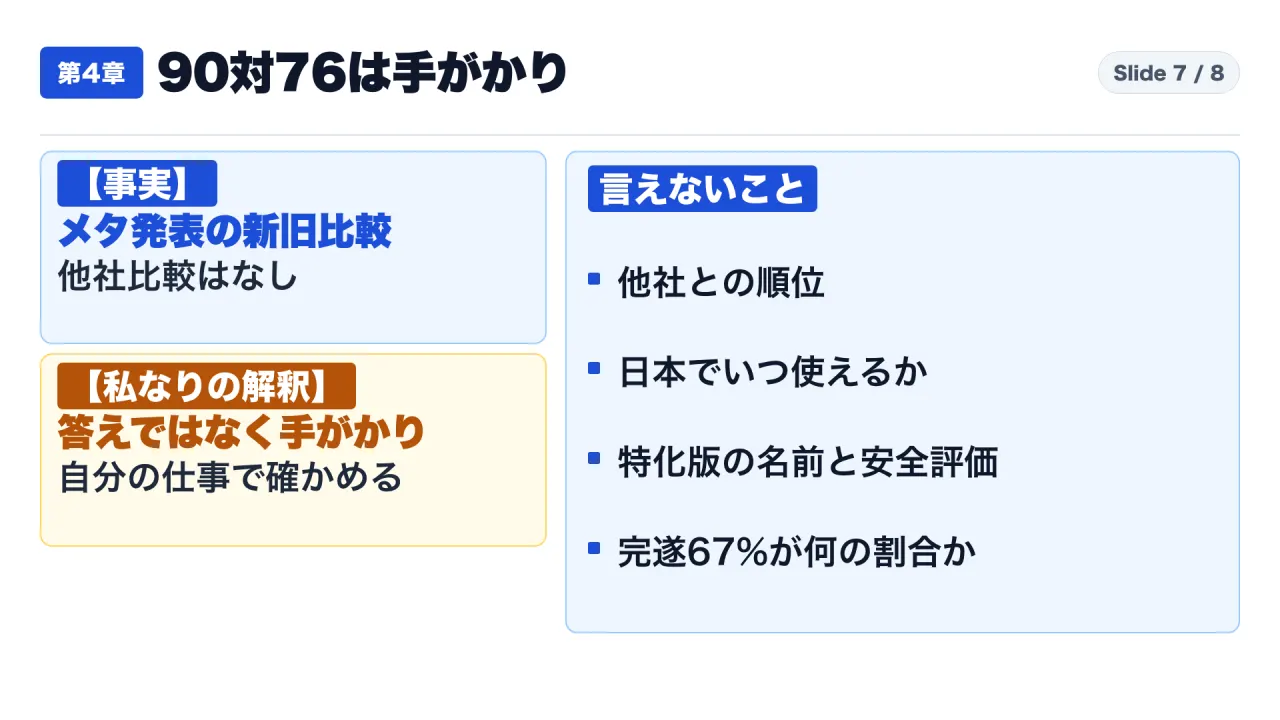
A rigorous evaluation of Meta’s specialized models requires distinguishing verified facts from analytical interpretations:
Empirically Verified Disclosures
- On November 6, 2026, Meta announced specialized variants of existing models for Muse and Meta AI, trained using Muse Wonder.
- Meta reported internal performance metrics of 47% vs. 38% on PSI and 90% vs. 76% on Active Memory Evaluation, both measured strictly against prior internal Meta checkpoints.
- The reported “2.4x reduction in forgetting” corresponds arithmetically to the delta between a 24% and a 10% error rate on the Active Memory test.
- The disclosure omits parameter counts, model architecture names, developer API access, open weights, and regional rollout schedules for international markets including Japan.
Analytical Interpretations
- Synthetic Versus Real-World Friction: Scoring 90% on synthetic long-context retrieval (MemoryBench) demonstrates that a model can locate needles in a 100k-token haystack. It does not establish that the agent can maintain complex corporate policies when real-world human users change instructions mid-execution.
- The Single-Evidence Trap: Presenting both “90% vs. 76%” and a “2.4x reduction in forgetting” creates the optical illusion of two distinct empirical proofs, when they are mathematical derivatives of the same underlying data point.
- The Persistence of Silent Truncation: A critical hazard in autonomous agents is silent task truncation—where an agent encounters an obstacle and quietly drops secondary constraints rather than requesting clarification. Meta’s published metrics do not quantify whether specialized fine-tuning eliminated this specific failure mode.
6. Strategic Conclusions: Three Operating Directives for Technology Leaders
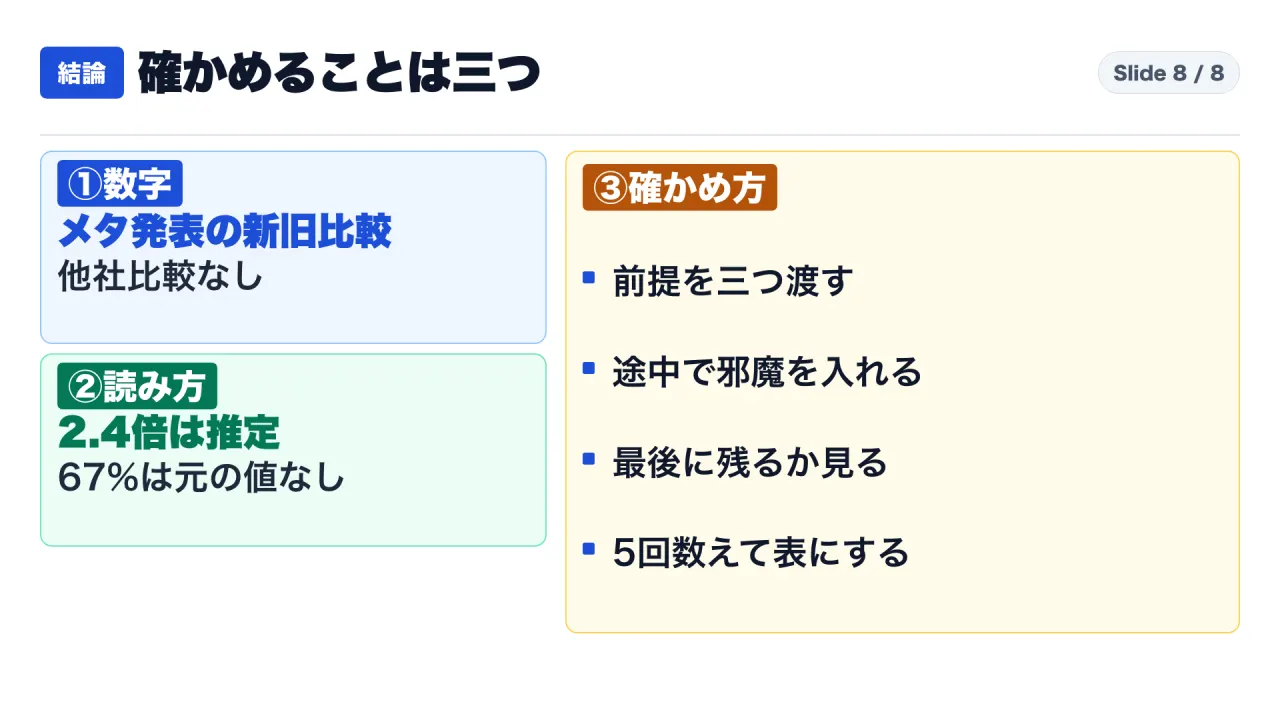
Organizations exploring the deployment of autonomous personal and enterprise agents should adhere to three practical directives:
- Verify Which Model Executes Behind Your Enterprise Tenant: Because consumer AI platforms continuously deploy specialized checkpoints without version incrementation, establish operational clarity with your software vendor regarding which model weights, context limits, and safety filters govern your active enterprise sessions.
- Treat Benchmark Claims as Hypotheses, Not SLAs: Recognize that internal vendor metrics reflect idealized, automated evaluation loops. High retrieval scores on internal synthetic datasets do not eliminate the operational necessity of testing agent behavior against proprietary workflows.
- Institutionalize Adversarial Disruption Testing: Prior to delegating autonomous workflows (such as scheduling, vendor communications, or customer support) to AI agents, subject the systems to controlled mid-task interruptions. Measure whether the agent remembers foundational premises, adapts to updated instructions, and transparently flags errors.
Primary Sources & References
- Meta AI Research: “Bringing Specialized Models to Muse and Meta AI” (November 6, 2026)
- Meta AI Research: “Muse Wonder” (October 12, 2026)
- Meta AI Research: “Muse Wonder Model Card” (October 12, 2026)
- Meta Corporate Communications Japan: “Muse Personal AI Agent Launches in Japan” (October 23, 2026)
This article analyzes primary technical and financial disclosures for informational purposes only and does not constitute investment advice.