Why Microsoft Exited a $3B Neocloud Deal as CoreWeave Bond Yields Hit 17%
Inside the hyperscaler retreat to in-house infrastructure, the 5-year power grid backlog, and the massive capital rotation toward Apple’s $150B FCF and physical AI.
Japanese Edition: https://consuloji.substack.com/p/microsoft30gpucoreweave17
Executive Summary & Key Takeaways
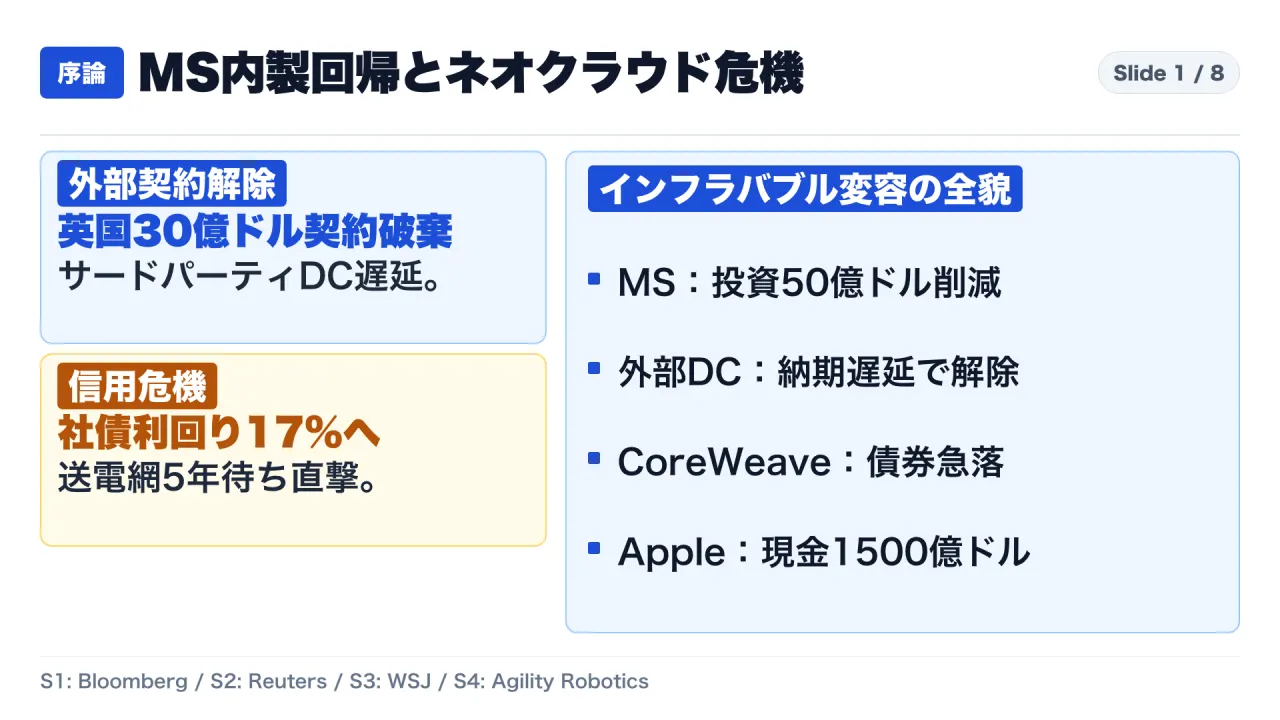
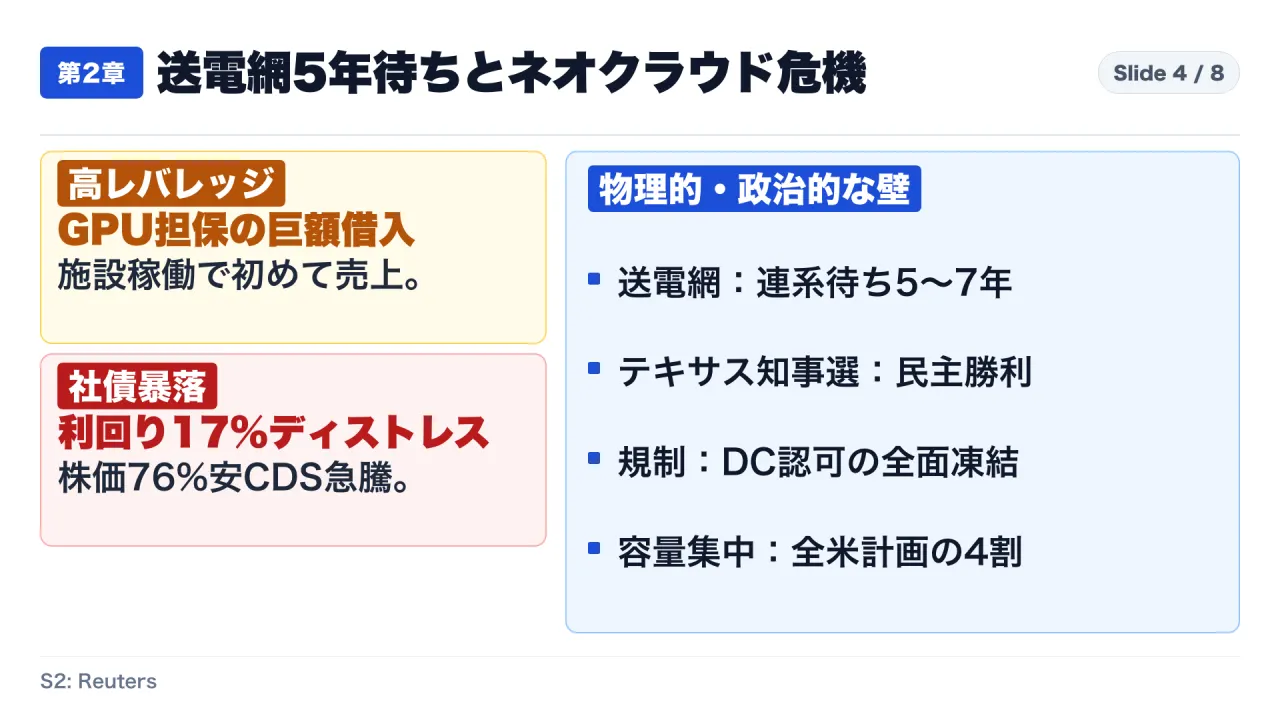
- Core Thesis: On November 6, 2026, financial and technical disclosures confirmed a fundamental structural shift in the global AI infrastructure landscape. Microsoft reduced its fiscal 2026 capital expenditure plan by $5 billion and terminated a $3 billion lease agreement with UK-based neocloud provider Nscale, citing chronic construction delays and elevated operational costs. Simultaneously, as nationwide power grid interconnection queues stretched to 5 to 7 years and political opposition mounted in key energy states, the high-leverage business model of specialized GPU clouds unraveled. Bond yields for industry leader CoreWeave spiked to a distressed 17% with 5-year credit default swap (CDS) spreads exceeding 1,100 basis points, while its equity collapsed 76% from peak valuations.
- The Great Capital Rotation: While debt-burdened neoclouds faced liquidity constraints, institutional capital rotated into cash-generative mega-caps and embodied robotics. Apple is projected to generate $150 billion in annual Free Cash Flow (FCF) by fiscal 2027, funding aggressive share repurchases. Concurrently, growth capital flowed aggressively into “Physical AI”—highlighted by Agility Robotics’ NASDAQ listing (AGLT) backed by a $300 million commercial order backlog for bipedal warehouse humanoids, alongside multi-billion-dollar fundings for autonomous defense and delivery pioneers Shield AI and Zipline.
- Actionable Strategic Takeaways:
- Why the primary operational bottleneck for artificial intelligence has permanently shifted from semiconductor fabrication capacity to physical high-voltage grid interconnection and municipal utility permitting.
- How the collapse of third-party neocloud unit economics accelerates vertical integration among hyperscalers, driving proprietary silicon adoption (Microsoft Maia, Google TPU, Amazon Trainium).
- The framework institutional investors and enterprise infrastructure buyers use to evaluate counterparty insolvency risk across debt-financed GPU providers.
Background & Primary Sources Verified
The analysis in this report synthesizes four primary corporate disclosures and investigative reports published on November 6, 2026:
- 1. Bloomberg: “Microsoft Cuts CapEx by $5B, Exits Nscale Neocloud Deal on Delays” (Investigative reporting detailing internal CapEx revisions, third-party contractor milestones, and datacenter buildout delays).
- 2. Reuters: “CoreWeave Bond Yields Surge to 17% in Neocloud Credit Crunch” (Financial disclosure analysis covering senior unsecured debt pricing, CDS spreads, and municipal power permitting bottlenecks).
- 3. The Wall Street Journal: “Apple Eyes $150B FCF as Nvidia Forward P/E Dips Below 13; Micron Halts Taiwan Plant” (Macroeconomic reporting on semiconductor multiples, Big Tech cash allocation, and labor strikes in advanced packaging).
- 4. Agility Robotics: “Agility Completes SPAC Merger (NASDAQ: AGLT) with $300M in Orders” (Official SEC registration and commercial production roadmap for the RoboFab facility).
1. Microsoft’s $5B CapEx Reduction: The Retreat to First-Party Infrastructure
During the initial phase of the generative AI boom, hyperscalers faced unprecedented demand for accelerated compute clusters. To bring capacity online faster than their internal real estate and construction cycles permitted, major cloud providers signed extensive multi-billion-dollar take-or-pay lease commitments with specialized third-party operators (often termed “neoclouds”) and colocation landlords.
By late 2026, the economic equation inverted.
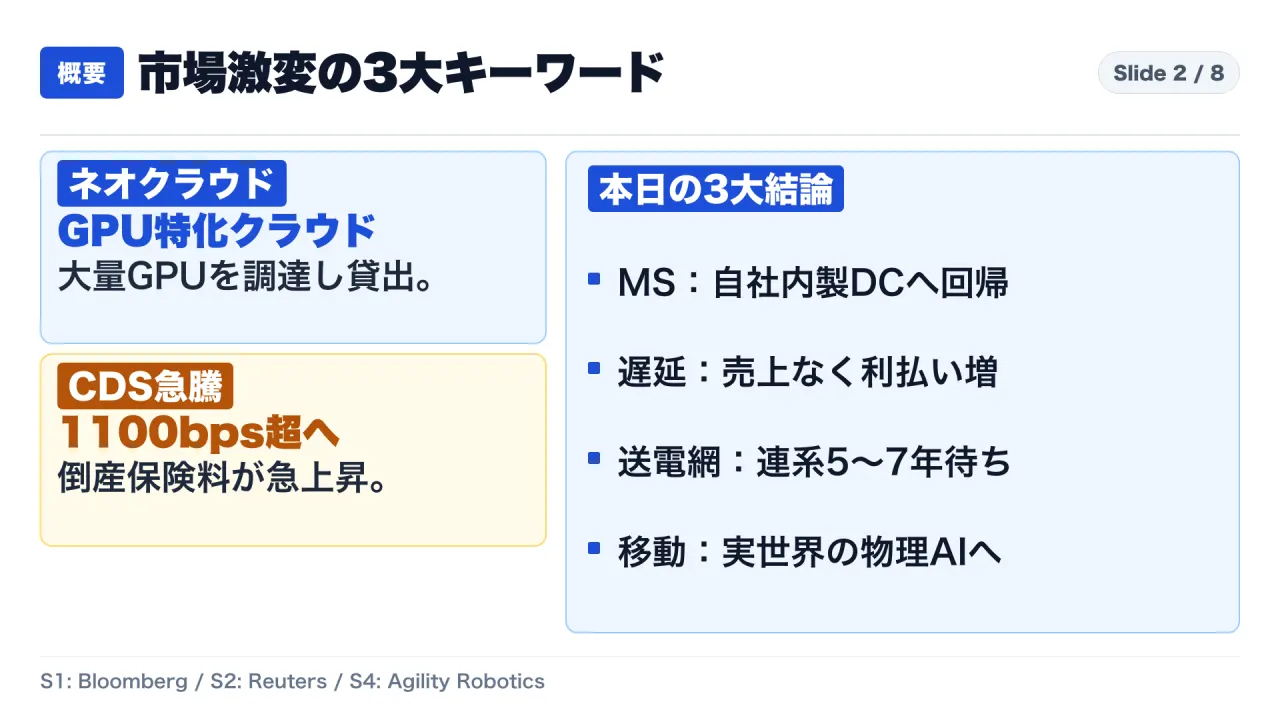
According to Bloomberg’s investigative disclosures, Microsoft revised its fiscal 2026 capital expenditure budget downward by $5 billion. The primary catalyst was not a reduction in AI workload demand, but rather systemic execution failures across third-party development partners. External operators repeatedly missed contractual delivery milestones, while imposing capacity lease premiums that significantly exceeded the cost of self-built, self-operated facilities.
The most prominent casualty was Microsoft’s $3 billion development partnership with Nscale in the United Kingdom. Citing repeated schedule slippage, Microsoft exercised contractual termination provisions. Concurrently, data center operator IREN suffered operational delays at its Childress, Texas site due to complex substation and medium-voltage cabling complications, further reinforcing Microsoft’s determination to eliminate external dependencies.
Microsoft responded by reallocating capital toward first-party, vertically integrated infrastructure:
| Cloud Hyperscaler | Proprietary Custom Silicon | Production Deployment Ratio | Strategic Datacenter Infrastructure Posture |
|---|---|---|---|
| Microsoft (Azure) | Maia 200 / 300 ASIC series | Expanding past 30% of internal cluster footprint | Terminating third-party leases; prioritizing 100% owned and operated sites |
| Alphabet (Google Cloud) | TPU v6 / TPU v7 (Ironwood) | Anchors majority of internal and external AI workloads | Long-standing vertical integration model; direct-to-utility energy contracts |
| Amazon (AWS) | Trainium 3 / Inferentia 2 | Core cost-reduction engine for bedrock enterprise tiers | Aggressive self-build expansion; dedicated on-site nuclear and renewable power |
By replacing off-the-shelf third-party leases with proprietary Maia accelerators deployed within purpose-built Microsoft facilities, Azure aims to protect gross margins while shielding its engineering roadmap from third-party construction failures.
2. The Neocloud Credit Squeeze: 5-Year Interconnection Delays and Political Moratoriums
The termination of anchor-tenant contracts coincided with a severe structural crisis in utility interconnection and municipal governance, triggering a credit contraction across debt-financed GPU providers.
The Vulnerability of Asset-Backed Debt Financing
Specialized GPU clouds such as CoreWeave funded their exponential physical growth through asset-backed lending (ABL) facilities, pledging the GPU silicon itself as collateral. Under this capital structure, interest expense begins accruing the day capital is drawn to procure hardware. However, operating cash inflow only commences when those processors are installed, powered, networked, and accepted by enterprise customers.
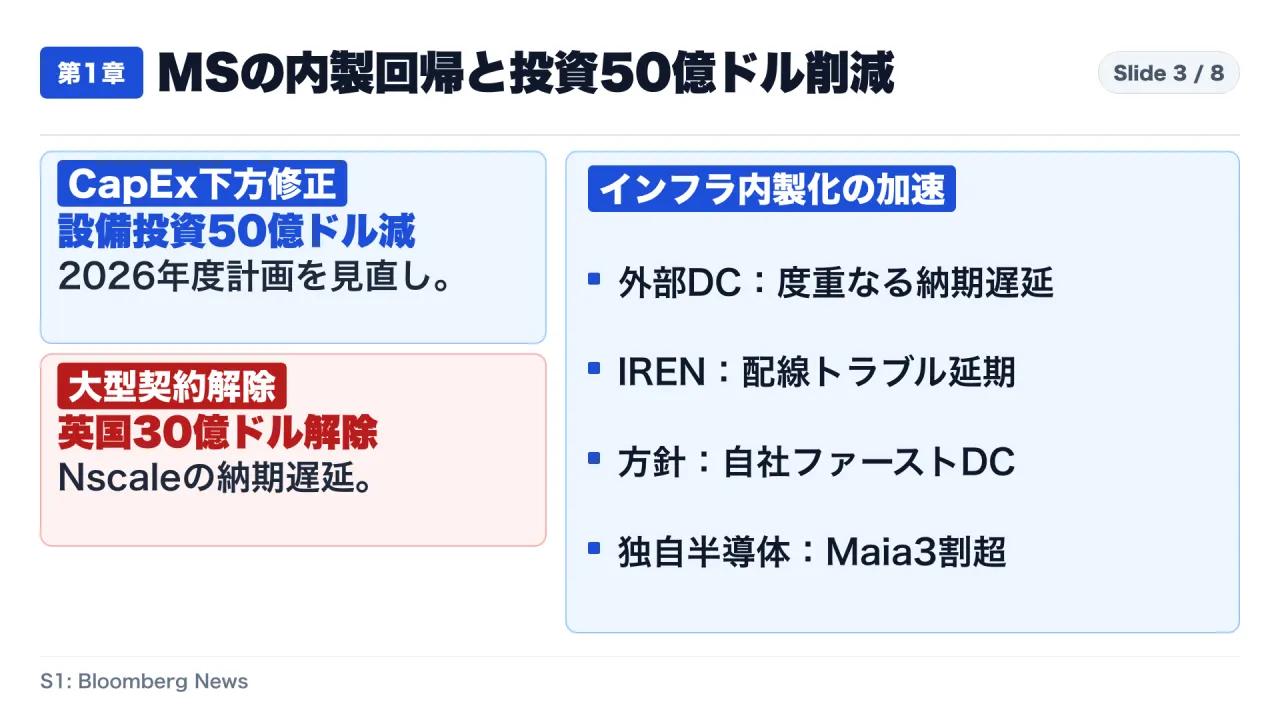
Across the United States, utility interconnection queues managed by regional transmission organizations (such as PJM, ERCOT, and MISO) lengthened to 5 to 7 years. When a datacenter completion date slips by even two quarters, an operator generates zero customer revenue while paying compounding double-digit debt service on depreciating semiconductor assets.
The Texas Political Shift and the 40% Concentration Hazard
The fragility of this debt architecture was exacerbated by regional political developments. In the November 2026 United States midterm elections, Democratic candidate Gina Hinojosa won the Texas gubernatorial race, defeating the incumbent administration.
Texas represents between 22% and 27% of all planned datacenter capacity in the United States, drawn by ERCOT’s deregulated energy market. However, following consumer backlash over surging residential retail power rates and severe municipal water strain caused by evaporative cooling towers, Hinojosa campaigned on an explicit platform to institute an immediate permitting moratorium on new large-scale datacenter construction.
Crucially, industry census data revealed that 40% of all gigawatt-scale datacenter capacity scheduled to come online in 2026 and 2027 was concentrated in just two states undergoing acute regulatory shifts.
The confluence of anchor-tenant departures, 5-year utility queues, and regional permitting freezes triggered an immediate flight to quality in fixed income markets:
| Enterprise | Equity Drawdown (From Peak) | Senior Debt Yield | 5-Year CDS Spread | Core Operational and Balance Sheet Risk |
|---|---|---|---|---|
| CoreWeave | Exceeds -76% | Senior Unsecured: 15% – 17% | Surpasses 1,100 bps | Asset-backed debt debt service; tenant cancellation; delayed energization |
| IREN | Down 14% to 18% | Credit spreads widened sharply | Elevated trading volume | Cabling failures and substation delays at Childress, Texas site |
| Nebius | Down 14% to 18% | Capital borrowing rates surged | Substantial widening | Permitting freezes on greenfield sites; inventory carrying drag |
CoreWeave’s senior unsecured bond yields trading between 15% and 17% placed the securities squarely in distressed territory, signaling that institutional bondholders perceive elevated restructuring risk unless cash generation accelerates dramatically.
3. Financial Bifurcation: Apple’s $150B Free Cash Flow Versus Semiconductor Multiple Compression
The reassessment of infrastructure spending created sharp divergence across public equity markets, separating balance-sheet fortresses from high-beta supply chain providers.
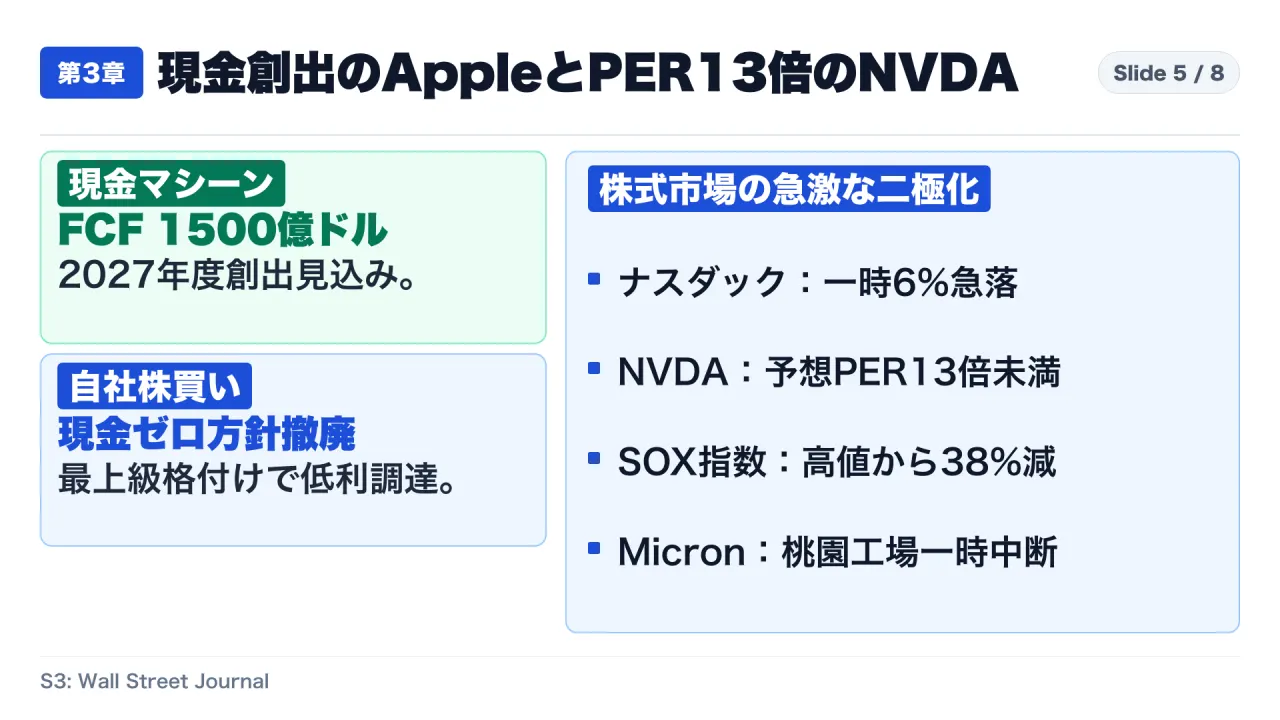
Apple: The $150B Cash Bastion
While hyperscalers diluted cash flows through unprecedented CapEx cycles, Apple executed an alternative strategy. By maintaining a disciplined, asset-light approach to cloud infrastructure—licensing external foundation models while running client-side inferences on internal Apple Silicon—the company protected operating cash conversion.
Financial projections published by Wall Street institutions indicate Apple is positioned to generate $150 billion in annual Free Cash Flow by fiscal 2027. Furthermore, Apple formally retired its long-standing “net cash neutral” framework. Leveraging its premier corporate credit rating to issue low-coupon commercial paper and long-term bonds, Apple aggressively expanded its share repurchase program, absorbing equity float and providing an institutional safe haven during technology market pullbacks.
NVIDIA Valuation Reset and Supply Chain Friction
Conversely, upstream semiconductor components experienced acute valuation multiple compression. Despite reporting robust trailing earnings growth, NVIDIA’s forward price-to-earnings (P/E) multiple compressed below 13x following an 8% single-day equity decline, coinciding with a 6.2% correction in the Nasdaq 100 and a 38% peak-to-trough decline in the Philadelphia Semiconductor Index (SOX).
Upstream supply chain stability was further disrupted by labor tensions. In Taiwan, the labor union representing Micron Technology’s Taoyuan memory packaging facility initiated industrial action. Spurred by record corporate profits in High Bandwidth Memory (HBM), the union demanded bonuses equivalent to 83 months of salary, rejecting management’s proposal of 35 to 68 months. The resulting impasse caused Micron to temporarily suspend an estimated $4.5 billion (NT$150 billion) advanced packaging expansion, highlighting the operational vulnerabilities underlying AI hardware supply lines.
4. The Capital Pivot: From Software Chatbots to Physical Embodied AI
Faced with datacenter power bottlenecks and commercial margin compression in software text generation, growth capital initiated a structural rotation toward Physical AI—systems capable of autonomous operation and labor substitution in the physical world.
+---------------------------------------------------------------------------------+
|                       GLOBAL AI CAPITAL ROTATION ARCHITECTURE                    |
+---------------------------------------------------------------------------------+
|                                                                                 |
|  [CAPITAL OUTFLOW: Cash-Burning Infrastructure]                                  |
|  * Third-party colocation leases and high-premium neocloud capacity             |
|  * Asset-backed debt models facing 15-17% bond yields                           |
|  * Greenfield data centers blocked by 5-7 year utility interconnection queues   |
|                                                                                 |
|                           |                                 |                   |
|                           v (Flight to Quality)             v (Flight to ROI)   |
|                                                                                 |
|  [TIER 1: Balance Sheet Fortress]             [TIER 2: Real-World Embodied AI]   |
|  * Apple: $150B projected 2027 FCF            * Agility Robotics (NASDAQ: AGLT) |
|  * Low-coupon corporate bond issuance           $300M order backlog; 10k/yr cap |
|  * Systematic programmatic share buybacks     * Shield AI ($28.8B valuation)    |
|                                                 $5.3B Echodyne buy; defense AI  |
|                                               * Zipline ($21.5B valuation)      |
|                                                 300-store Walmart drone rollout |
+---------------------------------------------------------------------------------+
Agility Robotics: Commercialization of Bipedal Automation
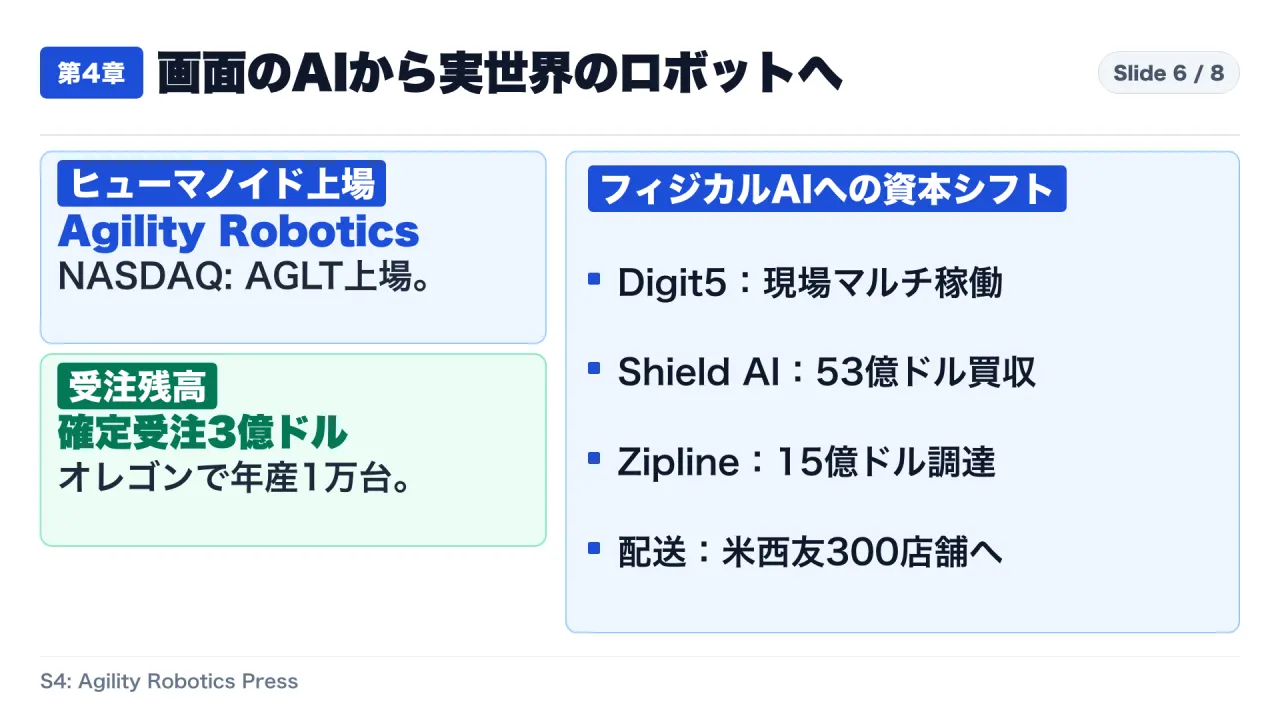
On November 6, 2026, Agility Robotics (NASDAQ: AGLT) completed its public listing via a business combination valuing the enterprise at $2.5 billion. Unlike research-oriented robotics initiatives, Agility demonstrated commercial traction:
- Order Backlog: Secured $300 million in binding and conditional commercial orders for its next-generation bipedal robot, Digit 5.
- Manufacturing Capacity: Operationalized its dedicated “RoboFab” production facility in Salem, Oregon, engineered for a run-rate capacity of 10,000 humanoid units per year.
- Operational Deployments: Deployed Digit 5 units across Fortune 50 supply chain and e-commerce logistics centers, performing continuous bulk material transport across multi-shift operational schedules.
Autonomous Defense and Commercial Logistics Expansion
Concurrently, private funding rounds concentrated into capital-efficient autonomous hardware platforms:
- Shield AI: Raised $2.5 billion at a post-money valuation of $28.8 billion, following its $5.3 billion acquisition of Echodyne. The company’s Hivemind autonomy software provides GPS-denied navigation and cooperative tactical maneuvering for uncrewed defense systems.
- Zipline: Closed a $1.5 billion financing round at a $21.5 billion valuation, expanding its autonomous drone delivery infrastructure across 300 Walmart retail supercenters to provide zero-emission, sub-30-minute aerial parcel logistics.
Capital allocators increasingly conclude that physical systems directly addressing structural labor deficits offer more defensible unit economics than unspecialized conversational LLM API wrappers.
5. Risk Demarcation: Verified Realities Versus Analytical Projections
Maintaining rigorous risk governance requires separating confirmed primary facts from structural market interpretations:
Empirically Verified Events
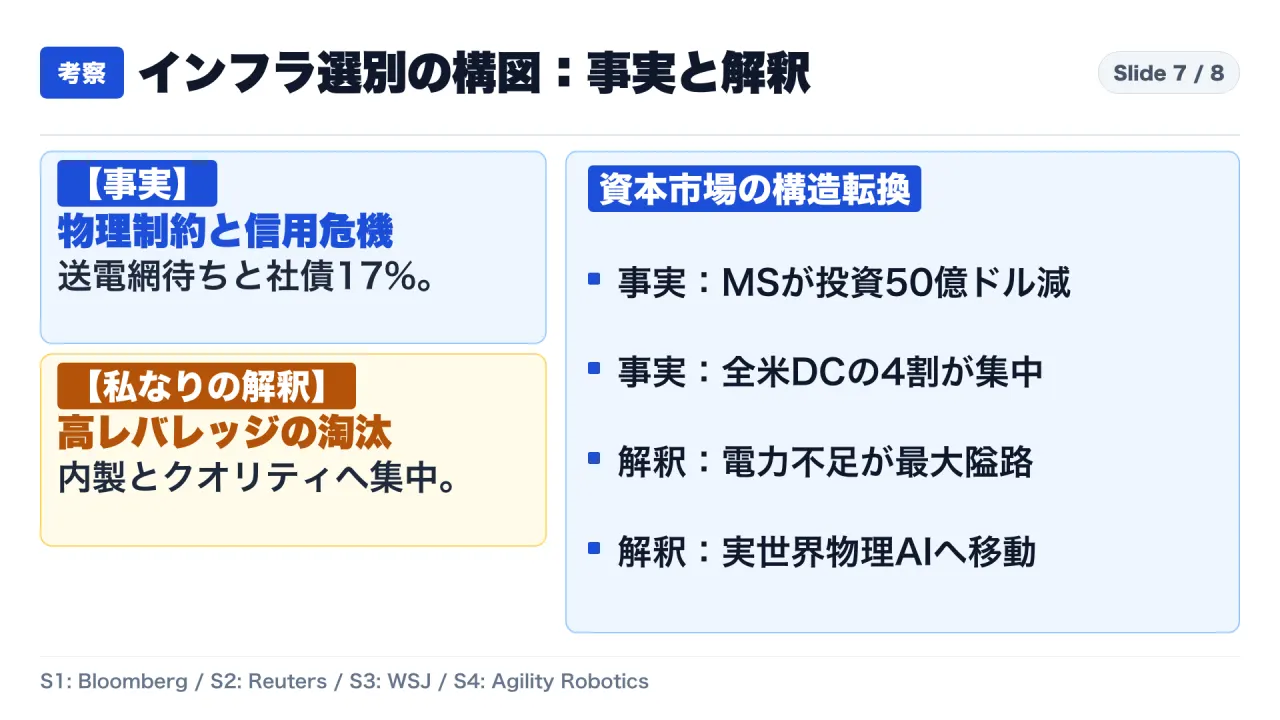
- Microsoft trimmed fiscal 2026 CapEx by $5 billion and cancelled its $3 billion lease agreement with UK provider Nscale due to execution delays.
- Interconnection queues across major US regional transmission grids span 5 to 7 years, with 40% of planned 2026–2027 gigawatt-scale capacity located in states facing municipal regulatory review.
- CoreWeave senior unsecured bond yields reached 15% to 17%, 5-year CDS spreads exceeded 1,100 bps, and equity declined over 76% from historical highs.
- Consensus estimates project Apple to generate $150 billion in annual FCF by fiscal 2027, while NVIDIA forward P/E compressed below 13x amid broader market adjustments.
- Agility Robotics commenced public trading on NASDAQ with a $300 million order backlog and a 10,000-unit annual factory capacity.
Analytical Interpretations
- The Shift from Silicon Scarcity to Kilowatt Scarcity: The pacing factor for artificial intelligence has permanently decoupled from semiconductor foundry output. The critical path now comprises high-voltage transformers, transmission substations, and local utility rate approvals.
- Hyperscaler Consolidation: Escalating regulatory hurdles and multi-year interconnection delays disproportionately penalize undercapitalized neoclouds while fortifying the moats of hyperscalers capable of financing captive energy assets and custom silicon architectures.
- The Physical Labor Premium: As software intelligence costs approach commodity compute pricing, economic returns will accrue to robotic and physical autonomous systems that displace physical labor in manufacturing, logistics, and national defense.
6. Strategic Conclusions: Three Operating Directives for Infrastructure Leaders
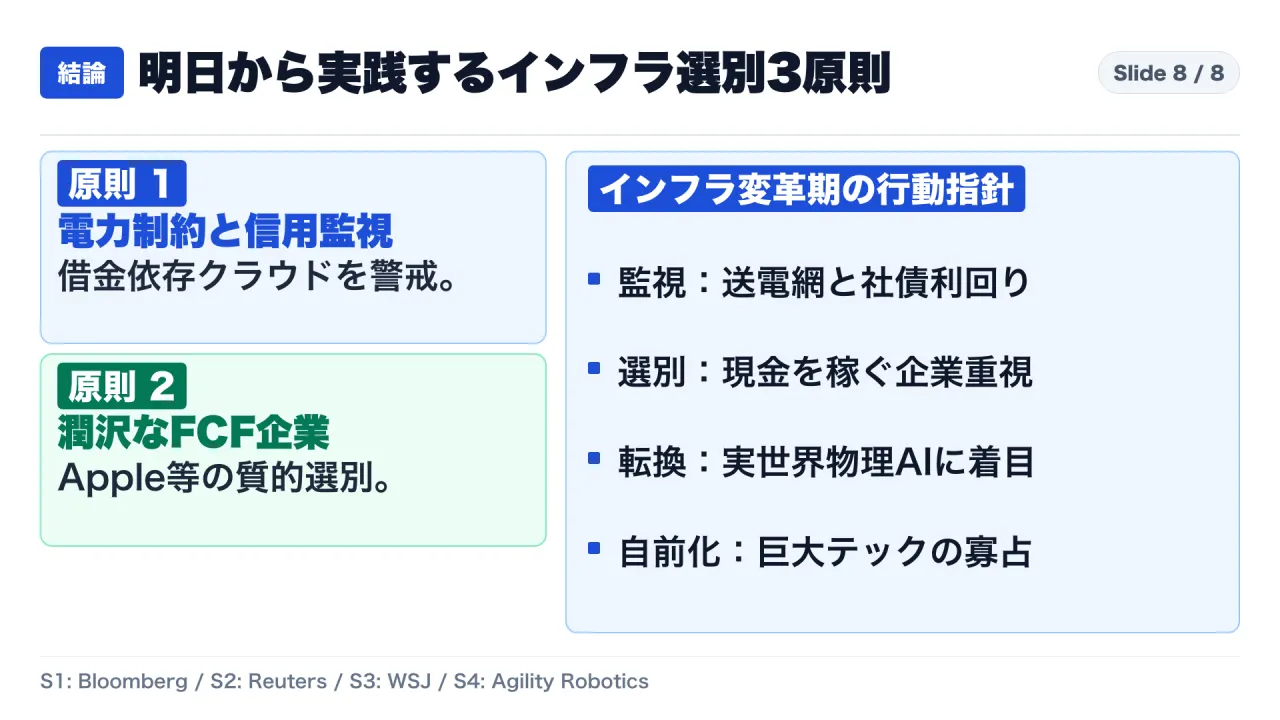
Enterprise technology executives and investment committees navigating this infrastructure inflection should apply three practical principles:
- Audit Vendor Credit and Power Provenance, Not Raw Compute Specs: When procuring cloud compute capacity, evaluate the vendor’s balance sheet, debt maturity schedule, and physical utility interconnection status. Contractual commitments from debt-laden operators facing 15% bond yields carry severe counterparty and operational disruption risk.
- Prioritize Durable Cash Flow Over CapEx Intensity: In public equity and vendor evaluation, favor organizations with fortress balance sheets and robust organic Free Cash Flow generation. Companies that fund operations through organic cash flow rather than continuous debt capital markets maintain resilience across macroeconomic tightening cycles.
- Expand Exposure to Physical Embodied Automation: Recognize that the frontier of enterprise productivity is transitioning from conversational generative text to real-world labor substitution. Organizations should audit internal workflows in logistics, assembly, and field operations to identify automation candidates capable of deploying physical robotics over the next 24 to 36 months.
Primary Sources & References
- Bloomberg: “Microsoft Cuts CapEx by $5B, Exits Nscale Neocloud Deal on Delays” (November 6, 2026)
- Reuters: “CoreWeave Bond Yields Surge to 17% in Neocloud Credit Crunch” (November 6, 2026)
- The Wall Street Journal: “Apple Eyes $150B FCF as Nvidia Forward P/E Dips Below 13; Micron Halts Taiwan Plant” (November 6, 2026)
- Agility Robotics: “Agility Completes SPAC Merger (NASDAQ: AGLT) with $300M in Orders” (November 2026)
This article analyzes primary technical and financial disclosures for informational purposes only and does not constitute investment advice.