The AI Power Grid Bottleneck: 16.44 GW in Nuclear PPAs, 4-Year Transformer Delays, and the $201.9 Billion Capex Repricing
How Alphabet’s negative $9.1B free cash flow, 2,060 GW of US grid congestion, and Anthropic’s valuation haircut expose the heavy-industry reality of artificial intelligence.
Japanese Edition: https://consuloji.substack.com/p/42019ai66gw7
Executive Summary & Key Takeaways
- Core Thesis: The governing constraint of artificial intelligence infrastructure has shifted permanently from semiconductor silicon supply to physical electrical power and grid transmission capacity. In Q3 2026, aggregate capital expenditures across the four largest hyperscalers—Amazon, Alphabet, Microsoft, and Meta—reached an unprecedented $201.9 billion (+107.5% year-over-year), establishing an annualized run-rate of $720 billion to $760 billion. To power these clusters, the four tech giants contracted an aggregate 16.44 GW of dedicated baseload capacity, anchored by major nuclear power purchase agreements (PPAs): Meta (6.60 GW), Amazon (6.61 GW), Google (2.39 GW), and Microsoft (0.84 GW). However, physical interconnection realities are stalling this buildout. Data from Lawrence Berkeley National Laboratory (LBNL) reveals 2,060 GW of generation and storage capacity queued for US grid interconnections, where only 13% of projects reach commercial operation and large data center connections (>100 MW) face 48 to 84 months (4 to 7 years) of regulatory delay in major hubs. Furthermore, heavy electrical equipment supply chains are exhausted: large power transformers (LPTs) face lead times of 128 to 208 weeks (up to 4 years) with prices up 45% to 95%, while commercial gas turbines are sold out through 2029–2030. This infrastructure bottleneck has triggered a severe financial repricing. Alphabet reported a negative $9.1 billion free cash flow (FCF) deficit in Q3 2026 after spending $51.3 billion on capex against $42.3 billion in operating cash flow (121% reinvestment), while Microsoft issued $25.0 billion in corporate debt and initiated a 60,000-person voluntary departure program. In private markets, institutional investors forced Anthropic to reduce its targeted IPO valuation from $2.0 trillion to $1.1–$1.3 trillion (with some institutional models suggesting $1.0 trillion), proving that financial markets now price AI through the lens of heavy capital equipment rather than high-margin software.
- Primary Sources Verified: Big Tech Q3 2026 Form 10-Q filings and earnings disclosures (Amazon, Alphabet, Microsoft, Meta); Lawrence Berkeley National Laboratory (LBNL) Queued Up: Characteristics of Power Plants Seeking Transmission Interconnection; Federal Energy Regulatory Commission (FERC) Docket ER24-2172 and RM26-4 filings; Meta Newsroom nuclear energy procurement statements; Constellation Energy investor presentations regarding Crane Clean Energy Center (TMI-1) and nuclear uprates; and Wood Mackenzie Electrical Equipment Supply Chain Market Analysis.
- Actionable Engineering & Governance Takeaways:
- Distinguish between speculative SMR roadmaps and near-term power: do not plan compute capacity expansions around Small Modular Reactors (SMRs) scheduled for commercialization after 2030; audit vendor contracts for active light-water reactor (LWR) uprates or inherited coal plant Capacity Interconnection Rights (CIRs) energizing in 2027–2028.
- Implement vendor Free Cash Flow (FCF) and capex monitoring: track whether cloud providers finance infrastructure through operating cash flow or debt issuance. Vendors with capex exceeding 100% of operating cash flow will face compounding pressure to pass electricity rate hikes and accelerated depreciation costs onto API and compute contracts.
- Prepare for grid tariff cost-shifting compliance: anticipate state public utility commission (PUC) mandates requiring data center operators to fund 100% of local network transmission upgrades, ending historical industrial utility subsidies.
- Limits of the Evidence: Specific PPA power pricing terms ($/MWh) remain confidential commercial trade secrets. While LBNL queue data accurately measures pending interconnection requests, completion rates vary across Regional Transmission Organizations. Pre-IPO valuation estimates for Anthropic reflect institutional investment banking underwriting models rather than finalized SEC transaction prices.
1. The Heavy-Industry Paradigm: 16.44 GW of Nuclear and Baseload Power Procurement
For two years, capital markets evaluated generative artificial intelligence almost exclusively through the lens of GPU allocation: how many advanced accelerators a technology firm secured from foundries. However, operating multi-hundred-megawatt and gigawatt-scale AI training clusters has exposed a hard physical limit: variable renewable energy sources (wind and solar) cannot supply the constant, uninterrupted baseload power required by continuous compute workloads without prohibitive battery storage costs.
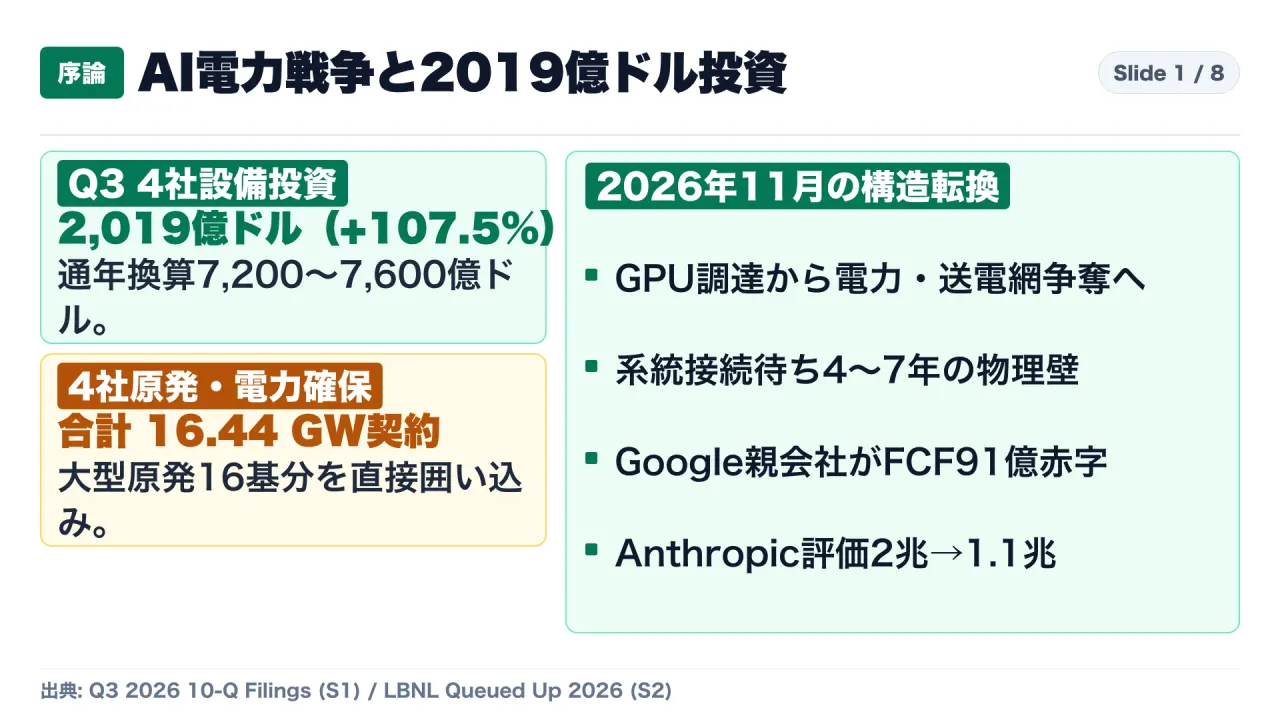
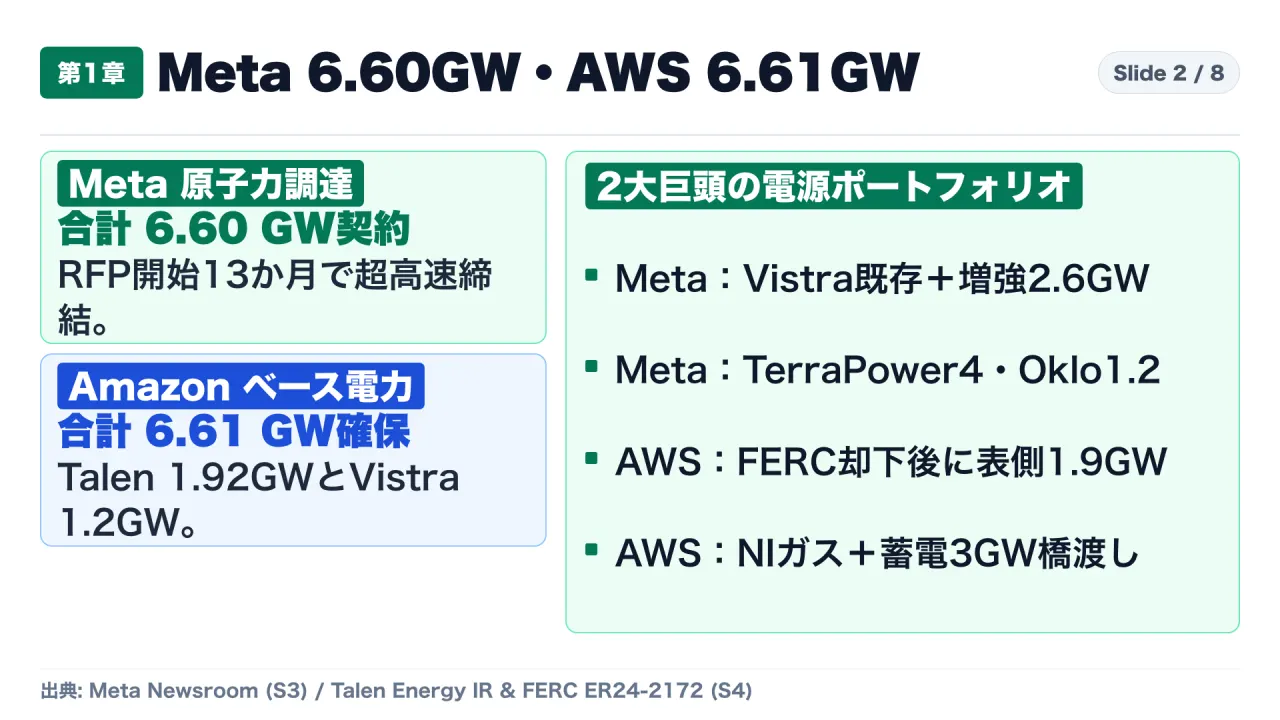
To solve this continuous power requirement, the four leading hyperscalers executed an aggressive procurement sweep across the North American nuclear and firm-baseload fleet, contracting an aggregate 16.44 GW of capacity—equivalent to the output of more than 16 full-scale commercial nuclear reactors.
| Enterprise | Contracted Capacity | Primary Projects & Structuring Mechanism | Operational Timeline & Regulatory Status |
|---|---|---|---|
| Meta | ~6.60 GW | • Vistra: 20-year PPA across 3 operating reactors (Perry, Davis-Besse, Beaver Valley) for 2,176 MW + 433 MW in reactor uprates = 2.61 GW / • TerraPower: Up to 8 Natrium SMR units (2.8 GW baseload, up to 4.0 GW with molten-salt storage) / • Oklo: Pike County, Ohio commercial fast-reactor campus for 1.2 GW | Contracted 6.6 GW in an intensive 13-month RFP sprint (concluded January 2026). Initial Vistra operational power deliveries commence in late 2026. |
| Amazon (AWS) | ~6.61 GW | • Talen Energy: Susquehanna Nuclear Station 17-year PPA for 1,920 MW (1.92 GW) / • Vistra: Comanche Peak Nuclear Station for 1.2 GW / • Constellation: Calvert Cliffs uprate for 190 MW / • X-energy: SMR development deployment (initial 320 MW, scaling to 5 GW) / • Northern Indiana (NI): New combined-cycle gas (CCGT) 2.6 GW + 400 MW battery storage = 3.0 GW ($6B–$7B investment) | Shifted to Front-of-the-Meter (FOM) grid interconnection after FERC rejected behind-the-meter expansion at Susquehanna. NI natural gas complex provides local rate relief. |
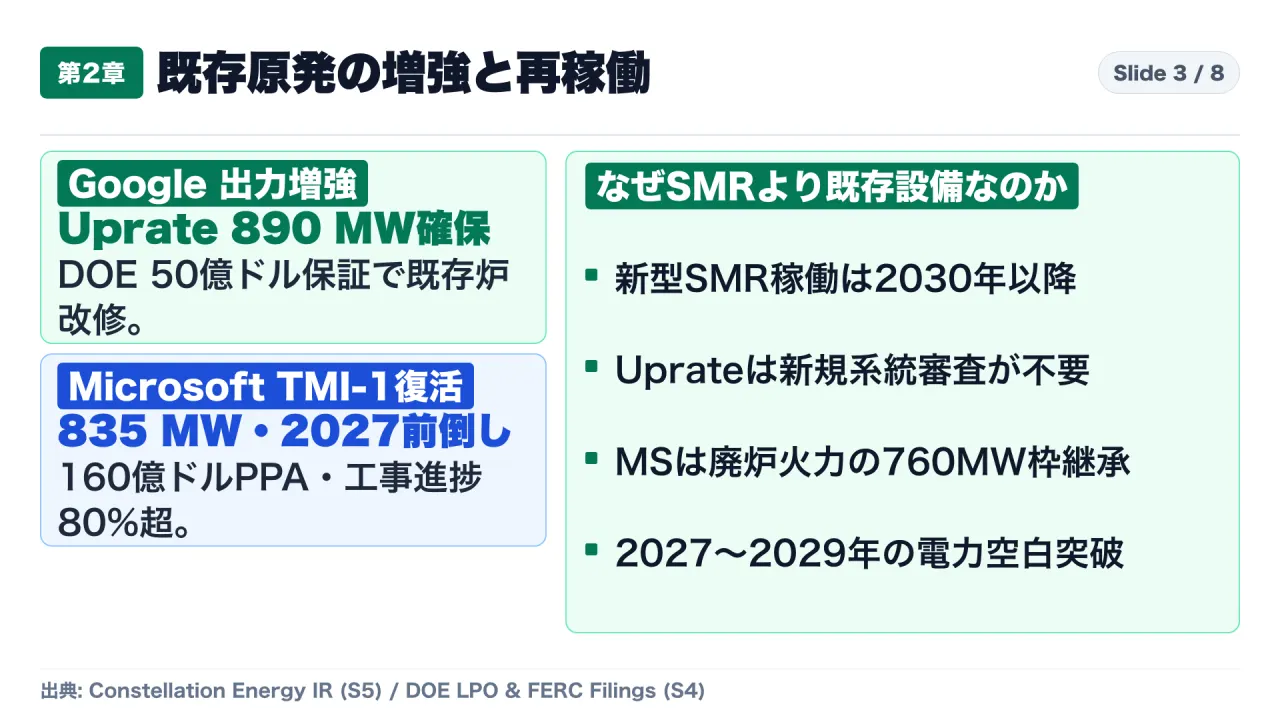
| Google (Alphabet) | ~2.39 GW | • Constellation Energy: Existing nuclear fleet uprates totaling 890 MW across Illinois and Mid-Atlantic facilities (backed by $5.0B DOE loan guarantee) / • Kairos Power: Multiple molten-salt cooled SMR units totaling 500 MW (2030–2035 delivery) / • Virtual Power Plant (VPP): 1.0 GW dynamic demand-response flexibility integration | Prioritized existing reactor uprates (890 MW) to inherit active transmission connections and eliminate multi-year queue delays. |
| Microsoft | ~0.84 GW / (835 MW) | • Constellation Energy: Crane Clean Energy Center (restart of Three Mile Island Unit 1) 20-year PPA for 835 MW (estimated $16.0B total commitment) | Backed by a $1.0B DOE loan guarantee and FERC waiver transferring 760 MW in Capacity Interconnection Rights (CIRs) from the retired Eddystone coal plant, advancing restart to 2027. |
2. FERC Regulatory Realities: Front-of-the-Meter Mandates, Uprates, and Coal Rights Inheritance
The execution of these multi-gigawatt power contracts has forced federal and state regulators to intervene, reshaping how AI data centers interact with the public grid.
The FERC Behind-the-Meter (BTM) Rejection and Shift to Front-of-the-Meter
The most consequential regulatory decision occurred in FERC Docket ER24-2172 regarding Amazon’s co-located data center at Talen Energy’s Susquehanna nuclear plant in Pennsylvania. Amazon sought to increase direct, behind-the-meter (BTM) power consumption from 300 MW to 480 MW, drawing electricity straight from the reactor switchyard without utilizing the public transmission system.
FERC rejected the proposal, establishing a nationwide precedent: co-located data centers cannot bypass transmission tariffs while relying on the regional grid as an emergency backup. Regulators determined that unregulated BTM arrangements shift transmission upgrade costs onto residential and commercial consumers while degrading grid reliability reserves. Consequently, Amazon and Talen restructured the contract into a standard Front-of-the-Meter (FOM) transmission framework, expanding total contracted volume to 1.92 GW (1,920 MW) through 2042 while paying regulated transmission and ancillary services fees to PJM.
The Near-Term Solution: Reactor Uprates and Retired Coal Interconnection Transfers
While advanced Small Modular Reactors (SMRs) from developers like Oklo, TerraPower, and Kairos Power have secured multi-gigawatt corporate commitments, their first commercial units will not achieve operation until 2030 to 2032 at the earliest. SMRs cannot bridge the energy gap between 2026 and 2029.
To deploy power within current hardware deployment cycles, Google and Microsoft pioneered two pragmatic engineering alternatives:
- Reactor Capacity Uprates: Google focused capital on upgrading steam turbines, cooling loops, and instrumentation across Constellation’s operating reactors. Supported by a $5.0 billion US Department of Energy (DOE) loan guarantee, this program yields 890 MW of new baseload power without requiring new land acquisition, reactor licensing, or transmission line construction.
- Transferring Retired Interconnection Rights (CIRs): To accelerate the restart of Three Mile Island Unit 1 (the 835 MW Crane Clean Energy Center), Microsoft and Constellation secured a FERC waiver transferring 760 MW of existing Capacity Interconnection Rights (CIRs) from the decommissioned Eddystone coal-and-gas generating station. By inheriting pre-approved transmission capacity, Microsoft bypassed PJM’s multi-year queue, accelerating commercial operations from 2028 into 2027 with plant refurbishment past 80% completion.
3. Physical Grid Limits: 2,060 GW in Queue, 77% Abandonment, and 4-Year Transformer Backlogs
The urgency with which hyperscalers are purchasing existing power rights stems from severe congestion in US transmission interconnection queues and electrical equipment manufacturing.
The LBNL Queued Up 2026 Audit
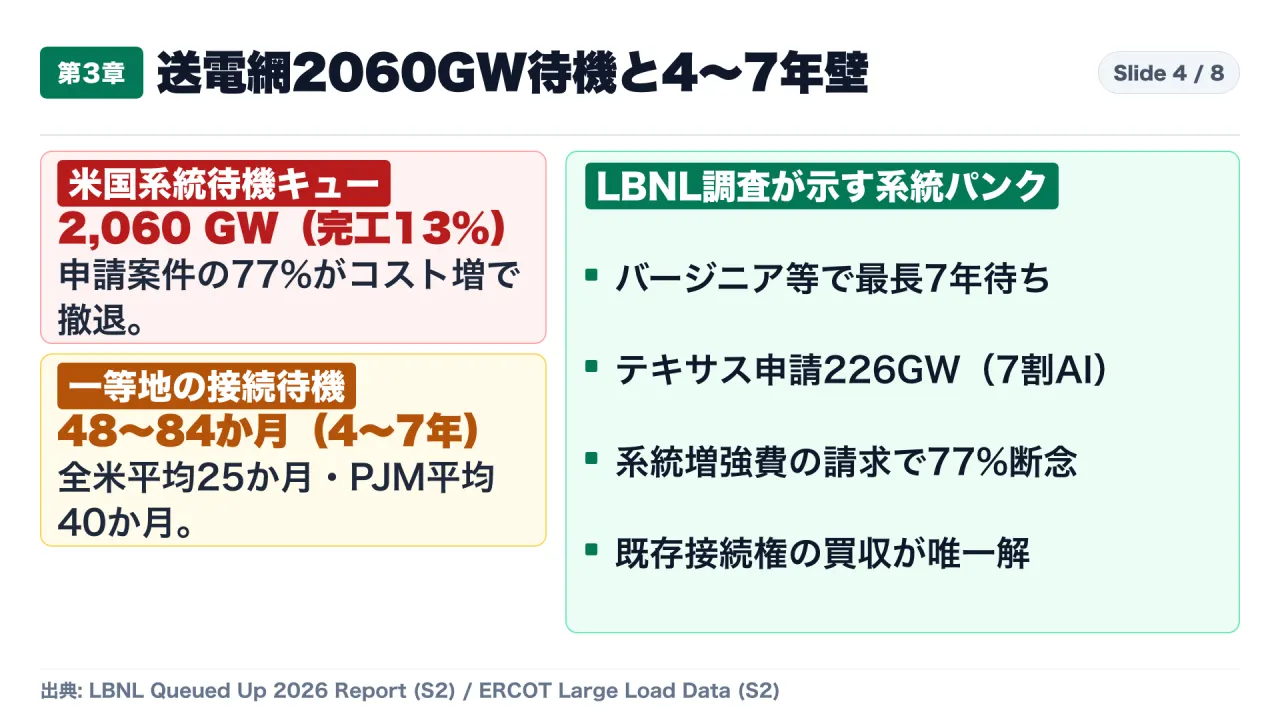
Data from Lawrence Berkeley National Laboratory (LBNL) illustrates the transmission impasse. Across all US regional grid operators (ISOs and RTOs), approximately 2,060 GW of generation and storage capacity is stalled in interconnection queues:
- 13% Realization Rate: Historically, only 13% of projects entering US interconnection queues successfully reach commercial operation (COD). The remaining 77% withdraw after utilities conduct system impact studies and assess massive network upgrade fees, often running into hundreds of millions of dollars.
- 4 to 7 Years in Tier 1 Hubs: While the nationwide median interconnection review duration stands at 25 months, large industrial loads (>100 MW) in premier data center markets—such as Northern Virginia (PJM), Dallas-Fort Worth (ERCOT), and Phoenix (APS)—face wait times of 48 to 84 months (4 to 7 years).
- The Texas Grid Saturation: In the ERCOT region, where peak system demand fluctuates between 85 and 105 GW, developers have submitted large industrial interconnection requests totaling 226 GW—with over 70% representing AI compute campuses.
Severe Supply Bottlenecks: Transformers and Turbines
Capital allocation cannot resolve physical equipment shortages when industrial factory capacity is fully utilized:
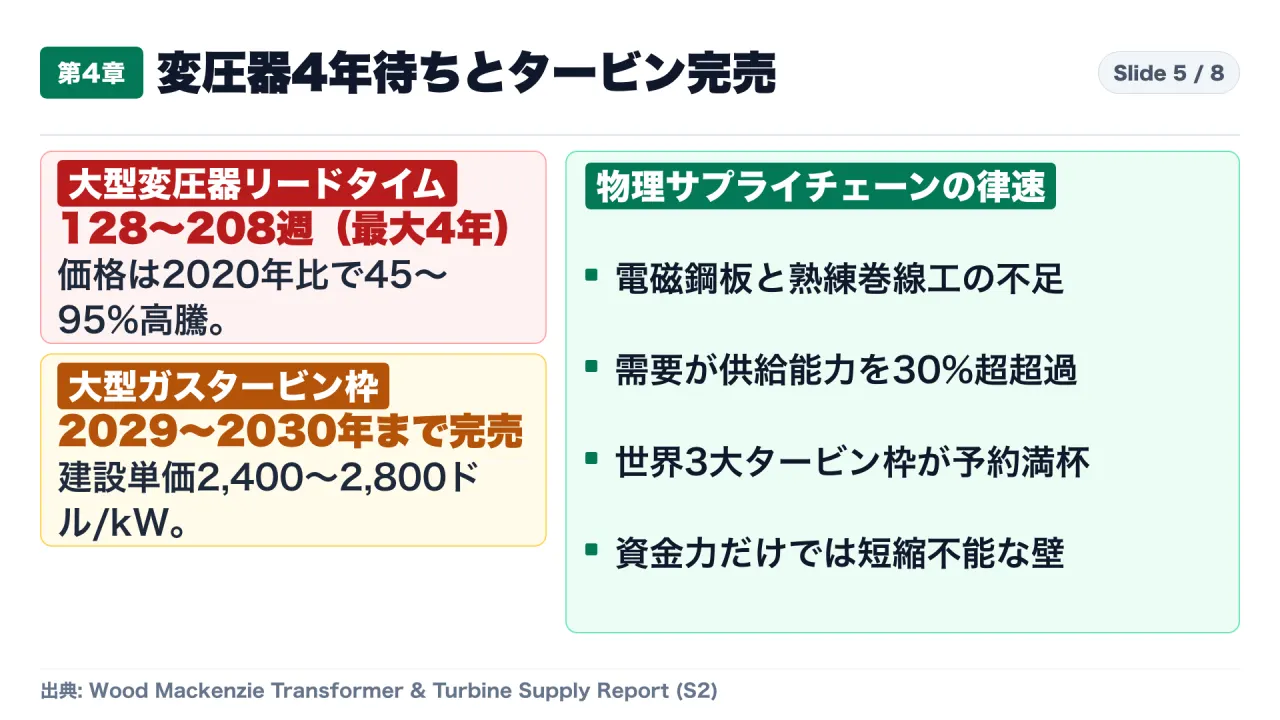
- Large Power Transformers (LPTs & GSUs): Analysis by Wood Mackenzie reveals lead times for high-voltage transmission transformers and generator step-up (GSU) units have stretched to 128 to 144 weeks (2.5 to 3 years), with specialized large-scale units reaching 208 weeks (4 years). Driven by acute shortages of grain-oriented electrical steel (GOES) and specialized winding labor, demand exceeds domestic production capacity by more than 30%, driving transformer prices up 45% to 95% relative to 2020 baselines.
- Heavy-Duty Gas Turbines: Natural gas combined-cycle (CCGT) turbines represent the primary interim baseload bridge. However, global manufacturing capacity across the primary turbine original equipment manufacturers (GE Vernova, Siemens Energy, and Mitsubishi Power) is sold out through 2029–2030. New orders carry lead times of 4 to 6 years, pushing EPC construction costs to $2,400–$2,800 per kilowatt.
4. The Financial Reckoning: $201.9 Billion Q3 Capex, FCF Deficits, and Anthropic’s Valuation Cut
The compounding costs of silicon procurement and physical infrastructure construction manifested across corporate financial statements in Q3 2026.
| Corporation | Q3 2026 Reported Capex | 2026 Annual Capex Guidance & Run-Rate | Cash Flow Impact & Balance Sheet Actions |
|---|---|---|---|
| Amazon | $77.2 billion | $250B–$280B annual run-rate | Largest single quarterly spend. Heavy capital deployment into AWS custom silicon, data centers, and power PPAs triggered an 8% post-earnings equity decline. |
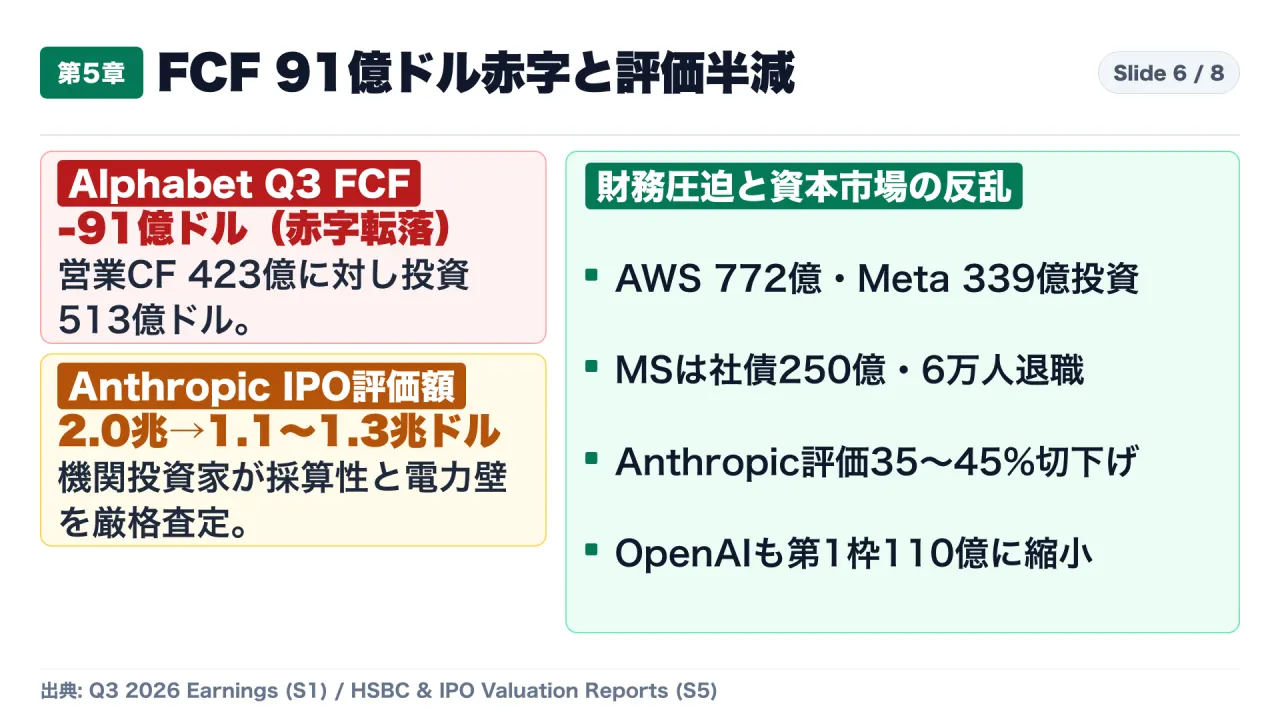
| Alphabet (Google) | $51.3 billion | $175B–$185B guidance | Capex consumed 121% of operating cash flow ($42.3B), pushing Alphabet into a quarterly free cash flow deficit of -$9.1 billion. |
| Microsoft | $39.3 billion | $120B–$145B guidance | Financed cash requirements by issuing $25.0 billion in senior debt and executing a 60,000-person voluntary departure program to control operational headcount costs. |
| Meta | $33.9 billion | $115B–$135B guidance | Raised full-year capex guidance floor. Accelerating depreciation expenses created measurable drag on operating margins. |
| Four-Company Aggregate | $201.9 billion / (+107.5% YoY) | $720B–$760B annualized | Transitioned the hyperscaler sector from self-funding cash generators into heavy capital consumers reliant on debt and cash reserves. |
Private AI Market Repricing: Anthropic and OpenAI
This capital intensity has triggered sharp repricing across private venture markets:
- Anthropic IPO Downward Revision ($2.0T to $1.1T–$1.3T): Preparing for a public listing under ticker
ANTled by Goldman Sachs, JPMorgan, and Morgan Stanley, Anthropic originally targeted a valuation of $2.0 trillion based on annual recurring revenue (ARR) scaling toward $30 billion across more than 1,000 enterprise customers. However, institutional underwriters and sovereign asset managers pushed back, citing the extreme capital requirements of physical compute infrastructure and energy procurement. Lead managers lowered the target valuation range to $1.1 trillion to $1.3 trillion—a 35% to 45% reduction—with institutional models from firms like HSBC indicating market-clearing pricing near $1.0 trillion. - OpenAI Capital Restructuring: In its concurrent financing round targeting $20 billion, OpenAI closed its initial tranche at $11.0 billion at a $1.25 trillion valuation, encountering demand resistance across retail and high-net-worth distribution channels sensitive to expanding infrastructure costs.
5. Enterprise Strategy: Transitioning from Software Metrics to Heavy Infrastructure Diligence
These developments confirm that generative AI has outgrown the economic profile of software-as-a-service (SaaS) and entered the operational regime of heavy infrastructure—comparable to rail networks, oil refining, and telecommunications utilities.
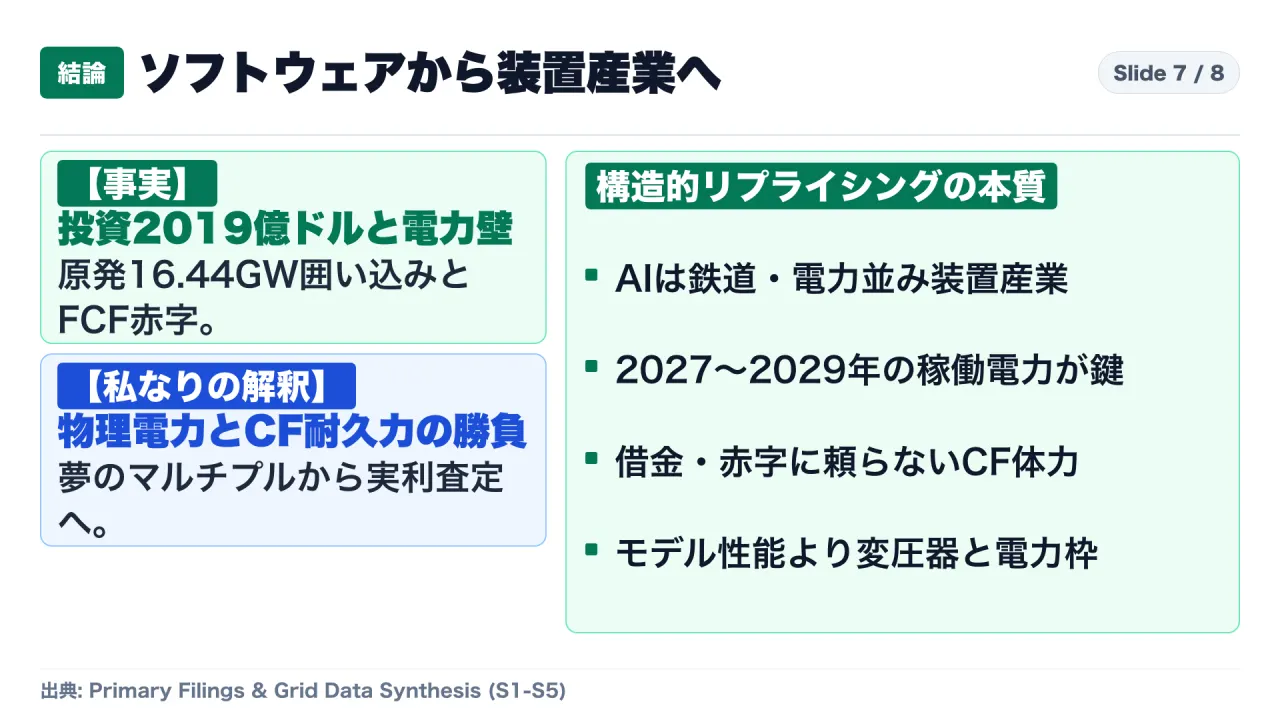
When selecting AI infrastructure partners or evaluating foundational model providers, enterprise technical leaders should apply two core diligence criteria:
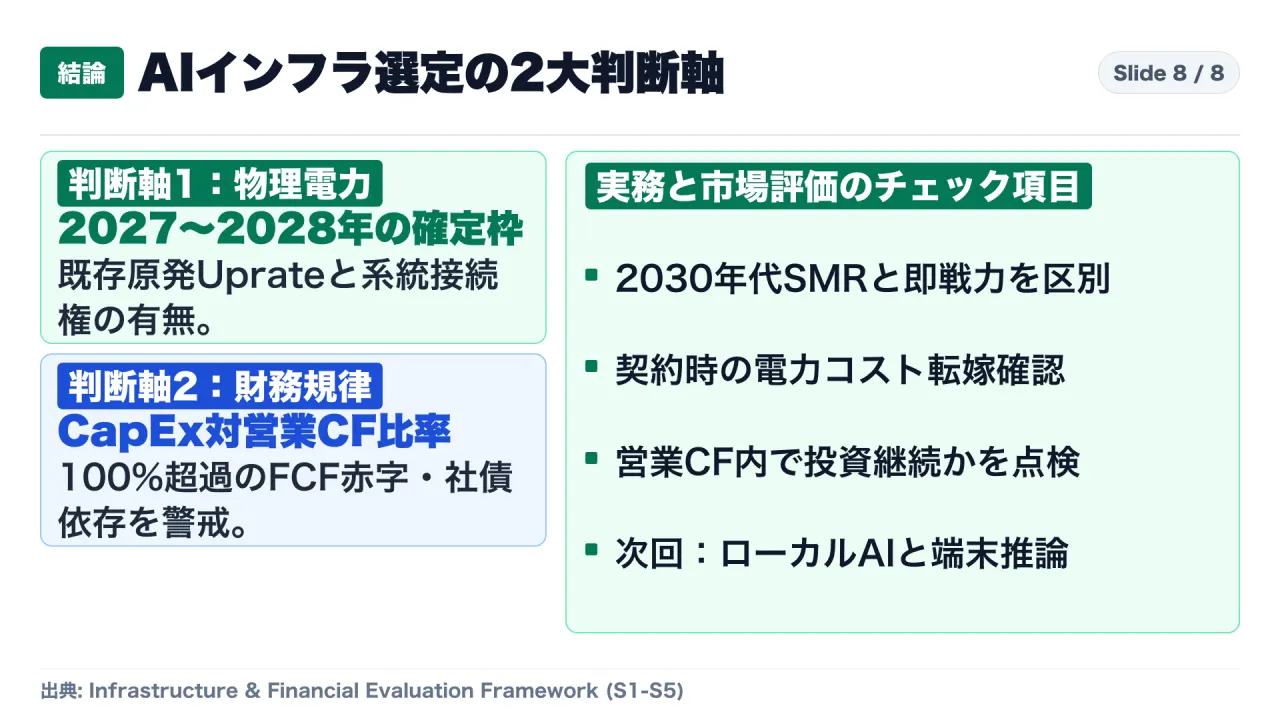
Framework 1: Verifying Near-Term Power Realization versus SMR Hype
Evaluate a cloud provider’s power portfolio based on execution timelines rather than long-term press releases:
- Separate exploratory SMR commitments scheduled for the 2030s from operational power flowing in 2027–2028.
- Prioritize infrastructure providers that have secured active light-water reactor (LWR) capacity uprates (such as Google’s 890 MW program) or inherited Capacity Interconnection Rights from retired thermal facilities (such as Microsoft’s 760 MW Eddystone transfer). These approaches provide secured transmission access that bypasses 4-to-7-year RTO interconnection queues.
Framework 2: Monitoring Capex-to-Operating Cash Flow Sustainability
Assess whether a model vendor or cloud partner can sustain its capital expenditures without destabilizing its core business:
- Review quarterly Form 10-Q disclosures to ensure capital expenditures do not consistently exceed 100% of operating cash flow.
- Recognize that vendors financing multi-billion-dollar capex programs through high-yield debt or FCF deficits will face compounding pressure to raise enterprise API prices, increase seat licensing costs, or curtail low-margin free-tier services.
- Mitigate vendor lock-in by designing workloads for multi-cloud deployment and running smaller models locally on edge hardware, ensuring computational resilience in an era of constrained physical power.
Sources
- Alphabet Inc., Amazon.com Inc., Microsoft Corp., and Meta Platforms Inc., Q3 2026 Form 10-Q Quarterly Filings: https://abc.xyz/investor/
- Lawrence Berkeley National Laboratory (LBNL), Queued Up: Characteristics of Power Plants Seeking Transmission Interconnection: https://emp.lbl.gov/queues
- Meta Newsroom, “Meta Announces Up to 6.6 GW of Nuclear Energy Commitments”: https://about.fb.com/news/2026/01/meta-nuclear-energy-rfp-6-6-gw/
- Federal Energy Regulatory Commission (FERC), Docket ER24-2172 (PJM / Talen Energy Susquehanna Interconnection Order): https://www.ferc.gov/media/er24-2172-000
- Constellation Energy Corp., Crane Clean Energy Center (TMI-1) Restart and Nuclear Uprate Investor Disclosures: https://investors.constellationenergy.com/news-releases
This article analyzes primary technical and financial disclosures for informational purposes only and does not constitute investment advice.