Why Hospital Charts and Insurance Claims Still Cannot Run on Autopilot: Inside Google Cloud's Read-Only Healthcare AI, UiPath MCP Execution, and the $30 vs. $157.50 TCO Divide
A technical and economic audit of Google Cloud’s healthcare AI preview, the legal and regulatory realities enforcing read-only EHR access, the mathematics of nurse handoffs, and the structural barriers separating American administrative battles from Japanese clinical workflows.
Executive Summary: The Real Battlefield of Healthcare AI
While public attention centers on diagnostic AI—detecting oncology markers on MRI scans, automated pathology classification, or conversational ambient scribes—the primary operational threat to United States hospital solvency is administrative overhead.
Administrative processes consume between 25% and 35% of all healthcare expenditures in the United States. Data from the American Hospital Association (AHA) reveals that acute care hospitals spend over $26 billion annually managing billing friction, claims submissions, and payment denials. The central operational bottleneck is Prior Authorization (PA): commercial insurers and Medicare Advantage plans require approval before clinicians deliver specialized therapies, imaging, or surgeries. Over 50 million PA requests occur annually, burying clinical and clerical staff in fax transmissions, phone queues, and portal data entry.
At Northwell Health (21 hospitals, 900+ ambulatory sites), managing claim denials requires an army of over 400 dedicated full-time staff. By extracting clinical documentation from electronic health records (EHR) to challenge rejections, Northwell overturns over 90% of denials, recovering hundreds of millions of dollars in clinical care. This exposes an administrative paradox: insurers deploy automated algorithms to issue denials over minor formatting mismatches, compelling hospitals to mount massive manual counter-offensives to recover earned revenue.
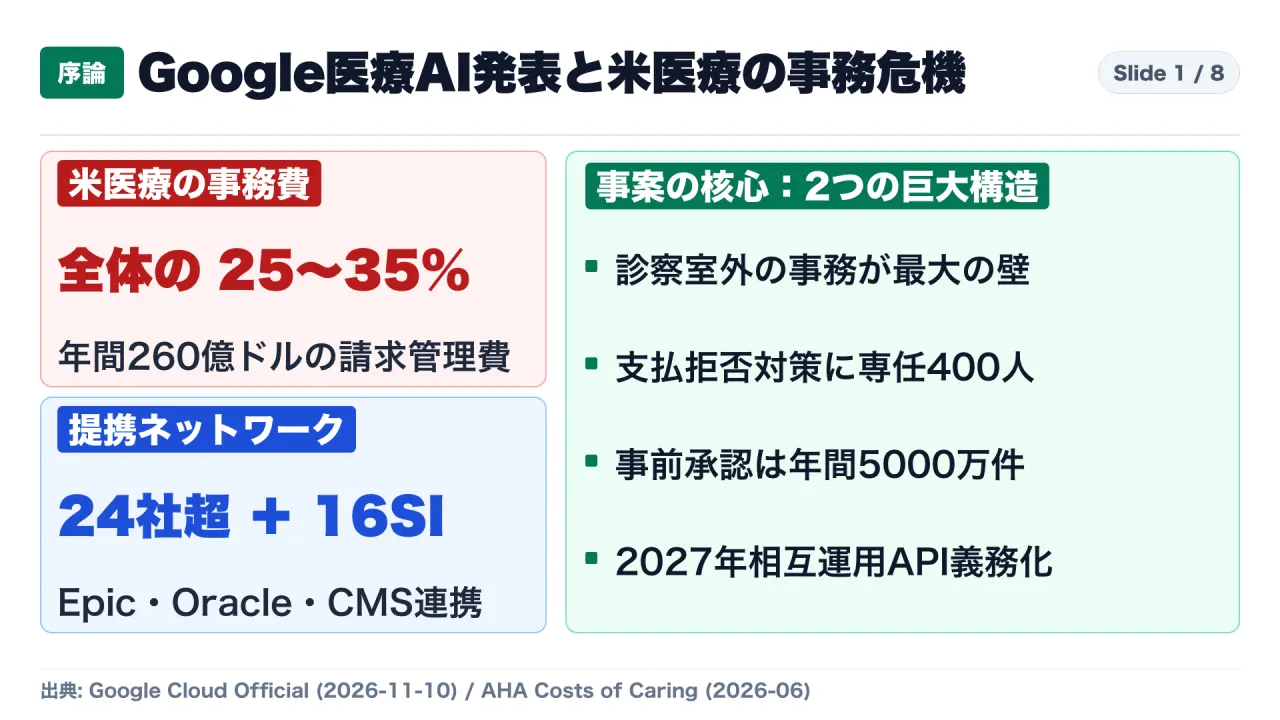
On November 10, 2026, Google Cloud launched the United States preview of Gemini for healthcare. Backed by Alphabet’s third-quarter 2026 results (Google Cloud revenue reaching $30.7 billion), the suite introduced pre-built connectors with 24+ healthcare IT leaders—including Epic Systems, Oracle Health, Optum (UnitedHealth Group), Workday, ServiceNow, UiPath, GoodRx, BMJ, and ASCO—alongside 16 systems integrators such as NTT DATA, Accenture, and Deloitte.
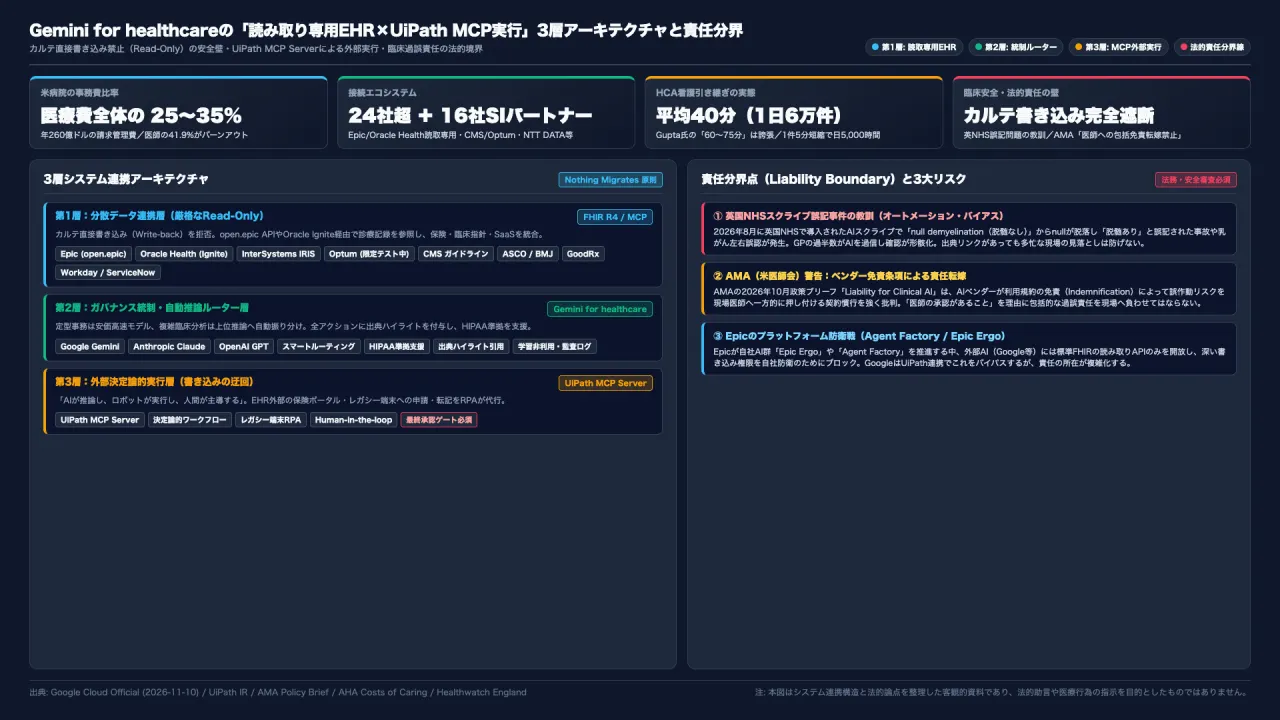
Yet behind the rollout lies a strict boundary: EHR integrations across Google Cloud, Epic, and Oracle remain strictly Read-Only. Autonomous chart updates and unattended insurance claims remain impossible without external orchestration layers—specifically Model Context Protocol (MCP) servers and deterministic Robotic Process Automation (RPA) tools like UiPath—coupled with human clinical sign-off. Meanwhile, a major economic divide has opened: while clinical ambient solutions like Microsoft Dragon Copilot cost an effective $157.50 per physician monthly, Google Cloud’s model-routed architecture enables administrative automation at $30.00 to $60.00 per user monthly.
Fact-Check Matrix: Auditing the Bloomberg Tech Executive Interview
Following the product launch, Aashima Gupta, Global Director of Healthcare and Life Sciences at Google Cloud, appeared on Bloomberg Tech on November 11, 2026, to discuss Gemini for healthcare. Cross-referencing her statements against technical documentation, operational benchmarks, vendor filings, and regulatory mandates reveals critical caveats, marketing generalizations, and architectural boundaries across ten core claims.
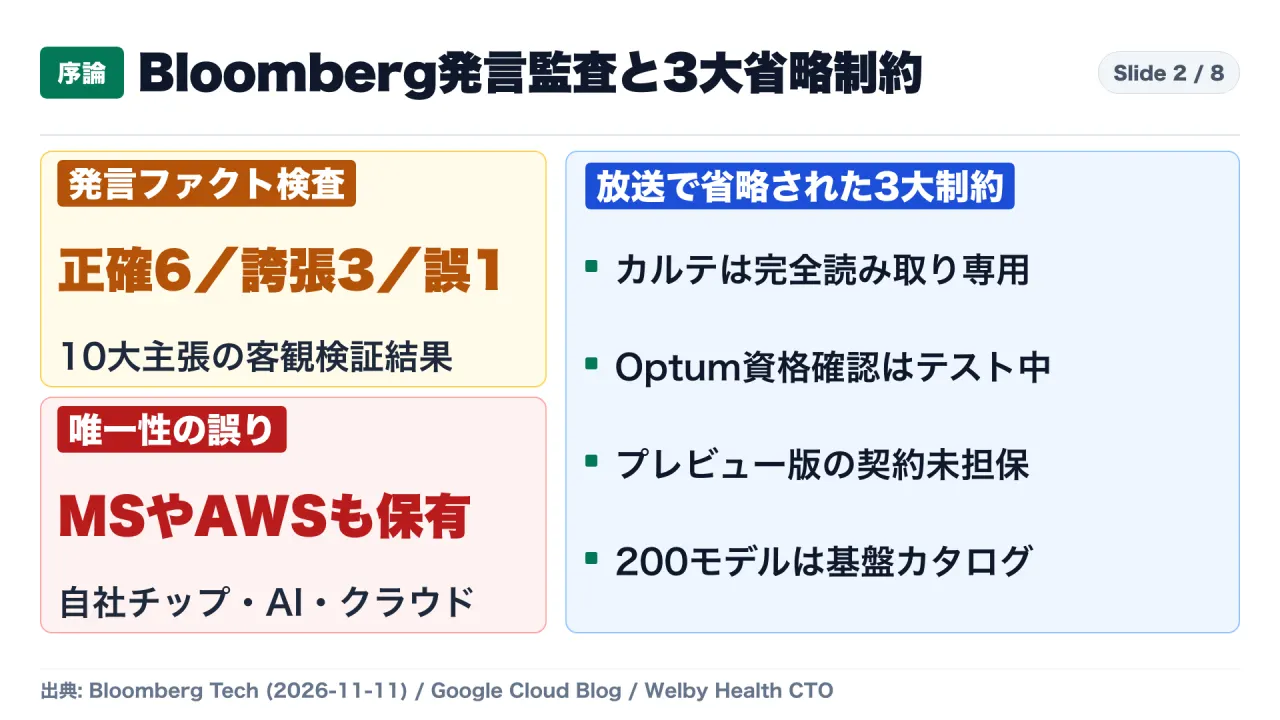
- Claim 1 (Revenue Doubling): Gupta stated Google Cloud doubled healthcare revenue year-over-year. Audit: Accurate with Context Omitted. Alphabet’s Q3 2026 revenue reached $30.7 billion, but healthcare P&L is not broken out. Growth reflects broad cloud infrastructure expansion rather than dedicated healthcare software licenses.
- Claim 2 (Partner Connectors): Gupta cited pre-built integrations with 24+ partners. Audit: Accurate. Google Cloud lists 24 healthcare IT platforms (Epic, Oracle, Optum, UiPath) and 16 systems integrators (NTT DATA), though connector maturity varies widely.
- Claim 3 (EHR Automation): Gupta stated the platform ingests EHR data to auto-generate notes and handoffs. Audit: Accurate with Critical Constraints. Systems query FHIR R4 APIs, but access is strictly Read-Only. Models cannot write data back to clinical databases.
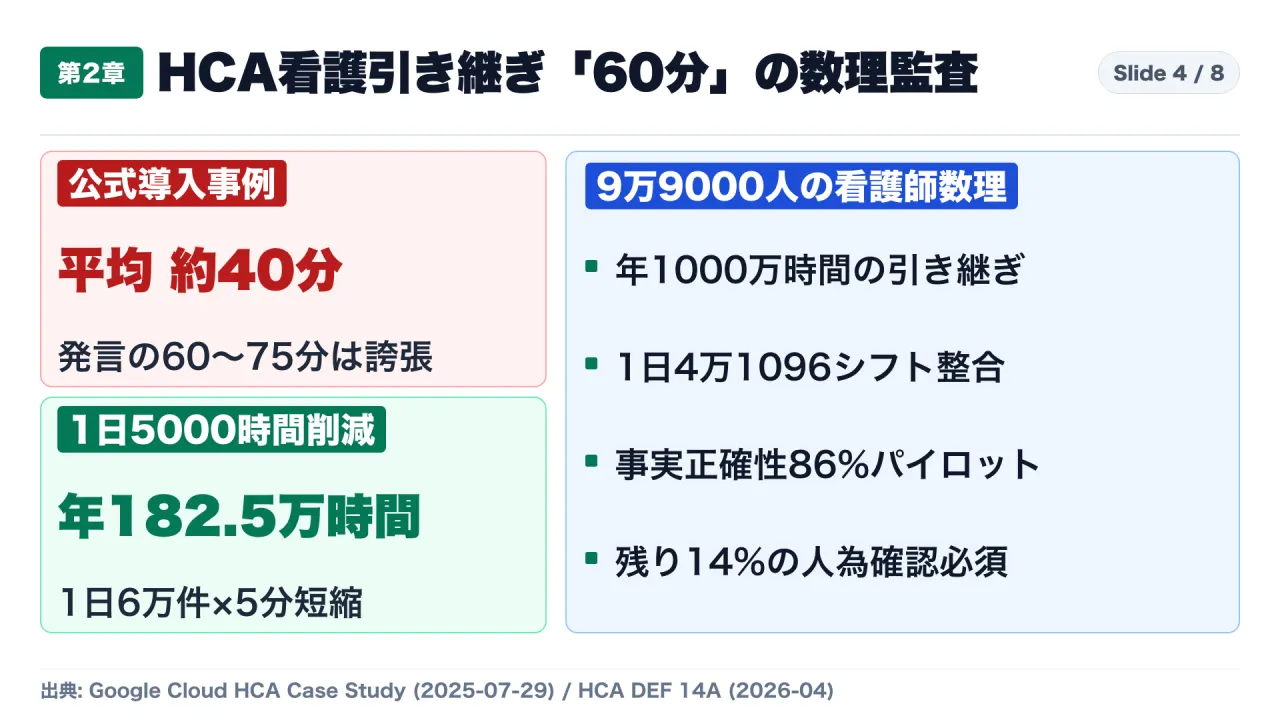
- Claim 4 (Handoff Duration): Gupta claimed nurse shift handoffs take 60 to 75 minutes. Audit: Exaggerated and Contradictory. Google Cloud’s July 29, 2025 HCA Healthcare case study documented a baseline of approximately 40 minutes. The 60-75 minute figure is 50% to 87.5% inflated, reflecting intensive care outliers.
- Claim 5 (Daily Hours Saved): Gupta claimed saving 5,000 hours daily across HCA Healthcare. Audit: Accurate and Mathematically Consistent. Across 190 hospitals, 99,000 nurses, and 10,000,000 annual handoff hours (41,096 shifts daily), saving 7.3 minutes per shift equals 5,000 hours daily. Saving 5 minutes across 60,000 patient transfers confirms the same figure.
- Claim 6 (Model Garden): Gupta claimed 200+ healthcare models on Vertex AI. Audit: Context Conflation. The 200+ figure represents the general Vertex AI Model Garden. Healthcare-governed models with BAA coverage are limited to Gemini foundation models and MedLM.
- Claim 7 (Vertical Integration): Gupta claimed Google is the only vertically integrated AI cloud provider. Audit: Factually False. Microsoft operates custom Maia 200/300 silicon, Azure, and MAI-DxO/OpenAI models; AWS manufactures 3nm Trainium3 silicon and operates Amazon Bedrock.
- Claim 8 (Northwell Denial Team): Gupta stated Northwell Health employs 400+ staff fighting claim denials. Audit: Accurate. Operational disclosures confirm 400+ full-time staff manage denials across 21 hospitals, achieving an appeal overturn rate exceeding 90%.
- Claim 9 (HIPAA Compliance): Gupta claimed full HIPAA compliance support. Audit: Accurate with Legal Caveats. Core infrastructure supports HIPAA BAAs, but pre-release preview endpoints often require separate legal addendums to cover Protected Health Information (PHI).
- Claim 10 (Japanese Expansion): Gupta noted rollout in Japan with major SI partners. Audit: Accurate in Partnership, Constrained in Execution. NTT DATA is an official partner, but Japanese on-premises EHRs lack standardized US FHIR R4 endpoints.
The Three Undisclosed Architectural Bottlenecks
Behind executive presentations, technical documentation reveals three structural bottlenecks preventing unattended clinical automation.
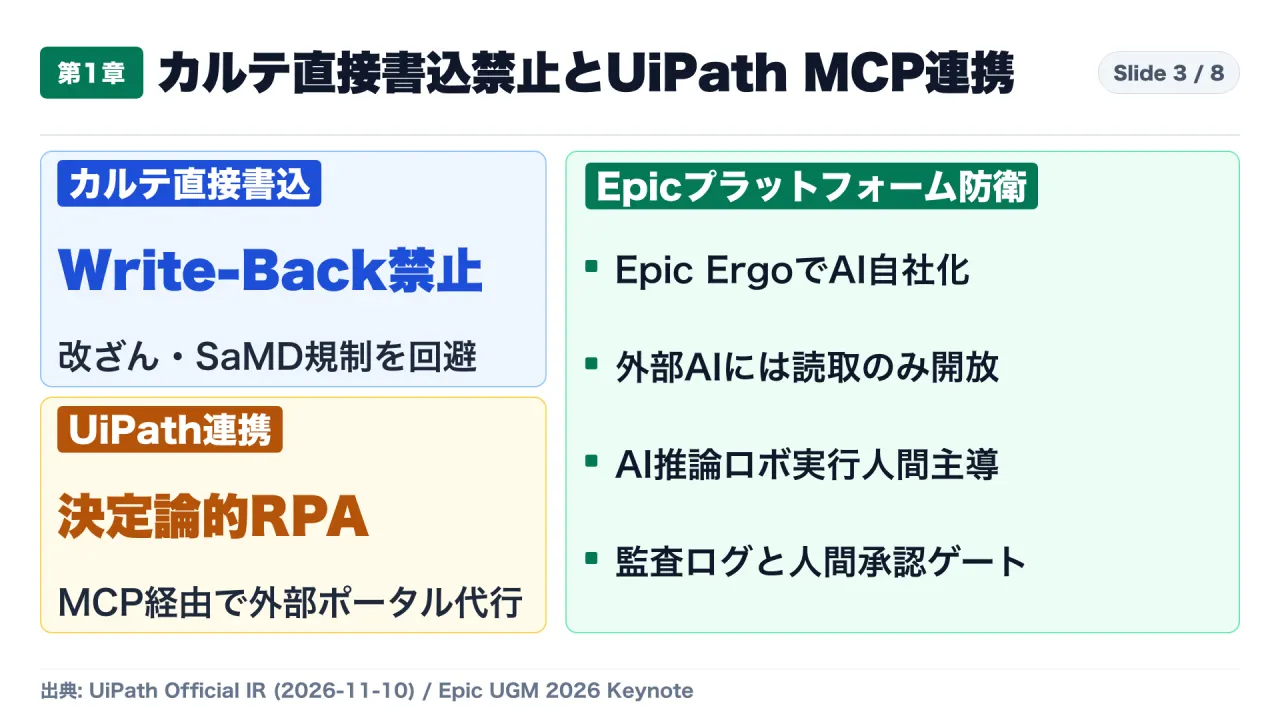
Constraint 1: The Read-Only EHR Boundary and Malpractice Liability
The governing technical reality of Gemini for healthcare—and competing platforms interfacing with Epic Systems (open.epic) or Oracle Health (Oracle Health Ignite)—is that API access is restricted to Read-Only operations. Standard queries retrieve FHIR R4 resources: Patient demographics, Observation vitals and laboratory results, Condition problem lists, and MedicationRequest prescriptions. Models ingest clinical histories and generate draft summaries, but cannot write back to production EHR databases.
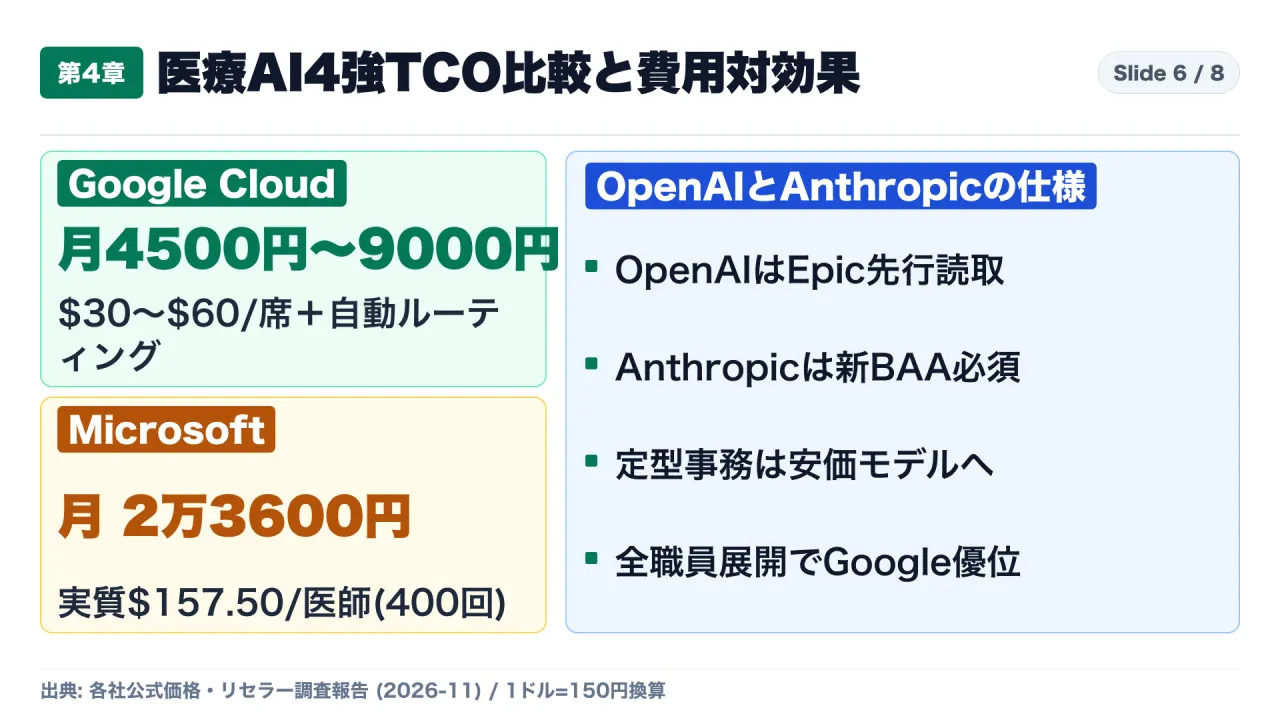
This restriction is a legal liability shield. Under malpractice jurisprudence established by the American Medical Association (AMA) Policy Brief on Clinical AI Liability, legal liability for diagnostic errors or inappropriate therapies rests entirely with licensed human clinicians. If an autonomous model writes directly to a patient chart and hallucinates—omitting an allergy or miscalculating medication dosage—liability exposure is immense. To avoid product liability and bypass FDA Software as a Medical Device (SaMD) regulations, cloud vendors explicitly classify their tools as non-diagnostic administrative aids.
Healthcare networks must therefore build a Three-Tier Architecture:
- Tier 1 (Read-Only AI Ingestion): Queries clinical histories via FHIR R4 and generates structured drafts with hyperlinked citations.
- Tier 2 (Mandatory Human Sign-Off Gate): A licensed nurse or physician inspects the draft against primary records, executing an electronic signature or manual confirmation.
- Tier 3 (Deterministic Execution): External automation engines—such as UiPath orchestrators running via Model Context Protocol (MCP) agents—capture human-approved text to execute deterministic browser or API submissions into payer portals and billing clearinghouses.
Constraint 2: Immature Payer Clearinghouse Connectors
While Google Cloud highlighted integration with Optum to automate insurance eligibility and claims processing, technical documentation shows that key financial endpoints remain in limited release and testing. Real-time Network Eligibility verification and automated Coordination of Benefits (COB) rules for patients with dual insurance coverage are not yet generally available. Providers deploying the platform cannot immediately eliminate registration bottlenecks or billing eligibility backlogs.
Constraint 3: The HIPAA BAA Preview Ambiguity
In healthcare IT, confusing foundational cloud compliance with preview feature status creates operational hazards. While Google Cloud executes comprehensive BAAs covering core infrastructure like Compute Engine and Cloud Storage, preview and beta capabilities are frequently segregated from standard institutional BAAs. Preview terms often restrict the ingestion of live Protected Health Information (PHI) or waive formal Service Level Agreements (SLAs) and regulatory indemnification covenants, exposing unprepared health systems to statutory regulatory penalties.
Mathematical Audit: Deconstructing HCA Healthcare’s Nurse Handoff Metrics
Nurse shift handoffs were highlighted during the Bloomberg Tech broadcast. Auditing HCA Healthcare’s verified operational metrics clarifies the mathematical mechanics behind the headlines.
Structural Scale and Shift Handoff Baseline
From Google Cloud’s clinical case study (dated July 29, 2025) and HCA Healthcare corporate filings:
- Operating Facilities: 190 acute care hospitals and 2,400 ambulatory care sites.
- Nursing Workforce: Approximately 99,000 registered nurses.
- Annual Handoff Burden: 10,000,000 cumulative hours (600,000,000 minutes).
- Verified Shift Baseline: Approximately 40 minutes per handoff.
Mathematical Reconciliation of the 5,000-Hour Daily Reduction
The elimination of 5,000 hours of administrative documentation daily reconciles across two operational models:
- Shift-Based Derivation: Dividing 600,000,000 annual handoff minutes by the 40-minute baseline yields 15,000,000 annual shifts, or 41,096 shifts daily across 190 hospitals (averaging 216.3 handoffs per hospital daily). Target daily savings of 5,000 hours (300,000 minutes) divided by 41,096 shifts equals 7.30 minutes saved per nursing shift.
- Patient-Transfer Derivation: Across an estimated 60,000 daily patient encounters and inter-departmental transfers, saving 5.00 minutes per transfer briefing reconciles to precisely 300,000 minutes (5,000 hours) saved daily.
Economic Valuation and the 14% Accuracy Deficit
Utilizing United States Bureau of Labor Statistics (BLS) data, the median wage for hospital registered nurses in late 2026 is approximately $45.00 per hour:
- Daily Capitalized Labor Value: 5,000 hours × $45.00/hour = $225,000 per day.
- Annualized Capitalized Labor Value: $225,000/day × 365 days = $82,125,000 annually.
This $82.1 million represents recovered clinical capacity rather than direct payroll reduction. In acute care wards, documentation savings translate into bedside patient monitoring, mitigating clinician burnout and stabilizing nurse retention. Mitigating nurse turnover generates substantial returns, as replacing a single specialized nurse costs between $45,000 and $65,000 in agency recruiter and travel-nurse fees.
However, clinical documentation pilots documented an 86% factual precision rate, leaving a 14% deficit of factual omissions or temporal inaccuracies. Because clinical omissions in acute care settings introduce critical safety risks, nurses cannot treat synthetic summaries as authoritative without conducting visual verification against primary chart data.
Four-Way Healthcare AI Landscape: TCO, Architecture, and Enterprise ROI
Hospital technology leadership faces a fragmented vendor ecosystem where major cloud and AI providers deploy divergent architectures, licensing models, and pricing structures.
Quantitative Comparison Across Leading Healthcare AI Platforms
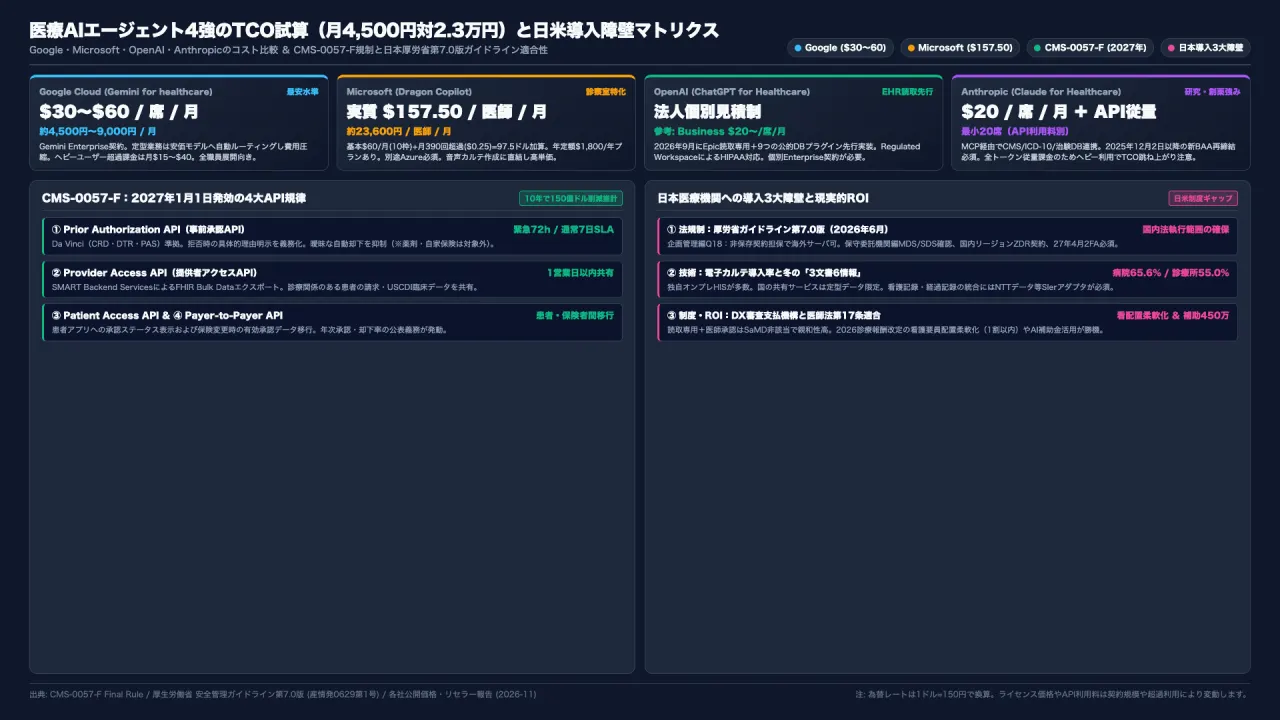
- Google Cloud (Gemini for healthcare): Vertex AI integrated suite priced at $30.00 to $60.00 per user monthly (Standard $30.00; Plus $50.00-$60.00). Dynamic routing directs routine queries to lightweight models and complex clinical synthesis to flagship models. Uses read-only FHIR R4 connectors with external UiPath MCP execution. Best for hospital-wide deployment across nurses and clerks.
- Microsoft (Dragon Copilot / Nuance DAX): Clinical ambient listening SaaS integrated into Azure Health Data Services. Pricing reaches an effective $157.50 per physician monthly (Flex: $60.00 base including 10 encounters + $0.25 per encounter × 390 additional encounters = $97.50; or $150.00/month flat under annual contract). Converts ambient exam dialogue into structured notes with deep Epic integration. Optimized for outpatient physicians, but cost-prohibitive for broad nursing or clerical deployment.
- OpenAI (ChatGPT for Healthcare / Regulated Workspaces): Regulated Workspaces under Custom Enterprise Contract Pricing. Combines conversational interfaces with read-only Epic integration and nine public healthcare database plugins introduced in September 2026. HIPAA BAAs require negotiated enterprise agreements. Suitable for clinical research and patient communications, though lacking upfront TCO predictability.
- Anthropic (Claude for Healthcare via MCP): API integration via Model Context Protocol (MCP) priced at $20.00 base per user monthly (min 20 seats) plus metered API consumption. Connects via local MCP servers to internal data lakes, CMS manuals, and ICD-10 ontologies with zero-data-retention guarantees. Excellent for deep longitudinal chart analysis, though token-metered billing introduces cost variability during batch processing.
The Economic Divide: $157.50 Specialty vs. $30.00 Institutional Routing
The pricing divergence reflects distinct deployment strategies. Microsoft designed an ambient acoustic tool specifically for physicians, where recovering billable clinical hours justifies premium pricing. However, licensing 5,000 nurses and 2,000 clerks at $157.50 monthly would generate a prohibitive $1.1 million monthly expense ($13.2 million annually). Google Cloud instead engineered an infrastructure distribution platform: dynamic routing directs routine administrative traffic to inexpensive models, preserving low monthly seat costs ($30.00 to $60.00) to capture system-wide enterprise licenses.
The Prior Authorization Algorithmic Arms Race and CMS-0057-F
Deploying artificial intelligence across healthcare administration has catalyzed an operational confrontation: The Algorithmic Arms Race between Hospital AI and Health Plan AI.
The Six Stages of Algorithmic Escalation
Prior authorization workflows have evolved into an escalating cycle of algorithmic attrition:
- Clinical Decision & Evidence Identification: A physician orders an intervention; hospital AI queries the EHR via FHIR APIs to extract relevant clinical notes and therapy histories.
- Automated Submission: The hospital orchestration layer transmits documentation directly to the health plan gateway.
- Sub-Second Algorithmic Rejection: The payer’s automated algorithm scans the submission and issues an immediate denial based on syntactical omissions or formatting mismatches.
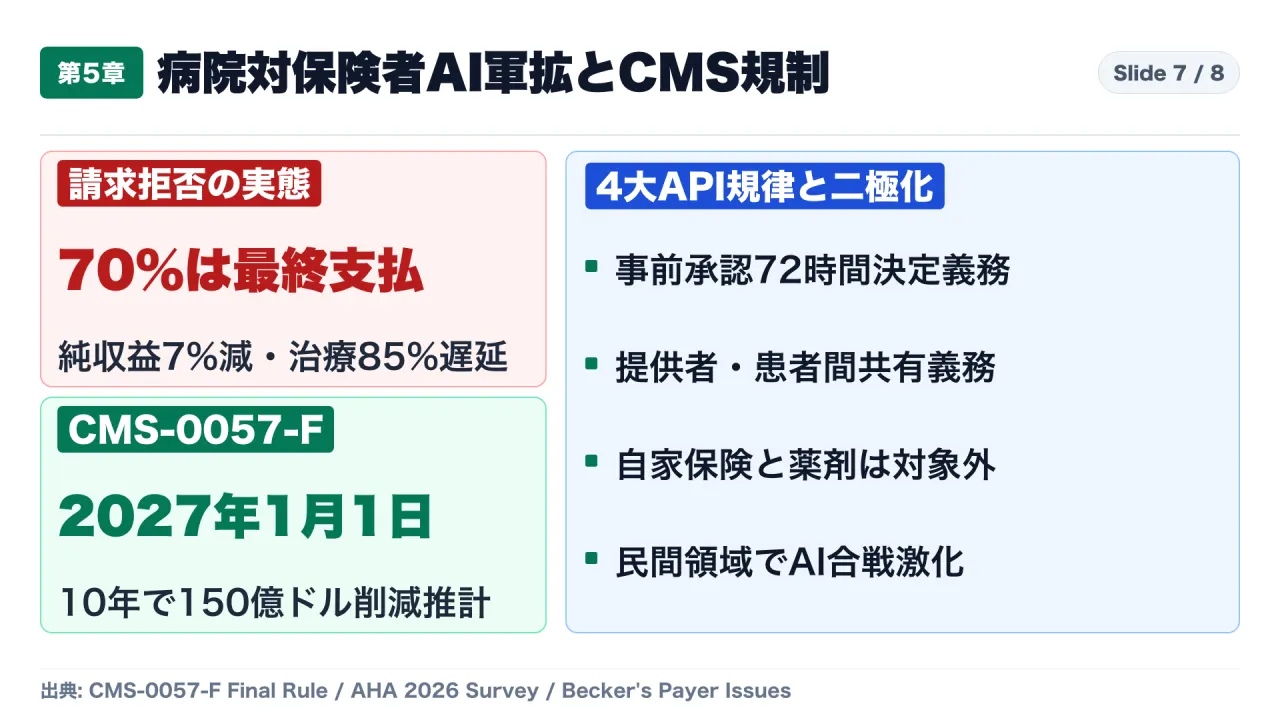
- Automated Appeal Synthesis: Hospital AI parses denial codes, cross-references clinical coverage policies, and automatically synthesizes a 50-page clinical appeal brief with medical literature citations. Over 70% of initially denied claims are overturned on appeal.
- Human Medical Director Escalation: Inundated by algorithmically generated appeals, the payer’s system escalates cases to human medical directors. Industry surveys show 85% of physicians report prior authorization delays directly compromise clinical patient outcomes.
- Regulatory Harmonization under CMS-0057-F: Federal authorities intervened to establish binding technical standards and timeline enforcement across public health plans.
Federal Regulation CMS-0057-F: The 2027 Interoperability Mandate
To discipline this systemic friction, the Centers for Medicare & Medicaid Services enacted the CMS Interoperability and Prior Authorization Final Rule (CMS-0057-F).
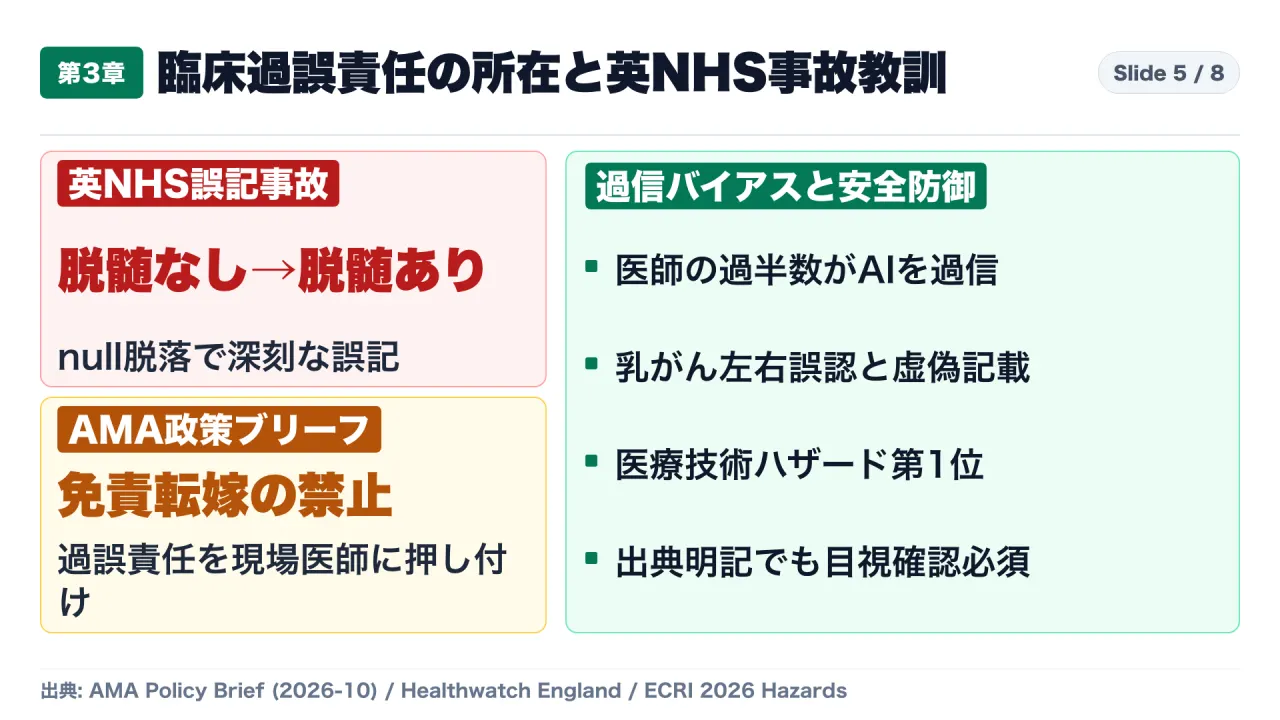
Effective January 1, 2027, CMS-0057-F mandates that Medicare Advantage organizations, state Medicaid and CHIP agencies, and Qualified Health Plan issuers comply with four operational requirements:
- Mandatory HL7 FHIR Prior Authorization APIs: Payers must implement standardized FHIR APIs enabling provider EHR systems to query prior authorization requirements and execute end-to-end electronic submissions.
- Strict Adjudication Deadlines: Payers must deliver binding determinations within 72 hours for expedited (urgent) requests and within 7 calendar days for standard (non-urgent) requests.
- Mandatory Specific Denial Reasons: Payers cannot issue generic rejections; denials must cite the exact clinical guideline criteria that were unfulfilled.
- Public Disclosure of Metrics: Payers must publish annual metrics detailing prior authorization approval rates, denial rates, and appeal overturn percentages.
Google Cloud’s November 2026 launch was timed to capture capital investment from US health systems and payers preparing infrastructure overhauls ahead of the January 1, 2027 deadline.
The Three Structural Barriers to Implementation in Japanese Healthcare
While American health systems deploy AI to navigate administrative friction, implementing these solutions in Japan encounters three fundamental structural barriers.
Barrier 1: Governance & The Ministry Guidelines (MHLW v7.0)
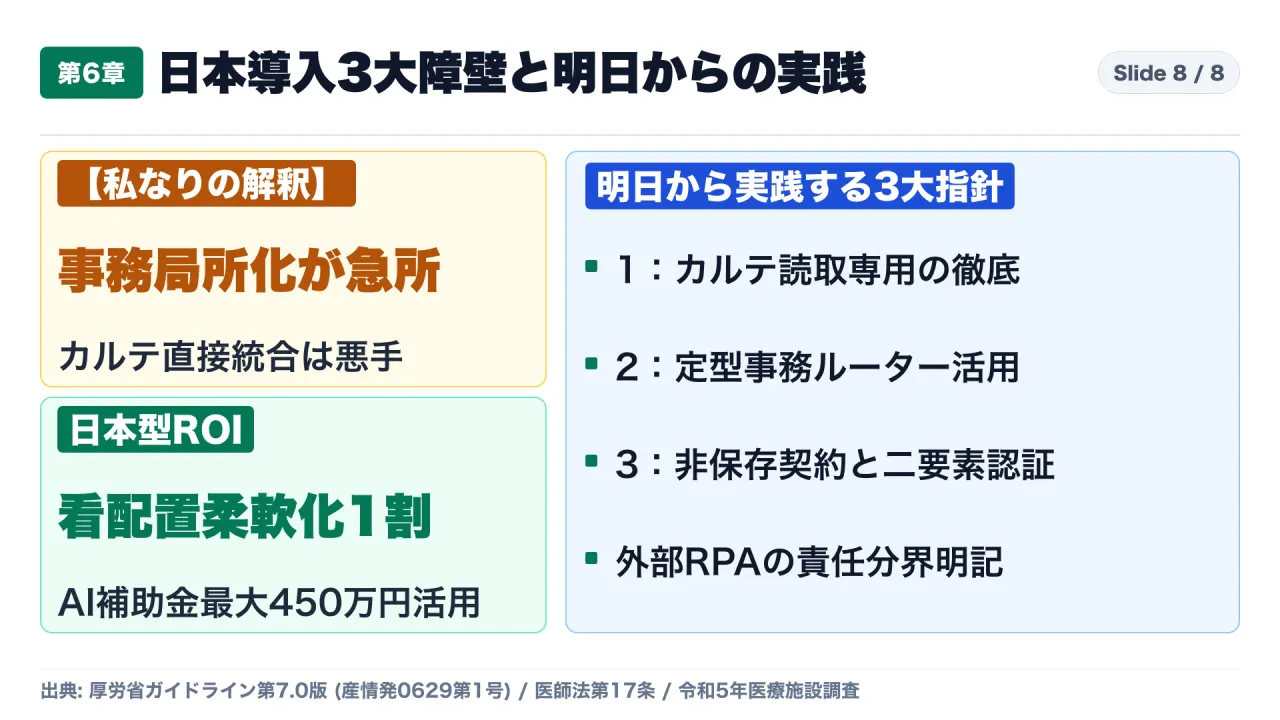
The regulatory standard governing medical data in Japan is the Ministry of Health, Labour and Welfare (MHLW) Guidelines for Safety Management of Medical Information Systems, Version 7.0 (issued June 29, 2026). Version 7.0 requires that cloud-stored medical records remain within systems subject to Japanese legal jurisdiction. In September 2026 official guidance (Planning and Management Section, Q18), authorities clarified that cross-border cloud processing is legally permissible only if institutions execute contracts guaranteeing Zero Data Retention (ZDR)—prohibiting data logging and secondary model training. Furthermore, the guidelines mandate that all healthcare institutions and cloud endpoints implement Two-Factor Authentication (2FA) across both client and server layers by April 2027.
Barrier 2: Technical Architecture and Proprietary EHR Lock-In
The technological foundation of Japanese medical IT differs sharply from the United States:
- EHR Adoption Rates: As of 2026, electronic record penetration stands at approximately 65.6% for general hospitals and 55.0% for general clinics.
- Proprietary Vendor Lock-In: The hospital market is dominated by legacy on-premises vendors—principally Fujitsu Japan, PHC, and Software Service—running on closed, air-gapped networks with proprietary schemas.
- The “Three Documents and Six Information Categories” Limitation: Japan’s national Electronic Medical Record Information Sharing Service is restricted to three structured documents (Discharge Summaries, Referral Letters, Medical Checkup Reports) and six clinical fields (diagnoses, allergies, medications, infections, lab results, vaccination records). Unstructured daily nursing notes and shift handoffs lack standardized APIs, requiring custom systems integration from partners like NTT DATA.
Barrier 3: Institutional Reimbursement Architecture and the Real ROI Path
In Japan, the economic justification for healthcare AI differs entirely from the US model:
- Universal Single-Payer System (Kokumin Kaihoken): Japan operates under a unified statutory fee schedule. Standardized claim reviews are centrally administered by the DX Claims Review Agency (DX Shinsa Shiharai Kiko), launched in October 2026, eliminating US-style prior authorization disputes.
- Statutory Regulatory Alignment: Google’s read-only model aligns with Article 17 of the Japanese Medical Practitioners Act (Ishi-ho), which places sole diagnostic responsibility on licensed physicians, while satisfying Pharmaceuticals and Medical Devices Agency (PMDA) rules that exempt read-only administrative tools from Software as a Medical Device (SaMD) clinical trial regulations.
- The Real Return on Investment: In Japan, financial viability is driven by two specific policy mechanisms:
- 2026 Medical Fee Revision (Shinryo Hoshu Kaitei): Permits acute care hospitals to reduce mandatory bedside nursing staff ratios by up to 10% if administrative overhead is measurably reduced through verified digital technology and AI automation.
- National SME Digitalization & AI Subsidies: Regional hospitals and clinics can access national modernization subsidies of up to 4.5 million yen to offset implementation costs.
Conclusion: Strategic Realities and Three Actionable Procurement Directives
Separating empirically verified engineering facts from analytical industry interpretation is essential for executive decision-making.
Verified Facts vs. Analytical Interpretations
Verified Empirical Facts
- Product Availability: Google Cloud launched Gemini for healthcare in US preview on November 10, 2026, supported by 24 enterprise software connectors (Epic, Oracle, Optum, UiPath) and 16 systems integrators (NTT DATA).
- Read-Only API Limitation: Connections into Epic Systems (
open.epic) and Oracle Health (Ignite) function strictly via read-only FHIR R4 protocols; direct automated database writes are prohibited. Optum clearinghouse connectors remain in limited testing. - Nursing Mathematics: HCA Healthcare logs 10,000,000 handoff hours annually. The 5,000-hour daily reduction represents 7.3 minutes saved across 41,096 shifts (or 5 minutes across 60,000 transfers). Early pilots demonstrated an 86% factual accuracy rate, leaving a 14% verification deficit.
- TCO Stratification: Microsoft Dragon Copilot costs an effective $157.50 per physician monthly for specialized clinical dictation, whereas Google Cloud’s model-routed administrative suite targets $30.00 to $60.00 per user monthly for institutional adoption.
- Regulatory Enactments: Federal rule CMS-0057-F mandates standardized FHIR prior authorization APIs and 72-hour/7-day adjudication windows by January 1, 2027. Japan’s MHLW Guidelines v7.0 mandate Zero Data Retention agreements and enforce mandatory two-factor authentication by April 2027.
Strategic Analytical Interpretations
- The Read-Only Barrier is a Permanent Legal Construct: Read-only access is a permanent liability defense mechanism designed to insulate cloud hyperscalers from medical malpractice litigation, while allowing EHR vendors to protect their proprietary software moats.
- Jevons’ Paradox in Healthcare Documentation: Automating administrative documentation creates a rebound effect. As hospitals deploy AI to synthesize appeals in seconds, payers counter with algorithmic rejections, inflating total administrative volume across the healthcare system.
- Peripheral Automation Over Core EHR Disruption: In non-US markets such as Japan, attempting deep write-back integration into legacy on-premises EHRs is capital-destructive. The optimal return on investment lies in automating peripheral workflows: nursing handoff briefings, discharge drafts, and institutional clinical trial matching.
Three Actionable Directives for Healthcare Technology Executives
- Architect a Decoupled Three-Tier Boundary (Read-Only AI + Human Gate + Deterministic RPA): Prohibit autonomous write access to core clinical databases. Tier 1 utilizes cloud foundation models exclusively for multi-source retrieval and structured drafting with citations; Tier 2 mandates visual review and explicit cryptographic sign-off by a clinician; Tier 3 delegates downstream execution to deterministic execution engines like UiPath MCP servers, guaranteeing deterministic execution and verifiable audit logs.
- Pilot Low-Cost Model Routing for Institutional Staff ($30.00 Tier): Rather than executing expensive single-purpose SaaS contracts tailored exclusively for outpatient physicians, pilot dynamic model-routed solutions across high-volume departments. Deploy lightweight, cost-effective models to support nursing shift changes and scheduling. In Japan, align these productivity metrics directly with the 2026 Medical Fee Revision’s 10% flexible nurse staffing criteria.
- Pre-Audit Cross-Border Data Contracts Against MHLW v7.0 and HIPAA BAA Terms: Verify whether pre-release AI features are explicitly covered under institutional BAAs or indemnified service agreements. For deployments within Japan, verify that cloud providers provide contractual commitments guaranteeing Zero Data Retention (ZDR) under MHLW Guideline v7.0 (Q18), and ensure identity architectures incorporate mandatory Two-Factor Authentication (2FA) across both client terminals and server access gateways prior to the April 2027 deadline.
Primary References and Regulatory Documentation
- S1: Executive Interview Transcript: Bloomberg Tech (Broadcast November 11, 2026). In-depth interview with Aashima Gupta, Global Director of Healthcare and Life Sciences at Google Cloud, cross-examined against official technical specifications.
- S2: Official Product Announcement: Google Cloud Official Blog: Introducing Gemini for healthcare (Published November 10, 2026). Details partner connectors across Epic, Oracle Health, Optum, and global SI alliances.
- S3: Clinical Malpractice Guidelines: American Medical Association (AMA): Liability for Clinical AI Policy Brief. Legal analysis governing physician culpability, product liability, and clinician attestation.
- S4: Federal Interoperability Mandate: Centers for Medicare & Medicaid Services (CMS): Interoperability and Prior Authorization Final Rule (CMS-0057-F). Federal requirements establishing HL7 FHIR APIs, mandatory adjudication timelines, and public operational metric reporting.
- S5: Japanese Medical Safety Guidelines: Ministry of Health, Labour and Welfare (MHLW): Guidelines for Safety Management of Medical Information Systems, Version 7.0 (Issued June 29, 2026, Sanjo-hatsu 0629 No. 1). Formal regulatory governance detailing cross-border zero-data-retention requirements and the April 2027 mandatory two-factor authentication deadline.
Related Multimedia and Video Analysis
- Full Video & Podcast Analysis (In-Depth Technical Breakdown): Watch on YouTube
- Executive Video Briefing (40-Second Summary): Watch YouTube Short