When Cloud Outages Cause Chemical Casualties: The Forensic Engineering Analysis of the German Pool Chlorine Disaster and the Perils of Single-Point SaaS Dependencies
An in-depth systems architecture postmortem examining the catastrophic decoupling of industrial control systems, best-effort SMTP alerting, Microsoft 365 cloud downtime, and deterministic fail-safe engineering for physical infrastructure.
Executive Summary: The Lethal Convergence of Cloud Latency and Physical Reality
Modern operational technology (OT) and enterprise information technology (IT) have undergone an aggressive, decade-long convergence. Industrial programmable logic controllers (PLCs), municipal water treatment sensors, environmental monitors, and critical facilities infrastructure—once air-gapped from commercial networks—are now routinely integrated with cloud-hosted enterprise services. While this architectural evolution promises operational convenience, centralized observability, and zero capital expenditure for custom alerting pipelines, it introduces a subtle, potentially catastrophic failure mode: the subordination of physical human safety to best-effort commercial software-as-a-service (SaaS) availability.
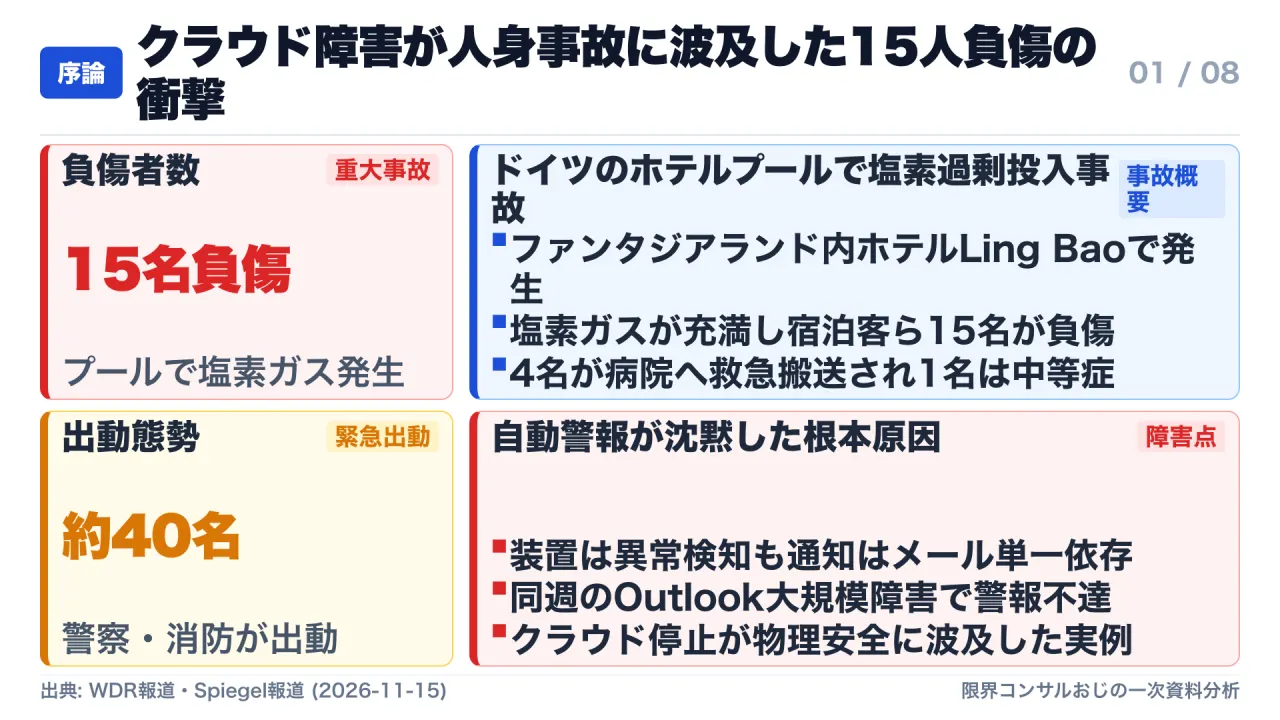
On November 15, 2026, this architectural vulnerability materialized in a severe mass-casualty incident at the Hotel Ling Bao, situated within the Phantasialand theme park complex in Brühl, North Rhine-Westphalia, Germany. During afternoon operations, an automated chemical dosing controller governing the hotel’s indoor pool facility malfunctioned, continuously injecting concentrated chlorine compounds into the water circulation loop. The resulting chemical reaction released heavy volumes of toxic chlorine gas into the enclosed aquatic space.
Fifteen hotel guests, including young children and families, suffered acute chemical respiratory trauma, severe ocular burns, and toxic inhalation injury. Emergency dispatch services mobilized a massive multi-agency response, deploying approximately forty first responders, specialized chemical decontamination units (CBRN/ABC defense), municipal police battalions, and advanced paramedic teams. Four victims sustained injuries severe enough to require immediate emergency hospitalization via intensive care transport ambulances, with at least one individual classified in serious, intermediate-stage chemical toxicity.
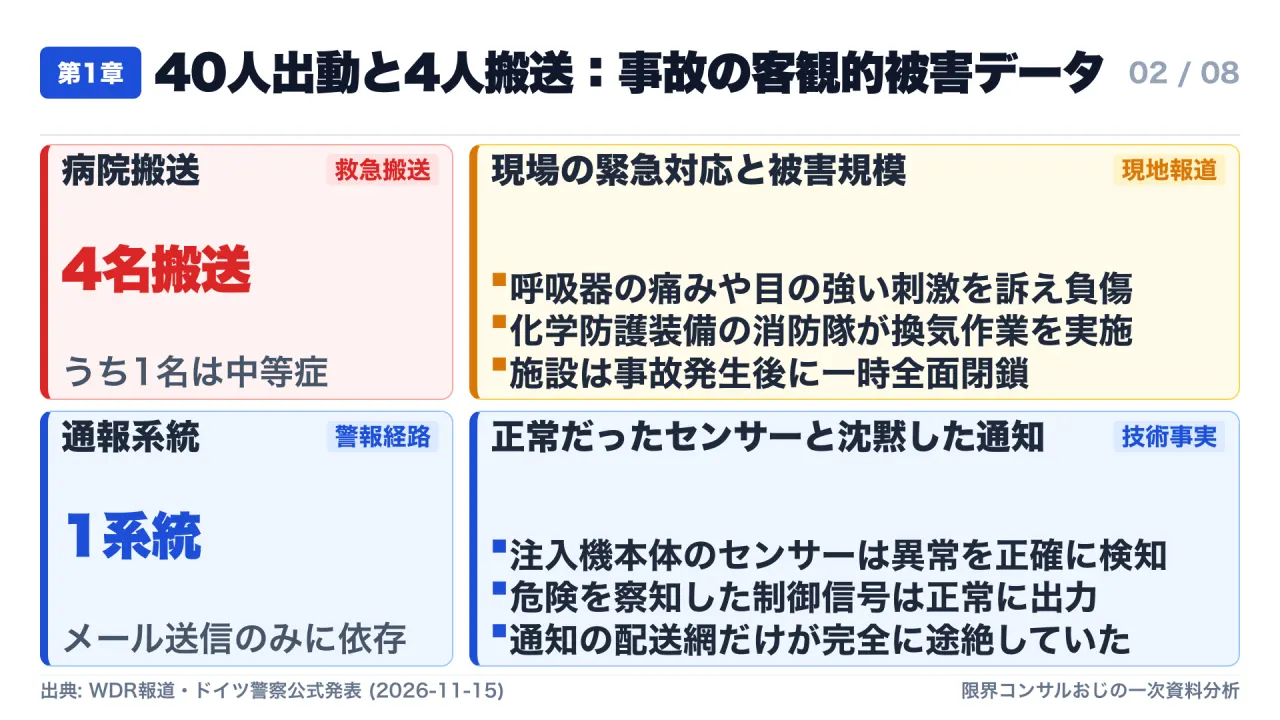
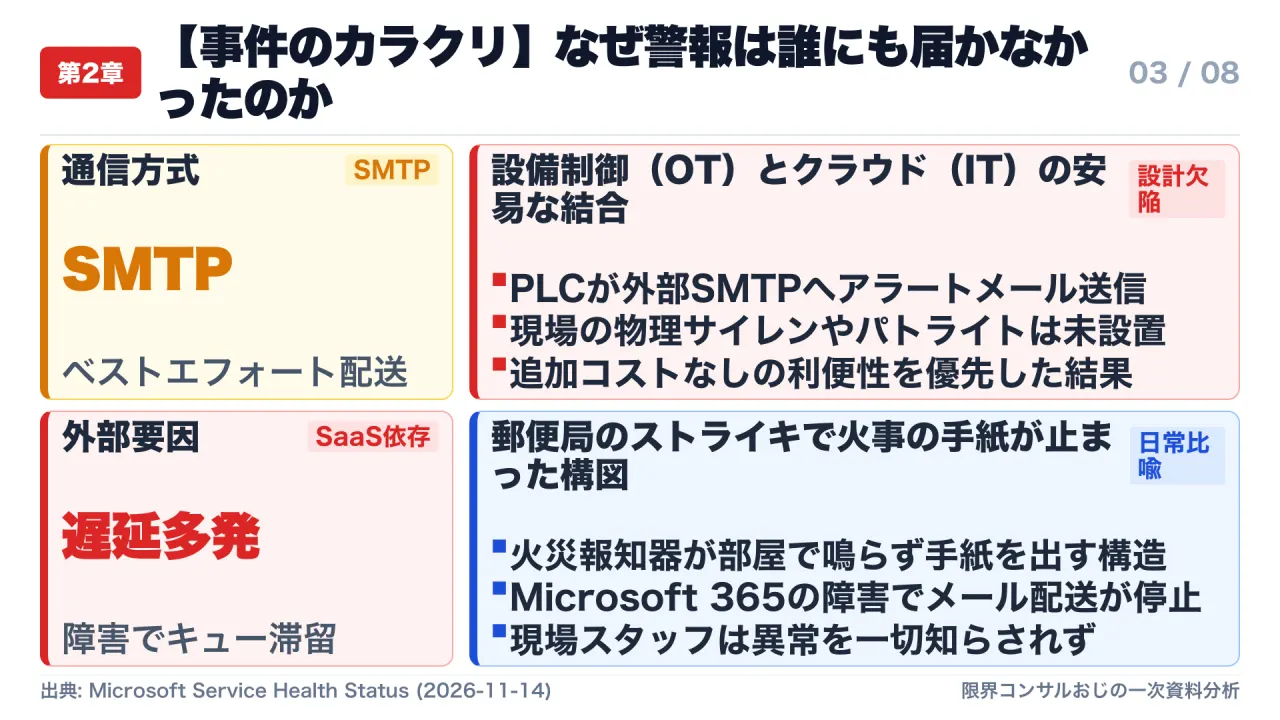
Initial technical debriefs conducted by municipal investigators and safety engineers uncovered a chilling engineering defect: the chemical dosing apparatus did not fail silently in isolation. On the contrary, internal diagnostic sensors correctly registered the catastrophic chemical imbalance and triggered an urgent alert state. However, the system’s external alert architecture had been engineered with a lethal single point of failure: it relied entirely on dispatching an unauthenticated SMTP email notification over the public internet to facility operations personnel. Crucially, during this precise operational window, a widespread, multi-hour service disruption across Microsoft 365 and Exchange Online infrastructure delayed and silently queued outbound and inbound email delivery across Western Europe. With no secondary local acoustic horn, no visual strobe indicator, no cellular SMS fallback, and no autonomous local emergency chemical shutoff valve, the system continued pumping toxic chemicals into the pool while its digital distress calls remained frozen in a remote cloud queue.
This technical monograph presents an exhaustive forensic dissection of the incident. We analyze the lethal mechanics of coupling industrial controllers to unverified cloud delivery pipelines, contrast the engineering standards of Safety Instrumented Systems (IEC 61508 / IEC 61511) with office automation paradigms, review typical real-world enterprise audit blindspots, and establish three immutable design directives to guarantee that software latency never again compromises physical human life.
1. Anatomy of the Disaster: Timeline, Chemical Mechanics, and Emergency Dispatch
To understand why this systems architecture failure resulted in human casualties, one must examine the operational characteristics of pool sanitization chemistry and the physiological properties of toxic chlorine gas.
Commercial and hospitality pool facilities utilize concentrated chlorine solutions—typically sodium hypochlorite combined with acidic pH-stabilizing buffers—to eliminate pathogenic bacteria, control algae, and maintain microbiological hygiene. Under normal equilibrium governed by industrial chemical controllers, free available chlorine is strictly regulated within narrow parts-per-million (ppm) thresholds (typically between 1.0 and 3.0 ppm) alongside tightly controlled pH levels (7.2 to 7.6). If an automated dosing controller enters a runaway injection state, or if an acidic neutralizing agent is mixed improperly or over-injected into an unbuffered reservoir, hypochlorous acid rapidly disassociates, evolving into gaseous diatomic chlorine (Cl2).
Diatomic chlorine is an extremely dense, yellowish-green gas approximately 2.5 times heavier than atmospheric air. In an enclosed architectural space such as an indoor resort pool, evolved chlorine gas does not disperse upward into the ceiling rafters; rather, it pools horizontally along the water’s surface and the immediate deck perimeter—the exact respiratory altitude of swimming guests and children. When inhaled, chlorine gas reacts exothermically with water molecules on moist mucosal membranes, producing hydrochloric acid (HCl) and hypochlorous acid (HClO). This chemical reaction causes violent cellular necrosis across the pulmonary epithelium, triggering severe bronchial spasms, chemical pneumonitis, intense ocular burning, nausea, and potentially fatal acute pulmonary edema.
flowchart TD
    subgraph PhysicalFacility["Physical Facility: Hotel Ling Bao Indoor Pool"]
        Sensors["Chemical Sensor Array: pH & Redox Detection"] --> Controller["Automated Dosing Controller / PLC"]
        Controller -->|Malfunction / Continuous Signal| Pump["Chemical Dosing Pump: Sodium Hypochlorite"]
        Pump -->|Over-Injection| PoolWater["Pool Circulation Loop"]
        PoolWater -->|Exothermic Chemical Evaporation| ToxicGas["Dense Chlorine Gas Cloud (2.5x Air Density)"]
        ToxicGas --> Casualties["15 Guests Poisoned (4 Hospitalized)"]
    end

    subgraph TelemetryPipeline["Alert Telemetry & SaaS Delivery Pipeline"]
        Controller -->|Trigger Alert Event| LocalNet["Facility Network Gateway"]
        LocalNet -->|SMTP Port 587 Traffic| ISP["Public Internet Service Provider"]
        ISP -->|Queued Outbound Connection| M365["Microsoft 365 / Outlook Online Gateway"]
        M365 -.->|SILENT SERVICE DISRUPTION: Cloud Queue Stalled| StaffInboxes["Facility Maintenance & Security Staff"]
    end

    subgraph BrokenControl["Missing Safety Interlocks"]
        LocalHorn["Local Audio Siren"] -.->|NOT INSTALLED| AlarmA["Audible Alarm: Silent"]
        LocalStrobe["Local Strobe Light"] -.->|NOT INSTALLED| AlarmB["Visual Strobe: Dark"]
        AutoShutoff["Hardware Solenoid Cutoff"] -.->|NOT INSTALLED| PumpCut["Emergency Shutdown: Never Triggered"]
    end
According to official briefings from the Rhein-Erft-Kreis police and municipal fire rescue departments, the emergency sequence unfolded rapidly on the afternoon of November 15, 2026:
- Initial Chemical Spike: The dosing apparatus at the hotel wellness complex malfunctioned, entering a continuous injection cycle. Sensor telemetry recorded chemical concentrations surging dramatically beyond safe operational parameters.
- Alert Dispatch Failure: The controller generated a digital alarm event and initiated an outbound Simple Mail Transfer Protocol (SMTP) connection to dispatch an alert email to the hotel’s on-duty facilities maintenance team. Unknown to the local controller, the remote cloud mail servers were experiencing severe service degradation. The outgoing message was accepted into an intermediate delivery queue or stalled during transit, resulting in zero notifications reaching human staff.
- Unmitigated Gas Accumulation: Because the controller possessed no internal interlock mechanism to disable dosing upon unconfirmed alarm delivery, the pump operated continuously. Within minutes, toxic chlorine vapors pooled across the water surface, creating a lethal respiratory trap for swimmers trapped in the aquatic enclosure.
- Acute Symptom Onset and Panic: Swimmers suddenly experienced violent coughing, eye irritation, and acute shortness of breath. Facility staff and guests initiated an emergency evacuation of the pool area, contacting municipal emergency dispatchers at approximately 15:30 CET.
- Mass Casualty Incident Mobilization: Given the hazardous materials nature of the event, regional authorities triggered a major emergency response protocol. Approximately 40 personnel, comprising municipal firefighters, specialized chemical hazard response vehicles, and emergency medical physicians, converged on the resort. Emergency crews wearing pressurized breathing apparatus and chemical protective suits entered the building to shut down the water treatment plant manually, isolate the chemical chemical storage tanks, and initiate high-volume negative-pressure ventilation.
- Medical Triage and Hospitalization: Medical personnel triaged fifteen individuals on scene suffering from toxic smoke and gas inhalation. Four patients, presenting with severe bronchial compromise and desaturation, were transported via emergency ambulances to specialized regional clinics, with one patient categorized in intermediate-to-severe condition requiring prolonged toxicological monitoring.
2. Architectural Deconstruction: The Fallacy of Best-Effort Protocols in Life-Safety Chains
The fundamental engineering failure of the Brühl pool installation lies not in the mechanical breakdown of the chemical sensor, but in the architectural category error committed by the system designers: treating an asynchronous, best-effort messaging protocol (SMTP) as a life-safety telemetry channel.
In distributed computing and systems engineering, communication protocols are classified across a spectrum of delivery guarantees:
| Protocol / Medium | Delivery Guarantee | Latency Profile | Feedback Loop | Suitability for Physical Safety |
|---|---|---|---|---|
| Direct Hardware Interlock (Dry Contact Relays) | Deterministic (>99.9999%) | Microseconds (microseconds) | Immediate closed-circuit break | Mandatory for Life-Critical Emergency Shutdown |
| Industrial Fieldbus (PROFINET, Modbus TCP, EtherCAT) | Deterministic / Bounded | Milliseconds (milliseconds) | Synchronous bidirectional handshake | High (when implemented within local safety rings) |
| Direct Hardware Strobe / Horn | Deterministic (100% local) | Milliseconds (milliseconds) | Direct human acoustic/visual perception | Mandatory for On-Site Toxic Vapor Warning |
| Point-to-Point Cellular SMS / LTE-M | Probabilistic (95.0% - 99.0%) | Seconds (seconds) | Cellular delivery receipt (optional) | Secondary / Fallback Monitoring Only |
| Internet-Routed SMTP Email | Best-Effort (<90.0% in SLA window) | Minutes to Hours | None (store-and-forward, non-blocking) | Strictly Forbidden for Primary Safety Alerts |
The Simple Mail Transfer Protocol (RFC 5321), originally conceived in 1982, was explicitly engineered as a “store-and-forward” document delivery architecture. It assumes an unreliable, heterogeneous network where intermediate mail transfer agents (MTAs) accept messages, spool them to local non-volatile storage, and retry transmission across indeterminate intervals if downstream hops are temporarily congested or unreachable. Under standard internet operating parameters, an email that takes thirty seconds, ten minutes, or four hours to traverse the network has completely fulfilled the semantic contract of RFC 5321.
Furthermore, when an industrial IoT gateway or PLC dispatches an SMTP alert through a public cloud provider such as Microsoft 365, Google Workspace, or Amazon SES, the message must successfully execute an extensive, highly fragile chain of dependencies:
- Local Ethernet & Physical Switching: The controller must maintain a healthy link to a local network switch.
- Local Gateway & NAT Routing: The local enterprise router must translate and forward internal packets.
- External WAN Connectivity: The local commercial broadband link (fiber or DSL) must remain operational.
- Public DNS Resolution: The controller must resolve remote hostnames (e.g.,
smtp.office365.com) across public DNS hierarchies. - TLS Handshake & Cryptographic Ciphers: The controller’s embedded microcontroller must successfully negotiate modern cryptographic ciphers (TLS 1.2/1.3) with public certificates that have not expired.
- Cloud Tenant Ingestion & Authentication: The cloud mail service must authenticate the device credentials without rate-limiting or anti-abuse flags.
- Cloud Queueing & Filtering Engines: The message must traverse multi-tenant spam filters, heuristic behavioral scanners, and internal routing queues.
- Downstream Push Infrastructure: The recipient’s mobile handset or client terminal must maintain active cellular connectivity, valid APNs/FCM tokens, and unthrottled battery optimization profiles.
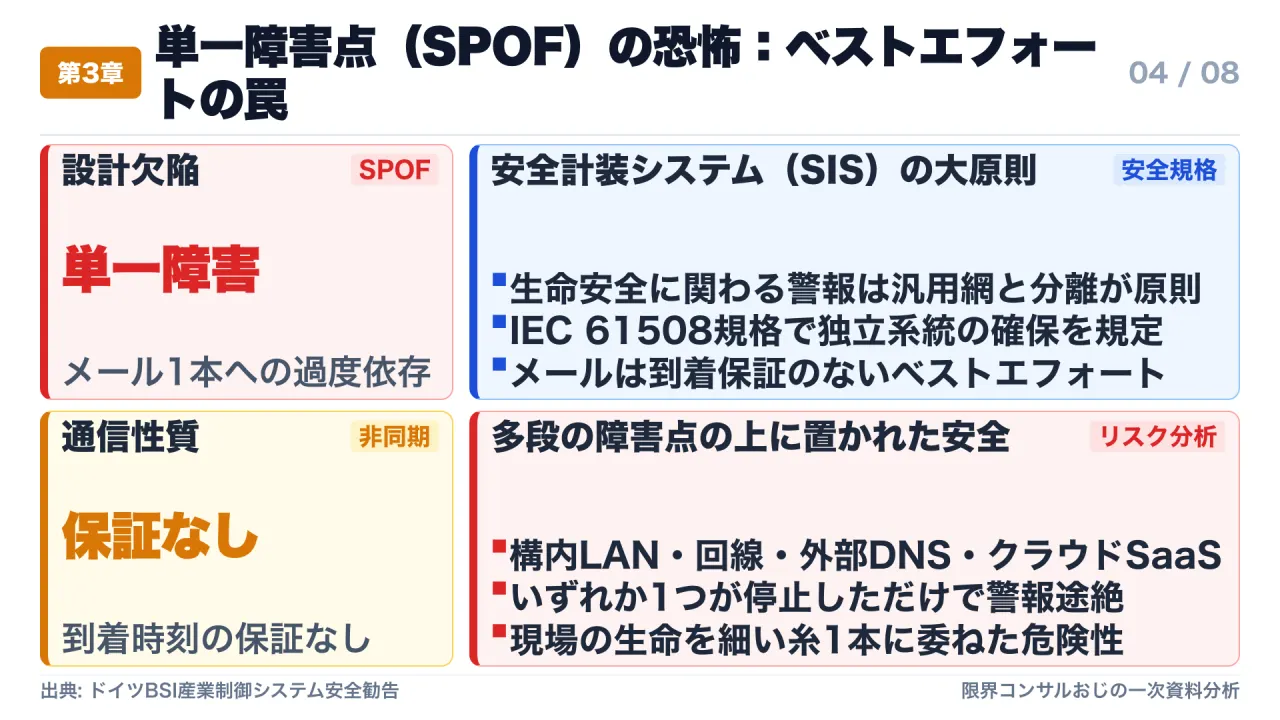
If any single link in this eight-tier pipeline experiences latency, packet loss, credential expiry, or server downtime, the alert delivery silently stalls. Yet the chemical dosing controller at Hotel Ling Bao had been configured as if this entire eight-tier dependency chain possessed zero latency and absolute deterministic availability.
It is the operational equivalent of building a fire alarm system in a residential building that, instead of sounding a 100-decibel klaxon in the hallway, drops an unstamped postcard into a municipal mailbox and assumes the fire department will arrive before the roof collapses.
3. Industrial Safety Standards vs. Office Convenience: The IEC 61508 / 61511 Imperative
To assess the severity of this design failure, one must evaluate it against established international engineering norms for safety-critical systems.
Across global manufacturing, chemical processing, and civil infrastructure, functional safety is governed by the International Electrotechnical Commission standard IEC 61508 (Functional Safety of Electrical/Electronic/Programmable Electronic Safety-related Systems) and its process-industry derivative IEC 61511 (Safety Instrumented Systems for the Process Industry Sector). These frameworks establish rigorous quantitative criteria for Safety Integrity Levels (SIL), ranging from SIL 1 (low risk mitigation) to SIL 4 (catastrophic mass-casualty risk mitigation).
A foundational mandate of IEC 61508 is the strict architectural separation of the Basic Process Control System (BPCS) from the Safety Instrumented System (SIS):
- The Basic Process Control System (BPCS): Governs standard operational routines, such as measuring water temperature, calculating routine chemical injection rates, logging daily operational metrics to databases, and generating weekly management summaries. The BPCS operates under normal commercial availability models where transient software delays are acceptable.
- The Safety Instrumented System (SIS): Operates as an independent, deterministic physical safety barrier. Its sole responsibility is to monitor critical parameters (e.g., dangerous chemical thresholds, pressure extremes, explosive gas buildup), evaluate those parameters against deterministic safety limits, and immediately force the physical equipment into a verified Safe State—typically by cutting power to chemical injection pumps, closing spring-loaded pneumatic shutoff valves, and activating on-site audiovisual emergency alarms.
graph TD
    subgraph ForbiddenArchitecture["Defective Architecture (Implemented at Ling Bao)"]
        Sens1["Sensor"] --> DualController["Single Shared Controller (BPCS & SIS Blended)"]
        DualController -->|Normal Execution| Pump1["Dosing Pump (Active)"]
        DualController -->|Alarm Condition| CloudMail["Internet SMTP / Cloud Gateway"]
        CloudMail -.->|Stalled by Outage| HumanAction["Human Staff (Uninformed)"]
        Pump1 -->|Continuous Unchecked Injection| Disaster["Catastrophic Chemical Release"]
    end

    subgraph StandardCompliantArchitecture["IEC 61508 Compliant Architecture (Deterministic Separation)"]
        SensBPCS["Process Sensor"] --> BPCS["BPCS (Control Automation)"]
        BPCS --> NormalPump["Normal Dosing Control"]

        SensSIS["Independent Safety Sensor"] --> SIS["Dedicated SIS Logic Solver (Safety PLC)"]
        SIS -->|De-energize on Alarm| HardRelay["Normally-Open Hardwired Relay"]
        HardRelay --> PowerCut["Instant Dosing Pump Power Deprivation"]
        SIS --> LocalSiren["On-Site High-Decibel Siren & Strobe"]
        SIS --> DedicatedSMS["Hardwired Cellular / Pager Dialing Engine"]
    end
The German incident represents a total violation of this separation principle:
- Absence of Dedicated Safety Logic: The facility utilized a blended controller where standard dosing automation and emergency life-safety alarming were handled by the identical software stack.
- Absence of Local Fail-Safe De-Energization: Under true fail-safe engineering, industrial actuators must be wired in a normally de-energized or normally-open (NO) safety circuit. In a compliant system, holding a chemical dosing pump in an active pumping state requires continuous, active safety clearance signals from both the sensor and the controller. If the controller encounters an internal fault, loses power, or registers an alert state, the safety relay immediately opens, cutting line voltage to the chemical pump via physical gravity or spring return. In the Brühl facility, the pump remained continuously energized and running while the software logged unread digital alerts.
- Absence of On-Site Sensory Warning: Emergency warning channels must directly interface with the sensory perception of humans present within the blast radius. A 100-decibel local acoustic siren and a flashing amber xenon strobe light require no internet connection, no domain controller, no cloud tenant, and no operational mobile handset. Their failure probability over a ten-minute operational window is negligible (< 1 in 1,000,000). By relying entirely on remote email dispatch, facility engineers guaranteed that swimmers inside the pool enclosure remained oblivious to the toxic gas accumulation until physical respiratory burning made evacuation unavoidable.
4. Broken Boundaries: Why Cloud SLAs Cannot Govern Physical Safety
A widespread architectural blindspot among enterprise technology teams is the conflation of high cloud availability with deterministic physical safety.
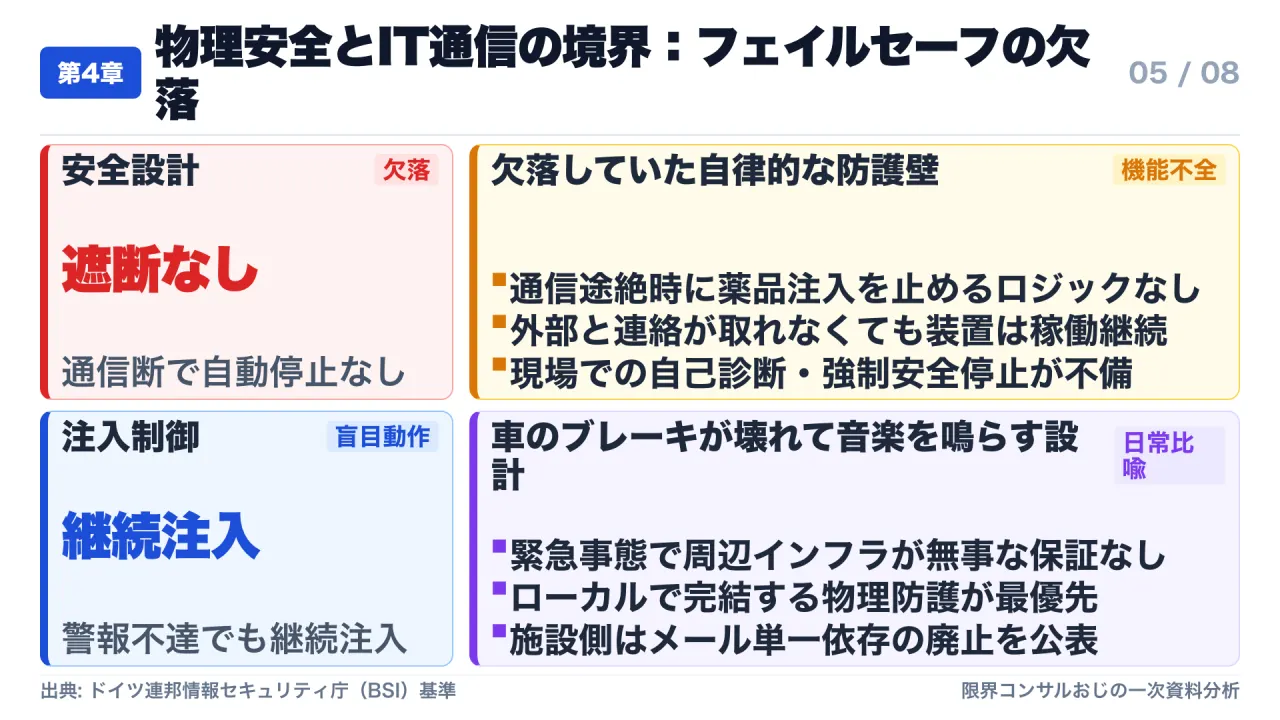
Enterprise cloud groupware platforms, including Microsoft 365, Google Workspace, and enterprise communication channels like Slack and Microsoft Teams, publish attractive contractual Service Level Agreements (SLAs). A typical tier-1 enterprise SLA guarantees 99.9% availability (often colloquialized as “three nines”). When non-technical facility managers or modern software developers review a 99.9% uptime commitment, they intuitively perceive it as near-perfection.
However, a quantitative translation of availability mathematics into operational physical risk reveals a lethal divergence:
Permitted Downtime per Year = 365.25 * 24 * (1 - 0.999) = 8.766 hours (approx. 8 hours and 46 minutes)
Under a fully honored 99.9% SLA contract, an enterprise cloud mail platform is legally permitted to experience nearly nine hours of complete downtime or message queueing every single year.
For office knowledge workers drafting spreadsheets, sending marketing proposals, or archiving customer relationship management (CRM) updates, an eight-hour email delay is an annoying business inconvenience easily mitigated by working on alternate tasks. The financial cost of delayed communication can be recovered during subsequent business days.
In stark contrast, physical, thermodynamic, and chemical processes do not operate on human office business schedules. When gaseous diatomic chlorine accumulates within an enclosed aquatic volume, the human physiological tolerance window is measured not in hours, but in seconds and minutes:
- 0.2 – 0.5 ppm: Olfactory perception threshold; mild mucosal tingling.
- 1.0 – 3.0 ppm: Significant ocular irritation, stinging sensation in upper trachea.
- 5.0 – 15.0 ppm: Immediate severe respiratory coughing, chemical laryngospasm, acute bronchial constriction.
- 30.0 – 50.0 ppm: Toxic chemical pneumonitis, immediate chest tightness, violent nausea, risk of asphyxiation.
- >= 100 ppm: Lethal pulmonary edema and respiratory arrest within minutes of exposure.
To couple a physical chemical reaction possessing a 120-second lethality window to an IT cloud messaging service possessing an 8.76-hour permitted SLA outage window represents an architectural error of over two orders of magnitude (over 250x).
xychart-beta
    title "System Latency vs. Human Chemical Toxicity Thresholds"
    x-axis ["Sensory Onset", "Bronchial Spasm", "Severe Toxicity", "Lethal Edema", "Cloud Mail Queue Retry", "Typical SaaS SLA Downtime"]
    y-axis "Time in Seconds (Log Scale Approximation)" 10 --> 35000
    bar [30, 90, 300, 600, 1800, 31536]
Furthermore, contractual cloud SLAs exclusively define financial compensation (service credits applied to future software billing invoices); they explicitly disclaim all liability for consequential physical damages, equipment destruction, environmental contamination, and bodily injury. Software vendors understand the inherent stochasticity of wide-area networking, distributed datacenters, fiber optic cuts, and routine software deployment regressions. When enterprise systems engineers route emergency physical safety signals through these non-deterministic pipelines, they unilaterally assume total operational and legal liability for physical failure.
5. The “Silent Alarm” Antipattern: Lessons from Enterprise IT/OT Forensic Audits
The disaster at Hotel Ling Bao is not an isolated edge case in European hospitality. Rather, it represents the visible tip of an enormous, pervasive engineering ice shelf spanning commercial real estate, manufacturing, logistics, and data center operations worldwide.
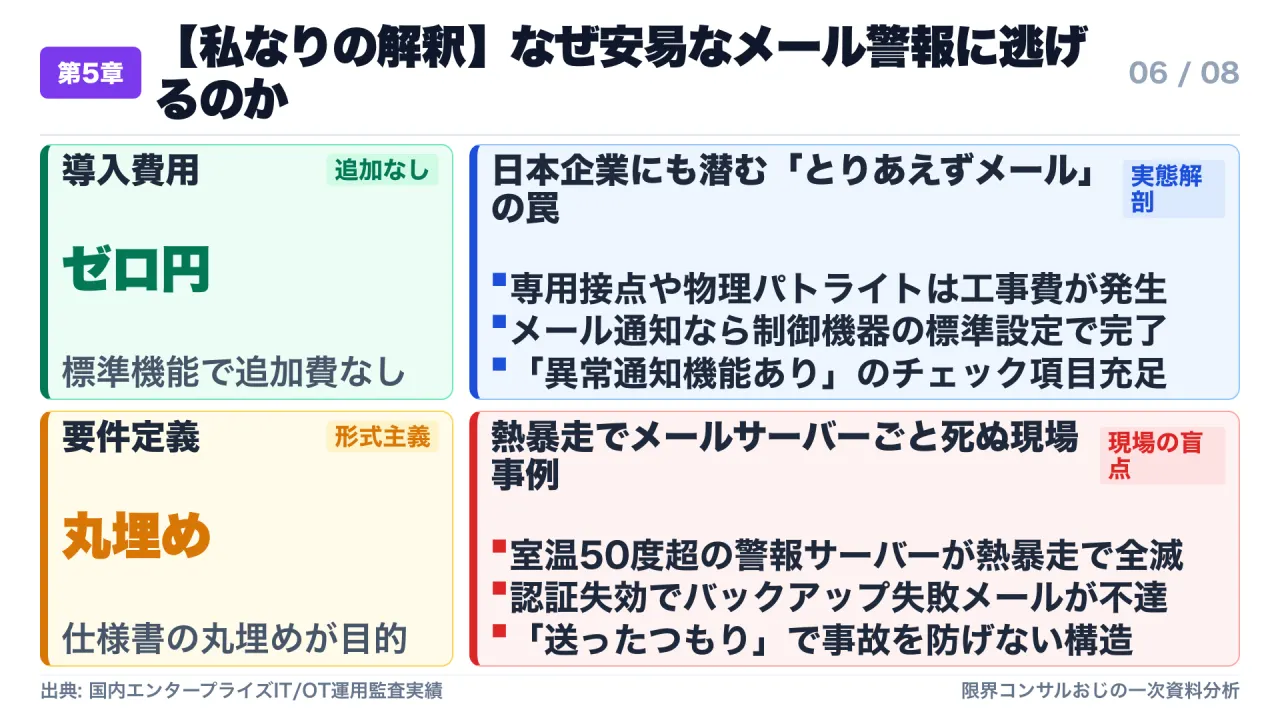
In forensic technology audits across mid-market and enterprise facilities, cybersecurity and safety investigators routinely encounter what is colloquially known as the “Silent Alarm” Antipattern. This antipattern manifests whenever an organization transitions legacy facility equipment to modern networked operations while cutting corners on physical infrastructure engineering.
Why Do Organizations Deploy Defective Email-Only Alerting?
- Zero Marginal Infrastructure Cost: Integrating a physical siren, running rigid conduit across a commercial complex, installing dedicated relay panels, or contracting an industrial telemetry dialer incurs thousands of dollars in capital expenditure, electrical labor, and regulatory permitting. Conversely, typing an SMTP server address and an internal shared mailbox alias into a web administration interface costs zero dollars.
- Specification “Box-Checking”: Corporate risk registers and facility inspection checklists frequently contain vague, qualitative compliance requirements such as: “Must possess an automated alert mechanism for equipment fault conditions.” A software engineer or facilities vendor can check this box by demonstrating that an email arrives in their personal inbox during an initial installation test. The qualitative checklist fails to interrogate protocol determinism, network partition behavior, or out-of-band redundancy.
- The Illusory Safety of Mobile Ubiquity: Because modern operational managers carry smartphones with them twenty-four hours a day, facility leadership instinctively concludes: “If it goes to our email, we will see it immediately on our phones wherever we are.” This subjective intuition ignores mobile operating system power-saving sleep modes, background app refresh throttles, cellular coverage dead-zones, notification silencing features, and external mail server routing incidents.
Parallels Across Enterprise Infrastructure
This architectural negligence mirrors catastrophic failures observed across the broader digital infrastructure estate:
- Data Center Thermal Runaways: In several documented enterprise hosting facility incidents, server room precision cooling chillers failed during non-business hours. The environmental controllers dispatched SMTP alert emails to infrastructure teams. However, because the facility’s local mail server or primary edge router was physically located inside the identical overheated server room, the networking hardware crashed from thermal exhaustion before transmitting the emergency packets. The incident was only discovered when physical hardware melted and adjacent fire suppression sprinklers deployed.
- Uninterruptible Power Supply (UPS) Battery Explosions: Industrial battery arrays designed to back up municipal telecom nodes possess hydrogen gas detection sensors. When these sensors are configured to notify operators via standard enterprise messaging webhooks (e.g., Slack or Teams), a transient cloud DNS outage or OAuth API token expiry renders the alert mechanism completely blind, allowing explosive concentrations of hydrogen to accumulate unchecked.
- Municipal Water Treatment Over-Chlorination: Similar chemical dosing architecture flaws have occurred across municipal water districts in North America and Australasia, where water operators relied on consumer-grade SMS gateways to monitor chlorine dioxide levels, only to discover hours later that cellular carrier bulk-messaging spam filters had silently blacklisted the automated telemetry number.
6. Designing Resilient Cyber-Physical Systems: Active Heartbeats and Autonomous Failsafes
How must professional engineering teams architect life-safety telecommunications to eliminate this class of catastrophic failure?
The solution requires replacing passive, event-driven, best-effort notification architectures with active, deterministic, closed-loop safety rings.
flowchart LR
    subgraph ResilientSafetyLoop["Closed-Loop Resilient Safety Architecture"]
        direction TB
        Watchdog["Active Watchdog Timer (Local Hardware)"]
        Sensors["Redundant Chemical Sensors"] --> Logic["Local Failsafe Logic Solver"]
        Logic -->|Heartbeat Ping Every 30s| RemoteCloud["Remote Cloud Telemetry Platform"]
        Logic -->|Dry Contact Loop| LocalSiren["On-Site Siren & Strobe"]
        Logic -->|Active Power Feed| SolenoidValve["Normally-Closed Dosing Valve"]

        Watchdog -->|Timeout if No Heartbeat| FailsafeCut["Instant Hardware Power Deprivation"]
        FailsafeCut --> SolenoidValve
    end

    subgraph MonitoringCloud["External Monitoring (Non-Critical Visibility)"]
        RemoteCloud --> Dashboard["Executive Telemetry Dashboard"]
        RemoteCloud -->|Absence of Ping within 60s| CloudAlarm["Cloud Dead-Man Alarm: Communication Lost!"]
    end
Pillar I: The Dead-Man Switch (Active Heartbeat Architecture)
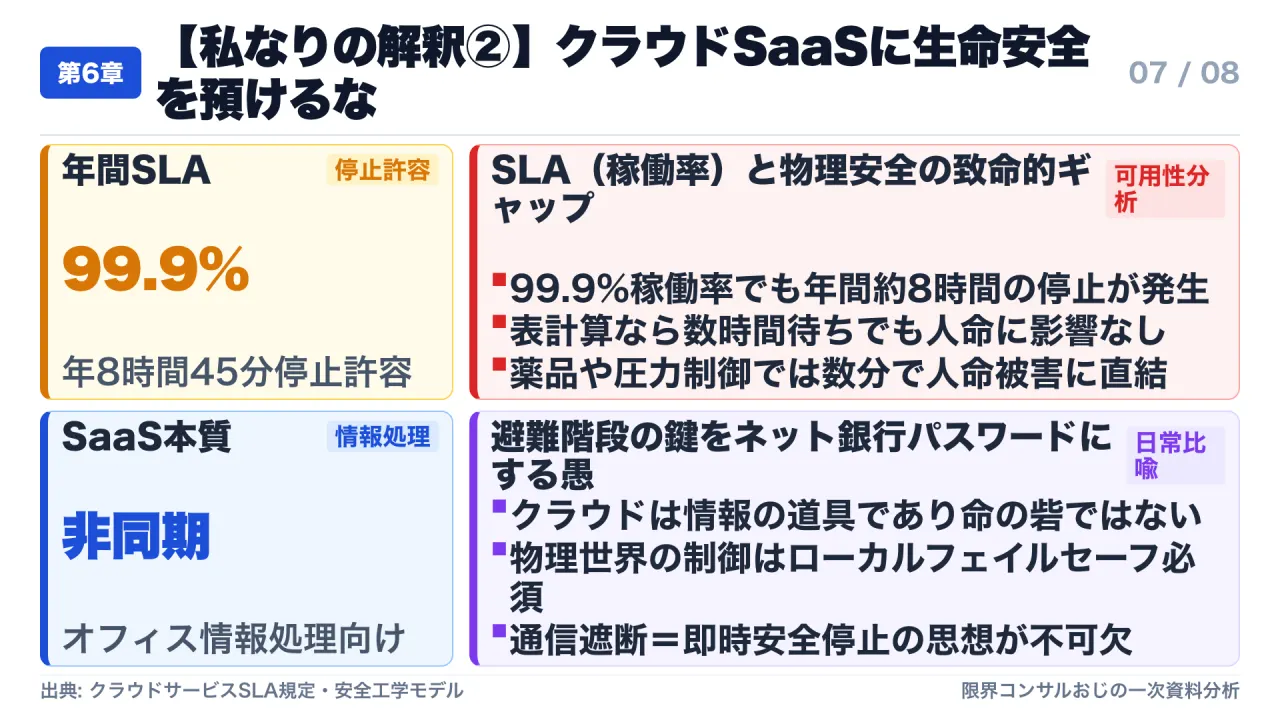
The most fatal vulnerability of the Brühl setup was its reliance on negative reporting: the system assumed that as long as no alert email was received, operations were normal. Under negative reporting, a healthy system and a dead communication channel look completely identical.
Robust industrial engineering mandates positive, continuous heartbeating:
- The controller must transmit a periodic “keep-alive” or heartbeat telemetry ping to an external watchdog supervisor at high frequency (e.g., once every 30 to 60 seconds).
- The external supervisor must be programmed with an inverted dead-man logic: the absence of an expected heartbeat is automatically treated as an active, critical emergency state.
- If a cloud mail provider, a local router, or an internet service provider experiences downtime, the external watchdog immediately fires a “Loss of Supervisory Control” emergency alert within sixty seconds.
Pillar II: Autonomous Local Failsafe Action (Zero External Dependency)
Under no circumstances should the mitigation of an immediate physical hazard depend on the successful transmission of an external digital message.
Safety mitigation must execute locally, autonomously, and deterministically:
Safety Reaction Time <= Process Safety Time (PST) << Telemetry Latency
If a chemical sensor registers a critical threshold violation:
- The local controller must immediately and autonomously de-energize the chemical dosing pump via a physical dry-contact relay.
- If the local controller’s software halts, an external hardware watchdog timer (a physical microchip that resets the system if not continuously toggled by software) must release a spring-loaded shutoff valve, physically halting the flow of chemicals.
- The facility must enforce a “No Communication = No Operation” rule: if the chemical dosing unit loses connectivity with its secondary safety verification subsystem for longer than 300 seconds, it must autonomously pause dosing operations and transition into a safe standby mode until communications are restored.
Pillar III: Out-of-Band, Multilayered Alarming
When human intervention is required, notifications must traverse multiple, physically diverse pathways that cannot be severed by a single vendor or utility incident:
- Layer 1 (Physical / Local): Immediate on-site acoustic siren (>95 dB) and flashing strobe lights installed directly within the hazard area and inside the primary facilities engineering office. Zero software dependencies.
- Layer 2 (Cellular Hardware Dialer): An industrial GSM/LTE-M modem wired directly into the controller’s serial bus, executing direct point-to-point voice calls and SMS dispatches through cellular base stations, completely bypassing the public internet, enterprise routers, and corporate cloud groupware tenants.
- Layer 3 (Cloud Enterprise SaaS): Detailed telemetry reports, analytics charts, and diagnostic logs routed to Microsoft 365, Slack, or enterprise dashboards—strictly designated as advisory operational information, never as the primary life-safety barrier.
7. The Three Immutable Operational Directives for Systems Engineers
The forensic lessons of the Hotel Ling Bao chemical disaster provide a critical blueprint for systems engineers, enterprise architects, and technology leaders. To ensure that digital transformation does not dismantle physical safety, every organization operating cyber-physical infrastructure must enforce three immutable operating directives.
================================================================================
          THE THREE IMMUTABLE OPERATIONAL DIRECTIVES FOR CYBER-PHYSICAL SYSTEMS
================================================================================

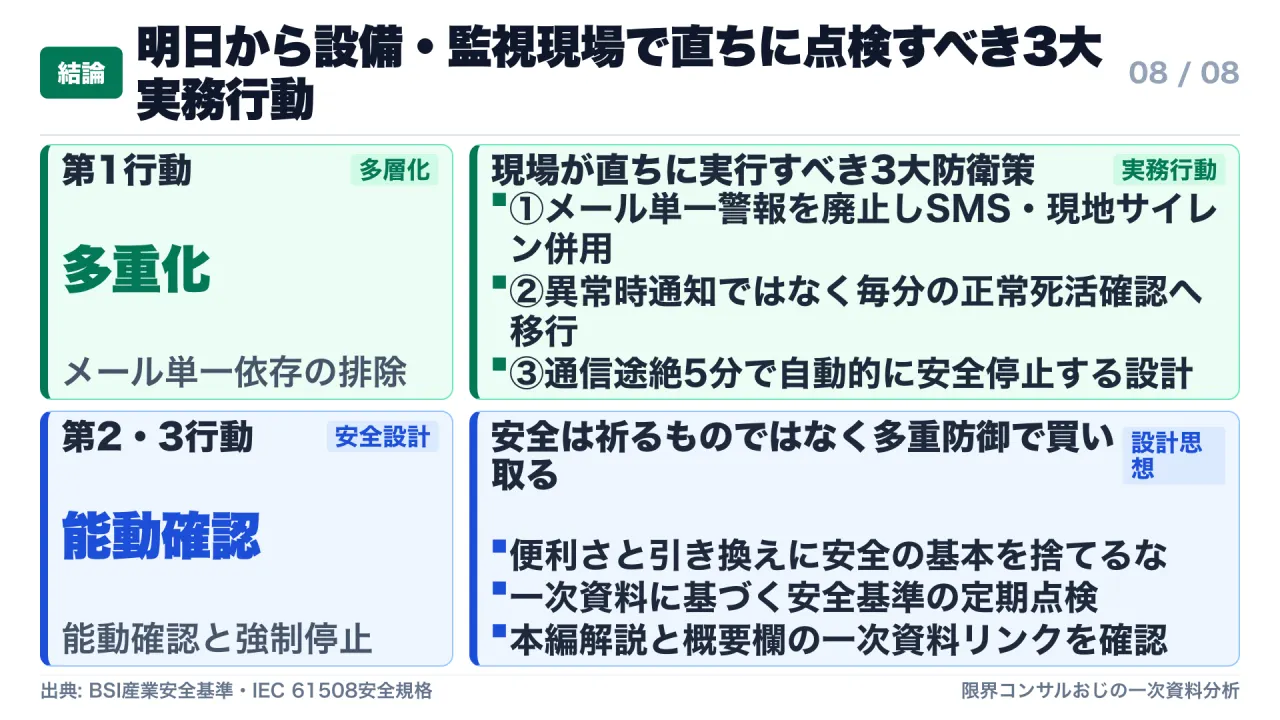
[DIRECTIVE 1]: BAN SINGLE-POINT BEST-EFFORT ALERTING FOR LIFE-SAFETY
  - Terminate all architectures where life-critical alerts rely exclusively on
    asynchronous messaging protocols (SMTP email, webhooks, consumer messaging).
  - Enforce mandatory on-site acoustic and visual alarms (klaxons, strobes).
  - Require out-of-band cellular voice/SMS hardware dialers as primary off-site
    emergency dispatch channels.

[DIRECTIVE 2]: INVERT TO POSITIVE MONITORING VIA ACTIVE HEARTBEATS
  - Abolish "silence implies health" negative reporting models.
  - Implement continuous, sub-minute cryptographic heartbeats from local
    controllers to remote supervisory observers.
  - Treat the absence or delay of a single heartbeat as an active, critical
    infrastructure failure requiring immediate operational investigation.

[DIRECTIVE 3]: ENFORCE LOCAL AUTONOMOUS FAIL-SAFE ISOLATION
  - Ensure that the mitigation of physical hazards requires zero active network
    packets, zero cloud API calls, and zero human operational intervention.
  - Wire all hazardous actuators (pumps, heaters, valves) in normally-open,
    fail-safe configurations that revert to a safe state upon loss of power or link.
  - Establish strict software timeouts: if external supervisory telemetry drops
    for > 300 seconds, the physical equipment must autonomously enter safe standby.
================================================================================
Directive 1: Eliminate Best-Effort Protocols from the Safety Chain
Every enterprise must immediately inventory all physical facilities, environmental sensors, data center cooling equipment, hazardous material stores, and fire suppression systems. Any installation discovered to utilize email as its sole notification mechanism must be formally flagged as a critical risk item.
Organizations must implement mandatory physical audible horns and visual strobes within the immediate hazard envelope, accompanied by industrial, battery-backed cellular dialers programmed to contact multiple human duty managers via direct telephony circuits.
Directive 2: Transition from Negative Silence to Positive Heartbeating
Auditing teams must dismantle the assumption that an empty alert inbox indicates a healthy operational plant. Systems must be refactored to emit deterministic, periodic heartbeats.
If an industrial controller fails to report its health to an independent external supervisor within a defined operational threshold (e.g., 60 seconds), the external supervisor must treat the silence as an emergency, firing out-of-band alerts indicating that telemetry has been severed.
Directive 3: Enforce Hardware-Enforced Local Safe States
Digital systems must never be permitted to operate hazardous machinery in a “blind” runaway state. Actuators, solenoid valves, and chemical pumps must be mechanically and electrically engineered to require active, continuous validation to remain open.
If external network connectivity, internal controller firmware, or environmental telemetry fails, physical gravity, mechanical springs, or hardwired interlock relays must automatically force the machinery into a safe, shutoff condition without requiring a single packet to traverse the internet.
Conclusion: Architectural Responsibility in an Automated World
The chemical poisoning of fifteen individuals at the Hotel Ling Bao was not an act of nature, nor was it an unpredictable mechanical anomaly. It was the predictable, mathematical consequence of an architectural compromise: substituting a zero-cost, best-effort office software protocol for a deterministic physical safety interlock.
As software systems increasingly interface with the physical world—through robotics, autonomous chemical dosing, smart municipal grids, automated HVAC management, and autonomous industrial agents—the boundary between IT software quality and physical human survival dissolves. Software architects must recognize that wide-area networks are inherently unreliable, cloud platforms will inevitably experience unexpected downtime, and contractual SLAs provide zero protection against toxic chemical vapors.
By enforcing the absolute separation of process control from functional safety, instituting local fail-safe interlocks, and replacing passive email notifications with active, multi-channel heartbeats, the engineering community can ensure that digital innovation builds a more efficient world without sacrificing the physical safety of human lives.
Architectural Audit Checklist for Facilities and IT Leaders
- Are any life-safety or environmental alarms currently configured to alert exclusively via email? (If yes, issue immediate remediation order).
- Do local facility controllers possess hardwired, normally-closed acoustic and visual alarms directly inside the operational hazard area?
- Does the physical machinery (pumps, heaters, chemical injection valves) autonomously de-energize if control software crashes or freezes?
- Is supervisory monitoring engineered around continuous positive heartbeats rather than passive failure alerts?
- Are external emergency alert pathways tested monthly under simulated WAN and cloud outage conditions?
- Have facility risk assessments calculated the quantitative Process Safety Time (PST) versus maximum worst-case cloud delivery latency?