Four November 2026 Infrastructure Shocks: From $3.78T Chip Governance Crisis to Nationwide Flight Grounding
SEC filings, FAA briefings, and incident reviews expose how internal governance gaps and maintenance failures—not cyberattacks—triggered four cascading tech crises in November 2026.
Japanese Edition: Read the original Japanese article on Substack
Video Episode (Japanese Audio): Watch on YouTube
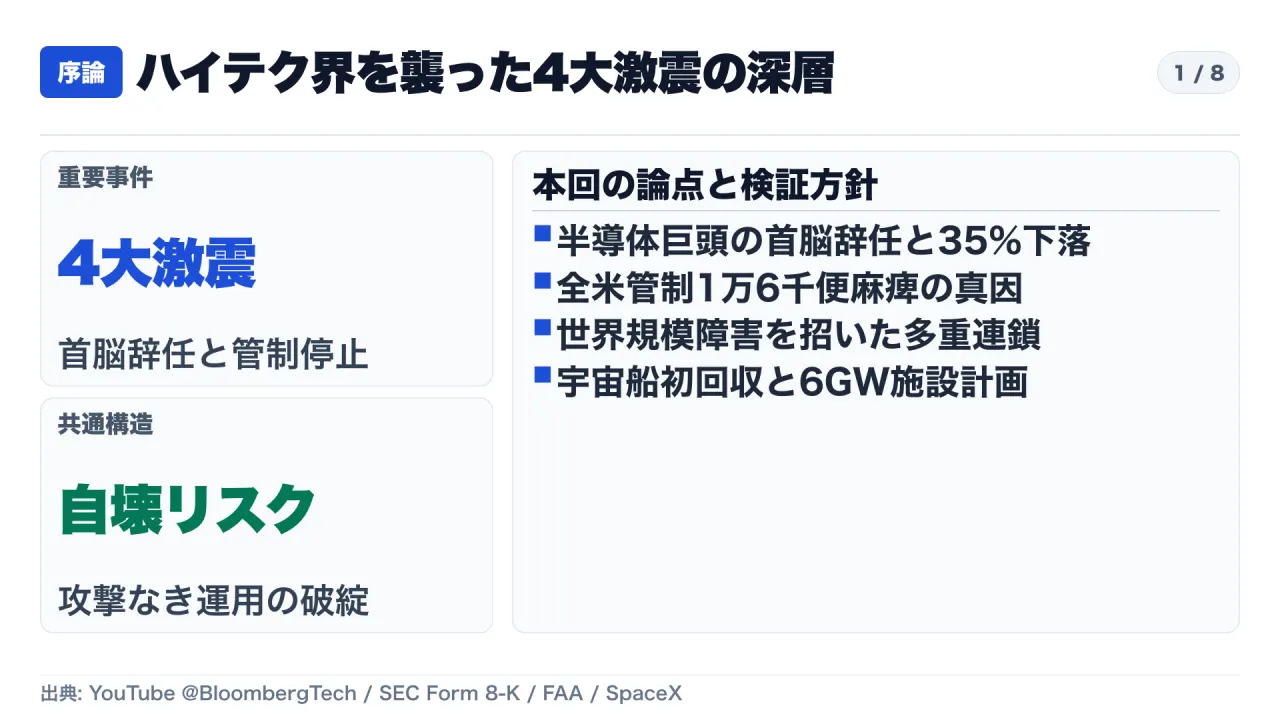
In mid-November 2026, four high-profile disruptions struck global technology and physical infrastructure within a matter of days. At the world’s dominant AI semiconductor supplier, a founder CEO who had led the company for 33 years resigned abruptly, wiping roughly 35% off its October peak market capitalization down to approximately $3.78 trillion. Almost simultaneously, a router overload in the U.S. Federal Aviation Administration’s (FAA) legacy telecommunications network triggered a 4-hour-25-minute nationwide ground stop affecting more than 16,000 flights—the longest disruption in 25 years. Days earlier, a three-factor cascade inside Microsoft’s core cloud infrastructure halted email, messaging, and AI tools across more than 70 countries, followed by a banking outage at Chase. Meanwhile, SpaceX’s Starship Flight 15 demonstrated the sharp contrast between frontier ambition and operational fragility: its first-stage booster exploded over the Gulf of Mexico while its upper-stage Ship completed 14 orbits and achieved history’s first mid-air catch recovery by launch tower arms.
At first glance, these four events appear to be unrelated news cycles spanning semiconductors, aviation, enterprise cloud, and aerospace. Yet primary filings with the U.S. Securities and Exchange Commission (SEC), U.S. Department of Commerce interim rules, FAA engineering union statements, U.S. Government Accountability Office (GAO) audits, and Microsoft post-incident reviews reveal a unifying structural mechanism. None of these major outages resulted from external cyberattacks. Instead, they stemmed from internal operational decay: single-person governance concentration, omitted pre-change risk assessments, paper-based maintenance tracking, and tightly coupled single-vendor dependencies.
- Core Thesis: As AI and physical infrastructure scale into multi-trillion-dollar and multi-gigawatt systems, the primary threat is no longer external intrusion alone—it is internal self-collapse caused by concentrated governance and hollowed-out change-management discipline.
- Primary Sources Verified: SEC Form 8-K Item 5.02 (NVIDIA Corporation, November 12, 2026), U.S. Department of Commerce Interim Final Rule on remote AI compute access (November 16, 2026), FAA and U.S. Department of Transportation briefings (November 14, 2026), GAO modernization audit (September 14, 2026), Microsoft Post-Incident Review (November 14, 2026), SpaceX Flight 15 mission update (November 14, 2026), and Anthropic Form S-1/A (November 10, 2026).
- Actionable Engineering & Governance Takeaways: Eliminate single-point-of-failure (SPOF) vendor and leadership dependencies, enforce mandatory technical risk reviews and digital maintenance ledgers before every infrastructure cutover, and regularly audit balance-sheet commitments against geopolitical export rules.
1. Timeline of the Mid-November 2026 Infrastructure Chain Reaction
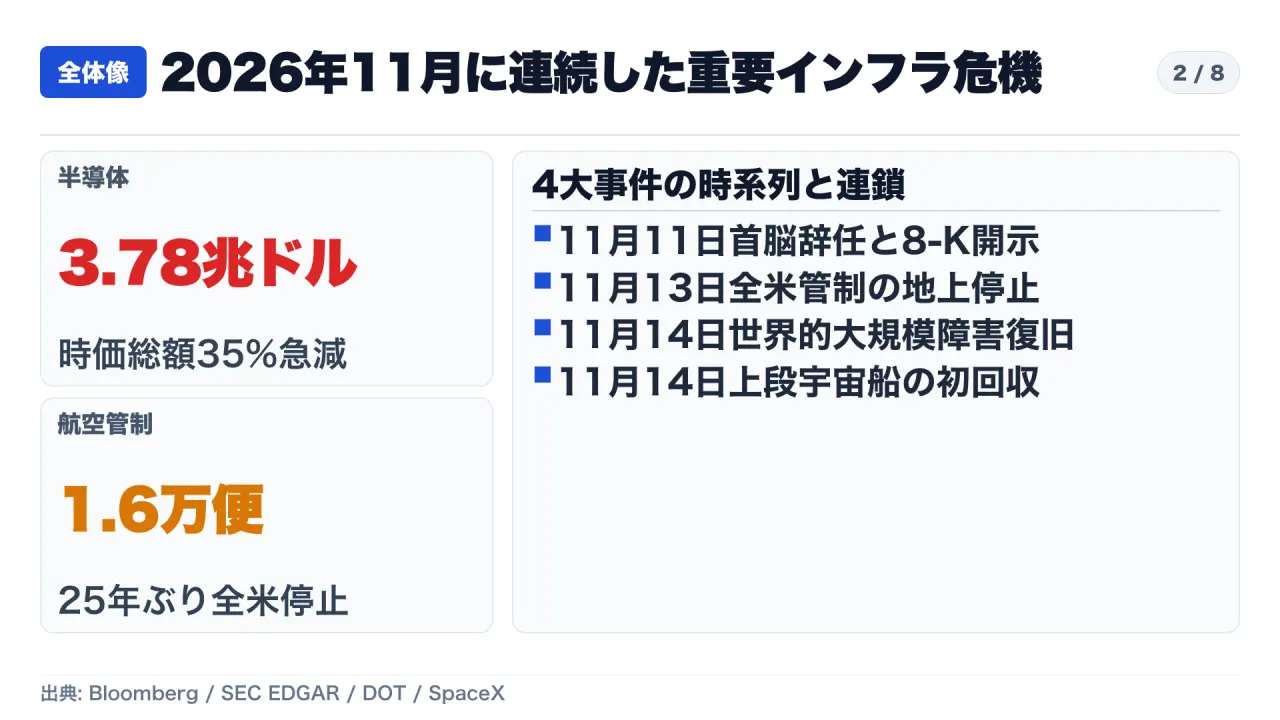
Examining the exact chronology of mid-November 2026 clarifies how governance shocks and legacy infrastructure failures overlapped like falling dominoes across critical systems.
On November 11, 2026, the board of directors of the leading AI semiconductor manufacturer accepted the immediate resignation of its founder and chief executive, formally disclosing the leadership change via SEC Form 8-K on November 12, 2026. The company’s market valuation dropped roughly 35% from its October 2026 high to about $3.78 trillion as investors reassessed succession stability and regulatory exposure.
Between November 12 and November 14, 2026, Microsoft’s core productivity cloud—including Exchange Online, Teams, and Copilot—experienced a cascading global outage spanning more than 70 countries, halting daily corporate workflows for hundreds of millions of users.
On the afternoon of November 13, 2026, the FAA’s Flight Telecommunications Infrastructure (FTI) network suffered a severe router overload during a live circuit migration, prompting a 4-hour-25-minute nationwide ground stop across all U.S. commercial departures and delaying or canceling over 16,000 flights.
Then on November 14, 2026, SpaceX launched Starship Flight 15. Although the first-stage booster (B22) exploded over the Gulf of Mexico shortly after liftoff, forcing an abort of the booster recovery, the upper-stage Ship completed 14 orbits around Earth, deployed Starlink payloads, and returned to perform the first-ever launch-tower arm catch of an orbital spacecraft. On November 16, 2026, two additional developments underscored the shifting landscape: the U.S. Department of Commerce published an interim final rule sealing third-country remote AI compute loopholes, and major U.S. bank Chase experienced its own system outage.
For engineering leaders, procurement officers, and enterprise architects in Japan as well as North America, this timeline highlights a striking paradox. Frontier compute and orbital launch capabilities are advancing at unprecedented speed, yet foundational enterprise clouds and national transport networks remain vulnerable to routine configuration errors and leadership concentration.
2. Shock One: The 33-Year Semiconductor Governance Exit and Export Tightening
The first major shock dismantled a management structure that had defined the global AI hardware boom for over three decades. According to SEC Form 8-K (Item 5.02) filed on November 12, 2026, the semiconductor leader’s board ended a 33-year era in which the founder CEO famously avoided formal one-on-one meetings while directly overseeing roughly 60 executives. Chief Financial Officer Colette Kress, a 13-year veteran of the company, stepped into the role of interim CEO, while board member Harvey Jones was appointed as the company’s first formal chairman of the board—marking an abrupt transition from founder-centric control to collective governance.
Public reporting linked the resignation to allegations involving a relationship with a direct subordinate and a separate executive implicated in unauthorized semiconductor export diversion to China. On November 16, 2026, the U.S. Department of Commerce reinforced that geopolitical pressure by issuing an Interim Final Rule prohibiting the remote rental or access of advanced AI compute clusters routed through third-country data centers in hubs such as Singapore and Malaysia. For cloud providers and multinational enterprises operating cross-border GPU workloads, compliance boundaries shifted overnight from physical hardware shipping controls to remote API and compute-account provenance.
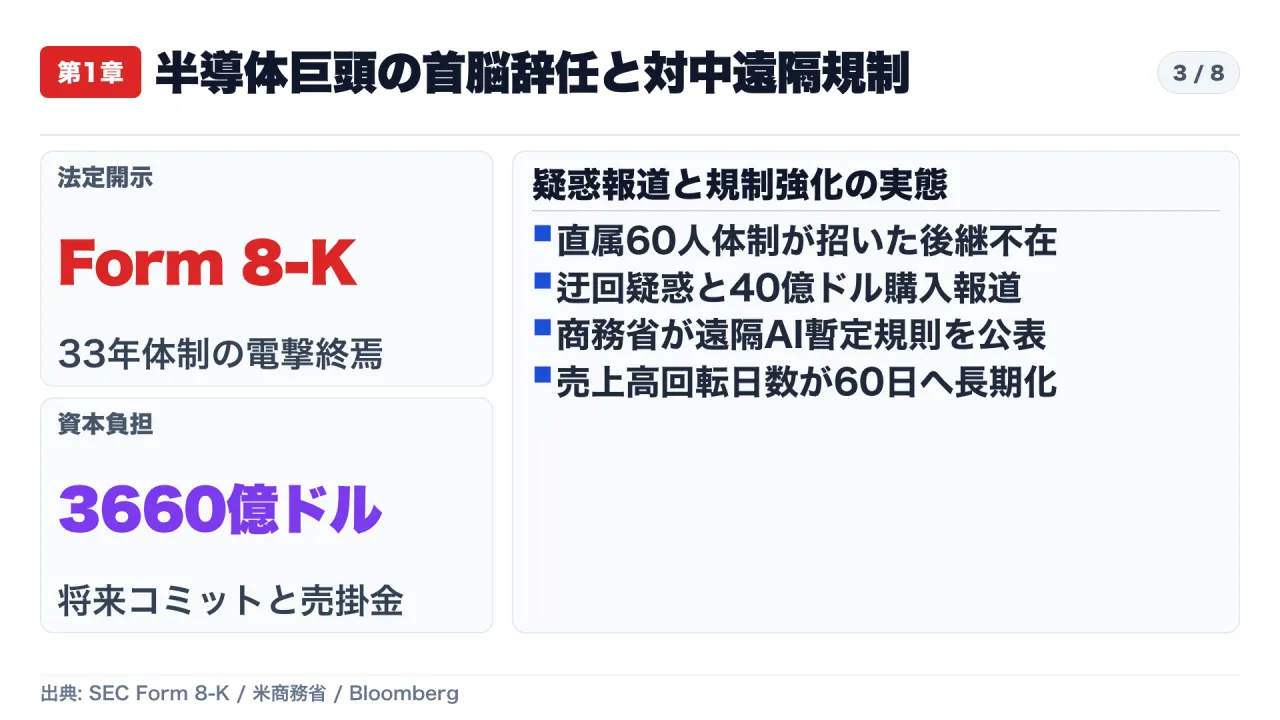
A closer inspection of the company’s financial disclosures reveals why governance continuity carries heightened stakes. While trailing quarterly revenue remained extraordinarily strong at $96.22 billion, off-balance-sheet and forward supply-capacity commitments climbed to $279 billion—bringing total future commitments to roughly $366 billion—while days sales outstanding (DSO) stretched from 45 days to 60 days. Even with surging demand, heavy capital obligations and elongated collection cycles leave little margin for strategic drift during a leadership vacuum.
Consider a famous heritage restaurant where the master chef has personally managed every ingredient supplier, kitchen station, and recipe purely through memory and personal relationships for 33 years. If that chef suddenly steps out of the kitchen and the head bookkeeper must take over daily operations, customer orders may still line up outside the door, yet hidden fragilities in supplier credit terms and succession planning immediately surface. Markets and enterprise hardware buyers face the exact same risk when a multi-trillion-dollar supplier relies on a single executive’s personal authority rather than institutional checks and balances.
3. Shock Two: The FAA Ground Stop and the Collapse of Paper-Based Maintenance
If the first shock exposed executive-level single points of failure, the second demonstrated how neglected operational governance can paralyze an entire nation’s airspace. On November 13, 2026, the FAA issued a nationwide ground stop lasting 4 hours and 25 minutes—the longest aviation halt in the United States since September 11, 2001—disrupting more than 16,000 flights.
Technical briefings revealed that the failure occurred inside the FAA’s aging Flight Telecommunications Infrastructure (FTI), operated by defense and communications contractor L3Harris since 2002. During a live cutover from legacy copper time-division multiplexing (TDM) circuits to digital IP fiber-optic lines, an overloaded router triggered a cascading failure across approximately 60 telecommunications nodes performing identical routing functions.
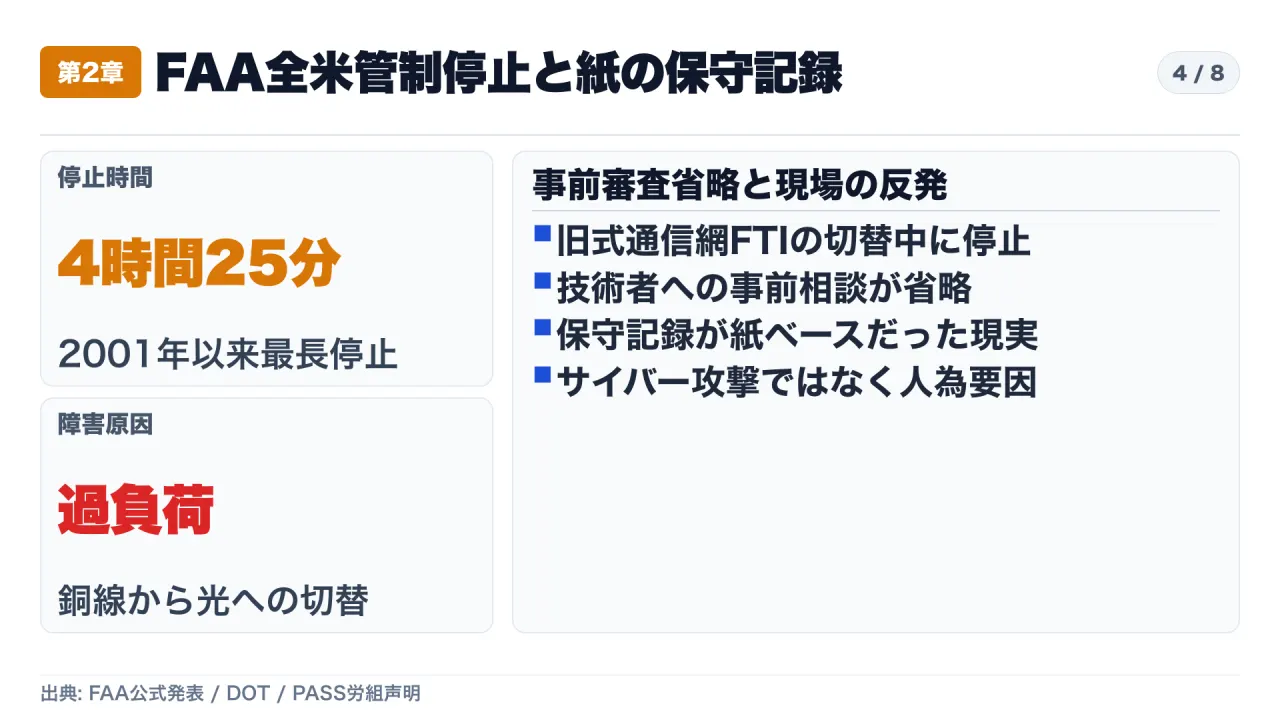
U.S. Transportation Secretary Sean Duffy and federal officials explicitly ruled out both cyberattacks and AI involvement. Instead, the failure was entirely self-inflicted. The Professional Aviation Safety Specialists (PASS) union publicly charged that standard pre-change risk assessments and frontline engineering consultations had been bypassed prior to the migration. Even more remarkably, FAA Administrator Bryan Bedford acknowledged in official remarks that equipment maintenance logs across critical segments were still being tracked on paper.
In operational terms, executing a live TDM-to-IP migration without halting traffic or verifying router capacity is equivalent to stripping and repaving an active multi-lane expressway without closing lanes—until paving equipment stalls across every lane and locks up traffic for hundreds of miles.
In large-scale enterprise IT migrations across Japan and global financial institutions alike, this failure mode is painfully familiar: treating a high-risk core network cutover as a “routine maintenance step,” skipping field verification, and trusting incomplete checklists. In fact, a U.S. Government Accountability Office (GAO) report published on September 14, 2026, had already warned explicitly that the FAA’s accelerated modernization schedule was outstripping frontline maintenance capacity months before the November collapse occurred.
4. Shock Three: Microsoft’s Global Outage and Multi-Factor Cascade Traps
The third shock hit corporate knowledge workers worldwide between November 12 and November 14, 2026, as Microsoft suffered a severe outage across more than 70 countries, disabling Exchange Online email, Teams collaboration channels, and Copilot AI assistants.
Microsoft’s Post-Incident Review confirmed that the disruption was not caused by a simple capacity miscalculation or external intrusion. Rather, three independently manageable conditions collided simultaneously:
- Latent Software Defect: A dormant software bug introduced back in July 2026 remained undetected inside production routing logic.
- Traffic Reallocation: Engineers executed a routine traffic-distribution change across regional endpoints.
- Reduced Gateway Headroom: Concurrent gateway maintenance temporarily reduced packet-processing capacity by 14%.
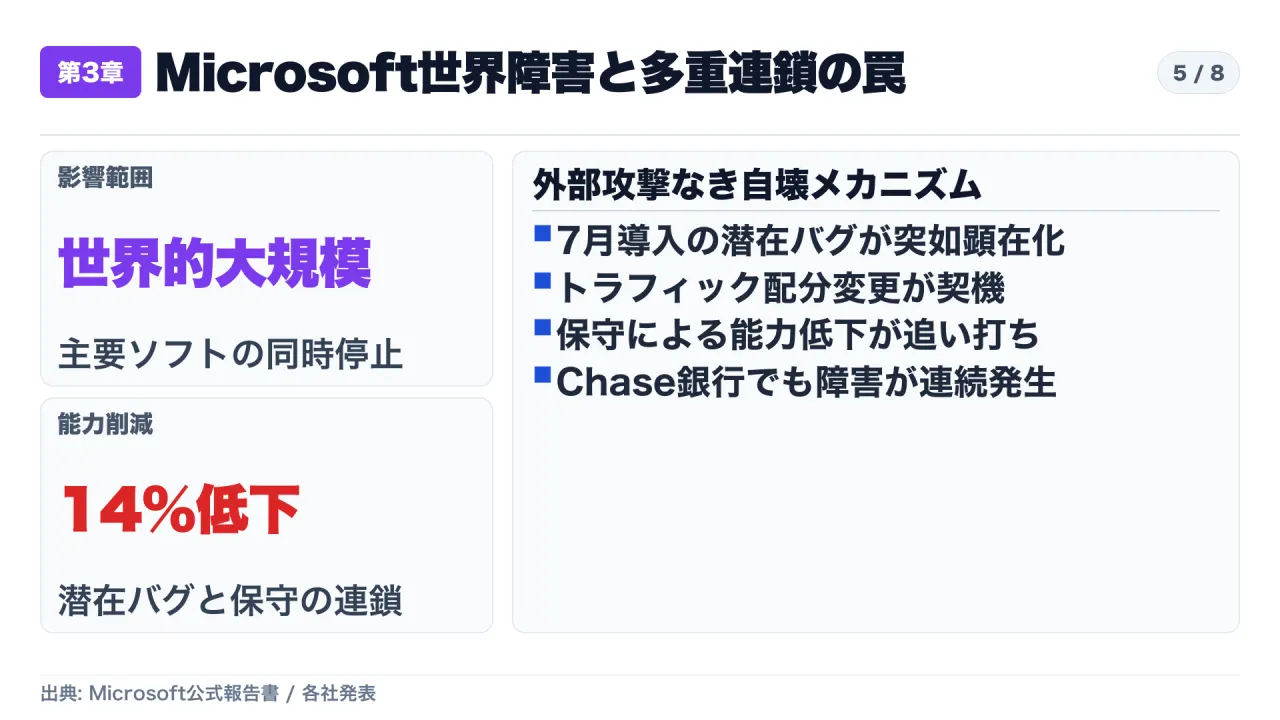
When the traffic shift hit the latent July 2026 bug under a 14% capacity constraint, automated failover and recovery routines failed, locking services into a prolonged outage loop. Imagine shutting off one water riser in a high-rise building for routine safety inspection, only to have an aging valve on a parallel pipe rupture under shifted pressure—cutting off water to the entire tower at once.
Just days later, on November 16, 2026, JPMorgan Chase experienced a major banking system disruption, underscoring how deeply modern commerce depends on a small handful of cloud and financial platforms. For enterprise IT departments, the lesson is unambiguous: Service Level Agreements (SLAs) written on paper do not prevent multi-factor cascading failures when regional redundancy, traffic engineering, and maintenance windows interact unexpectedly.
5. Shock Four: SpaceX Starship Recovery and the $50B–$90B AI Compute Race
Contrasting sharply with the breakdown of legacy telecommunications and enterprise cloud systems, frontier aerospace and AI compute infrastructure surged forward at massive capital scale during the same week.
On November 14, 2026, SpaceX conducted the 15th test flight of its Starship super-heavy launch system. Shortly after liftoff, the first-stage booster (B22) exploded over the Gulf of Mexico, forcing mission controllers to abort the booster catch attempt. However, the upper-stage Ship continued into orbit, released Starlink satellites, completed 14 revolutions around Earth, and re-entered the atmosphere to execute history’s first mid-air catch of an orbital spacecraft using the launch tower’s mechanical arms.
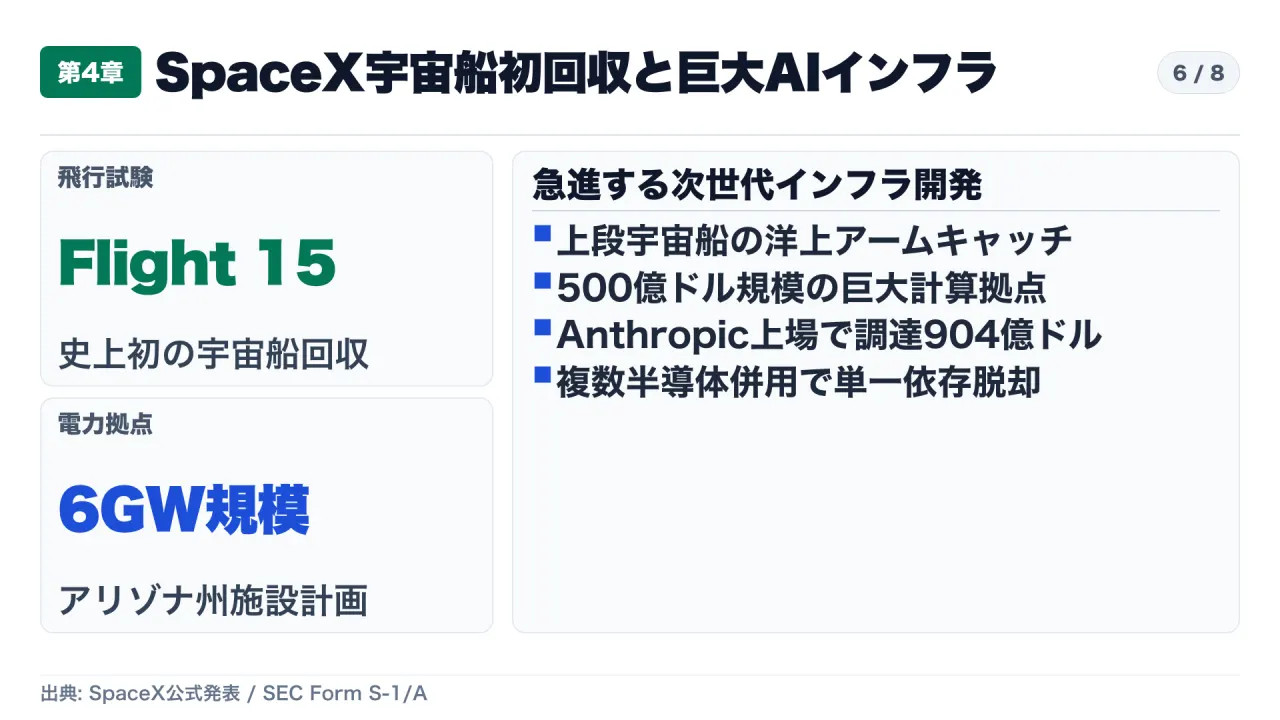
Beyond aerospace reusability, SpaceX’s infrastructure ambitions extend directly into terrestrial AI power capacity: the company filed plans in Cochise County, Arizona, for a hyper-scale AI data center campus designed for up to 6 gigawatts (6GW) of power capacity and approximately $50 billion in capital investment.
Meanwhile, frontier AI developer Anthropic advanced toward a landmark initial public offering targeting a fully diluted valuation of $1.404 trillion and up to $90.4 billion in proceeds. Crucially, Anthropic’s amended SEC Form S-1/A registration statement emphasized a deliberate multi-vendor silicon strategy—combining custom chips, Google TPUs, Microsoft Azure infrastructure, and AMD accelerators—explicitly designed to avoid catastrophic single-vendor dependence on any single semiconductor supplier.
6. Synthesis: Two Structural Bottlenecks Exposed Across Tech and Infrastructure
Stepping back from the individual headlines, the four mid-November 2026 shocks expose two fundamental bottlenecks confronting the global technology economy.
First is the Governance Bottleneck: Moving from Founder Charisma to Institutional Accountability. When a semiconductor supplier reaches multi-trillion-dollar scale and underpins global capital expenditure, operational stability cannot rest on one leader’s informal authority or personal network. Institutional fiduciary duty, independent board oversight, and documented succession planning become non-negotiable infrastructure requirements for every downstream customer.
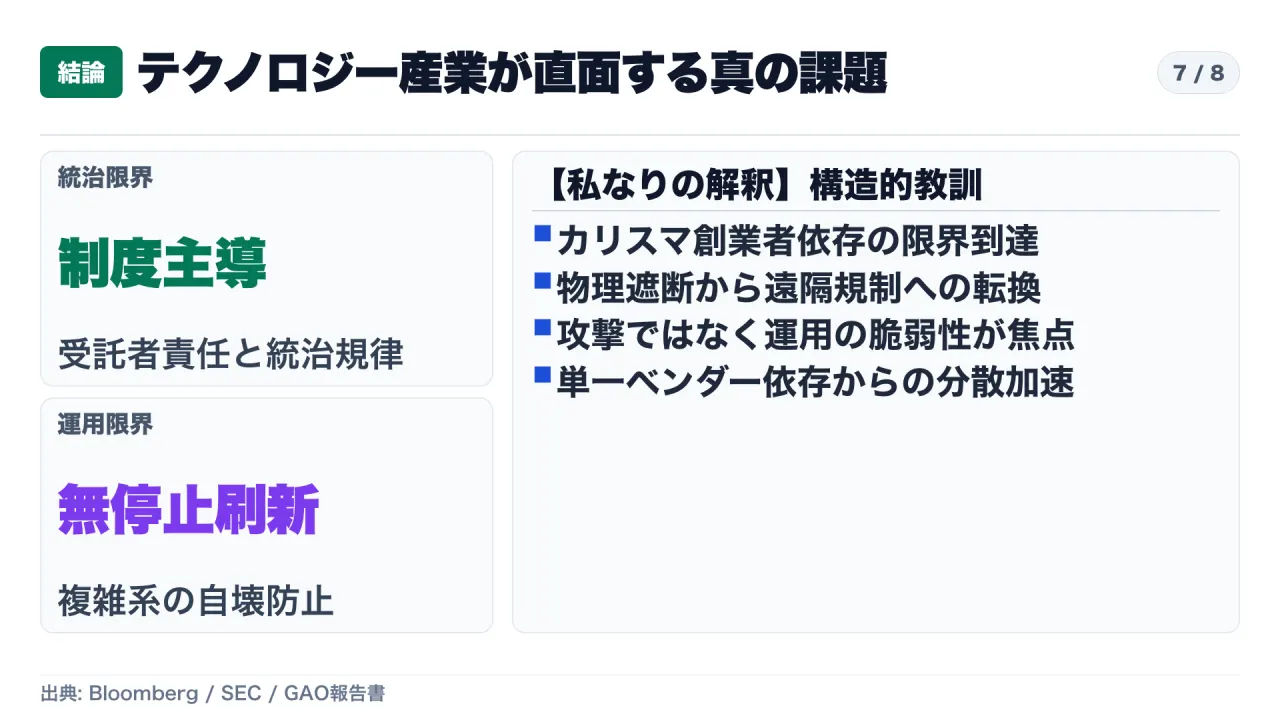
Second is the Operational Bottleneck: Internal Self-Collapse in Complex Systems. Organizations routinely allocate billions to perimeter cybersecurity defenses against external attackers, yet both the FAA ground stop and Microsoft’s 70-country outage happened with zero external interference. Hollowed-out change reviews, unverified legacy-to-modern migrations, paper maintenance logs, and overlapping maintenance windows inside complex systems pose an immediate, recurring threat to business continuity.
7. Three Practical Principles for Engineering and Business Leaders
To protect enterprise operations, cloud architectures, and capital commitments from similar cascading failures, technical leaders and procurement teams should apply three concrete operating principles immediately:
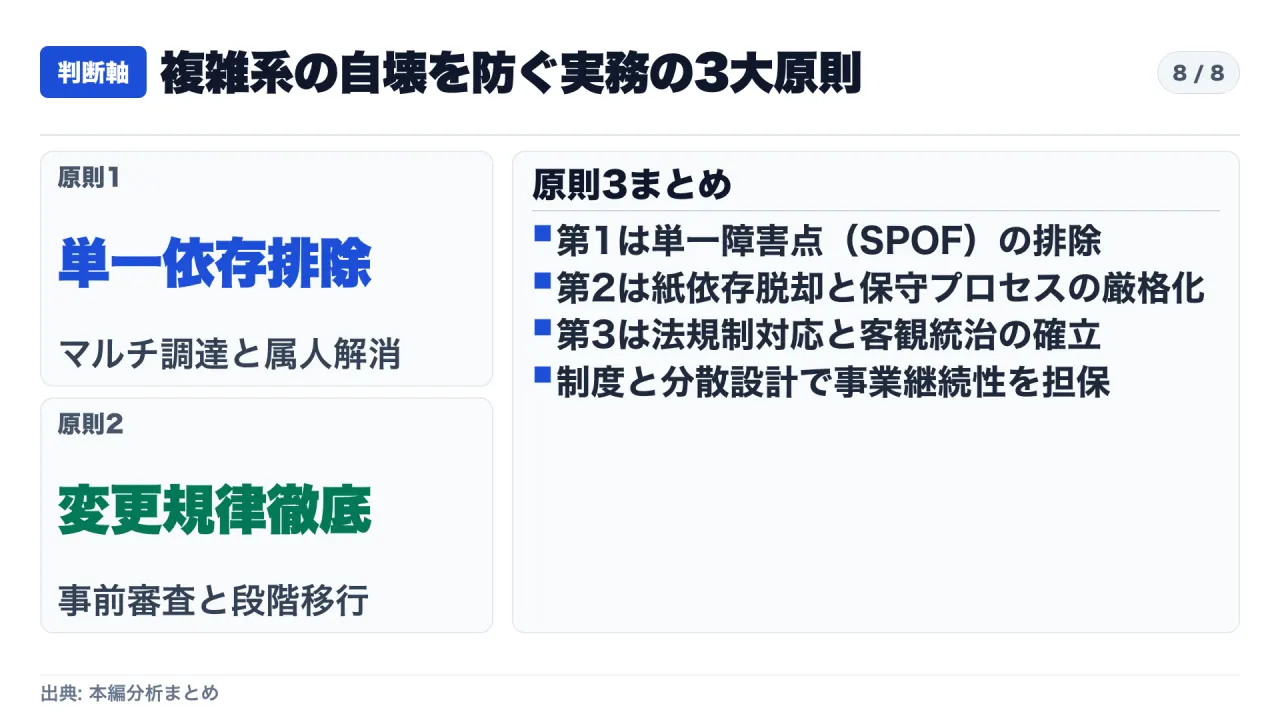
- Eliminate Single Points of Failure (SPOF) Across Vendors and Key Personnel: Adopt the multi-vendor discipline demonstrated in Anthropic’s Form S-1/A disclosures. Never lock critical AI inference, cloud productivity, or semiconductor procurement into a single supplier or a single irreplaceable human gatekeeper. Design and periodically test fallback routing and secondary vendors before a crisis strikes.
- Enforce Mandatory Pre-Change Audits and Digital Maintenance Ledgers: Treat every “routine” network migration or gateway maintenance task as a potential systemic trigger. Require formal cross-team risk sign-offs, frontline operator consultation, staged canary cutovers, and fully digitized, auditable configuration logs—never paper checklists or verbal assumptions.
- Audit Balance-Sheet Commitments and Regulatory Boundaries Quarterly: Look past headline revenue growth to examine supplier supply-chain commitments, working-capital metrics such as DSO, and shifting geopolitical export controls like the U.S. Commerce Department’s November 16, 2026 remote-compute rule. Align compliance architecture with sovereign and cross-border restrictions before workloads are disrupted.
High-velocity innovation in orbital launch systems and multi-gigawatt AI clusters will continue to reshape global industry. Yet as mid-November 2026 demonstrated, durable resilience depends not on headline breakthroughs alone, but on disciplined institutional governance and rigorous engineering execution at the operational core.